Rebuilding Place in the Urban Space

"A community’s physical form, rather than its land uses, is its most intrinsic and enduring characteristic." [Katz, EPA] This blog focuses on place and placemaking and all that makes it work--historic preservation, urban design, transportation, asset-based community development, arts & cultural development, commercial district revitalization, tourism & destination development, and quality of life advocacy--along with doses of civic engagement and good governance watchdogging.

Tuesday, February 28, 2006

DC Public Schools Master Education Planning Document released

Today's newspapers report that Superintendent Clifford Janey has released the planning document for the improvement of DC Public Schools.

Click here for the document All Students Succeeding: A Master Education Plan for a System of Great Schools or here for the Executive Summary.

Index Keywords:

Flickr photo of Wheatley Elementary School in the Trinidad neighborhood by Inked78.

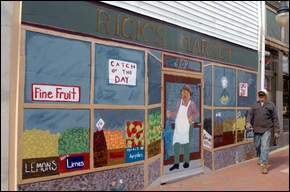
Murals as "place" setters

The Daily Journal -- Vineland, N.J..jpgStaff photos/Barbara Errickson. Vineland Daily Journal. A pedestrian walks past Rick's Market, which is really a mural on High Street next to Winfield's restaurant.

This article about Millville New Jersey's Glasstown Arts District, "ALL OF HIGH STREET'S THEIR CANVAS," discusses how the Arts District announces its presence through "simple" public art projects via murals. From the article:

[the city] will see its collection of curbside murals grow again this year. Murals showed up along North High Street soon after the Arts District opened. Some are permanent, such as a privately commissioned Egyptian motif on the side of Before and After Hair Center and Technique, and the publicly funded mosaics at the Chester M. Goodwin II Glasstown Plaza. Some murals are stopgaps, like the partially finished work in front of a fenced-in lot on the 700 block of North High Street, and another on the ground floor of the Levoy Theatre. Whether they are there forever or only a few years, the murals are seen as furthering the district's mission.

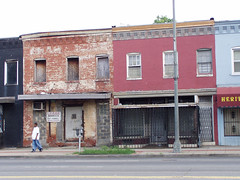
Flickr Photo Download P1010116.jpgWindow mural opportunities in Washington, DC. Photo by Inked78.

Index Keywords: ;

Restrooms and street signs

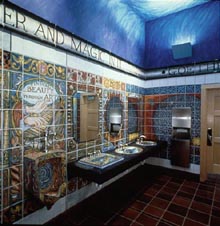
America's Best Restroom Award From Cintas.jpgFrom the Restroom Hall of Fame. Kohler Art Center restroom, Sheboygan, Wisconsin. The John Michael Kohler Arts Center is a not-for-profit organization established in 1967 for aesthetic and educational purposes. Kohler is the bathroom faucet company. It makes sense that they'd do a good job here.

"Voting Begins In Annual Best Restroom Contest: Voters Can Choose From 5 Finalists Profiled On Web Site:"

Cintas, the commercial restroom supply company, is sponsoring an online poll to find America's best bathroom. It has narrowed the field down to five sparkling-clean, sweet-smelling restrooms. The finalists are Atlantic City's Borgata Hotel and Casino, a Michigan bistro, a Rhode Island seafood house, an Illinois airport and an Ohio restaurant.

America's Best Restroom contest was started in 2001 to spotlight businesses that maintain exceptional hygiene and stylistic grace in their potties. Nominations can be made by anyone, and about 30 are received annually. Vote via the website.

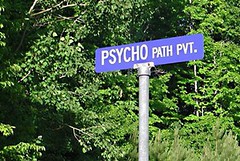
2. And in the story "Psycho Path Voted Wackiest Street Name," we learn about Mitsubishi's contest for odd street names. The company sponsored the poll on the Web site The Car Connection and more than 2,500 voters cast their ballots during a week of voting that ended this month. Winners were announced Friday.

Street Names Contest Winners! - The Car Connection.jpg
__________
Odd street names are funny but quality restrooms matter to neighborhood commercial districts a lot. A complete destination needs to have places where people can refresh themselves. Otherwise they won't linger and patronize other establishments in your commercial district.

We had a bit of a discussion about this on the public.spaces e-list a few weeks ago. Even though it's a hardship for businesses, I think it's better to focus on restrooms in managed establishments like restaurants or hotels, or in public buildings such as libraries, rather than to create separate facilities that need to be funded and managed apart from other functions. Sure there are the JC Decaux "self-cleaning" restrooms, but accessibility laws mean that micro-restrooms that would othterwise not provide opportunities for disorder can't be installed. The disabled-access JCD restrooms can become problems, at least in the U.S.

I never knew there was an American Restroom Association until the discussion on the e-list. Also see "Public toilets" from Metropolis Magazine, and "City workers to begin inspecting pay toilets in S.F.," from the San Francisco Chronicle.

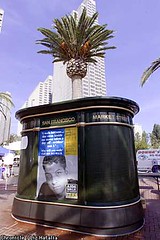
SF Gate Multimedia (image).jpgPolice make frequent drug arrests at this JCDecaux toilet at Jones and Eddy. San Francisco Chronicle photo by Liz Hafalia

Index Keywords:

Neighbourhoods blog and some gleanings

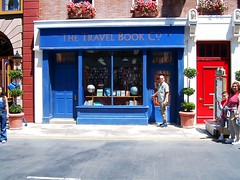
IMGP0876.jpgNotting Hill bookstore featured in the Hugh Grant-Julia Roberts film. Photo from Tobias.

This blog is from the UK and I don't look at it as much as I should. Cyburbia has some sort of blog feed including his and mine, so I was reminded to check it out. Here's a posting, verbatim, about neighborhood commercial districts:

Today is High Street hype day - the All Party Parliamentary Small Shops Group is publishing its report today. [The report is actually here, but it's 91 pages and I'm not up to printing it off at the moment.]

Meanwhile, Sustrans have come up with a very neat coup by publishing (or re-publishing? I'm sure I've seen this before) a repeat of what was known as the Graz study, which showed how retailers under-estimate the importance of pedestrian travel and over-estimate the significance of cars. Sustrans researchers working in Bristol seem to have got very similar results. Their report is a model, lucid and concise.

"Retailers overestimated the importance of car-borne trade by almost 100%; they estimated that 41% of their customers arrived by car, whereas only 22% had done so. In fact, more than half of shoppers walked to the shops. Walking to neighbourhood shops, and meeting friends and acquaintances there, is an enjoyable social activity, as well as an efficient way of shopping."

"So the picture is of local shoppers, mainly walking to the shops, and visiting a number of stores. Interestingly, this is also a picture of healthy, physically active lifestyles, populous streets and informal contact with other local people. This is the picture that urban planners, public health specialists and community leaders want to see."

As an aside, I'm interested in the argument that "many shopping streets need wider pavements." It often feels like that, but I seem to think that William Whyte in his studies of New York street encounters (City, 1989) argued the opposite. "The highest incidence of encounters," he wrote, "is in the most crowded locations." Maybe we need to look at this again. Via.

I'm going to start checking in more diligently with this blog every couple days.

Index Keywords: ; ;

Heurich Mansion update (updated again)

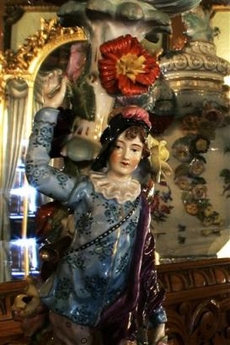
Yahoo! News Photo (2).jpgThe delight is in the details as you tour the Heurich Mansion, like this figure on a porcelain candelabra resting on the fireplace mantle in a parlor near the entrance, in Washington, Feb. 3, 2006. Known as the Brewmaster's Castle, the home of German immigrant and beer baron Christian Heurich was built in 1894 in Washington, DC's premier Dupont Circle neighborhood. The 12,000 square-foot, 31 room mansion resembles the Bavarian castles where Heurich's parents worked in the 1800s and is constructed of concrete and steel, with masonry interior walls. It was the first fireproof home built in the nation's capital. (AP Photo/J. Scott Applewhite)

The Heurich Mansion group raised about $80,000 in the six weeks after they made a public call for donations to avoid a calling of the loan. While they still need $180,000, Chevy Chase Bank gave them another 30 days to show more progress. In the interim, Councilmember Evans has proposed a $500,000 grant from the city towards paying off the mortgage long term, which is over $5 million, after the loan is brought up to date.

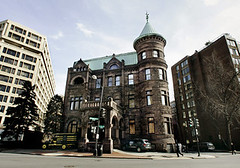
Preservationists try to save brewer's home in Washington.jpgPhoto: J. Scott Applewhite, Associated Press. The Heurich Mansion, known as the Brewmaster's Castle, was built in 1894 in Washington, D.C.'s premier Dupont Circle neighborhood by German immigrant Christian Heurich.

The AP did a story on the plight, "Preservationists try to save brewer's home in Washington," which ran in the Pittsburgh Post-Gazette, among other places. From the article:

"There are 80 million 'Joe Six-packs' out there who drink beer, the beverage of moderation," said Mr. Heurich, adding: "This is an extraordinary example of the way successful American brewers lived when beer was a hometown business."
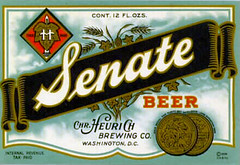
Where DC drank tavern Washington.jpgHeurich beer label image compliments of Peter Sefton.

Gary Heurich reported in an email that:

IN 18 DAYS WE RAISED $79,578.65 FROM 1,290 DONATIONS
- 1,048 of who came to The Castle for a tour or fundraiser (versus ~8,400 visitors in all of 2005!)

THE FOUNDATION RECEIVED A 30-DAY EXTENSION FROM THE BANK to 15 March to raise the remaining $170,000

OUR COUNCILMEMBER IS SEEKING $500,000 FROM THE CITY JUST FOR THE CASTLE which if approved will represent ~30% of our next goal!

WE'VE ELEVATED TO AN UNPRECEDENTED LEVEL THE VISIBILITY AND AWARENESS OF THE CASTLE through a volume of press and other coverage never before enjoyed by The Brewmaster's Castle

WE'VE ATTRACTED A WHOLE NEW CADRE OF VOLUNTEERS, ENGAGED THE COMMUNITY TO HELP, AND EXPOSED THE CASTLE TO A SLEW OF FOLKS WHO HAD NEVER BEEN THERE BEFORE easily at least 950 of the 1,048 were first-time visitors

WE'VE BEEN ABLE TO INCREASE REGULAR PUBLIC ACCESS FROM 3 TOURS OVER 2 DAYS TO 11 TOURS OVER 5 DAYS

New tour schedule:

Wednesday, Thursday, Friday 11:30 & 1:00
Saturday 11:30, 1:00, & 2:30
Sunday 1:00 & 2:30
First Friday Candlelight Tours**** - 5:30-8:30 the first Friday of each month (note that this is the coming Friday)

****However, due to lack of time to fully prepare for and market this event to really make it a smashing inaugural event that will take on a life of its own, the First Friday Candlelight tours will not start until April. Therefore the inaugural First Friday Candlelight Tour will now be on Friday, 7 April, 5:30-8:30.

WE'VE ATTRACTED THE ATTENTION OF AND ARE MUCH BETTER POSITIONED TO APPROACH POTENTIAL MAJOR DONORS
_____
After this debacle is through Gary and I are supposed to get together to process what happened and to draw out some meta-lessons about the lack of a systematic program in the city for investing in and extending local cultural heritage assets and attractions.

Index Keywords: ;

Virginia House reconsidering WMATA sales tax and thoughts about DC subsidies of Maryland and Virginia

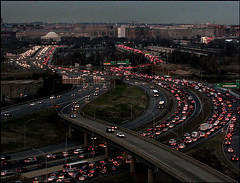
PH2006021502824.jpgPhoto: Nikki Kahn, The Washington Post. Traffic congestion heading north on 395 from Route 1 is shown on Wednesday, February 15, 2006, in Arlington, Virginia.

Today's Post reports in "House Panel to Take Up Va. Funding Bill for Metro: Move Comes After Measure Failed in Subcommittee" (likely in response to opprobrium heaped upon the "Northern Virginia" legislators from Prince William and Caroline Counties, and the city of Manassas) that the House Finance Subcomittee is reconsidering the bill, saving face by claiming that it has been rewritten to reflect their concerns.

For the bill text go the Virginia General Assembly website.

2. Sam Smith, publisher and writer of the Progressive Review and the online City Desk, has a different take on WMATA funding. While I don't agree with him that dedicated revenues from sales taxes are a terrible idea (BART in San Francisco has done this for decades) as always he makes great points.

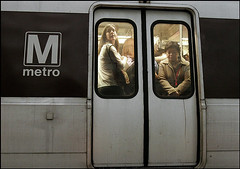
PH2006022202635.jpgCourthouse Metro Station. Washington Post photo by Nikki Kahn.

His point about intelligent jurisdictions like Arlington County's use of the subway to attract federal agencies and other businesses to their communities at the expense of DC is quite accurate.

Years ago I heard Bob Brosnan, Arlington County's Planning Director give a presentation and afterwards I told him he needed to retitle it to "How to Kill DC." But the fact is, poor planning in DC, and of course antipathy towards the city, provided plenty of opportunities to suburban business development regardless.

The blog entry is reprinted below:

AS WE HAVE argued from the start, Metro has been a poor deal for DC for a number of reasons:

- DC heavily subsidized suburban mass transit by dumping its remaining highway funds into the system after the freeways were stopped.

- At the then disparity between heavy and light rail costs, we could have had an 1000 mile light rail system for what the subway cost. This wouldn't be true today because as subways lost their allure (thanks in part to the Metro experience) and as light rail became more appealing, prices of the latter went up.

- The subway has removed jobs, businesses, and tourist facilities from the city and has made it possible for ever larger number of suburbanites to exploit DC tax free (thanks to the ban on a commuter tax). DC now has the greatest percentage increase in daytime population owing to commuters of any city in the country but it fails to benefit from this increase commensurate to the costs involved. In fact, jobs for DC residents have actually declined since the construction of Metro.

- The subway did not compete with the automobile as promised. In fact, it increased street traffic by attracting new development to which only a portion of the workers came by subway. The rest added to the street traffic.

- While the subway did not compete with the automobile, it did a fine job of competing with buses, first by building the system along the most heavily ridden bus lines (which were then eliminated) and second by making the bus system a feeder into the subway rather than serving its natural constituency. Finally, the system has treated the DC bus system like an unwanted child.

All this is absolutely true and absolutely verbotem to talk about in polite DC society.

Now there are plans for a dedicated tax for the Metro system under which the city would pay 37% of the cost of a system that is largely used to bring non-taxpaying suburbanites into the city. Leaving aside the fact that dedicated taxes are a bad approach to public budgeting (it strips legislative bodies of their democratic rights), before any such plan is approved we need actual proof that 37% of the cost of Metro is due to ridership by DC residents. Otherwise it is, as it appears, another suburban con ripping off the city.

Index Keywords:

Two missed (H Street) opportunities

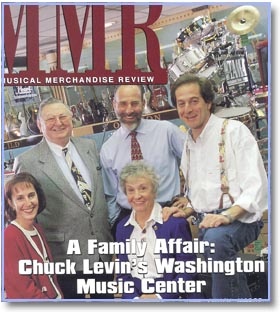
Google Image Result for http--www.tributetochuck.com-art-youngchuck.jpg.jpg1227 H Street NE, Washington, DC. The first time I walked into Chuck's on H street I knew I was in "musical candyland." Fender Jaguars stacked over your head, Super Reverbs (I got one) and Bassmans arranged like a fortress. Man it was great! 1965 and 15 years old, the British Invasion, and Chuck's. He and Marge would always throw in a free pair of drumsticks, a handful of picks, or a set of strings. Bought a Martin D28 from him in 1970, will never get rid of it. A big piece of my youth has now moved on. God rest his soul. --Gary Hancock. Images from Tribute to Chuck.

1. Chuck Levin's Washington Music Center was a thriving H Street business, until it was displaced by the riots in 1968. It reopened in Wheaton, Maryland and is now one of the largest musical instrument stores in the United States.

Today's Post has a story about the business today, "Chuck Levin's Riff 'n' Ready Charm." From the article:

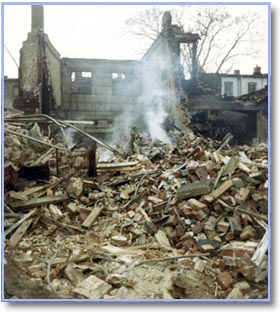
Chuck and Marge Levin, then in the pawnshop business, opened the Music Center in 1958 at 12th and H streets downtown. It lasted there for 10 years, and then there were the riots. Brown, a teenage horn player then, remembers defying his police officer father by going down to check out the damage with some other music students. "Going through the alleys, there were drumheads on the ground. Walking through them, it was like potato chips, crispy, burned up by the fire," he says. "Folks around had guitars, instruments and stuff. It really bothered us because they had no right to have that stuff. It was so precious to us, they had no idea what they had."

Google Image Result for http--www.tributetochuck.com-art-youngchuck.jpg.jpg

2. I had heard things about this store, but had never got around to trying to interview Mr. Levin for his reminisences of working on H Street back when it was a successful commercial district. Then I read his obituary... (I have part of a copy of a Washington Times-Herald front section from 1953 and it is full of ads featuring H Street businesses. Imagine opening up the Washington Post A section today and finding 10-12 large ads featuring H Street businesses...)

The lesson here is don't wait around to gather such oral history interviews for your neighborhood or your neighborhood commercial district. (Sam Lacy, the famed sportswriter key in the integration of DC sporting events, is another person I wished I would have interviewed, about the history of the Uline Arena.)

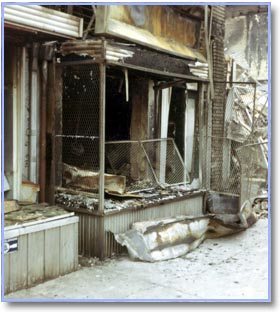
Google Image Result for http--www.tributetochuck.com-art-youngchuck.jpg.jpg 1227 H Street NE, Washington, DC, after April 5th, 1968. You can't call LI (54) 3-6440 to reach the "Washington" Music Center anymore...

Index Keywords: ;

More Arts Displacement

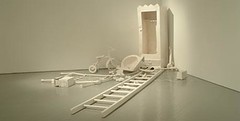
Number 84, Leonardo DrewLeonardo Drew in collaboration with The Fabric Workshop and Museum, Philadelphia. Number 84, 2002. Paper, glue. Approximately 74 1/2 x 108 x 144 inches. Photo: Shane Walsh.

When I wrote the piece yesterday about the displacement of Artworks, the community fine arts education and gallery project in Trenton, I didn't think to link their problems--the City of Trenton wants to evict the project and convert the building to condominums, with a ground floor gallery--with the displacement of the Washington Sculpture Center and the Washington Glass School in favor of the baseball stadium, and the relatively indifferent efforts to retain these programs elsewhere in the city. At this point the Sculpture Center is likely to cease activities, at least in DC, and the Glass School is moving to Arlington County, Virginia.

Part of the problem in finding alternative space for these organizations, and a number of people tried I will say that, is that DC doesn't have many of the industrial-like buildings that lend themselves to such uses, plus the real estate market is so strong that inexpensive buildings aren't available. But "the government" could have and should have done more, especially since it is the cause of the displacement.

DC/StadiumPatricia Ghiglino is the owner of Washington Sculpture Center; she must move the business because it is located at 1338 Half Street SE, the site of the proposed DC baseball stadium. Photo: Michel Du Cille, The Washington Post. From "Landowners in Stadium's Path Fight to Stay Put: Feb. 7 Move-Out Date Pending in D.C. Court." The buildings have been vacated.

Yesterday's Philadelphia Inquirer has a story about the displacement of the Gilbert Building, which developed into a low-cost arts uses building, in the article "Price of progress: Artists lose a haven." Interestingly enough, the building is being seized by the City to be demolished to allow for the expansion of the Philadelphia Convention Center. Like in DC, the City of Philadelphia did not undertake efforts to assist relocation. Being displaced are:

Asian Arts Initiative on the second floor, Highwire Gallery, a co-op for 17 artists, and Vox Populi, a cooperative and gallery of 24 artists, on the fourth floor. The 29-year-old Fabric Workshop and Museum is on the fifth and sixth floors. The building also contains the Institute for the Arts in Education on the sixth floor and about 35 other artists.

Index Keywords:

Monday, February 27, 2006

Regionalism, politics, and Prince William County, Virginia

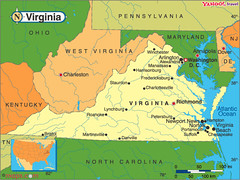
750x750_virginia_m.gifWon't you be my neighbor?

I like to think of this weblog as covering issues in a way that has resonance nationally, but it happens that I write mostly about how the issues of rebuilding place and urban revitalization work in the Washington, DC region. And I write more about Washington, DC than "the region." In any case I try to write in a way that people can draw out meta-lessons and apply them to other situations in other places.

I've said before that when I started writing, I never expected to write about Virginia and Maryland so much. Maryland comes up a lot because it possesses another traditional center city, Baltimore, which makes for a good comparison to DC. Plus, the State of Maryland is physically connected to DC, so it comes up more often maybe.

But since I write so much about transit, because great transit defines great and economically viable center cities, it ends up that I write a lot about Maryland AND Virginia, partly because the Washington Metropolitan Area Transit Authority is a three-jurisdiction hydra that links the State of Maryland, Montgomery, and Prince George's Counties, Fairfax, Arlington, and Alexandria Counties in Virginia, and the District of Columbia.

So when Northern Virginia legislators vote against the imposition of a local sales tax in counties not their own (see "Virginia House Panel Rejects Metro Financing Bill" from the Post) it turns out to affect us miles away, in the District of Columbia and other places, and it makes me more conscious of the necessity of regionalism. From the article:

Three Republicans from Northern Virginia whose constituents would not have been taxed voted against it, as did two GOP lawmakers from the Richmond suburbs. In discussing their opposition, delegates from the Washington suburbs said that they believed there were other ways to raise the money, though they did not cite any specific alternatives. One delegate cited Metro's operational and staff problems as reasons the General Assembly should not pour more money into it.

"Metro is a mess," said L. Scott Lingamfelter (R-Prince William), an anti-tax delegate who noted the recent dismissal of Richard A. White, the system's longtime chief executive, as an example of how the system's management needs to be overhauled. "Some of us are hesitant at throwing more money at Metro until we have some assurance that internal reforms are going to take place."

While I understand the concern about WMATA's operational competence, given the likelihood that Prince William residents use the system without the County paying anything towards the system (the local jurisdiction funding formula is based on the physical presence of stations within specific jurisdictions) why do people like this get to f* with a transit system that they ignore, use, underfund, and disrespect?

We need better information from WMATA on where riders come from. We know that Virginia Railway Express, which serves counties such as Prince William brings riders to the WMATA system, and many VRE riders finish their trips on the subway system. (We can probably get results of such survey data from VRE.)

There are five VRE stations at subway stops within the WMATA geographic area.

Clearly, if Washington area transit is held hostage by outlying legislators in Virginia (and sometimes Maryland) then a broader transit advocacy and marketing campaign must be devised to make the case throughout the States of Virginia and Maryland, to all legislators, whether they are from counties that have WMATA stations or not.

And, each of the legislators that voted against this bill need to be targeted for defeat in the next election.

Voting Against the Bill: Dels. Harry J. Parrish (R-Manassas), L. Scott Lingamfelter (R-Prince William), William R. Janis (R-Goochland), R. Lee Ware Jr. (R-Powhatan) and Robert D. "Bobby" Orrock Sr. (R-Caroline). (From Post article "Tie Vote Kills Effort to Raise Sales Tax.")

And, I've added the Potomac News (Prince William County), the Manassas Journal-Messenger, and the Fredericksburg Free Lance-Star to the "Some Area Media" section of links in the right sidebar.

The region keeps getting bigger.
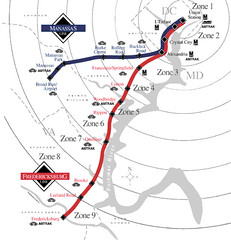
Virginia Railway Express station mapVirginia Railway Express station map.

Index Keywords:

Educating yourself for greater success (updated from Sunday)

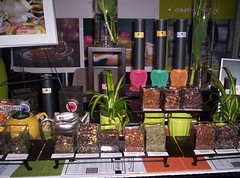
100_3405Mootz Run Tea table at Coffee Fest. My photo doesn't do it justice. Imagine dressing a store window like this to launch your tea program...

This weekend is the Coffee Fest conference trade show at the Washington Convention Center in DC. They have this event in various venues around the country each year. I was doing something else Friday morning, when the seminars started -- each morning there are seminars before the exhibit floor opens at noon.

Saturday I went to three excellent presentations (and snagged the materials from two others), one was on developing your store as a branded emotional experience, another on hiring great employees and reducing theft, and the third a very focused session on writing the business plan in a realizable fashion (breaking it down into sections, starting with the executive summary written as a letter to a friend).

Each of these programs would make excellent sessions for a local-regional conference promoting the development of small businesses. While their examples (except in the first sessions) focused primarily on coffee shops (and restaurants), the general points would be useful to most independent retailers.

These are the kinds of programs and conferences that local business development initiatives need to sponsor. I was impressed with how many people attended the seminars. There were 4 to 6 programs in each time block, and the sessions I attended had from 150-200 people in the audience.
__________
Updated: The Examiner ran an article about the conference on Saturday, "Coffee Fest trade show heats up Washington," although the paper was delivered after I already left to go to the conference. Sunday had some good sessions as well, including one on consumer trends, from a marketing person from Torani Syrups. She had some good insights. It would also be a great session in a local conference on promoting and developing independent businesses.

Washington Examiner Business.jpgPeter Giuliano, director of Coffee at Counter Culture Coffee, Inc. is seen cupping coffee, which is the equivalent of a wine tasting for coffee where beans from around the world are sampled for fragrance, aroma and taste. Greg Whitesell/Examiner.

Businesses should send their staff to conferences like this one, and pay them for attending. Talk about building the competence and knowledge of your employees. DC has such an advantage over many venues because conferences such as this one occur here all the time, because of the attractiveness of the city to visitors.

Index Keywords:

More bleeding edge marketing ideas from Media Life

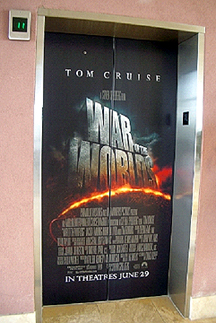
Media Life Magazine.jpgElevator ad, Florida, targeting spring break college students.

Media Life is an online media-marketing publication. I pay attention to it for its weekly "Out-of-Home" column, which usually has an interesting story on new ideas in out-of-home marketing. OOH ranges from ads on bus shelters to billboards to other way more imaginative programs. (I know this seems contradictory since I complain about the "commodification of authenticity," but face it, we live in a world permeated by advertising and marketing.)

Today's article, "Your client chilling on spring break: Putting ad messages in hotels where the kids stay," is typical and provocative.

Imagine a "local history promotion program" in DC hotels, promoting not the "national cultural heritage experience," but the local one?

Local history pillowcases, ads for local history venues on elevator doors, etc.

Index Keywords:

Speaking of enclave development (Washington Convention Center)

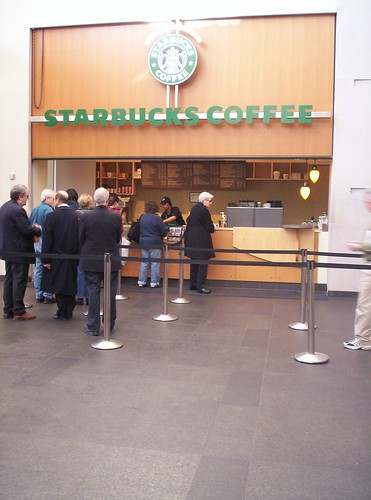
Starbucks, Washington Convention CenterStarbucks, not a locally-owned company like Mocha Hut or Murky Coffee, in the Washington Convention Center.

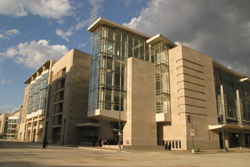
The Washington DC Convention Center is a three block long box in the middle of a neighborhood. Local commercial district revitalizers complain that because the Convention Center hasn't put in the retail that it is supposed to have, it isn't having much positive spillover benefits on the surrounding commercial strips bracketing the center (7th and 9th Streets NW--7th Street there was once a vibrant commercial corridor but it was destroyed during the riots).

Who's to say it will anyway?

People go in, do their business, and leave. How many areas are thriving around convention centers in other cities across the country? (Not many.)

That's not to say that such facilities don't help local hotels and extant commercial and entertainment districts. The question is can they aid the revitalization of the area around the Center?

They could, if and only if, the centers are designed to connect, complement, stabilize, build, and extend the areas around them.

Big projects like this, a different form of enclaves, tend to not do so. (Also see "Space Available: The Realities of Convention Centers as Economic Development Strategy" by Heywood Sanders.)
conventioncenter.jpgWashington DC Convention Center.

I raise the issue of Starbucks at the Washington Convention Center in the context of "Building a Local Economy" which as I have been mentioning lately, tends NOT TO BE AN ELEMENT in local comprehensive plans, including DC's.

Every time a municipality creates such a project, it needs to take special measures to ensure that the facility connects to, builds, and extends the local economy. A Starbucks, repatriating its profits to Seattle doesn't do much for the local economy in terms of reinvestment and building local capital, although it does add employment. Similarly, the other food service operations in the building should be local companies. Likely they are not.

Another real problem with the Convention Center is the military-like presence of security guards, who interrogate you to determine if you belong. It can be quite unpleasant.

I know this is done to prevent the building from being blown up, but it communicates a terrible message, that DC IS UNSAFE!, that you must be careful and coddled, or you will be killed.

Such a message doesn't likely promote "sampling" of other venues that DC has to offer.

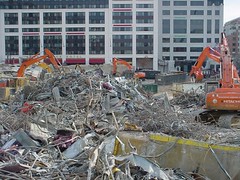
3Loadingoutthesteel.jpgThis is what happened to the last Washington DC Convention Center. (Photo by Wrecking Corporation of America.) Is a fear of such destruction what drives the "security" agenda for its replacement?

Index Keywords: ;

Civil Rights photos re-discovered by the Birmingham News

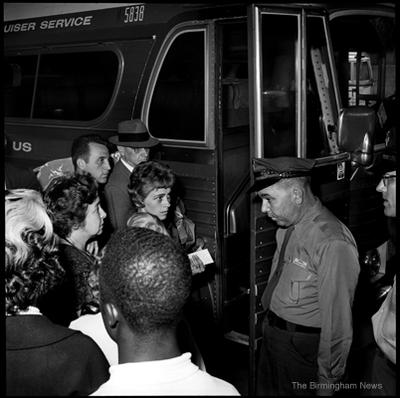
al.com Photo Galleries.jpgMay 17, 1961: A Greyhound bus driver faces passengers waiting at the Birmingham Greyhound station as Freedom Riders are held aside by Birmingham police. Birmingham News FILE Photo.

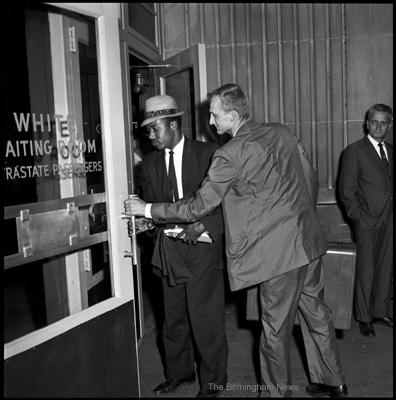
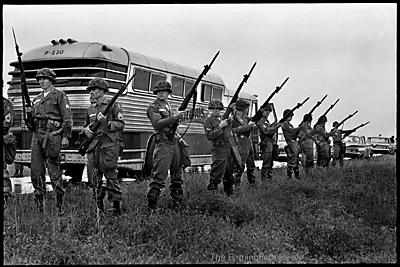
Today's Post has an AP story about a cache of Birmingham (Alabama) News, civil rights era photos found in an old closet. The newspaper website has a much longer story and a number of photo galleries online, including a number of chilling photos on a Ku Klux Klan rally. (The Post article ran three of the photos, there are many more.)

Check them out.

al.com Photo Galleries.jpgMay 19, 1961: Jim Zwerg opens the door for fellow Freedom Rider Paul Brooks as they enter the Birmingham Greyhound Station. Zwerg and Brooks were arrested coming into Birmingham from Nashville.NEWS FILE.

al.com Photo Galleries.jpgMay 24-25, 1961: National Guard troops protect a Trailways bus near the Mississippi state line as it travels from Montgomery to Jackson on Highway 80 near Cuba. The troops were called out after prolonged violence in Montgomery. NEWS FILE/NORMAN DEAN


Index Keywords:

Wal-Mart roundup

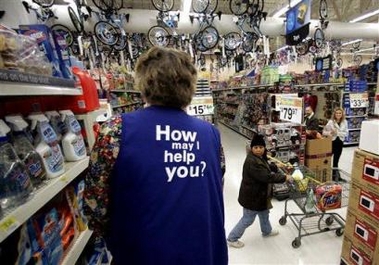
Wal-Mart on Yahoo! News Photos.jpgAP photo by Rick Bowmer. Wal-mart, Portland, Oregon.

1. "A Wal-Mart Grows in Wyoming" is the story of a young woman writing about the impact of Wal-Mart on the business community in her town, and how the closure of many small businesses threatens to put her family's printing shop out of business. (Thanks to Bird from the North for this link.) From the article: "I don't know how long my family's printing company can survive, since Wal-Mart moved into my town and displaced most of the local businesses."

2. Many people criticize organizing, thinking it's futile, but clearly Wal-Mart's recent response to improve employee health benefits and access to health insurance comes as a result of Maryland's recent legislation requiring large companies to provide health insurance benefits to their employees, and the introduction of similar bills in legislatures across the country, as well as continued organizing by groups such as Wal-Mart Watch. (See "Wal-Mart to Expand Health Coverage, Add Store Clinics")

3. Relatedly, this weekend Wal-Mart Chairman Lee Scott spoke to the National Governors Association winter meeting in Washington, and "urged the attendees not to adopt state laws requiring a specific level of health benefit spending by large companies, and said that such moves were driven more by short-term political interests than long-term concerns about the nation’s health care crisis."

4. Last week, the Washington Business Journal reported, in "Wal-Mart bank plan set for D.C. hearing," that "the much-anticipated public hearings to consider Wal-Mart's application for federal deposit insurance are set for April 10 to 11 in D.C., the Federal Deposit Insurance Corp. announced Thursday."

Sounds like an organizing opportunity... I won't put this event in my calendar until the venue is set.

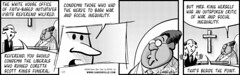
Candorville, 2/20/2006Candorville, 2/20/2006. Used by permission from www.candorville.com, Darrin Bell, and the Washington Post Writers Group.

5. And this article, "Andrew Young to Head Pro-Wal-Mart Group," proves everything that people like Manning Marable and the publishers of the e-journal Black Commentator write about co-optation, and how capitalism intensifies "a growing class stratification within the Black community and had bought off a social layer, a privileged, middle-class group of African Americans to go along with the system." (See these articles from the Black Commentator, "Wal Mart and the Economic Destruction of Black Communities" and "Why Black Leaders are Stone Silent on Wal-Mart Abuses" by Earl Ofari Hutchinson.)

Note that I am not arguing against capitalism here, merely making a point about how the structure of the system works. From the article:

Former United Nations ambassador and Atlanta mayor Andrew Young will be the public spokesman for a group organized with backing from Wal-Mart Stores Inc. that defends the world's largest retailer against mounting attacks from its critics.

Working Families for Wal-Mart, a group of community leaders from across the country, was set to announce Monday that Young will be the chairman of its 16 member steering committee formed in December to counter charges from two union-backed groups that are pressuring Wal-Mart to improve wages and benefits.

Young said he will be a public face for the group, giving interviews and publishing opinion articles defending the company. "They are some of the best entry level jobs that are available to poor people. And they also make products available to the working poor," Young said in a phone interview from Atlanta.

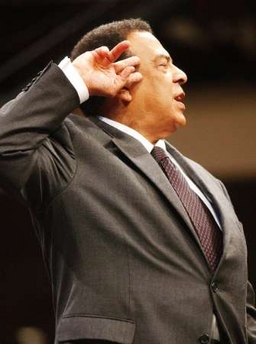
Coretta Scott King on Yahoo! News Photos.jpgFormer U.S. United Nations ambassador and Atlanta Mayor Andrew Young speaks during a funeral service for Coretta Scott King at the New Birth Missionary Baptist Church in Lithonia, Georgia February 7, 2006. Coretta Scott King was the wife of Martin Luther King Jr. REUTERS/Renee Hannans Henry/Pool

Index Keywords:

Keep Art Real in Trenton, New Jersey

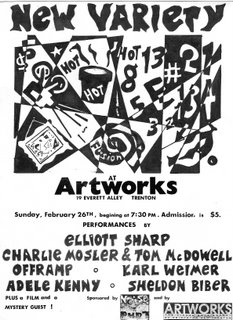
 local show, organized by locals in a local space. Flyer from 1988.Flyer from 1988.Artworks, Trenton, New Jersey. Image from Tricia Fagan.

I've been meaning to write a bit about an arts organizing crisis effort in Trenton, New Jersey. Artworks is a community-based fine arts program and Gallery run by Mercer County Community College in the historic "ARTWORKS" building. Both credit and non-credit visual arts classes are available, year-round, for adults, teens, and children. The Gallery at ARTWORKS also hosts exhibitions of work by regional artists, students, and members of the TAWA artists' coop.

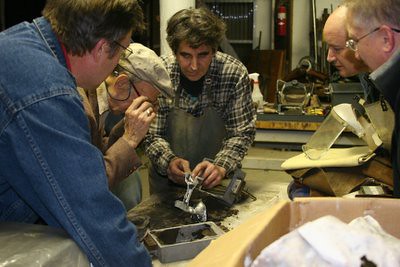
Instructor Rory Mahon with his Aluminum Casting classInstructor Rory Mahon with his Aluminum Casting class, Artworks. Image from Tricia Fagan.

This facility has been in operation for more than 15 years, although the community college management is relatively recent.

Artworks Painting StudioStudio at Artworks.

The City of Trenton has come up with the brilliant idea of replacing this arts use with another arts use--converting the building to condos, with an artists gallery on the ground floor. It's interesting, tragic, and a waste of precious revitalization capital that rather than complement the ArtsWork project with a live-work set of housing and a new and additional gallery, they merely propose to replace one arts use with another. Compare this with projects described in Cities: Back from the Edge by Roberta Gratz, for ground up revitalization efforts in places such as LoDo in Denver and Mansfield, Ohio, as well as the Social Impact of the Arts project at Penn.

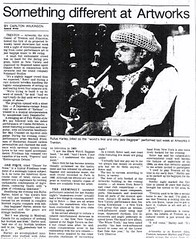
Rufus Harley in a local space. Newspaper article from 1988.Image from Tricia Fagan.

As the community organizing blog devoted to keeping the Artworks use extant, Keep Art Real, points out "the proposed condos for which ARTWORKS would be gutted are described as live/work space for artists but will be open for purchase by anyone."

Garden State Project - an ARTWORKS installation exhibit, May 2005.Garden State Project - an ARTWORKS installation exhibit, May 2005. Image from Tricia Fagan.

Speaking of layering (see Pride of Place: Fred Kent and the Project for Public Spaces), this project proposal makes no sense. Certainly the area where ARTWORKS is located has plenty of vacant buildings in the vicinity. After all, it's Trenton, New Jersey, another (smaller) center city that has suffered multiple cycles of deindustrialization resulting in job and population losses. According to this report, more than one out of every ten Trenton residential buildings is vacant. Plus there are plenty of industrial buildings capable of being converted to housing as well.

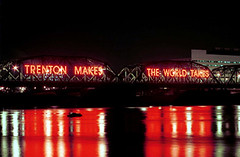
Trenton Makes Bridge, Trenton NJ.jpgTrenton Makes Bridge. Marc Freeman photography. Today, Trenton's population is 2/3 of its peak in 1950, which was 128,009 residents.

Create an arts district. There are plenty of good examples. Merely replacing one arts use with another (purportedly) arts use makes no sense whatsoever.

Mexican Art traditions, Dia de los MuertosMexican Art traditions, Dia de los Muertos, Artworks. Image from Tricia Fagan.

Check out the Keep Art Real blog, send suggestions, and considering writing a letter of support.

Index Keywords:

Be afraid...

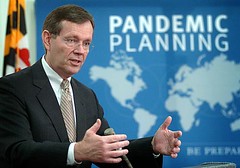
HHS Secretary Michael Leavitt addresses conference on pandemic fluHealth Secretary Michael O. Leavitt discusses preparedness for the possibility of an avian flu pandemic striking in the United States. (Sun photo by Jerry Jackson) Feb 24, 2006

In "States must lead if pandemic hits country, U.S. official says," the Baltimore Sun reports on Department of Health and Human Services Secretary Michael O. Levitt's comments at a State of Maryland conference on pandemic flu. From the article:

...states must be self-sufficient in flu preparedness."Any community that fails to prepare with the expectation that the federal government will come to the rescue is tragically wrong," Leavitt said during a conference at the Maritime Institute of Technology and Graduate Studies in Linthicum. He also called on families to consider how they will provide for themselves. "It's important for people to have some water, a storage of food," he said. Families also should consider storing enough prescription drugs to last more than a week, while parents think about who would care for their children if schools were closed and they must report to work.

Index Keywords:

"It is around the contradictions and problems of daily life that radical intervention can unfold"

I hate to admit that I haven't read Manning Marable's How Capitalism Underdeveloped Black America, even though it's been on my list of things to read for more than one decade. I got to thinking about this book while writing the earlier entry on Anacostia--the enclave development analogy comes from my long ago reading of Andre Gunder Frank's Capitalism and Underdevelopment in Latin America.

The quote in the title comes from an interview with Professor Marable. Reading the interview redoubles my resolve to work through his ouevre. The interview is an excellent discussion of left politics generally, Marxism as a method of social analysis, and black politics and organizing.

While I would call the work that I do more ameliorative than anything, I do focus on "the problems of daily life" in urban revitalization. There certainly are opportunities for intervention, even if they aren't radical steps.

Index Keywords:

Sunday, February 26, 2006

Poorly designed transit systems don't market transit very well
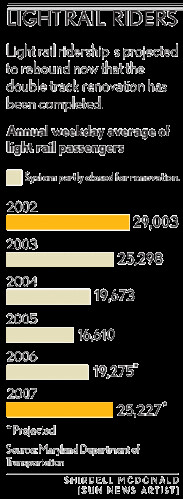
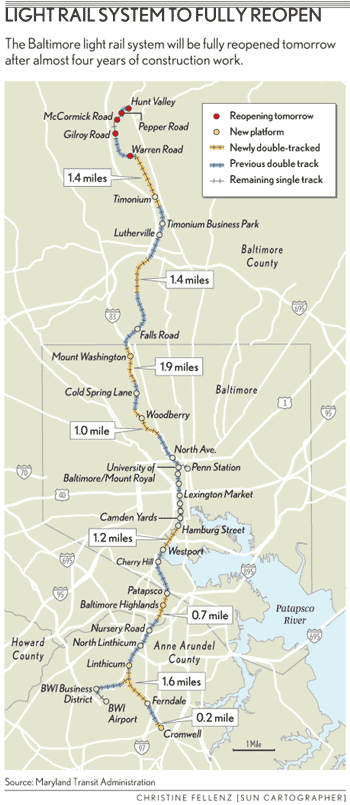
Baltimore Light Rail ridership
I have been involved in an e-discussion about Baltimore area transit. Unfortunately the conversation is a little skewed in that it features three ardently pro-transit people from Washington who don't know that much about Baltimore, and one person from Baltimore who isn't ardently pro-transit.

But then, it's easy to understand why people in Baltimore aren't necessarily transit advocates when the transit "system" doesn't work very well.
A case in point is the Baltimore Light Rail System, which opened in the late 1980s, but while the DC subway system carries around 700,000 riders daily (on five lines not one), the Light Rail system carries fewer than 25,000 riders/day, on a 20 mile line (the WMATA lines are a bit more than 100 miles of track). By comparison, the Baltimore LR line totals about one and one half of the ridership of DC's highest use bus lines.

The light rail system "reopened" this weekend, after the construction of additional trackage to make the entire system double tracked to reduce delays, and the Baltimore Sun reported on it in "Light rail back on tracks: With reopening of northern stretch, entire line will be double-tracked, but a boost in ridership is not guaranteed." From the article:

Baltimore's Central Light Rail Line is getting its second chance to win the hearts of commuters. The light rail will assume its full role in the region's transportation network tomorrow as the 14-year-old transit system operates for the first time as a two-track line for virtually all its route from Hunt Valley to Anne Arundel County. The Maryland Transit Administration is reopening the rail system's northern stretch, between Timonium and Hunt Valley, after a hiatus of 14 months. It had been closed to complete the final phase of a $154 million project to add a second track along 9.4 miles where there used to be one...
Gilbert Yates of Baltimore, headed north on a light rail trainGilbert Yates of Baltimore, headed north on a light rail train as another passes, depends on the system to get to work.(Sun photo by Amy Davis) Feb 23, 2006

Still up in the air is whether double-tracking is the charm that will make Baltimore finally embrace light rail - a system that critics contend was built "on the cheap" - with the same fervor that such cities as Denver and Portland, Ore., have. At station after station along its route, abundant empty parking spaces in free lots tell a story of an underused transit resource.

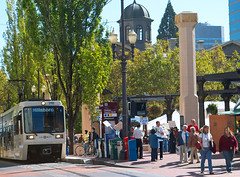
Pioneer Square, Max Light Rail, Protestors, at Lunchtime.jpgPioneer Courthouse Square, Portland, Max Light Rail, Protestors, at Lunchtime. Photo by Miles Hochsein, Portland Ground. Portland Light rail vehicles are "low to the ground" and come every 5-8 minutes.

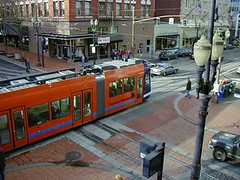
Portland Streetcar, OregonThe Portland Streetcar system complements the Light rail system, but only operates within a few mile section of the Downtown and near Downtown area of the city. DC and Arlington County are planning to implement similar systems (with the same Skoda vehicles) to complement WMATA subway and bus transit to build connectivity and convenience, and to promote economic development, at 1/20 of the cost of building underground subways.

"Light rail is not a failure here. It just has not lived up to its expectations," said Walter Sondheim Jr., senior adviser to the Greater Baltimore Committee and the patriarch of the city's redevelopment efforts. State Sen. Lisa A. Gladden is a recent convert to light rail technology after a visit to Portland. But she's no fan of Baltimore's system. The Northwest Baltimore Democrat said the MTA built it with little regard for the communities it passes through.

"It was built to serve suburban communities trying to get to the [Camden Yards] stadium," she said. "If they think double-tracking's going to help, I wish them luck. "But aboard a near-empty light rail train heading south from Timonium last week, lawyer Paul Hazlehurst said the double-tracking project is already paying big dividends in terms of reliability. He said he used to have to wait 20 to 30 minutes for a train. But no more. "It's far better than it used to be," he said. "Now [trains] come about every 10 minutes and it's turned out to be a fairly useful way to commute."...

The return of passenger service to the system's northern reaches marks the completion of a multiyear program to reverse a much-regretted decision during the late 1980s to run a substantial part of a two-way system on one track.

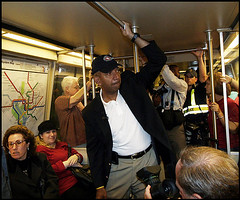
Mayor Williams on the SubwayMayor Williams on the WMATA subway. (Photo from the city website.) Does Governor Ehrlich ride MTA transit very much?

That decision, made to hold down costs, was one of many widely acknowledged flaws in the system - including a route that bypassed the most populous corridors, stations without shops or other development, and a stop-and-go crawl though the Howard Street corridor. Together the problems led to disenchantment with light rail. "It's soured Baltimore's appetite for transit because it's slow and it doesn't serve many people," said Nate Payer, spokesman for the Transit Riders Action Council of Metropolitan Baltimore. "I think it was not the best investment we could have made."
_______
Constraining the usefulness of transit systems through decisions that weaken the value and effectiveness of the system dooms the system to failure, and doesn't build a constituency that advocates for transit development and expansion.

Don't think that everyone in the Washington or Portland regions is a staunch advocate for transit, unfortunately many people are committed and devoted to the car still. But you can live in either of these regions quite well without having to own a car, because of where the transit systems can take you--to work, school, home, shopping, to play, etc.

Transit systems to nowhere cost a lot of money and don't accomplish very much. And they certainly make it harder for advocates trying to make arguments in favor of transit.
Baltimore Light Rail system

Index Keywords:

Mobility + The Growth Machine

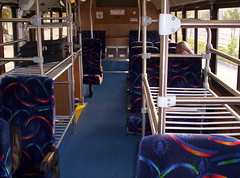
B30 bus to BWI from Greenbelt Metro StationCurrent Conditions. Interior of the WMATA B30 bus to BWI from Greenbelt Metro Station.

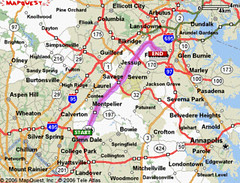
In "Senator calls for Metro study: Giannetti says impending Fort Meade jobs demand Green Line extension to BWI," the Baltimore Sun reports on even newer suggestions that the WMATA Green Line subway system be extended to Fort Meade and the Baltimore Washington International Airport. From the article:

The large number of new federal jobs expected to move to the Fort Meade area should provide the impetus for an extension of the Washington Metro's Green Line to Baltimore-Washington International Thurgood Marshall Airport, says one area lawmaker. If the line were extended to BWI, it would result in a connection between the Washington and Baltimore mass transit systems. Currently, Baltimore's light rail system goes to BWI, but the D.C. subway stops in Greenbelt, about 20 miles away...

Though passage of a bill to fund a study might seem unnecessary, Giannetti said, he hopes to create excitement for the idea. "We need to pass this bill ... and say that we as the General Assembly endorse the idea of taking that Green Line up to the BWI Airport," he said. While the study wouldn't cost the state any extra money, building the extension itself could possibly cost more than $3 billion, depending upon where exactly the train would stop.

Giannetti said the relocation of people to the National Security Agency and Fort Meade areas will bring 40,000 new residents and more than 6,000 new jobs to the military facility, so having mass transit stops in that area is "crucial." According to one proposed route, Giannetti said the 20-mile extension could include stops at the Konterra Town Center, Guilford/Columbia East, NSA/Fort Meade, Odenton Town Center and Dorsey.

001Mapquest map from Greenbelt to BWI Airport.

Index Keywords:

Recruitment Opportunity: Dutch Country Market

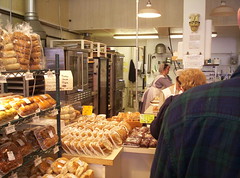
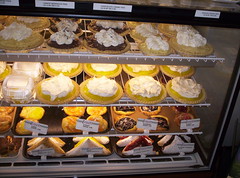
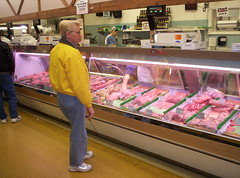
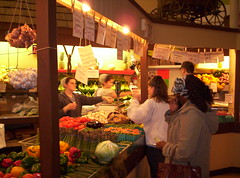
The Dutch Country Market is a "public market" in an Old Safeway Store on Old Columbia Pike Road (Route 29) in Burtonsville, Maryland. It's open Thursday, Friday, and Saturday. I didn't count the "stalls" but there are a fair number. Many dessert counters, and large produce, meat, and dairy sections.

According to a flyer that was being passed out, the property owner is seeking approval to tear down this shopping center (which also has a Post Office, a Dunkin Donuts, and a number of other stores) in favor of a Walmart type big box store.

DC is pretty much disconnected from the agriculture around us, and as a result, doesn't have much of a food culture. Here's an opportunity to change that somewhat.

100_3364
Baked Goods.


100_3358
Decent prices.


100_3356
"You need meat, go to the market. You need bread, try the bakery..." Jim Morrison and the Doors.


100_3350

Labels: ,