Food tourism (and World Tourism Day, September 27th)
 There are a couple sessions at this November's World Travel Market conference in London on food tourism, led by Erik Wolf, director of the World Food Travel Association, so he has written a few entries on the topic for the WTM blog.
Food tourism is more than gourmet restaurants. In the past, people have mostly thought of food-related tourism as more about "gourmands" traveling to the best and most noted restaurants.
This element of tourism pre-dates the Michelin Guide and its restaurant ratings and today's versions--the Zagat Guide, Yelp, and TripAdvisor among others.
But the fact of the matter is that people have to eat, whether or not they are traveling, and food and beverage consumption comprises 23% to 38% of total tourist spending. Some of the spending is more utilitarian, or depending on the tourist, may be more specifically a special element of the trip.
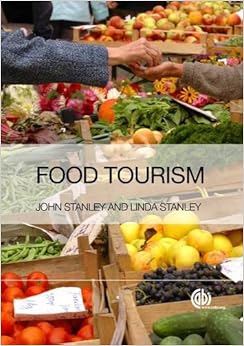
There are many elements of the food tourism market, from restaurants and catering, to farms, public markets, food halls, and farmers markets, special events, tours, cooking classes, winery tastings, etc.
Meals and other food-related experiences can be trip highlights, whether it's a great experience at a restaurant that you just happened upon, visiting and buying food at a local public market and then preparing a great meal, a fabulous cup of coffee at an independent coffee shop, a visit to a farmers market (the Saturday farmers markets in cities like Portland or Salt Lake are some of the biggest and most interesting markets in the country), shopping at a unique grocery store or ethnic market, etc.
 With the explosion of agritourism, including the creation of local, regional, and state-related food and beverage related trails (BBQ in North Carolina, Bourbon in Kentucky, wine trails in many of the nation's wine-producing regions, etc.), the growth of farmers markets, food halls, and public markets and the rise of the local food movement more generally (one element being the rapid expansion of the Edible Communities network of local food publications), there has been a greater recognition that the gourmand is a small segment of the total tourist market and there is a need for a more fine-grained understanding of an interest in food as an element of the "tourism product."
(One out-of-print publication that I liked using when I did Main Street commercial district revitalization work was the Nova Scotia Tourism Destination Assessment Workbook, which included collecting information about and assessing restaurant and other food-related destinations.)

For example, yesterday's Washington Post Food section had an article ("Why North Carolina's barbecue scene is still smoldering") on "traditional" North Carolina barbecue, and how people's expectations of what barbecue is, based on other food traditions, in particular Texas, impacts the market for traditional North Carolina barbecue, even in its home state.
PsychoCulinary profiling. The World Food Travel Association commissioned research with the aim of fine-tuning our understanding of food tourism in terms of distinct customer segments. They have created what the call the PsychoCulinary profile, coming up with 13 different psychodemographic categories:
adventurer, ambiance, authentic, budget, eclectic, gourmet, innovative, localist, novice, organic, social, trendy and vegetariandescribing the different "food personalities" that orient how people approach food as part of their lives more generally but also as an element of their tourism experience.
Food and food halls as an activation element for new developments. The Charleston Post & Courier has an interesting article, "Charleston gains its first food hall as food lovers flock to others across U.S.," published on the opening of a new "food hall" in Charleston.
While not mentioning public markets directly, the article distinguishes between "public markets," which are public-owned halls featuring vendors selling fresh and/or prepared foods directly to the consumer and "food halls," which do the same thing but are privately owned.
(The article lists Union Market in DC as an example of a food hall, and doesn't mention that the city even has public markets, Eastern Market and the Maine Avenue Seafood Market. Then again, the article doesn't mention Charleston's City Market either, and how that facility has been revitalized after a recent (five years ago) renovation.)
A key difference between "food halls" and "public markets" is that food halls tend to be more focused on selling prepared foods and meals for consumption on the premises, while traditionally, public markets are more oriented to selling food that is taken home to be prepared and cooked for at-home consumption.
Food halls, being private ventures, also tend to be much more focused on selling higher priced goods and meals, as opposed to how much of the food at public markets tends to be priced in line with traditional grocery stores.
 A display case in the food hall at Grand Central Station, New York City. I've often wondered why Union Station hasn't created a similar kind of offering, especially as the basement food court continues to languish.
Food halls have a long tradition too, such as at Harrod's Department Store in London, or how a "food hall" was added to Grand Central Station in NYC to enliven the retail offer and expand choices available to the station's visitors and people using the trains.
The P&C article attributes the recent rise in food halls to the opening of Eataly in New York City, although I'd argue Chelsea Market in New York City and the resuscitation of the Ferry Building in San Francisco as a food market were equally important and high profile examples, especially to real estate developers, in how a food-oriented retail venture can activate an otherwise underutilized area.
I think it's also a function of how local place-based retail space is shifting away from a mix of retail and restaurants to being dominated by food, especially for consumption, in line with changes in retail distribution, e-commerce's impact on retail including the "creative destruction" of some categories, and the fact that out-of-home food consumption is now half of the market for food sales.
I have noticed an increasing number of examples around the country of "food halls" being created as part of real estate developments as a branding and positioning device and as a way to provide unique offerings, which is a lot more difficult to do when focusing only on retail
Local tourism organizations need to take a more nuanced approach to food tourism. Just as I have argued that business improvement districts need to plan for food trucks as an element of the district's offer rather than oppose them because the BID's members are property-based ("Food truck issue revisited"), tourism promotion organizations need to ensure that they are supporting a broad range of food tourism-related offers and experiences.

Interestingly, the different pyschographic profiles devised by the World Food Travel Association probably reflect people's more general attitudes about a broad range of experiences, not just towards food.
I realize now why most of the ads for DC tourism don't resonate with me. It's because they are aiming to reach psychographic profiles different from me.
Maybe that's merely a function of the media vehicles where those ads run, like Food & Wine Magazine, but even that magazine covers a wide range of tourism experiences, and doesn't limit its coverage to "gourmet" restaurants and hot bars.
Restaurants, food events, farmers markets (Baltimore's big farmers market is run by the city's Office of Promotion and the Arts, the Downtown Salt Lake Farmers Market is run by the Downtown Alliance), public markets and food halls, beer gardens, breweries, and distilleries, wine tasting facilities, special events and other ventures need to be supported by a community's economic development agencies, including the tourist office, as part of a broader approach to food tourism.
Labels: agritourism, food-agriculture-markets, restaurants, supermarkets-groceries, tourism
posted by Richard Layman @ 11:36 AM&Permanent Link
Follow this blog
3 comments







