Rebuilding Place in the Urban Space

"A community’s physical form, rather than its land uses, is its most intrinsic and enduring characteristic." [Katz, EPA] This blog focuses on place and placemaking and all that makes it work--historic preservation, urban design, transportation, asset-based community development, arts & cultural development, commercial district revitalization, tourism & destination development, and quality of life advocacy--along with doses of civic engagement and good governance watchdogging.

Monday, September 28, 2026

Parks Week #2: Gaps in Parks Master Planning

Parks Week.  I am calling this "Parks Week" because for the first time I will be attending the National Recreation and Parks Association national conference, in Philadelphia.  I hope to learn a lot and write some posts too.

Looking southeast across Sugar House Pond.

Based on my experience as a board member of Sugar House Park, a park in Salt Lake City that is jointly owned by the city and county, and overseen by a proto-land trust ("the board") I wrote a ten part series on "gaps in parks master planning."

Not every park master plan has these gaps, but enough do, or the way that they address one of the gaps may be inadequate, hence the list.

Children playing at the Parley's Creek Playground.

I have two more in (desultory) progress, one on park equity, the other on recreation center planning in downtowns.

The first piece is definitely out of my experiences both in DC and on the east coast, as well as the tricky intergrovernmental relationships in Salt Lake.

It's on "Levels of Service," the basic point is that urban parks have more needs for maintenance, perhaps programming, security, and other elements compared to most suburban parks.  This creates a problem with the County because most of their experience with parks is suburban.  E.g., they have limited problems with homelessness (so do we, but it's purely out of luck--geographical and topographical elements of the park make it not particularly attractive for the homeless).

The other thing is that as a well-situated urban park, it's used all year long, even in the winter the playgrounds are used.  And that we should have more staff in keeping with this demand.

Business districts address having greater needs than a city is prepared to provide by creating business improvement districts, which provide additional services, especially on "clean and safe issues" which is funded by a small tax on property in the defined geographical area of the district.

Parks can be funded similarly.  There is a property tax that helps to fund Bryant Park in NYC.  But a similar tax proposed for the High Line failed.  Not quite the same, SF has "green benefits districts" which fund public space improvements and maintenance.

What parks have as a form comparable to a BID is a conservancy, which raises money independent of the city and uses those funds to supplement funds that the city continues to provide for operations and capital improvements.  Generally, the conservancy is the lead on managing the park day to day.

The first entry goes into this in detail.

Tree climbing at Sugar House Park.

Other entries that are really specific to my experience are on using academic research and best practice to guide action on matters not covered by a master plan, planning art programs systematically, programming, including public art as a element of parks, using park architectural history as a way to guide building design issues, and managing the park as a cultural landscape:

e.g., Sugar House Park has six primary features defining the Park--what we call "Big Field" a large grassy bowl which abuts (2) Parley's Creek, (3) which in turn feeds Sugar House Pond, (4) the sledding hill, (5) the sledding hill on the east side of the park; together they illustrate that Sugar House Park is hilly compared to many other parks in the area, and (6) the view to the east of the Wasatch Front Mountains, although from some parts of the park the view to the west includes the Oquirrh Mountains.

The planning arts programs systematically entry is also very good.

Separately, I haven't written about it in the blog, but an article in the Washington Post, "Forget rest stops. Plan your road trip around playgrounds," gives us a lot to think about, especially because the park abuts I-80.  

It shapes the idea of having a visitor center on private property abutting the park--I wrote about that issue here, "Learnings from a recent zoning issue I've been involved in."

Labels: , , , , , , ,

Sunday, September 27, 2026

"Parks Week": Yesterday was National Public Lands Day

Parks Week.  I am calling this "Parks Week" because for the first time I will be attending the National Recreation and Parks Association national conference, in Philadelphia.  I hope to learn a lot and write some posts too.

National Public Lands Day is Today.  Throughout the year I collect stories relevant to National Public Lands Day, which is the last Saturday in September.  Sometimes I manage to publish a piece in advance, sometimes not.  This is pretty late in the day but just read something that blew me away even more, so here goes.

National Public Lands Day is focused on but not exclusively oriented to federal public lands.  There are many types: National Park Service, US Fish and Wildlife Service, USDA National Forests, Bureau of Land Management, the Bureau of Reclamation--dams, but often with recreational elements, the Army Corps of Engineers, dams some with recreational elements.

On this day, many federal installations have volunteer opportunities and entrance to federal public lands is free.

Some only some of the bad s*** Trump is doing to public lands

So the Trump Administration has been doing its best to f* up federal lands, and the supine Republican Congress seems to be just fine with it.  Of course, the year started out with Trump's face put on visitor passes.  

2.  I hope the Democrats make a law preventing a president from trying to put his name on f* everything.  This week there were reports that since he isn't getting his way with the Kennedy Center, nor the Institute of Peace--what a laugher, that there's consideration of renaming Ford's Theatre in DC--where Lincoln got shot!  Why the f* should his name have anything to do with it? ("Why does Trump want to name Lincoln assassination venue after himself? Dem strategist has a theory," AL.com).  Remember, every accusation by Trump is an admission ("Trump erupts after report claims aides want Ford Theatre renamed for him: ‘Ridiculous lie’s," NJ.com).

Parenthetically, a Canadian Substack, Dean Blundell's "Canada Versus Everybody," ("MAGA Is Losing The Senate And The House, But America Doesn't Get Its Allies Back Until Every Crook, Coward And Crypto Dollar Is Dragged Into Court") points out that the US will still not be trusted after Trump is gone unless there is true deep cleaning, on the scale of the Nuremberg Trials.  

He says that every time bad stuff happens, people get pardoned, so there are no long term repercussions and each bad administration takes it up another level.  An example is how Scooter Libby unveiled a CIA agent for political reasons and was convicted but then got pardoned.  He had an op-ed in the Washington Post this week, "America needs to destroy what really sustains the Iranian regime."  Not much of a punishment.

I'm fine with renaming all the toilets in federal buildings after Trump, along with sewage treatment centers and landfills, but that's it.  

3.  Whitewashing American History.  The Trump Administration has been "white washing" American History to diminish the stories and experiences of people who aren't white ("This article is more than 2 months old ‘A sanitized view of America’: inside Trump’s campaign to erase US history from national parks," Guardian), like Blacks and slavery--over the worry this could unduly hurt white people.  Talk about snowflakes.  The right calls the left snowflakes but they're the ultimate ("Are Conservatives the new snowflakes?," Free Press).

Workers remove displays from the President’s House Site in Independence National Historical Park. Tom Gralish / Staff Photographer

This started with interpretation boards at federal public lands, mostly National Parks, including the President's House in Philadelphia ("Slavery exhibits at the President’s House have been swapped for the Trump administration’s version," "Centuries of controversy at the President’s House," Philadelphia Inquirer) and now extends to the National Park Service, which controls the National Mall space on which Smithsonian Museums abut, putting up signs warning people about the false histories presented by the various Smithsonian Museums ("Trump administration plans ideological warning signs for Smithsonian," NPR).  Trump also wants an abstract sculpture replaced with a 30 foot tall George Washington. 

FWIW, this has been a conservative issue for decades, I wrote about it in 2008, "Dancing with the one that brung ya and challenging the dominant narrative." Then I termed it a battle between American hagiography and stories (e.g., George Washington and the cherry tree) and a deeper interpretation and narrative.  My joke was imagine if we reinterpreted the exhibits at the National Museum of American History in terms of American Imperialism.  

This time the White House released a report, Saving America's Story, which was countered by premier historians ("Historians Reject White House’s Criticism of Smithsonian Museum," New York Times).

Tired, the leader of the Smithsonian has resigned ("Why Lonnie Bunch Is Leaving the Smithsonian," Atlantic).  Even though Trump fired him when he canned board members at the Kennedy Center, I think David Rubenstein would be good.  He's not a cultural historian, but he funds culture and understands politics and turnaround situations ("Smithsonian leadership changes give Trump an opening for control," Post).

Photo: Jose Luis Magana/AP.

4.  (I forgot) The Reflecting Pool and DC Lands, Potomac Park golf course, the White House Ballroom and the Arch... and National Security.  Yes, Trump wants to makeover DC.  Earlier this summer we had the debacle of failed improvements to the Reflecting Pool, which he blamed on vandals.  It and big parts of the National Mall are fenced off.

He's put money into some improvements in what DC locals consider local parks but they are run by the NPS because of the federal relationships.  For years, many of us criticized the Park Service, partly because they are more focused on big national parks, but they do have a lot of knowledge still, it's just not been funded (Small Park Management Strategies, NPS).

So why the press and the rest of the country was critical about park entrance fees being diverted to DC, I thought it was okay because of the decades of under investing in NPS's DC installations ("National Park Entrance Fees Are Funding Trump’s D.C. Projects," NYT).

A banner in Logan Circle with a graffiti tag on it Wednesday May 5th, 2026. (Maxine Wallace/The Washington Post)

Of course, Trump had to put his name on the improvements, at least on banners ("Trump demands gratitude in D.C. So he put up banners thanking himself.," Post).  People fought back, as they have in terms of specious prosecutions, opposition to National Guardsmen in the city, etc.

Instagram photo from Popville.

I meant to write about the Ballroom debacle and the Arch but I haven't gotten around to it.  Trump appointed lackeys to the Commission on Fine Arts and the National Capital Planning Commission, removing that level of what had once been judicious and careful oversight ("Trump has gotten rid of many of the checks and balances that could stop him from demolishing the Kennedy Center," Conversation).  

He tore down the White House Ballroom without authorization to build a much bigger one, intending for it to be paid "by contributors" (more grift) but with the American People with the final bill.  To get out of oversight he's claiming national security ("Trump’s Shoddy Ballroom Design Is the Real National Security Threat," New York Magazine).  Which isn't a winning argument so far.  But of course the Supreme Court lets construction continue despite the lawsuits.

Same with "the arch" a 250 foot monstrosity modeled after the Arc de Triomphe in Paris.  To get away with it he claims it can house snipers and drones so it's national security too ("Trump says his ballroom will house a drone port. The Secret Service has one next door," ABC-TV, "How Militarizing the Triumphal Arch Could Backfire for Trump," Atlantic). 

Pristine is not a word that marks Trump's treatment of golf courses.  

Caption: The East Potomac Park Golf Course is seen from the Washington Monument, Tuesday, Sept. 15, 2026, in Washington. (AP Photo/Pablo Martinez Monsivais)

The golf course at East Potomac Park was first targeted as a place for ballroom demolition construction debris.  Now he's taking that over too.  Again, the Department of Interior is his lapdog, plus NCPC, so there are no checks and balances ("Park Service quietly awards contracts to work on Trump’s takeover of East Potomac golf course," AP).

Signage in Washington, D.C., stating "The Donald J. Trump and John F. Kennedy Memorial Center for the Performing Arts" on June 11. Photo: Alex Wroblewski/AFP via Getty Images

5.  And the Kennedy Center.  This mess is pretty damning and widely covered ("How President Trump Broke the Kennedy Center, NYT, "What the Kennedy Center’s Tax Return Reveals," Atlantic).  

The latest is threats to demolish the building while they blame safety reasons they've known about and failed to address ("Kennedy Center put off planned repairs despite known structural issues, former employees allege," PBS).

6.  But hey, what about public lands?  How about the National Forests.  The Administration has already fired bunches of FS workers.  Now they are downsizing the department and moving it to Salt Lake, with the justification that it's closer to where most of the forests are ("The Forest Service is moving its federal HQ to Salt Lake City. Here’s why," Salt Lake Tribune, "Understanding The Forest Service Move To Utah," Flylords,) 

While taking other destructive measures ("U.S. Forest Service to Open Millions of Acres to Off-Road Vehicles, Memo Shows," "Trump Administration Moves to Allow Logging in National Forests," "Forest Service Will Close Research Stations That Study Wildfire Risk," New York Times).

Utah is the center of opposition to public lands under federal control ("Utah files ambitious lawsuit to take control of 18.5 million acres of federal public land," Utah News Dispatch, "Inside Utah’s PR campaign to seize public lands," HighCountry News, "Utah wants more control over federal lands. Here’s how lawmakers are advancing the fight," Salt Lake Tribune).

The reality is that there are national forests in 40 states and Puerto Rico, so a Western location is more about making it easier to f* with the lands.  

Besides the firing of workers, closing of offices, elimination of research programs, they are trying to open up forests to road building, when the prevailing authority is that forests should be wilderness where they can, hence no roads ("Trump administration moves to open untouched national forests to logging," NPR).

More Than Just Parks is a great Substack about public lands. Their coverage is astounding in its detail and insight.

Crowds hike their way up the Mist Trail, one of the more popular trails in Yosemite National Park. Photo: William Hale Irwin for the LA Times.

7.  Yosemite National Park in California.  It's well known that the parks experiencing the most visitors are overwhelmed.  Yosemite is one of them.  Not only did they fire a bunch of workers.  They ended the reservation system, so the park is overwhelmed still ("Crushing crowds turn Yosemite into ‘Disneyland.’ Can visitors still have fun?," Los Angeles Times).

To make it worse, the Trump Administration wants to give part of it to a private developer to enable them to monetize proximity to the Park ("Map shows where Yosemite developer wants to build private road," SFGate).  

The first Trump Administration tried to give a lot more concessions to the private sector in National Parks, but they didn't have enough time.  This Administration, mostly they've been too busy focused on eliminating workers, research programs, and checks on overtourism.

8.  WTF?  A baseball stadium in Grand Tetons National Park.  Ironically I was at that park a couple weeks ago.  

It's beautiful, and poking in the museum shop at the city history museum I came across some interesting books on its history--land was acquired by the Rockefellers and given to the federal government to create the park.  

The museum has a small but detailed and thorough thematic presentation of the history of the area, from the Native Americans to Hollywood and tourism, and how the recreation industry--skiing and whitewater rafting sectors--got their start in the Tetons.

We didn't see as much as the park I would have liked, but it's close, about a 4 hour drive.

Anyway, apparently Major League Baseball has the insane idea of desecrating a national park by playing a baseball game in one.  

My photos aren't as good as this.  Caption: A view of Grand Teton National Park, Wyoming. (Daniel Slim/AFP/Getty Images).

Trump seems to think it would be fine at the Grand Tetons National Park (" Trump administration considers building baseball park in Grand Teton National Park that could host a Major League Baseball game." Post, "The real Field of Dreams: MLB has a new stadium opening—in an Iowa cornfield," Fortune).  

I don't think a fiction writer can come up with the narratives the Trump Administration performs in real life.

From the article:

An MLB official, who spoke on the condition of anonymity because he was not authorized to speak publicly, said the league approached the administration after the success of MLB’s other stand-alone events, such as the recurring Field of Dreams game in Iowa. The idea of playing a game in a national park is one of several that MLB is exploring.

... National Park Service Deputy Director Frank Lands visited Grand Teton National Park this week and looked at three potential locations for a baseball park within the park’s boundaries, the two people familiar with the matter said.

... A prized national park like Grand Teton is not an appropriate place for a baseball park, said Betsy Buffington, Northern Rockies regional director for the National Parks Conservation Association, an advocacy group.

“It is irreplaceable. There is no other Grand Teton that is home to bears and wolves and bison, elk and pronghorn,” Buffington said in an interview. “So the idea that we would put a baseball stadium in Grand Teton National Park is just — what would the word be? — ludicrous. Crazy. Ridiculous. I mean, I just can’t fathom.”

Probably it would be a simple field, like the Field of Dreams stadium.  But it's still a desecration, and the transportation complexities of holding such an event there would be considerable.  The roads do not have that kind of special event capacity.  Plus it's just wrong, interfering with the principles of why National Parks exist.  From the law creating the National Park Service:

"....to conserve the scenery and the natural and historic objects and the wild life therein and to provide for the enjoyment of the same in such manner and by such means as will leave them unimpaired for the enjoyment of future generations. 

 —National Park Service Organic Act; August 25, 1916

A baseball field is not congruent with the law guiding the creation and management of national parks. 

Photo: On the Road Facebook Page.  Driving through Grand Staircase-Escalante National Monument from Kanab to Page, Arizona, on US 89A.

9.  Speaking of Utah, the Grand Staircase-Escalante and Bears Ears National Monuments battle continues.  Republicans in the state were fine with the Trump Administration reducing the land reserved for the monument ("Utah Delegation Welcomes President Trump's Monument Proclamation," Rep. Celeste Maloy).  The Obama Administration increased it, after a many year public process, the first Trump Administration reversed, the second Trump Administration again reduced it.

(Brooke Larsen | The Salt Lake Tribune) Autumn Gillard and others protest President Donald Trump's shrinking of Bears Ears and Grand Staircase-Ecalante national monuments in St. George on Monday, July 20, 2026.

But a majority of the state's citizens prefer it remain as it was, and not be unreasonably developed ("Most Utahns want Trump’s cuts to Bears Ears, Grand Staircase reversed, survey finds," Salt Lake Tribune), which is the agenda of the State Government and the Utah Congressional Delegation. 

For example Utah's Senators were the leaders in the successful fight to reverse BLM's designation of conservation as a worthy use of public land under their purview, "Independent Petroleum Association of America backs Trump administration rollback of BLM public lands rule," World Oil, "Mining Claims Staked on Land That Trump Cut From Monuments," NYT).

10.  State Public Lands.  I haven't yet read The Other Public Lands: Preservation, Extraction, and Politics on the Fifty States' Natural Resource Lands by Steven Davis. It seems an essential book to understand the state side of public lands policy, the good and the bad.

Professor Davis also wrote In Defense of Public Lands: The Case against Privatization and Transfer, which these days is worth a read too.  We can call what the Trump Administration is doing as creeping privatization, if not in form, substance, where the private sector receives prioritized access with the aim of monetization of public lands for resource extraction, harmful recreation (off road vehicles), and monetization of park lands in surreptitious ways.

11.  City Public Lands.  Some cities are distinguishing between parks and other types of spaces in their organization of public parks agencies. 

For example, Salt Lake City's Department of Public Lands has seven separate units: planning, parks, trails and natural lands, urban forestry, recreation, the Salt Lake City Cemetery, and golf courses.

Hoover Dam, Nevada.  It turns out all the dams and hydroelectricity generation created in the 1930s became essential to powering US war production in Southern California and the Pacific Northwest.

12.  Are public waters "public lands"?  Meanwhile Bureau of Reclamation dams at Lake Powell and Lake Mead are reaching historic lows, which threatens their ability to generate electricity ("Lake Powell Hits Record Low and Lake Mead Could Fall Nearly 40 Feet, Straining Water for 40 Million," MedicalDaily).

Labels: , , , , , , ,

Saturday, February 21, 2026

Does the US need a set of national urban parks? | Revisiting a comment from 2019

I bring this up because reading "backfile" articles about architecture and parks in the Toronto Globe and Mail, there is this year old article, "What Canada’s only national urban park can teach us about accessible, eco-friendly design." 

The Rouge National Urban Park is 30 minutes outside of Toronto, and is transit accessible ("One of the largest urban parks in North America is in Toronto and you can get there for free"), unlike most of the Canadian national parks in rural areas. (Or many US national parks and related federal park-type facilities.)

It's a single park unit, not an amalgamation of sites like an NPS National Recreation Area spanning multiple sites in an area like SF, Boston, Long Island, New York or outside Atlanta.

(WRT access issues and DC area national parks, see "A gap in planning across agencies: Prioritizing park access for pedestrians, bicyclists and transit users compared to motor vehicle access" and "Revisiting: Access to Theodore Roosevelt Island, a national park in Washington, DC.")

Nor is it a National Heritage Area which typically isn't urban-focused specifically, they are focused on a large region and interpreting it thematically, such as the Rivers of Steel NHA for Greater Pittsburgh (although the one in Baltimore is; Boston has a National Historical Park including many different sites), but an area of historic interested spread out in a region of many hundreds of square miles. (In the Detroit area there is even an (inter)national wildlife refuge along both the US and Canadian sides of the Detroit River.

(Separately, I've argued DC should manage itself as a heritage area, whether or not it is federally designated as such.  See "A unified National Park Service Visitor Center for DC (and the region).")

Toronto as seen in the distance from Rouge National Urban Park.

The article makes the point that the Canadian Park Service wants to develop other urban parks.  From the article:

Dubbed the “people’s park,” RNUP is currently Canada’s only national urban park. But not for long. To connect more urban dwellers to nature, the federal government committed $130-million in 2021 to establish more of them across the country – looking at cities such as Windsor, Ont., Edmonton and St. John’s, with the aim of creating six by 2025 and a total of 15 by 2030. Parks Canada believes that creating these parks will improve resident well-being, air and water quality and commemorate Indigenous knowledge and culture. The government also recently announced RNUP’s expansion, scrapping plans for an airport in Pickering in favour of adding to the park’s footprint.

As RNUP expands and new urban national parks take shape, the question of how these spaces should look and function becomes more important. Planners and designers are grappling with how to balance ecological health, accessibility and public use, while also considering the role of beauty and aesthetics.

On the long ago entry, "Defining National Park Service installations in DC as locally or nationally serving" (2019), Ed Drozd made the point that there ought to be a systematic provision of "national" parks throughout the country:

First, in re whether locally serving, thinking about it, I wonder what should be the goal of the National Park Service. Clearly part should be iconic areas. But, I do think selected locally serving areas, whether National Parks or National Historic Parks, might be important as well. Not just as outreach between the NPS and most people, but also to connect people to history and/or environment.

Part first amended: my wife lives near the Cuyahoga Valley National Park (full National Park) between Akron and Cleveland. I've been in it, and have been underwhelmed compared to, say, Acadia or Glacier, but it is truly lovely and can connect people to the environment like few other places in the area can.

But, why there but not places in NJ where I grew up? Granted there are National Historic Parks, but those are tied to history. However, in the grand scheme of things, perhaps it doesn't matter because of the programming.

If we think about this in terms of spreading the wealth of national parks beyond the signature parks, as far as urban parks go, there are a bunch of NPS installations, mostly historic site based, some "national recreation areas" like around Boston, SF, Long Island, etc.  They do have an urban program, or at least they did before Trump.

In a follow up comment I was in agreement, but now I am not so sure.  DC has a lot of national park sites, big and small, but the Park Service hasn't been that great about taking care of them, partially because they have a big portfolio, a backlog of maintenance, and because they aren't set up well to deal with urban parks.

Even though they produced a couple decent reports on how to do it, the Urban Agenda Call to Action Initiative more generally, and wrt DC specifically, the Small Parks Management Strategies document (report).

Cracked and broken tiles mar the appearance of Welcome Park, a plaza dedicated to telling the story of William Penn’s vision for the city. Tom Gralish / Philadelphia Inquirer.

And resource deficiencies aren't just a problem in DC, they are especially a problem at Philadelphia's Independence National Historical Park ("Large granite ‘join or die’ sculpture is among Independence Park improvements that still need funding," "Independence Park is ‘woefully behind’ for 2026 and in ‘grave need of resources,’ stakeholders say," "A Much-Needed Makeover: How Philadelphia’s Independence National Historical Park is getting ready for America’s 250th birthday," "More bikes and pedestrians, fewer cars: A $100M rethink of Philly’s historical district," Philadelphia Inquirer) 

-- Independence National Historical Park: Long-Range Interpretive Plan, National Park Service (2007)

A display describing the lives of enslaved people on the site where one of George Washington's homes once stood in Independence National Historical Park. Tom Gralish / Philadelphia Inquirer.

This is irrespective of the recent problems over historic interpretation ("The slavery exhibits at the President’s House are starting to be restored by the National Park Service," "Trump’s attempts to hide the unpleasant truths about our actual history are the real disparagement," PI) at the President's House and the Trump Administration's desire to whitewash over "minority" elements, especially "hurtful" history, as part of the good and bad of the national story.

What about networking existing urban parks?  Now, and I might be biased because I am on the board of an urban park (granted it's 1/6 the size of Central Park in NYC), and knowing also that there are extensive networks of state parks in addition to the large park inventories typical in major cities, that maybe like how within Montreal, they have a set of parks they refer to as Network of Large Parks, some more urban and sculpted, others more natural, that instead, somehow we think of these park systems as networks, and promote and support them that way.

Parks People, the parks advocacy group in Canada, has created such a network there ("Park People launches first-of-its-kind network for Canada’s large urban parks").  Of course in the US there is the Trust for Public Land, an advocacy and consulting group--with an urban parks unit, and various national and state professional associations.  But judging from what I know about parks in Salt Lake City and County, state parks or natural resources agencies don't work that closely to help local and county park systems in terms of a network.

Still a role for the Park Service (and other federal agencies).  There is still a place for NPS in terms of linking various federally controlled sites through National Recreation Areas, Urban National Heritage Areas, Boston's National Historical Park, historic sites and landmarks, and other resources.  There's talk in Southern California of designating some of the beaches a national par ("Parks service says federal control of local beaches could spur new, protections, conservation efforts and economic activity," Santa Monica Daily Press).

But like as opined in the above-cited blog entry, there needs to be a strong interpretational, historic, and cultural resources framework for determining why such parks and sites should be designated as federal.  

And new systems need to be built that better gather public input on these facilities, especially for places treated as more like public parks--ordinarily the Park Service is pretty distant from local input.

Which is why I recommend that local parks master plans also provide guidance wrt federal, state, and county parks within their boundaries.  Some planners say, we don't have any authority so why bother.  My counter is without guidance from us we guarantee we're not considered ("Federal shutdown as another example of why local jurisdictions should have more robust contingency and master planning processes," 2013).

And, there needs to be money appropriated to deal with additional responsibilities for new federally designated parks, rather than merely add to the current $10+ billion backlog in maintenance.

That doesn't even mention US Forests which may be located on the outskirts of urban areas such as in Los Angeles and the Uintah-Wasatch-Cache National Forest outside of Salt Lake.  The Forest Service has been underbudgeted for years, which has led to mergers of forests covering often disparate areas.

Labels: , , , , , , , , ,

Monday, October 06, 2025

Definition of insanity, National Parks/federal government shutdown

One definition of insanity is doing the same thing over and over, expecting different results.

=========

For almost 15 years, I've written entries about how local governments need to do scenario planning vis a vis state and federal government installations in their cities, similarly states vis a vis the federal government.

This was spurred by federal government shutdowns leading to the closure of national parks, the impact on states and local governments, and their plaintive calls for opening the parks.  But also because of the impact on parks in DC, where the National Park Service runs a majority of the city's parks.

-- "Contingency planning in parks planning: Montgomery County Maryland edition," 2013
-- "Federal shutdown as another example of why local jurisdictions should have more robust contingency and master planning processes," 2013

This comes up with the SF Chronicle article, "Tourists from around the world blindsided by Muir Woods closure."

On any given year, Muir Woods National Monument draws hundreds of thousands of visitors from all over the world to take in the pristine views, trails and wildlife that make up one of the last ancient redwood forests left in the Bay Area.

On Wednesday, however, tourists were greeted by an unexpected sight at the entrance: a sign informing them the Marin County park was “closed due to a lapse in appropriations” after the federal government shutdown went into effect at 12:01 that morning. A ranger on duty stood in front of a growing line of cars and tried to offer alternative nearby parks for them to visit, but there was no way around the disappointment. The reservations many of the visitors had booked months in advance had been cancelled.

The thing is, there is a system where states (or local) governments can pay to keep parks open.

It's not like this hasn't happened before.

Tourists might be blindsided by this.  Local and state governments have no excuse.

Just like in 2013, the State of Utah is stepping in to fund national parks ("Utah will fund national parks amid government shutdown. Here’s what it will keep open," Salt Lake Tribune).  

Visitors may have better luck accessing information soon, though. The state of Utah is stepping in to keep national parks open, including visitor centers, which act as central hubs of information.

The Governor’s Office of Economic Opportunity is dedicating funds to cover visitor center costs in Utah’s five national parks, as well as Cedar Breaks National Monument, according to a Friday news release. “Utah’s National Parks will remain open,” said Natalie Randall, director of the Utah Office of Tourism and Film. “We are committed to supporting visitors in planning and preparing for their best trip to Utah, preserving our parks, and ensuring Utah communities and businesses that rely on national park visitation are supported.”

The National Park Service has estimated that it costs $8,000 per day to operate visitor centers at Utah’s five national parks and Cedar Breaks National Monument, according to a statement from Randall. “This is a fiscally responsible decision and we will continue to evaluate, as national parks visitor centers serve as an essential hub for visitor safety, sanitation, and public security,” she said.

Not California.

According to the SLT article, the daily cost to keep multiple parks open isn't very much.  So there isn't really an excuse except for lack of planning.

Note that the Republicans understand that closing parks is bad for them, given how "front facing" they are as public assets and places where citizens go to recreate.  So they try to keep them open, skating on the law ("National Parks Told to Remain Open During Shutdown Despite Risks," Bloomberg).

Labels: , , , , , , , ,

Wednesday, September 17, 2025

Los Angeles Union Station Train Festival: September 20-21

In the 2000s Amtrak used to sponsor a Trains Day at some of their stations.  It was held in May, because that is the anniversary of the Golden Spike Celebration, commemorating the creation in 1869 of a transcontinental railroad system.

Amtrak stopped doing it, for budget reasons.

I've written a few blog entries suggesting that the US have a National Trains Month in May, which could include passenger and freight railroads, and not just Amtrak but regional commuter rail systems also.

-- "Modern railroad tourism promotion," 2018
-- "May should be National Train Month as a way to market and promote passenger rail," 2021
-- "Two train/regional transit ideas: Part 2 | Running tourist trains from Union Station," 2021

-- "May should be National Train Month: Rethinking promoting more comprehensively travel by train in the US," 2022

A number of railroad museums and transit agencies do hold similar kinds of events, not in May, and not coordinated into a national calendar.

Union Station in Los Angeles holds one such event, involving Amtrak, the regional Metrolink commuter rail service, and the LA Metro transit system.

-- Union Station Train Festival

(Similarly, I suggested DC's Union Station could be a focal point for rail transit promotion and marketing, in my submission on the DC State Rail Plan.)

LA's Union Station is pretty amazing, Spanish style colonial architecture on the outside, amazing art deco on the inside.

Labels: , , , , , ,

Thursday, May 01, 2025

63 things to do during National Historic Preservation Month

Over the years, originally inspired by a "what you can do" list by Preservation Action Council of San Jose, I've developed a four-part series on what people can do to "celebrate" National Preservation Month.  There are 60 items across the posts, ranging from visiting a historic district to watching a film in a historic theater.

Rather than reprint them in full--recognize that some of the links in previous pieces may be out of date--here are the entries.

-- "May is Historic Preservation Month: 60 ways to celebrate | Part 1: Cultural Heritage Tourism (1-19)," (2019)

1.  Resources for Cultural Heritage Tourism Travel. Magazines like Southern Living, Yankee and Sunset.  Bookstores.  Visitor Centers.  Historic preservation organizations.  Local chapters of the American Institute of Architects, and sometimes the American Society of Landscape Architects.  When traveling, library special collections.

2. Stay at a historic hotel in the city or a bed and breakfast located in a historic district. For example, the Tabard Inn in the Dupont Circle Historic District is one of the most romantic places in the city to have weekend brunch--out on the patio, during the spring, summer, and fall.

3.  When you visit other places, check out how they deal with historic preservation matters, and share that learning when you come back. For example, every fall, Pasadena Heritage sponsors Craftsman Weekend, in honor of its bungalow heritage.

4. Don't forget to check out traditional commercial districts, antique shops, other stores, cinemas, theaters, concert halls, restaurants, historic cemeteries, etc. as a regular part of your travel itinerary.

5. Check out a historic library building/Central Library.  Another great place to learn about a community when you're traveling is the main library.  Some of the buildings are historic, others more recently are majestic new construction buildings very much worth visiting.  .

6. Visit historic sites.  Many people visit historic sites when traveling.  Across the United States, ("The shortest route to America's 49603 historic sites," Washington Post) there are almost 90,000 places listed on the National Register of Historic Places.

7. Go see a museum exhibit relevant to urban history, even if it's on a seemingly broader topic. When people travel, and "consume" locally available museums, usually people's trips start and end with the local arts museum.

8.  Walking and building tours.  Many communities have organized walking tours for historic areas. Some print booklets for self-guided tours, many places have smartphone tour apps, and cities often have historic marker and trails programs.

9. Bicycle touring.  Bikes are a great way to cover a lot of ground more quickly.  And it's less tiring to bike than it is to walk.  Many cities have bike rental operations (there is a loosely affiliated group called "Bike and Roll" operating in many cities).  And some hotels and B&Bs make bicycles available to their guests.  (There are even apps for renting bikes directly from individuals, like Spinlister, which can be cheaper than the bike rental places.)

10.  Transit as a way to get around.  While not many cities in the US do this, many European cities set up or promote specific transit services as a way to tour parts of the city, usually a set of tourist-oriented attractions in the core ("Travel around the city by tram," Visit Helsinki).

If you're already familiar with how to use transit, it usually isn't hard to figure out how to use another transit system.  If you don't regularly ride transit, likely people will be happy to help you.

11.  When we travel, we like to visit house museums.  For example, the Woodford Mansion in Philadelphia is really cool, and Savannah has many different house museums that you can visit, the most notorious being the Mercer-Williams House.  Most cities have at least one.  Los Angeles has just reopened the Hollyhock House.

12. Arguably, "antiquing" which for me includes ephemera, can be a form of historical/historic preservation-related research and is deserving of a separate entry.

While traveling, you may wish to check out reclaimed building materials stores too.  You'll probably have to do some digging to find such organizations, but offhand I know there are such places in New York City, DC (Suburban Maryland), Baltimore, Pittsburgh, Minneapolis, Detroit, York and Scranton, Pennsylvania, etc., plus the various Re:stores run by local affiliates of Habitat for Humanity.

13.  Visit a historic railroad station, bus terminal and/or a transportation museum.   There are many fabulous extant railroad stations, many no longer in use, in so many cities.2013 was the 100th anniversary of Grand Central Station in New York City, and in Chicago, Denver, and Los Angeles new master planning and/or construction improvement projects for stations in those cities are underway.

14. Visit a streetcar museum.   Many communities have streetcar/transit museums such as the Baltimore Streetcar Museum and the National Capital Trolley Museum  in Montgomery County, Maryland in this area.  So try to ride a historic streetcar as well.

15.  Ride a streetcar system in active service. Some places run heritage streetcars in active service.  Everyone knows about the streetcars in New Orleans (and that system continues to expand in bits and pieces).

16. Tour a historic trail, road, railroad, canal, park network, or parkway/greenway.

17.  Garden Tourism. Garden tourism has two different strands.

18. Ride a passenger rail train.  Ride a passenger railroad (commuter) train.  In the DC region, that means MARC or VRE.  In Greater New York, New Jersey, Philadelphia (SEPTA), Chicago, and Boston (as well as Toronto and Montreal), Southern California, Northern California and elsewhere commuter railroads provide passenger rail services once provided by private railroad companies.

19. Visit a national or state park. DC, for obvious reasons, has many nationally owned parks, the system of Fort Circle Parks works to preserve the forts built during the Civil War to protect the city from Confederate invasion. Fort Stevens, hidden behind a church on Georgia Avenue, around Quackenbos Street NW, was attacked by Confederate forces, and President Lincoln was up there and watched. Up Georgia Avenue a bit, close to Walter Reed Hospital, is a somewhat forlorn and neglected battlefield cemetery and monument honoring soldiers who died at the battle at Fort Stevens.

20. Take a boat trip on a local river.  Many cities have water-based tours or smaller scale water taxi systems.  Boston, Seattle, New York City, and San Francisco have working passenger ferry systems. The Staten Island Ferry is working transit that's free.

-- "May is Historic Preservation Month: 60 ways to celebrate | Part 2: Explore your community (20-36)," (2019)

21. Explore an older area of your community that you don't know. Go on a neighborhood or building tour. Check out a talk (not all of them cost money) at the National Building Museum.

Or just walk around a neighborhood with housing built before 1930.  Walking here and there around the core of Takoma Park, Maryland, we always come across attractive and unique houses.

22.  Many preservation groups sponsor neighborhood house tours.  On the first Sunday of May, Historic Takoma Park (DC and Maryland) has their annual house tour.

23.  Follow the path of a Heritage Trail such as one of the many "produced" by CulturalTourismDC in DC.

24. Shop at stores in commercial districts that are historically designated: i.e., Cleveland Park; Georgetown; Capitol Hill; Dupont Circle in DC, but there are so many across the country.
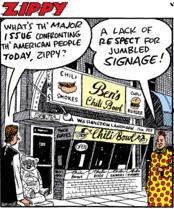
Frame, Zippy the Pinhead by Bill Griffith, Ben's Chili Bowl25. Eat in a restaurant in a historic building/historic district. Now 60+ years old, Ben's Chili Bowl is one of the few remaining restaurants in the city that is many decades old.  .. Readers have pointed out that Martin's Tavern in Georgetown and Cafe Mozart, a German restaurant downtown, are much older.

26. See a movie in a historic cinema building. There aren't many historic cinemas in DC proper any more, but the Uptown Theater in Cleveland Park is one.

27.  See a production in a "legitimate" historic theatre or concert hall.  You have many choices in the DC area such as the Warner, the National, the Studio Theatre, the Lincoln Theatre, the Shakespeare Theatre at the Landsburgh, the Atlas Performing Arts Center (which utilized federal historic preservation tax credits to pay for a portion of the building's rehabilitation), or the DAR Concert Hall.

28.  Even if you're an atheist, it can be fun to visit a historic church building, including checking out their stained glass windows (I am a big fan of stained glass).

29. Shop at a historic public food market. Eastern Market is DC's last remaining public food market building, built in 1873.  (Union Market is privately owned, and was constructed in the 1970s.)

30. Visit a historic cemetery. In DC, we have the Congressional Cemetery or the Rock Creek Church Cemetery at St. Paul's Episcopal Church, among others.  Brooklyn's Greenwood Cemetery is a standout.  Some cemeteries offer tours.

31. Check out an exhibit at a local history museum or historic site, such as at the Anacostia Community Museum or the Historical Society of Washington or one of the other house museums and historic sites in the city and region.

32. Walk the historic grounds of a local college or university.  In DC, Catholic University, Trinity, Georgetown, Howard, and Gallaudet have beautiful grounds and buildings.  Kendall Green at Gallaudet was designed by Frederick Law Olmsted.

33. Check out a monument or memorial in your community and learn more about it. We can't preserve what we don't understand or appreciate.

34. Visit a historic railroad or bus station, such as DC's Union Station. Designed by Daniel Burnham, it's an incredible example of the City Beautiful architectural movement. Check out chapters from Bill Wright's dissertation on Union Station. He's a great writer!

Railroad stations tend to be grand while older bus stations tend to be gnarly, which is an interesting commentary on the place of these respective modes in transportation history and practice.
35. Check out a historic library building.  Many cities have great library buildings that now qualify as historic.  A number of DC's libraries were built with support from the Carnegie Foundation (Northeast, Southeast, the old Carnegie Library downtown, Takoma, and Mount Pleasant, which is particularly gorgeous) as were more than 2,000 other libraries elsewhere in the US.

36. Take a boat trip on a local river.  The pontoon boat tours of the Anacostia River leaving from the Bladensburg Waterfront Park (in Prince George's County) dip into DC.  Many cities have water-based tours or smaller scale water taxi systems as well.

37. Explore historic preservation matters in your region, beyond the borders of your community.

-- "May is Historic Preservation Month: 60 ways to celebrate | Part 3: Learn and Get Involved (37-52)," (2019)

38. Learn about the history of your community. For example, for DC, read Dream City: Race, Power, and the Decline of Washington, D.C., 1964 -1994 and Between Justice and Beauty, and more.
39. Become a member of your citywide/countywide/regional preservation organizations such as the DC Preservation League, the Municipal Arts Society in New York City, Baltimore Preservation, Historic Districts Council in New York City, Cleveland Restoration Society, Preservation Resource Center of New Orleans, Landmark Society of Western New York (which serves Rochester, among other places), etc.  I am a big fan of the Chicago Bungalow Association.

40.  Before you get too involved, you might want to take the time to read your city, county, or state historic preservation plan.  This will educate you about preservation issues in your area.  (Although generally such plans are pretty positive, and don't go into enough detail about the "threats" nor do they outline ways to address "opportunities" in a process design approach.)

41. Learn about why historic preservation is important, in and of itself, as well as a urban revitalization strategy. The reason I am a strong supporter of preservation is that I have come to believe that it is the only approach to economically sustainable neighborhood and commercial district revitalization that works for the long haul.


42. Join a neighborhood/local preservation group, such as in DC the Capitol Hill Restoration Society, Historic Takoma, or Historic Mount Pleasant).

43.  Nationally, you can join the National Trust for Historic Preservation while you're at it. If you join, you can visit NT owned sites and affiliate organization museums at a discount/free, get discounts at Historic Hotels, and discounts on products you purchase.

44.  Preservation Action is a 501(c)4 advocacy group that advocates for specific legislation and is also a membership group.  Their "Preservation Advocacy Week" is held in March, where members lobby Members of Congress for legislation favorable to preservation.

45.  At the state level, most states have statewide preservation organizations.  In the DC-VA-MD area, that means Preservation Maryland and Preservation Virginia/Association for the Preservation of Virginia Antiquities, as well as the DC Preservation League.  Many sponsor annual or bi-annual conferences, journals, and other provide other resources.

46. Volunteer/1. Get involved in a preservation issue in your neighborhood or the city-county at large, which could include attending meetings of your local historic district/preservation commission, which in DC is the Historic Preservation Review Board, or working on a particular project affecting your neighborhood or city.

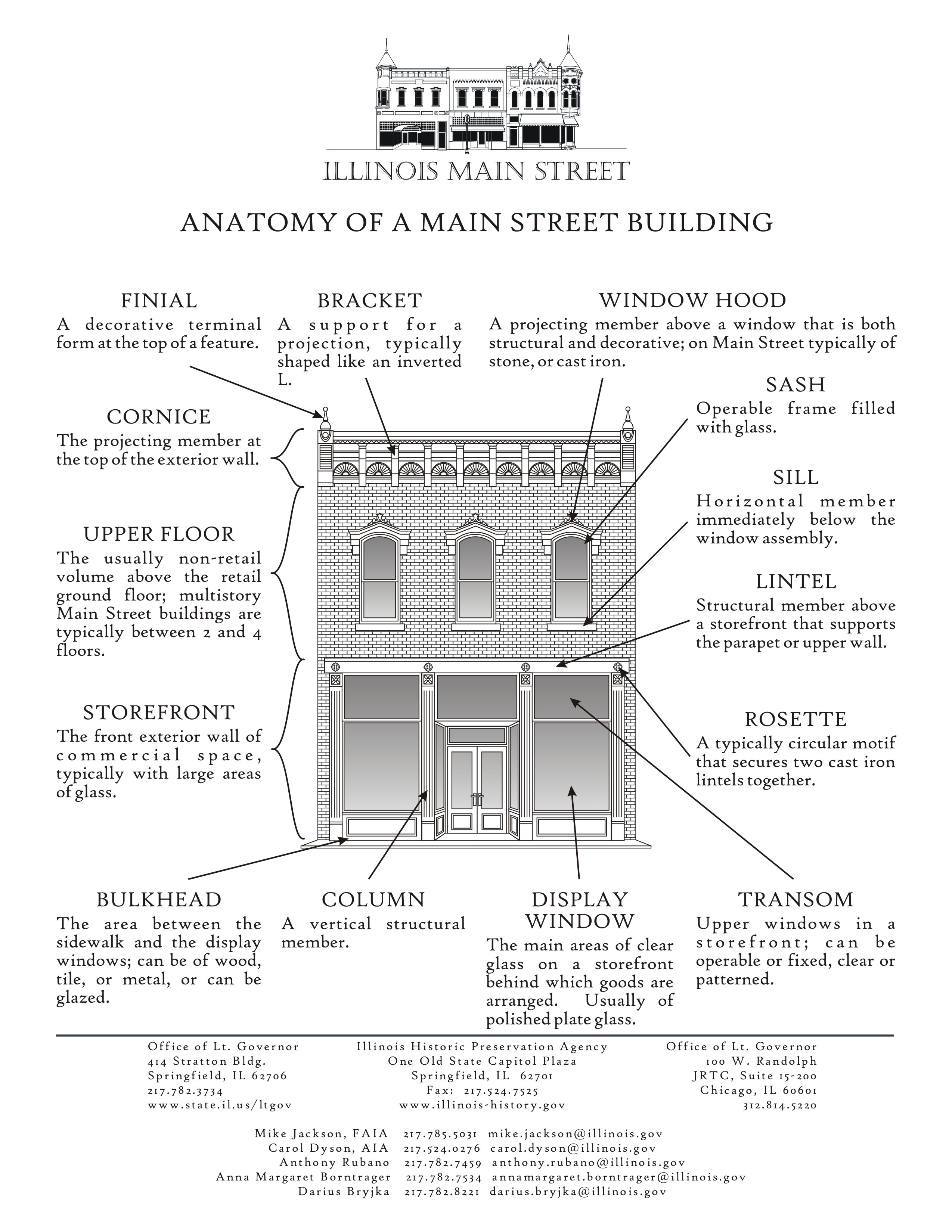
47. Volunteer/2, in a traditional commercial district revitalization initiative, at a history museum, or for a historic site.  A "division of the preservation movement" is the Main Street commercial district revitalization program, which links economic development with historic preservation focused on the revival of local commercial districts and downtowns in smaller communities.
48.  Volunteer/3, at a history museum, a historic park or at a historic site.  Museums and historic sites are always looking for volunteers, as our most park systems, including the National Park Service.  Many docents at sites and museums are volunteers.

-- Volunteer in Parks program, National Park Service

49. Work to preserve historic schools as schools.  The DC Public School system has an archives and museum that is also a meeting center, Sumner School, at 17th and M Streets NW.

50. Another way to learn a lot but very quickly is to attend a preservation conference such as the annual meeting of the National Trust for Historic Preservation (this year it's in Denver starting October 10th) and the National Main Street conference, which was held in Seattle in March, some sessions materials are available).

51. Check out the history resources at your local library or a specialized collection such as in DC at the Washingtoniana Collection at the Martin Luther King Central Library or the Peabody collection at the Georgetown Branch, the Kiplinger Library at the Historical Society of Washington, the Jewish Historical Society, or the Moorland-Spingarn Collection at Howard University.  Many city libraries have history collections.

52. Read a historic district brochure (or historic building or district nomination form).  In DC, they are available online or in hard copy at the Historic Preservation Office.  Many communities produce and publish these kinds of publications.  Two of the best I've ever read is one on Jefferson County Indiana including Madison (One of the first Main Street communities) and Hanover, and the other on the Kansas City public market, called City Market.  Both lay out their respective histories chronologically but thematically.

53.  I am a big fan of reading the design guidelines publications produced for cities or neighborhood historic districts, which describe local historic districts, such as those from Montgomery County Maryland, Richmond, Virginia, Roanoke, Virginia, and the Philadelphia Rowhouse Manual.  The Roanoke Virginia Residential Pattern Book is a stand out!

54.  Listen to a preservation focused podcast.  Podcasts--"radio shows" are a new addition to preservation-based media.  Preservation Maryland produces a great series, PreserveCast, which is worth checking out.

-- "May is Historic Preservation Month: 60 ways to celebrate | Part 4: Preservation At Home (53-60)," (2019)

55. If you own "an old house," and want to learn more about historically sympathetic renovation, why not subscribe to relevant magazines such as Old House Journal, Old House Interiors, American Bungalow, This Old House, Fine Homebuilding, etc.

56.  Publications on maintenance of historic houses.  

57.  Books to guide renovation.  

58.  Parts and appliance resources.  There are companies that specialize in "historic" parts.  For example, DEA Bathroom Machineries specialize in bathrooms, especially historic sinks.

59.  Most big cities have architectural salvage stores, for example in the DC area, it's Community Forklift.  In Baltimore, Loading Dock is a non-profit while Second Chance is a for profit.

60.  Workshops and expos.  It would be logical to have "Preservation Expos" during Preservation Month but it doesn't seem to be the case.  Historic Chicago Bungalow Association holds workshops most months, and has building expos too, from time to time.

61.  Activities for and with children.  If you have children in your life, how about doing an activity with them that is architecture-preservation related?

62. Television programming.  There are some HGTV/DIY network shows that are sympathetic to historic preservation, although the bulk of the shows are not.  Even the heralded "Fixer Upper," even if they renovate vacant houses, tends to homogenize the interior of a house into a gargantuan "open concept" house with a massive kitchen. 

But shows like "Rehab Attic," to some extent "Stone House Revival," and "American Rehab: Charleston" generally are pretty empathetic on historic preservation and can be a great source of ideas.  Lately I've been enamored by "Restored," featuring Brett Waterman working on houses in Riverside County, California.

Obviously, "This Old House," on PBS is the grand-daddy of all shows.  In my opinion, it's great for historic architecture and detailing, but the program tends to be more about supersizing houses, but doing a great job while you're doing so.  And they seem to let it slide when homeowners make decisions that somewhat cavalierly rip out historic elements in favor of modernization.

63.  Researching the history of your house.  There are people who will research this for you, but many city libraries have usable information and even may offer seminars on how to go about this.  Census records are one place, but more current records aren't accessible.

-- How to Research the History of Your House | This Old House
-- Internet Public Library: Research the History of Your House
-- Houses - The National Archives

Labels: , , , , , ,

Wednesday, March 12, 2025

Southern California Museums “Free-For-All” day: March 16th

I think coordinated "Open Doors" events like this are a great way for the cultural community to market itself while providing access to people who might not otherwise visit.

-- Southern California Museums “Free-For-All” day, Sunday March 16th

The only thing is one day probably isn't enough, I'd do the full weekend.  The downside of such Open Doors events, like the one the Smithsonian Museums sponsors in September, is that they are super crowded and can be uncomfortable.

Although in the SoCal case, it turns out that some of the institutions aren't open on Sundays, only Saturdays, so it works out.

Cultural heritage tourism. When you travel, looking for such events can be pretty cool.  So many cities have them, such as New York City, Pittsburgh, and Toronto.

Labels: , , , ,