Rebuilding Place in the Urban Space

"A community’s physical form, rather than its land uses, is its most intrinsic and enduring characteristic." [Katz, EPA] This blog focuses on place and placemaking and all that makes it work--historic preservation, urban design, transportation, asset-based community development, arts & cultural development, commercial district revitalization, tourism & destination development, and quality of life advocacy--along with doses of civic engagement and good governance watchdogging.

Wednesday, September 17, 2025

Los Angeles Union Station Train Festival: September 20-21

In the 2000s Amtrak used to sponsor a Trains Day at some of their stations.  It was held in May, because that is the anniversary of the Golden Spike Celebration, commemorating the creation in 1869 of a transcontinental railroad system.

Amtrak stopped doing it, for budget reasons.

I've written a few blog entries suggesting that the US have a National Trains Month in May, which could include passenger and freight railroads, and not just Amtrak but regional commuter rail systems also.

-- "Modern railroad tourism promotion," 2018
-- "May should be National Train Month as a way to market and promote passenger rail," 2021
-- "Two train/regional transit ideas: Part 2 | Running tourist trains from Union Station," 2021

-- "May should be National Train Month: Rethinking promoting more comprehensively travel by train in the US," 2022

A number of railroad museums and transit agencies do hold similar kinds of events, not in May, and not coordinated into a national calendar.

Union Station in Los Angeles holds one such event, involving Amtrak, the regional Metrolink commuter rail service, and the LA Metro transit system.

-- Union Station Train Festival

(Similarly, I suggested DC's Union Station could be a focal point for rail transit promotion and marketing, in my submission on the DC State Rail Plan.)

LA's Union Station is pretty amazing, Spanish style colonial architecture on the outside, amazing art deco on the inside.

Labels: , , , , , ,

Thursday, December 05, 2024

Brand America 2025

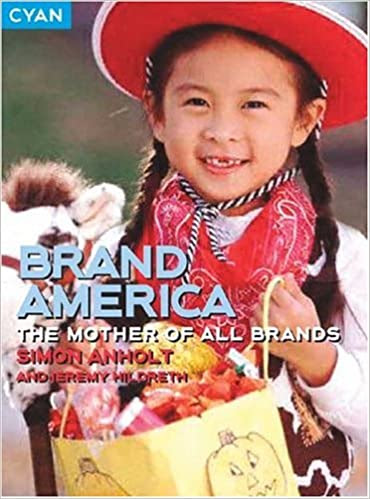
During the first Trump Administration, I wrote to Simon Anholt, the author of Brand America: Mother of All Brands, stating that Trump's brand for America was:

Can't Do.  Won't Do. You Do.  Fuck You.

It will get worse this go around.

An interesting story in the Financial Times, "What makes the US truly exceptional: Are American pathologies the necessary price of economic dynamism?."  From the article:

It is the best of countries, it is the worst of countries, or at least of the high-income ones. The US stands out for its prosperity and its brutality. 

This is how I have felt about it since I visited in 1966 and lived there throughout the 1970s. The sustained prosperity of the US is astounding. A few western countries have even higher real incomes per head: Switzerland is one. But real GDP per head in the larger high-income countries is below the US average. 

... Not surprisingly, the US economy also remains far more innovative than other large high-income economies. Just look at its leading companies. These are not only far more valuable than those in Europe, but far more concentrated in the digital economy... 

... The US then is an economic powerhouse, so much so that it has persistently run a large deficit in its capital account. Donald Trump protests. Yet this is a powerful vote of confidence. 

... So, how can such an economic marvel also be “the worst of countries”? Well, its homicide rate of 6.8 per 100,000 inhabitants in 2021 was almost six times as high as that of the UK and 30 times that of Japan. 

... More broadly, what does US prosperity mean when combined with such potent indicators of low welfare? These outcomes are the result of high inequality, poor personal choices and crazy social ones. Some 400mn guns are apparently in circulation. This surely is insane. 

... Then there is a related question, which is whether the relatively high inequality of the US and the insecurity of those in the bottom and middle of the income distribution inevitably lead to what I called “pluto-populism” in 2006: the political marriage of the ultra-rich, seeking deregulation and low taxes, with the insecure and angry middle and lower middle, seeking people to blame for what is going wrong for them. If so, what made the US dynamic, at least in this age of deindustrialisation and unbridled finance, led to the rise of Trump and so to a shift to a dangerous new demagogic autocracy. A big question for non-Americans, notably Europeans, is whether these pathologies are the necessary price of economic dynamism? Logically, it is not clear why an innovative economy cannot be combined with a more harmonious and healthier society. Denmark would suggest so. One might hope that the scale of the US market, its relatively light regulation, the quality of its science and its attractions to high-quality immigrants are the explanations. But there is this lingering fear that the technologically dynamic society Draghi and other Europeans now seek might require the rugged, nay dog-eats-dog, individualism of the US. It is a sobering possibility.

FWIW, I don't think pathology is necessary to economic dynamism.  We have a super conflicting element in American society, rank individualism ("Toward the Land of Self-Defeat," New York Times) versus a more communitarian approach.

But individualism is the side for people who want it all, don't want to share, don't believe in mutually beneficial outcomes.  And too much has changed in the economy, from neoliberalism to financialization, a winner take all economy, oligopoly, and the belief by Republicans that taxes are bad.

This extends to the social sphere by denying the value of the safety net, government action of any kind, building the wealth of of the nation by investing in people, etc.

It was pointed out that Reagan's plan was a form of austerity comparable to that of UK's Tories.  For a couple decades, because the US had previously overinvested in government and public goods, that could be withstanded.

It ended with the multiple failures of the Bush Administration.

It's amazing that the Trump posse is so focused on the destruction of America, not building its public investment ("Capital shallowing: the effect of disinvestment on government functioning").

We're in for it.

Labels: , , , , , , , ,

Saturday, March 23, 2024

Missed design opportunity with bridges as aesthetic elements of neighborhoods

 I do write about bridge abutments and underpasses as marketing and urban design-placemaking opportunities.  I had this concept to do public art lighting of the underpasses in Takoma (Piney Branch, Aspen, Van Buren, and Kansas Avenue, not Cedar Street because it has wall tile public art project already, but lighting would have been better) as a system.

Birmingham Light Rails, Alabama, Bill FitzGibbon

The Elvert Barnes photo feed on Flickr has this photo of a bridge in Southwest DC as part of a "walk to the Tidal Basin" to see the cherry blossoms.  Can't remember what street this is.


It's also keeping with the 1800s "railroad beautiful" movement by Richardson and Olmstead, although it was more focused on stations and their grounds ("A Railroad Beautiful" and "The Treatment of City Squares--III; The Square Before the Railroad Station," House and Garden (2) 1902 and "Railroad Gardening," Standard Cyclopedia of Horticulture

And what I call transportation infrastructure as an element of civic architecture.

DC does understand they can do this.  But I think this example on Florida Avenue NE promoting the Metropolitan Branch Trail is the only one I know of in the city.


But I think it needs to be more in your face and visible.  The MBT example is a bit timid, and therefore easy to miss.  This is from the Great Rivers Greenway program in St. Louis.


Similar examples include Camden, London.  In your face is better and a better marketing tool.  And it's also an urban design and quality of life and anti graffiti measure.


Other treatments can be more arty.

Outside the Vauxhall Underground Station, London promoting the nearby Brunel Museum

Hartford Connecticut

Underpasses too.

Spring Garden Station, Philadelphia.

And under freeways.

Great Rivers Greenways, St. Louis.

Which can include placemaking initiatives like the Bentway in Toronto and the Underline in Miami.


Labels: , , , , , ,

Sunday, March 03, 2024

Crain's Chicago Business: Crain's Forum on Rebranding Chicago

Not as scintillating as the Boston Globe series ("Blueprints for a downtown Boston | Boston Globe"), but at least the business community is concerned about reputation and brand and identity management.  

One of my earliest pieces "Town-City branding or "We are all destination managers now"" (2005) was later expanded into the concept of a city's elected officials and stakeholders are its brand managers in commercial district revitalization framework plans I wrote in 2008 for Cambridge, Maryland, and Brunswick, Georgia.  

From destination managers to city brand managers to community asset managers.  What I wrote about "destination managers" and "brand managers" can be rewritten to encompass the civic asset network:
Just as the study team believes that “we are all destination managers now,” elected and appointed officials in particular and in association with other community stakeholders serve not only as a community’s “brand managers,” they also function, either by commission or omission, as a community's "asset managers"—whether or not they choose to think of their roles in this manner. 
That means that decision-making on land use and zoning, business issues, infrastructure development (roads, sewers, water, utilities, transit), technology (broadband Internet, etc.), the natural environment (open space, rivers, tree cover, watershed, etc.), and quality of place factors (arts, culture, historic preservation and heritage, education, public schools and libraries, urban design, etc.) must be consistent and focused on making the right decisions, the decisions that collectively achieve and support the realization of the community’s desired vision and positioning in terms of quality of life/placemaking, economic health, and the stewardship of physical assets and the built and natural environment.

Chicago, San Francisco, Seattle, Portland and DC are taking big reputational hits because of crime, homelessness, general disorder and other issues--abetted by the constant playing of these issues in conservative media.  

OTOH, having lived in DC in the 1980s and 1990s when things hit bottom, I am anti-disorder to the nth degree.  

I don't understand when elected officials don't appreciate how important getting public safety under control was to inward investment and population growth in the 2000s.  My lesson from the bad times is that it's very easy for disorder to get out of control.  

In DC, the social justice push to ease treatment of criminals has been counter productive.  Elected officials saw their actions as a way to address structural racism and other issues.  While perpetrators looked at these measures as a cue to commit more crime.  (DC has other issues in addressing crime too.

An extremely lenient approach to crime committed by juveniles--which these days ends up with rampant car jacking, weapon-assisted robberies and assaults, and murders--and prosecution by a special unit of the Department of Justice, which can be somewhat disconnected from responding to the need for crime suppression.

DC Crime Facts is a great e-letter on these issues.
With the Democratic National Convention coming to town this summer, Chicago has a rare opportunity to regain its swagger and reposition itself as a global city at the top of its game, a city second to none as a place to live and work. 

Chicago did it before, nearly 30 years ago, by giving itself a makeover for the 1996 Democratic National Convention that continued with the creation of Millennium Park. 

But this time, the city is approaching its moment in the spotlight without a CEO at the helm of World Business Chicago or its convention and tourism promoter, Choose Chicago. 

Chicago can counter the narrative that its best days are behind it by focusing on the strategic advantages that it’s always had as an affordable big city that attracts a deep pool of educated talent. 

 “The Chicago brand remains strong for fundamental reasons,” says Mike Grella, founder of site-selection consultant Grella Partnership Strategies in Atlanta. “It’s the third-largest metro area and a top 20 global economy. It has tremendous talent and some top colleges and universities. Those fundamentals aren’t going to change. 

”Chicago getting a bad rap, and are we making ourselves too easy a target by not putting our best foot forward to change the narrative? The nation’s third-largest city is still a city that works, but it also has a growing list of very real challenges, topped by crime, that must be addressed. 

“We are fighting perception, and you have to be aggressive, or it takes on a life of its own,” says Andrea Zopp, who was CEO of World Business Chicago, the city’s public-private partnership for corporate recruiting, from 2017 to 2020. 

... “It would be a serious mistake to move major entertainment venues to the suburbs,” Florida says. “The downtown of the future has to be an entertainment center, and sports are part of that.” He points to Detroit as an example. “Before, I would have said Detroit went too far with the casino, the stadia, the arena. . . .What we’ve learned post-COVID is that stuff is necessary. In a reduced office environment, attractions and visitation are so key. This is what Miami and Las Vegas figured out.”

===
Interesting point comparing to Detroit, and the city as an entertainment machine--something criticized for years by suburban partisan Joel Kotkin ("The Renaissance of Cities," Government Technology, "Joel Kotkin: The man urbanists love to hate," Grist, "PERSPECTIVE ON CHICAGO: FROM CITY OF BIG SHOULDERS TO ENTERTAINMENT MACHINE?" New Geography).  From the last article:
It is this more gilded, elegant Chicago – home of arguably the nation’s and even the world’s greatest collection of 20th Century high-rise structures – that foreshadows the current city. The success of Millennium Park, the powerful if now fading condo boom, the city’s newfound celebratory culture (think Oprah Winfrey and Barack Obama), its growth in fine restaurants, nightclubs and other entertainments has persuaded some observers like the University of Chicago’s Terry Nichols Clark to declare that Chicago is indeed the model city of the future. 
Clark’s new urban vision sees a city that marries upper crust with proto-bohemian elements, providing a spectacle for the well-to-do and distracted. Such cities may no longer serve as a vehicle for class mobility, but as an “entertainment machine” for the privileged. For these elite residents, the lures are not economic opportunity, but rather “bicycle paths, beaches and softball fields,” and “up-to-the-date consumption opportunities in the hip restaurants, bars, shops, and boutiques abundant in restructured urban neighborhoods.”
And I have to temper my thinking about this too.  

One of the most important books I read in the late 1980s, pre-Internet, was Maximarketing.  Its basic point was that you have to focus on all channels, not just some, selectively. 

Another good book was the Marketing Imagination.

That's where cities are.  Needing to maximize all opportunities.  

And the legacy cities still have advantages in terms of cultural institutions, professional sports teams, colleges and universities, parks and other civic assets, public space investment.  Transit.

When such institutions are created in the suburbs, the reality is that they are suburban, less cosmopolitan, often less diverse, less likely to challenge the status quo ("Creative hubs in suburban communities," "Suburbs take their place in the cultural sun," Chicago Tribune, 1990, "Vancouver's suburbs fertile ground for cultural infrastructure," Toronto Globe & Mail).
Suburban – or so-called "edge" cities – are developing cultural infrastructure that, if not necessarily on par with what is downtown, is bound to impress. As they grow to view themselves less as bedroom communities and more as cities with cultural identities, these municipalities are focusing on the arts as a way to help them grow, and to demonstrate their maturity. 

... Dr. Baeker points to Vaughan, Ont., north of Toronto. He developed Vaughan's cultural plan guided by two questions: "One was how do we stop being a suburb? And how do we use cultural facilities and amenities and opportunities to create a sense of this being an urban centre, not a suburban area?" 

... "I think the suburbs are changing. I think there's a much more urban audience in and around Metro Vancouver than has historically been the case," says Mr. Shier , who points out urban epicentres are developing in cities such as North Van, Burnaby, Surrey and Richmond . " That demographic is shifting expectations. The expectation is that people can have this type of amenity in those urban cores, rather than having to travel to Vancouver to get it."

Union Square in SF, like shopping in Manhattan, and some time ago on the Magnificent Mile in Chicago, was special.  

Still maintained its relevance despite the move of retail to the suburbs in various forms.  No more.

And cities suffer disproportionately from homelessness and drug issues and disorder problems.  And cities have limited budgets and many priorities.

But there are plenty of us who still prefer to live in such an environment.

The challenge will be to get disorder under control.  Schools--an issue in cities like Chicago and DC.  Revive retail.  And make downtowns more balanced, more like neighborhoods.  

While fixing transit ("Ensuring the intertwined post-pandemic recoveries of downtowns and transit systems," Brookings) and a myriad of other issues.

-- Transit is the answer plan, Chicago

Advocacy Agenda Detail 
  1. Secure increased funding for transit operations
  2. Develop a funding structure that is less reliant on rider fares, but instead focused on expanding access to opportunity
  3. Build a coalition around the value transit brings to the Chicago region
  4. Support communities’ efforts to improve the area around their transit stations and stops and pursue equitable transit-oriented development
  5. Engage with communities in an inclusive and transparent way about how transit dollars are spent in the Chicago region
  6. Secure increased funding for transit infrastructure
  7. Partner with roadway agencies to build more transit-friendly streets and advance bus rapid transi
It comes down to the asset investment approach, be it social urbanism, revitalization, or a wide range of investment in key infrastructure projects like Oklahoma City:

-- "Defining place-keeping: The long-term management of public spaces," Urban Forestry and Urban Greening (2011)
-- "Now, a push to bring more culture — and connection — to Kendall Square," Boston Globe, 2022, (public space, access improvements, culture additions)

The Economics of Uniqueness: Investing in Historic City Cores and Cultural Heritage Assets for Sustainable Development

DC ("Bowser, business leaders pitch $400M plan to fix D.C.’s ailing downtown," Washington Post) and other cities ("Chicago leaders announce committee to revitalize downtown area, including State Street," WLS-TV/ABC, "State Street downtown has highest vacancy rate ever, but experts say there is hope," CBS2, "Mayor Brandon Johnson outlines vision for downtown revitalization" Chicago Sun-Times, "Downtown's next act: Converting offices to residences is the best hope for the Golden Triangle" and "All hands on deck': 5 more Downtown properties get big assessment cuts as woes deepen for city," "As foreclosure risks rise, nearly half of Downtown Pittsburgh office space could be empty in 4 years, report shows," Pittsburgh Post-Gazette) have announced initiatives to refocus on improving Downtowns-their central business districts.  

I'm pretty down on the capacity of DC's planning function though. From the article: 
Among the plan’s wide-ranging proposals: recruiting more universities to fill up excess office space, simplifying regulations to attract new small and international businesses, and creating a “history triangle” between Farragut Square, Franklin Park and Lafayette Square that would draw visitors from the Mall. 

... Still, city officials say that a more extensive, detailed version of the Downtown Action Plan will not be ready until May. For now, it takes the form of a summary of recommendations and broad spending priorities that the report’s authors say, if fully funded and realized, will help mitigate the negative trends threatening the viability of downtown and the city’s overall financial health. 

Downtown brings $2.3 billion in revenue to the city’s coffers each year, which represents about one-fourth of the city’s total local revenue annually. The report says annual tax revenue generated from downtown has declined by $243 million since 2019, and if current conditions are left unabated, could decline by an additional $193 million over the next five to 10 years. 

Office vacancy rates downtown have crept up to a record high of at least 21 percent so far in the first quarter of fiscal 2024, according to data provided by the DowntownDC Business Improvement District (BID). 

... Other investment recommendations focus on transportation, increasing retail opportunities, enhancing downtown’s parks and open spaces, and providing $2.5 million for a “dedicated team and marketing efforts to facilitate the transformation of Downtown D.C. into a global learning hub.” 

... In the realm of public safety, the plan’s short-term recommendations include a lighting assessment and an increased budget for a newly launched program to create “Safe Commercial Corridor” hubs to keep neighborhoods safe and clean through a combination of efforts from public safety and human services agencies. The first hub opened in Chinatown two weeks ago. 

The plan also focuses on making downtown more friendly to small businesses by simplifying licensing and permitting regulations and in April, launching a soft-landing program to attract international companies and start-ups. 

And to accelerate the number of housing conversions downtown — the plan notes there are now fewer than five units of housing there for every 100 employees — it suggests streamlining construction and building permitting processes while offering a 10-year suspension of the Tenant Opportunity to Purchase Act (TOPA), a law that gives tenants a first right of purchase, for new housing projects that are not replacing existing housing.
Plus DC's central business district improvement districts are a bit less capable than those of NYC or the Center City District in Philadelphia.


Plus, change takes time.  A decade is just a start.  And DC may take a further blow if the professional basketball and hockey teams do leave the city for suburban Virginia.

Labels: , , , , , ,

Monday, December 04, 2023

Super design forward buses in Mexico: Irizar ie tram

Merida city in Mexico is creating a new bus rapid transit system ("IE tram system brings to Merida a whole different means of transportation," Yucatan Times, "Yucatan's Electrifying IE-TRAM Project," Mexico Business News), and as part of it, they're using Irizar ie tram bus vehicles, produced by the Irizar company in Turkey, which look more like fixed rail transit vehicles than buses.

While the specifications on the website only show a 40 foot long bus, images also show an extended version in the articulated bus form.


In "Making bus service sexy and more equitable," as a way to position bus service as a high quality servivce, I suggest that cities like Washington should switch to double deck buses, made famous by London, but used in many cities in Europe especially, but also Las Vegas and Ottawa, Ontario.  The Vegas and Ottawa buses are pretty dowdy looking, while Luxembourg puts them to shame.


The Irizar ie tram is a worthy option as a way to reposition the image of bus transit.

Also see:

Labels: , , , , , , , ,

Tuesday, November 21, 2023

Design forward trains and streetcars: Haga-Utsunomiya Light Rail and Brightline (plus bonus)

When I first was into the idea of reintroducing streetcars into American cities, I favored re-adopting the heritage streetcar vehicle ("A National Mall-focused heritage (replica) streetcar service to serve visitors is a way bigger idea," 2013).  

But maybe 15+ years ago, I had a conversation with Dan Malouff (Beyond DC), and he made the point that for a lot of people that might mean that streetcars are dowdy and old fashioned.

His point was provocative.  And I'm sure I disagreed at the time.  But he's right.  

Today, too many people scoff at streetcars as "19th century technology."  Although cars are 19th century too.  The thing is both have improved since.  But really they are knocking mass transit for being transit while favoring individualized personal mobility.  

Design should be a key element in repatterning how people think about transit.

A lot of train design is clunky, or at least given that the trainsets are used (unless terribly faulty) for at least 40 years, it's important to try to get the design right and to be forward, recognizing it will be around for a long time.  

While I think Baltimore's light rail cars have a kind of industrial charm, they have been in service for 31 years, and likely many more.  They don't communicate "design forward."  (Note that in my writings on the Purple Line, I suggested that they replace the Baltimore light rail vehicles at the same time.  But that's expensive when the cars have years of useful life yet.)

Most governments aren't so great at this, but there are exceptions.

There's an article in the Financial Times, "Kenneth Grange: ‘The government once had ideas about how to use design’," about a famous designer in the UK, and he commented about how the UK government was once truly focused on the value of design as an element of the built environment:

He also says the Design Council, founded in 1944, was a cornerstone of his career, a government body which “approved” the right kinds of designs. “It was an incredible thing,” he says. “The government had ideas about how to use design, for how to recover from the war and for society. And it promoted industry too; everything then was made here, now absolutely everything is made in China.” 

... One thing Grange points out is that so many of his designs were the result of central or local government commissions, from the Festival of Britain to parking meters and trains, something almost unthinkable today. “Wouldn’t it be great if [Keir] Starmer, or whoever ends up trying to govern this country, embraced the idea of believing in design in the creation of real stuff that makes real lives better?”

And you have the great example of Frank Pick who incorporated design into the communications and stations and trains of what we now call the London Underground.

I do have a piece about this, "Using the Purple Line to rebrand Montgomery and Prince George's Counties as Design Forward," which includes links to scads of entries as design as an element of urban revitalization.

I watch "Japan Railway Journal" on NHK as a way to keep in touch with best practice in Japanese rail matters.  While it's a sub-channel for many PBS stations, it's also available on demand.

For the most part they cover trains and stations, but sometimes but not nearly enough local transit systems operating in Japan.

The latest episode is "Haga Utsunomiya LRT: Shaping Communities," on Japan's first new from the ground up streetcar/tram/what they call light rail in 75 years.  

HU 300 light rail car.

The line was built mostly for Utsunomiya City, capital of Tochigi Prefecture, but during the planning phases it was slightly extended to the manufacturing district of Haga, which is a major job center ("Utsunomiya in Japan: The new light rail opened today!," Urban Transport Magazine).  

Just like in the US, it took a long time to realize, about 30 years from idea to working line--about 10 miles.  And its primary purpose is urban revitalization and centralizing new development along the transit line, with the aim of promoting trips on transit instead of by the car.

There's talk about extending it to the Utsunomiya City Hall, but I think they should also extend it to Haga's center, as the manufacturing district is on the edge of Utsunomiya, and the light rail barely extends into Haga.

But related to Dan's point, the streetcars are absolutely design forward, with a great design, low floors, huge swathes of glass for the windows, and a decent livery.  

The cars are called HU 300 and are manufactured by Niigata Transys, although Alstom is a partner as they provided the bogie/wheel sets.

Similarly, Brightline ("Florida's Brightline passenger rail as an opportunity to rearticulate and extend transit service in cities like Orlando"), the "new" private passenger rail service operating from Miami to Orlando (an extension to Tampa is planned) also has well designed trains and liveries.

In "Branding's (NOT) all you need for transit," I discuss how London Underground is treated as a "design product":

The London Underground as a design product. The London Underground is an outlier for transit systems in that it has been a consistent innovator in design and usability for 100+ years.

Key to this development was Frank Pick, who started at the agency being responsible for communications ("PR") and who laid the groundwork for corporate branding by coordinating all elements of the program into an integrated and extensive transit system -- advertising, branding, station architecture, vehicle design, and mapping -- with the highest standards for "design."

That legacy had been maintained through the creation of "product design managers" for the various transportation modes managed by the successor agency, Transport for London. But more recently, because the agency has been crushed by needing to find money to pay for Crossrail, in part because the national government cut back its contribution, they've cut these positions (and many other programs across the system).
-- Product design guidelines, Transport for London

Although in our IT centric world these days maybe people think about this more in terms of what is now called UX or User Experience.  

Brightline also does that, better than Amtrak, more like how it was done "back in the day" with railroad passenger service as being a premier service by railroads.

And the ads ("American Streamlined Trains. Striking Ads of the 1940s," Ikonographia). This page classifies ads, and the elements of premier train service as:

  • the equipment
  • power and speed
  • comfort and service
  • ability to serve leisure and vacation (and commuting)
  • designing trains for the future.


Brightline's focus on first mile/last mile transportation integration with train service is unparalleled.  They even sponsor bike share in some places ("Brightline kick starts bike share rental program," Florida Weekly).  

(Deutsche Bahn was an early pioneer in bike sharing, but not in other elements of first mile/last mile.  In Los Angeles, the local transit agency is the deliverer of bike share.  This is an outlier in the US.)

Multiplicity bus system Luxembourg.  I've mentioned these buses.


And I just came across the livery for the Class 222 trains of East Midland Trains in the UK.

Labels: , , , , , , , ,

Friday, September 23, 2022

Distinctive bus shelter at the entrance to Utah State University, Logan

The reason that I find this interesting is because when I did the bicycle and pedestrian plan for Western Baltimore County many years ago, one of the recommendations was that University of Maryland Baltimore County respectfully recognize that students use the local MTA bus system, and provide on campus shelters and related facilities.

At that time, they didn't provide any shelters at all, so students had to wait outside in the sun and cold. I seem to recall rolling through the campus a few years ago and seeing shelters, but I could be misremembering.

That's why I was a bit surprised about this shelter.  It's not just a shelter, it announces that it is on the campus of the university, it's large not small, it's much more substantial than a typical transit agency bus shelter. It's branded with the University's logo, etc.

It definitely is an illustration of my point that bus shelters are "marketing touchpoints" of transit systems ("Arlington County's bus shelters and a public realm framework of quality ," 2013), and if bus shelters are crappy that communicates very clearly that the community doesn't value transit.  

Although in this case, it is a marketing touchpoint for the University more generally, not just wrt transit.

Labels: , , , , , ,

Thursday, August 25, 2022

Revisiting New Carrollton and the opportunity of transit oriented development: New train hall to be built at transit hub

 I've written so much about how Prince George's County, Maryland has been handed so many opportunities to reposition the county around transit oriented development, yet they've failed to take advantage of the opportunities time and time again.

The new train hall at New Carrollton aims to bind together the development of offices, housing and shops. (Gensler/Urban Atlantic).

Today's Post reports, "New Carrollton train hall will unite transit lines, bike lanes, retail," about a new train hall to be constructed at New Carrollton, the county's primary inner ring transit hub, with Metrorail, MARC, and Amtrak service now, and a Purple Line light rail connection whenever it manages to open.

(Note that Alex B./City Block has a good post on how to do a transit hub at New Carrollton, "Missing a chance to create a great transit hub – New Carrollton." I hope they read it.)

I wrote about New Carrollton in depth in 2014, where I suggested that Prince George's County create a center there, moving their government center to a Metrorail-connected location, and beginning the process of redeveloping the conurbation as a more walkable-connected-transit centric place.  Transit oriented development, TOD, although I didn't think of it in that way exactly.

-- "Go big or go home: Prince George's County needs to think big and consider better revitalization examples for New Carrollton

and repeated it, with little augmentation in 2017, in the Purple Line series:

-- "Part 4 |   Making over New Carrollton as a transit-centric urban center and Prince George's County's "New Downtown""

how Prince George's continues to be misguided in trying to make Largo its Downtown:

-- "Downtown is not a word without meaning: renaming the Largo Town Center to Downtown Largo is without meaning," 2021

that it shouldn't have taken them 40 years to come up with a TOD plan for the Blue Line:

-- "Prince George's County's newly announced transit oriented development program for the Blue Line," 2022

and that they should have made transit connections central to the National Harbor development:

-- "Backwardness of transportation and land use planning: National Harbor, Prince George's County, Maryland | Why isn't high capacity transit access required from the outset?," 2022

There are lots of links to relevant past blog entries within those posts.

(On an e-list there's been a discussion of suburban TOD and someone mentioned this journal article, "Seven American TODs: Good practices for urban design in Transit-Oriented Development projects," Journal of Transport and Land Use, 2008.)

The discussion in the first piece outlines how New Carrollton could be a TOD exemplar, using the examples elsewhere in the DMV of Tysons and Reston in Fairfax County, Virginia, and White Flint in Montgomery County.  But no, they keep doubling down on Largo, which is a pretty disconnected place.

Maybe this can be a transformational move, but with the competing centers of Largo and the failure to take a TOD/edge city transformation approach to New Carrollton, I am not hopeful.

Two more things.

1.  Start planning to extend the Purple Line to Alexandria NOW!  The original Purple Line series was only focused on the plans for constructing the line from Bethesda to New Carrollton, not on its expansion, or other opportunities.

In a follow up piece, "Revisiting the Purple Line (series) and a more complete program of complementary improvements to the transit network," in 2019, I made the point in the section on "meta network improvements" that there should commence immediately:

Expansion planning for the Purple Line on the south.  I didn't include beginning expansion planning for the Purple Line, at the very least southwest from New Carrollton to connect to the Blue/Silver Lines at Largo Town Center, the Green Line at Suitland, and even the Yellow/Blue Lines across the Potomac River in Alexandria.


 Flickr link.

This would provide a robust transit connection to National Harbor, and provide many more opportunities for transit connection and access and improvements in east-west movement on the south side of the Washington Metropolitan area.  

It would make New Carrollton a much more significant business and residential district.

And it is a part of #12 in the action points list in the 2014 piece.

2.  Improve the Public Schools.  In my talks with planners and developers, they tend to say, given the chance to build in PGC or elsewhere in the region, they prefer elsewhere, because the public school system lags, and people prefer other locations.

Besides College Park failing to take advantage of the University of Maryland as an anchor ("More Prince George's County: College Park's militant refusal to become a college town makes it impossible for the city(and maybe the County) to become a great place," 2015) this is probably why a lot of highly educated people choose not to live in PGC.

The Dallas Transformation Schools initiative is one worth considering as a model for rebooting the PGCPS, which has had oversight and management problems for a couple decades ("This school board can’t stop fighting. A Maryland bill aims to fix it," Washington Post).

-- "Dallas parents flocking to schools that pull students from both rich and poor parts of town," Hechinger Report

They could start with making the schools in the New Carrollton area a "Transformation Schools District," as a way to attract residents and new housing.

Conclusion.  A train hall isn't enough to transform New Carrollton, although I should have included it as a suggestion on the list of actions in the original piece.  

Although #12 is:

Strengthen New Carrollton's "edge city" position by strengthening its place in the metropolitan transit system by developing a separate transit vision plan, including extending the Purple Line light rail from New Carrollton to Alexandria, Virginia, which is part of the original Purple Line proposal (as pictured below), and the creation of MARC (the state's passenger rail system) railroad passenger service from Annapolis to New Carrollton (and on to Washington).

Unless it's seen as part of a much bigger, transformational program.

Labels: , , , , , ,

Friday, May 13, 2022

May should be National Train Month: Rethinking promoting more comprehensively travel by train in the US

 I started this post in 2019, and then I had to move west and I never finished it.  


1.  A Los Angeles Times article ("At 80, Union Station tries to reinvent itself for a rail future") about the upgrading of Union Station in Los Angeles reiterates  that train stations should be thought of as key "marketing touchpoints" for transit, based on how stations are key city and community hubs in cities like London, Hamburg, Paris, Tokyo, etc.

I wrote about this general idea in my comments in 2015 on the DC State Rail Plan with regard to DC's Union Station.  

The basic point in those comments was how to "Fully leverage Washington Union Station's potential as a portal and visitor center and as a focus point for marketing transit, specifically rail service."

A long time before, I made the point that bus shelters are "marketing touchpoints" for the transit system in multiple ways: (1) for the user; (2) for people walking or driving by and wanting information; and (3) more generally in terms of aesthetics and maintenance and how it communicates whether or not the community values transit, with poor condition shelters and stops with few if any amenities making clear that transit isn't valued.

This goes double for transit stations: subway; bus; railroads; and their combinations.


(Interestingly, only this year has the Federal Railroad Administration devolved to incorporate the kinds of ideas and not the best ones, that I suggested then.  But none on marketing. "Union Station overhaul removes parking spaces, adds underground facility," Washington Post.)

2.  Make May National Train Month.

The National Train Day that Amtrak did in the mid-2000s then dropped for budgetary reasons should be revived, involving the entire rail industry, but redeveloped into: 

(a.) Train Month.  One day out of 365 puts too much pressure, and people can only do one thing.  Train Month allows for more activities, spread out over an entire month, more attention, etc.; 


(c.) involving all types of train service, not just Amtrak, but all passenger train service, including regional commuter rail services

(d.) including freight railroad service; (e.) which could help with funding and visibility

(f.) also involving train and transit museums and tourist railroads.

Working with the American Public Transportation Association, the National Railway Historical Society and its local chapters, regional and state transportation museums, transit media such as Railway Age, Trains Magazine, Mass Transit, Classic Trains, Progressive Railroading, and Metro, and possibly with freight railroads and the Association of American Railroads, as well as excursion (tourist) railways, railroad passenger transportation agencies should revive the concept and create Train Month as a way to promote travel and transportation by rail, for commuting and leisure travel..

Ogden, Utah is home to the location of the Golden Spike National Monument, the place where the transcontinental railroad joined up.  The Ogden Standard-Examiner published a special book for the 150th anniversary.

-- "Golden Spike Centennial Edition," Ogden Standard-Examiner, 1969

But rather than one day, it should be done for the entire month of May designated  as National Train Month, spreading out activities over the course of the month by creating a calendar of events, coordinated at multiple scales (regional, state, national).

This would be timely especially given Amtrak's refocusing on expansion through their Amtrak Connects US program, calling for significant expansion of passenger rail service across the United States.


3. Other good models are various promotions especially tourism efforts by railroads in Japan, as featured on the NHK World television program, "Japan Railway Journal."  

In the late 1980s, Japan began privatizing the national rail system.  It broke it up into seven companies.  Some are capable of being independent, some are still government owned.  The regional JR services, usually with the foundation of high speed rail, are complemented by private railways operating on lines where the ridership is strong enough to maintain profitability, and by what are called third sector lines, which are a mix of privately run, privately owned, community owned or community subsidized.

Because the country is shrinking in population, especially in rural areas, railroads have focused on special tourism ventures to build ridership and revenues in the face of decline.  Some train stations have a small museum, there are efforts for engaging children (future riders!).  Using regional foods and special meals on trains.  Revitalization efforts.  Etc.

Although there are plenty of exemplary efforts outside of Japan.  Places that do special services for sports events or concerts.  Virginia Railway Express and its support of Clifton Days, a community heritage festival with a big dose of trains.  Souvenir tickets for children on the LIRR.  Various tourist railroads in the US.  Tourism promotion efforts by rail lines in England, and by AMT in Greater Montreal.  Etc.

4.  Train stations can be living "transportation and tourism museums."

Developing spaces and opportunities to present railroad history should be considered within the  program for the station's expansion.

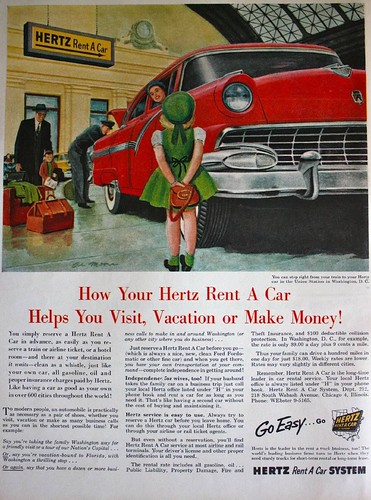
Hertz rental car ad, 1955, featuring Washington DC's Union StationThis 1955 Hertz rental car ad features Washington's Union Station.  Because Union Station is multi-modal (railroad, subway, local bus, inter-city bus, streetcar, tourist services, taxi, bicycle, walking) it's a good location for a transportation museum.

I see this as being done as a kind of joint venture with existing museums in a region, especially those museums already presenting aspects of railroad-related history with a local angle.

A "transportation" museum at a train station like Union Station  in DC wouldn't have to develop a large permanent collection.  

It could more be a place for existing museums to display items that would otherwise remain in vaults, complemented by changing exhibits curated both locally and developed by and with other transportation museums around the country.

Partners could include the National Museum of American History, the National Postal Museum, the National Railroad Historical Society Washington chapter, the B&O Museum in Baltimore, and the National Capital Trolley Museum.

Because of Washington's place as a leading tourist destination and the multimodality represented by Union Station, exhibits on other elements of transportation and visitation history would also be appropriate.

Private railcars on display at a railfan expo in Barstow, California.

Private railcar storage could be "displayed" to the public as part of the exhibit program also. [Note: when this was first written, Amtrak had an active program of renting space to privately owned passenger railcars, including at Union Station.  This has since been de-emphasized.]

The way active trains are staged within the St. Pancras Station in London shows this can be done.   There the Eurostar platform is placed above the ground floor retail.  The train engines were quiet, unlike comparable locomotive engines in the US.
Fire closes Channel Tunnel!  Eurostar trains stranded @ St Pancras London

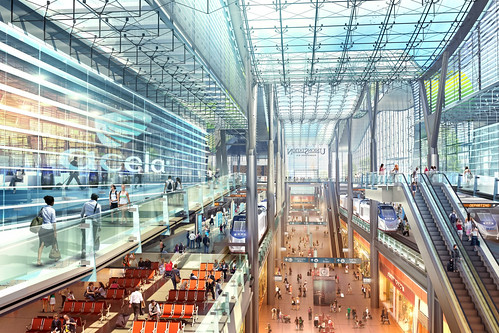
Renderings presented by Amtrak for a redo of DC's Union Station show something similar, the incorporation of the train shed into a kind of atrium, with active tracks.  I believe that this element has since been deemphasized in future planning for the station.
union-station-new-concourse

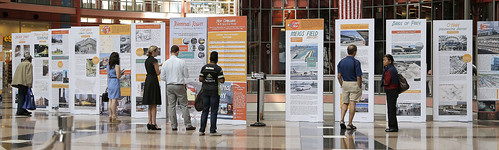
An example of the kinds of exhibits that could be presented is  the companion exhibit--shown here when staged at Chicago's Union Station--to the book Terminal Town, which covers all of the types of transportation terminals in Chicago.
Terminal Town Display at the James R. Thompson Center
“Terminal Town: Celebrating 75 Years of Travel to the Windy City,” exhibit on display at Thompson Center by the DePaul University’s Chaddick Institute for Metropolitan Development. Photo by Jamie Moncrief/DePaul University.

The Market Street Railway--the F Line streetcar--is operated in part as a living transit museum.

5.  Add excursion rail programs to big city train stations.  Many states have scenic-excursion railroads that are tourist attractions.  There are a number of these systems in Virginia, Maryland, West Virginia, and Pennsylvania, and the B&O Museum and the National Capital Trolley Museum have short tracks used for train riding.  NRHS chapters also organize excursion trips.

Most state rail plans do discuss, albeit briefly, excursion railroads and their place in the rail and tourism systems.  But they don't suggest integrating this into the passenger rail network as it currently exists.

For example, in the DC area, as a way to build interest and awareness of railroad service in the region, it could be worthwhile for the local commuter railroad agencies, MARC and Virginia Railway Express,  with the National Railway Historical Society and the proposed transportation museum in Union Station and the B&O Museum, to develop a special event railroad excursion program.

-- "Two train/regional transit ideas: Part 2 | Running tourist trains from Union Station," 2021

6.  Treating railroad stations within states and regions as a network.  I have been thinking about this for a number of months, after reading articles about railroad station efforts in Detroit ("MDOT wants to transform Detroit's 'cramped' Amtrak station into $57M hub with retail, more," Detroit Free Press) and Ann Arbor ("Ann Arbor tells feds it's willing to scale back $171M vision," Ann Arbor News), although I did make this point in a review of the Silver Spring Transit Center ("Multiple missed opportunities in the creation of the Silver Spring Transit Center," 2015; "Updating my review of the Silver Spring Transit Center: a few things I missed," 2018) and in "A well designed train station is a well designed train station: it's not about "luxury"," 2017.
and the Takoma Langley Crossroads Transit Center in Suburban Washington.

Of course the ultimate expressions of this idea are the station networks created by Southern Pacific in Southern California and the Boston & Albany Railroad's stations by H.H. Richardson, with landscaping by Olmstead.  

Santa Ana Train Station
Stations from San Diego to Santa Barbara express the California "Mediterranean" architectural style.

The efforts by Richardson and Olmstead, termed "railroad beautiful" influenced the development of the ideals of the "City Beautiful" Movement decades later.  (See "A Railroad Beautiful" and "The Treatment of City Squares--III; The Square Before the Railroad Station," House and Garden (2) 1902 and "Railroad Gardening," Standard Cyclopedia of Horticulture.)  

7.  Train stations as vital urban hubs.  In "A well designed train station" I wrote:

I think more than "building a station to serve luxury markets," the issue is the design of the station as a way to maximize the quality of the trip and the experience, specifically: 

-- quality of accommodations for passenger throughput generally (entry and exit, connections to other transit services) 
-- quality of accommodations for passenger throughput specifically to/from and on platforms 
-- centrality of its location (for example the recently in the news Michigan Central Station was deliberately constructed in a location outside of the center "to avoid congestion" thinking it could attract patronage regardless) 
-- its place and position as the anchor of the area transit system and the mixed use district in which it is placed 
-- amenities, especially retail and food service 
-- architectural design and aesthetics.

We don't have to reinvent, the basic principles were set long ago.  For example, the book pictured at right was first published in 1916.  I can't find the cite but there's an equally great book on this, dating to the 1890s.

There is the new Penn Station in NYC, which I haven't yet had the chance to visit.  Grand Central and Penn Station in New York City, Union Station in DC, somewhat 30th Street Station in Philadelphia are much closer to the example of European train stations as major city hubs as well as transportation hubs--multiple stations in London, the main station in Hamburg, Gare de Lyon in Paris, etc. are all fabulous places, community and city centers, and mobility hubs.

Granted in the US, most major cities lack the kind of density needed to be able to create that kind of facility, as shown by the failure of new stations like the Anaheim Regional Transportation and Intermodal Center (poorly located, not served by a lot of transit, waiting for HSR).  

Still, it's the model to aim for.

8.  Finally, another element is interpreting transportation history not just as part of community cultural history interpretation programs, but as a part of transit systems.  Many years ago, Passaic County, New Jersey included this idea as a section of their county transportation plan, including railroads, transit, roads, canals, and rivers.  

DC's history trail interpretation program could be a model for the creation of community-wide railroad history "trails," with Union Station as the hub of the interpretation system.  

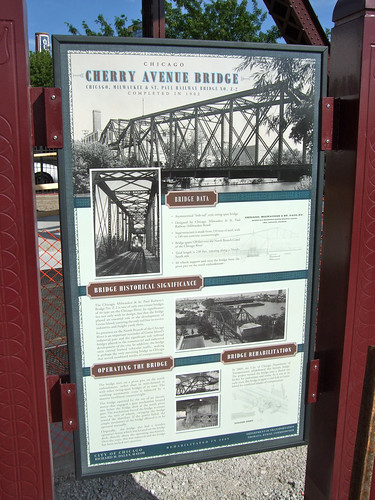
The sign below is in Chicago, and presents the history of a railroad bridge.  A handful of communities, the Ride Philadelphia program is one, information at the Queen Street Station in Lancaster, Pennsylvania is another, have transportation history interpretation programs that are good models.
Cherry Avenue bridge interpretation and facts
Cherry Avenue bridge interpretation sign, Chicago.  Flickr photo by Steven Vance.

Labels: , , , , , , ,