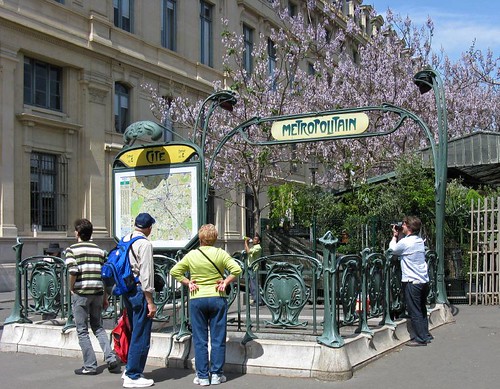
Flickr photo by Elvert Barnes of a trash can in Times Square, branded with a public art campaign addressing harassment of Asian Americans.There is a big tension in public space management over maintenance--its cost, vandalism, restrooms (an issue that I'm dealing with now in Salt Lake)--and the quality of urban design, street furniture, and the aesthetic environment of the place.
The primary reason that business improvement districts and parks conservancies ("Creating a Parks Conservancy That Fits," Parks & Recreation) were created was to provide for a higher level of maintenance and care than can normally be provided by a city or county agency, because they don't focus on just one place, but many.
Sugarhouse wayfinding kiosk/pylon. They are supposed to be stocked with maps and there is a QR code for more information, but these resources haven't been funded or updated in an ongoing way.(There is criticism of these types of entities over the source of money, concerns about privatization, the ability for civic input into their operation, etc. See Public Spaces/Private Money: The Triumphs and Pitfalls of Urban Park Conservancies, Trust for Public Land.)
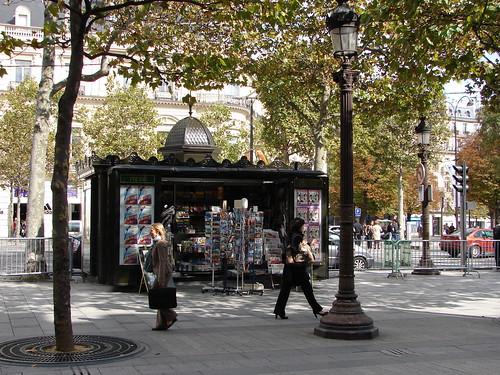
But the cost can be exacerbated by groups seeking to be more distinctive by having street furniture unique to them, like creating their own designs for trash cans instead of buying them from Victor Stanley and branding them. Another big thing is designing their own bike racks, instead of focusing on making bike parking better overall.
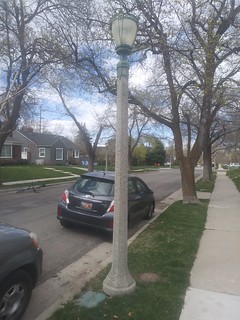
Another problem with this is creating unique appurtenances that don't work very well, as they haven't been tested elsewhere in real life situations. For example, the wayfinding pylons created by the Salt Lake Redevelopment Authority for the Sugarhouse Business District.
A prototype of the Salt and Pepper trash can seen near the Embarcadero and Ferry Building in San Francisco. Photograph: Eric Risberg/AP.
This has come up in San Francisco with their design of a new trash can that costs $20,000 per copy ("Rubbish! San Francisco’s $20,000 designer trash can struggles to contain trash," Guardian).
I'd rather buy 20 cans for the same amount of money. And figure out how to add an evening maintenance shift.
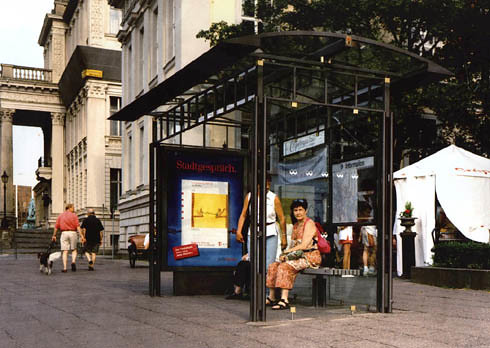
Years ago this came up in Arlington with the $1 million bus shelter ("Arlington County's bus shelters and a public realm framework of quality," 2013, "I guess I do have some issues with the Arlington bus shelters ," 2014). The criticism was unfair because it was a prototype and they were testing new approaches, and at scale it would have been cheaper, but the problem is that the cost of street furniture and other initiatives by government are an easy target for anti-taxers and conservatives, and an easy story for the media.
====
This is also an issue with transit systems and their heavy rail cars. Most every transit system designs their own. If they used similar or the same designs, likely they'd be cheaper, easier to build, and more reliable.
A PCC car still in operation in Antwerp, Belgium. Flickr photo by Tie 62.The brilliance of the PCC streetcar was that it brought standardization and savings to transit systems looking to save money.
Labels: business improvement districts, civic assets, civic engagement, public finance and spending, public realm framework, public space management, street furniture, transit infrastructure, urban design/placemaking