Rebuilding Place in the Urban Space

"A community’s physical form, rather than its land uses, is its most intrinsic and enduring characteristic." [Katz, EPA] This blog focuses on place and placemaking and all that makes it work--historic preservation, urban design, transportation, asset-based community development, arts & cultural development, commercial district revitalization, tourism & destination development, and quality of life advocacy--along with doses of civic engagement and good governance watchdogging.

Thursday, May 01, 2025

63 things to do during National Historic Preservation Month

Over the years, originally inspired by a "what you can do" list by Preservation Action Council of San Jose, I've developed a four-part series on what people can do to "celebrate" National Preservation Month.  There are 60 items across the posts, ranging from visiting a historic district to watching a film in a historic theater.

Rather than reprint them in full--recognize that some of the links in previous pieces may be out of date--here are the entries.

-- "May is Historic Preservation Month: 60 ways to celebrate | Part 1: Cultural Heritage Tourism (1-19)," (2019)

1.  Resources for Cultural Heritage Tourism Travel. Magazines like Southern Living, Yankee and Sunset.  Bookstores.  Visitor Centers.  Historic preservation organizations.  Local chapters of the American Institute of Architects, and sometimes the American Society of Landscape Architects.  When traveling, library special collections.

2. Stay at a historic hotel in the city or a bed and breakfast located in a historic district. For example, the Tabard Inn in the Dupont Circle Historic District is one of the most romantic places in the city to have weekend brunch--out on the patio, during the spring, summer, and fall.

3.  When you visit other places, check out how they deal with historic preservation matters, and share that learning when you come back. For example, every fall, Pasadena Heritage sponsors Craftsman Weekend, in honor of its bungalow heritage.

4. Don't forget to check out traditional commercial districts, antique shops, other stores, cinemas, theaters, concert halls, restaurants, historic cemeteries, etc. as a regular part of your travel itinerary.

5. Check out a historic library building/Central Library.  Another great place to learn about a community when you're traveling is the main library.  Some of the buildings are historic, others more recently are majestic new construction buildings very much worth visiting.  .

6. Visit historic sites.  Many people visit historic sites when traveling.  Across the United States, ("The shortest route to America's 49603 historic sites," Washington Post) there are almost 90,000 places listed on the National Register of Historic Places.

7. Go see a museum exhibit relevant to urban history, even if it's on a seemingly broader topic. When people travel, and "consume" locally available museums, usually people's trips start and end with the local arts museum.

8.  Walking and building tours.  Many communities have organized walking tours for historic areas. Some print booklets for self-guided tours, many places have smartphone tour apps, and cities often have historic marker and trails programs.

9. Bicycle touring.  Bikes are a great way to cover a lot of ground more quickly.  And it's less tiring to bike than it is to walk.  Many cities have bike rental operations (there is a loosely affiliated group called "Bike and Roll" operating in many cities).  And some hotels and B&Bs make bicycles available to their guests.  (There are even apps for renting bikes directly from individuals, like Spinlister, which can be cheaper than the bike rental places.)

10.  Transit as a way to get around.  While not many cities in the US do this, many European cities set up or promote specific transit services as a way to tour parts of the city, usually a set of tourist-oriented attractions in the core ("Travel around the city by tram," Visit Helsinki).

If you're already familiar with how to use transit, it usually isn't hard to figure out how to use another transit system.  If you don't regularly ride transit, likely people will be happy to help you.

11.  When we travel, we like to visit house museums.  For example, the Woodford Mansion in Philadelphia is really cool, and Savannah has many different house museums that you can visit, the most notorious being the Mercer-Williams House.  Most cities have at least one.  Los Angeles has just reopened the Hollyhock House.

12. Arguably, "antiquing" which for me includes ephemera, can be a form of historical/historic preservation-related research and is deserving of a separate entry.

While traveling, you may wish to check out reclaimed building materials stores too.  You'll probably have to do some digging to find such organizations, but offhand I know there are such places in New York City, DC (Suburban Maryland), Baltimore, Pittsburgh, Minneapolis, Detroit, York and Scranton, Pennsylvania, etc., plus the various Re:stores run by local affiliates of Habitat for Humanity.

13.  Visit a historic railroad station, bus terminal and/or a transportation museum.   There are many fabulous extant railroad stations, many no longer in use, in so many cities.2013 was the 100th anniversary of Grand Central Station in New York City, and in Chicago, Denver, and Los Angeles new master planning and/or construction improvement projects for stations in those cities are underway.

14. Visit a streetcar museum.   Many communities have streetcar/transit museums such as the Baltimore Streetcar Museum and the National Capital Trolley Museum  in Montgomery County, Maryland in this area.  So try to ride a historic streetcar as well.

15.  Ride a streetcar system in active service. Some places run heritage streetcars in active service.  Everyone knows about the streetcars in New Orleans (and that system continues to expand in bits and pieces).

16. Tour a historic trail, road, railroad, canal, park network, or parkway/greenway.

17.  Garden Tourism. Garden tourism has two different strands.

18. Ride a passenger rail train.  Ride a passenger railroad (commuter) train.  In the DC region, that means MARC or VRE.  In Greater New York, New Jersey, Philadelphia (SEPTA), Chicago, and Boston (as well as Toronto and Montreal), Southern California, Northern California and elsewhere commuter railroads provide passenger rail services once provided by private railroad companies.

19. Visit a national or state park. DC, for obvious reasons, has many nationally owned parks, the system of Fort Circle Parks works to preserve the forts built during the Civil War to protect the city from Confederate invasion. Fort Stevens, hidden behind a church on Georgia Avenue, around Quackenbos Street NW, was attacked by Confederate forces, and President Lincoln was up there and watched. Up Georgia Avenue a bit, close to Walter Reed Hospital, is a somewhat forlorn and neglected battlefield cemetery and monument honoring soldiers who died at the battle at Fort Stevens.

20. Take a boat trip on a local river.  Many cities have water-based tours or smaller scale water taxi systems.  Boston, Seattle, New York City, and San Francisco have working passenger ferry systems. The Staten Island Ferry is working transit that's free.

-- "May is Historic Preservation Month: 60 ways to celebrate | Part 2: Explore your community (20-36)," (2019)

21. Explore an older area of your community that you don't know. Go on a neighborhood or building tour. Check out a talk (not all of them cost money) at the National Building Museum.

Or just walk around a neighborhood with housing built before 1930.  Walking here and there around the core of Takoma Park, Maryland, we always come across attractive and unique houses.

22.  Many preservation groups sponsor neighborhood house tours.  On the first Sunday of May, Historic Takoma Park (DC and Maryland) has their annual house tour.

23.  Follow the path of a Heritage Trail such as one of the many "produced" by CulturalTourismDC in DC.

24. Shop at stores in commercial districts that are historically designated: i.e., Cleveland Park; Georgetown; Capitol Hill; Dupont Circle in DC, but there are so many across the country.
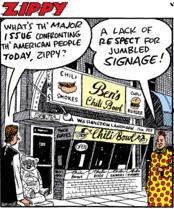
Frame, Zippy the Pinhead by Bill Griffith, Ben's Chili Bowl25. Eat in a restaurant in a historic building/historic district. Now 60+ years old, Ben's Chili Bowl is one of the few remaining restaurants in the city that is many decades old.  .. Readers have pointed out that Martin's Tavern in Georgetown and Cafe Mozart, a German restaurant downtown, are much older.

26. See a movie in a historic cinema building. There aren't many historic cinemas in DC proper any more, but the Uptown Theater in Cleveland Park is one.

27.  See a production in a "legitimate" historic theatre or concert hall.  You have many choices in the DC area such as the Warner, the National, the Studio Theatre, the Lincoln Theatre, the Shakespeare Theatre at the Landsburgh, the Atlas Performing Arts Center (which utilized federal historic preservation tax credits to pay for a portion of the building's rehabilitation), or the DAR Concert Hall.

28.  Even if you're an atheist, it can be fun to visit a historic church building, including checking out their stained glass windows (I am a big fan of stained glass).

29. Shop at a historic public food market. Eastern Market is DC's last remaining public food market building, built in 1873.  (Union Market is privately owned, and was constructed in the 1970s.)

30. Visit a historic cemetery. In DC, we have the Congressional Cemetery or the Rock Creek Church Cemetery at St. Paul's Episcopal Church, among others.  Brooklyn's Greenwood Cemetery is a standout.  Some cemeteries offer tours.

31. Check out an exhibit at a local history museum or historic site, such as at the Anacostia Community Museum or the Historical Society of Washington or one of the other house museums and historic sites in the city and region.

32. Walk the historic grounds of a local college or university.  In DC, Catholic University, Trinity, Georgetown, Howard, and Gallaudet have beautiful grounds and buildings.  Kendall Green at Gallaudet was designed by Frederick Law Olmsted.

33. Check out a monument or memorial in your community and learn more about it. We can't preserve what we don't understand or appreciate.

34. Visit a historic railroad or bus station, such as DC's Union Station. Designed by Daniel Burnham, it's an incredible example of the City Beautiful architectural movement. Check out chapters from Bill Wright's dissertation on Union Station. He's a great writer!

Railroad stations tend to be grand while older bus stations tend to be gnarly, which is an interesting commentary on the place of these respective modes in transportation history and practice.

35. Check out a historic library building.  Many cities have great library buildings that now qualify as historic.  A number of DC's libraries were built with support from the Carnegie Foundation (Northeast, Southeast, the old Carnegie Library downtown, Takoma, and Mount Pleasant, which is particularly gorgeous) as were more than 2,000 other libraries elsewhere in the US.

36. Take a boat trip on a local river.  The pontoon boat tours of the Anacostia River leaving from the Bladensburg Waterfront Park (in Prince George's County) dip into DC.  Many cities have water-based tours or smaller scale water taxi systems as well.

37. Explore historic preservation matters in your region, beyond the borders of your community.

-- "May is Historic Preservation Month: 60 ways to celebrate | Part 3: Learn and Get Involved (37-52)," (2019)

38. Learn about the history of your community. For example, for DC, read Dream City: Race, Power, and the Decline of Washington, D.C., 1964 -1994 and Between Justice and Beauty, and more.

39. Become a member of your citywide/countywide/regional preservation organizations such as the DC Preservation League, the Municipal Arts Society in New York City, Baltimore Preservation, Historic Districts Council in New York City, Cleveland Restoration Society, Preservation Resource Center of New Orleans, Landmark Society of Western New York (which serves Rochester, among other places), etc.  I am a big fan of the Chicago Bungalow Association.

40.  Before you get too involved, you might want to take the time to read your city, county, or state historic preservation plan.  This will educate you about preservation issues in your area.  (Although generally such plans are pretty positive, and don't go into enough detail about the "threats" nor do they outline ways to address "opportunities" in a process design approach.)

41. Learn about why historic preservation is important, in and of itself, as well as a urban revitalization strategy. The reason I am a strong supporter of preservation is that I have come to believe that it is the only approach to economically sustainable neighborhood and commercial district revitalization that works for the long haul.


42. Join a neighborhood/local preservation group, such as in DC the Capitol Hill Restoration Society, Historic Takoma, or Historic Mount Pleasant).

43.  Nationally, you can join the National Trust for Historic Preservation while you're at it. If you join, you can visit NT owned sites and affiliate organization museums at a discount/free, get discounts at Historic Hotels, and discounts on products you purchase.

44.  Preservation Action is a 501(c)4 advocacy group that advocates for specific legislation and is also a membership group.  Their "Preservation Advocacy Week" is held in March, where members lobby Members of Congress for legislation favorable to preservation.

45.  At the state level, most states have statewide preservation organizations.  In the DC-VA-MD area, that means Preservation Maryland and Preservation Virginia/Association for the Preservation of Virginia Antiquities, as well as the DC Preservation League.  Many sponsor annual or bi-annual conferences, journals, and other provide other resources.

46. Volunteer/1. Get involved in a preservation issue in your neighborhood or the city-county at large, which could include attending meetings of your local historic district/preservation commission, which in DC is the Historic Preservation Review Board, or working on a particular project affecting your neighborhood or city.

47. Volunteer/2, in a traditional commercial district revitalization initiative, at a history museum, or for a historic site.  A "division of the preservation movement" is the Main Street commercial district revitalization program, which links economic development with historic preservation focused on the revival of local commercial districts and downtowns in smaller communities.

48.  Volunteer/3, at a history museum, a historic park or at a historic site.  Museums and historic sites are always looking for volunteers, as our most park systems, including the National Park Service.  Many docents at sites and museums are volunteers.

-- Volunteer in Parks program, National Park Service

49. Work to preserve historic schools as schools.  The DC Public School system has an archives and museum that is also a meeting center, Sumner School, at 17th and M Streets NW.

50. Another way to learn a lot but very quickly is to attend a preservation conference such as the annual meeting of the National Trust for Historic Preservation (this year it's in Denver starting October 10th) and the National Main Street conference, which was held in Seattle in March, some sessions materials are available).

51. Check out the history resources at your local library or a specialized collection such as in DC at the Washingtoniana Collection at the Martin Luther King Central Library or the Peabody collection at the Georgetown Branch, the Kiplinger Library at the Historical Society of Washington, the Jewish Historical Society, or the Moorland-Spingarn Collection at Howard University.  Many city libraries have history collections.

52. Read a historic district brochure (or historic building or district nomination form).  In DC, they are available online or in hard copy at the Historic Preservation Office.  Many communities produce and publish these kinds of publications.  Two of the best I've ever read is one on Jefferson County Indiana including Madison (One of the first Main Street communities) and Hanover, and the other on the Kansas City public market, called City Market.  Both lay out their respective histories chronologically but thematically.

53.  I am a big fan of reading the design guidelines publications produced for cities or neighborhood historic districts, which describe local historic districts, such as those from Montgomery County Maryland, Richmond, Virginia, Roanoke, Virginia, and the Philadelphia Rowhouse Manual.  The Roanoke Virginia Residential Pattern Book is a stand out!

54.  Listen to a preservation focused podcast.  Podcasts--"radio shows" are a new addition to preservation-based media.  Preservation Maryland produces a great series, PreserveCast, which is worth checking out.

-- "May is Historic Preservation Month: 60 ways to celebrate | Part 4: Preservation At Home (53-60)," (2019)

55. If you own "an old house," and want to learn more about historically sympathetic renovation, why not subscribe to relevant magazines such as Old House Journal, Old House Interiors, American Bungalow, This Old House, Fine Homebuilding, etc.

56.  Publications on maintenance of historic houses.  

57.  Books to guide renovation.  

58.  Parts and appliance resources.  There are companies that specialize in "historic" parts.  For example, DEA Bathroom Machineries specialize in bathrooms, especially historic sinks.

59.  Most big cities have architectural salvage stores, for example in the DC area, it's Community Forklift.  In Baltimore, Loading Dock is a non-profit while Second Chance is a for profit.

60.  Workshops and expos.  It would be logical to have "Preservation Expos" during Preservation Month but it doesn't seem to be the case.  Historic Chicago Bungalow Association holds workshops most months, and has building expos too, from time to time.

61.  Activities for and with children.  If you have children in your life, how about doing an activity with them that is architecture-preservation related?

62. Television programming.  There are some HGTV/DIY network shows that are sympathetic to historic preservation, although the bulk of the shows are not.  Even the heralded "Fixer Upper," even if they renovate vacant houses, tends to homogenize the interior of a house into a gargantuan "open concept" house with a massive kitchen. 

But shows like "Rehab Attic," to some extent "Stone House Revival," and "American Rehab: Charleston" generally are pretty empathetic on historic preservation and can be a great source of ideas.  Lately I've been enamored by "Restored," featuring Brett Waterman working on houses in Riverside County, California.

Obviously, "This Old House," on PBS is the grand-daddy of all shows.  In my opinion, it's great for historic architecture and detailing, but the program tends to be more about supersizing houses, but doing a great job while you're doing so.  And they seem to let it slide when homeowners make decisions that somewhat cavalierly rip out historic elements in favor of modernization.

63.  Researching the history of your house.  There are people who will research this for you, but many city libraries have usable information and even may offer seminars on how to go about this.  Census records are one place, but more current records aren't accessible.

-- How to Research the History of Your House | This Old House
-- Internet Public Library: Research the History of Your House
-- Houses - The National Archives

Labels: , , , , , ,

Monday, October 12, 2020

PBS Documentary: Driving While Black, Tuesday October 13th, 9pm EDT

 -- "Driving While Black: Race, Space, and mobility in America"  From the website:

Chronicling the riveting history and personal experiences – at once liberating and challenging, harrowing and inspiring, deeply revealing and profoundly transforming – of African Americans on the road from the advent of the automobile through the seismic changes of the 1960s and beyond – "Driving While Black" explores the deep background of a recent phrase rooted in realities that have been an indelible part of the African American experience for hundreds of years – told in large part through the stories of the men, women and children who lived through it. 

Drawing on a wealth of recent scholarship – and based on and inspired in large part by Gretchen Sorin’s recently published study of the way the automobile and highways transformed African American life across the 20th century (Driving While Black: African American Travel and the Road to Civil Rights (W.W. Norton, 2020)) – the film examines the history of African Americans on the road from the depths of the Depression to the height of the Civil Rights movement and beyond, exploring along the way the deeply embedded dynamics of race, space and mobility in America during one of the most turbulent and transformative periods in American history.

Civil rights history is intertwined with transportation, because services were segregated throughout the South, with occasional exceptions such as in DC. 

The Montgomery Bus Boycott, the Freedom Riders, protests we don't know about in the early 1900s (Richmond Streetcar Boycott, 1904) are key elements in the fight for African-American Civil Rights in the United States.  A bus strike over fare raises was a key event in the political ascension of Marion Barry, who became a school board member and then mayor of DC.

"Driving While Black" remains an issue today in terms of racialized social control and policing in urban communities. Many police killings of civilians have involved African-Americans being stopped for infractions that might have been ignored had they been white.  See "Philando Castile killing: Officer charged with manslaughter," CNN; "Photo contradicts key claim made by Tulsa police in unarmed black man's fatal shooting," Denver Post.

Labels: , , , ,

Friday, May 10, 2019

May is Historic Preservation Month: 60 ways to celebrate | Part 3: Learn and Get Involved (37-52)


This series is updated and expanded annually, to encourage us to acknowledge and celebrate historic preservation, ideally not only during Preservation Month but throughout the year, by pointing out things that we can see and do.

The first post runs on the first day of May and the other posts on succeeding Fridays.

-- May is Historic Preservation Month: 60 ways to celebrate | Part 1: Cultural Heritage Tourism (1-19)
-- May is Historic Preservation Month: 60 ways to celebrate | Part 2: Explore your community (20-36)
-- May is Historic Preservation Month: 60 ways to celebrate | Part 3: Learn and Get Involved (37-52)
-- May is Historic Preservation Month: 60 ways to celebrate | Part 4: Preservation At Home (53-60)

I reorganized the series this year to put "things to do" up front, and the harder stuff "learning and volunteer" behind.

A preservation organization in Snohomish, Washington marching in a local parade.

Preservation Month aims to encourage increased engagement by supporters, and to reach broader audiences, in communicating the message that preservation is essential to community vibrance, identity, and quality of place.

The National Trust suggests using its "This Place Matters" promotion program as a way to draw attention to historic properties.

-- This Place Matters Toolkit: How to Create a Campaign for a Place You Love, NTHP

Some organizations do a much better job of organizing activities throughout the month than others. Agencies that stick out positively include the State of Indiana Historic Preservation Office and the City of Boston Landmarks Commission.

Bringing media attention to preservation. It's also a great opportunity to try to engage local media on preservation topics.

For example, the statewide preservation group Indiana Landmarks releases their list of most threatened resources just before the onset of Preservation Month, as a way to get publicity and draw attention (see "Indiana Landmarks names '10 Most Endangered' sites for 2014," Indianapolis Star, "A new pastime: Preservation Month brings plenty of events in May in Southern Indiana," Jeffersonville News and Tribune).

(On the other hand, you can argue that releasing a list of endangered properties at another time of year may bring additional publicity to the cause outside of the May period when more attention is likely to be focused.)

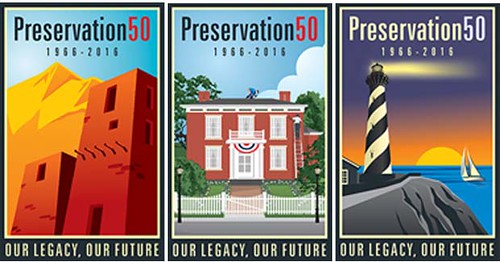
50th anniversary of the National Historic Preservation Act in 2016 as an opportunity for assessment.  2016 was the 50th anniversary of the National Historic Preservation Act, which was passed in 1966.  The law was spurred by public protest against the impact on existing neighborhoods from urban renewal and highway construction projects, "undertakings" funded for the most part by the federal government.

-- Preservation 50
Posters, 50th anniversary of the National Historic Preservation Act

Learn; Get Involved

37. Learn about the history of your community. For example, for DC, read Dream City: Race, Power, and the Decline of Washington, D.C., 1964 -1994 and Between Justice and Beauty, and more.

In DC, knowing about the original L'Enfant Plan and follow up planning by the McMillan Commission, allows you to understand the antecedents of the city, and make better land use decisions going forward, for your neighborhood and for the city.

L'Enfant Plan, Washington, DCStart with Washington in Maps by Iris Miller and Washington: Through Two Centuries by Joseph Passonneau. And see "Washington: Symbol and City," a permanent exhibit at the National Building Museum.

Many university presses publish books on local history and architecture that are well worth reading.

For example, the Wayne State University Press published a fabulous book on railroad stations, Michigan's Historic Railroad Stations.

The book, by Michael Hodges, doesn't have an extensive section of introductory text, but what's there is golden--a succinct discussion of public space and the importance of railroad stations in the civic realm, and a good survey of the key texts in the field.

Johns Hopkins University Press (catalog on railroads, regional interest, including architecture) and the University of Chicago Press (architecture) have extensive publishing programs on history and architecture, with many many excellent items.  So do the MIT Press and Princeton Architecture Press, as do most university presses, from the University of California to the University of Tennessee.

History Press and Arcadia Publishing Company have extensive publishing programs on community history.

38. Become a member of your citywide/countywide/regional preservation organizations such as the DC Preservation League, the Municipal Arts Society in New York City, Baltimore Preservation, Historic Districts Council in New York City, Cleveland Restoration Society, Preservation Resource Center of New Orleans, Landmark Society of Western New York (which serves Rochester, among other places), etc.  I am a big fan of the Chicago Bungalow Association.

39.  Before you get too involved, you might want to take the time to read your city, county, or state historic preservation plan.  This will educate you about preservation issues in your area.  (Although generally such plans are pretty positive, and don't go into enough detail about the "threats" nor do they outline ways to address "opportunities" in a process design approach.)

In order to implement the provisions of the National Historic Preservation Act, the National Park Service was tasked with the responsibility of working with states to create a process for designating resources for the "National Register of Historic Places."  All states have historic preservation offices to coordinate efforts at the state level.  And in order to be "certified" at the state and local level--this means that the agency is eligible to use federal historic preservation funds--the entity has to have a plan.

-- DC Historic Preservation Plan

However to fully protect historic resources, you need local laws and regulations.  Note that something that many people find confusing is that the federal law only concerns federal undertakings--federally-owned buildings (the Post Office is exempt) and federal programs spending money locally (like aging programs or road and transit projects).

Getting national recognition from the National Register of Historic Places for a local historic district isn't enough to protect resources from local, state, or private action.  Separate local laws are required.

Unfortunately, I'd argue that the 50th anniversary of the law was an opportunity for assessment and evaluation, and setting an agenda for improvement, and in most places that did not happen.  

40. Learn about why historic preservation is important, in and of itself, as well as a urban revitalization strategy. The reason I am a strong supporter of preservation is that I have come to believe that it is the only approach to economically sustainable neighborhood and commercial district revitalization that works for the long haul.

Hands down though, the best speech on the power and centrality of beauty and historic preservation in civic life is that by recently retired Mayor Joseph Riley of Charleston, SC.

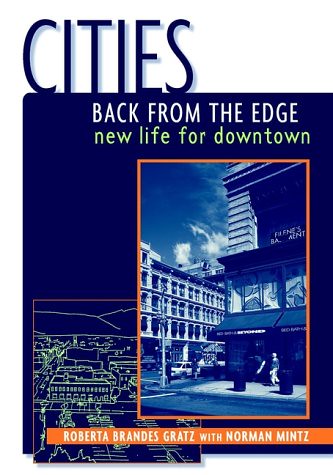
Probably the best two books to read are Cities: Back from the Edge and Changing Places, in terms of getting up to speed on the issues quickly without having to read dozens of other tomes.

Cities Back from the Edge by Roberta GratzIf you want to get into more detail, I suggest reading some of the work by Donovan Rypkema, such as his speeches, including "Culture, Historic Preservation and Economic Development in the 21st Century" and "Economic Power of Preservation," and his report on the economic value of preservation for New York, New York: Profiting through Preservation.

The book published a couple years ago by the World Bank, The Economics of Uniqueness: Investing in Historic City Cores and Cultural Heritage Assets for Sustainable Development, extends these arguments more broadly.


41. Join a neighborhood/local preservation group, such as in DC the Capitol Hill Restoration Society, Historic Takoma, or Historic Mount Pleasant).

42.  Nationally, you can join the National Trust for Historic Preservation while you're at it. If you join, you can visit NT owned sites and affiliate organization museums at a discount/free, get discounts at Historic Hotels, and discounts on products you purchase.

Historic Takoma House Tour sign in front of a participating building43.  Preservation Action is a 501(c)4 advocacy group that advocates for specific legislation and is also a membership group.  Their "Preservation Advocacy Week" is held in March, where members lobby Members of Congress for legislation favorable to preservation.

44.  At the state level, most states have statewide preservation organizations.  In the DC-VA-MD area, that means Preservation Maryland and Preservation Virginia/Association for the Preservation of Virginia Antiquities, as well as the DC Preservation League.  Many sponsor annual or bi-annual conferences, journals, and other provide other resources.

I am always impressed by the quality of the annual conference of Colorado Preservation.  (The Saving Places Conference is in February, so we missed it.)

So join your statewide group.

45. Volunteer/1. Get involved in a preservation issue in your neighborhood or the city-county at large, which could include attending meetings of your local historic district/preservation commission, which in DC is the Historic Preservation Review Board, or working on a particular project affecting your neighborhood or city.

Issues common to many communities are inadequate protections for "old" buildings that may be historic but not necessarily designated (e.g., "Boston-area towns seek ways to slow razing of historic homes," Boston Globe) and teardowns, where older smaller houses are bought solely for the opportunity to build a new and bigger house on the same property ("Demolition Derby: As high-dollar houses crowd onto tiny lots, teardown fever is sickening neighborhoods across Nashville ," Nashville Scene) which is likely well located.  This is an increasing problem in high value real estate markets, and less of an issue in weak real estate markets.

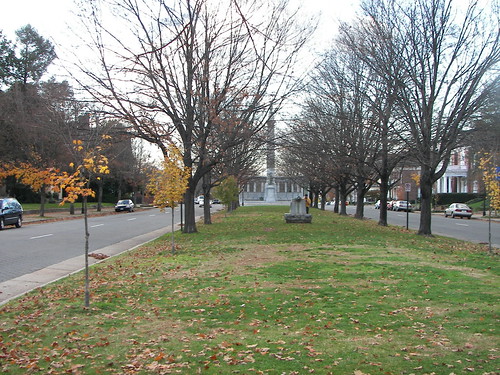
Boulevard, Monument Avenue, Richmond
Median, Monument Avenue, with a monument in the background.

Another example is in Richmond, Virginia, where the Save our Statues organization is focused on restoring and maintain the city's statues, for example, those along Monument Avenue.  See the article from the Richmond Times-Dispatch.

There are always issues with "old" commercial buildings being demolished in favor of new architecturally homogeneous buildings (e.g., preserving diners in Baltimore County, Maryland, or historic theaters in various places).

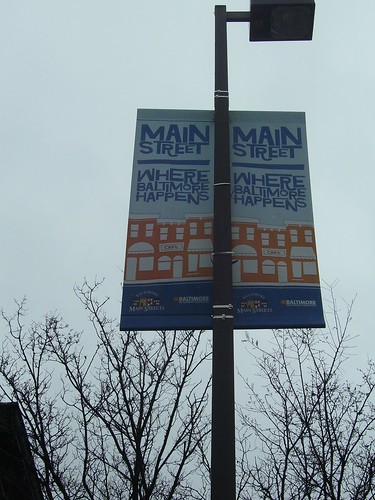
46. Volunteer/2, in a traditional commercial district revitalization initiative, at a history museum, or for a historic site.  A "division of the preservation movement" is the Main Street commercial district revitalization program, which links economic development with historic preservation focused on the revival of local commercial districts and downtowns in smaller communities.

There are affiliates in every state, in many provinces in Canada, and in other countries as well. In the DC region, Maryland and Virginia have state level programs--Baltimore's program at the city level is independent of the state program, and there are a number of Main Street programs in DC.
'Baltimore

The Main Street Approach is ground up, where residents and other stakeholders join in with merchants and property owners to work on improving the commercial district overall. Typically, programs have a manager and may have additional full-time or most likely, part-time staff. It's volunteer.

Note that big downtowns and large business improvement districts tend to be members of the International Downtown Association, and are more focused on clean and safe activities and tend to be run by full-time staff, although in some cities such as San Diego, many of the business improvement districts are run using the Main Street Approach.

In my experience, interestingly, volunteers in Main Street programs tend to be 10-15 years younger than those in traditional preservation organizations, and the most active Main Street volunteers tend to live closest to the commercial district.

This makes Main Street commercial district revitalization programming a tremendous opportunity to draw new and younger audiences to the preservation movement.

There are more than 1200 Main Street programs around the county, including active programs in every state.

47.  Volunteer/3, at a history museum, a historic park or at a historic site.  Museums and historic sites are always looking for volunteers, as our most park systems, including the National Park Service.  Many docents at sites and museums are volunteers.

-- Volunteer in Parks program, National Park Service

48. Work to preserve historic schools as schools.  The DC Public School system has an archives and museum that is also a meeting center, Sumner School, at 17th and M Streets NW.

Sprawl-supportive building accreditation standards for school buildings push the concept of larger campuses served by school buses.

-- Historic School Preservation help page, NTHP
-- Why Johnny Can't Walk to School: Historic Neighborhood Schools in the Age of Sprawl, NTHP
-- Helping Johnny Walk to School: Policy Recommendations for Removing Barriers to Community-Centered Schools, NTHP

A tougher issue is preserving school buildings that are no longer needed.  This is a big problem in large cities that once had much bigger populations and a large set of school buildings spread throughout the city to accommodate.

In stronger market cities the school buildings are in high demand for conversion to housing.  In weak market cities, typically there isn't much demand for the buildings and they moulder, although sometimes they can be converted to social housing with the use of various tax credit programs.  (See Why Vacant Schools Still Sit Empty, a publication of The Pew Charitable Trusts.)

49. Another way to learn a lot but very quickly is to attend a preservation conference such as the annual meeting of the National Trust for Historic Preservation (this year it's in Denver starting October 10th) and the National Main Street conference, which was held in Seattle in March, some sessions materials are available).

Many other areas have great preservation conferences but not in May, such as the state conference in Colorado, usually in February, and the conference of the Landmark Society of Western New York.

50. Check out the history resources at your local library or a specialized collection such as in DC at the Washingtoniana Collection at the Martin Luther King Central Library or the Peabody collection at the Georgetown Branch, the Kiplinger Library at the Historical Society of Washington, the Jewish Historical Society, or the Moorland-Spingarn Collection at Howard University.  Many city libraries have history collections.

51. Read a historic district brochure (or historic building or district nomination form).  In DC, they are available online or in hard copy at the Historic Preservation Office.  Many communities produce and publish these kinds of publications.  Two of the best I've ever read is one on Jefferson County Indiana including Madison (One of the first Main Street communities) and Hanover, and the other on the Kansas City public market, called City Market.  Both lay out their respective histories chronologically but thematically.

Relatedly, to win designation, the group organizing the creation of a historic district has to create a "context statement," which outlines the architectural, social, and cultural history of the area.  While the writing quality varies, they are usually great resources and fun to read.  One example is the nomination form for the Hyattsville Historic District in Prince George's County, Maryland.

The difference between a brochure and the full context statement is the detail.  A brochure is succinct and the highlights version, drawn from the full document.

Also note that there is a variant of context statements, called thematic studies.  These documents set the stage at a larger scale, that of the landscape, period, or a particular type of building, structure, or site (warehouses, schools, telecommunications facilities).

For example the National Register Publication Historic Residential Suburbs is an excellent discussion of suburban development, recognizing that this type was a part of late stage development within center cities also, at the outskirts but still within a city's boundaries.

The City of San Jose commissioned a Mid-Century Context Statement to document the city's "contributions to California Modernism, [focusing] on resources built between 1935 and 1975 ... [delineating] architectural styles, historic themes and associated property types, and catalogues local practitioners."

52.  I am a big fan of reading the design guidelines publications produced for cities or neighborhood historic districts, which describe local historic districts, such as those from Montgomery County Maryland, Richmond, Virginia, Roanoke, Virginia, and the Philadelphia Rowhouse Manual.

The Roanoke Virginia Residential Pattern Book is a stand out!

53.  Listen to a preservation focused podcast.  Podcasts--"radio shows" are a new addition to preservation-based media.  Preservation Maryland produces a great series, PreserveCast, which is worth checking out.

Labels: , , , , , ,

Friday, May 03, 2019

May is (2019) Historic Preservation Month: 60 ways to celebrate | Part 2: Explore your community (20-36)

This series is updated and expanded annually, to encourage us to acknowledge and celebrate historic preservation, ideally not only during Preservation Month but throughout the year, by pointing out things that we can see and do.

The first post runs on the first day of May and the other posts on succeeding Fridays.

-- May is Historic Preservation Month: 60 ways to celebrate | Part 1:Cultural Heritage Tourism (1-19)
-- May is Historic Preservation Month: 60 ways to celebrate | Part 2: Explore your community (20-36)
-- May is Historic Preservation Month: 60 ways to celebrate | Part 3: Learn and Get Involved (37-52)
-- May is Historic Preservation Month: 60 ways to celebrate | Part 4: Preservation At Home (53-60)

=====
Explore Your Community from the standpoint of Historic Preservation

20. Explore an older area of your community that you don't know. Go on a neighborhood or building tour. Check out a talk (not all of them cost money) at the National Building Museum.

Or just walk around a neighborhood with housing built before 1930.  Walking here and there around the core of Takoma Park, Maryland, we always come across attractive and unique houses.

21.  Many preservation groups sponsor neighborhood house tours.  On the first Sunday of May, Historic Takoma Park (DC and Maryland) has their annual house tour.

Similarly, every Mother's Day weekend, DC's Capitol Hill Preservation Society they have their house tour (that's this coming weekend).

There are others throughout the year in neighborhoods across your city and region.

On Saturday May 18th, the Frank Lloyd Wright Preservation Trust in Oak Park, Illinois, holds its annual House Walk tour/fundraiser.

22.  Follow the path of a Heritage Trail such as one of the many "produced" by CulturalTourismDC in DC.

A growing number of communities have similar kinds of interpretation programs.

Richmond's Liberty Trail links historic neighborhoods, sites, and attractions.  They got the idea from Boston's Freedom Trail, which more specifically focuses on sites and places significant to the American Revolution.  But Richmond's Slave Trail, interpreting the city's history in terms of slavery, started out pretty uniquely as one of the first "trail" initiatives to take on such a troubling subject.

Delaware History Trail sign, Holy Trinity (Old Swedes) Church
Delaware has a state-wide history trail. The States of Maryland, Virginia, Pennsylvania, and Tennessee have a coordinated set of trails on Civil War history.

And many states and heritage areas are creating culturally-focused programs such as a whiskey trail in Kentucky, a blues trail in the Mississippi River Delta, food artisan trails, etc.

23. Shop at stores in commercial districts that are historically designated: i.e., Cleveland Park; Georgetown; Capitol Hill; Dupont Circle in DC, but there are so many across the country.

The Park and Shop parking fronted shopping center in Cleveland Park, built in 1931, illustrates the evolution of retail development alongside changes in US transportation practices, i.e., "the car."  Similar shopping centers in the area are in Silver Spring, Maryland and on Cary Street in Richmond.

Interestingly, the Larimer Square commercial district in Denver assesses a 1% sales tax surcharge, called a Historic Preservation and Restoration Fee, to fund physical improvements in that district.  It's a special purpose district that is a variant of what the State of Colorado calls "Metropolitan Districts."

Frame, Zippy the Pinhead by Bill Griffith, Ben's Chili Bowl24. Eat in a restaurant in a historic building/historic district. Now 60+ years old, Ben's Chili Bowl is one of the few remaining restaurants in the city that is many decades old.  .. Readers have pointed out that Martin's Tavern in Georgetown and Cafe Mozart, a German restaurant downtown, are much older.

25. See a movie in a historic cinema building. There aren't many historic cinemas in DC proper any more, but the Uptown Theater in Cleveland Park is one.

A few years ago, we had a blast seeing a midnite film at the Byrd Theatre in the Carytown district in Richmond.  Recently, the Byrd underwent a much overdue renovation ("Byrd Theatre in Carytown to raise ticket prices, install new seats," Richmond Times-Dispatch).

And I loved how the then barely active Lincoln Theatre in DC showed "The Girl with the Dragon Tattoo" in December 2011.  It helped to reposition the theatre as an actively programmed cultural asset.

-- League of Historic American Theatres

26.  See a production in a "legitimate" historic theatre or concert hall.  You have many choices in the DC area such as the Warner, the National, the Studio Theatre, the Lincoln Theatre, the Shakespeare Theatre at the Landsburgh, the Atlas Performing Arts Center (which utilized federal historic preservation tax credits to pay for a portion of the building's rehabilitation), or the DAR Concert Hall.

The State Theatre in Falls Church, Virginia is a great place to see a concert, especially from the balcony!

Lido Theater, Palm Desert, California.

Note that the Pittsburgh Cultural Trust and the Cleveland Theater District Development Corporation programs to revitalize their respective interest areas through rehabilitation and operation of historic theatre buildings has been vital and central to revitalization efforts in those communities. See "Playhouse Square stars in its own real estate revival" from the Cleveland Plain Dealer.

Fisher Theatre in 1970, a few years after I first attended a children's theater production there.

Of course, there are hundreds and hundreds of such arts-based revitalization efforts, mostly on a much smaller scale, across the country.

Without realizing it, attending plays and concerts as children can be the first formal introduction a child has to historic preservation.

One of my first such experiences was as a child seeing a play in the historic Fisher Theatre in Detroit's Fisher Building.

27.  Even if you're an atheist, it can be fun to visit a historic church building, including checking out their stained glass windows (I am a big fan of stained glass).

The Fifth Avenue Presbyterian Church in Manhattan/New York City often has its doors open when the choir is practicing.  Many churches offer tours or special concerts.

If you want to learn more about church architecture, a good place to start is with the book, THE CHURCH BUILDING AS A SACRED PLACE: Beauty, Transcendence, and the Eternal.(Review of the book from the Imaginative Conservative blog.)

28. Shop at a historic public food market. Eastern Market is DC's last remaining public food market building, built in 1873.  (Union Market is privately owned, and was constructed in the 1970s.)

There are many great markets around the country, including the Eastern Market food district in Detroit, the Italian Market and the Reading Terminal Market in Philadelphia, the Farmers Market and Grand Central Farmers Market in Los Angeles, Pike Place Market in Seattle, the Indianapolis City Market, Lancaster Central Market in Lancaster, PA, the York Public Market in York, PA, West Side Market in Cleveland, etc.

Eastern Market, Washington, DC
Eastern Market in Washington DC 

29. Visit a historic cemetery. In DC, we have the Congressional Cemetery or the Rock Creek Church Cemetery at St. Paul's Episcopal Church, among others.  Brooklyn's Greenwood Cemetery is a standout.  Some cemeteries offer tours.

30. Check out an exhibit at a local history museum or historic site, such as at the Anacostia Community Museum or the Historical Society of Washington or one of the other house museums and historic sites in the city and region.

The Pittsburgh History Center, the New-York Historical Society, Museum of the City of New York, the Jamestown Experience, the Brooklyn Historical Society, the Valentine History Center in Richmond, among others, are great local museums that are definitely worth a visit.

31. Walk the historic grounds of a local college or university.  In DC, Catholic University, Trinity, Georgetown, Howard, and Gallaudet have beautiful grounds and buildings.  Kendall Green at Gallaudet was designed by Frederick Law Olmsted.

Note that I wish colleges would focus on this more than they sometimes do.  Howard University in DC has a beautiful campus, but you'd never know as it is tucked behind Georgia Avenue with few attempts to draw people inward to the campus.  (Recently, the National Trust has set up an initiative with Howard to assist them in preservation and rehabilitation of their historic properties.)

32. Check out a monument or memorial in your community and learn more about it. We can't preserve what we don't understand or appreciate.

Over the past couple years, greater attention has been paid to monuments in honor of people associated with the Confederate cause with a demand that a more nuanced interpretation be provided, or that monuments be removed from prominent public locations ("What to do with Confederate monuments," Chicago Tribune).


Terminal Town is a fascinating book discusses in brief all of Chicago's transportation terminals--including bus stations, interurban stations, and airports.

33. Visit a historic railroad or bus station, such as DC's Union Station. Designed by Daniel Burnham, it's an incredible example of the City Beautiful architectural movement. Check out chapters from Bill Wright's dissertation on Union Station. He's a great writer!

Railroad stations tend to be grand while older bus stations tend to be gnarly, which is an interesting commentary on the place of these respective modes in transportation history and practice.

34. Check out a historic library building.  Many cities have great library buildings that now qualify as historic.  A number of DC's libraries were built with support from the Carnegie Foundation (Northeast, Southeast, the old Carnegie Library downtown, Takoma, and Mount Pleasant, which is particularly gorgeous) as were more than 2,000 other libraries elsewhere in the US.

35. Take a boat trip on a local river.  The pontoon boat tours of the Anacostia River leaving from the Bladensburg Waterfront Park (in Prince George's County) dip into DC.  Many cities have water-based tours or smaller scale water taxi systems as well.

Boston, Seattle, New York City, and San Francisco have working passenger ferry systems.  The Staten Island Ferry is working transit that's free and is a fun trip.

Mount Vernon Plantation, view from the River.

Suzanne recently took a boat to Mount Vernon Plantation on the Potomac River, and she said entering the grounds from the River provided a completely different perspective on the property and reminded her of the fact that before roads, rivers were the nation's highways.

36. Explore historic preservation matters in your region, beyond the borders of your community.

Silver Spring, Maryland is immediately north of DC and grew as an inner ring suburb.  Much of its growth occurred during the "art deco" period so it has a number of buildings done in that style, including an early version of a "park and shop" strip shopping center, the Silver Theatre, and other commercial buildings.

Their historic trail marker system is excellent.

Not quite two miles from DC is the Bladensburg Waterfront Park in Bladensburg, Maryland.

Reflect about when this was a major port, when tobacco was king, and DC was still part of Prince George's County, Maryland. They offer river rides on the weekends, including a jaunt into DC to the National Arboretum.  Prince George's County has an extensive inventory of historic sites that are open to the public, etc.

In Prince George's County, the Historic Hyattsville (Maryland) house tour is Sunday May 19th.

Labels: , , , , , ,

Wednesday, May 01, 2019

May is Historic Preservation Month: 60 ways to celebrate | Part 1: Items 1-19 (Cultural heritage tourism)

This post is updated and expanded annually, to encourage us to acknowledge and celebrate historic preservation, ideally not only during Preservation Month but throughout the year, by pointing out things that we can see and do.

I used to run it in one long piece, now I break it up into four posts each of which are still long.  In the past, I led from learning and locally to cultural heritage tourism as the fourth entry.  But given that I mention events happening during the month, it makes more sense to lead with the entry on cultural tourism--getting out and exploring beyond your community.

-- May is Historic Preservation Month: 60 ways to celebrate | Part 1: Cultural Heritage Tourism (1-19)
-- May is Historic Preservation Month: 60 ways to celebrate | Part 2: Explore Your Community (20-36)"--
-- May is Historic Preservation Month: 60 ways to celebrate | Part 3: Learn; Get Involved (37-52)
-- May is Historic Preservation Month: 60 ways to celebrate | Part 4: Preservation At Home (53-60)

========

Cultural heritage tourism is the segment of tourism and visitation where people "consume" culture-related attractions, events, and places.  Cultural tourists tend to stay longer, spend more, and spend more "locally."  Of course, the great thing about making places great for ourselves is that they are attractive to visitors, and the money they spend while visiting supports the local economy.

-- Cultural Heritage Tourism, Partners for Livable Communities

At the same time, we have to be conscious of our footprint, because places can become "touristified" and the local offer shifts from locally-serving commerce to tourist-serving activities (think junky souvenirs and Spring Break type drinking establishments).

The use of nonstandard accommodations through Airbnb or Home Away can also be controversial because these properties can remove housing from the normal residential rental market ("Statistics and data on whether Airbnb puts up rent prices," Business Insider).

While most cities charge a variety of "tourist" taxes (extra taxes on hotel stays, rental cars, and meals), some impose separate fees--a fee for being there--and other cities are considering this ("Barcelona plans day tax for tourists," London Telegraph).

From a planning perspective, in Passaic County, NJ, the Transportation Plan raised the idea of treating historic transportation corridors as opportunities for historic interpretation and cultural tourism, and the county has further developed the idea as part of the county's Heritage Tourism Plan.

(The National Trust for Historic Preservation used to focus on cultural heritage tourism, which is one of the ways I learned about the field, but they have de-emphasized this in recent years.)

Like how the Main Street program can produce "resource plans" for local commercial district revitalization programs, the NTHP cultural heritage program used to produce similar cultural heritage development plans, but other organizations still do so, such as the policy studies program at the University of Delaware, and their proposal for Sussex County as well as academic tourism programs.)

Visitor centers as resources.  Many cities, counties, and state tourism and/or "convention and visitors bureaus" sponsor "visitor centers" where people can get tons of information about the places they are visiting, and usually information about history and cultural is readily available there.  (For me, visitor centers are also a great place to learn about "best practices.")

-- "Why Miami-Dade has more visitor centers than any city in the U.S.," Miami Herald
-- Accredited Visitor Information Centres Portal, Tourism and Events Queensland, Australia

Sadly, more visitor centers are moving to a digital focus, making it harder to pick up printed information and to be exposed to places and sites that you wouldn't otherwise be exposed to.

Historic preservation organizations.  Obviously, local historic preservation organizations at the city, county, or neighborhood level are a great resource for finding out about local points of interests, historic neighborhoods, and interesting architecture.

Many such websites include downloadable resources for walking tours, etc.

The April 2017 cover story of Southern Living Magazine featured Charleston, South Carolina. 

(FWIW, seeing Charleston and Savannah for the first time taught me about the value of historic preservation, but at the time thinking of my own community, how too often we take the historic features of our own city and neighborhood for granted.)

Magazines focusing on historic homes (Old House Journal, This Old House, American Bungalow) and regional travel (Sunset, Southern Living) and interesting travel (National Geographic Traveler) are also a good source.

-- Southern Living City Guides

Note that a community doesn't have to have the reputation of a Savannah or Charleston to have plenty of interesting historic features that are worth exploring.

Uniquely, the Preservation Society of Charleston has a shop on the main shopping street, King Street, selling stuff but also dispensing information, and serving as a staging point for tours.  More preservation groups should consider doing something similar.

Resources at local chapters of the American Institute of Architects. In many cities, AIA chapters often have multifaceted offices that also have exhibit spaces and bookstores, and offer information on a city's built environment that is useful for visitors.  The Philadelphia chapter is particularly noteworthy, and is located close to Reading Terminal Market.

Most major cities have a guide to local architecture published in association with the AIA and the Architecture Daily website also has a City Guides page.

Local bookstores.  Most communities have some premier, usually independent, bookstores, and these stores usually have a section of books on local history and places to visit.

1. Stay at a historic hotel in the city or a bed and breakfast located in a historic district. For example, the Tabard Inn in the Dupont Circle Historic District is one of the most romantic places in the city to have weekend brunch--out on the patio, during the spring, summer, and fall.

Pittsburgh Trip - Priory HotelI'm a big fan of the Priory Inn (Flickr photo by Two Ks) in Pittsburgh, which is in the Northside district, but an easy walk over the river into Downtown, near various Northside cultural institutions (and football and baseball if you're into that), etc.

Kennedy School in Portland, Oregon is a B&B in a former school, etc.

The National Trust for Historic Preservation has an affinity group, Historic Hotels of America, a collection of particularly distinctive and historic hotel properties.  NTHP members get discounts.

But the Standard Hotel in Los Angeles isn't a traditional historic hotel--it is remade from an office building constructed during the art deco area for an oil company--and it's very cool!  There are an increasing number of such hotel properties across the country.

This month, on May 15th, the makeover opens of the TWA Terminal at JFK Airport into a 512-room hotel ("TWA Hotel at New York's JFK airport to open for bookings," Guardian).
Lounge area at the TWA Hotel complex.
Lounge area at the TWA Hotel complex. Photograph: Max Tuohey.

Old neon signs, like this one for Groff's Restaurant, hang in the Doo Wop Preservation League museum in Wildwood. Photo: Dale Gerhard, Atlantic City Press.

All kinds of buildings can be historic, from motels in the Doo Wop Motel District, technically named the "Wildwoods Shore Resort Historic District" in Wildwood, NJ ("Wildwood's doo wop architecture, appeal finding new generation of younger fans," Atlantic City Press), the art deco district in Miami Beach, or the Waldorf-Astoria in New York City.

VRBO.com, HomeAway, Airbnb, etc. are great sites for finding places to stay in neighborhoods, including historic districts. Not only do you more directly support the local economy (typically, hotels are owned by noncity interests and most of the room rental revenue doesn't stay local), but you can--if it's your way--have a much better, more local experience.

As examples, we've stayed in a house on Forsyth Park and a converted church building both in Savannah, a rowhouse in North Beach in San Francisco, and a basement apartment in Capitol Hill in Seattle and we experienced those places much more like local residents.

When you visit other places, check out how they deal with historic preservation matters, and share that learning when you come back. For example, every fall, Pasadena Heritage sponsors Craftsman Weekend, in honor of its bungalow heritage.

2. Don't forget to check out traditional commercial districts, antique shops, other stores, cinemas, theaters, concert halls, restaurants, historic cemeteries, etc. as a regular part of your travel itinerary.

3. Check out a historic library building/Central Library.  Another great place to learn about a community when you're traveling is the main library.  Some of the buildings are historic, others more recently are majestic new construction buildings very much worth visiting.  .


Pictured at left, the Handley Memorial Library in Winchester, Virginia is particularly grand.

A number of DC's libraries were built with support from the Carnegie Foundation (Northeast, Southeast, the old Carnegie Library downtown, Takoma, and Mount Pleasant, which is particularly gorgeous) as were more than 2,000 other libraries elsewhere in the US.

Big city libraries tend to be pretty awesome, but as Winchester, Virginia proves, there are such jewels in cities of all sizes.

4. Visit historic sites.  Many people visit historic sites when traveling.  Across the United States, ("The shortest route to America's 49603 historic sites," Washington Post) there are almost 90,000 places listed on the National Register of Historic Places.

5. Go see a museum exhibit relevant to urban history, even if it's on a seemingly broader topic. When people travel, and "consume" locally available museums, usually people's trips start and end with the local arts museum.

But most cities have history museums as well, and they are well worth visiting.  In New York City there is the Museum of the City of New York, the New-York Historical Society, the NYC Transit Museum.  The Morgan Library has relevant exhibits, etc.  The Museum of the Shenandoah Valley outside Winchester, Virginia combines history and art.  The Valentine Center in Richmond, Virginia is excellent, as are the museums in Greater Williamsburg, the Pittsburgh History Center, etc.

While it's a national example, at the National Museum of American History, the exhibit on transportation history, "America on the Move" is superb.

Part of that exhibit uses Washington as an example specifically. But in any case, it explains the role of transportation in urban and regional development, and will give you a lot of insight into these issues as they relate to any region.

6.  Walking and building tours.  Many communities have organized walking tours for historic areas. Some print booklets for self-guided tours, many places have smartphone tour apps, and cities often have historic marker and trails programs.

In New York City, the Municipal Arts Society offers tours.  In Chicago, the Chicago Architecture Center is a staging point for tours.  In San Francisco, the City Guides organization provides free tours led by volunteers.

7. Bicycle touring.  Bikes are a great way to cover a lot of ground more quickly.  And it's less tiring to bike than it is to walk.  Many cities have bike rental operations (there is a loosely affiliated group called "Bike and Roll" operating in many cities).  And some hotels and B&Bs make bicycles available to their guests.  (There are even apps for renting bikes directly from individuals, like Spinlister, which can be cheaper than the bike rental places.)

Me on a Bixi
Me on a Bixi bicycle sharing bike in Montreal.

Bike share operates in many cities and can be a good way to get around, although to be cost effective you need to be clued in to how the system works.

Usually you can buy a short term pass, for a day, a few days, or a week, and this entitles you to unlimited free trips of 30 minutes duration.

But if any individual trip lasts for more than 30 minutes, you will be charged additional fees, which usually escalate with each additional 15 minutes to half hour.

But as long as you keep your trips to 30 minutes, no additional fees will be charged.

The Divvy bike share system in Chicago sometimes offers neighborhood tours as a promotional effort, although these are targeting residents.

It would be great for bike sharing systems, working with local convention and tourism bureaus, to develop a little better the opportunity of bike tourism--it would increase usage during slack times, would introduce people to the concept, and make a little money.

As an example, Choose Chicago has a webpage, "DIY Tours: Chicago's Riverfront by Divvy Bike," promoting bike share as a way to explore parts of the city..

8.  Transit as a way to get around.  While not many cities in the US do this, many European cities set up or promote specific transit services as a way to tour parts of the city, usually a set of tourist-oriented attractions in the core ("Travel around the city by tram," Visit Helsinki).

If you're already familiar with how to use transit, it usually isn't hard to figure out how to use another transit system.  If you don't regularly ride transit, likely people will be happy to help you.

Pierce Transit Bayliner, waterfront transit serviceThe old "Bayliner" bus used by Pierce Transit in its special waterfront service was decorated with images related to the sea.

Many cities have "Circulator" bus routes focused on the core that can aid "traveling by tourists."

Most cost money, some are free (Baltimore, Raleigh, North Carolina).  Tacoma, Washington is re-introducing a waterfront access transit service.

Some transit agencies publish special brochures and webpages for visitors, but CVBs and transit agencies need to work more closely together on facilitating visitor use of local transit, if only for "transportation demand management" purposes.

-- CTA Visitor Information - Using Transit in Chicago, Chicago Transit Authority-- Visitor's guide to public transit, City of Vancouver
-- MetroCard City, NYC MTA
--- Visitor's Kit, Washington Metropolitan Area Transit Authority

Some cities--not DC--have bundled transit access into specially priced tourist passes, such as the City Pass in San Francisco, which includes unlimited use of the MUNI transit system including the cable cars and the vintage streetcars as well as regular bus and light rail services.

To get the best prices on fares, likely you'll have to buy a local transit fare card, rather than paying for each ride as you go.  Depending on the system, the type and price of available passes, and how long you stay, it may or may not be worth buying a transit pass.

9.  When we travel, we like to visit house museums.  For example, the Woodford Mansion in Philadelphia is really cool, and Savannah has many different house museums that you can visit, the most notorious being the Mercer-Williams House.  Most cities have at least one.  Los Angeles has just reopened the Hollyhock House.

This brochure for the consortium of the Historic House Museums of Southeastern Connecticut does a nice job of showing the 12 affiliated sites as a network.

10. Arguably, "antiquing" which for me includes ephemera, can be a form of historical/historic preservation-related research and is deserving of a separate entry.

While traveling, you may wish to check out reclaimed building materials stores too.  You'll probably have to do some digging to find such organizations, but offhand I know there are such places in New York City, DC (Suburban Maryland), Baltimore, Pittsburgh, Minneapolis, Detroit, York and Scranton, Pennsylvania, etc., plus the various Re:stores run by local affiliates of Habitat for Humanity.

11.  Visit a historic railroad station, bus terminal and/or a transportation museum.   There are many fabulous extant railroad stations, many no longer in use, in so many cities.2013 was the 100th anniversary of Grand Central Station in New York City, and in Chicago, Denver, and Los Angeles new master planning and/or construction improvement projects for stations in those cities are underway.

Photo of the exterior of The Grey Restaurant, Savannah by Emily Andrews.  

Greyhound, the inter-city bus company, was known for in the 1940s and 1950s, the construction of dynamic bus terminals featuring art deco/streamline design.

Savannah's Greyhound Bus Terminal has been transformed into a sleek restaurant ("How a Greyhound station in Savannah became a hit new restaurant," Washington Post).

The Illinois Railway Museum runs trains and streetcars on its site, including the art deco/streamline designed Nebraska Zephyr, of the Chicago, Burlington and Quincy Railroad.


Nebraska Zephyr.  Arlington (IL) Daily Herald photo.

-- list of railroad museums

While they don't promote "sustainable mobility" classic car shows and museums are still interesting and great opportunities for learning and seeing something different.

-- National Association of Automobile Museums

12. Visit a streetcar museum.   Many communities have streetcar/transit museums such as the Baltimore Streetcar Museum and the National Capital Trolley Museum  in Montgomery County, Maryland in this area.  So try to ride a historic streetcar as well.

Photo of a Kenosha streetcar by Brian Gardner.

13.  Ride a streetcar system in active service. Some places run heritage streetcars in active service.  Everyone knows about the streetcars in New Orleans (and that system continues to expand in bits and pieces).

San Francisco's F Line/Market Street Railway is an active transportation museum, featuring vintage streetcars painted to represent various streetcar systems from around North America.

The cars are restored with the help of volunteers, organized as the Market Street Railway. Membership in the group entitles you to their quarterly newsletter, which is fabulous.

But historic/"old" streetcars run in many places in regular service: Boston; Dallas; Kenosha, Wisconsin; Little Rock; Memphis; Philadelphia; Tampa, Toronto (the current cars date to the 1980s but the system has remained in operation for a long time); etc.

In the summer, on weekends, the Toronto streetcar system runs a heritage car on the waterfront ("TTC's vintage streetcar a great way to see harbourfront on Sundays").  Portland used to do something like this, but no long does.

San Francisco also has the cable cars, which are a designated National Historic Landmark.
San Francisco Cable Car
Cable car in San Francisco.  Flickr photo by Jon Robson.  Cable cars are mostly a tourist attraction, but depending on where you live and work in the city, they are also a working element of the public transit system.

Not to mention new streetcars such as in Portland, Tacoma, Seattle, etc. Memphis re-created part of its historic trolley system, which runs Downtown and in the riverfront district, in 1993.

And note that the South Shore Line, an active transit service connecting Northern Indiana to Chicago, is the nation's only extant interurban railroad service--there once hundreds of such systems across the country, but their moment as an elemental mode in the transportation system was brief, snuffed out by the combination of the rise of the automobile and the Depression.
South Shore Line
South Shore Line train in Michigan City, Indiana.  Flickr photo by Tony Lau.

Reading Outside Lies Magic: Regaining History and Awareness in Everyday Places by John Stilgoe will help you look at the outside environment in new ways.

14. Tour a historic trail, road, railroad, canal, park network, or parkway/greenway.

The C&O Canal Trust has restored some of the canal lockmaster quarters, which people can stay in.

-- Great Allegheny Passage (biking)
-- National Scenic Byways Program

The National and State scenic byways programs draw attention to these opportunities, and information from these programs is usually made available at visitor centers.

Minneapolis has recently upgraded its Grand Rounds Scenic Byway System, which connects Downtown sites, neighborhoods and the city's park system including lakes, the Mississippi River, and Minnehaha Creek.

Salt Lake City has created a bike loop not quite 14 miles long, linking various points of interests and the route is signed with special "Cycle the City" signage (Brochure and map).

15.  Garden Tourism. Garden tourism has two different strands.

The first focuses on public gardens such as the National Arboretum in DC, Roses Garden in Portland, Oregon or San Diego, and large scale local arboretums like the Lewis Ginter Botanical Garden in Richmond, Longwood Gardens in Pennsylvania, or the Morton Arboretum outside of Chicago. Usually such facilities are open all year.

The second is special event public access to normally what are private gardens.

One such program is Virginia's Historic Garden Week--held every year the last week of April--and sponsored by the Garden Club of Virginia. 

Another is how GardenWalk Buffalo sponsors a weekend of events, this year on July 29th and 30th, where people can tour gardens across the city.    (It's supposed to lead into a six week program that they call the "National Garden Festival.")  Both organizations use monies raised from their programs to support beautification and restoration projects.

These larger scale events are complemented by various locally organized events and programs, such as Garden Tours in the Georgetown and Shepherd Park neighborhoods of DC.

University Avenue in Toronto.

There is an interesting article ("Hidden landmarks: Why Toronto is at the forefront of the landscape architecture movement") in the Toronto Globe and Mail about that city's place in landscape architecture, which is perhaps deserving of a separate item for landscapes and urban design. From the article:
University Avenue may be the least wild place in Toronto, with eight lanes of traffic running between great walls of stone and concrete. But it’s a landscape. Look around: On the islands in the boulevard, lawns, copses, planters, fountains and benches form a modernist tapestry all the way from College to Richmond Street.

To Charles Birnbaum, this is a valuable piece of history, a work of design with “a pedigree that doesn’t exist anywhere else in Toronto,” explains Mr. Birnbaum, the head of the Cultural Landscape Foundation. Speaking from his office in Washington, he enthusiastically runs through the history of those traffic islands: The landscape designer André Parmentier planted the avenue in 1829; it was reshaped in the 1920s in the Beaux-Arts style; and in the 1960s, the current landscape was designed by the British-born architect Howard Dunington-Grubb to cap the newly built subway. It includes perennials, statues and vent stacks.
And as an example, the American Society for Landscape Architecture has produced three area guides (usually in association with their national conference) which discuss monuments, sites, neighborhoods and other points of interest from the landscape architecture perspective.

-- The Landscape Architect's Guide to Boston
-- The Landscape Architect's Guide to Portland
--  The Landscape Architect's Guide to Washington, DC,

16. Visit a heritage area/heritage park.  Somewhat different from a specific site is the concept of state or nationally designated "heritage areas," based on the organizing framework of the cultural landscape, addresses heritage preservation and cultural interpretation over a large district sharing a common identity, history, and theme.  Heritage areas are networks of sites, attractions, historic districts and other features.

The Alliance of National Heritage Areas is a support organization for nationally-designated heritage areas.  There are more than 40 such areas including cities like Baltimore and the Blue Ridge National Heritage Area: Blue Ridge Mountains, which includes Asheville, North Carolina.

Separate from the federal program of National Heritage Areas, which are designated by Congress (so it can be a somewhat political process), many states have their own programs. Some, like Maryland or Pennsylvania, call them "heritage areas," while certain states like Connecticut call them "heritage parks."

-- Map of heritage areas in New York State

Baltimore started out with a state-designated heritage area -- and I've argued that DC should use the heritage area concept as an organizing tool to manage and present the city's cultural resources -- which later was nationally designated.

A newer heritage area is the Thames River Heritage Park in Connecticut, promoting and linking cultural sites in Groton and New London, which are across the river from each other, and home to many great sites, shopping districts, etc.

Last summer they launched water taxi service for visitors wanting to see sites on both sides of the river.

-- Thames River Heritage Park Master Plan

17. Ride a passenger rail train.  Ride a passenger railroad (commuter) train.  In the DC region, that means MARC or VRE.  In Greater New York, New Jersey, Philadelphia (SEPTA), Chicago, and Boston (as well as Toronto and Montreal), Southern California, Northern California and elsewhere commuter railroads provide passenger rail services once provided by private railroad companies.

The Norfolk Southern Railroad, in association with the Tennessee Valley Railroad Museum, is running steam engine passenger train excursions in various places on their system.

(Union Pacific has decided to restore a steam locomotive--it will take some time--and run similar kinds of excursions beginning in 2019, which is the 150th anniversary of the driving of the "Golden Spike" and the creation of a transcontinental railroad system. See "Big Boy steam engine to start journey to Wyoming on April 28" from the Los Angeles Times.)

Amtrak's National Train Day is one way to acknowledge and celebrate railroad history and passenger train service.

There are many special scenic railroad organizations and other riding opportunities too.  Children really love these experiences.

-- Tourist Railway Association
-- Heritage Rail Alliance

Perhaps the most prominent example is the railroad from Williams, Arizona to the Grand Canyon, the Grand Canyon Railway.  The trains used to be powered by steam locomotives, but they switched to diesels to reduce negative environmental impact.

(In the past couple years now I've argued that big train stations like Union Station in DC or Union Station in Los Angeles ought to be used as staging points for heritage train travel too.)

18. Visit a national or state park. DC, for obvious reasons, has many nationally owned parks, the system of Fort Circle Parks works to preserve the forts built during the Civil War to protect the city from Confederate invasion. Fort Stevens, hidden behind a church on Georgia Avenue, around Quackenbos Street NW, was attacked by Confederate forces, and President Lincoln was up there and watched. Up Georgia Avenue a bit, close to Walter Reed Hospital, is a somewhat forlorn and neglected battlefield cemetery and monument honoring soldiers who died at the battle at Fort Stevens.

-- National Park Service, find a park
-- America's State Parks

19. Take a boat trip on a local river.  Many cities have water-based tours or smaller scale water taxi systems.  Boston, Seattle, New York City, and San Francisco have working passenger ferry systems. The Staten Island Ferry is working transit that's free and is a fun trip.

Labels: , , , , , ,