Comments by the (Federal) "Made in America" Outdoor Recreation Advisory Committee to improve national parks

... an advisory committee created under former Interior Secretary Ryan Zinke that has been looking at ways for private businesses to operate on public lands.-- Recommendations for actions to expand and improve recreational opportunities and access to public lands and waters administered by the U.S. Department of the
The vice chairman of the Outdoor Recreation Advisory Committee, Derrick Crandall, said many campgrounds don't meet visitors' expectations. Allowing the private sector to run them would free up park staff for interpretation, safety needs or other visitor services, he said.
Redesigning some campgrounds, and adding running water, tent and cabin rentals, food trucks, extended family sites and Wi-Fi at select parks also could boost revenue and encourage more people to stay overnight, the committee said.
"We're basically suggesting that would be a way to improve overall camping experiences," Crandall said. "Are we talking about pricing people out of national parks through this? Not at all."
The Interior Department isn't obligated to enact the recommendations but has said it doesn't have the money to modernize the more than 1,420 campgrounds in its system nor does every campground need upgrades.
"Once the report is reviewed, we'll respond accordingly," department spokesman Nicholas Goodwin said.
Interior (Department), "Made in America" Outdoor Recreation Advisory Committee, National Park Service
The committee was convened by the former Secretary, Ryan Zinke, and because the recommendations focus on how the private sector can offer paid for services at parks, there has been fear that this is about privatization of the parks.
Critical analysis of National Parks Service management of parks and sites in Greater DC and other urban areas. While much of my criticism about park service operations has focused on urban park needs, and how they differ from the big national parks, and how in the DC area in particular, many parks and sites are run by the Park Service, but really serve decidedly local interests and should be devolved to local parks authorities, it is the case that the big "traditional" parks have issues too.
-- "Defining National Park Service installations in DC as locally or nationally serving," 2019
-- "Yes, the National Park Service shouldn't be paying to maintain major commuter roads and bridges in the DC area," 2019
-- "Another example of the need to do comprehensive parks, recreation and civic assets planning at multiple scales, including neighborhoods like Columbia Heights," 2019
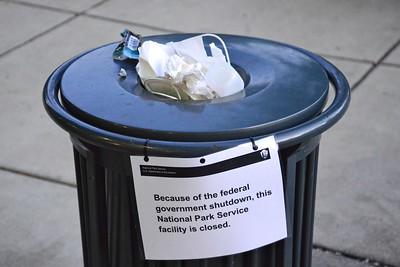
-- "Federal shutdown as another example of why local jurisdictions should have more robust contingency and master planning processes," 2013
-- "Contingency planning in parks planning: Montgomery County Maryland edition," 2013
The underlying issues are the same for big and urban parks. The same issue of underfunding. The same issue of difficulties in being innovative and flexible because of time consuming and difficult planning requirements and processes, the need to have Congress approve changes minor and major, etc.
Privatization? While I don't have a problem with private sector concessionaires, I do have a problem with exclusivity, or contracting with one master concessionaire for a park, because that is a different way of constraining the ability to innovate.
Combine master concessionaire agreements plus cumbersome federal regulations--so at a community festival in a DC park that is NPS-controlled, you can't have for profit business vendors exhibiting unless they are the concessionaire, so that means no local restaurants, not car sharing or micromobility vendors with booths, etc., even if the uses are "public spirited" but for profit.

Who owns the intellectual property associated with national parks? Plus, concessionaires can be very "corporate" and out for their own interests and against the parks, such as the issue with the concessionaire trademarking park brands in California ("The corporate grab behind the Yosemite trademark clash," Los Angeles Times).
The thing to remember is that corporations "aren't your friends." They make decisions on business criteria and don't care much about "values" and "norms."
But as the author of the LA Times makes clear, the federal government hasn't been such a great manager of the intellectual property of parks and public lands either?
Conclusion. Park management, amenities, and private versus federal delivery of services are matters that still need to be addressed and perhaps this set of recommendations from the Outdoor Recreation Advisory Committee is the first foray.
NPS will have to make a posting for comments at some point, etc., and that is a way to provide other responses.
But it would have been better to start out with a more broad brushed planning initiative, where this element was but one component.
Labels: federal regulations, National Parks Service, parks planning, privatization
posted by Richard Layman @ 3:48 PM&Permanent Link
Follow this blog
0 comments







