Rebuilding Place in the Urban Space

"A community’s physical form, rather than its land uses, is its most intrinsic and enduring characteristic." [Katz, EPA] This blog focuses on place and placemaking and all that makes it work--historic preservation, urban design, transportation, asset-based community development, arts & cultural development, commercial district revitalization, tourism & destination development, and quality of life advocacy--along with doses of civic engagement and good governance watchdogging.

Tuesday, January 04, 2022

Why Did Keisha Lance Bottoms Quit? -- New York Magazine article | The Growth Machine and addressing economic inequality

One year when I was still in Ann Arbor, I ran for City Council in a Ward that at the time was still traditionally Republican because the guy who normally ran wasn't interested in doing so that particular year and there wasn't anyone else.

At that time, like many places, local elections were in the Spring, on a cycle different from national elections, making it less likely for college students to vote, so Republicans tended to have a majority.  This changed a decade later when Ann Arbor's local election cycle was made co-terminate with the national election cycle.

When I worked at the Center for Science in the Public Interest, it turned out that the person running the Americans for Safe Food project had, years before, run for Congress in Iowa.  He lost, but made the point that his campaign helped lay the groundwork for the subsequent election of Tom Harkin.

Anyway, we were sitting at the lunch table one day, maybe in 1990, talking about DC, and with the difficulties so serious, we wondered why anyone would run to be the mayor.

And then, I didn't even know about the urban sociology theory of the Growth Machine.

====

New York Magazine has an article about Keisha Lance Bottoms, the black woman who until recently had been Mayor of Atlanta, with seemingly endless possibilities in state and national politics.  

Instead she chose not to run for reelection as she crashed and burned over rising crime in Atlanta--to the point where the city's most exclusive area, Buckhead, a large driver of property tax revenue, is agitating to secede from Atlanta and create its own city ("Buckhead's proposed secession from Atlanta goes under the microscope," Axios), a number of police killings, covid, the George Floyd killing and how it drove local progressive politics, and the difficulty of being the Democratic mayor in the state's largest city, when state politics are dominated by Republicans.

From the article:

... Her time in office seemed to have sobered her; the magical transcendence that marked her inauguration had given way to a recognition that a lot would go unfinished. “I’m not God,” she said. “In the same way the groundwork for so many things was laid by previous mayors, I’m laying the groundwork for mayors to come as well.”

Whether her successor builds on that legacy remains to be seen. But the deeper question about Bottoms’s tenure haunts other American cities, too, especially after George Floyd — whether the demands of being a Black mayor are at odds with making those cities work for all Black people.

The article discusses the difficulties of balancing neighborhood revitalization with downtown development, and how over the last few decades of the "Atlanta Miracle" downtown development has been the winner.  
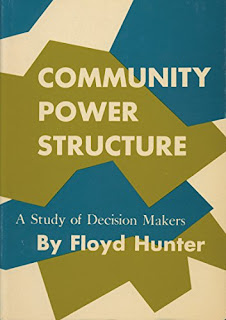
Interestingly, the political science theory of the urban regime was first explicated in an analysis of Atlanta ("Atlanta: Floyd Hunter Was Right," Who Rules America; "DC Growth Machine Update," 2010.)  

From the New York Magazine article:

... “An established, as well as rising, Black middle class could only benefit from a city in which the racial priorities but not the class priorities had changed,” writes historian Ronald H. Bayor. As Andrew Young, the city’s second Black mayor, once remarked, “Politics doesn’t control the world; money does. And we ought not to be upset about that.” To this day, Atlanta’s Black working class and poor are routinely left behind — their neighborhoods bisected, left to deteriorate in the shadow of new sports stadiums; their economic needs deprioritized in new business ventures welcomed by the city government.

Black mayors are tasked with managing this order on the tacit condition they don’t change it. You get the sense that many, from Jackson to Bottoms, are driven by the apprehension that boom times are fragile — that this experiment in Black rule, for all its successes, could just as easily fall apart and vindicate the racists. Atlanta’s economic momentum is already under threat from its mostly white Northside. The local cityhood movement, in which mainly rich communities in Georgia break off to form small cities, has recently enticed Buckhead, Atlanta’s wealthiest district. The big reason its leaders have given for wanting to secede is crime. And the easiest way for mayors to perform seriousness on the matter is to throw money at cops, to greet Black suffering with nightsticks and gun barrels.
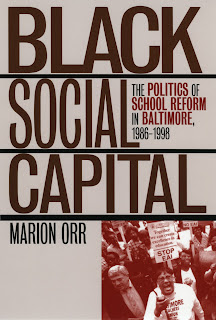
This reminds me, albeit a little differently, about a point made by Marion Orr in Black Social Capital: The Politics of School Reform in Baltimore, 1986-1999, how African Americans achieved "control" of municipal institutions in big cities but only after their heyday had passed, and in a time of reduced economic circumstances, making it almost impossible to achieve the big aspirations that seemingly having control unleashed.

In Baltimore, the city had long since been outspanned by the suburbs.  By contrast, Atlanta is growing, albeit marked by poverty with a strong Downtown core and a number of large corporations are headquartered there, with firms continuing to relocate there (for example Mercedes Benz, a large State Farm facility, etc.).  

In Atlanta, the contract between the largely white economic elite and the black political elite ensured that political control remained  subservient to the interests of property and capital, that neighborhood and black economic and social improvement would always take a back seat.  

==== 

One of Bottoms' initiatives is called One Atlanta, a poverty reduction initiative along the lines of my recommendations for St. Louis ("St. Louis: what would I recommend for a comprehensive revitalization program? | Part 1: Overview and Theoretical Foundations," "St. Louis: what would I recommend for a comprehensive revitalization program? | Part 2: Implementation Approach and Levers") or DC ("Social urbanism and equity planning as a way to address crime, violence, and persistent poverty").  

But the funding is paltry, less than $35 million over 5 years, drawn from proffers from a development agreement ("Atlanta City Council authorizes agreement for mayor's One Atlanta initiative," Newsbreak).  Coordinated through a newly created Mayor’s Office of Equity, Diversity and Inclusion, the initiative aims to provide:

  • A safe and welcoming city 
  • World-class employees, infrastructure and services 
  • An ethical, transparent and fiscally responsible government 
  • Thriving neighborhoods, communities, and businesses 
  • Residents who are equipped for success
[and is charged with] ensuring more equitable access to economic and workforce development opportunities across the city and developing equity champions across citywide departments.

Separately, the Atlanta Beltline initiative has been underway for almost two decades.  It's a smart growth project leveraging the once extant circumferential rail line.

MARTA, the metropolitan subway system, has been developing new expansion plans and some of the previously resistant suburban counties, facing serious transportation difficulties, are more open to adding public transit to the mix.

A number of businesses have decamped for the suburbs, including the Atlanta Journal Constitution newspaper and the Atlanta Braves--counter to trends in other center cities. 

I'd say that in legacy cities in the Midwest and Northeast, many corporations are relocating back to the center city from the suburbs.  But in the growing sprawling places in the South and West, there is still the strong trend of suburbanization of commerce.

--  "Could bringing premier regionally headquartered business enterprises to the Pennsylvania Avenue Corridor be key to its renewal and revitalization?," 2014
-- "A lesson that seeing is believing: Panasonic's new building in Newark, NJ as an example, positive and negative, in businesses coming back to the city center," 2015
-- "Corporate headquarters relocating to the center city: GE chooses Boston," 2016**

** Note that GE's subsequent crash and burn ended up making the relocation not particularly lucrative for the City of Boston ("GE breakup creates uncertainty around Boston HQ," Boston Business Journal).  There are only 200 employees at the Boston headquarters, while there were 800 employees at the GE campus in Stamford, Connecticut.

Labels: , , ,

Friday, August 26, 2016

A good chance that the Bloomberg-Harvard initiative to train mayors to achieve great things won't be that successful

See "Harvard, Bloomberg unite for $32 million initiative for mayors" and the op-ed "Helping mayors do their job," Boston Globe.

From the first article:
“With more and more of the world living in cities, mayors are increasingly responsible for solving major challenges we face, from climate change to poverty to public health,” said Bloomberg in a statement on his website. “By giving mayors tools and resources — and by connecting them with peers facing many of the same challenges — this program will go a long way toward helping them run cities more effectively.”

The initiative will be a collaboration between Harvard Business School and the Harvard Kennedy School’s Executive Education program, with input from Bloomberg’s consortium of philanthropic efforts.

According to a joint press release and interviews with officials, the new City Leadership Initiative seeks to serve up to 300 mayors and 400 mayoral aides in the next four years. The “curriculum” will consist of training and research programs, mentorship, and best-practice sharing among participants, though specifics are yet to be determined. ...

In that first cohort in 2017, officials hope to accept 40 to 60 American mayors and mayoral aides to descend on Cambridge, according to Harvard Kennedy School spokesman Daniel Harsha. The program will expand its applications to a global audience the following term.
My reaction

Without the support of legislators and citizens, too often Mayoral-led change efforts fail.  My first criticism of this is the same criticism I have of the "Mayor's Institute for City Design," which is an otherwise supra-laudable program developed by the National Endowment of the Arts to train mayors in the principles of urban design, public space, and quality architecture--lessons that they can take back to their own cities and apply in unique but visionary ways for community improvement.

While you absolutely need these kinds of initiatives to build the capacity for change and vision, if the elected officials in the legislative branch aren't part of the effort in terms of capacity building and visioning what a city could be, instead of their being more focused on the here and now and maintaining things the way they are and being incredibly resistant to any and all kinds of change, most change efforts by mayors are stymied.

The change process is way more complex than one mayor and one aide can typically accomplish.  See articles on social change and movements from Autumn 2009 issue of the Stanford Business School Alumni Magazine especially Hayagreeva Rao on MARKET REBELS and Sarah Soule on SOCIAL MOVEMENTS.

Most mayors, at least in my experience, aren't particularly visionary, and have the capacity for only one or two initiatives.

But that doesn't even take into account how current and unanticipated events force attention on other matters, e.g., such as a white police officer shooting and killing African-Americans in custody, which spawned the Black Lives Matter movements, natural disasters--think of what elected officials have to deal with in Louisiana and West Virginia because of recent floods, budgetary disasters and lack of funds, and rises in crime, etc.

Most legislators, at least in my experience, aren't particularly visionary either and definitely aren't oriented to thinking about the city of the future.

Not even a handful of US mayors rise to the level of a Joe Riley, the recently retired mayor of Charleston, South Carolina ("Is Joe Riley of Charleston the Most Loved Politician in America?," New York Times).

-- Mayor Joseph Riley, Charleston, SC, speech on the value of placemaking, civic initiatives and assets, and aesthetics
-- City Mayors Foundation
-- "World Mayor Prize," City Mayors Foundation

Instead of focusing on individuals, build capacity for change and vision within the local government system.  My second criticism is that while you can argue that mayors are the change agents, the platform for change in a city, the point ought to be focusing on building a process, system, and structure for innovation that is not dependent on the vicissitudes of elections, but something that is built into the local government system.

In this vein, Governing Magazine has been touting an approach called "Peak Performance," and they have published a book on the topic too, Peak Performance: How Denver's Peak Academy Is Saving Millions of Dollars, Boosting Morale and Just Maybe Changing the World, although the article on the subject, "Sweat the Small Stuff," didn't wow me, although even the Bloomberg Foundation is impressed ("How Denver has saved over $15 million by investing in staff").

Note that building systemic change and innovation structures within local government seems to be very difficult because like other efforts, they tend to be associated with particular initiatives by particular elected officials, and when those officials are replaced, new elected officials prefer to create their own new initiatives, rather than to support, develop, improve, and expand previous efforts.  Or they reorganize agencies, etc., as is happening in Philadelphia ("Philly's IT Reorganization Receives Barbs and Praise," Government Technology).

Long term successful change efforts.  This is the list of necessary components I came up with after researching revitalization efforts in Bilbao, Liverpool, and six other European cities.  From "Economic restructuring success and failure: Detroit compared to Bilbao, Liverpool, and Pittsburgh":

The six components of a successful broad ranging revitalization program.  In writing about the various efforts, I drew the conclusion that successful revitalization programs, especially in those cities that were working to overturn serious disadvantages, were comprised of these elements:


  • A commitment to the development and production of a broad, comprehensive, visionary, and detailed revitalization plan/s (Bilbao, Hamburg, Liverpool);


  • the creation of innovative and successful implementation organizations, with representatives from the public sector and private firms, to carry out the program.  Typically, the organizations have some distance from the local government so that the plan and program aren't subject to the vicissitudes of changing political administrations, parties and representatives (Bilbao, Hamburg, Liverpool, Helsinki);


  • strong accountability mechanisms that ensure that the critical distance provided by semi-independent implementation organizations isn't taken advantage of in terms of deleterious actions (for example Dublin's Temple Bar Cultural Trust was amazingly successful but over time became somewhat disconnected from local government and spent money somewhat injudiciously, even though they generated their own revenues--this came to a head during the economic downturn and the organization was widely criticized; in response the City Council decided to fold the TBCT and incorporate it into the city government structure, which may have negative ramifications for continued program effectiveness as its revenues get siphoned off and political priorities of elected officials shift elsewhere);


  • funding to realize the plan, usually a combination of local, regional, state, and national sources, and in Europe, "structural adjustment" and other programmatic funding from the European Regional Development Fund and related programs is also available (Hamburg, as a city-state, has extra-normal access to funds beyond what may normally be available to the average city);


  • integrated branding and marketing programs to support the realization of the plan (Hamburg, Vienna, Liverpool, Bilbao, Dublin);


  • flexibility and a willingness to take advantage of serendipitous events and opportunities and integrate new projects into the overall planning and implementation framework (examples include Bilbao's "acquisition" of a branch of the Guggenheim Museum and the creation of a light rail system to complement its new subway system, Liverpool City Council's agreement with a developer to create the Liverpool One mixed use retail, office, and residential development in parallel to the regeneration plan and the hosting of the Capital of Culture program in 2008, and how multifaceted arts centers were developed in otherwise vacated properties rented out cheaply by their owners in Dublin, Helsinki, and Marseille).
  • Labels: , , , , ,

    Wednesday, March 20, 2013

    Chicago's ongoing debacles: parking and governance

    1.  I wrote almost one year ago ("A lesson to cities that they need to be very careful when leasing assets to public private "partnerships"") about the continuing debacle of Chicago's long term lease of its parking garages and parking meters to a for profit consortium.

    The consortium sued the city because it allowed a competing privately-owned parking garage to open.  I opined that such a provision in the contract was unenforceable--to require zoning to favor one property owner over another in a contract with a municipality strikes me as illegal.

    I didn't realize the contract calls for arbitration, not the courts, to settle disputes.  And according to "City of Chicago hit with $57.8 million tab over parking garage snafu" in the Chicago Sun-Times, arbitrators have ruled in favor of the consortium, which will cost the city almost $60 million.

    I guess the city can be happy with the judgement, since it's a lot less than the $200 million that the private consortium was seeking.

    2.  In the meantime, parking rates go up this year, to $6.50 per hour on the street in the Chicago Loop.  See "Chicago parking meter rates to rise again in 2013" from the Chicago Tribune.  (Image above: Chicago Tribune.)

    3.  I think that this is the fallout from the financial desperation faced by most cities and counties.  Falling revenues, big costs from deferred maintenance and rising pension obligations, and limited sources for new revenues.

    So they sign multi-year contracts for items like street furniture-advertising contracts or consider leasing monetizable assets such as parking lots and garages.  (Cincinnati is in the process of doing the latter as well.  See "City responds to restraining order on parking plan" from WLWT TV. Indianapolis did a couple years ago, and Sacramento has talked about it as a funding source for a new basketball arena.)

    Oh, and doing speed camera and red light camera deals with firms that fund the installation and share the revenue.  See "Red-light camera firms get heat over tickets" from USA Today.

    If there were state ("In I-Bank Debate, States Provide Successful Model," New York Times) and national infrastructure banks (The Case for a National Infrastructure Bank | Brookings Institution), operating somewhat like the Bank of North Dakota or the Federal Farm Credit Banking system, where local governments could do fairer financing deals, the kind of debacle that Chicago will be in for the many decades remaining on the long term lease of its parking assets could be avoided.

    Of course, Illinois' state finances are so screwed up that their ability to create a state-level infrastructure bank is minimal.

    4.  The cover story, "Why Chicago’s Spineless City Council Just Can’t Say No: Nearly two years after Rahm barreled into office, aldermen are still rubber-stamping everything he wants. Here’s why the trend is so troubling for Chicago’s citizens" of the April issue of Chicago Magazine is on the Chicago City Council and discusses why it is so weak, even though Chicago's charter actually lays out a weak mayor-strong council form of government.

    The integration of the Democratic Party Machine into City Government through Mayoral Power has built the current system.  Manipulation of the budget and direction of projects to Aldermanic districts where the Mayor has control, selection of committee chairs, and bottling up critical legislation in the committees of loyal Alderman keeps things the way they are.

    One of the complaints in the article is that fundamental oversight--such as for the original parking garage and meter leases--is missing and the costs to the citizenry over the lack of accountability is significant.

    Labels: , , , ,

    Saturday, December 29, 2012

    Most innovative US mayors, according to Newsweek

    -- the article

    1.  Education, New Orleans, charter schools, Mitch Landrieu;  Umm, charter schools aren't a solution, really, to poorly functioning school systems, but that's another argument for a later date.

    2.  Public Safety, New York City, Michael Bloomberg and Ray Kelly, Police Commissioner; Interestingly, the NYC police department has received a great deal of criticism for their stop and frisk tactics, especially the arrest of residents (not visitors to) in public housing projects.  However there is no question that the continued drop in murder in NYC and the greater sense of security on the streets of New York City is a significant and stellar achievement.  Although the recent murders of people pushed onto the subway tracks in front of oncoming trains is quite disturbing.

    It demonstrates, along with the governmental response to various public safety and public health issues in the post-Superstorm Sandy environment, that safety isn't just about crime, and that we need to consider the issue of "public safety" more broadly.  Certainly, the subway killings are an illustration that our system for dealing with the mentally disturbed is quite faulty.  (Not that this fact is new.)

    But we need to figure out what's truly behind the reduction in crime--really the murder drop, because other crimes may be rising, or if not rising, may be more violent.  And the drop isn't uniform.  For example, while Chicago's mayor is lauded below, Chicago's murder rate is escalating significantly.  (Oakland, California, Philadelphia, and other cities are equally troubled on this measure as well.)  DC's murder rate has dropped as has the rate in many cities.  In some cities, violent crime and gun-related crime hasn't dropped, but emergency medical care has significantly improved, leading to murder rate reductions, while gun crime is still in fact a problem.

    3.  Digital Government, Chicago, Rahm Emanuel;  Umm, the issue isn't using data, creating apps, etc., since CompStat under William Bratton (who deserves, maybe more than most public officials, including the mayors listed in this blog post, much of the credit for the revitalization of center cities more recently, because more police departments are changing their tactics toward reducing crime rather than just merely responding to it), more city governments have been doing data-based analysis.  I've been writing about this for almost 10 years, or more recently pointed out in "All the talk of e-government, digital government, and open source government is really about employing the design method," the real issue is whether or not governments are willing to empower residents and open up the process of governance in a variety of ways, including through participatory budgeting and similar methods, and open source applications related to government.

    A long time ago, someone criticized my use of the term "civic engagement."  I was pretty shocked because of course, we want citizens to be able to be more involved in their communities.  But the respondee I think was more focused on how typically, civic "engagement" initiatives are top-down endeavors that don't "empower" citizens.

    I guess I have to agree.  I am trying to speed read a tome about civic engagement in Toronto in advance of a New Year's Day post on what the city's agenda should be for 2013, so I have been thinking about this a bunch.  Most of DC's efforts on engagement, e.g., the Mayor's "Office of Neighborhood Engagement" are top-down rather than being focused on building the capacity of individuals, organizations, and neighborhoods to help themselves.

    4.  Entrepreneurial Infrastructure, Kansas City and the "Silicon Prairie," Sly James; actually I've been intending to write about this example in with my intended "review" of DC's economic development plan and the approaches most local governments take up with regard to "economic development."  In short, I think this is interesting. press release, Think Big Partners and the Greater Kansas City Chamber of Commerce Announce “IgniteKC” as Kansas City’s New Innovation and Entrepreneurship Conference

    5.  Quality of Life, Oklahoma City, Mick Cornett;  the Republican Mayor is focused on rebuilding his city's attractiveness through urban design and walkability.  Initiatives include school building renovations, the building of a 77 acre downtown park, a community wellness initiative including a weight loss campaign resulting in people collectively losing more than one million pounds of weight, attracting a professional basketball team (ugh...), etc.  Governing Magazine interview; "Oklahoma City Mayor Mick Cornett plugs city's success at Republican National Convention," Oklahoma City Daily Oklahoman.

    Labels: , , ,



