This post is a little late, National Community Planning Month ended yesterday, the end of October.
I had a bunch of ideas to write a bunch of pieces over the course of the month, like on citizen participation and civic engagement through participation in planning engagements, and on best practice engagement programs involving community groups and planning agencies ("Framingham Massachusetts creates Citizen Participation Officer position," 2018).
Next year...
Students, parents, and teachers participating in a clean up of the school grounds, Wasatch Elementary School, Salt Lake.Schools as fundamental neighborhood anchors. One of the ideas for a piece was built on my pieces around the idea that the way we do "neighborhood planning" and schools planning is upside down in that elementary schools are key community-civic assets embedded in neighborhoods, and the neighborhoods with successful elementary schools usually function better than neighborhoods with less successful schools--for a variety of reasons.
So we should re-prioritize planning around this point, making neighborhoods better by making schools better and vice versa.
-- "One way in which community planning is completely backwards," 2011
-- "Missing the most important point about Clifton School closure in Fairfax County," 2011
-- "Rethinking community planning around maintaining neighborhood civic assets and anchors," 2011
-- "The bilingual Key Elementary School in Arlington County as another example of the "upsidedownness" of community planning," 2019
Yes, I know some of this is about demographics. Schools with high income demographics tend to do much better than those with low income demographics.
But Dallas and their Transformation Schools initiative has proven that with the addition of focused resources and initiatives, that doesn't have to be the case.
-- "Dallas parents flocking to schools that pull students from both rich and poor parts of town," Hechinger Report
Well not exactly, what they do is in a very purposeful way, they bring high and low income demographics together, in ways where both groups are well served.
2. Special Funding. What this should mean is that schools should get additional funding, from the local government separate from the school system, or the school system's budget should include support, for these functions.
Another element could be treating schools as "neighborhood cultural centers" too, the way I describe how neighborhood libraries should be positioned ("Neighborhood libraries as nodes in a neighborhood and city-wide network of cultural assets," 2019).
An activist arrives at the entrance of Parker Elementary School in
Oakland, where parents and community organizers occupied the building
after it was closed by the school district. (Melina Mara/The Washington
Post)3. Recognition of the need for school support = neighborhood support. There are stories about school closure planning in Oakland, California ("In Oakland, closing schools opens questions about a city’s soul," Washington Post).
What amazed me about the situation is that the city has lots of charter schools ("How Charter Schools Became Such a Big Player in California's Education System," KQED/NPR), and they drew off enrollment from the traditional schools, so those schools started failing, in turn having negative impact on the neighborhood.
One way to think of this is as mitigation. If new schools are allowed to draw off students, and schools in neighborhoods are key neighborhood assets, this policy needs to be further considered.
Open enrollment is a problem in a way. While it expands choice, opportunity, and equity, at the same time it disconnects students from neighborhood schools. It's also complicated because some people in low income neighborhoods believe that local schools are always inferior to schools in high income areas ("DCPS middle schools in black wards, "positive deviance" and the pull of the attractiveness of schools in the upper income wards west," 2022).
4. Individual schools need a program to systematically build relationships with their neighborhood. (Note that sometime in the next few months, I plan to write a dedicated blog entry on this topic.)
A big problem, at least in cities, is that households have a lot fewer children. In the average city, fewer than 25% of households have children, so that means 75% of the households in the average neighborhood have limited interest or connection to the local schools.
That means that schools need to invest resources in engaging with the neighborhood beyond the school grounds. But school districts don't invest in this, don't create assistance programs for schools. Most figure that PTAs suffice, but again, PTAs are mostly comprised of parents of schoolchildren, not interested parties without children.
I found this bookmark, promoting volunteering in the schools, in a book at a Library book sale. It dates to the 1980s.Arts Festival and fundraiser, Uintah Elementary School, Salt Lake City.In Salt Lake, many of the city's schools, even in the West Side low income area, are threatened with closure as long term demographics expect the city's population of school aged children will decline, even as the city's population rises, because most of the new residents will have no children or fewer children, and family sizes are declining (even though Utah, because of the Mormon Church, tends to have way more children per household on average compared to other states).
But in the higher income east side of the city, only one school, just one, out of more than a dozen, is threatened with closure. That's because that school, on the edge of an exclusive neighborhood, is in an area where the demographics don't favor households with children.
The school district doesn't understand at all the link between neighborhoods and school success, school success and neighborhoods, and the need to invest in outreach and building relationships beyond the school grounds.
Although many of the schools do art festivals in the Spring, doing great projects as fundraisers. I don't know if that happens at the poorer schools too.
My neighborhood school, Bonneville Elementary, has introduced its first fall festival.
But assistance to schools for marketing, for creating successful differentiated programs, is wanting.
There is a big arts initiative, and some STEM efforts, but language programs and other innovative programs like Montessori, present elsewhere, aren't part of the discussion here.
Turn a place around workshop, Project for Public Spaces. Ironically, when I first got involved in urban revitalization in my Northeast DC neighborhood 20+ years ago, because of the disconnection from the neighborhood problem, I suggested that the local school do a form of the PPS "How to Turn A Place Around" workshop, focused on building connections between the neighborhood and the school, if only to reduce vandalism.
The school had a special program in French, and for a long time had higher enrollments, because resident grandparents were illegally enrolling their suburban resident grandchildren in the local school. This was a childcare measure among others.
Capital City Public Charter School, DC. This school is located a couple blocks from our DC house, and for the first few years after it opened, they made a big effort to do outreach to the neighborhood, to invite residents to school events, etc., but it fell off. I think this is an element of their "expeditionary learning" approach.
But they did place the school playground in the front yard of the school so it could also serve the neighborhood. And they've created a food forest on their grounds too ("For D.C. students, lessons in growth, of the garden variety," Washington Post).
5. Community schools. One type of program, although more focused on schools in low income neighborhoods, is called "community schools" ("Schools #2: Successful school programs in low income communities and the failure of DC to respond similarly," 2019).
There are a number of great examples ("Community Schools Offer More Than Just Teaching," New York Times). From the article:
Community schools, which, among other things, integrate nonprofits,
businesses and colleges on the school site to offer services to students
and their families, have existed for more than a century. There are now
an estimated 5,000 such schools nationwide, according to the national Coalition for Community Schools. ...
The trend is bolstered by research
demonstrating that community schools help increase students’ attendance
and graduation rates. By addressing an array of student and family
issues — from hunger and homelessness to health care — schools are
lifting barriers that prevent students from fully participating in and
benefiting from their education. The approach also helps to build trust
that allows families to embrace the schools and their child’s learning. ...
A full-service community school includes four elements: various
integrated support services through nonprofits, businesses and
higher-education institutions; active family and community engagement;
expanded and enriched learning, which can include after-school, weekends
and summers; and collaborative partnerships among parents, students,
school administrators and community leaders.
And not mentioned in the NYT article is the "Family Learning Center" model being expanded in Vancouver, Washington ("As need soars, schools rally behind families in Vancouver, Wash. — and other cities take notice," Seattle Times).
6. Related is the concept of co-location, "joint use" and "shared services" between agencies to further support schools. For example, why couldn't the local library system be involved in running school media centers? I read somewhere that Helsinki does this.
In Baltimore County, the Department of Recreation and Parks invests in recreation and community serving facilities in schools, so that these facilities can serve the community beyond the school day, and at the level required, which might be more than what the school would normally provide to serve only its school population. They've done this for 70+ years. It's sad that it's so atypical.
An obvious example are playgrounds.
-- "Joint Use Agreements," Planning for Whole Communities Toolkit, Puget Sound Regional Council
-- Shared Use webpage, Change Lab Solutions
7. Walk and Bike to School initiatives as a way to do urban design improvements in a neighborhood. While I argue that transportation agencies should be planning for "walkable communities" not pedestrians ("Planning for place/urban design/neighborhoods versus planning for transportation modes: new 17th Street NW bike lanes | Walkable community planning versus "pedestrian" planning," ), the improvements that come from developing safe routes to schools also serve neighborhoods.
-- "Wednesday is National Walk and Roll to School Day," 2022
-- "Why isn't walking/biking to school programming an option in Suburban Omaha? | Inadequacies in school transportation planning," 2022
Note that such programs should also address night time activities ("
Night-time safety: rethinking lighting in the context of a walking community," 2014).
- School Walk and Bike Routes: A Guide for Planning and Improving Walk and Bike to School Options for Students, Washington State Department of Transportation
-- Safe Routes to School program, Washington State Department of Transportation
-- City of Tacoma SRTS program, including SRTS Action Plan.
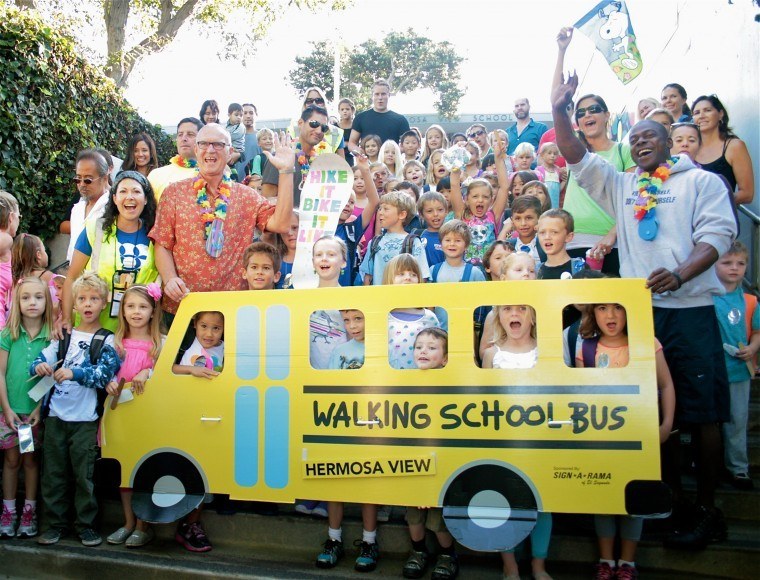
Walk and bike to school activities can also be a way to engage residents who don't have children, in supporting "bike buses" and "walking school buses."
But if kids aren't neighborhood residents, they aren't going to be walking or biking.
Labels: capital planning and civic assets, civic engagement, integrated public realm framework, land use planning, neighborhood planning, public education/K-12, public finance and spending


.jpg)

.jpg)
.jpg)
.jpg)

.jpg)