Rebuilding Place in the Urban Space

"A community’s physical form, rather than its land uses, is its most intrinsic and enduring characteristic." [Katz, EPA] This blog focuses on place and placemaking and all that makes it work--historic preservation, urban design, transportation, asset-based community development, arts & cultural development, commercial district revitalization, tourism & destination development, and quality of life advocacy--along with doses of civic engagement and good governance watchdogging.

Monday, July 28, 2025

Revitalization of the wholesale food Union Market in DC to a consumer focus

Was a major project I was involved in from a grassroots perspective, in the face of an urban renewal focused effort by Ward 5 interests (bowling alley, etc.).  See "Retail planning and the Florida Market" [2009].  I'm reminded because the Washington Post had an article over the weekend about remaining wholesalers ("The last wholesalers of Union Market"), and a couple months ago there was an article about the last original vendor in the DC Farmers Market selling out ("Soko Butcher Shop Takes Over Historic Harvey’s in Union Market," Eater).

Photo: Craig Hudson, Washington Post.

Since then it has been massively revitalized, beyond anything I could imagine.  Mixing apartments and hotels, with food counters and restaurants, with a marked shift to prepared foods.

With the broadening and upscaling of the range of stores and restaurants ("All the places to eat and drink at Union Market" and "D.C.’s Minetta Tavern is an alluring chip off the old block in N.Y.," Post), you could argue that "gentrification of the market" isn't any different than urban renewal.

=====

Produce vendor Joe Giordano shown in a 1993 Inquirer Magazine feature about peaches. Michael Bryant / Staff Photographer

Cf "A landmark food business in the Italian Market has closed after a century," Philadelphia Inquirer, which discusses vacancies in a similar market there, Italian Market.  

The produce business has changed with competition from supermarkets and other retailers, of course, but more recently has suffered with the rise of delivery, said John Giordano, 64, who started working in the store at age 5 when he got home from kindergarten.

“Our business has moved into wholesale — pizza places, restaurants, and everything like that,” Giordano said Saturday, as he and workers cleaned out the property, setting out boxes of bric-a-brac salvaged from an upstairs apartment to offer to passersby. The garage doors were rolled down, unheard-of on a Saturday.

Revitalization Lessons.  In terms of Italian Market as a whole, it's proof to maintain it as best as possible, you need a manager.  In Union Market, that manager became Edens Realty which bought out one property holder with a preponderance of parcels, leaving Edens with the critical mass necessary to make significant change ("Two years in, Union Market thrives," Post, "Vendor's Game: Meet the Chef Behind Union Market," Washington City Paper).

Labels: , , , , , , ,

Saturday, November 30, 2019

Small Business Saturday

That American Express, a big corporation which mostly makes its money from big corporations, is the sponsor of Small Business Saturday, which focuses on independent businesses, is ironic and illustrates the contradictions in the American economy.

We laud independent businesses.  But we promote and support bigness.

Independent businesses often focus on providing artisanal goods, but such goods are more expensive, usually being produced with a lot more labor, and at the same time, our consumer economy is focused on buying a lot, but at the lowest cost.

In business there is the line: "Price, Quality, Speed: pick any two."  With a focus on price, independent business in terms of production and sales is usually the loser.

Furthering the contradictions, as part of its focus on Small Business Saturday, American Express has produced a set of videos focusing on small businesses, called "Saving Main."  The first one is on a clothing-focused store in Oakland, California, called OwlNWood.


Interestingly, while most of the economic changes--especially housing production and the attraction of higher income residents (because they can't afford to live in San Francisco) in Oakland are likely to benefit her ability to sell more product, it could affect her ability to stay in the same location if rents rise/she doesn't own the property. 

And in the video she mentions specifically how her local supplier for custom sewing, a small manufacturer, is likely to be displaced as higher value property uses replace industrial uses.

Her business closes.

But to me, not covered in the video, the issue is likely more than the changes in Oakland, although yes, they are an issue, but more about the commercial district and its foot traffic, and possibly the way that the store is managed.

Shifting to Salt Lake mostly, before moving we joked about opening an apparel, gift, and coffee shop, based on the way a couple stores in DC work.

Coffee bar at the back of the Modern General Store by Sylvester & Company in Savannah.   (This branch has closed but I think it would have worked in a more walking, less touristy district, in a community with a bigger population.  The company still has a store on Long Island, albeit in the tourist destination of Sag Harbor.)

But besides SLC being 1/3 the size of DC, the reality is that this is an automobile-centric community, not transit-walking based like many neighborhoods in DC, which was the model for the business concept.

(Other models are a couple stores in Hampden in Baltimore and in Savannah, where a bunch of stores--books, apparel and gifts, housewares--also incorporate coffee shops, which is a great element because as I say "people eat and drink every day, but they don't buy a shirt or book every day..."  More recently, the Shop Made in DC store which was on Dupont Circle had a cafe.)

So I am skeptical that the concept could work (or at least, I feel more confident about doing such a store in a walking district), unless we get the absolutely right space, and place, and rent, and publicity able to attract customers who have to consciously make the decision to visit, as opposed to stopping in while walking home from the transit station.

That being said, there are a fair amount of independent businesses here.

And they do succeed in the context of an automobile-centric community.

It's important to distinguish the characteristics a business needs in order to be successful.

The general belief is that an apparel shop like OwlNWood can't succeed in a small commercial district, they need to be located in a larger, more regionally serving district--that can still be a traditional commercial district, the big issue is being able to draw on a much larger customer base.

There are exceptions though.  And it's important to know why those exceptions work.

-- "Why ask why? Because," 2007
-- "Retail and restaurant check up surveys," 2009
-- "Indepependent retail businesses can succeed and thrive," 2008
-- "Critical analysis and critical analysis of retail, communities, etc.," 2014
-- "Little room for error: small retail business in general and in DC in particular," 2019

A couple that I've come across in my work are Pavement in the Lawrenceville District in Pittsburgh and Willow on Upshur Street in DC.

Storefront window, Willow retail storeI wrote down my 12 lessons from Willow, but those notes are boxed away somewhere.

For Willow, it's key that the store has an ever changing inventory of clothes that are competitively priced (constantly changing means that if you don't buy it when you first see it it might not be there when you return), is neighborhood-anchored, but also on the walking route to and from transit--both bus and subway, and that the owner lives in the neighborhood, and has developed what I call "a brigade", that is a group of fans, mostly neighborhood residents but not exclusively, who stop by to shop frequently.  The store also supports and develops events both for the store and the commercial district.

Bene hat shop, 6200 block of 3rd Street NWThis is key.  My Manor Park DC neighborhood has a little one block shopping district on the 6200 block of 3rd St. NW and there are three clothing stores there--a hat shop, a boutique, and a consignment store.

All do great window displays.

But by contrast to Willow--which also does great window displays--few people walk in Manor Park, and the displays are wasted.

Pavement is in a more widely known commercial district, but it isn't a setting with a lot of foot traffic.  So there has to be constant promotion in order to attract customers.  Although 10 years later when I first came across it, Lawrenceville has more than come into its own.

Trying to figure out why Pavement was an exception to the rule about apparel retail I read Designing Brand Identity which led to this table:

Principles for creating complete concepts/identity systems for independent retail businesses*

• Understand the needs, preferences, habits, and aspirations of the target audience.
• Good design sells. It is a competitive advantage. Design is systems and processes, not just graphics.
• A disciplined, coherent approach leads to a unified and powerful brand presence.
• Create a distinct position and complete identity for your store/concept.
• Experience and study the competition and learn from their successes and failures.
• Understand traffic flow, the volume of business, and economic considerations of your location.
• The storefront is a mass communications medium that works 24/7 and can attract new customers, influence purchasing decisions, and increase sales.
• Logo and signage expresses the brand and builds on understanding the needs and habits of users in the environment.
• Exterior signage must consider both vehicular and pedestrian traffic.
• Design an interior space that is sustainable, durable, easy to maintain and clean, and is energy efficient.
• Consider the dimensions of space: visual, auditory, olfactory, tactile, and thermal.
• Understand the psychological effect of light and lighting sources.
• Consider the needs of handicapped customers and those of different ages.
• The shelf is the most competitive marketing environment that exists.
• Align merchandising strategies with displays, advertising, and sales strategies.
• Create an experience and environment that makes it easy for customers to buy, and that inspires them to come back again and again.
• Create an environment that helps the sales force sell and makes it easy to complete a transaction.
• Align the quality and speed of service with the experience of the environment.
• Benchmark the quality and speed of service against the competition.
• Consider all operational needs so that the store delivers on the brand promise.
• Anticipate future growth. Measure, evaluate, change. Constantly ask: is the message clear?; is the content accessible?; is the experience positive?

* This table was built from the section on "creating touchpoints" from Designing Brand Identity (second edition) by Alina Wheeler

(Social media barely existed when I produced that table.  It's a necessary addition now.)


carytown3By contrast the Hampden district in Baltimore and Carytown in Richmond are regional destinations in that they are known for providing a wide range of independently run retail businesses.

So even though those communities are automobile-centric, those districts are destinations.

In "Little room for error: small retail business in general and in DC in particular," I listed 11 reasons why small retail businesses can fail:
  1. Rents are too high relative to sales.
  2. Property taxes for retail space are too high generally and in neighborhood commercial districts specifically.
  3. Size of the market.
  4. Too much retail space overall.
  5. Constant addition of new retail districts and space to the city's footprint and inventory of space. (WRT restaurants, there are some articles about the number of restaurants closing in DC, including the Washington City Paper article "What Are the Warning Signs That Your Favorite Restaurant Is About to Close?." Many chalk it up to there being too many restaurants relative the market. They didn't mention the number of "new" destination districts in the city such as the Wharf, Navy Yard, and Union Market.)
  6. Consolidation and chaining of the retail industry.
  7. Competition/Fit of the business model/lack of robust concept and operations model.
  8. The impact of e-commerce.
  9. Location (both generally and whether or not a particular location is a good fit for a particular business -- e.g., waterfront districts seem to be better for food and beverage and not so great for retail).
  10. Lack of a good commercial district marketing and coordination mechanism (the original list uses different wording, referring to DC's failure to have a differentiated set of commercial district revitalization approaches that can fitted to the conditions and needs of particular districts), especially ongoing marketing.  Also see "The "soft side" of commercial district competition"
  11. Store sizes are too big relative to sales.

Labels: , , , , ,

Wednesday, January 09, 2019

Little room for error: small retail business in general and in DC in particular

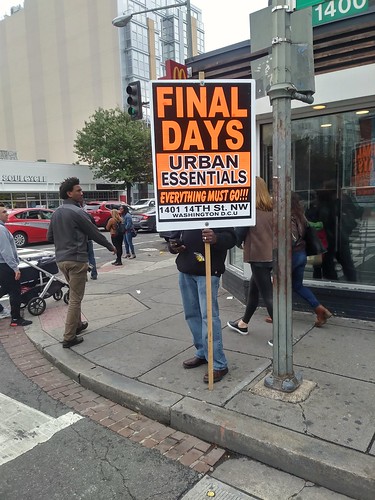
Final Days: Urban Essentials going out of business sale signLast week, Washington Post writer Paul Schwartzman had a piece, "Amid prosperity, D.C.'s independent retailers struggle to survive," on the seeming increase in failure of small retail businesses in the city.

Years ago, I took him around (actually, he wore me out) to look at popups -- third floors on traditional rowhouse buildings -- for a story.

And later he interviewed me for a story he wrote about the impact of property assessment rates ("Feeling the Pinch Of D.C.'s Prosperity"), something I had been agitating about for years. I stopped testifying about after awhile after realizing that Councilmembers didn't really care to understand why the problem existed.

-- "Avoiding the real problem with DC's property tax assessment methodologies," 2007
-- "Testimony -- Historic Neighborhood Retail Business Property Tax Relief Act," 2006
-- "Forcing Displacement by the disconnection of tax assessment models from public policy goals," 2005
-- "Displacement of retail businesses through increasing property tax assessments," 2005
-- "Revisiting the issue of neighborhood commercial district property tax methodologies," 2013

After Paul's 2007 article, I had a letter to the editor about it, re-emphasizing the point about the disconnect between property values, therefore tax rates, and the value of properties in terms of their revenue capacity in terms of sales/square foot.
My letter in the Post from July 25, 2007

Tax Policy Hurts D.C.'s Local Businesses 


A July 20 Metro Article ["Feeling the Pinch of D.C.'s Prosperity: Small Businesses Cry Out for Relief From Rapid Rise in Property Taxes"] inadequately explained why tax assessments are rising for small commercial property owners in the District.

Regardless of buildings' locations and use, the D.C. Office of Tax and Revenue values commercial buildings as if they could be converted into downtown office buildings. If the purpose is to turn the entire city over to office buildings and retail chains, then this property tax assessment methodology is working.

The market for downtown property is not local; it involves national and international developers, lenders, and portfolio investors. The market for small-footprint buildings in neighborhood commercial districts is local--in terms of property owners, investors, tenants, sales potential and rents. The solution is simple: differentiated tax assessment methods.

The legislative focus on property tax abatements or tax caps fails to address this fact.

As a result, locally owned businesses will continue to close or relocate to the suburbs, while more and more of the retail identity and uniqueness of the District is lost and the city's retail landscape becomes reshaped into yet another mall, albeit outdoors, featuring national brands.
But while I think the fact that DC commercial retail rents are too high, and that commercial property tax rates -- shaped by the fact that the Central Business District is a national-international real estate market, which reprices value beyond local considerations, and this ends up shaping the value of commercial property across the city, whether or not the commercial district is a part of the national or international real estate market -- independent store owners have other problems.

For example, Dupont Circle and Cleveland Park properties are often owned by national firms, whereas properties Downtown, Georgetown, and Friendship Heights involve both national and international firms.

Years ago, in the entry "Why ask why? Because," I discussed store operations in terms of various "mixes."  But it's about more than that.  Here's what I think is a more comprehensive list of the conditions faced by independent businesses:

1.  Rents are too high relative to sales.  The metric is that a business should pay no more than 4% to 10% of gross revenue in rent, although restaurants pay up to 15%.  In malls and large commercial buildings owned by major firms, after a certain point, tenants also pay out as rent a portion of total revenue.

Based on a calculation of estimated sales per square foot, you can figure out the gross revenue potential of a space, and calculate what the rent "should be" on that basis.

-- "Cleveland Park Retail: My off-hand evaluation, the rents are too high," 2009
-- "Commercial retail rents #2," 2009

At best, a store has a gross profit of 20% before taxes.  Paying more than 10% of gross revenue in rent pretty much wipes out profit.

(2.  Property taxes for retail space are too high generally and in neighborhood commercial districts specifically.)

3.  Size of the Market.  DC isn't that big, about 700,000 residents.  The number varies, but the average resident supports up to 7.5 s.f. of retail space.

Yes, the daytime population swells, but office workers have a very limited range of stuff that they buy, mostly prepared meals, and convenience goods.  A number I've used for years, derived from an economic research firm, said the average office worker supports 2 s.f. of retail and 5 s.f. of quick service food.  Although in the DC context, one study for the SW Ecodistrict found that about two-thirds of federal workers bring their lunch.

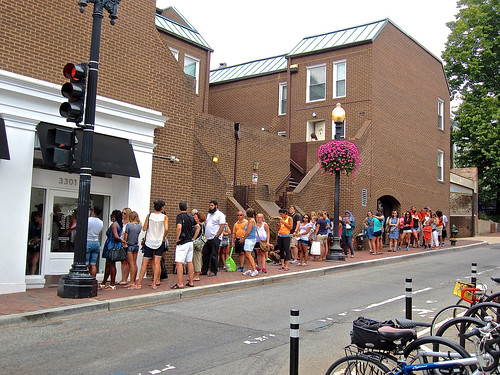
Tourists add to the mix, but mostly spend on food and lodging, and some retail.  The lines at Georgetown Cupcake or the busy restaurants at Washington Harbor in Georgetown when often the food isn't that great, demonstrates the value of tourism to retail and restaurant spending in DC.
Cupcakes in Georgetown, Washington, DC
People in line at Georgetown Cupcake.  Flickr photo by Robby Virus.

4.  Too much retail space overall.  With that 7.5 s.f/resident metric, DC can support upwards of 5 million square feet of retail space + some calculation for the spending by daytime office workers and districts.

There is much more retail space than that in the city.  E.g. on 14th Street and H Street NE likely there is more than one million s.f. in each place.

Nationally this is the case too, especially vis a vis the impact of e-commerce.  The US has 4x the retail space per person as the UK or other countries.  That's why so many chains are going under, or closing stores.

5.  Constant addition of new retail districts and space to the city footprint.  While in some respects the city is under-stored compared to the suburbs, the addition of new retail districts like The Wharf , Navy Yard, City Center in Downtown, and Ivy City puts pressure on existing districts, without there necessarily being a commensurate increase in the overall customer base.  Granted some of this space serves regional markets and tourist segments and isn't fully dependent on DC residents for success.

(Some of this space is sold on the belief that because it's located on commuter routes out of the city it will draw non-resident shoppers, but for the most part, most shoppers do their shopping nearer to home and not as part of work trips.)

Similarly, the impact of re/new/ed entertainment districts such as H Street or Ivy City puts pressure on existing districts like Adams-Morgan or Georgetown.
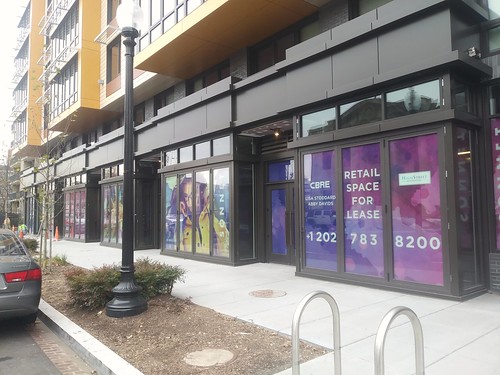
New retail space at the Sonnet mixed use building on the 1400 block north side of U Street NW, Washington, DC
New retail space at the Sonnet mixed use building on the 1400 block north side of U Street NW, Washington, DC.

Every new mixed use building adds more supply to the retail space inventory.  But it just isn't in big new districts as greyfield developments..  It's in most every place where new "mixed use" buildings are created, with retail on the ground floor.  For example, this new building on the 1400 block of U Street NW is in place of a parking structure.  It adds housing above, but new retail on the ground floor, where none had previously existed.  While you can argue it will help strengthen the U Street streetscape, tying together north and south and drawing from the energy of 14th Street, it still is adding space likely beyond the demand.

6.  Consolidation and chaining of the retail industry.  Independents are hurt by how the retail sector has become dominated by chains, which enjoy special treatment by vendors, banks, and laws.

One way to counter this is to join buying groups and business services cooperatives, but not all independent stores do this.

7.  Competition/Fit of the business model/lack of robust concept and operations model.  Chances are good that there are other stores selling the same types of goods, so to be successful, a store has to have a good "value proposition."  That might not necessarily be price, it can be quality, service, experience, etc.

-- "Why ask why? Because," 2007
-- "Retail and restaurant check up surveys," 2009
-- "An update to Richard's Rules for Restaurant-Based Revitalization on the failure of wine bar restaurants in DC and Baltimore," 2018

Plus some places may not be that great anyway.  That's why I recommend that more commercial district revitalization organizations contract out for independent third-party evaluations of retail businesses, such as what are called "mystery shopper" evaluations.

-- "Critical analysis and critical analysis of retail, communities, etc.," 2014

(See table below.)

8.  The impact of e-commerce.  Online purchasing shaves off upwards of 10-20% of sales -- and more in certain categories such as office supplies and electronics, and has completely destroyed other categories altogether, such as travel -- reducing the revenue stream, profit margins, and flexibility to face downturns.

9. Location.  Not all submarkets in the city can support every type of retail category or even multiple stores in particular categories.  This gets back to the size of market point, but also a recognition that some commercial districts are "regionally serving" in that they serve multiple neighborhoods and include anchors that draw beyond the immediate neighborhood (and need to do so in order to be successful).

The smallest districts tend to support convenience retail -- food, pharmacy, hardware, gasoline -- and might have one or two specialty stores that may also serve as destinations, e.g. a store specializing in antique lighting in Cleveland Park, etc

10.  Lack of differentiated commercial district coordination mechanisms.  DC has Business Improvement Districts or Main Street programs.  There are plenty of areas that need something different

-- "The "soft side" of commercial district competition," 2006

Typically, across the nation, Business Improvement Districts function in large city commercial districts, especially "Downtown."  Some of the most prominent BIDs in the US are in New York City and Philadelphia, along with DC's Downtown DC BID.  The main actors in BIDs are the property owners.

Main Street groups typically are present in smaller towns and in neighborhood commercial districts that don't have a lot of office buildings.
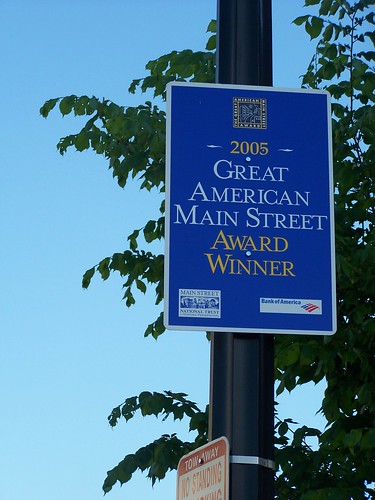
Barracks Row, Great American Main Street signThe Main Street approach is different from the BID approach in that residents and other stakeholders who don't necessarily own businesses in the commercial district are drawn into the organization, to broaden the range of skills and volunteers able to work on issues.  (In my experience, Main Street volunteers tend to be 10-15 years younger than typical historic preservation group members, and live within a couple blocks of the main commercial street.)  DC began a city Main Street program in 2002.

A hybrid of the BID and Main Street approach is the "Community Improvement District," a special service district (that's what BIDs are) that covers both commercial and residential areas.  Baltimore has a couple, and one in particular, Charles Village, has been very contentious with a group of residential property owners who resent paying towards the SSD.  California has a lot more types of these districts, especially in San Francisco. 

But I have also written about the BIDs in San Diego, which are somewhat unique, in that they use the BID funding mechanism--a fee per $100/property value--but tend to use the more ground up "Main Street Approach" to shape the programming and orientation of the organization.

So the commercial district revitalization organizations in San Diego have the advantage of steady funding from a property tax assessment like a BID, but the broader organizational, programming, and volunteer structure of a Main Street program.  See "Let's Assess the Assessments" from the San Diego Reader.

That's a form that we're missing in DC, and ultimately the lack of steady funding has been the biggest problem for neighborhood commercial district revitalization organizations in the city.  But also some districts need marketing and business support, but not necessarily the Main Street model, etc.

11.  Store sizes are too big relative to sales..  National chains have been buffeted by these changes too and one of the things they are doing besides closing stores or going out of business is shrinking store size.

This reduces inventory and the amount of money tied up in it, increases focus on better selling items that sell more quickly, and reduces fixed costs for rent and variable costs for labor, utilities, etc. 

====
In short, I think that many of the stores mentioned in the Schwartzman piece have multiple issues, not usually just one.  Rent/commercial retail property issues are only two. 

From "Retail and restaurant check up surveys":

------------------------------------------------------------------------------------------------
Principles for creating complete concepts/identity systems for retail businesses*
------------------------------------------------------------------------------------------------

• Understand the needs, preferences, habits, and aspirations of the target audience.
• Good design sells. It is a competitive advantage. Design is systems and processes, not just graphics.
• A disciplined, coherent approach leads to a unified and powerful brand presence.
• Create a distinct position and complete identity for your store/concept.
• Experience and study the competition and learn from their successes and failures.
• Understand traffic flow, the volume of business, and economic considerations of your location.
• The storefront is a mass communications medium that works 24/7 and can attract new customers, influence purchasing decisions, and increase sales.
• Logo and signage expresses the brand and builds on understanding the needs and habits of users in the environment.
• Exterior signage must consider both vehicular and pedestrian traffic.
• Design an interior space that is sustainable, durable, easy to maintain and clean, and is energy efficient.
• Consider the dimensions of space: visual, auditory, olfactory, tactile, and thermal.
• Understand the pyschological effect of light and lighting sources.
• Consider the needs of handicapped customers and those of different ages.
• The shelf is the most competitive marketing environment that exists.
• Align merchandising strategies with displays, advertising, and sales strategies.
• Create an experience and environment that makes it easy for customers to buy, and that inspires them to come back again and again.
• Create an environment that helps the sales force sell and makes it easy to complete a transaction.
• Align the quality and speed of service with the experience of the environment.
• Benchmark the quality and speed of service against the competition.
• Consider all operational needs so that the store delivers on the brand promise.
• Anticipate future growth. Measure, evaluate, change. Constantly ask: is the message clear?; is the content accessible?; is the experience positive?

* This table was built from the section on "creating touchpoints" from Designing Brand Identity (second edition) by Alina Wheeler

Retail's tough in general.  But people eat more than they buy stuff.  The Restoration Hardware in Georgetown, once one of the company's signature stores, is now a Wawa convenience store ("awa is coming to Georgetown. Bid farewell soon to Restoration Hardware," Washington Business Journal).
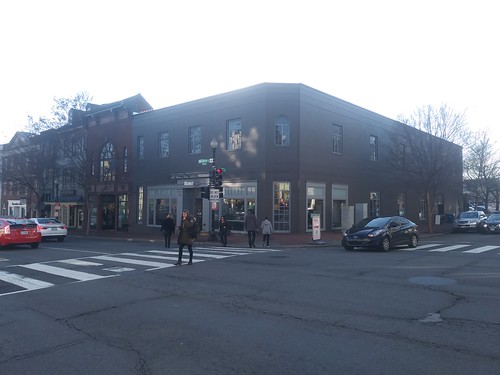
Restoration Hardware is now a Wawa convenience store, Georgetown, D.C.

Labels: , , , ,

Monday, May 28, 2012

Craftcation: business conference for DIY/Crafters

Was this past March, in Ventura, California, and will be repeated in March 2013, also in Ventura.  These kinds of business, entrepreneurship, and capacity development events help to convert hobbies into businesses.

-- Craftcation

Labels: ,

Friday, May 25, 2012

Economic impact of business improvement districts (in San Diego and Canada)

Typically, there are four types of organizations that may be involved in local commercial district revitalization: community development corporations, although cdcs usually focus more on producing housing; merchants associations; Main Street organizations, which link merchants, residents, and other stakeholders; and business improvement districts, which usually are in larger cities, are funded by assessments on commercial property, and spend a goodly portion of their efforts on clean and safe activities, along with property-development-oriented economic development activities.

People usually get confused about what type of organization does what.  The most important things that these organizations do are: (1) marketing the commercial district as a distinct entity; (2) business recruitment and development; (3) streetscape improvement and transportation coordination; (4) clean and safe activities; with funding provided in a wide variety of ways.  Typically, the smaller city and towns don't provide the means to do tax assessments and the bigger cities do.

BIDs usually have the most stable funding source, but tend to be oriented most toward the interests of property owners, because property owners provide the funding support for the organization, and they provide the fewest opportunities for citizens who are not "interested parties" (either property or business owners) to get involved in the activities of the organization.  Lack of citizen involvement can be a particular concern especially because commercial districts are becoming mixed use districts with a goodly amount of residential housing, and BIDs act on business issues in those districts, and residents have limited input into those decisions.

Main Street organizations tend to be more focused on the interests of retail and service businesses, and unlike the BIDs, they work to capture the involvement of local residents, to expand the ability and capacity of the organization to accomplish work.

I've always felt the best possible structure would be to have the regular funding system typically "enjoyed" by BIDs, with the committee structure and community involvement components of the Main Street Approach.

San Diego comes closest to this ideal. 

It has 17 business improvement districts, funded with property assessments, but many are organized like Main Street programs, such as the Little Italy, North Park, and Adams Avenue districts.

Because the programs are up for renewal of their funding stream, a report, The Economic Impact of Business Improvement Districts (BIDs) in San Diego, was commissioned to determine their impact.  The report found that there is a $5 return for each $1 provided through the property tax assessment.  (Also see this article from the San Diego Union-Tribune, "Study: It pays to have a Business District.")

I haven't worked through the report yet, so I doubt that it has made this distinction between how San Diego BIDs operate versus more typical business improvement districts.

Speaking of economic impact of investment in the coordination and capacity building of traditional commercial districts, the Canadian Urban Research Institute released the report, The value of investing in Canadian DOWNTOWNS,which finds that downtown revitalization is dependent on successful partnership and organizational development.

Labels: , , , , ,

Wednesday, May 16, 2012

Mobile retail

College textbook buying using a hot dog cart
Selling back college textbooks at the end of term to a mobile buying operation using a hot dog cart, on the George Washington University campus.


Boston Business Journal has a story, "Could Boston be 1st in Fashion Trucks: 7 Startups need Newbury Street Parking," on how the City of Boston is going to permit 7 mobile trucks to sell fashionable clothes.  I think that this form of "pop-up" retailing is interesting, but will be difficult to pull off successfully with longevity because apparel in particular is a "specialty" good, and people like to shop different stores before they buy.

But it reflects a couple things.  The difficulty of finding a place to sell.  The fact that so many of the hours during the week that a store is open are unproductive from a revenue standpoint, since the majority of retail sales transaction volume occurs Friday through Sunday.

The "upscale" container market in Brooklyn, the Dekalb Market (story from Inhabit) is another way to reduce barriers to entry, and to restrict hours of operation so that they more closely match the times when people are more apt to buy.

Labels: , , ,

Friday, April 20, 2012

Retail: what you want vs. what you can build vs. what you can create

(To badly paraphrase the Dylan lyric, "the debutante knows what you need, but I know what you want," the issue of getting the retail you want is much more than want, it's about what can be created, supported, and financed.)

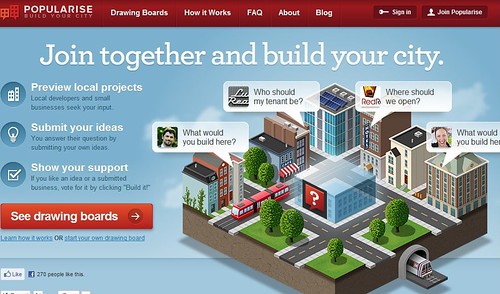
While it looks cool, I am not a big fan of the Popularize.com "crowdsourcing" website that seemingly gathers information from residents about "what they want" to be built on various building sites. See the WAMU/DCentric article, "Crowdsourcing Neighborhood Changes."
popularize.com screenshot

It's pretty clear from all sorts of surveys that predate what is now called "crowdsourcing" that people want coffee shops (especially Starbucks), restaurants, Trader Joe's type food stores, book stores, etc. for their neighborhoods.

The issue isn't what people want so much as to how to get it.

E.g., last week I was a bit derisive about the new DC Vibrant Retail Toolkit in the blog entry "The primary ingredient for retail revitalization is (after planning) conviction," but I did print it out for deeper reading, and while I haven't read it yet, I did scan a couple pages (and yes it is going to be a very good resource (more about that some other time) even if I still believe that the biggest ingredient for retail revitalization that is missing in DC will still be missing after the distribution of the Retail Toolkit and that's conviction) and one of the pages outlines household population and income targets for various types of retail businesses.

Anyway, my problem with crowdsourcing is that if you don't provide some base information and structured knowledge to help shape the discussion, you set up the opportunity for mismatched expectations and don't get enough in the way of useful information and knowledge. (Sort of like the comments on a typical story in an online newspaper, the comments can be good but mostly are drivel.)

Or (1) how to provide them with the retail that they want; (2) in terms of specific businesses, independent or chain; (3) in terms of how businesses, especially chains, rate/score neighborhoods and their willingness to locate there (e.g., to Starbucks, the store at 8th and D Streets SE on the Eastern Market Metro Station Plaza, in the heart of Capitol Hill, is an impoverished neighborhood); (4) the dictates of financing the building (banks prefer chains not independent retailers); and (5) capital formation for retail businesses.

To get all that to be congruent is difficult, and you need support systems for business proprietors so that they can develop robust concepts and operating systems so that their businesses will succeed over the long term, line up a good location and a favorable lease, and financing for their business.

And the neighborhood has to have the right kind of demographics necessary to support the business.
Page from the DC Vibrant Retail Toolkit
Key criteria in evaluating urban retail submarkets. Page 38 from the DC Vibrant Retail Toolkit.

And out of all that, traditionally, developers and property managers haven't gone out of their way to provide any of that kind of extra-normal assistance to actually develop, create, and nurture that kind of retail for their properties.

Also see the blog entry "Store Siting Decisions" originally from July 2005. And while the overall circumstances are changing somewhat, as chain retailers are now more willing to consider center city markets than they were almost 7 years ago when I wrote "The future of urban retail isn't chains," the entry is still relevant, especially for marginal districts.

E.g., sure Walmart, a national chain, is entering the DC market in force, but it's not like other, more desirable chains are doing so, e.g., Trader Joe's hasn't expanded their store frontprint in the city from the one they have in the West End; you don't have a Kohls Department Store, etc.

There are exceptions. The Rouse Company's creation of Faneuil Hall in the early 1970s as a retail environment is one. It laid the basis for what are now known as "festival marketplaces."

But even over time, the company moved from the "one-off" retailer to chains, as evidenced by the store and restaurant mix in Harborplace in Baltimore, which features non-local brands such as California Pizza Kitchen.

Although note that one way to help fund retail that you want is by "crowdfunding" it. See "'Go Local' means invest local" from CityPulse (Lansing, MI).

Of course, for the big retailers, it's called financial incentives. For example, a payment of not quite $1.5 million was made to Trader Joe's to attract them to the West End DC location.

Labels: , , ,

Thursday, April 19, 2012

A large stock of old buildings and innovative uses: Building Character in Lancaster, PA


Is one of Jane Jacobs four basic precepts:

1. the need for primary mixed uses;
2. the need for small blocks;
3. the need for aged buildings;
4. the need for concentration;

for successful and therefore "Great American Cities."

She argued this not as a historic preservationist but because big old buildings of the time were built to be flexible and adaptable, and buildings "free and clear" of mortgages could be rented out more cheaply than newly constructed buildings.

Almost by definition new or innovative uses need lower rents, in order to be able to experiment and prove out the concept.

One of the factors that makes doing "creative" or innovative "urban" revitalization projects difficult in DC is the fact that as an office, not an industrial, city, for the most part the city doesn't have a large stock of old big buildings to work with, the kinds of buildings that in places like Brooklyn, Manhattan, Pittsburgh, Baltimore, Philadelphia, or even York and Lancaster, Pennsylvania and other once industrial towns have in abundance.

Those large old buildings can be adaptively reused to support innovative new uses, from businesses still producing items to services like hotels and residential projects. (Of course, the other strike DC has against it is even decrepit buildings have high value and are taxed accordingly and therefore the rents are high, making it hard to support "innovative" uses.)

Antique malls are a form of supporting retail entrepreneurship for proprietors who may not be able to be successful at running a store of their own and they are a good way to "absorb" and bring back large old buildings that may otherwise be too hard to reuse, at least in the intermediate term, as a single use. There are a bunch of such buildings serving as antique malls in Downtown Frederick Maryland for example, activating what would otherwise be big forlorn places.

There aren't many examples of non-antique "sub-store" operations (I hate to call them "malls") that I am familiar with, but one that I like is Building Character in Lancaster, PA.

It's partly a sales gallery for architectural salvage, but there is also spaces filled out with various boutique operations, ranging from someone who sells cards, bags and other items promoting Lancaster neighborhoods to incredibly well curated used clothing stores for men and women and a home store where we knew we could buy some bird houses made of gourds, and is why we went to the store in the first place.

This kind of operation does a few things, all good.

First, it utilizes a building that otherwise might be empty. Second, it supports retail entrepreneurship development generally, but also specifically through relatively low rents (in DC, retail rent in even marginal areas is in excess of $35/s.f.). Third, it provides a great place to shop and activates the retail offer of the commercial district.

Labels: , ,

Friday, April 06, 2012

The primary ingredient for retail revitalization is (after planning) conviction

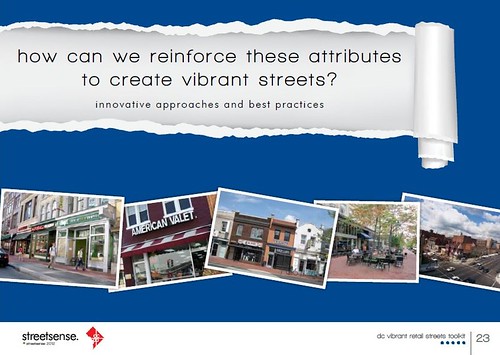
How can we reinforce these attributes to create vibrant streets?
page from the new DC Vibrant Retail Streets Toolkit.

Recently, the DC Office of Planning released a "DC Vibrant Retail Streets Toolkit" that they commissioned from the marketing and retail development consulting firm Streetsense, and according to an article in the Northwest Current, Streetsense believes that the report is awesome.

I haven't read it, and I'm sure it's good.

But in a larger sense, I don't think having a toolkit is the issue and I don't think it necessarily covers new ground.

There are plenty of resources out there already (I probably list at least 100-200 retail specific resources in the right sidebar), including:

-- the National Main Street Center, various trainings, conferences, materials etc.
-- the University of Wisconsin's Downtown and Business District Market Analysis Toolbox
-- the Urban Land Institute's Ten Principles for Rebuilding Neighborhood Retail
-- Business Recruitment Handbook by David Milder
-- an old publication by the Downtown DC BID which I have copied in two (Great Streets, Great Storefronts) Flickr photo sets
-- the report, Challenges of the Future: Rebirth of Small Independent Retail
-- and scads of others;

not to mention DC Office of Planning's massive "Retail Action Strategy" effort, which is a citywide plan with a number of subplans for specific commercial districts.

After a plan--with a focus on implementation--I think the most important factor is conviction.

Conviction | Vision |

Commitment to Quality & Excellence


Without conviction, and by that, I mean a total commitment to quality in all elements, you're f*ed. And I think the perfect example of this problem is Washington, DC, where for the most part, neighborhood commercial district revitalization sputters.

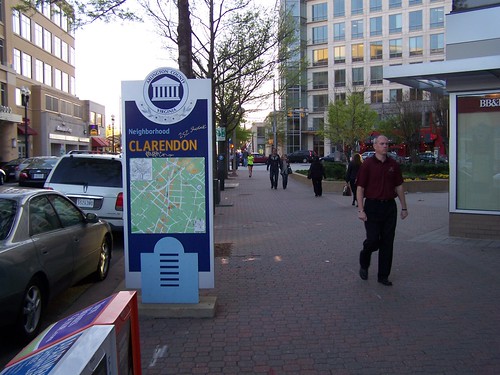
I meant to write about this last week, because I happened to go to meetings on consecutive days in different parts of Arlington's Wilson Boulevard corridor, and I was just bowled over by the vitality on the corridor between Courthouse and Clarendon Metro Stations, not that I got many photos, as I was biking to my meeting.
Wilson Boulevard, Clarendon
It's not like I don't know about what Arlington has done planning-wise over the years, but I thought back to a presentation I gave to the Clarendon Alliance maybe in 2006, about some of the issues they had there, including scale and urban design problems, and there is no question about Arlington's conviction--their commitment to great planning followed by great execution and implementation supplemented by incremental improvement through analysis and learning from their mistakes.

At the same time that I had seen people shopping, dining, walking, biking, rollerblading, running, using transit on Wilson Boulevard, the City Paper Housing Complex blog ran this piece, "Yes! Organic Market Interested in Bruce Monroe Site…Eventually," about a proposal for a development on the old Bruce Monroe School site on Georgia Avenue, which is a key and important site in its node, bracketed by H bus service going East-West, which connects to the north-south bus services on Georgia Avenue.

To me, it sounds like the city would be happy with anything, and isn't shaping what could happen there, but rather open to anything. Sorta like how Walmart's plans to build six stores in DC is reshaping the retail environment for the city, regardless of a Retail Toolkit.

The planning office does it's thing, but it only can try to convince the elected officials, and the Deputy Mayor's office of Planning and Economic Development, which has its own projects and staff of project managers running various initiatives across the city, from Walter Reed redevelopment to Skyland redevelopment to Reservation 13 ridiculousness etc., to do good work.

Mostly, there just isn't the will in DC--maybe it is the lack of knowledge of other places, and best practices from elsewhere--to do good work, people are satisfied with any sort of activity at all, because they believe that any activity is better than no activity. And they don't know the difference between quality and s***.
Walmart rendering, Georgia Avenue store, DC
Walmart rendering, Georgia Avenue store, DC. Walmart's entry into DC has been wildly embraced by the city's top elected officials without any consideration for how the stores will impact traditional commercial districts and the small buildings and small businesses located there.

On the other hand, when you look at places where DC has made considerable investment, and where quality urban design is a key element of the transformation, such as on U Street NW, H Street NE, or increasingly, in the Petworth Metro Station anchored node of Georgia Avenue, you see significant forward progress, even if it takes decades to fully realize.

So it's not like DC can't do good work, it's just that I think it's more a function of the luck of the draw of quality developers, rather than anything that the city's elected officials or Deputy Mayor's Office are doing consciously.

And that more than anything, is why I believe that there is no question that DC needs a Planning and Parks Commission, if only to bring more attention to land use and other planning issues on an ongoing basis, and to work to increase the attention on high quality planning and implementation on a day-in, day-out basis.


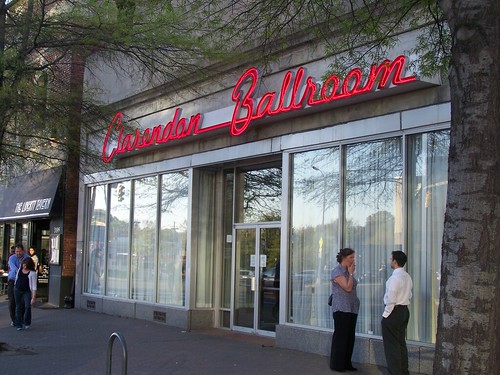
Clarendon Ballroom

Labels: , , , ,

Sunday, March 18, 2012

Interesting businesses/markets/operations: ideas for revitalization export

Made by DWC cafe in Los Angeles. Image from Good Magazine, "A New Cafe on L.A.'s Skid Row Serves Crafts, Coffee, and Community."

-- Huntington Beach, California's "Surf City Nights" includes a night-time farmers market. I've suggested such for DC's Eastern Market for years. (There are plenty of such examples across the country.)

-- Brooklyn has an occasional Night Bazaar as well.

-- Local Roots Market & Cafe in Wooster, Ohio is a co-op but I think of it more as a conglomerator, selling foods produced locally, but not requiring each farmer to set up stands at a farmers market.

Actually, more of these kind of "local food hubs" are being created across the county, in places like Charlottesville, VA and Phoenix, Arizona, among others.

-- Venezuela's El Sistema classical music education program sponsors a variety of programs across the country and has produced talents active on the international scene. See "Venerated High Priest and Humble Servant of Music Education" from the New York Times.

Although DC's Washington National Opera is doing some local programs too, such as their "in your neighborhood" program which has delivered a number of concerts and related activities in the Columbia Heights neighborhood.

-- The Museum of Contemporary Art/Denver has the "Art Fitness Training" program, which teaches art appreciation. The Utah Museum of Contemporary Art has a similar program. See "Art fitness training helps with understanding contemporary art" from the Salt Lake City Deseret News.

-- Made by DWC (the Downtown Women's Center) is a gift shop and cafe on Skid Row in Los Angeles (and last year they had popup shops elsewhere in the city during the holidays). It's a job training program, a revenue producer for the nonprofit, and a place where DWC clients can sell goods that they produce. (Article from Good Magazine.)

From the Good Magazine article:

The DWC's social enterprise program was started five years ago to help the center's women develop business principles, a sense of social responsibility, and environmental awareness, says Annah Mason, social enterprise coordinator. Workshops taught by local artists and designers, like social design group Project H, help teach the women valuable skills and give them a creative outlet. In addition to creating the products, DWC women do the store's merchandising and inventory, thanks to training from Bloomingdale's Century City location. "They have work experience, they've just been disconnected," says Mason of the women at DWC. "It's amazing to see the light come back."

The store itself was designed by David Magid and takes advantage of the huge, loft-like windows and extra-high ceilings that flood the space with light. Attractively arranged among the creations by DWC's women are other items including housewares, stationary sets, craft books, and even antiques—all donations, says Mason. They're still looking for more donations, including products that will fit the boutique's DIY-market-meets-hip-thrift-store theme. In fact, she'll gladly take your grandmother's china that's gathering dust in the basement. "If you feel sentimental about something but don't need it anymore, we will turn it into something," she says.


This is the kind of shop I had in mind when I wrote about the hullaballoo over the Calvary Woman's Services debacle in Anacostia, where people fighting the homeless program looking to locate a facility there--over two arguments, one on overconcentration, the other on a nonretail use in a commercial district desperate for more retail uses--could have at least some of their concerns assuaged, if the homeless program would build retail activities into their program, just like the DWC in Los Angeles. (Although there are other examples.)

-- Similarly, there are a bunch of good examples of craft stores selling regionally produced items--something that I suggested should be part of the retail at the building constructed on the Hine site, adjacent to DC's Eastern Market in this blog entry, "Art & Invention Gallery as a retail prototype for a store in the Eastern Market area," including Heartwood in Abingdon, Virginia, the Illinois Artisans Shop, state run, in a government building in Chicago, the Mississippi Crafts Center Gallery in Ridgeland, Mississippi, the Art Studios at Spanish Village Art Center in San Diego, the Center for Maine Craft Gallery in West Gardiner, Maine, and the South Carolina Artisans Center near Charleston.

Labels: , , , , ,

Monday, March 05, 2012

Public markets and pop up restaurants

I have advocated for years that virtually all public markets should have demonstration kitchens, and ideally "community kitchens" to serve as business incubators.

Why not also have a kitchen space that supports so-called "pop up" restaurants? Give the restaurant space for one month, not unlike "Restaurant Wars" on Top Chef, and they can work out their concepts, develop a following, and maybe "graduate" to more permanent spaces?

USA Today has an article on pop up restaurants, "Pop-up restaurants serve specialty food on the go," which made me think of this as an idea.

From the article:

A trend that has been flourishing in big urban centers such as Los Angeles and New York for several years, pop-up restaurants are, ahem, popping up all over. Temporary and often culinarily avant-garde, they spring up for a short period of time, be it a single night, a week or several months, promoted via social media, e-mail lists or simple word of mouth.

They have been known to take over empty lofts, airplane hangars, and restaurants during off-hours — pretty much anywhere the imagination dares to go, but with access to a working kitchen. As evidenced by their proliferation, pop-ups can indeed be profitable. In fact, their popularity is only enhanced by their fleeting nature, creating even more demand and perhaps an air of exclusivity.

A pop-up's emphasis is often on pushing the envelope — be it with the food, the venue or the entertainment. That said, most pop-ups tend not to be fly-by-night enterprises, as they want to build a loyal following, and are required to abide by restaurant or catering health-department regulations in their town.


Probably you could argue that the DeKalb Market in Brooklyn supports pop up type operations as does the food truck phenomenon.

In any case, this would be a natural extension of the public market and food markets as food-related business incubators. See the report, Public Markets as a Vehicle for Social Integration and Upward Mobility.

Labels: , , ,

Friday, January 27, 2012

Another one from the archives: analyzing retail store failure

One of the comments on this City Paper Housing Complex blog entry, "Going Backwards on Benning Road," indirectly and correctly makes the point that I was guilty of the over-generalizations that I often accuse others of employing, it's worth reprinting this piece from September 2007, when I was the program manager for the now defunct Brookland Main Street commercial district revitalization program.

I am particularly proud of the discussion of the four different "mixes" or subsystems of individual businesses, including what I call the store operations mix.

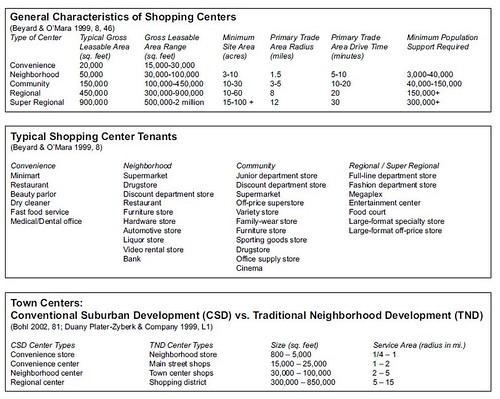
The link for the "Urban Retail Centers" document doesn't work anymore. This is one of the sections that I was referring to, in terms of the typical size and type of retail centers (you can sort commercial districts in cities in a similar fashion) and how many residents (retail trade area) you need to support the centers of various sizes.
Extract from UWM Urban Retail Centers document


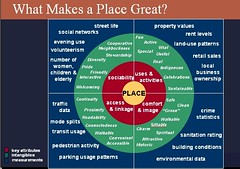
What Makes a Place Great?
Slide from the Project for Public Spaces. I need to make a slide like this for individual stores. (See below) about the Retail Mix.

In the last couple months, 3 businesses have closed on the 12th Street NE corridor in Brookland, the commercial district I am charged with assisting. Another one is closing (this one is in large part a succession issue). On the other hand, in the last year, Yes! Grocery opened, and has a greater sales volume and number of employees than all of the stores that closed.

But when a store closes, the point isn't to make a statement "The store closed." The point should be to figure out why. That means asking questions. (I mention this because of one of the questions from someone in the audience at the session about Brookland at Friday's local ULI chapter conference made a statement about the failure of these businesses.)

The thing is that most people don't have any clue as to why the businesses close and don't have much insight into what is going on. In "Main Street at 15," Kennedy Smith wrote in 1995 about how marginal economies in our local commercial districts disconnected knowledge and success from the ability to open a business. She writes:

As retail dollars moved out of Main Street, a host of problems moved in. To begin with, the economics of owning commercial property downtown no longer worked. With fewer business tenants, downtown property owners had to depend on fewer rents. A building which might have once generated three $500 monthly rent checks might now only produce one or two--and building maintenance suffered. Downtown started looking run-down and shabby, in marked contrast to the spanking new shopping malls. Main Street`s retail space was suddenly second-class, at best. The businesses that could afford to pay the highest rents went to the mall; the rest came downtown.

Market demand had once shaped the mixture of businesses downtown. Now, anybody could open a business downtown with a few thousand dollars, regardless of his or her marketing savvy, business skills, or even knowledge of whether or not there was a market for the stuff he or she hoped to sell. Instead of a business district tightly synchronized with market-area consumer demand, Main Street had become a bizarre and eccentric assortment of junkshops, marginal businesses and other occupied vacancies.

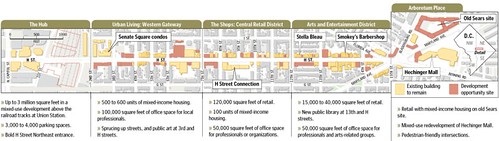
After doing my presentation earlier in the week in Takoma Park, I realized I need to add a couple slides on the concept of a "retail trade area." So I was doing some research and reading about this yesterday. One of the best short discussions of some of the issues, and a listing of the size and population required to support various retail shopping places is this piece, Urban Retail Centers from UMN. (Note that you need up to 40,000 people to support 50,000 s.f. of retail. Most of the small neighborhood commercial districts have 50,000 to 100,000 s.f. minimum. H Street, including Hechinger Mall has 1 million square feet.)

One of the articles I dug up is called "Trade Area Mix and Retailing Mix: A Retail Strategy Matrix," from the Journal of Marketing, October 1976. In turn it cites an article from 1961, "The Retailing Mix: Planning and Management," from the Journal of Retailing.

The latter article proposes three components or sub-mixes of the retail mix:

Goods and services mix
• Variety and Assortment
• Parking [I would change this to Accessibility and Transportation]
• Sales Service
• Customer Service
• Credit
• Price Lines
• Guarantees and Exchanges
• Alterations and Adjustments
• Delivery

Communications mix
• Personal Selling
• Advertising
• [I would add Exterior Conditions of the Commercial District]
• Window Display
• Interior Display
• Public Relations
• Store Layout
• Catalogs
• Telephone Sales
• [now we would add online sales as well]

Physical distribution mix.
• Store Location
• Distribution Centers
• Inventory Control
• Transportation [of goods]
• Handling Goods

In terms of thinking more broadly in terms of the success of an individually-owned independent store, you can add another dimension called something like:

Store Operations mix
• Rent
• Quality of space and location
• Proprietor salary
• Personnel acquisition
• Labor costs
• Access to capital

The Rosenbloom article discusses the Trade Area Mix, linking broad market demand to the possibility of store (and commercial district) success:

1. Trade Area Geography: the geographical extent of the trade area
2. Trade Area Demand: the level of consumer demand within the geographically delineated trade area
3. Trade Area Heterogeneity: the mix of consumer market segments within the trade area and the diversity of consumer demand for products and services. The greater the demand, the higer degree of heterogeneity, characterized by more offerings.

When someone says "That store closed, the X commercial district is a terrible place to do business," the reality is a lot more complicated. Was it the owner? The concept? The commercial district? The property? Access to capital?

And it's not either/or, it can be and/and/and... For example, the Brookland commercial district has some significant spatial and access issues. Just like I write about "intra city sprawl," commercial districts need to ensure intensity and critical mass.
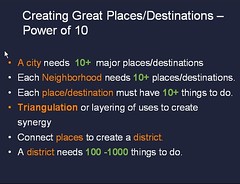
Creating Great Places/Destinations
Slide © Project for Public Spaces.

And in terms of creating a "Commercial District Retail Strategy Matrix" for the city, the only way it will be possible to create strong retail centers in our neighborhood commercial districts in DC is through differentiation and a focus in part on cultural anchors to assist demand.

There is no way that DC with its current population can possibly fill the demand for all the new retail that is going to be created in the city, let alone the extant retail space, given the difficulty of developing independent retailers in the current environment, and the fact that asking prices for rents even in marginal neighborhood commercial districts are greater than $30/s.f.

Furthermore independent property owners, unlike the management of a shopping center, aren't likely to provide either build out allowances, a period of free rent, and/or rent rebates, which are necessary sweeteners often provided in order to set the stage for retail success.

Labels: , , , ,

Saturday, January 21, 2012

More on commerz in the 'hood

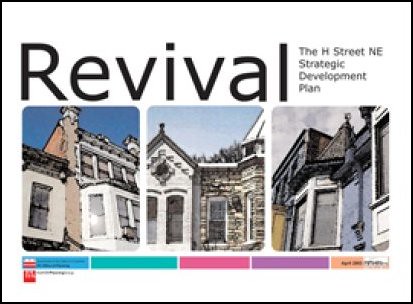
Cover, h street revival plan, washington DC
An H Street e-list calls our attention to this piece, " D.C. Residents Call for Fewer Bars on H Street" from the Washington Informer, with quotes from African-American residents about the gentrification of the commercial district.

Note that this isn't a new story. See the blog entries from 2006, which responded to similar articles in the Washington Post, including "Whose H Street Is It, Anyway? A Dispute Over Restaurant Zoning Creates a Chasm Between Northeast Washington's Old and New Residents" (the first entry below includes cites to other Post articles about other neighborhoods, recycling the same issues):

H Street, Block by Block
Post graphic on the H Street revitalization plan, 2007.

From the Informer article:

Residents of the gentrified H Street area are troubled by the block on block of bars that line the Northeast corridor. Margaret D. Lewis said not all of the improvement projects left the corridor better than it was found.
"They have too many bars and too many restaurants," said Lewis who has lived in the area for more years than she cared to remember. "They need to have more retail stores." ...

Lewis' friend, who didn't want to be identified, shared Lewis' frustration. She was bothered by the lack of grocery stores in the area and also saw evidence she was being pushed out of the corridor.

"They have come and taken H Street over as their place," [Dineen Method] said. "It should be a place for anybody -- not just for them." She said she lived in the area when nobody else wanted to be here and made the best of a bad situation.

She also blamed city planners for not making Black people an integral part of the rebuilding of the H Street Northeast corridor. "They built it up around them," she said. "They are putting up condominiums, but they are not putting up low-income housing for people in the area. That leaves more people homeless and jobless."

... Meanwhile, if Darnell Thomas has his way, he would choose youth friendly activities to put on the corridor and fewer watering holes. The youth need places to go, too, said Thomas who is a Muslim.

"They took the library. Why would you take a library down? So now the youth have no place to go," he said, referencing the closing of the R.L. Christian Library kiosk in 2008. "Every neighborhood should at least have a library," he sighed.

He didn't understand the closing of the Children's Museum at 3rd and H streets. It was converted to luxury condominiums, one of which is occupied by former Mayor Anthony Williams, who targeted H Street as one of the areas slated for revitalization.


My response:

When there was a hearing on the Main Street program, convened by then Councilman Kwame Brown, at the Atlas in 2007, the same argument was made about the need for more retail stores.

My response at the time was that commercial districts revitalize in phases. My "Richard's Rules for Restaurant-Based Revitalization" piece focuses on how restaurants/taverns are necessary to get people to resample commercial districts. And are needed so that people can "refresh" themselves (by eating, using the restroom, etc.) and stay longer in the district, rather than just accomplishing one or two errands and leaving.

This is a phase that lasts upwards of 10 years, before you can seed substantive retail. Plus, DC has a different dynamic going on with rents, and the rents are too high to allow for a significant amount of independent retail to develop, because the revenue potential of the space isn't high enough to support the asking price for retail rents. Whereas because of the small spaces, otherwise you'd think that these spaces would be great for retail...

- "Cleveland Park Retail, my off-hand assessment is that the rents are too high"
- "Commercial retail rents #2"
- this article by columnist Neal Peirce discusses how the period of Main Street revitalization is a 15-20 year process,

Although as certain blocks are redeveloped in a more large scale fashion, like 600, 800, 900, + parts of the 300 and 1200 blocks, especially after the introduction of the streetcar, chain retailers are likely to come to the corridor. The fact that Giant Supermarkets is building a store on the 300 block communicates to other retailers that the submarket is worthy of consideration.

The other challenge is that the economics of retail are much different than the economics of restaurants/nightlife establishments. People consume food every day. They don't buy apparel, furniture, books, etc. every day, or even as frequently as every month.

Therefore you need much larger numbers of people coming to your district to support retailers in these categories than are traditionally available within an immediate area. So the district has to become the equivalent of a "regional shopping center" (like Friendship Heights) to offer the array of retailers that people quoted in the Informer want.

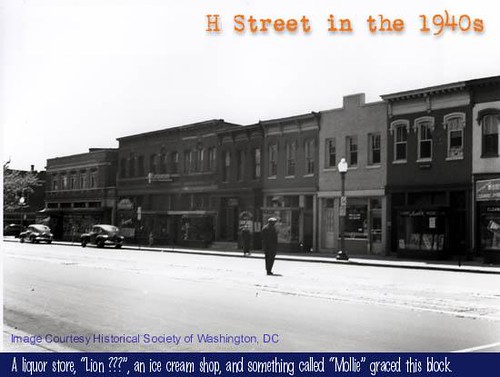
And actually, that is how H Street functioned in its glory days, as one of the city's three primary shopping districts (after Downtown, and arguably ahead of 14th Street). H Street didn't have the downtown department stores, but it did have a Sears, and the "5 and 10 stores"--national chains and local versions, a local department store (Mortons) and apparel shops and all the rest.
400 block south, H Street NE

Hechts didn't build its first suburban department store until the late 1940s. Once it did, other shopping districts formed in the suburbs, and DC's top commercial districts began to languish in response to the new and ever growing competition. In 1964(?, maybe it was 1962) Ourisman Chevrolet left H Street for Marlow Heights. Plus Kresge converted its store to its downmarket division ("Jupiter") banner, making it more of a dollar store, etc. These are indicators about how suburban locations became superior to city locations, at least in terms of H Street.

The riots were the denouement for H Street, and even downtown, which was also affected by national trends which made it almost impossible for locally owned department stores (Jellefs, Kanns, Woodward & Lothrop, etc.) to survive, further dooming downtown shopping districts (although that's a separate issue).

E.g. with regard to retail, look at 8th St. SE (Barracks Row). They have about 8-10 actual retail stores (2 bike shops, a gift shop or two, a couple housewares/kitchen stores, knitting, a couple cell phone stores including Radio Shack). But to show how districts develop in stages, the Main Street program there is about 13-14 years old, and now an apparel store is coming in. But most of the businesses in that area and along 7th St. by Eastern Market are restaurants/nightlife places. And the income demographics of the residential area there are much better than they are for H St.

I now have a term for this, entertainment/commercial districts rather than just "commercial districts."

Other points in the story are misleading. By relying on quotes and not digging deeper, the story takes on a bad tinge. E.g., the Children's Museum wasn't kicked out. They had no interest in staying. They saw the corridor as dingy and unable to improve. They wanted to leave and they did. But the H Street plan didn't even consider that the Children's Museum would leave and didn't recommend changes in its location.

Similarly, the H St. neighborhood was provided with tons of "low income" housing or lower income housing in terms of 2 senior housing complexes, the creation of a garden apartments complex (Pentacle) by tearing down a streetcar barn, a garden apartment type condo complex (Wiley Courts), and other lower cost new construction of rowhouses.

One could argue the new market rate construction is about providing a wider variety of housing at different price points. The reality is that people with income support retail. Whereas the building of low income housing may have stabilized urban neighborhoods (that's arguable), low income residents in and of themselves lack the income to support the development of a wide array of retail.

That's why the H Street Urban Renewal Plan, which was mostly successful*:
- bridge over the railyard
- Hechinger Mall
- 2 senior housing complexes
- Wiley Court condominiums
- Pentacle Apartments
- two office buildings on the 600 block
-3 sets of new rowhouses on the 700 block of 8th and 10th Streets, and the 800 block of 10th St. (on the 700 block of 3rd St. an old distribution complex was converted to gated condominiums as well)
- H street connection strip shopping center
- plus the DC government coming through and leasing the office buildings

didn't improve the corridor overall, because those initiatives didn't add enough income to the local micro-economy to spur revitalization of the retail corridor. Plus, Hechinger Mall, by drawing off the post office, Safeway, and CVS, diverted retail customers from H Street to the Mall, and forced them to drive to get there, and away from walking to shop.

* these projects added up to over $100 million when they were constructed, not in current values, which is higher, which is why I always LOL when people argue that the H Street neighborhood was ignored all those years by the city government.

The fact that the H Street Urban Renewal Plan" "worked" and yet the corridor still languished is what propelled me into urban planning as a profession. I've spent all this time trying to figure why investing $100+ million in the H Street commercial district didn't "fix" it.

The lesson was that in a city/neighborhood with historic architecture/great building stock, a pedestrian centric urban design, history, authenticity and identity, and great transit access (proximity to Union Station--subway, train, highways, high frequency bus service), an urban renewal strategy focused on building housing for poor people and wiping away the past was a losing strategy.

My other lesson came from the New York Avenue infill subway station. The development of that station meant that H Street was no longer a barrier for people with the ability to choose where they wanted to live. Because of the new subway station, people were now willng to buy and live north of H St.

E.g., seeing white people live on Orleans Place still boggles my mind, as in the late 1980s/early 1990s that was a key center for crack distribution in the city and dozens of people were murdered in that general area. Now, the demographics of the people walking on the streets north of H Street or K Street are truly shocking, given the past.

Anyway, seeing how the investment in the right kind of public transit (at New York Ave. station) propelled neighborhood revitalization faster than almost any other investment is what pushed me along towards transportation planning.

-----
Atlas Marquee, H Street NE, Washington DC
Flickr photo by DCMatt.

Note: as pointed out by some of the people quoted in the Informer article, it is reasonable to acknowledge that the plans for H Street inadequately addressed the provision of non-commercial public places and spaces, other than arts-related functions around what became the Atlas Performing Arts Center.

This is the result of flaws in how we do planning in DC.

So called "small area plans" aren't comprehensive neighborhood plans covering all issues thoroughly, such as parks, open spaces, libraries, schools, and other civic assets as well as commercial property development opportunities and transportation.

Mostly, small area plans are management plans to address development opportunities. So the provision of cultural and other non-"commodified" spaces within a neighborhood or commercial district often is overlooked in DC planning processes. And this is the case in part with the H Street plan.


This planning document "summarizes the successes" of the H Street small area plan so far. But it doesn't try to determine what if any gaps there were/are in the process and how to address them.

(Note that when the H Street revitalization process started, I knew a lot less about urban planning than I know today. I hope that I would have raised some of these issues back then, had I known.

A few years ago, I did raise with the chair of ANC6A's zoning committee the opportunity to carve out a public parklet at the southeast corner of 8th Street in association with the future redevelopment of the H Street connection strip shopping center. But it was too late in the process. Had ideas like this been addressed in either the H Street revitalization plan or the streetscape and transportation plan, the chances would have been much greater that something like that could have been done.)

Labels: , , ,