Rebuilding Place in the Urban Space

"A community’s physical form, rather than its land uses, is its most intrinsic and enduring characteristic." [Katz, EPA] This blog focuses on place and placemaking and all that makes it work--historic preservation, urban design, transportation, asset-based community development, arts & cultural development, commercial district revitalization, tourism & destination development, and quality of life advocacy--along with doses of civic engagement and good governance watchdogging.

Wednesday, October 16, 2013

"Undesirable" back yard tenants

A cream-colored skunk in our backyard, next to the garage which could be converted to an ADU.  Because of the rains, the grass hasn't been cut.

Skunks... well, not really, as according to the Humane Society for the most part skunks stay out of our way

Our landscape design for our backyard is what I call "rustic," we let wildflowers bloom even though they give our beds a very much unmanicured look. 

On the other hand, we have plenty of different species of birds, bees, butterflies (and yes, mosquitos) and such and have a more Jain-like attitude to those species.  I contrast our backyard habitat (which qualifies for the NWF Certified Wildlife Habitat program) to the very manicured lots which have minimal bird activity.

(Note that this is the first time we've seen a skunk.  We do have raccoons from time to time.  Bats fly around from time to time, but we aren't close enough to a water source to put up a bathouse.)

Labels: , ,

Thursday, April 12, 2012

The circle of life: baby birds edition


This year a cardinal family built a nest right on the fence between us and our neighbors on the west, in a mass of honeysuckle that we intend(ed) to cut back.

Usually we get one or two bird families nesting in our backyard each season, although mostly it has been wrens.

These birds hatched a couple days ago.

Now they are a seemingly interconnected mass of hungry birds, struggling to stay warm.

-- Certified backyard habitat program, National Wildlife Federation

(We don't have our backyard certified, but we did add a birdbath last fall, and birds drink from it and bathe on a daily basis. We have to be sure to frequently change/clean/refill the water. It goes pretty fast.)

Labels: ,

Saturday, September 05, 2009

Dilemmas in urbanism and suburbanism and the transect...

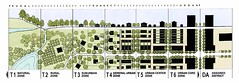
The transect of "urbanization" is a useful conceptual construct to help us think through land use and planning issues. There are six transect zones, ranging from nature to highly populated and/or dense districts. It's not perfect, because it is broad-brushed.
Land development Transect (new urbanism)
Transect diagram.

The Nashville/Davidson County Community Character Manual takes the transect concept but fine tunes it, with up to 7 subzones of each transect zone, based on the interaction between four primary elements (open space, neighborhoods, centers, and corridors) and the intent to preserve, enhance or create (develop) the spaces.

In the meantime, there are many incongruencies as places change such as:

1. Cougar on the loose? Park closed" from the Seattle Times.

A sign at the visitors center alerts people to Discovery Park's closure due to "credible" cougar sightings.

Enlarge this photo

KEN LAMBERT / THE SEATTLE TIMES. A sign at the visitors center alerts people to Discovery Park's closure due to "credible" cougar sightings.

2. "No One's Breaking Bread With This Wine: Some think a Fairfax County winery would preserve open space and boost tourism" and "Farm Winery Squeezes by Fairfax Zoning Law: State Board Gives Approval Over County's, Neighbors' Objections" from the Washington Post, about the creation of a winery in a more rural area of Fairfax County.

3. "Bow Hunt for Deer Debated in Leesburg: Residents Weigh Damage, Danger" from the Post.
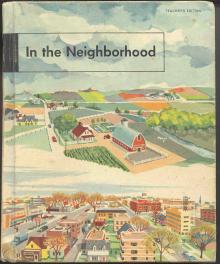
In the Neighborhood, 1960s reading primer

Labels: , , ,