The "new" Washington Post editorial page blows a chance to be innovative | Nudging versus "nannyism" and senior health care

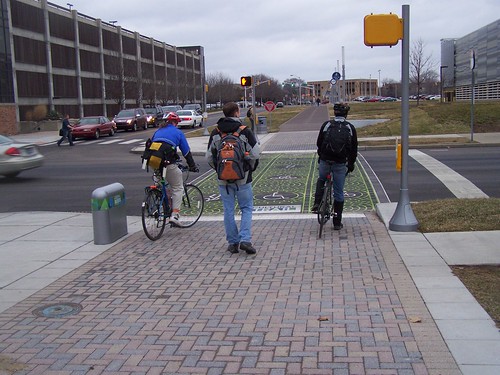
Nudging is the behavioral economic theory that people who should change their behavior but won't because it requires a change in their routine or to act, will make the right choice given a nudge.
Nudge theory is a behavioral science concept proposing that subtle changes to the environment—known as "choice architecture"—can guide people to make better decisions without restricting their freedom of choice or altering financial incentives

The term was coined by MP Iain Macleod in (1965) to describe a government that over-regulates personal lifestyle choices.In the Nanny State Index, the UK consistently ranks among the most heavy-handed countries in Europe for dictating health and consumer regulations.The concept manifests across several specific areas of public policy:
- Tobacco & Vaping: The UK has pushed heavily toward a "smoke-free generation," alongside severe restrictions and proposed taxes on disposable vapes.
- Diet & Food: Following the implementation of a national sugar tax, England has enforced strict rules including calorie labels on restaurant menus and bans on junk food advertising near checkouts and on TV.
- Alcohol: Measures like minimum unit pricing aim to curb consumption by hiking the cost of cheaper alcohol.
Their theory of situational crime prevention used locks, access control and vigilance. Yet the most impressive demonstration of the theory examined the relationship between the lethality of household gas usage and suicide rates in England and Wales. Their research led to decades of innovations in the design of crime prevention measures, largely following their clear theoretical framework.Prime example: Less lethal oven gas reduced suicides Between 1963 and 1975, there was an unexpected decline in the number of suicides in England and Wales. Clarke and Mayhew then reviewed the evidence to look for any change in the opportunity structure to prevent suicide. In 1988 they published a report showing that the decline was clearly due, at least in part, to a reduction of lethality in the chemical composition of household gas. It simply became more difficult to commit suicide by just turning on the gas and lying down – then waking up alive with a headache. They concluded that the practical feasibility of carrying out a particular act has a major impact on whether or not the act will be committed – and at what rate of occurrence.
Situational crime prevention theory is but a form of "choice architecture."
The Post is all in on being against "nannyism" even with clear economic/cost-benefits. The editorial, "Seniors are adults: They don’t need the federal government to buy them bath mats.," criticizes Senator Angus King who wants to send everyone on Medicare (that includes me) a bathmat to help reduce the likelihood of falls, because bathroom falls by the aged cost the health care system a lot of money.

Medicare doesn't pay for prevention measures like bath mats, grab bars, and shower chairs.
According to a pre-Trump Administration report which is scrubbed from the HUD website, Overcoming Obstacles to Policies for Preventing Falls by the Elderly Final Report, by the Department of Housing and Urban Development, the annual cost of health care from elderly falls is at least $80 billion per year.
To put that number in perspective, if Jeff Bezos who is one of the globe's wealthiest and owns the Washington Post, was responsible for covering that cost year after year, his fortune would be wiped out in 3 years and 2 months.
Although note that Senior Housing Services programs, which used to be funded by HUD, will make these kinds of fixes, as part of broader renovation assistance aimed at keeping seniors in their homes despite infirmities--keeping people at home as long as feasible costs a lot less than nursing homes, another major health care cost, but for Medicaid.
Housing renovation data by age and economic and physical circumstances. Years ago I saw a presentation from the Joint Center for Housing Studies.

It contrasted overall housing remodeling statistics with statistics for lower income households.
Most households do one major remodeling project annually, targeting one key element of the house, either repair, maintenance, or the creation of a new feature. Annually, the average household spends $2,400 on improvements and $700 on repairs.
Their research finds that a disabled household spends 10% less than the average, senior households 20% less, minority households 30% less, households with houses under $100,000 in value 50% less, and households with under $20,000 annual income spend 50% less.
Households with all of these characteristics spend an average of $500 year on repairs and improvements, less than one-sixth of the national average, and a majority of these households spend no money at all.
Nursing homes/social care. The US is running into a fiscal cliff as society ages and Medicare doesn't provide nursing home care ("New Study Explores the Need for Expanded Long-Term Care Services to Support Aging-in-Place," JHU).

In England, local government is responsible for providing what they call "social care" for the disabled and aged, and it's driving cities into bankruptcy ("Social care is bankrupting councils. Why aren't we angry?," New Statesman). Families are sending their relatives needing care to Thailand because it is cheaper ("Families sending relatives with dementia to Thailand for care," Guardian). Anti-nannyism has real and escalating costs.

These costs demonsrate the value of changing the policy on assistive devices.
In my comment on the Post editorial, I said that Medicare could make bath mats a "joining premium" like how PBS and NPR give you premiums (gifts) in return for donations.
It's an intellectual and policy failure of great proportions for the Post to not acknowledge the reality of the severe economic cost of falls.
The other thing, while the term "ableist" is in decline these days by Trump mandates against inclusion, you really get insight into the need for universal design--in the old days, the Post published articles about it, such as:
-- "Adapting Your Home To Maximize Mobility," 2006
-- "A Safe Home, Step by Step," 2010
-- "Making the case for cottage homes," 2019
-- "A major renovation yields a multigenerational home on Capitol Hill," 2021
to better deal with the changes in psychomotor prowess that come from illness, disability, and or age. Instead, the Post's worldview is shaped by its writers being able, not infirm.

Last year they did one of their "Washington Post Live" events on the "Future of health policy in the United States." Times sure have changed.
My circumstances changed in a flash.
I went from biking to work for 30 years to being a hospital "frequent flyer," but for good reason.
I had colon cancer, presented heart failure in post-op after surgery, and the biopsy found I also had an aggressive rare Lymphoma, so I started chemotherapy within a month of the colon surgery. Without treatment for the Lymphoma the oncologist said I'd be dead within a year.
Chemotherapy f*s you up.
I was so weak, but I didn't vomit. Though once it did take me 3-4 hours to have a bowel movement. Suzanne said the prednisone made me mean. It did help my appetite.
I did use chairs in the shower some because my FIL had dementia before he died, and we kept the equipment. I even used a transporter because for a time I couldn't handle the "long walk" from the entrance of the hospital to my heart doctors or to the radiology/lab testing section. For more than two years, I was pretty damn weak, especially because even more medical things happened:
- I was hospitalized for covid,
- probably could have died thank god for remdesivir, but it did worsen my heart
- got a heart pacemaker
- then an additional lead
- then a stent, even though less than a year before my angiogram found limited plaques, and
- serious reduction in appetite as a complication from chemotherapy and the medicine,
- which led me to a few months of enteral nutrition feeding + regular eating--enteral really sucks, the tubes can clog easily, and emergency rooms aren't set up to deal with feeding tube clogs.
Plus, one of the medicines I took made me cough constantly--it turned out it was from a medicine I didn't really need, fortunately, and once I got off it, and other medication changes my appetite improved. Although I still only weigh 20ish more pounds than my low of 110. From a high of about 175.

And that was after I went through chemotherapy swimmingly. I had three treatments, then covid, so treatment stopped. In preparation for resumption 14 weeks later, testing found I no longer had the Lymphoma (thank you to mRNA maybe).
But it took me until about the past two months when everything finally came together "at once" and I am super better. (I'm still susceptible to illnesses like norovirus which can wipe me out.)
Yet only two years ago I thought I was a candidate for a heart transplant. My ejection fraction could be better, but I haven't been tested since my recovery kicked in.
Our shower has a "natural grab bar" the soap dish, and is a pretty tight squeeze so I could lean against the walls. But I was damn tired, had balance problems etc. I think I might have had assistance once or twice...
Now I don't. It helps that last summer I joined the JCC Wagner in Salt Lake first for the pool, and weight lifting really started only this year (not much so far 30-60 pounds depending on the machine or free weights), cycling (I've just started being able to bike a bit "in the wild," after not having done so since September 2023), spa, and pool walking. The JCC has indoor and outdoor pools, that + the spa have been incredible for me.
Another premium that should be part of Medicare: fitness memberships/a MAHA agenda for aging. I'm not part of Medicare Advantage, so I pay from my limited social security income the monthly cost of JCC membership. The local rec center is cheaper especially with a senior discount, but there is no pool. The County rec centers with pools happen to be much less convenient for me to get to, triple the time.
But Medicare should consider paying for fitness memberships for all enrollees, regardless of the type of plan, because lifting weights and other fitness activities have so many positive benefits (Physical Activity Benefits for Adults 65 or Older, CDC, "Resisting decline: the neuroprotective role of resistance exercise in supporting cerebrovascular function and brain health in aging," Frontiers in Physiology, "How can strength training build healthier bodies as we age?," National Institutes on Aging).
Or a deduction program funding the purchase of bicycles like in England or Ireland ("The Benefits of Biking for Seniors, Including the Mental and Physical Payoffs," Bicycling), but instead of deducting from your payroll check, from your Social Security check.
They could do this in conjunction with County and City Recreation Centers, Senior Centers, and yes, for profits. Better that fitness centers make money off of Medicare than prescription mills and other fraudulent activity.
If we were really about MAHA, "Make America Healthy Again," ("Dr Oz at the Center for Medicare and Medicaid Services: a chance to improve food service in hospitals") those are the kind of preventative care measures we should be instituting.

While RFK has done stupid PR stunts with unhealthy people like Kid Rock ("RFK Jr.'s erotic workout video with Kid Rock sure is weird," USA Today), imagine if the FitLot exercise equipment station piloted by AARP on its 50th anniversary--they funded one, but just one, in every state--were rolled out to playgrounds and parks across the country.
(I am working to install one at Sugar House Park.) Especially because it turns out they aren't just used by the elderly, but by people wanting to maintain and improve their fitness.
My energy level has rebounded significantly. The past week, although I developed a cold as a result, I worked 10 hour days for about 9 days on the grant application, doing some 8-15 discrete tasks each day. Before the last two months, I maybe could have done 3-4, took naps many days of the week, etc. Now I am waking up before 7am which is what I used to do naturally, before I was sick. I'm not taking naps.
(Oh, and I am drinking alcohol some again, and coffee.)
What about the people who are in a permanent state of debilitation? But most people who are debilitated remain debilitated, no Lazarus Effect for them. They need compassion and assistance. The Post really fell down by not considering this issue more broadly than the opportunity that they saw to shoot an arrow at "government waste" and overinvolvement of government in our lives rather than "personal freedom" to be really sick and unhealthy.
Fuck you Washington Post editorial page, until your writers have similar kinds of experiences and develop some empathy.
Just based on my response, the Post clearly missed an opportunity to move better policy choices forward.
========
These are articles I wrote suggesting DC could develop a wellness oriented program in association with building a new hospital in Southeast DC, where suffering from chronic conditions is high. Of course, DC took the least innovative path.
-- "Health equity devolves to cities and states as the federal government cuts taxes for the wealthy," (2025)
-- "Revisiting East of the River medical care: United Medical Center" (2018)
-- "Update on DC's plans to build a new United Medical Center" (2018)
-- "A glaring illustration of the need for comprehensive health and wellness planning in DC: Providence Hospital" (2018)
Labels: aging, behavior change, change-innovation-transformation, consumer behavior, cost-benefit analysis, equity planning, health and wellness planning, health equity, hospitals, urban design/placemaking
posted by Richard Layman @ 10:00 AM&Permanent Link
Follow this blog
15 comments