Rebuilding Place in the Urban Space

"A community’s physical form, rather than its land uses, is its most intrinsic and enduring characteristic." [Katz, EPA] This blog focuses on place and placemaking and all that makes it work--historic preservation, urban design, transportation, asset-based community development, arts & cultural development, commercial district revitalization, tourism & destination development, and quality of life advocacy--along with doses of civic engagement and good governance watchdogging.

Sunday, December 08, 2019

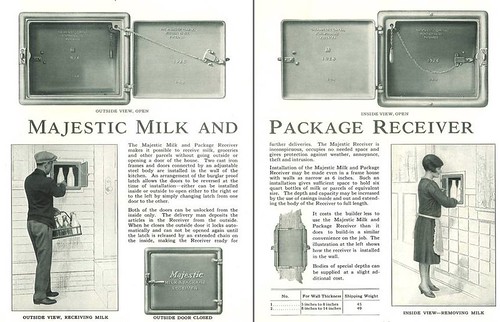
Package receipt devices for houses

Add for Majestic Mile and Package Retriever

I remember in the early days in discussions concerning e-commerce and secure package delivery, there was talk about creating/installing package delivery devices for houses, including even the capacity of refrigeration.

Someone sent an article about this to the Takoma e-list, and it included the above image.

Something like this, maybe even these particular versions, was installed in many houses on Warwick Street in the Rosedale Park neigthborhood in Detroit, where I lived from about 5 years old to 8 years old.  I used to crawl through them for neighbors who locked themselves out.

We called them "milk chutes."

Even a door-based device like a doggy door, but code activated could work (exception for the refrigeration part).

Labels: , , ,

Tuesday, May 24, 2011

Freight delivery management as part of urban transportation demand management

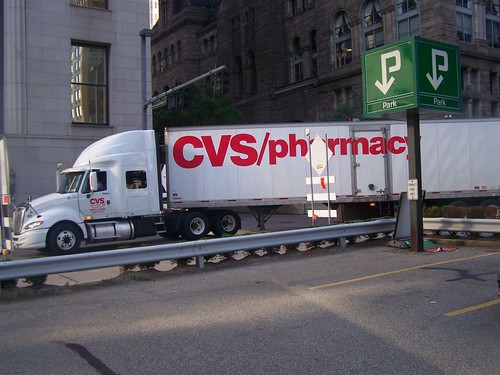
CVS pharmacy delivery truck during rush hour, Downtown Pittsburgh
CVS pharmacy delivery truck during rush hour, Downtown Pittsburgh.

Why companies like CVS have a tendency to receive their deliveries during afternoon rush hour (I see this all the time in DC) is beyond me. They should be required to shift their deliveries to overnight hours, when the road network, both on the freeways and in urban centers, tends to be empty.

Labels: ,

Tuesday, February 15, 2011

Freight trams

CarGo Tram Dresden 2010
Flickr photo by hrs51.

While looking up something, I came across the concept of freight trams. (Discussion thread in Skyscraper City.) Obviously, using street railways for freight is not a new concept, but with the rise of trucking (for obvious reasons, a truck can go directly to the final destination), this was abandoned.

In Dresden, Volkswagen has created a freight tram (CarGo Tram) to move parts from a storage facility to the manufacturing plant, and to move finished cars to a logistics facility. Apparently, as many as 65 daily semi-truck trips are avoided as a result.

There was an attempt to create a company to do this in Amsterdam (City Cargo BV), but as of 2009 they entered bankruptcy.

There would be opportunities to do this kind of dedicated delivery, especially overnight.

Labels: ,

Monday, October 06, 2008

A change the mobility paradigm is in order

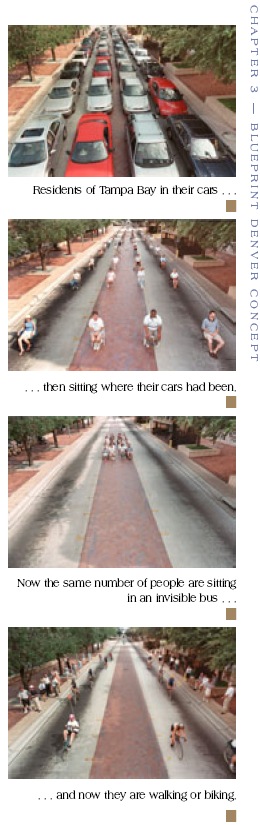
Packing the pavement: different modes take up vastly different amounts of space
Different transportation modes take up vastly different amounts of space. Image from Tampa via Denver.

One of the things I babble about is that the dominant planning paradigm is centered upon automobile connected separation of uses. The average household makes 15 trips/day, most in single occupancy vehicle trips. So if you build more roads, rather than work to make transportation and land use planning reciprocal, there is little you can do to reduce congestion, since the maximum capacity of a lane of road--in the best conditions of no stop lights and limited access--is 2,200 cars/hour.

It happens that 10% to 25% of trips are discretionary. So when people find negative inducements (congestion, etc.) they won't necessarily make the trip.

While it's true that business-to-busines delivery has different issues, as pointed out in this article, "Traffic Cure Only Worsens the Pain" in today's Post, at the same time, not rethinking delivery of freight, and special transportation demand management for deliveries, means that yes, the costs of congestion will increase.
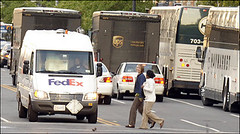
Washington area truck and bus fleets expand their numbers to beat traffic, but the additional vehicles only make matters.
Washington Post image by Marvin Joseph.

Shifting deliveries to night time when possible makes a big difference. For example, CVS stores mostly get deliveries during the day, and the big semi- truck and trailer combination makes traffic difficult. Were they to take deliveries at night, the impact on traffic would be minimal, except in a few locations.

In any case, rethinking logistics and delivery is necessary to truly impact congestion problems. We have a road network that is maximally used from 7 am to 7 pm, and then is empty for much of the time at the other hours. By time shifting some of that demand, maximum positive impact on throughput can occur.

In the city specifically, certain companies such as FedEx and UPS could save a lot of money by using delivery bicycles in the core of the city. It would mean more labor costs, but less money in vehicles, fuel and parking tickets.
UPS delivery bike, Amsterdam
UPS delivery bicycle, Germany. Image courtesy of Workcycles.

And by adding double deck buses to the Metrobus fleet, rather than more 40 feet and 60 feet long traditional buses, more capacity can be added without taking up more footprint on the street.
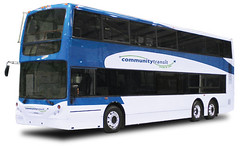
Community Transit "Double Tall" bus, Snohomish County, WA
Community Transit photo, Snohomish County, Washington.
* Bus Model: Enviro 500
* Manufacturer: Alexander Dennis Limited
* Height: 14 ft
* Weight: 51,000 lbs
* Length: 40 ft
* Weight distribution: 70 percent of weight is contained just above floor level on the lower deck
* Capacity: 70 seats, with lower deck standing room for up to 20 passengers
* Hip-to-knee room: 31 inches
* Double deckers in U.S. transit: Las Vegas is the only other U.S. city with double decker buses in transit operation, although various cities are now testing.

But doing things the same old way is certain to not result in the kinds of systemic improvement that are needed.

Labels: ,

Thursday, April 24, 2008

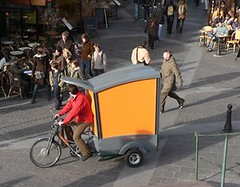
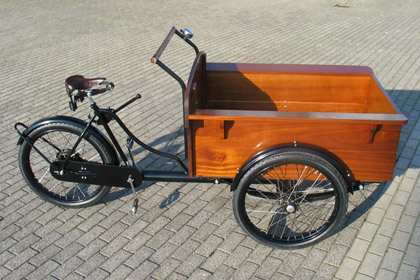
Cargo bicycle from La Petite Reine

This "bicycle" is more like a small city-complementary truck. It can carry about 400 pounds. It isn't cheap though. It costs about $10,000.

See La Petite Reine.

Via the Springwise trendwatcher website.

Labels: , ,

Wednesday, March 21, 2007

Working bicycles

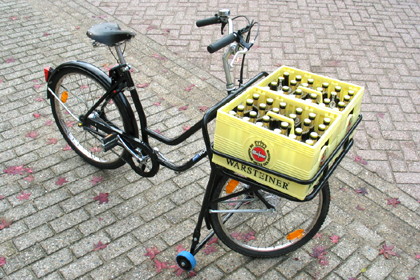
Henry's Workcycles
Will, in a comment in response to one of mine, about how one of these years I intend to create a bicycle manufacturing business focused on creating and distributing _lower cost_ bicycles designed for urban lifestyles--meaning carrying stuff, suggests Henry's Workcycles, in the Netherlands.

Cool contraptions but apparently very expensive.
Henry's Workcycles
We need to make these bikes cheap, or at least, less expensive. A bike costing over $2,400 is not what I had in mind... PLUS, I also mentioned in my comment that maybe the forthcoming SmartBike program from Adshel could include some of these kinds of bikes, although they obviously won't if they cost this much (although maybe it's something that stores could do).

The Chinese seem to be able to have bikes like these and I can't imagine they cost this much to produce. And I don't think it's just the low cost of labor.
China---man-on-bike
Image from Edgewood College.

Labels: , , ,