Rebuilding Place in the Urban Space

"A community’s physical form, rather than its land uses, is its most intrinsic and enduring characteristic." [Katz, EPA] This blog focuses on place and placemaking and all that makes it work--historic preservation, urban design, transportation, asset-based community development, arts & cultural development, commercial district revitalization, tourism & destination development, and quality of life advocacy--along with doses of civic engagement and good governance watchdogging.

Wednesday, September 07, 2016

Public entities ought to be more careful of whom they do business with

Apparently the business at Trump Hotels is down at least 30% since the start of Donald Trump's campaign for president ("Is Donald Trump’s campaign hurting his hotel chain?," Boston Globe).

1.  Government agencies need to do way better risk management when it comes to contracts with charlatans.  I thought about Trump's negative reputation when he won the bid to convert DC's Old Post Office building to a hotel ("GSA and Trump Organization Reach Deal on Old Post Office Lease," press release).  It would have been reasonable to reject his bid, given his track record in real estate (bankruptcies, stiffing contractors, etc.) let alone his other issues with hucksterism and other ripoffs, not to mention his litigiousness ("Exclusive: Trump's 3,500 lawsuits unprecedented for a presidential candidate," USA Today).

But the GSA went ahead and signed a deal with him, and now Pennsylvania Avenue NW and Washington DC's central business district has to deal with the consequences.

The same is true of "public" golf courses.  Do you really want Trump running your city or county's golf course ("Golf Course Deal With Donald Trump Leaves New York City in the Rough," New York Times; "Trump claims his golf courses are worth tens of millions. Until the tax bill comes," Washington Post).

2.  and should think twice about recruiting businesses with bad reputations and service.  And for Walmart too.  DC's elected officials were very much welcoming of a company with terrible customer service ("Walmart rankings the lowest for customer service," St. Louis Post-Dispatch and "White privilege: Study says Walmarts are nicer in the burbs"), labor relations, and crime-ridden facilities ("Tampa Bay Walmarts get thousands of police calls," Tampa Bay Times," note that Businessweek recently published a similar story).

Is that the kind of company you want to welcome with open arms to your city?

3. Conclusion: government officials and other stakeholders need to take their community brand management responsibilities seriously.  In a couple commercial district revitalization framework plans that I produced I wrote this:
... elected officials need to take their responsibilities as stewards and managers of a community's image very seriously:

Just as the study team believes that “we are all destination managers now,” elected and appointed officials in particular and in association with other community stakeholders serve as a community’s “brand managers”—whether or not they choose to think of their roles in this manner.

That means that decision-making on land use and zoning, business issues, infrastructure development (roads, sewers, water, utilities, transit), technology (broadband Internet, etc.) and quality of place factors (arts, culture, historic preservation and heritage, education, public schools and libraries, urban design, etc.) must be consistent and focused on making the right decisions, the decisions that collectively achieve and support the realization of the community’s desired vision and positioning.
Something else I read termed this as making "brand deposits" or "brand withdrawals," how the decisions and actions concerning a brand either make positive contributions and build the brand or the actions are negative and diminish the value of the brand, its reputation, aspirational qualities, etc.

Labels: , ,

Tuesday, March 13, 2012

Identity, public diplomacy, and war: specifically the morass in Afghanistan and the impact on US image

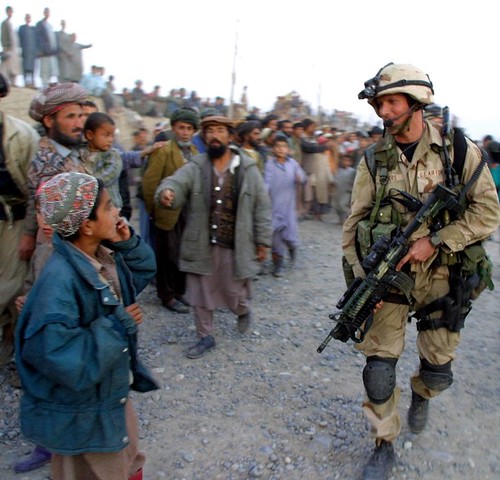
At sundown, a United States Air Force Special Operations soldier walks by an Afghan boy as others loyal to the rebel Northern Alliance look on
At sundown, a United States Air Force Special Operations soldier walks by an Afghan boy as others loyal to the rebel Northern Alliance look on, in Kwaja Bahuddine, 15 November 2001. Photo credit: BRENNAN LINSLEY/AFP/Getty Images.

It's not ostensibly relevant for this blog to discuss the recent tragic, horrible event in Afghanistan, where a U.S. soldier went off into the stealth of the night and murdered 18 Afghan civilians while they were sleeping.

What happened in Afghanistan is devastating vis-a-vis the U.S. position in global society, particularly in Islamic nations.

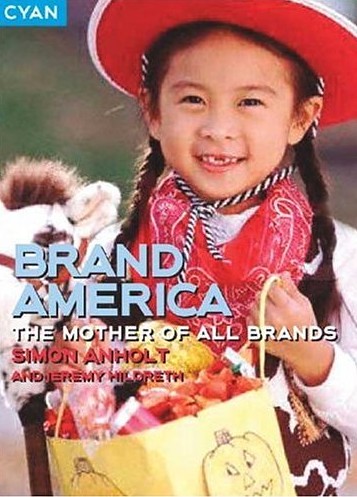
The reality is that nation-branding (e.g., Simon Anholt's book Brand America, and the op-ed from the Boston Globe, "Re-branding America") and "public diplomacy" aren't different, except to a degree, from regional and local identity and branding systems development.

After all, there is the Association for Place Branding & Public Diplomacy, the Place Branding and Public Diplomacy Journal, blogs such as this one, Place Management and Branding, from Germany, etc. I have had links to these kinds of resources in the right sidebar for years, and I reference these materials from time to time.

I have always thought in the era of military civil action programs since the 1960s, that we need to think of soldiers not just as killing machines, but as ambassadors. Obviously, that's a boundary spanning dilemma that is practically incalculable.

But if you are going to go to war (it really isn't germane to the stated purpose of this blog to discuss that) you need people on the ground in places like Iraq and Afghanistan that function more like anthropologists, not killing machines. They need to be able to interpret, understand, make connections, and generalize--not just kill.

Similarly, although the comparison is seemingly mundane given the stakes, communities need to do a better job training the "first line" of people who represent it to visitors--workers in public transportation including taxi drivers, and hotels and restaurants, at sites open to the public, in places where people are likely to ask questions and seek advice, etc.

I wrote in the COMMERCIAL DISTRICT REVITALIZATION FRAMEWORK PLAN FOR DOWNTOWN CAMBRIDGE, MARYLAND that elected officials need to take their responsibilities as stewards and managers of a community's image very seriously:

Just as the study team believes that “we are all destination managers now,” elected and appointed officials in particular and in association with other community stakeholders serve as a community’s “brand managers”—whether or not they choose to think of their roles in this manner.

That means that decision-making on land use and zoning, business issues, infrastructure development (roads, sewers, water, utilities, transit), technology (broadband Internet, etc.) and quality of place factors (arts, culture, historic preservation and heritage, education, public schools and libraries, etc.) must be consistent and focused on making the right decisions, the decisions that collectively achieve and support the realization of the community’s desired vision and positioning.

The materials that the community uses to communicate (print media advertising, brochures, websites, radio and television commercials, billboards, public relations placements, press releases, etc.) also must be consistent with the vision and positioning of the community’s branding program.


The same goes for US politicians and leaders--they manage the brand and identity of the United States of America, and the decisions they make should have this foremost in their minds, as every decision that they make in favor of a special interest or ideology can diminish the reputation and success of the country, and in the case of wars in Iraq and Afghanistan (and frankly, maintaining access to oil for gasoline from the Mideast which is where all this started, and is relevant to the blog) and seemingly simple decisions may have devastating consequences that all Americans should find extremely troubling.
Brand America by Anholt

Labels: , , , ,