Rebuilding Place in the Urban Space

"A community’s physical form, rather than its land uses, is its most intrinsic and enduring characteristic." [Katz, EPA] This blog focuses on place and placemaking and all that makes it work--historic preservation, urban design, transportation, asset-based community development, arts & cultural development, commercial district revitalization, tourism & destination development, and quality of life advocacy--along with doses of civic engagement and good governance watchdogging.

Wednesday, March 18, 2020

A bad bump for the sharing economy

wework, the coworking firm already on the ropes because of poor financial controls and overexpansion, may be seriously hurt by coronovirus since people won't want to be in places in close proximity to others ("Coronavirus may kill wework," Forbes Magazine).

The Wall Street Journal opinion piece "Coronavirus Will Permanently Change How We Work" suggests that the virus will increase significantly teleworking. I tend to disagree because the whole point of agglomeration economies is exchange and connectedness.

In a connected world public health surveillance and response systems need to be robust.  While the virus is bad, it is a 100-year (or more) event, and sadly, one that could have been contained if (1) the Chinese didn't have wet markets; (2) the Chinese were direct and honest about the emergence of the virus; and (3) the failure to have an ongoing and sound surveillance and proactive reaction system in place such as that employed in Taiwan ("Response to COVID-19 in Taiwan: Big Data Analytics, New Technology, and Proactive Testing," Journal of the American Medical Association), Hong Kong, Singapore, and South Korea.

South Korea, where the virus was more prevalent earlier, has fewer deaths from it than does the US, where the prevalence of the virus came later ("What the U.S. Needs to do Today to Follow South Korea's Model for Fighting Coronavirus," Time Magazine).


Jimmy Williamson rides an empty BART train from the East Bay to San Francisco on March 10, 2020. (Beth LaBerge/KQED)


Micromobility services shutting down in high risk areas.  Separately, e-scooter/bicycle sharing operations have announced a pullback ("Lime is yanking its electric scooters from California and Washington due to coronavirus," The Verge), which to me makes little sense because these devices allow people to make trips instead of on (theoretically) tightly packed transit vehicles--although transit systems are experiences catastrophic declines in service based on the statements that you need to be within 6 feet of someone with the coronavirus for 15 minutes to get infected--sounds like the minimum amount of time for a transit trip...

More biking.  With coronavirus, more people are biking in NYC ("A Surge in Biking to Avoid Crowded Trains in N.Y.C.," New York Times).

More driving?  But probably there will be more driving, except in the most congested places.  Although because people are self isolating/sheltering in place, fewer people are driving also.

Labels: , , , ,

Thursday, October 04, 2018

20000/600000 = 3.3% | No, probably WMATA doesn't have an adequate ridership improvement action plan

One of these days I will write more about WMATA's significant loss in ridership, both on train and bus.  I've written so much about the broad issues in the past that it becomes difficult to try to figure out the specifics now:

  • other than unreliable service 
  • extended shutdowns for rail system rebuilding
  • and much less frequent service
  • complemented by high cost of Metrorail + bus fares
  • and the fact that unlike a car or car sharing or a taxi when riding with multiple people the cost increases 
  • plus increased critical mass of locally-reached amenities in neighborhoods reducing the demand for longer journeys requiring transit
  • a soupçon from the significantly reduced frequency of rail service at night and on weekends discouraging transit use in significant ways--it no longer serves as the "top of mind"* mobility choice
  • which in turn increases the use of alternate modes like car sharing and taxi/ride hailing.
WMATA Metrorail at Takoma Station, with apartment building being constructed northwest of the stationBut I am not sure that today's Post article, "Metro says it doesn’t know what to do about falling ridership. An internal report lays out exactly what to do," is particularly helpful in getting us to the solutions.

The article is a follow up to an earlier one, "When it comes to reversing the ridership slide, Metro's leaders don't have a plan."

But this could be the headline writer's fault...

The article discloses an internal memo, and argues that an agenda for ridership improvement has already been developed by WMATA staffers.  The memo appears to be quite good at understanding the root of the problem.

-- Stabilizing and Growing Metro's Ridership, WMATA, May 2018

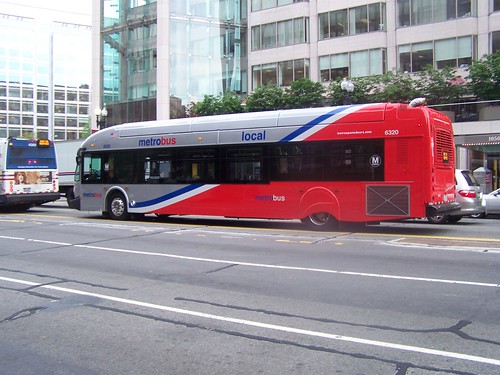
A New Flyer Metrobus done in the Metro Local liveryThe system used to have about 700,000 daily subway trips and 500,000 daily bus trips and it's significantly less than that now--616,000 daily train riders and 370,000 daily bus riders in 2017 on average, according to the memo.

But the number of additional trips projected as a result of the proposed measures is small relative to the drop off in rail ridership.

An increase in daily ridership of 20,000 is a percentage increase of 3.3% on current ridership and recovers about 25% of the total number of lost rail riders.**

I don't think that level of outcome would meet the commonly accepted definition of "exactly what to do," because the other 75% of lost riders are still lost.

=========
* "Top of Mind" as a marketing term. When doing market research, there is what is called "top of mind" answers, where you ask the question "what radio station do you listen to?" and the person says WAMU NPR or Magic 102.3 unprompted.  That's also called "unaided."  Then you ask, "do you listen to [specific stations, like WTOP etc.] and they answer.

In mobility, if I were to be asked how do I get around primarily, my "top of mind" response would be "bike," then "car sharing," then "subway." 

In what we might call WMATA's best markets for potential customers: DC; the Rosslyn-Ballston corridor in Arlington; and probably from Rockville to Bethesda in Montgomery County; in DC and Arlington specifically there are an increasing number of amenities located within a 2 mile radius of neighborhoods and people aren't likely to use transit to get there.

** In David Halberstam's book The Best and the Brightest about the Vietnam War, he recounts an anecdote of how the US Army was reporting a constant stream of victories in battles, but when a journalist mapped the location of each of the "victories" he realized that the land area controlled by the US/South Vietnamese was shrinking relative to the Vietcong/North Vietnamese.

Labels: , , ,

Wednesday, October 05, 2016

Re: why Metrorail ridership is declining and scary results on transit use declines resulting from a two-day strike on the London Underground

Previous entry, "Why Metrorail ridership is down."

A box filled with leaflets detailing alternative travel options is left outside a tube station
Photograph: Oli Scarff/Getty Images
.

Economists studied the impact of a two-day strike on the London Underground on ridership behavior and found that one out of every twenty riders changed their routes to one that was more efficient ("The Benefits of Forced Experimentation: Striking Evidence from the London Underground Network," Larcom, Rauch & Willems, 2016).

This led to a 5% drop in ridership as a result from a two-day change in commuting patterns.

Routine had kept them using their normal method/route, even though it was less efficient ("London Tube strike produced net economic benefit," Cambridge University).  From the press release:
Analysis of the London Tube strike in February 2014 has found that despite the inconvenience to tens of thousands of people, the strike actually produced a net economic benefit, due to the number of people who found more efficient ways to get to work.

The researchers, from the University of Cambridge and the University of Oxford, examined 20 days’ worth of anonymised Oyster card data, containing more than 200 million data points, in order to see how individual Tube journeys changed during the strike. Since this particular strike only resulted in a partial closure of the Tube network and not all commuters were affected by the strike, a direct comparison was possible. The data enabled the researchers to see whether people chose to go back to their normal commute once the strike was over, or if they found a more efficient route and decided to switch.
As a piece in GGW ("Sorry, Metro. I've been seeing someone else") which recounts how one Montgomery County resident has shifted from using Metrorail to the MARC Commuter train, more people will shift their commuting routine significantly as a result of the long term degradation in Metrorail service.

A notice informing commuters of the RMT union's tube strike is displayed in Clapham Common station on day two of the strike. Photograph: Oli Scarff/Getty Images. Note the discussion of alternative modes, including cycling and walking.

Anecdotally, it sure seems like during rush hour there is a lot more motor vehicle traffic in the vicinity of the Takoma neighborhood as evidenced by much longer queues of traffic at major choke points:

-- Blair Road/Piney Branch Road/Cedar Street
-- Blair Road and Aspen Street (which is a cut through for Maryland commuters)

My sense is that this is derived from the long term service declines of Metrorail which are perhaps leading to a critical mass of commuters coming to the decision to use other modes.

The issue is that individual utility and community utility are different measures.  For various reasons, sustainable mobility choices are more optimal systemically.

But long term, since the Metrorail system is polycentric, not monocentric, and because of the relatively high cost of using transit on Metrorail or combined with Metrorail, Metrobus, and local bus services, ridership is likely to plateau for some time, although the coming Purple Line will offer an opportunity to stoke overall increases, as the shape of the sustainable mobility changes and is expanded.

======
Philadelphia commuter rail.  Relatedly, it will be interesting to see how much of SEPTA's ridership declines from reductions in commuter rail service from July-September will be recaptured as the system is now back to its normal schedule ("Philly rail system back to normal after 3 month headache," USA Today).  From the article:
SEPTA announced over the July 4 weekend it discovered cracks in the suspension systems of 120 rail cars. The agency had enough cars to operate its weekend schedule but was forced to cut back its commuter schedule. SEPTA estimated its trains shuttled about 65,000 people each way on a normal work day, a number that dropped to fewer than 40,000 at the height of the crisis.

Labels: , , , , ,

Tuesday, October 04, 2016

Why Metrorail ridership is down

In response to the Washington Post story, "Metro's multimillion-dollar mystery: Where have our riders gone?," of course the answer is obvious -- significant degradation of the service and high cost.

Which the Post reported on a couple weeks ago ("Meet some Metro riders — ex-Metro riders, that is").

There is a great deal of research on the factors that influence people's choice of mode, but I don't need to reference that work to provide "insight" into the problem.

Note that SEPTA's ridership declined by 10% to 21% ("Ridership takes a hit because of SEPTA's rail woes," Philadelphia Inquirer) when they had to take many commuter rail trains out of service because of structural cracks discovered in the equipment ("SEPTA pulls repaired Silverliner V cars after new defect found," Inquirer), giving credence to the belief that service degradation is the primary reason for the decline in Metrorail ridership.

As commenter charlie said years ago, "transit's killer app is saving you time."  In most communities, people have choices and the well off have the most choice.  The people who can't afford personal mobility are typically called "transit dependent" for obvious reasons.

Ridership declines are likely derived from changes in behavior on the part of "choice riders," people who have the financial wherewithal to take advantage of other choices.  The intermediate term decline of gas prices is a contributor ("Metro Continues Steep Ridership Decline Amid Nationwide Trend of Transit Losses," WAMU/NPR).

Time/Efficiency.  The time to get from your origin to your final destination.  Efficiency is abetted by relatively short distances between residential location and activity centers, and concentration, which supports frequent transit service.  Frequency of service is an element of this measure.

As employment centers, especially large federal employers, disperse from the core, transit becomes less efficient in part because smaller ridership volumes don't support frequent service.

With the decline in the quality of the Metrorail system, people's trip times have risen considerably.  In that case, people are led to consider and choose other alternatives.

Cost.  The cost of alternatives.  For example, the American Automobile Association says the cost to own a car is about $8,000/year ("Annual Cost to Own and Operate a Vehicle Falls to $8,698, Finds AAA").  Note that people who pay to park pay more than this.

Obviously, the cost of gasoline is a factor.  As prices rise, people shift to transit, as prices decline, people shift to driving.  If people have free parking, they tend to drive more and if they have to pay they drive less.

The cost of fares.  The Metrorail system is somewhat unique for a "subway system" (it functions as a hybrid of subway and commuter rail) in that it charges on the basis of distance, with a one way fare topping out at about $6.

But it is also somewhat unique in that it charges by mode, so that rather than one fare or one fare slightly higher for a trip involving multiple modes such as rail and bus, they charge separate fares (see the 2015 entry, "What will it take to get WMATA out of crisis?").

Until recently the system didn't have very favorable rates for monthly passes, although this has changed with the introduction of the Select Pass.

But compare the cost of a car as calculated by AAA as around $8,700/year versus the cost of a year's worth of monthly passes for the NYC Transit system, which includes buses and subway -- at $116.50 per month, it costs about $1,400/year.

Even with additionally spending on car sharing and rentals, taxis, etc., the cost per year is considerably less than owning a car.  Similarly, SF's MUNI system has low cost monthly passes, as does the MBTA system in Boston.

In cities with a robust sustainable mobility infrastructure, it can be much cheaper to get around compared to automobility.  DC has those conditions, at least within the core of DC, as long as the transit system is highly functioning.

Federal transit benefit.  Also, until recently the federal transit benefit was significantly lower than the tax benefits made available for driving.  Federal workers don't pay for the transit benefit, so it is an inducement to use transit.  The monthly benefit rate was increased to $230, not quite doubled, which should be leading to ridership increases for Metrorail.  (Separately, the federal transit benefit offered in the DC area is a kind of indirect subsidy to Metrorail not enjoyed by other transit systems to the same degree.)

Marginal cost for additional riders on a single trip.  A big problem with transit is that it isn't cheaper for groups, unlike how with a car the marginal cost for additional riders is zero.  The cost for four people to travel downtown from outer points can be as much as $12 round trip per person (a little less for a one day pass).  At that rate, it is cheaper to drive.  Overseas, a number of transit systems provide inducements for people to use transit in such instances, by allowing some forms of group travel as part of a transit pass.

Comfort and safety.  Seats.  The ability to multi-task (read, etc.).  Quality of the ride.  (This has degraded significantly on Metrorail.)  Note that transit is still much safer than driving, generally.

Reliability/Predictability.  Expectations that the trip will be uneventful and not longer because of service interruptions.  With the decline in the quality of the Metrorail system, people's trip times have risen considerably.

Because of failures to adequately maintain the system, accentuated by service increases associated with the addition of the Silver Line, the system more frequently experiences unplanned service interruptions and outages that lead to significant delays.

For example yesterday had simultaneous service interruptions on multiple lines.  As pointed out in "Night and weekend transit/subway service: Metrorail edition," Metrorail's system design, which leads to inter-connecting or "inter-lining" various lines ends up spreading failure across lines like a virus, making the problem worse, rather than containing or localizing the problem.

According to a recent study, especially for choice riders, predictability is the most significant factor influencing transit ridership. From the Governing Magazine article "Top Reasons People Stop Using Public Transit":
Nothing ruins a public transportation rider's day quite like waiting around for a train or bus that never shows up. Turns out that if it happens enough, riders will start giving up on transit, according to a new report.

University of California, Berkeley researchers examined exactly what effect a transit system's unreliability has on its customers. While it's well-known that reliability is important to riders, it's less understood how, exactly, common transit problems impact the public's likelihood to reduce their ridership in the long-term.

Some studies show that transit riders value consistent travel times even more than shorter travel times, making reliability an especially important issue for agencies to consider if they want to retain customers.

One statistic in the study stands out in particular and should give transit agencies pause: More than half of the riders said they had reduced their use of public transportation specifically because of its unreliability. Most of them didn't just make fewer trips overall; rather, they switched to other modes of transportation to fill the void.

That's significant because transit agencies and advocates alike place a heavy emphasis on courting so-called "choice riders" -- those who have other options besides public transportation, but for one reason or another choose it anyway. The lesson from the researchers is that quality of service is important, and if it declines, choice riders don't mind finding alternatives. Unlike commuters who travel by car and have few options when it comes to changing their routes, some transit riders do have flexibility. And that flexibility can work against transit agencies if their service becomes too unreliable.
-- "Passengers' Perception of and Behavioral Adaptation to Unreliability in Public Transportation," Andre Carrel, Anne Halvorsen, Joan L. Walker; Civil and Environmental Engineering | University of California, Berkeley

Alternatives.  In areas that have the spatial conditions that support a sustainable mobility centric lifestyle, the increased availability of other options -- walking, biking, bike share, car share, ride-hailing -- captures more trips based on the nature of the trip and the other factors (time, cost, comfort, predictability).  For example, with the decline in frequency of weekend service, plus the relatively low cost of one way car share, it's cheaper and faster for two people to drive using Car2Go than it is to wait around for Metrorail.

In polycentric areas, where the options are more limited, but can include driving as well as railroad commuting, people may shift also based on the same set of considerations.

Ride-hailing services are also picking off riders with higher incomes ("Falling prices for ride-share services provide competition for CTA," Chicago Tribune) who are less likely to prefer "mass transit" over more private-like mobility options.

Although the likelihood of such services being successful long term is low, because today's current low fares are subsidized by capital investments that can't be maintained.

Although I do see potential for such services in functioning like shared taxis/jitneys in certain parts of a transit network service area, but this potential doesn't justify the high enterprise values accorded to companies like Uber ("Uber's $66 billion valuation may ride on shaky foundation," CNBC)

Failure to consider transit as a "product service system in its entirety."  WMATA for the most part focuses on Metrorail and Metrobus, not a more overarching goal and mission of facilitating the efficient movement of people and building quality communities.

For example, One advantage of people using Metrorail to get to big events, especially baseball, basketball, and hockey games, is that if they are able to so effectively, this can increase their willingness to use transit for other trips.  But WMATA is cutting back on such service, not maintaining it such as with their plans to do nothing extra to accommodate people attending Washington Nationals playoff games ("Without late Metro, Nats' first World Series could get embarrassing," and "Dr. Gridlock's tips for getting to Nationals Park playoff games," Post).

Dropping service to such events is over time, but one more contributor to ridership declines.

Labels: , , , , ,

Friday, May 16, 2014

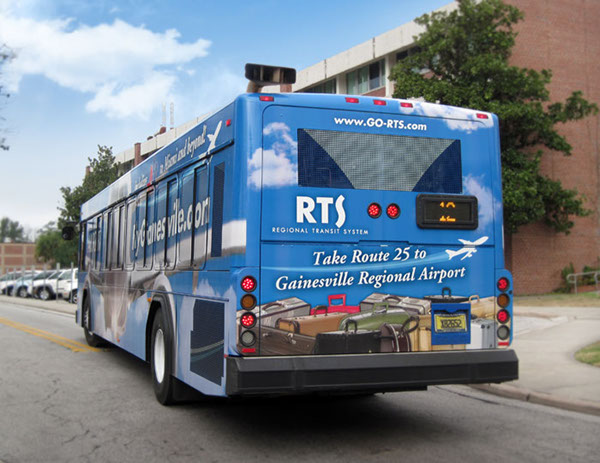
Gainesville Florida transit union pays for one day passes to focus attention on the Federal transportation bill

According to "Transit union paying for daily bus passes next week to bring attention to transportation bill" in the Gainesville Sun, the local union is paying the cost of those using daily transit passes on Wednesday next week, as a way to promote the importance of transit and the federal transportation bill authorization process. From the article:
ATU Local 1579 President Mary Frances Folz-Donahue said the union is funding a fare-free rider appreciation day to highlight the ongoing talks in Washington, D.C., on whether to reauthorize the Moving Ahead for Progress in the 21st Century Act (MAP-21) and, more broadly, how significant federal funding is for the operational and capital needs of RTS.
I have always wondered why the local transit union doesn't seem to inclined to manage and focus on the relationship with riders, to build a broader base of support for transit and transit workers.  See:

-- Sunday March 18 is International Bus Driver Appreciation Day
-- "When the union label may be terrifying: transit edition

By contrast, in San Francisco, the local transit workers unions are vociferously focused on maintaining financial support for transit--sometimes with criticism because their policies tend to support modes like buses that require more personnel rather than modes like rail which require fewer people to run. But as a result the local transit service in San Francisco is funded about as well as it could be, given various constraints and other financial commitments.

But they do strike, and transit strikes don't build support for unions amongst the riding public.

Labels: , , , , , ,