Rebuilding Place in the Urban Space

"A community’s physical form, rather than its land uses, is its most intrinsic and enduring characteristic." [Katz, EPA] This blog focuses on place and placemaking and all that makes it work--historic preservation, urban design, transportation, asset-based community development, arts & cultural development, commercial district revitalization, tourism & destination development, and quality of life advocacy--along with doses of civic engagement and good governance watchdogging.

Friday, June 30, 2006

Reconsideration of the value of sports

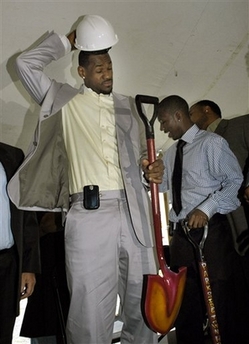
LeBron JamesLeBron James puts on a hard hat during a ground-breaking ceremony for Parkside Townhomes, a 20-million dollar project that James' company, LRMR Development, LLC., is co-developing, in Cleveland, Wednesday, June 21, 2006. At right is Richard Paul, one of James' partners in LRMR Development. (AP Photo/Jamie-Andrea Yanak)

I don't think much about sports-related revitalization. The fact that everything I wrote today is about transit and mobility reminded me of something that Mati Senerchia sent me, about LeBron James.

See "LeBron James Invests In Cleveland Housing Development: James' Development Company To Help Redevelop Glenville Neighborhood," now we don't know if they are urban design appropriate buildings--I haven't been able to find renderings--but still, that says something about this very young man and his character. From the article:

James, 21, along with three friends and business partners who formed LRMR Development LLC, are among the investors in the 18-unit project that will feature two- and three-bedroom, 2,000-square-foot townhouses expected to sell for $265,000 and $325,000 each.

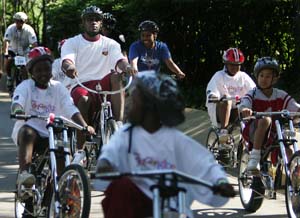
And speaking of another LeBron James pro-urban good deed, see "Sun, stars out in Akron to join bikeathon: Thousands gather on beautiful day to join LeBron James, NBA standouts," where "300 lucky Akron grade schoolers chosen to ride the three-mile course with James and other NBA stars. The kids were selected to receive free bicycles and helmets based on their character" as part of an annual fundraiser for the James Family Foundation and its support of the Akron Area YMCA and the Akron Urban League.

LeBron James King for Kids BikeathonLeBron James (rear) rides his bike down South Main Street in Akron on Saturday, June 24, 2006, in the second annual LeBron James King for Kids Bikeathon. The fundraiser brings thousands of riders and a host of NBA stars and celebrities to downtown Akron. The bikeathon was eight miles long and the family-friendly route was three miles. (Ken Love/Akron Beacon Journal)

That's quite a week for LeBron James.

Index Keywords: ;

Georgia Avenue Rapid Bus meeting

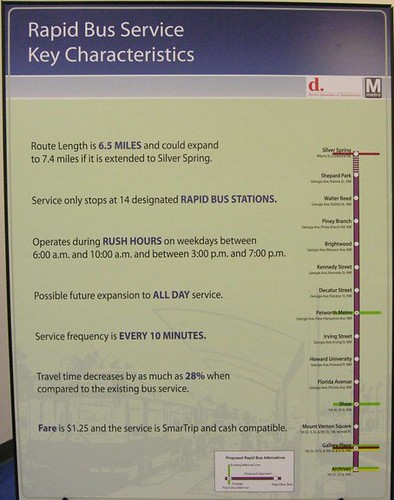
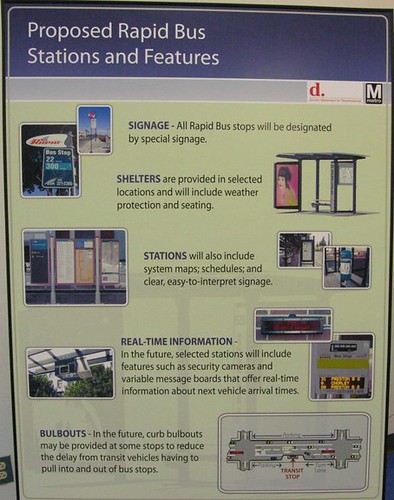
Georgia Avenue Rapid Bus proposalImages courtesy of Tom Metcalf, Chair, Transportation Committee, Sierra Club Metro DC.

So I went to this meeting after all last night and it was interesting. The usual grousing by neighbors, the excitement and glee of transit advocates. I think the proposal is interesting. It's designed to improve service for parts of the corridor that don't have access to higher speed subway service. It's an intermediate step to streetcars, but a whole lot easier to start off with. Their proposals seem fine to me. They intend to introduce this service this year.

My only concern is some desires to "satisfice" and terminate the service at Eastern Avenue, the border between DC and Montgomery County, because those damn Marylanders aren't involved in creating or funding this service.

Still, it makes sense to me that since the streetcar service would go to Silver Spring, and because the people currently riding the 70/71 bus from Silver Spring to DC are coming to the city for a reason, that these people, for whatever reason, are DC's customers-citizens-residents-visitors, even if they alight in Maryland, that it makes the most sense to provide them access to this service also, rather than tell them to "f* off" -- that's not the sentiment of DDOT, but was the basic sentiment of a 71-year old lifelong resident who pulled the "I've lived here my whole life" card, although he used the s*** word not the f*** word in expressing his point.

The way I look at this is that transit customers aren't too concerned about jurisdictional boundaries. To the average rider, they merely want to get from where they are to where they are going relatively painlessly. They don't want to have to mess with too many jurisdictional roadblocks. (I know that the various jurisdictions other than DC do offer their own bus services in addition to WMATA provided bus service, in order to provide more bus service at less cost--often without unionized bus drivers, etc.) Should transit riders from that segment from Silver Spring Metro station to the Eastern Avenue line be left behind to the 70/71 buses?

One complaint made by riders is that people fill up the bus at Silver Spring Metro, so that it is less comfortable and fewer seats are available for riders once they get into DC.

I have some concerns about that sentiment, believing that most DC residents aren't good empiricists, and that I would like to see survey data and origin-destination study data before I would be willing to concede that point.

Possibly one way to collect some more dough would be to charge slightly more for alighting at Silver Spring (maybe 50 cents?). The buses to Dulles and BWI Airport have premium fares of $3.

Photo 4 of 6, Rapid Bus.jpg

Index Keywords:

Speaking of (Baltimore) Streetcars

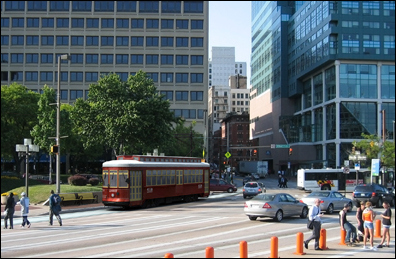
Charles Street Development Team.jpgBaltimore, Charles Street. Simulation: Charles Street Corridor Trolley Initative.

The Charles Street Corridor Trolley Initative has a website, with a nice photo gallery of various streetcar systems in North America, and some (but not all) of their documents--not the economic impact study--online. I like the simulation images, and one difference compared to DC, they seem to be more willing to entertain the idea of "heritage replica" vehicles.

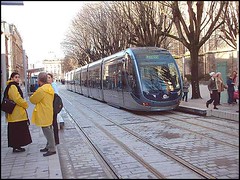
Also, in conversation with some of the Baltimore folk, they pointed me to Alstom's INNORAIL ground level power system, which would allow for in-ground powering instead of overhead wires.
BTO05.jpg"Look ma no wires!" Citadis, the Bordeaux tram. Photo from Transit Coalition.

Charles Street Development Team.jpgBaltimore, Charles Street. Simulation: Charles Street Corridor Trolley Initative.

I like that Baltimore seems to be more open to the idea of interoperable modern and historic (replica or actual) streetcars. As I have written before, there are cultural heritage reasons to promote this that make sense. See: "Adding cultural heritage dimensions and expanded service capabilities within commercial districts to DC Streetcar planning ."

Index Keywords:

Relativistic thinking about mobility

The New York Times  Business  Image .jpgChristophe Ruckstuhl/Keystone, via Associated Press. Despite its hip image in big European cities, the Smart division of Daimler has lost an estimated $3.6 billion since it opened in 1998.

"Conservatives" like to criticize society post-1960s as degenerating into a valueless sphere of relativistic thinking. It happens that this is a pretty facile approach to the nuances involved in cognitive development. I have mentioned before William Perry's work and his 9 stages of cognitive development. Relativistic thinking as a "permanent" form of thinking without commitment is by no means the highest stage.

This comes up with regard to thinking about different forms of mobility, comparing forms, and determining which are "superior." Sometimes I do fall into this trap that I need to extricate myself from too. People would send me stuff about scooters, Segways, etc. and I would always respond, "a bike is better." Sure, a bike is better than a scooter or a Segway for most settings, but that isn't the point.

In a city, for a lot of things, a bike is better than a car. And, now that you can take a bike on buses, and on the subway except for certain times of the day, you get further enhanced mobility that is relatively time-efficient.

For example, I went to that bus rapid transit meeting last night, but I didn't want to ride up the hill of Georgia Avenue. So I rode to 7th and Florida Avenue NW and took the bus up. On the way back, aided by the downhill slope, I rode all the way home (made good time too).

Anyway, there is some discussion about the Smart Car, and the response from some is "a bike is better." But the Smart Car isn't about bicyclists. It's about people who already have cars. In auto marketing what they call "conquest" sales is when a particular brand gets someone who drives another brand to switch (a Lexus sale to a Mercedes driver is a "conquest", etc.).

We need to think about "conquest sales" in terms of promoting (more) sustainable transportation options. And moving people along a sort of continuum to better mobility choices. The kinds of "conquests" we need to work towards are getting a car driver to switch to transit, or a multiple car household to get rid of a car, or for a F-350 pickup driver to switch to a Smart Car, etc.

walking
bicycling
Segways?
scooters/Vespas
transit
- bus
- rapid bus
- light rail/streetcar
- subway
driving
- car (usually big)
- cars (usually many in a household)
- shared cars
- Motorcycles
railroad

(this is another element of thinking about transportation planning through the lens of a transit or mobility shed)

Other dimensions include frequency of use, purpose of the trip (for example, delivery services need to come back--if Home Depot can make deliveries in Manhattan, maybe Best Buy and Target and Bed Bath & Beyond could have a shared delivery service from the DC USA shopping center in Columbia Heights), habitation type and location (apartment buildings could develop car sharing Smart car programs as a profit center), sustainable and efficiency, etc.

Yeah, a bicycle is better in a lot of instances than a Smart Car. But for someone committed to driving, a Smart Car is way better than most any other car choice they make--for most trips under 25 miles (and most people in the city make relatively short driving trips). And you can almost fit 2 Smart Cars in the same space that one car takes up on the street now.
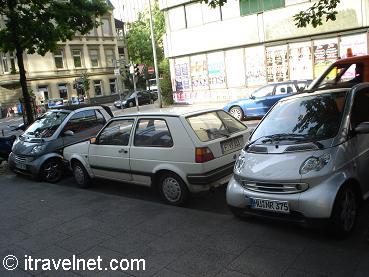
Smart cars in FrankfurtSmart Cars in Frankfurt. Photo from ITravelnet.
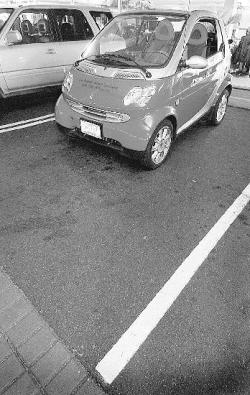
Smart use of a parking space (Smart Car in Canada)Smart use of a parking space (Smart Car in Canada). From Canada.com.
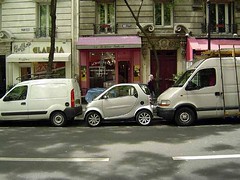
Smart Car - Spike's FotoPage - Fotopages.com.jpgSmart car in Paris. Photo by Spike.

That's good for cities, and why I expect I will write to United Auto Group and make the point that they need special dealerships in center cities (the Mini dealerships are in the suburbs).

In short, I think that a bicycle is always better than a Segway, and I can't even think of a possible conquest sale-choice favoring Segways (no car driver would give one up; is a Segway ever preferable to a bike or walking or transit?, probably not), but a Vespa would be much better than a car. On the other hand, a Segway can be great for people with mobility issues.

Everything isn't relative, but we need to be sure we are making the right comparisons when we are debating these issues.
_______
Question for you: in this New York Times article, "Daimler Hopes Americans Are Finally Ready for the Minicar," a trends analyst is quoted comparing the Smart Car to a Mercedes and using that as a marketing point, rather than focusing on its size and urban-appropriateness. From the article:

Smart will not be the only extreme-subcompact darting in and out of traffic on American city streets. Honda has had success with its new Fit, as has Toyota with the Yaris. DaimlerChrysler notes, however, that the Fortwo is the only car in the world less than 3 meters (roughly 10 feet) long.

That makes it small enough for two to squeeze into a single parking space. Or for drivers to park it perpendicular to the curb without protruding beyond other parked cars — a practice that is forbidden in some cities.

Some experts said DaimlerChrysler should promote Smart's European styling and affiliation with the Mercedes Car Group. "They ought to play it like a Baby Benz," said Joel A. Barker, an author and expert on business trends. "The Smart car just has a style to it that these other cars don't have. They don't have the cachet."

Do you think he is right and I am wrong? Should the Smart Car be marketed primarily as a "city car" or not?

Labels: , ,

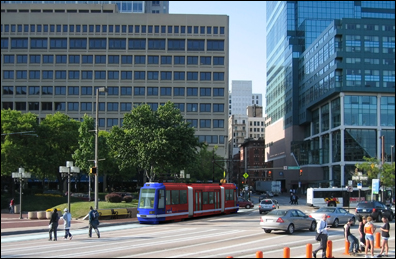
Look at this, I guess this streetcar is coming to DC


Picture-10-27 007
Originally uploaded by portlandtransport.
A Trio under construction for Washington D.C. From Portland Transport's Flickr account.

Index Keywords:

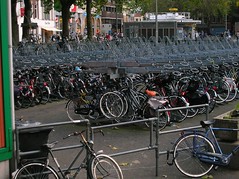
Two-tier Bike Parking


Two-tier Bike Parking
Originally uploaded by portlandtransport.
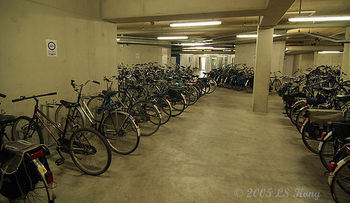
The top rack pulls down on a hinge for loading and unloading. Users prefer to use the bottom first. Netherlands. Photo from Portland Transport.

Public Opinion Research Presentation (from Portland)

I happened across the Portland Transport Flickr account, which has a bunch of images related to Portland's streetcar and transportation planning.

Index Keywords:

Thursday, June 29, 2006

A basic lesson in (housing) economics

Frozen Tropics writes:

[Yester]day's Post has this article, "Housing Cost Increases Migrate to Poorer Areas" about how, while housing prices in more established neighborhoods like Cleveland Park or Capitol Hill proper seem to be leveling out, prices in areas with greater poverty (like Ivy City) continue to climb steadily.

In high cost areas, adjacent areas of rough equivalence (location, housing stock, amenities) but lower prices experience increases in demand and therefore price, spurred by the demand of people who can't afford to buy in the higher cost, "nicer" but still close areas, so they accept a secondary choice-location. This is what spurs "neighborhood investment" and what some people call "gentrification." (See this previous blog entry on the topic, "More about Contested Space--"Gentrification".)

However, it is likely that the new entrants in the lower cost area, while having less household income compared to residents in the preferred areas, have more income than present residents in the secondary area, which can contribute to recognition and resentment of "differences." (See gentrification effect #2 in the previously cited blog entry.)

Case #1 Example: the H Street NE neighborhood.

People were first attracted to H Street because the housing stock is roughly identical to that on Capitol Hill, although the houses typically are a bit smaller. Generally, the area isn't as maintained as nicely, and the shopping amenities particularly restaurants are meager, but the area is just as close to Downtown, National Airport, and the Capitol. And if you want a decent meal, just go a few blocks south...

Talk to old-timers. Some say, yeah, when I first moved here, no one moved east of 6th Street, then it was 8th Street, then it was Lincoln Park (11th Street), now that Hill East will be home to a Harris-Teeter, interest is moving all the way over to the Anacostia, etc.

As prices increased in the H Street area, accelerated in part by the groundbreaking and later opening of the New York Avenue Metro station, demand moved northeast into lower Trinidad. It continues northward into upper Trinidad, Ivy City, and eventually eastward past Miner School on the 600 block of 15th Street NE, although that area is still tough...

Remember the same kind of progression with regard to Dupont East, Logan Circle, Shaw, U Street? Now it's Columbia Heights, Petworth, and northward up Georgia Avenue. Etc.

I was on U Street last night at about 8 p.m. and 50% of the people on the street were white. Makes you appreciate people's concern about deep changes in the city.

Although as I have said time and time again, that's the way it's been for more than 120 years. Neighborhoods change. And they keep changing.

See "Renaissance continues along capital's `Black Broadway': Washington D.C.'s U Street corridor -- known as Black Broadway for its history of drawing black artists and cultural institutions -- is undergoing a face lift that is already restoring some of its former glory" from the Miami Herald and today's obituary, "Mayor of U Street' John 'Butch' Snipes, 71" from the Post.
PH2006062802062.jpgJohn "Butch" Snipes. Family photo.

U Street Britta on Flickr - Photo Sharing!.jpgFlickr photo, Britta on U Street, from housing

Index Keywords:

Pedestrianism


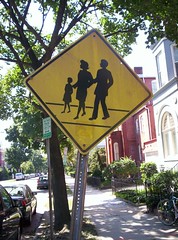
Old pedestrian street sign
Originally uploaded by rllayman.
Today's District Extra section has an article and sidebar about pedestrians and street fatalities. I'm surprised that the statistics show that more people walk to work in Baltimore than in DC. From "Taking Steps to a Pedestrian-Friendly D.C.":

On average, 550 walkers are hit on District streets each year. And although progress has been made in reducing fatalities, which reached 25 in 1993, officials are aiming for zero.

It's an important goal in a place that ranks second among U.S. cities in the proportion of commutes done on foot. The 2000 Census found that walkers account for 11.8 percent of journeys to work in Washington. Baltimore is higher, at 13 percent. New York, a prime pedestrian city, has only 10.4 percent walkers.

When commutes that involve walking to public transit or bicycling are added in, almost 47 percent of trips to work in the District are fully or partly by foot or bike, city officials said.

Speeding is a major concern, because a vehicle's speed "is the most critical factor" in determining whether a hit pedestrian will live or die, said George Branyan, pedestrian program coordinator for the D.C. Department of Transportation.


Of course, while the speed limit on most streets is 25 mph, most of the streets are engineered for speeds in excess of 50 mph, we have a problem.

We need alternative ways to get people to think about streets differently, about the impact of cars on people and spaces.

Road Witch (UK)From the Road Witch project in the UK.

The article also has a sidebar on the city's Pedestrian coordinator.

Index Keywords:

(Why aren't people) Learning from Jane Jacobs revisited

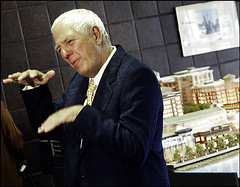
PH2006022101798.jpgPreston Keres, Washington Post. Unveiling of a model for National Harbor in Prince George's County Maryland.

Last July, I wrote this entry, "(Why Aren't People) Learning From Jane Jacobs" in response to something that Michele Dyson wrote in the Post about National Harbor and making it more like Las Ramblas in Barcelona.
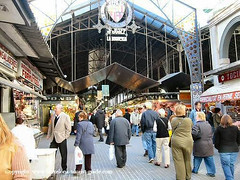
Yahoo! Mail - <a href=Here is the Mercat de la Boqueria a large and colourful market on the Ramblas. If you were to visit this market, particularly during the summer months, you'll be dazzled by the brilliance of colour from the fruits and vegetables in its stalls. Photos from Barcelona Tourist Guide.
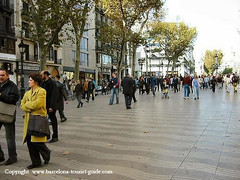
Yahoo! Mail - <a href=Las Ramblas.
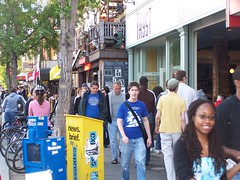
Sidewalk, Adams-Morgan (by Tryst)Sidewalk in Adams-Morgan.

Well, everything in that piece is relevant to the ongoing discussion about revitalization vs. redevelopment and authenticity vs. a focus on the attraction of retail chains. Silver Spring Singular linked to a story in the Gazette about this verysame issue in Silver Spring, which we discussed earlier in the week. See "Owners of niche shops downtown getting priced out: Being a part of the redevelopment in Silver Spring has its cost, many now say."
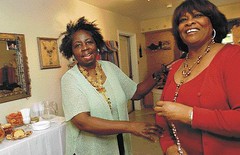
characters061406a.jpgNaomi Brookner⁄The Gazette. Elena Aiken (left), owner of Elena Design Studio on Fenwick Lane in downtown Silver Spring, helps customer Doris McGhee of Washington, D.C., decide on a necklace June 10, during an open house at her shop. ‘‘I like revitalization but I’m not benefiting from it,” said Aiken, who fears her rent will soon increase.

ALL I CAN SAY IS read Jane Jacobs, read the writings about the "economic restructuring" point of the Main Street approach. The problem is that the improvement in the real estate market for property owners is somewhat disconnected from improvements in the market for retail and service store proprietors. Rents go up in advance of business increases. And property tax increases lead to rent increases even though business could in fact be declining.

Rents have to be a function of market reality, of what businesses generate in revenue. Unfortunately, as our commercial districts become a part of the national and even international real estate market, local businesses get priced out.

As regular readers know, I have testified about the issues of property tax valuation methods in traditional commercial districts. Those new to the issue might want to check back to this analysis, which I figured out through some pretty careful analysis of what's happening in various commercial districts around the city. See:

-- Testimony -- Historic Neighborhood Retail Business Property Tax Relief Act.

Index Keywords:

Tonight -- Bus "rapid" transit planning for Georgia Avenue NW

______
Update: I don't think I can go to tonight's session, but I have one important comment. They are considering stopping and starting this service at Eastern Avenue rather than to/from the Silver Spring Metro Station. Presumably this is because DC will pay the extra costs for this service, not Montgomery County. On the other hand, more connectedness is better than less connectedness, and it would be a mistake to stunt the development and growth and opportunity of this enhanced bus service.

As Richard Gere says in "An Officer and a Gentleman": "Don't you do it. Don't!"

Do it right or don't do it at all.
______

Steve Pinkus sent this on to me, although I didn't get it in time to mention the meeting that was held Tuesday night:

Community Workshops to Be Held on Plans for 'Rapid Bus' Service Along Georgia Avenue and Seventh Street, NW

The
District Department of Transportation (DDOT) and the Washington Metropolitan Area Transit Authority (WMATA) will hold two workshops [this] week to engage residents on the establishment of a “Rapid Bus” service along Georgia Avenue and Seventh Street in Northwest. The workshops will give residents an opportunity to learn about the proposed Rapid Bus service and provide input.

As planned, the service would run between the Silver Spring Metrorail station or Eastern Avenue, NW, and the National Archives via Georgia Avenue and Seventh Street, NW. The existing Georgia Avenue/Seventh Street 70/71 Metrobus route transports 22,000 passengers daily between Silver Spring and Buzzards Point. Recent studies show passengers along this route would benefit from a service in addition to the regular route bus service. The service would feature distinctive, low-floor vehicles and provide faster service with fewer stops.

Thursday, June 29, 2006 in the Multipurpose Meeting Room, at the Emery Recreation Center, 5701 Georgia Avenue, NW.

The workshop begins at 6:30 pm and runs to 8 pm.

For more information, residents may contact Catondra Noye, DDOT Project Manager, at (202) 673-1737

Index Keywords:

Shaw Main Streets Lower 9th Street Open House -- Tonight

001Long View Gallery, 9th Street NW.

I am always impressed with the energy and ideas expressed by Alex Padro, director, and the Shaw Main Streets program. (I talk about co-authoring a book for the Main Street program, The Ultimate Guide to Retail Business Promotion. Clearly he needs to be one of the co-authors.)

Anyway....

On Thursday, June 29, 2006, 6:00-9:00 PM, pick up your Shaw Main Streets Night passport at either TG Cigars, 1118 9th Street, NW, or the Ninth Street Gallery, 1306 9th Street, NW, and join the fun as businesses on the 1100 through 1300 blocks of 9th Street open their doors for this first ever SMS Night Open House. Be sure to get your passport stamped at each of the participating businesses in order to be eligible for a drawing for a prize from each business.

Participating businesses will include (final listing on the event passport):

Ninth Street Gallery, 1306 9th Street, NW
Long View Gallery, 1302 9th Street, NW
Wagtime Pet Spa and Boutique, 1232 9th Street, NW
The Flats at Blagden Alley, 1212 9th Street, NW
Squares Fashions, 1208 9th Street, NW
Modern Liquors, 1200 9th Street, NW
Breakwell's Coffee + Tea, 900 M Street, NW
TG Cigars, 1118 9th Street, NW

Several of these businesses have opened in the past two months, so take this opportunity to visit them and win some exciting prizes. No purchase necessary to win. Contest rules will appear on the back of the passport.

Shaw Main Streets Night events highlight new businesses on Shaw’s 7th and 9th Street commercial corridors. For more information, contact
Shaw Main Streets at 202-265-SHAW or by email.

Index Keywords:

Does a restaurant selling alcohol create a pernicious environment for children?

Real Drunks Don't Drink Zima
Modern Drunkard Magazine.
______
Update: also see this article from the Washington Post, "Request for Liquor License Uncorks Dispute," by Lyndsay Layton. WRT the School Board holding an emergency meeting to weigh in on this issue, no wonder the school system is in trouble. They aren't focusing on what really matters. A restaurant's peak hours of operation are from 7-10 pm. Uhh, schools aren't open then, are they? (Note that Alex Padro's comment in the story, that restaurants make 60% of their revenues from alcohol isn't correct, maybe 60% of net profit--alcohol is marked up 5 times, and food not usually more than 3-4 times. So a drink that costs $1 to make yields $4 in profit. It adds up. From the article:

Evans said that his bill would remove the automatic prohibition against a license but that the alcohol beverage control board would still be required to hold hearings and consider opposition.

What's the problem with that?
_______

Bill 16-696, which proposes to allow CR and CT sales (restaurant/tavern) of alcohol within 400 feet of schools, continues to raise hackles amongst some. Apparently, the School Board is trying to call an emergency meeting to pass a resolution on the issue, and it's still being discussed on the columbia_heights e-list. (I wrote about this last week.)

In response to William Jordan's rhetorical question, "It that because we no longer feel the need to offer special protection to these classes of persons and insititutions?," I would answer:

It is because the proscription chosen, for restaurants, has no impact +/- in terms of offering "special protection" wrt the sight of alcohol or inebriated people.
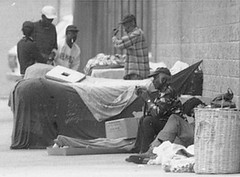
Skid Row in Los Angeles
Skid Row in Los Angeles. Photo from the Weingart Center.

Restaurants are the issue here. Not package sales. Package sales tend to over-contribute to conditions in the public spaces that are deleterious to children. Yet the exception clause for Class A and B licensees--if a preexisting establishment exists, then the provision can't be enforced against others--means that in many instances this law is moot.

But it affects restaurants (CR, CT) even so, which are a different category, and again, have little if any impact on children. Technically, night clubs (places such as in Adams-Morgan) though raucous, also have little impact on children because their activities happen late at night/early in the morning.
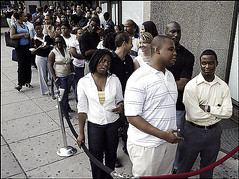
Club 1223 for Happy Hour
Queue the revelers: Steven Hargrove, front left, and Carl Biggs plot their Wednesdays to arrive early in line for the popular happy hour at MCCXXIII. (By Preston Keres -- The Washington Post). From "Drinking Up The Club Atmosphere."

For churches (not technically at issue), this is a non-starter. Most churches function only for about 3-5 hours/week, on Sunday mornings. Class A establishments are closed on Sundays. Class B sales start at noon. Restaurants serve alcohol in the morning, but it is quite limited.

The failure to make useful distinctions between Class A and B licenses vs. Class C licenses is one of the many failures in local political discourse. This catches us particularly in our mixed-use neighborhood commercial districts, which often include schools and religious institutions in the mix of uses.

Better to think about how to limit the impact of alcohol on children and work backwards in terms of thinking about and creating policies. In so doing, I can't imagine that restrictions on C licenses would have any impact whatsoever, or make the list of the top 10 or top 20 policies to work on bringing about.
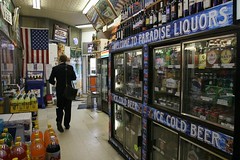
Paradise Liquors
Paradise Liquors. Washington Post photo by Nikki Kahn.

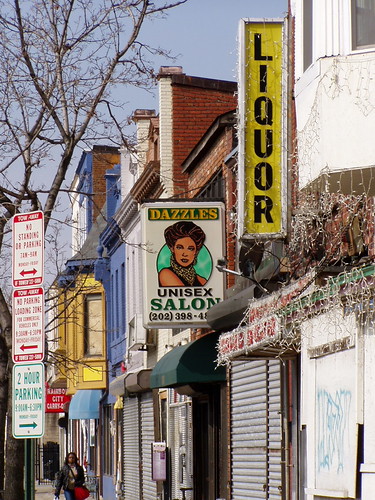
Liquor store on H Street NE
H Street NE. Flickr photo by Inked78.

Labels: ,

Wednesday, June 28, 2006

Walking Tour--Downtown DC Libraries and Research Facilities: Their German Immigrant and Neighborhood Histories

From Norma Broadwater (via the H-DC e-list):

Walking Tour: Thursday, June 29, 5 - 7:30 pm
Meeting point: Historical Society of Washington, D.C., 801 K St. NW
entrance (north side), Mount Vernon Square

The Historical Society of Washington, D.C.'s Kiplinger Research Library, which is located in the old Carnegie Library building, and the Washingtoniana Division of the Martin Luther King, Jr. Memorial Library, are indispensable facilities for local research.

Washington, D.C. guide and historian Alice Stewart will show photographs and documents from both libraries to illustrate how they can shed light on the history of specific buildings and former residents in the neighborhood. She will also update visitors as to the status and future uses of both library buildings.

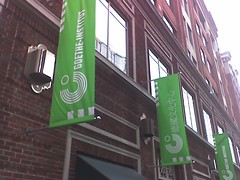
Goethe Institut, WashingtonGoethe Institut, Washington. Photo by Payton Chung.

The tour will begin at the former Carnegie Library, continue through the neighborhood north and west of the Library, stop by the Goethe-Institut (812 Seventh Street), where visitors will learn about its programs, research facilities and services, and end at the Martin Luther King, Jr. Library. A reference librarian in the Washingtoniana Division will give a special presentation for the group.

Limited to 20 participants
RSVP to 202-289-1200, ext. 510
For further information:
www.goethe.de/washington, or 202-289-1200

Charge: $5.00
Free for members of Friends of the
Goethe-Institut, the Historical Society of Washington, D.C., and Friends of Washingtoniana.

Index Keywords:

Losing my religion (continued)

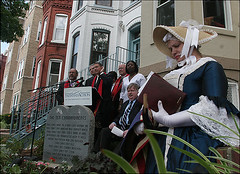
PH2006062601265.jpgMerrie Warren Turner, dressed as Betsy Ross, and other members of the evangelical Christian group Faith and Action unveiled a monument depicting the Ten Commandments in front of the group's offices in a Capitol Hill rowhouse this month. The property is across the street from the U.S. Supreme Court. (By Jahi Chikwendiu -- The Washington Post)

Officials in both DC and Baltimore have made bad decisions on planning and zoning regulations with regard to properties owned by religious organizations.

In Baltimore, Mayor O'Malley punted on letting the Archdiocese of Baltimore go forward with the demolition of an apartment building, according to a piece (part of a slew of letters to the editor) by Tyler Gearhart, director of Preservation Maryland:

Mayor Martin O'Malley recently approved a demolition permit for the historic Rochambeau apartment building located at Charles and Franklin streets downtown. Depending on your perspective, the mayor has either bowed to or hidden behind the archdiocese's threat to sue the city in the name of religious freedom if the permit was denied.

For the Baltimore Sun editorial on this issue, please click the link and here for the original article, "Rochambeau has to go, mayor says: Catholic Church wins fight to raze building."

Today's Post has a piece "City Drops Objections To Religious Sculpture" subtitled "Display Doesn't Need Permit, Agency Says," about the controversy on 2nd Street NE where an evangelical group installed a sculpture of the Ten Commandments in the front yard "to influence" Supreme Court Justices as they ride into work. Obviously, whizzing by in a car, you can't read squat on a tablet from 30 feet away, so this is merely grandstanding.

From the article:

More than three weeks after District officials warned an evangelical Christian group about displaying a sculpture of the Ten Commandments on property across the street from the U.S. Supreme Court, they said yesterday that the 850-pound granite monument doesn't need a permit after all. ...

Yesterday, Lars Etzkorn, associate director of the office of public space management administration at the Transportation Department, sent a letter to the group rescinding the earlier warning. The letter stated that, "In view of the First Amendment interests reflected in the installation of the Ten Commandments sculpture . . . and upon further consideration of applicable law," the city now believes that no permits are required.

The First Amendment forbids Congress to make any law prohibiting the free exercise of religion or abridging freedom of speech.

Both cases are a misuse of religious principles to planning and zoning decisions, not much different than "blue laws" (no longer extant in DC) that prohibit the sale of alcohol within a certain distance of a church.

Granted that I am not a lawyer, but the way I read the law is that local laws that somehow treat churches differently (and punitively in some way) and therefore impact the practice of religion, are what are covered.

Zoning and land use provisions that are the same for every property owner would not be included, although many many churches bring up this federal law in an attempt to get around zoning laws. Or financial hardship. A church in Virginia said they couldn't repair their steeple to historic preservation standards and that the federal law allowed them to vacate the preservation provisions. My sense is that again, hardship is not a defense when the laws treat every property owner equally.

However, there is a case in Georgia currently, where a municipality has a law that only allows churches to be located on sites where churches already existed (because of loss of properties from tax rolls), that is likely to be considered a clear violation of the act. (It's a pending case.) And in Montgomery County whether or not churches (megachurches) should be allowed to locate in the Montgomery County Agricultural Preserve is a contentious issue. (I say no. Pouring cars onto rural roads is not the intent of the law that created the Preserve to begin with.)

Another problem with this is the City's elected officials kow-towing to churches over the hardships that Sunday parking during services often causes area residents. I think that this use can be accommodated, but not if churches don't have to create and manage "transportation demand management" programs and not if they can avoid being brought to the table as a result of elected officials pandering.

baltimoresun.com - The Rochambeau.jpgThe Rochambeau, once a hotel and now a vacant apartment building, has stood for a century at Charles and Franklin streets. Preservationists argued for saving the Renaissance Revival building. (Sun photo by Chiaki Kawajiri). Sep 30, 2004. Recent studies find that the amount of housing stock deemed affordable in Baltimore and the Baltimore region is shrinking drastically.

Index Keywords: ;

Central library planning redux

In a blog entry last month, I wrote about the Portland streetcar, mentioning a Seattle Times travel article about Portland. Somehow I missed a part in the article "A streetcar to inspire, in Portland," that discusses the difference between the two cities and their central libraries.
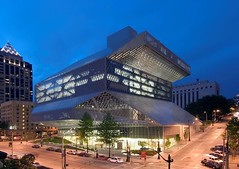
Seattle Central LibrarySeattle Central Library, photo from the American Institute of Architects.

WRT modern vs. classical design in libraries, Seattle has built a Rem Koolhaas-designed place. Portland has a library from the early part of last century, recently renovated (and ironically, the new director of the DC Public Library system worked in Portland during the time of that renovation. From the article:

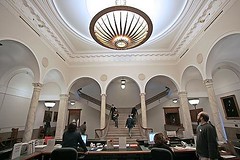
Hop the streetcar a few more blocks to downtown and get off by Portland's Central Library at 11th and Taylor (the entrance is on 10th). The restored 1913 edifice with grand staircases and chandeliers is another Portland yin to Seattle's yang.

Where would you rather spend an afternoon, at the ultra-modern library in downtown Seattle or the historical library in Portland, my wife asked our daughter. "Oh, Portland!" our daughter exclaimed. "It's a beautiful library! The one in Seattle makes you feel like a pod person!"
Multnomah County Central LibraryMultnomah County Central Library, Portland, Oregon. Photo by Miles Hochstein, Portland Ground.

Portland Central LibraryMARK HARRISON / THE SEATTLE TIMES. The streetcar has a stop near Portland's Central Library, in a grand 1913 building.

With regard to the process in DC, the proposal is very much "satisficed", calling for a facility half the size of the current library and about half the size of new central libraries being built elsewhere (such as Seattle).

And the proposal calls for $100 million in private donations, when (1) DC doesn't have a good track record for attracting such (our major industry isn't private, but the federal government, so we don't have lots of indigenous rich people hanging around with open checkbooks, and (2) Seattle raised "only" $14 million (not $100 million) in private contributions as part of its project.

I have written about this pretty extensively. It's also very controversial in some quarters because the proposal calls for (1) mixed use; and (2) the deaccessioning and lease to private interests of the current library, a Mies van der Rohe building.

WRT the latter, I happen not to be a fan of modern architecture, but the proposal, overall, has so many many problems. It gives "caring" about "public spaces and the public realm" and "mixed use" a bad name.

This is a blog entry from January about some of the issues: DC Library Planning Part ? and this from November: Citizen Summit and Libraries.

Katie Salay of PPS calls our attention to this piece at ArchNewsNow, "Reference This: Two views on trends in public and academic libraries." The interview with Mark Schatz, AIA, Field Paoli, focuses on "recent changes in public libraries, especially smaller community libraries." From the piece:

Mark Schatz: One trend we are seeing more of is the multi-use building. The library, senior center, teen center, gym, all together.
KC: Is this something communities are demanding? Or is it mostly an issue of keeping construction and operations costs down?

Schatz: I think it's a matter of synergy more than budget. For years architects worked with this concept, which seemed rooted in the 1950s, that you had a city plan that gave each use its own discrete area. And you would drive from home to business to retail to school to library. That's not the tradition of cities prior to that period. Residences and offices were over the shops; uses and people commingled. You could get most of what you needed within a short distance. Architects and urban designers are finding ways to change various codes and ordinances to encourage mixed use, and one area we are seeing that effort is with community facilities. It's part of a significant, larger trend.


He also discusses linking retail in with planning, how you need to look at different user segments (he calls them "layers") and how their needs differ and how to design and respond to these different needs, as well as public participation issues.

The interview with Ed Dean, AIA, LEED, Chong Partners, focuses on trends and design of "large urban libraries," and college libraries too, developments within which are relevant to urban centers. (They don't discuss the impact of book superstores on libraries, although this piece from the Seattle Times, "Meet your new Central Library: It's both a testament to and test of civic chutzpah," mentioned in this blog entry "Today's Library hearing testimony" covers that issue. From the ArchNewsNow piece:

Ed Dean: Libraries are becoming a kind of public forum. They are one of the last places where people can intersect, get public service, and shop for information. They're becoming less about checking out a book and more about finding services and interacting. There are homework centers, computer training centers. I reviewed the plans for a new library in San Bernardino, California ?it hasn't been built yet, but a prominent feature in the design is a community garden that occupies the entire roof. The biggest change I've seen is the addition of computers for children. A lot of larger libraries now have arrangements with the school district to provide a high-tech classroom. The districts don't tend to have the resources.

The article is full of good images as well and you need to read it.

For various reasons, I think we need to stick with the current Central Library, fix it, expand it, add other functions (such as City Museum, archival, and visitor functions, and look at working to bring other special libraries into the mix such as the independent Foundation Center Library currently located on K Street NW).

Something I wrote about that is here:

-- Central Library Planning efforts and the City Museum, how about some learning from Augusta, Maine ... and Baltimore? and
-- MLK Library: Eyesore or Modern Masterpiece?

Index Keywords:

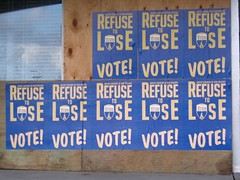
Mid City: Refuse to Lose

This is from the flickr photo account associated with The Third Battle of New Orleans blog on rebuilding New Orleans.

There is no question that blogs, photo communities like Flickr, other web communities and software applications (and for good and bad--email*) take connecting and learning to levels unimaginable 13 years ago.

I say 13 years ago because it was in August 1994 when the New York Times first wrote about the "World Wide Web," specifically the Mosaic graphical browser, which was a recognition of the fast spread of this software innovation.

* Email is also a curse. I now get over 200 emails daily and I cannot keep up, or even get through a single day's messages.

Plus, I get queries for help and my opinion from all over. And I do respond. And that takes time. You see my blog entries (long, with citations), well, my emails are no different.

Farmers Market Policy presentation last night


Yellow Pepper
Originally uploaded by AndrewMorrell.
Tuesday night was the now annual (this was the third one) presentation about farmers market policy, held in the Longworth House Office Building, sponsored by the chairman of the House Agriculture Committee, Robert Goodlatte of Virginia (he's from Roanoke, and the Roanoke Farmers Market is in his district).

Large farms have the product and systems to participate in the national and international sales and distribution system. "Direct" marketing of produce is a way for farmers to capture more of the value from the market chain. Plus, it is one of the better ways for truly small farms (under 15 acres) to sell product and make a workable, viable, profitable business.

Presentations by Steve Davies of Project for Public Spaces (one of the lead organizers of the session), Charles Kuperus, Secretary of Agriculture for the State of New Jersey, and Errol Bragg, Associate Deputy Administrator for the Agricultural Marketing Service of USDA were excellent.

One funny thing though about the person speaking from the federal government. He discussed the various initiatives of the office, including a Farmers Market Policy mini-conference, and how they hope that this becomes a more regular event. This mini-conference occured at last fall's PPS Farmers Market conference, and it was my idea. I raised it at a steering committee meeting, making the point that they needed to leverage the opportunity to engage federal policy types, since the conference was to be held in Washington.

It was weird to see how my idea is being translated into federal "policy"...

Afterwards there was a nice reception, with food provided by farmers who participate in farmers and public markets.

Public markets are the permanent buildings, such as Eastern Market, while farmers markets are the "temporary" events, such as the Brookland Farmers Market on 12th Street from 10-2 on Sundays, or at the Metro on Tuesday nights, or the Historic Anacostia Farmers Market sponsored by the Capital Area Food Bank, held at "Peace Park" on 14th Street between U and V Streets SE, every Wednesday, June through mid-November, from 3 – 7 pm (or until dark in the fall).

Anacostia Farmers Market

Index Keywords:

Rock Creek Park


Rock Creek Park
Originally uploaded by birdcage.
I am taking the liberty of reprinting this entry from the Columbia Heights yahoogroup. The writer took advantage of Rock Creek Park being closed to cars because of flooding.

(very slightly edited) From Peep:

Now is your chance...run, walk, bike on Rock Creek Parkway!

I ran this morning even in the rain because the chance to run the length of Rock Creek down to the Kennedy Center is something I could not pass up. I heard birds chirping, the sound of a very full Rock Creek flowing, and even the wind blowing. No cars, no cars, no cars!!!

The politicians and our WONDERFUL elected officials are so afraid of this. Why? Because all of the cars had to take the Beltway, drive through downtown, or take some other way to get to work and did we have any major disasters with traffic? No! I drove through downtown this morning (7:30AM) on Connecticut Avenue to 21st Street down to Constitution and it only took me 15 minutes.

Now this proves that we can safely close the entire length of Rock Creek Parkway on the weekends with no problem!! Why not??

The traffic is even lighter on the weekends without all the Feds going to work. I know you people who oppose this will say boo hoo! This is a critical route for people, emergency vehicles, blah, blah, blah. Well, become a politician then if you want to complain that much (sorry venting now before I read the hater's posts).

I think we should reclaim Rock Creek Parkway back for the people who run, walk, and bike - people who help the environment. Why reward people who drive cars that produce ozone and damage the environment. What a dumba$$ way of thinking.

Index Keywords: ;

Speaking of windows


Originally uploaded by Your New Best Friend.
From Danielle Thyse, Preservation Maryland:

Colleagues Workshop: Historic Window Rehabilitation

In partnership with Allegany College of Maryland, the City of Cumberland, the Maryland Historical Trust and the Historic Preservation Institute, Preservation Maryland is pleased to offer the first of several workshops on Historic Window Repair. Join historic restoration specialist David Gibney for a full day workshop and learn how to save a bit of history for your old home, while making it more energy efficient and saving thousands of dollars on repairs.

When: July 20th, 9am – 4pm
Where: 9 Virginia Avenue, Cumberland, MD
Cost: $25 – Members of Preservation Maryland Colleagues
$55 – Non-members
______
Although Cumberland is a bit of a trip...

Index Keywords:

Baltimore: tourism (slogan) revisited

Banner ad, Baltimore Summer Tourism Promotion, 2006
As you may recall, I was somewhat derisive of Baltimore's new tourism promotion slogan, "Baltimore, Get it on it," even though I think the associated logo is okay. See this previous blog entry, although now I feel guilty about the headline [More (pathetic?) city branding efforts... (Baltimore).]

However, I must make it clear that Baltimore, regardless of the slogan, does great tourism marketing. Right now, they seem to be the primary banner headline advertiser on Yahoogroups.

Click through to Baltimore Summer and you'll be impressed with the webpage that greets you. It's well laid out, lists major attractions, offers up to $150 in coupons, calls your attention to an e-newsletter you can sign up for and enter a contest for a free weekend.
Baltimore Summer Tourism Promotion, 2006
It's topnotch, truly.

By comparison, our own Washington tourism promotion webpage is unompetitive.

And this listing of assets is a great way to organize our own thinking about how to present our "local" tourism resources vis-a-vis the "national-federal" tourism resources.
Baltimore Summer Tourism Promotion, 2006

Index Keywords:

Tuesday, June 27, 2006

Our friends in New Orleans need our help

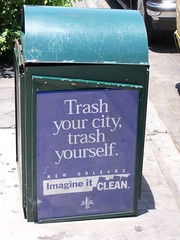
Trash your city, trash yourself

1. The The Vieux Carré Property Owners, Residents and Associates, Inc. association in the French Quarter is looking for a community organizer with a preservation sensibililty or a preservationist grounded in community organizing. The problem is that organizers tend to think preservation is just for the rich, and the average preservationist doesn't understand organizing, what I call "built environmental justice." From the posting:

The job requires being a strong and effective:

Strategist; Motivator; Teacher; Facilitator; Organization builder; Committee builder/trainer; Financial Development coordinator; Organizational coordinator; “Behind the scenes”-style leader; Politically savvy thinker and practitioner; Big-picture thinker and doer; Patient and people-skilled leader.

Description:

This position is not that of an “advocate”. In some ways, being an“organizer” is harder than being an advocate. In a world in which it’soften “easier to just do it yourself”, organizing represents achieving victories by effectively helping other people succeed, by teaching them how to strategize, organize, inspire and motivate. This leads to not just winning issues, but a process of finding new leaders and building the organization.

The person in this position will help VCPORA develop its structure and operate according to its structure. This person does not and cannot do the work of the committee chairs; rather, this person helps the committee chairs reach their own potential in terms of leadership and results.

Success will be seen by the numbers of people involved, goals accomplished and campaigns won. Different types of involvement include issue work, support work, strong financial development and strategic recruitment.

Contact Ellen LaFleur.

2. There is a blog on rebuilding called "The Third Battle of New Orleans," and they have a "Walgreen's problem" in the South Carrollton area. Because I took the wrong bus a few weeks ago when I was there, I actually know this particular place, because I walked around exploring it. I didn't take too many photos, and I haven't uploaded the ones I did take. It's at the end of the St. Charles Streetcar line (not currently operational) and a short jog to Jefferson Parish.

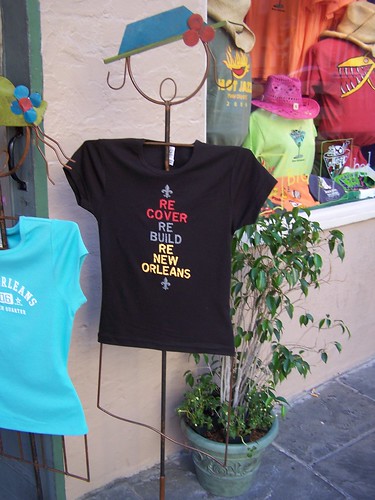
Tee shirt

Index Keywords:

The Zoning Commission makes the front page (of the sports section)

Not being a maven of the ins and outs of the Zoning regulations, I didn't realize that the Zoning Regulations require that the parking for the stadium be constructed underground.

I say no exception or variance should be granted.

It is a shock to read a quote from a Commission member concerned about the "quality" of the result, rather than a strict adherence to the regulations (which are about everything but design and the post-construction impact on people and places).

From "Garages proposal roundly criticized," in the Washington Times:

Members of the D.C. Zoning Commission last night roundly criticized a proposal to build two parking garages with condominiums and other development at the north side of the Washington Nationals new ballpark, and said it was clear that plans for the project had been rushed.

"I'm a little concerned," commission member Greg Jeffries said after watching an hour-long presentation from city officials and stadium architect Hellmuth, Obata and Kassabaum. "How much time was put into this plan? It has to be five days or seven days. It just does not seem like it's fully developed." ...

Commission members were not impressed, particularly with renderings of the garages that appeared to show that cars would be visible from inside the stadium. "Having exposed garages is not what we want to see," said commission member Michael Turnbull, Architect of the Capitol. "We have this fear that we're going to build this temporary thing for 50 years that's not going to look good."

Index Keywords:

Silver Spring: Revitalization vs. Redevelopment

The Express blog cites another blog's comment about Silver Spring, "The price of urban renewal," and how a friend of the blogger commented that it reminded him of Disneyworld.

I have made this point for years, long before I began blogging, on national e-lists, and in email to Annys Shin, one of the business reporters for the Post in the Montgomery County bureau.

Silver Spring exemplifies the difference between "revitalization" which is a rebuilding strategy based on assets: buildings (usually historic); businesses; people; organizations; versus "redevelopment" which looks at the only asset being present as land, land that needs to be cleared and redeveloped into something new.

The revitalization strategy is best exemplified by the "Main Street" Approach or the "Community Economic Development" approach outlined by Mihalio "Mike" Temali. It's the difference between saving Eastern Market and a Giant Supermarket, or between revitalization the Florida Market and clearing it and starting "fresh."

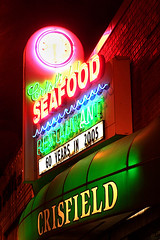
Now it's not true that this is fully the case in Silver Spring. There are extant assets. The Silver Theater is one, and I rue the fact that they were able to make such an arrangement with AFI, whereas the Tivoli Theater in DC would have been perfect for such a venture. Regardless of what you think about Doug Duncan, he does appreciate the economic development power of arts and culture (also see the Strathmore Center). Mayorga Coffee is another. And Crisfields!

Crisfields Georgia Ave. Silver Spring 4 Jan 06 003 on Flickr - Photo Sharing!.jFlickr photo of Crisfield's by Smata2.

On the other hand, it's the kind of place where an arts organization (!!!!!!!!!!!!!!!!!!!!!!!) demolished one of the few remaining Little Tavern buildings, and it has City Place, a pretty gross "urban mall" within the city, and it is attracting mostly chains.

Google Image Result for http--www.nationaltrust.org-magazine-_images-news-silveFrom "Historic Maryland Eatery at Center of Preservation Debate." To quote Neil Young, "once you're gone, you ain't ever comin' back." Photo: Silver Spring Historical Society.

It's getting more Bethesda-like by the day, and while Bethesda Row is interesting, although skewing towards chains, and a good example of new urbanism (see this blog entry: Why are people so damn good at asking the wrong questions?) the fact of the matter is that the rest of Downtown Bethesda is placeless and faceless. Silver Spring is hurtling towards the same future. (Which is why if I were a Maryland resident I would have voted for Martin O'Malley in the primary...)

On the other hand, given that most people grow up in faceless placeless places, maybe that's the best way for Silver Spring to compete within the automobile-centric Montgomery County market.

The cool stuff, the independent businesses are finding it hard to survive. So much so that a student urban design studio from UMD provided Montgomery County with a slew of suggestions about Minimizing Small Business Displacement.

Index Keywords:

Monday, June 26, 2006

Finally, a decent idea for "Dupont Under"

Washcycle has a good idea for the old trolley tunnel under Dupont Circle, a bikestation. I hope he includes showers. (It's so rare to see good urban ideas in area blogs that this is such a breath of fresh air. Although, Washcycle has way more ideas than most.)
TheWashCycle Got Any Other Bright Ideas.jpgUnderground bike station in the Netherlands. Photo via Washcycle.

Index Keywords:

Smart Car In Baltimore


Smart Car In Baltimore
Originally uploaded by spike55151.
Paul Johnson called my attention to this. See this press feed for more.

Now if they would get "Smart" and create specific car dealerships in center cities...

Pittsburghers can wear their city pride

According to the Pittsburgh Business Journal:

A slogan that was last seen on the streets of Pittsburgh in 1994 is being resurrected by the Allegheny Conference on Community Development. Buttons with the phrase "Ask me. I'm a Pittsburgher!" will begin appearing on the chests and lapels of the city's residents in July as part of the efforts to make the city more friendly and accessible for the 2006 All-Star Game. Civic leaders introduced the phrase the last time the All-Star Game was in town, in 1994.

Pam Golden, a spokeswoman for the conference, said she resurrected the buttons as a way to let out-of-towners know which Pittsburghers are willing to be stopped and asked for things such as directions or dining recommendations. Golden has begun handing out the buttons to visitors to the conference's headquarters in the Regional Enterprise Tower on Sixth Street. They also will be given to elected officials, cab companies, hotels and other businesses involved in the hospitality industry.

It'd be a lot better if the people who received the buttons were trained... see as an example, the Detroit Orientation Institute.

I see so many people give wrong directions, etc.

Trained people, now that's a different story.

Here's something I found from the University of Texas. I like the idea.
Ask me for Help (University of Texas)

Index Keywords: