Rebuilding Place in the Urban Space

"A community’s physical form, rather than its land uses, is its most intrinsic and enduring characteristic." [Katz, EPA] This blog focuses on place and placemaking and all that makes it work--historic preservation, urban design, transportation, asset-based community development, arts & cultural development, commercial district revitalization, tourism & destination development, and quality of life advocacy--along with doses of civic engagement and good governance watchdogging.

Saturday, March 18, 2023

Washington Cherry Blossom Festival and event transit

In the past, I've suggested as part of Presidential Inauguration Weekend, that transit on the Metrorail system and in DC should be free, if only as a throughput-transportation demand management measure.

-- "Should transit on Inauguration Day be free?," 2013/2016

Note that DC will be launching free surface transit later this summer ("Free ride: DC unveils bold plan to boost public transit," Associated Press), something I'll get around to writing about ("Is making surface transit free the best transit investment DC can make?," 2016).  So that makes a chief element of that idea realizable.

Photo by alphanumeric.

Seeing the Washington Post article "3 maps for getting to the 2023 Washington, D.C., Cherry Blossom Festival," about getting to the Cherry Blossom Festival, I had a similar thought.  

1. Besides improving public transit services on the National Mall generally.

 --  "New DC Circulator route serving National Mall reminds us that we are neglecting connections from west to east and fail to adequately connect Georgetown to the National Mall," 2015
 -- "Revisiting: a proposal for heritage streetcar service on the National Mall | adding service to the DC waterfront"

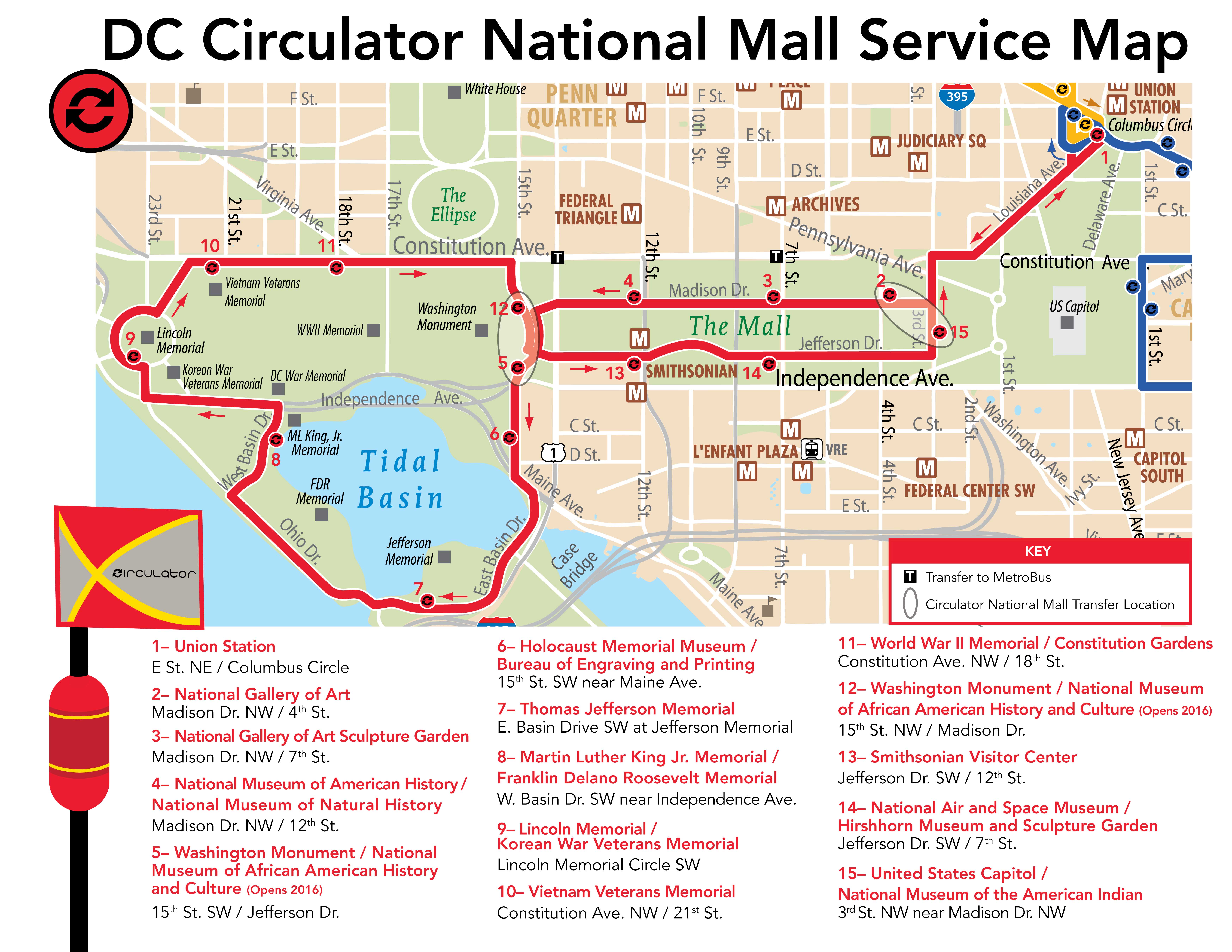
2.  Why not improve transit on the National Mall specifically for the Cherry Blossom Festival, a highly important special event?  Note that back in the day Capital Transit provided weekend transit service to East Potomac Park.  And note that maybe the DC Circulator National Mall bus line is enough as it is (although it doesn't go to Georgetown).

3. Make it free.  Again, that's more out of simplicity than anything else.

--  "Transperth transit (Perth, Western Australia) provides free transit to certain events, like the Red Hot Chili Peppers concert on 2/12/2023," 2023

Labels: , , , , ,

Tuesday, September 14, 2021

(Republished) Free Transit on H Street NE?

===============

Republished from Friday September 10th, because I forgot to mention that effective last week, the City of Alexandria Virginia made its local transit service free.

New graphic design for the livery of Alexandria's buses is considerably more spiffy than the old design.

I can't believe I forgot to mention that Alexandria, Virginia, which runs intra-city transit under the DASH banner, including a previously already free "trolley bus" on King Street between the Metrorail station and the business district and waterfront, implemented free transit last week ("Alexandria’s DASH is going fare-free. The city says transit should be considered public infrastructure," Washington Post).

That's a big deal.  It's the only jurisdictional bus service in the area where all the transit is now free.   

It will be interesting to see if this has any affect on other jurisdictions, especially Arlington County, which for the most part is the most innovative community when it comes to sustainable mobility policy and practice.

And DC as it relates to Metrobus.

Dash didn't really make a lot of money from fares, so the amount of funding the city requires to substitute for fare revenue is comparatively small.  From the Post article:

The conversation probably started even before my time at DASH, and I’ve been here for a little over 4 1/2 years now. The question of the value of charging fares as compared to a fare-free service has come up quite frequently. And it really comes down to a question of how you view transit — whether you view it as a pay-as-you-go service or if you view it more as a public infrastructure, much like a road or a bridge or some other type of method to help people living their lives. And I think we’ve got local officials and DASH Board [of Directors] leadership who are coming together and recognizing that transit probably should be viewed more as infrastructure and as something that is open to all, regardless of your means.

Old style livery.  Flickr photo by SoCal Metro. 

In the immediate term for this fiscal year, the city’s additional subsidy that they had to provide was about $1.47 million. Now, consider that DASH typically budgets for approximately $4 million or so in fares. But in the current year with the [pandemic] climate and with all the things that have been going on and reduced ridership in our projections, the gap was much smaller to fill this year. So I think in the immediate term, it was easier to figure out.

================

Will was on the streetcar today, running an errand on H Street NE in DC and sent me this photo.

It reminded me of something I was thinking about in terms of "transit equity."  I believe in it, but haven't always paid the right level of attention to it.

While I believe that free transit would be best, in most places that isn't practical ("Revisiting free transit in the wake of the decision in Kansas City ... and Lawrence, Massachusetts," 2019).  

While I don't believe in decriminalizing fare evasion I do believe in facilitating transit access to low income riders, through discounted or free passes, something that the DC area hasn't been great about ("WMATA to consider lower cost/free transit pass for low income riders," 2020).

And rather than prepaying for a month's worth of a discounted pass, it's possible to create systems that do "pay as you go," which stop charging once the cost of a pass has been reached, as a result of paying fares one at a time ("New smart cards for Edmonton Transit boast a 'social justice' edge," Edmonton Journal).

DCs mayor made the Circulator bus system free ("Revisiting "Should surface transit be free?" given DC's announcement the Circulator bus service will be free," 2019).  

DC runs this system independent of the Metrobus system.

Although this was countermanded by City Council, but as many transit agencies did during the pandemic, the service was made free, although this will end September 30th.

In Boston, a couple years ago, then City Councilor Michelle Wu (now the leading candidate for Mayor) suggested that one of the bus lines running in the city be free, since it was relied upon by so many low income riders ("Two Boston city councilors want to make the Route 28 Bus free," Boston Globe).  From the article:

Boston City Councilor Michelle Wu, one of the outspoken advocates in the charge against the price hike, says it’s time for the “next step:” a public discussion on how to ultimately make one of the busiest bus routes in the city, free of charge.

The Route 28 Bus, making stops between Mattapan and Ruggles Station, carries around 12,000 riders on weekdays. The majority of passengers are low-income residents without cars and almost half don’t have a driver’s license, Wu told her fellow councilors this week. ...

“This would be a measure that would also ensure people have no barriers to access that economic opportunity corridor,” Wu said during a meeting Wednesday, where she and Councilor Kim Janey filed their request for a hearing on the proposal. “This is the route I think we need to have the conversation about.”

In Greater Boston, all of the transit services are run by the Massachusetts Bay Transit Authority, a state agency.  In July, MBTA announced they would test free transit on Route 28 ("MBTA launches fare-free pilot program on busiest bus route in Boston," WCVB-TV).

Should DC do the same thing on H Street NE?  It made me think about the X bus service along H Street NE.  

It's one of the city's busy bus lines, with about the same pre-pandemic ridership as Route 28 in Boston.

But it "competes" with the DC Streetcar, which doesn't charge a fare. 

 Some people argue that the streetcar is a premium service, having free transit for the streetcar only is inequitable ("Transit "wokeness" in DC and Baltimore," 2021). One way to address this would be to make the X bus free, just like the streetcar.

Like the Circulator, the streetcar is a 100% DC funded and operated service.  And for DC to have Metrobus free there might be some things they have to negotiate with other members (Maryland and Virginia) of the Compact, and of course, they'd have to come up with the funding for it.

(Back in the day, when Seattle had a Downtown free fare zone, they made a separate payment to King County Metro to pay for it.  But it probably wasn't near enough, less than $1 million annually.  As a result of declining revenues due to the 2008 recession, the Free Fare Zone was discontinued.

Another way to improve DC bus service.  Elsewhere I've argued that bus service could be rebranded and repositioned is by switching to double deck buses ("Making bus service sexy and more equitable," 2012). 


This wouldn't be a problem in DC in most cases, because traffic signals and powerlines don't cross the street in ways that would impede tall buses.  But it wouldn't work in the suburbs.

For profit double deck tourist buses already operate in DC, proving it can be popular and isn't particularly difficult operationally.

A few transit agencies in North America use double deck buses, but not many including Ottawa, Las Vegas, and Snohomish County, Washington.  They get tested from time to time in various places.  

But I think the infrastructure issue--not just traffic signals and utility wires, but bus terminals need higher ceilings and such--ends up scotching the idea.

Labels: , , , ,

Friday, July 10, 2020

WMATA to consider lower cost/free transit pass for low income riders

According to the Washington Post ("Metro board to consider making bus rides free for low-income residents") the WMATA Board has directed the planning staff to study the issue of providing discounted riding, at least on buses. From the article:

The Metro board on Thursday asked its staff to look into proposals for free or reduced-fare travel for low-income Metrobus riders, adding momentum to initiatives by D.C. officials to provide residents with free transit.

The suggestion of free Metrobus rides came as the board released its “framework for transit equity,” an overarching plan to tackle inequities as varied as fare prices and police enforcement. ...

Wiedefeld said that in the past, decisions were made with the idea of trying to keep costs down or the same for lower-income riders, whereas Metro should be thinking, he said, about how to make riding easier and more affordable for that segment of ridership.

“Today, major service and fare changes are evaluated using, to be frank, a ‘do no harm’ standard to ensure that minorities and low-income riders do not suffer disproportionate, adverse impact,” he said. “How can we create an affirmative standard while delivering more and better service to those communities?”

Board member Michael Goldman suggested halving or waiving Metrobus fares for low-income riders, with those who qualify for Medicaid being eligible.
This follows an earlier pilot ("Pilot program to test free and discounted Metro fare cards for low-income D.C. residents," Post).

I've written about the issue of low income transit passes a lot but I've always made the point that the cost for this shouldn't come out of existing revenue sources but should be an add-on, covered by separate allocations by the member jurisdictions.

That's how it's done in Greater Seattle.  It's probably not exactly how it's done in San Francisco, but that's because the transit agency is part of the city government (and the access doesn't cover BART, except within the city I think).  In NYC, the money for a discounted transit pass comes from the city government, separate from other appropriations for transit--MTA is a state agency.

Similar to MTA and Sound Transit in Seattle, WMATA is a supra-government agency, which goes across multiple jurisdictions, while the SFMTA is exclusive to San Francisco.

But in any case, that WMATA Board members are concerned about transit equity is a step forward. 

Likely this is stirred in part by the recent proposal by DC Councilmember Charles Allen to provide DC residents with a $100/month transit credit ("DC Councilmember proposes residents get $100 monthly towards transit").

Definitely without a plan or study we can be assured nothing will happen.

At this point, while I am definitely for "free transit for all" ("Revisiting free transit in the wake of the decision in Kansas City ... and Lawrence, Massachusetts," "No Fares" article series, Tyee, 2007) we're nowhere near being able to do that. The "Charles Allen" post, included these recommendations:

(2) Instead of providing transit free "to everyone," focus on providing transit fare subsidies to low income households, because they have the greatest need

(3) Create a capping system on fares equal to the cost of a transit pass, so that people don't have to buy transit passes specifically, in order to get the best pricing for fares.

For example, in London and Melbourne, there is a cap on how much a rider has to pay per day. But it doesn't increment up to the level of a weekly or monthly pass.

While I don't think it has been implemented, Edmonton has proposed a transit fare capping system which would increment up to the cost of a monthly pass, after which it would stop assessing fares.

From the Edmonton Journal article "New smart cards for Edmonton Transit boast a 'social justice' edge":
People with steady jobs and good paycheques are the most likely to buy a monthly pass. They have cash on hand at the beginning of the month.

Those who might need their last nickel just to keep the lights on are the most likely to pay cash for every trip. It means they pay $3.25 per ride, more money for the same service.

That’s one reason Ken Koropeski is excited about Smart Fare.

With a card and an online account, the system can track how many times a person uses transit during a 30-day period, said Koropeski, director of special projects for Edmonton Transit. No one would have to commit to a monthly pass on Day 1. Instead, the system could automatically track use and once the rider hits that monthly maximum, all other rides are free.

“When you have capping, it has inherent benefits for people with low income,” said Koropeski.
(4) To provide some benefits "to everyone", provide funding for at least three free bus fare days (Spring, Summer, Fall) as a promotional and marketing initiative to encourage transit use by non-riders.

========
The first recommendation was that it is just important on equity terms to expand quality transit service in terms of depth (frequency) and breadth (the geographical area in which transit service is available).

Labels: , , , , , ,

Tuesday, March 03, 2020

DC Councilmember proposes residents get $100 monthly towards transit

It's appropro since Luxembourg's free transit program just kicked in at the beginning of the month ("Luxembourg has launched the world's first free nationwide public transpor," Telegraph) and given other free transit initiatives that have received media attention over the past few months ("Revisiting free transit in the wake of the decision in Kansas City ... and Lawrence, Massachusetts") that DC City Councilmember Charles Allen has suggested a form of this for DC.

-- "D.C. Council member proposes free public transit for residents," Washington Post

Because most of the transit provided in the city is delivered by the metropolitan operator, WMATA, which provides bus and subway service, and this is done in conjunction with Virginia and Maryland, DC can't unilaterally make transit free, instead he proposes (1) the $100 credit; (2) a $100 million fund to improve bus service; and (3) some means testing.

Given that most research on transit choice finds that middle and higher income households don't find price to be the primary barrier to transit use, it's important to figure out if this is best way to use funds on transit priorities.

(The "Revisiting free transit" piece summarizes a bunch of the issues around free transit.)

Another problem is that the way the agreement between the three jurisdictions is set up, DC can't unilaterally pay for funding improvements to intra-city transit, and increases in ridership and service trigger greater "subsidy payments" to the agency's annual operating budget.

I don't know the ins and outs of this element of the Compact, but according to GGW commenter Alfred Harf:
As I understand WMATA’s subsidy allocation formula, 15% of the allocation is based on ridership by jurisdiction, while bus revenue hours and miles are other (even more significant) factors in the calculation. More DC riders resulting from the subsidy (and the prospect of more revenue hours and miles to accommodate those additional riders) will increase the District’s share of the total bus subsidy, an expense that to the best of my knowledge has not been acknowledged.
Seattle and Salt Lake add city-specific transit service within a metropolitan transit system. Unfortunately, it appears as if there isn't a way for a DC-area jurisdiction to significantly improve local bus service through Metrobus, the way that citizens in both Seattle and Salt Lake City voted to pay additional taxes in order to improve transit service within their city despite lack of similar support or interest from the rest of their respective counties--in both cases service is provided on a county or multi-county basis by a metropolitan or regional transit provider.

In Seattle, they made the entire city a "Transportation Benefit District" and approved an add on tax to support it, which provides about $50 million/year in additional funding.  Separately, Salt Lake City has subsidized purchase of monthly transit passes by residents. Both areas have experienced significant gains in ridership, even as most transit agencies nationally are seeing declines.

Note that some Utah resort communities, like Park City, have free transit, which shapes attitudes around the state in some jurisdictions. For example, a poll during the recent mayoral election in Salt Lake found that 75% of those polled favored free transit. And in the core of Salt Lake, as a congestion and transit promotion measure, there is a free fare zone, which has existed for a couple decades.

Conclusion.  What I think should be done:

(1) Invest money in more transit, in structural ways, for example like how I suggested last week the region should create a defined overnight transit network ("Metrorail night hour extension vs. creating a metropolitan overnight transit network"); streetcar expansion, which the city has scotched; and advocacy for a separated Blue Line subway ("A "Transformational Projects Action Plan" for the Metrorail Blue Line").

(2) Instead of providing transit free "to everyone," focus on providing transit fare subsidies to low income households, along the lines suggested by Councilmember Allen, as a DC specific initiative that doesn't require approval of the other jurisdictions.

Note that San Francisco has offered a half price monthly transit pass for many years.  The Puget Sound area has recently introduced a similar product, and so has New York City.  In the case of Greater Seattle and NYC, these discounts are provided by the local jurisdictions, not the transit agency.  In SF, the city transit agency pays for the discount, which doesn't work on other transit services.

In the DC area, seniors are eligible for discounted fares, and some jurisdictions provide free transit passes for youths, including DC, Arlington, and Montgomery County.

(3) Create a capping system on fares equal to the cost of a transit pass, so that people don't have to buy transit passes specifically, in order to get the best pricing for fares.

For example, in London and Melbourne, there is a cap on how much a rider has to pay per day. But it doesn't increment up to the level of a weekly or monthly pass.

While I don't think it has been implemented, Edmonton has proposed a transit fare capping system which would increment up to the cost of a monthly pass, after which it would stop assessing fares.

From the Edmonton Journal article "New smart cards for Edmonton Transit boast a 'social justice' edge":
People with steady jobs and good paycheques are the most likely to buy a monthly pass. They have cash on hand at the beginning of the month.

Those who might need their last nickel just to keep the lights on are the most likely to pay cash for every trip. It means they pay $3.25 per ride, more money for the same service.

That’s one reason Ken Koropeski is excited about Smart Fare.

With a card and an online account, the system can track how many times a person uses transit during a 30-day period, said Koropeski, director of special projects for Edmonton Transit. No one would have to commit to a monthly pass on Day 1. Instead, the system could automatically track use and once the rider hits that monthly maximum, all other rides are free.

“When you have capping, it has inherent benefits for people with low income,” said Koropeski.
(4) To provide some benefits "to everyone", provide funding for at least three free bus fare days (Spring, Summer, Fall) as a promotional and marketing initiative to encourage transit use by non-riders.

(5) Address elements in the subsidy formula that penalize individual jurisdictions for paying into the Metrobus system for service expansions (otherwise jurisdictions may increase non-Metrobus service instead).

Labels: , , , , , ,

Wednesday, December 18, 2019

Revisiting free transit in the wake of the decision in Kansas City ... and Lawrence, Massachusetts

Last month, Kansas City, Missouri announced that it is making transit free.

-- "Will KC become the first major city with free bus service," Kansas City Star
-- "Kansas City moves to make all bus travel free, Smart Cities World

There are many examples of free transit, but it is still relatively rare.

-- "No Fares" article series, The Tyee, 2007

The biggest example heretofore is Talinn, Estonia, which is a little smaller than Kansas City, Missouri, but definitely smaller than the metropolitan area there.

Many resort communities have free transit.

In 2018, Luxembourg announced it is moving to a free transit paradigm ("Luxembourg to become first country to make all public transport free," Guardian).

And some cities in Germany are considering it, as an air quality measure ("Germany considering free public transportation to take on air pollution," Die Welt).

Green New Deal/Climate Change.  From a "knock your socks off sense of urgency" a la the Green New Deal, making transit free so that people will choose transit instead of driving makes sense.

But is the impact significant?  But if your transit system isn't particularly robust in terms of where it goes and how frequently, does it matter if it's free?  The KC bus system has just under 50,000 daily riders, and about one third of that on weekends.  The Metrobus system in DC and the suburbs has 500,000 daily riders, and this is complemented by other jurisdictional bus services, subway and train service.

Yes, transit can't satisfy every possible trip, but many trips are well suited for transit, especially when complemented by walking, biking and concentrated land uses.

And the physics of transportation make it impossible for every trip to be satisfied by the use of a 100 s.f. box.  There isn't enough road space to handle all the trips.

WRT DC, I have written about the possibilities of free transit, in response to proposals for free transit as well as the tug of war between the Executive and Legislative branches over whether or not the Circulator buses should be free (the short line streetcar is free, but only travels a short distance on one street).

-- "Is making surface transit free the best transit investment DC can make?," 2016
-- "Revisiting "Should surface transit be free?" given DC's announcement the Circulator bus service will be free," 2019

Cost is an issue, but mostly for the poor.  Cost is an issue for people of limited means, but for others, cost isn't the primary reason most people don't use transit.  (Although Metrorail fares + parking costs from far distances are high, and can't compete against the cost of gas if free parking is provided, especially for multiple riders.)

I'm embarrassed that earlier transportation wish lists I'd written didn't include low income fares as a key issue.

With limited funds, how should transit monies be spent: is free transit the best choice?

At this point, rather than making all transit free, especially in communities with relatively minimal ridership, I'd rather focus on:

-- making transit great in breadth and depth so that it is the preferred choice
-- making transit free/low cost for low income households
-- providing free access mobility services at the neighborhood/transit station catchment area scale.

Transit breadth and depth

It's been a number of yeas since I've written one of my "master transportation wish list" pieces:

-- "Transportation Wish List: 2015 edition, part one, the original list"
-- "Transportation Wish List, 2015: part two, new ideas"

and I don't feel the need to do another one given newer pieces that are more focused on particular elements of the transit network such as:

-- "Revisiting the Purple Line (series) and a more complete program of complementary improvements to the transit network," 2019
-- "A "Transformational Projects Action Plan" for a statewide passenger railroad program in Maryland," 2019
-- "Reviving DC area bus service: and a counterpoint to the recent Washington City Paper article," 2019
-- "The answer is: Create a single multi-state/regional multi-modal transit planning, management, and operations authority association," 2017
-- " Using the Silver Line as the priming event, what would a transit network improvement program look like for NoVA?," 2015

But transit expansion and increased frequency is a big issue.

Lower cost transit for low income households 

Poster promoting new rider-friendlier transit pass product pricing, WMATA/Metrorail, DC areaThat being said, reducing fares is a reasonable goal.  Metrorail fares are high.  Although in the last couple years, WMATA, forced to respond to a precipitous drop in ridership, has created a goodly number of cost competitive transit pass products.

Low income monthly passes.  Other communities, such as San Francisco and Seattle, have low priced monthly transit passes for low income riders.  NYC has recently introduced such a program.

In the DC area many jurisdictions, including DC and Montgomery and Arlington Counties, have discounted or free fare programs for youth, but not for low income residents.

-- Affordable Transit Pass Programs for Low Income Individuals: Options and Recommendations for the City of Winnipeg, Social Planning Council of WInnipeg

Lawrence, Massachusetts: free intra-city shuttles.  Lawrence is a distressed city that once had been an industrial powerhouse.  In the last decade it went through financial exigency but now is stabilizing.

A woman boards the Route 34 MVRTA bus in Lawrence.NIC ANTAYA FOR THE BOSTON GLOBE


Now that the city has some budget surplus money, they've put a bit of it into making intra-city shuttle bus service free ("'Just make it free': Lawrence paid all the fares for three bus routes, and ridership is up," Boston Globe).

It's not rocket science.  Tempe, Arizona has done this for decades.  And mostly for transportation demand management purposes, many resort communities, like Park City, Utah, have free transit.

Bus fare capping for low income riders.  The BG article on Lawrence makes the point that the regional transit system has a low price for the month, but because low income residents often don't have the full amount to buy a pass at the beginning of the month, they still pay on a per fare basis.  From the article:
But even though [a Merrimack Valley Regional Transit Authority] monthly pass is much less expensive than an MBTA pass — $30 compared to about $80 for a full fare — many here struggle to come up with enough money to pay for the pass at the beginning of the month and end up paying cash for each ride.
But "capping" processes can be built into the software behind transit fare card technology.  In such cases, it tracks and increment each payment, and once the cost of the pass has been reached (on a daily, weekly or monthly basis) additional per fare costs aren't charged ("Cities that have transit fare capping have fairer fares, Steven Vance).

London and Melbourne do this, but not necessarily for low income fare pass products.

Edmonton has discussed doing this for low income riders ("New smart cards for Edmonton Transit boast a 'social justice' edge," Edmonton Journal).  From the article:
People with steady jobs and good paycheques are the most likely to buy a monthly pass. They have cash on hand at the beginning of the month.

Those who might need their last nickel just to keep the lights on are the most likely to pay cash for every trip. It means they pay $3.25 per ride, more money for the same service.

That’s one reason Ken Koropeski is excited about Smart Fare.

With a card and an online account, the system can track how many times a person uses transit during a 30-day period, said Koropeski, director of special projects for Edmonton Transit. No one would have to commit to a monthly pass on Day 1. Instead, the system could automatically track use and once the rider hits that monthly maximum, all other rides are free.

“When you have capping, it has inherent benefits for people with low income,” said Koropeski.
Free fare zones, free shuttles and buses

Fareless square.  Portland was known widely for its "fareless square"--where transit service was free in the Downtown core.  This was done as a transportation demand management measure, but also was helpful for low income riders.  The service was discontinued after the 2008 recession.

Calgary, Pittsburgh, and Salt Lake City have free fare zones in the core still.

Shuttle systems.  Some cities have free bus systems that complement regional services that aren't free.  The example with which I am most familiar is Tempe, Arizona.  Other cities in the Phoenix area have created similar services.  Mentioned above is the new service in Lawrence ("Lawrence will pay to make 3 local bus routes free," Boston Globe).

There can be a problem with the creation of what I call free "political" bus services, shuttles and circulators serving particular areas,  But when these routes have relatively low ridership, it raises the question of whether money being spent on transit service can be better used ("Methodology for determining transit expansion")

Specific free services.  There are many examples, especially "circulators" usually in the core of a center city.  Circulators are fixed routes.

They are called circulators because the routes are usually circular.  Linear routes exist too, like the 16th Street Transit Mall in Denver or on the Nicolett Transit Mall in Minneapolis.

Smaller vehicles, including electric vehicles ("Revisiting stories: FRED Downtown shuttle in San Diego") are not fixed route.

UTA in Salt Lake City provides a free shuttle from the Downtown free transit zone to the nearby State Capitol.

Transit station catchment areas.  I've argued that services like these need to be developed to provide mobility access within transit station catchment areas too.

Some cities in the Metrolink commuter rail service area provide free or discounted shuttle service between train stations and major destinations.  Other train systems may have similar services such as in the Greater New York region.

I am not familiar with many such services within subway and light rail systems.  I think such a service should be developed in association with the forthcoming Purple Line light rail in Suburban Maryland.

Labels: , , , , , , ,

Sunday, December 09, 2018

Luxembourg to become first country to make all public transport free

===========
Revised with new date -- Sunday, 12/9 because of new information

In the comment thread, charlie wrote: "Ironic, because Luexembourg is well known as a gas-tax haven for locals -- drive there to fill up."

That changes "everything" in terms of recommendations.

This new point is #6 below with subsequent renumbering.

(this is one of the problems of arm chair pontificating from great distances without on the ground knowledge, sometimes you miss key points.)

=========

NotionsCapital calls our attention to this article about Luxembourg--a very small country--moving to a free transit paradigm. From the article:
Luxembourg is set to become the first country in the world to make all its public transport free.

Fares on trains, trams and buses will be lifted next summer under the plans of the re-elected coalition government led by Xavier Bettel, who was sworn in for a second term as prime minister on Wednesday.

Bettel, whose Democratic party will form a government with the leftwing Socialist Workers’ party and the Greens, had vowed to prioritise the environment during the recent election campaign. ...

Luxembourg City, the capital of the small Grand Duchy, suffers from some of the worst traffic congestion in the world.

It is home to about 110,000 people, but a further 400,000 commute into the city to work. A study suggested that drivers in the capital spent an average of 33 hours in traffic jams in 2016.
2.  1. Interestingly, I just happened to come across this paper, "Fare's fair? Concessionary travel policy and social justice," from the Journal of Poverty and Social Justice published by Policy Press at Bristol University UK.

I still need to work through it. It has a nice summation of the existing literature but points out there isn't a lot published on the topic.

3.  Getting back to Luxembourg, for this to really work, since much of the traffic is commuting traffic originating in France and Belgium ("Cross-border workers provide nearly half of Luxembourg's workforce," Luxembourg Times), for free transit to have a substantive dampening effect on motor vehicle traffic, they'd need to have cross-border free transit with transit authorities in France and Belgium participating.

4.  They could do this by setting up a cross-border German style transport association, which links transit planning and operations and is often agnostic when it comes to borders between states or countries:

-- "Verkehrsverbund: The evolution and spread of fully integrated regional public transport in Germany, Austria, and Switzerland," Ralph Buehler, John Pucher & Oliver Dümmler, International Journal of Sustainable Transportation (2018)
-- Transport Alliances -– Promoting Cooperation and Integration to offer a more attractive and efficient Public Transport, VDV, the association of German transport companies

and by having a fare media system like that of Talinn, Estonia, where transit is free for registered residents, when using a specially issued transit card  ("The Tallinn experiment: what happens when a city makes public transport free," Guardian). Non-residents pay for transit.  From the article:
The capital of Estonia introduced free public transport at the beginning of 2013 after their populist mayor Edgar Savisaar called a referendum on the decision, dismissed by critics at the time as a political stunt that the city couldn’t afford. ... the city remains committed to the programme – claiming that instead of it costing them money, they are turning a profit of €20m a year.

To enjoy Tallinn’s buses, trams, trolley buses and trains for free you must be registered as a resident, which means that the municipality gets a €1,000 share of your income tax every year, explains Dr Oded Cats, an expert who has conducted a year long study on the project. Residents only need to pay €2 for a “green card” and then all their trips are free.
5. Instead of being free for residents only, to work it would also have to be free for commuters, not unlike the free transit pass recently provided to Downtown employees in Columbus, Ohio, instituted as a transportation demand management measure ("Downtown workers getting free COTA passes," Columbus Business First).

6.  Perhaps most importantly, charlie pointed out in a comment on the original piece that Luxembourg is known for having cheaper gas than Belgium and France, so that people make a point of going there to buy gasoline.  This obviously encourages (induces) motor vehicle based trips to Luxembourg.

Price per gallon of gas

Luxembourg €4.30/$4.89
Belgium €5.26/$5.99
France €5.45/$6.20

Increasing gasoline excise taxes so that prices are more comparable to Belgium and France may have as important effect on transit use and motor vehicle trip reduction as providing free transit.

7. Free transit on Whidbey Island in Washington State ("Next Door to BC, the Bus Is Free: Fare-free transit on Whidbey Island is a 20-year success story") among others is discussed in The Tyee series, "No Fares," and follow up article, "Free Transit? Experts Are Wary."

8. Major cities in Germany might move to a free transit paradigm as an air quality improvement measure ("Germany considering free public transportation to take on air pollution," Die Welt).

8. Some small cities based on a tourism-focused economy, like Park City, Utah, also have free transit systems, as a transportation demand management measure for visitors, residents, and employees.

-- Visitor Transportation Study: Report on Urban Visitor Transportation Services, Volpe Transportation Center, USDOT

10.  Salt Lake City, Pittsburgh, and Calgary, Alberta still have "Downtown free fare zones."  Seattle and Portland--the nation's most prominent example--used to, but dropped them after the Great Financial Crisis of 2008, which led to massive drop offs in tax revenues for governments and transit agencies ("TriMet board kills Portland's Free Rail Zone, raises fares, cuts bus service," Portland Oregonian, 2012).

11.  With financial support from a casino and sports team, the Pittsburgh free fare zone was extended to the North Shore Casino and Sports Stadium district ("Free North Shore T service expected to survive without Steelers as sponsor," Pittsburgh Post-Gazette).

Although to make up for lost funding when the Pittsburgh Steelers declined to continue their participation after the initial three year period, revenue from parking fees kept the service free ("Downtown Pittsburgh to North Shore light-rail service not charged; lot parking rates rise," PPG).

=====

I've written about this issue concerning DC at times, including:

-- "Is making surface transit free the best transit investment DC can make?," 2016

Labels: , , , ,