High Speed Rail in California to be seriously dialed back
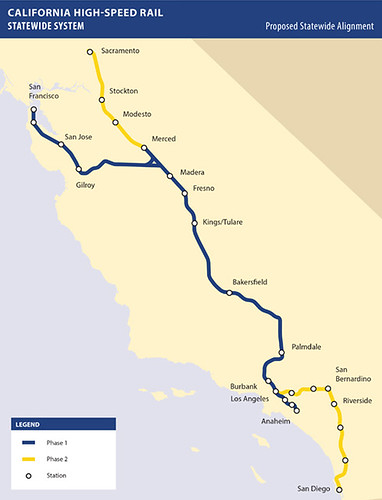
In his State of California speech, new Governor Gavin Newsom pulled back on the plans for a high speed rail line/semi-system in California, because of the high cost and opposition, committing only to going through with the currently underway project in the Central Valley.
Original plan
I'd argue that the California project was somewhat misdirected. But it's possible I am completely wrong.
1. I've learned that "big hairy audacious goals" can be as they say "the hobgoblins of small minds."
It's better to start smaller sometimes, and have proof of concept, and especially important to start where you can be wildly successful. That usually means postponing social justice outcomes to later phases of a project, because in earlier phases, such goals are likely to imperil a project.
Yes, it's a big lift to say start with Los Angeles, but who is going to use HSR in the Central Valley of California?
Tijuana to San Diego to Los Angeles to Santa Barbara, plus LA to Las Vegas, would have been a more productive way to start. It's not that there isn't a lot of demand theoretically for LA to SF, it's just there's a lot of area of not demand between SB and SF.
It's 291 miles from Santa Barbara to San Jose and about 50 miles to San Francisco from San Jose. It's 120 miles to Sacramento from San Jose.
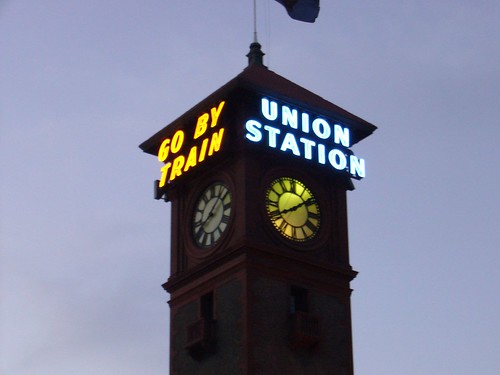
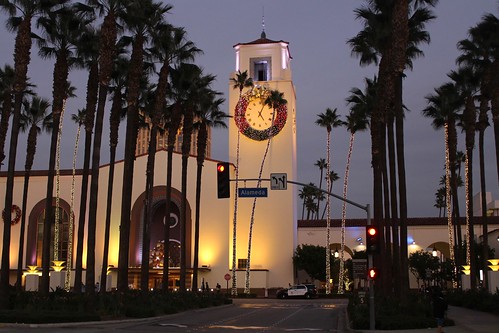
LA Union Station btw is f*ing beautiful. But most of the stations in those bigger cities along the California coast, such as San Diego are also quite attractive.
2. I don't think HSR in Central Valley on its own will have that much in the way of economic impact. The value of train transit is in a network of breadth and depth. Without either, it won't have much effect.
3. Maybe, given the contentious political situation in the US, when the right is against almost anything done by government, especially train service, out of a fear that it verges on communism, it was too big of a lift for California to try such a big project, at least at first.
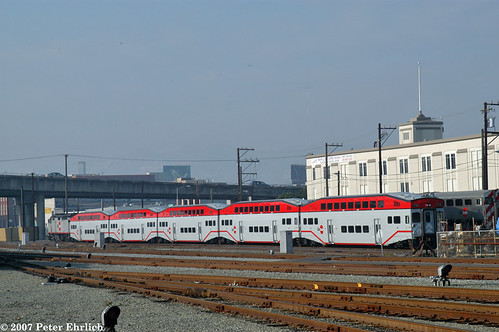
It would have delayed HSR by ten years or more, but perhaps the thing would have been to focus on making the various existing regional rail passenger programs in Southern California, the San Francisco Bay area, and between Sacramento and the SF Bay much better. For example:
- the ongoing electrification program for Caltrain could have been accelerated, and extended to the Capitol Corridor (Sacramento to San Jose) line.
- Train service to the Transbay Terminal Station in San Francisco could have been accelerated. See Richard Mlynarik website concerning broad civil engineering design problems generally, plus the civil engineering problems with the current station now.
- Double tracking and other improvements could have been implemented for the Metrolink system in Southern California
- other improvements could include integration of Coaster (San Diego County) with some of the Metrolink lines for continuous service rather than hiccup of a connection between the two systems at Oceanside in North San Diego County.
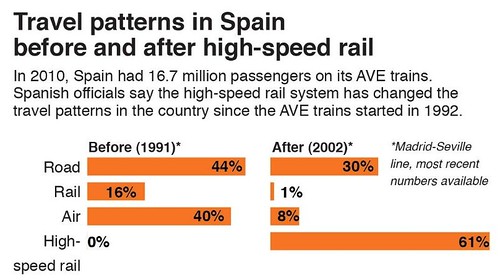
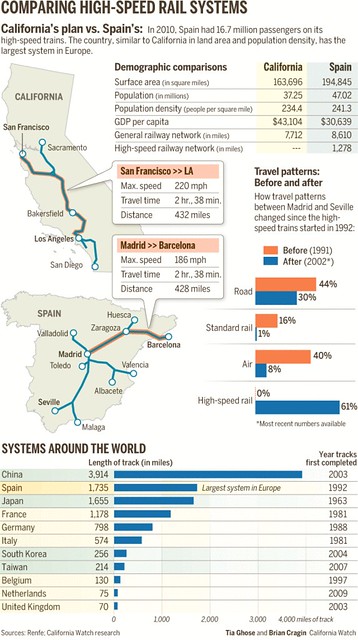
-- "High-Speed Rail Gains Traction in Spain," New York Times
-- "Spain's high speed rail system offers lessons for California," Orange County Register
This was demonstrated by the Obama Administration's failed attempt to move HSR along in large part as an economic development initiative. Many of the states where lines were proposed had Republican Governors, who blocked the proposals.
5. Yes, there are lots of articles about how the US pales in HSR compared to China especially and of course Japan, and yes France or Spain.
-- "Watch Out, Airlines. High Speed Rail Now Rivals Flying/," Bloomberg Businessweek
But now we are being outspanned by Morocco too! A high speed rail service launched last December, funded and designed by French interests.
-- "Will Africa's first high-speed train be a £1.5bn magic bullet for Morocco?," Guardian
(And yes, Moroccan activists argue the money should have been spent on programs for the impoverished.)
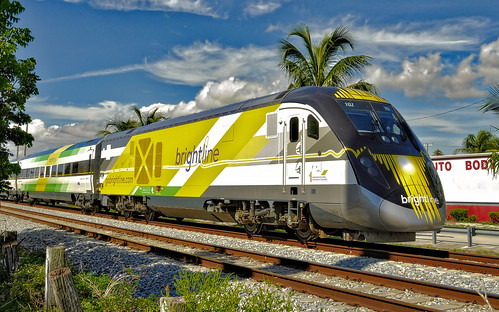
6. I don't know what it means exactly but the Brightline privately launched and funded higher speed rail program in Florida has (1) licensed the Virgin Trains brand and will be rebranding; (2) bought the Las Vegas to Southern California's Victorville HSR line, formerly called XPress West, and will also call it Virgin Trains ("High-speed train connecting Las Vegas, Southern California gets new owner," BusinessInsider).
The service currently runs between Miami and Palm Beach with plans for extensions to Orlando and Tampa Bay.
7. Except for vociferous lobbying by airlines, I'd focus HSR on high usage relatively short trip airline corridors (e.g., DC to NYC, NYC to Boston) and build from there.
I think the Texas service proposed between Houston and Dallas, called Texas Central Railway, can be successful, but besides acquiring property, a major problem is the same for the Brightline program--the train stations aren't in the center of the Downtown but on the outskirts, and historically that doesn't work out so well in terms of maximizing the benefits of urbanism, density, and centrality.
However, given the state's conservative bent, the Texas project may well be doomed.
-- "Face the stats: Texas high-speed rail destined for failure [Opinion]," Houston Chronicle
-- "COUNTERPOINT: High-speed rail takes aim at traffic and dangerous highways"
8. There's been a bunch of coverage about decline in passenger rail service quality with Deutsche Bahn and of course the high cost of train travel in the UK, but these countries have dense networks and frequent service, including higher speed rail in Germany. (European style HSR is being developed in the UK, although not without problems.)
Outside of the Northeast Corridor, we don't have anything like the train service in those countries, although the suburban regional rail networks in Chicago, Philadelphia, NY/NJ, and Boston are pretty great, comparatively speaking, with all-day and weekend service.
Labels: high speed rail, railroad passenger services, social change, Transformational Projects Action Planning, transportation planning
posted by Richard Layman @ 5:18 PM&Permanent Link
Follow this blog
12 comments