Rebuilding Place in the Urban Space

"A community’s physical form, rather than its land uses, is its most intrinsic and enduring characteristic." [Katz, EPA] This blog focuses on place and placemaking and all that makes it work--historic preservation, urban design, transportation, asset-based community development, arts & cultural development, commercial district revitalization, tourism & destination development, and quality of life advocacy--along with doses of civic engagement and good governance watchdogging.

Wednesday, March 20, 2024

Why drug stores don't have housing above/aren't mixed use buildings

 GGW has a piece, "CVS stores that should have apartments above them, ranked."

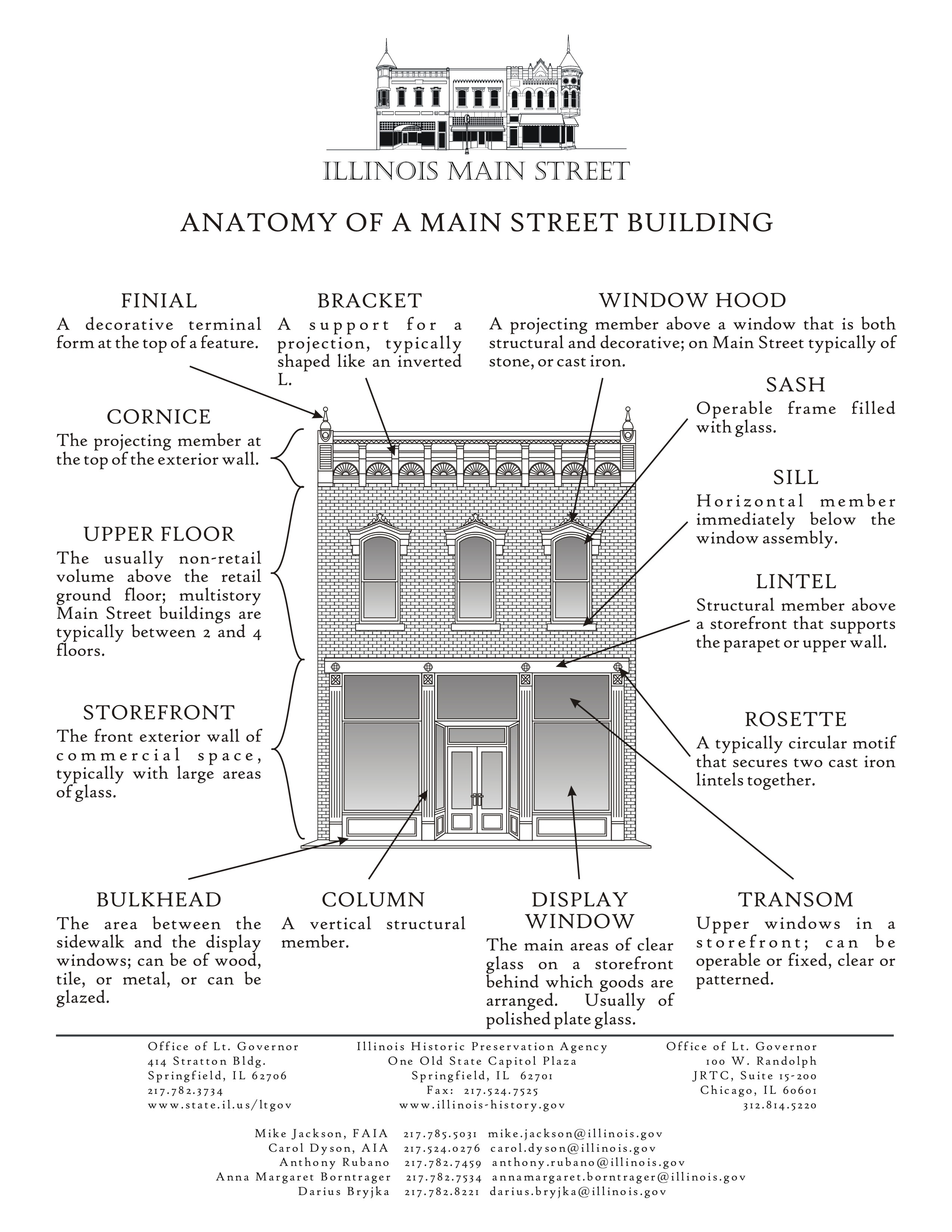
This store is in Baltimore but the same point pertains.  The second story is fake.  That's a common tactic for chain stores who get complaints that the building isn't tall enough, that it could be mixed use.

I wrote about this 10 years ago ("Beyond matter of right: incentivizing preferred types of development").

It's because of Real Estate Investment Trusts ("Problematic outcomes as real estate investment trusts buy more "high street" retail real estate," 2015).  Some specialize in drug store properties.  They don't want them encumbered by anything else.  Just the drug store.  So properties that would be good for mixed use aren't used that way, because it's not part of the business model.

Drug stores that are in mixed use buildings are in those in those buildings because of different kinds of business relationships.

====

I remember talking about this with a planner from Takoma Park.  At the New Hampshire Avenue/University Boulevard intersection is a big Walgreen's.  It actually is part of a large parcel, and Takoma Park wanted to buy it or have an interested developer get it.  Walgreen's didn't even know it was a multi-building parcel and they had no interest in selling it to a third party, only a REIT.

Labels: , , , , ,

Monday, January 23, 2023

Even more pharmacy consolidation: UPMC in Pennsylvania

 When I was doing research on public markets a few years ago, I came across a book called Civic Agriculture, about the development of local food systems centered upon small business.  

One of the interesting discussions within the book was how the prominent sociologist C. Wright Mills did a study for a Congressional Committee just after World War II, about the difference in economic effect of small businesses versus chain businesses and the impact on local communities.

-- Small Business and Civic Welfare, United States. Congress. Senate. Special Committee to Study and Survey Problems of Small Business Enterprises, 1946

Well, in terms of government support for small business versus large business, we know the road that was taken.

At the beginning of the covid vaccination program, West Virginia was touted for its program which focused on utilizing independently owned pharmacies to deliver vaccines, leveraging the trust in locally based professionals within the community ("A West Virginia pharmacist on how the state became a vaccine success story," Vox).

I also remember stories about independent pharmacists taking their own initiative to go to local nursing homes, senior centers, etc., to do vaccinations "in place" rather than expect often infirm people to come to them ("This Pharmacist Had Vaccine Doses to Spare. So He Hit the Road," New York Times).

Just like there is a term food desert, the same goes for pharmacies, "pharmacy deserts," as the industry has pretty much chained up on two primary firms--CVS and Walgreen's--and one also ran, Rite Aid.  Plus Walrmart.  A few years ago Target sold its pharmacies to CVS, which now runs them within Target stores.

-- "Mapping pharmacy deserts and determining accessibility to community pharmacy services for elderly enrolled in a State Pharmaceutical Assistance Program," PLoS One, 2018

While supermarkets have been quite active in having pharmacies, increasingly stores are getting out of the business, especially because prescription benefit companies keep lowering the reimbursement levels, making it unprofitable to fill a prescription.

Health care organizations are doing the same thing.  UPMC, the major hospital and health care group based in Pittsburgh, has just reduced the number of pharmacies able to participate in its health care program, and this has targeted small pharmacies in small towns ("As UPMC takes drugstore network trend to Obamacare plans, small-town Pa. pharmacists worry," Pittsburgh Post-Gazette).  From the article:

UPMC Health Plan is reducing by 60% statewide the number of drugstores where people with Obamacare coverage can fill prescriptions, a move that follows an industry cost-cutting trend and one the insurer said is needed to better align pharmacist services with overall patient care.

The smaller networks will affect both individuals and small employers who are insured through Pennsylvania’s online marketplace, called Pennie. Enrollment in Pennie plans for 2023 continues through Jan. 15 and will determine the number of people affected by the change.

But some independent pharmacy owners predict the downsizing — and similar efforts to drive down drug costs by limiting the number of participating pharmacies available to plan participants — endangers Pennsylvania’s 829 independently owned pharmacies, including many serving rural areas.

Healthcare deserts, nationally.  While the switch will reduce costs up to 2%, it comes at the cost of abetting the medical desert problem, and makes getting medical care that much more difficult in small towns and rural areas more generally. 

-- "Mapping Healthcare Deserts: 80% of the Country Lacks Adequate Access to Healthcare," GoodRx

Government policy should differentiate between place conditions--inner city urban versus suburban versus rural in particular, and these kinds of program changes should be disallowed because of the negative impact on local communities and businesses.

The immediate savings for the health plan are dwarfed by the negative costs imposed on communities in other ways, costs which can exacerbate health conditions rather than improve them.

Labels: , , , ,

Thursday, November 11, 2021

Pharmacy deserts

=====

This could be an initiative in keeping with the November 2020 post, "What should a domestic Marshall Plan/21st Century New Deal look like?."

=====

The Washington Post has a story, "The last drugstore: Rural America is losing its pharmacies," about the dearth of pharmacies in rural areas in particular, because of market consolidation--nationally there are really only three primary firms, CVS and Walgreen's, which have many many thousands of stores, and Rite Aid, which is about 1/4 of the size of either of the other two.  

Note that the Post covered this story in 2018, "The Health 202: Here's why rural independent pharmacies are closing their doors."

And a few months ago, I remember reading this Kaiser Health News story, "How One Rural Town Without a Pharmacy Is Crowdsourcing to Get Meds."

A couple of "general merchandise store chains," Shopko and Fred's, which served smaller communities, included pharmacies or thought that was a point of differentiation (Fred's).

But now both companies are out of business, further reducing the presence of pharmacies in rural areas.

Supermarkets can be a major force in pharmacy, including Walmart, although the stores with pharmacies tend to be in larger communities.  This is much less the case for the much smaller stores that are more likely to serve rural communities.

And some supermarkets are getting out of the business too ("Wakefern to shut 62 ShopRite pharmacies," Supermarket News).

Unfortunately, today's pharmaceutical reimbursement programs penalize independent pharmacies, which is why there has been such consolidation.

Pilcher-McBryde Drug Store in Selma Alabama.  Photo by Michael Harding.

There are independent pharmacies supported by national pharmaceutical and medical supply distributors, run as franchises, like Good Neighbor, Health Mart, and Medicine Shoppes.  

Somehow, Rexall still exists in Canada, but I don't think in the US, although there are still remnant stores, maybe they still have signage up but are otherwise independent.

Here and there hospital groups may operate community pharmacies, but increasingly they are less interested in doing this because of cost and liability, especially the need for higher security.  For example, the Intermountain Hospital Group based in Utah recently closed all its 25 pharmacies ("Intermountain Healthcare to close 25 retail pharmacies across Utah," KUTV-TV).

Five-ish solutions.  Working with the National Community Pharmacists Association, the National Grocers Association, and other organizations...

Supporting the creation of independent pharmacies.  When I first got involved in commercial district revitalization, I remember a story recounted by the Hometown Advantage initiative of the Institute for Local Self Reliance.  A community that lost its pharmacy sent a letter to every registered pharmacist in the state, offering incentives for them to open a store in their city, that they would own.  They got a taker.  ILSR wrote about this a couple years ago as well ("How a Rebirth of Independent Pharmacies Could Cure Rural Ills").

A group like the National Association of Counties could work with the franchise groups and communities to offer an incentive program to address this.

Small supermarkets.  The same thing can be done with small supermarkets.  Just like Ace Hardware has a program to open hardware stores in association with supermarkets especially in small communities, the franchise groups could do this too, in association with a group like the National Association of Counties.

Or independent pharmacies could co-locate with supermarkets, operated independently, but each supporting the other and sharing customers.

State incentive programs.  Pennsylvania has a program to support the opening of supermarkets in underserved communities, called the Fresh Food Financing Initiative, which involves the state and community development and food advocacy organizations ("Success story," Reinvestment Fund; eligibilityapplication, Food Trust).  

A similar program can be created by states to support the opening of pharmacies in underserved areas, working with independent pharmacies and small supermarkets, backstopped by independent franchise systems

Federal and state insurance supports.  Just as teaching hospitals get a premium payment from federal insurance programs to recognize the greater costs and benefits from their teaching role, state and federal health insurance support programs could provide greater reimbursements for stores located in pharmacy deserts, just as teaching hospitals get a premium for the extra costs of teaching. The National Community Pharmacists Association is suing the federal government over this issue

Doctors offices.  Doctors could do this too ("Should physicians dispense drugs to their patients?," Quartz), although it creates a significant cost and security issue.  Most doctors offices aren't constructed to the security level required for dispensing pharmaceuticals.

Labels: , , , , ,

Wednesday, September 11, 2019

Is the National Health Service/universal health care the reason that the UK doesn't have an opioid crisis comparable to the US?

I have been offline for awhile because of the process of getting my house not only ready for renting, but able to pass a home inspection, as we are renting out the house legally, by registering it with the city, etc.

The city's inspection process has been under fire recently, because a fire at an illegal rooming house killed two people ("D.C. officials strengthen policies for dangerous code violations after deadly fire," Washington Post).

I was worried that was going to make our experience more difficult, but it didn't. The situations were different -- that was a building illegally converted into a rooming house, and besides that, doing it in ways that were unsafe.

Although it was plenty difficult in that we aimed to fix everything on our house that needed fixing, and given the reality of deferred maintenance over 11 years, the list of "what to do" became pretty long.

And there are other things that you have to do as a landlord with a property that you don't have to do as an owner-occupant, such as have storm windows and screens on every window -- and because we have a walkout basement that theoretically could be lived in, that was 6 windows...

And frankly, there were things that needed to be done when we bought the house and we didn't do them (like we never received a key to the garage and the lock had been painted over besides, but we never replaced the lock, so it never could be secured in the 11 years we lived there--well, I got it fixed, thank you Capitol Garage Door and it is so cool to open the door with a key and then lock it). Now we can put stuff in there (it has a dirt floor, so there are limits) like ladders etc. and it doesn't clutter the house.

Suzanne was worried we wouldn't pass (she gets anxious about stuff like that) and I said, besides the wear and tear on the floors, the house is in better condition today than we when we first walked in 11 years ago.

Now, I couldn't have said that 3 months ago.  It's been a process.  We found a great unlicensed "contractor" who was comparatively cheap, so it cost us considerably less than the normal cost.
The walkway lined with zinnias
For example, the new walkway.  The former walkway was constructed of individual bluestone "pavers," very large, which over the decades had settled slightly before grade.  We put this in its place, and afterwards, I planted zinnias along it. 

But that was a two-day project for the contractor, and I spent a couple hours digging out the stones, and transporting them to the garage.  Fortunately for us, we are one house off the alley, so I could get them to the garage that way (our house has two grade levels--the ground floor is at street grade, but the back of the house is like 6 feet or more lower, and we have a walkout basement).

In fact, I commented to my brother that the array of specialists we pulled together to do all this things (like rebuilding historic windows, replacing broken glass panes, yard work and hauling, garage door locks, finding replacement fencing, etc. -- we already have a great plumber and electrician--the plumber is fabulous but not cheap, but his work is always excellent, and the electrician firm is good and inexpensive--e.g., something we needed to do, Kolb Electric estimated it would cost $2,200, and the firm we chose offered a similar option for one-third the price, but an even cheap option that all told cost $250, plus our painting of the electric line housing), that we could put together a team that could successfully flip houses.

... so part of the cleaning process has been going through (or at least reboxing) tons of printed matter that I either read and clipped, or somehow didn't read at the time. I was skimming a Financial Times from 2017, and there was an op-ed on the likelihood of the UK developing an opioid crisis comparable to that of the US ("The Opioid Files: Follow The Post's investigation of the opioid crisis," Washington Post, and it occurred to me that wasn't likely because of the way the health care system is organized there.

The profit motive around being "a prescription drug mill" is different in the UK than in the US ("As overdoses soared, nearly 35 billion opioids — half of distributed pills — handled by 15 percent of pharmacies," Post), and doctors are less independent and subject to more oversight.

Capitalism without adequate regulation doesn't work because there are always actors willing to take advantage of gaps in regulation or opportunities for extranormal benefit.

Labels: , , , ,

Tuesday, January 23, 2018

Pharmacy deserts in (weak market) urban areas

Because in DC, CVS stores are so ubiquitous (they acquired the hometown company, People's Drug, in the 1990s, and that was a big company in itself) it's sometimes easy to forget that access to a pharmacy can be difficult in other areas.

I remember working a conference in the mid-1990s in St. Louis, and to get various sundries we had to drive many miles to find a CVS.

Yesterday's Chicago Tribune has an article ("'Pharmacy deserts' a growing health concern in Chicago, experts, residents say") about the issue there, about limited access to pharmacies, typically geographies dominated by low income households, but it turns out that academic research predates the media coverage:

-- "'Pharmacy deserts' are prevalent in Chicago's predominantly minority communities, raising medication access concerns," Health Affairs, 2014

Interestingly, while Chicago among other cities has pharmacy deserts, Walgreens was started in the city and is still based in the Chicago suburbs.

In general, in competitive markets, it's difficult for independents to compete with chain pharmacies and supermarkets ("Marshall pharmacy closing after 34 years in business," Fauquier Now), but this may not be an issue in "pharmacy deserts." From the article:
But, consolidation and the power of large insurance companies more recently have made it almost impossible for independents to compete, according to Mr. Trumbo and Mr. Spellman.

In some cases, the Marshall pharmacy paid more for prescription drugs than it received in payment. In others, insurance companies will pay for only the first three fillings of a prescription, forcing patients to buy from mail-order pharmacies or pay the entire cost at a local store.
1.  National city/county organizations could create a store development initiative with independent pharmacy buying and branding groups, such as the Good Neighbor Pharmacy group, a support organization for more than 3,000 independent pharmacies ("Good Neighbor Pharmacy empowers independents," Chain Drug Review). (Similarly the National Grocery Association is a trade association for independents, and the National Co-op Grocers is a trade association for food co-ops.)

2. Linking pharmacies and public markets/grocery stores.  I have been thinking about an element of this as it relates to public markets. I argue that the public market model is a way to "deliver" grocery functions to impoverished areas anyway.

But in thinking about how to keep DC's public market, Eastern Market, relevant I've been suggesting  delivery (well, I've actually advocated that the market consider delivery for going on 11 years...) and how to be more useful and cost effective and to support another local business, the market could do this in conjunction with the nearby independent pharmacy, Capitol Hill Care Pharmacy. But also thinking about how many traditional supermarkets incorporate pharmacy operations also.

Note that this particular pharmacy is part of a group of three, including one East of the River, and there are buying groups/programs out there to support independent pharmacies even as the industry is increasingly concentrated.

3.  Similarly, cities could work with independent grocers to incentivize adding pharmacy functions ("CVS-Target deal could spur supermarkets to find pharmacy partners," Reuters; "Supermarkets Offer Patients Accessible Pharmacy Services," Pharmacy Times).

As it is, grocery stores with pharmacies are already offering clinic functions such as flu shots, workshops on food-related health care management for diabetes, etc. ("Grocery store or Doctor's Office: does it matter where you get your flu shot?," LiveScience).

The Greenbelt Co-op Supermarket also has a pharmacy, and that store is a one-off, not part of a smaller group.

But typically independent and ethnic groceries don't have pharmacies.  While difficult to spur, it would be an opportunity.

4. Why not create a pharmacy recruitment program oriented to supporting independent business.  Just as cities have incentive programs to lure supermarkets, the same could be done for pharmacies.

I remember when I got involved in Main Street commercial district revitalization work back in 2001, that at one of the trainings an example of how to recruit a pharmacist/create an independent pharmacy in a town that was under-served was the community mailed letters to every member of the community pharmacy association in that state.

Still, we must recognize that independent businesses like pharmacies are especially difficult to keep going generally, let alone in more profit challenging locations in impoverished areas, so such businesses need more and ongoing support than may be normally be offered.

5. But at the same time, laws need to be changed to require pharmacy benefit management programs to utilize the independents in the others otherwise deemed as "pharmacy deserts" and to not stint on the reimbursement, which generally is a problem for independents -- not too that the main two national drug chains, CVS and Walgreens, own PBMs.

Such arrangements to support independents should be developed on anti-trust grounds as it relates to PBMs ("Independent Pharmacies File Suit Against Pharmacy Benefit Manager," press release).

6.   Incorporating pharmacies into public health/community clinics/hospitals.  In terms of broader wellness planning, in impoverished areas without pharmacies, it would be possible to include a pharmacy as part of a community health operation, run by a city or county, a hospital, or a nonprofit.

Labels: , , ,