Rebuilding Place in the Urban Space

"A community’s physical form, rather than its land uses, is its most intrinsic and enduring characteristic." [Katz, EPA] This blog focuses on place and placemaking and all that makes it work--historic preservation, urban design, transportation, asset-based community development, arts & cultural development, commercial district revitalization, tourism & destination development, and quality of life advocacy--along with doses of civic engagement and good governance watchdogging.

Thursday, October 02, 2025

Going to the dogs

In the past I've written about dogs as an indicator of people feeling safe living in cities, and that dog walking provides the impetus for many to actually walk outside in a city.  Plus, dogs (and little kids) act as a "social bridge" (what William Whyte called "triangulation") in getting people who don't know each other to interact.

Some say, with justification, that dog parks are an indicator of reproduction of space and gentrification.  This study, "Dog Parks and Coffee Shops: Faux Diversity and Consumption in Gentrifying Neighborhoods" (Journal of Public Policy and Marketing) is based on DC.

-- "Dog Parks and Coffee Shops documentary about gentrification in DC," 2020

OTOH, how many times have you stepped in dog poop or narrowly avoided it?  Even people who do pick up the poop often toss it into recycling cans, contaminating the waste meaning it can't be recycled.

Suzanne was talking to people about my illnesses, and a person opined that I should get a dog.  That's the last thing I'd be interested in, even though health researchers think having a dog is a good thing ("Can’t commit to a dog? Have one for a day — science says it’s good for you.," Washington Post).  

Psychologist Kerri Rodriguez, who leads a group at the University of Arizona that researches animal-human interactions, said spending just five or 10 minutes with a dog can make people happier and decrease their stress.

In fact, research has shown that when people interact with dogs, oxytocin — known as the love hormone — increases in both species. This is true even if you’re petting someone else’s friendly dog.

Actually my response was "F* that."  I can walk and do things without a dog, and without the responsibility of dog maintenance.  Reading and writing makes me happier...

Note that for a long time, urban multiunit apartment buildings have been offering dog-related amenities to tenants ("Pet-Friendly Apartment Amenities Gather Steam Amid Societal Shifts," Commercial Observer).

1.  "America’s Most Dog-Friendly City Has Had Enough," Wall Street Journal

.  People aren't managing their dogs and feel entitled to take them anywhere.  From the article:

Rose Crelli loves dogs. The violinist grew up with sled dogs in Alaska. She stops to pet dogs on the street. If she had to rate her love on a scale of 1 to 10, it would be a 10.

But Crelli, 29, has started thinking maybe San Francisco is too dog-friendly. While she and a friend were having coffee at Alamo Square park, the pair were approached by five different off-leash dogs in an area that requires dogs be leashed. The final visitor, a golden retriever, sent Crelli over the edge. “It literally launched itself at my pastry and got its mouth all over it and covered it with drool,” she said. The dog’s owner saw the whole thing and kept walking.

I had something like this happen to me in DC.  It cost me a cup of coffee and the dog owner felt no compunction for recompense.

2.  "An Italian City Is Considering a Dog Tax for Tourists and Locals," New York Times.  It's to pay for the costs associated with errant dog owners who don't pick up dog poop, etc.

A bill in Bolzano, Italy, would mean that dogs bringing their owners to the Tyrolean Alps for some scenery and mountain air would face a new charge of roughly 1.50 euros ($1.75) per day, the Italian news media reported.

Local dogs won’t escape under the bill, which would come into force in 2026 if it is approved by the provincial council. Residents would be charged an estimated 100 euros per dog, per year, bringing back a dog tax that was abolished in 2008.

Flickr photo by Edgar Zuniga, Jr.  Sugar House Pond.

3.  Sugar House Park, Salt Lake.  We don't have a dog park, dogs are required to be on leash, but the vast open spaces of the park lead many to unleash their dogs.  For the most part it isn't a problem, and we don't have the resources to enforce the rule.

The board member representing the County Parks Department, which operates the park for us under contract, says if we had a dog park, then people would be more inclined to follow the rules.  

Note the dog park denoted at the lower right of the map for SLC's Fairmont Park.

For me, given that there is a city park a couple blocks aware with over 2 acres devoted to a dog park, I think it's unnecessarily duplicative to create one in our park.

4.  Great guidance offered by Salt Lake County Parks.

-- Salt Lake County Off-Leash Dog Park Master Plan

5.  "Chicago restaurants mixed on the prospect of dogs at the table," Crain's Chicago Business.  An alderman has put for legislation to allow dogs in restaurants, not just on patios.  Holy health department Batman!

6.  Private dog parks with bars and play areas are a new type of business on the rise across the country ("Detroit dog park and bar set to open a suburban outpost," Crain's Detroit Business, "Detroit’s first indoor and outdoor dog park with beer garden plans second location," Detroit Free Press).  Usually they have membership fees.  

The Southfield Barkside will have 5,000 square feet of indoor, climate-controlled, off-lease play space and 8,000 square feet of outdoor fenced-in space. The indoor space will feature wi-fi and TVs. The Southfield location will also have dedicated indoor and outdoor play areas for small dogs. The new dog park and bar will have space for 150-200 guests and a staff of 15-20.

Bark Social when it was operative, in Bethesda, Maryland.

I know one went out of business in DC ("Bark Social dog park, bar files for bankruptcy, shutters all DMV locations"), so I expect the market isn't that big.  Although Bark Social is relaunching on a much smaller scale.

7.  Dog parks issues in Boston ("Boston has few dog parks. It’s led to a pitched battle over public space," Boston Globe).  Apparently Boston is particularly dog friendly.  Many parks it's against the rules to walk dogs, even on leash.  

The article discusses how some park systems across the county have hours where off leash use is allowed, partly as a public safety measure, to crowd out negative uses.

8.  Apparently there is an issue with pet rescue sheltering in DC, which dropped its vendor without a new one on deck ("Inside the Year-End Scramble to Save More Than 100 D.C. Dogs," Washington City Paper).

Labels: , , , , , , , , , ,

Tuesday, February 21, 2017

Documentary on "transformation of public housing": "70 Acres in Chicago: Cabrini Green," premiering tonight on the WORLD Channel

World Channel is a programming service produced by WGBH, the Public Broadcasting Station in Boston, and is available in many television markets across the country, broadcast on subsidiary HDTV channels (with digital television broadcasting, each station has a main channel, and secondary channels).

Unfortunately, the World Channel isn't available in the DC-MD-Northern VA area, but it is available in many markets, and online.

(WRT the value of access to such programming, see "Culture planning at the metropolitan scale should include funding for "local" documentary film making" and the section on community media in this post, "Voting vs. civic participation | elections vs. governance.")

America ReFramed is the channel's premier documentary series and tonight, at 8 pm, is the premiere of "70 Acres in Chicago: Cabrini Green,"by Ronit Bezalei.  From the press release:
Filmed over two decades [the program] is a remarkable 20-year look at the Cabrini Green redevelopment process, starting int he mid-'90's as the demolitions begin. Concerns quickly arise over the implementation of the Plan for Transformation and the lack of input afforded to existing residents. The community fights back; they file lawsuits, march and rally. Yet many families wonder if the new housing will accommodate the old residents, or if they will be forced to find affordable housing elsewhere.
Later today I will post a review. But I didn't want that delay to forego advanced notice about tonight's broadcast and the need to plan your day.

The documentary is important because it illustrates the many (unintended?) consequences of the "public housing transformation" program dating to the mid 1990s and the Clinton Administration's HOPEVI program, which gave money to housing authorities to rebuild projects.

Not only did these redevelopments make the housing projects smaller, it incorporated market rate housing into the developments, but at the expense of the number of units made available to lower income households.

Plus, while a majority of residents were made the promise that they could return many did not.  And in the interim, the destruction of these developments and the dispersal of the residents had negative impacts on the people and sometimes, severe consequences for the broader community.

In terms of people, they lost their neighborhoods and their social networks and "social and community capital," or what Logan and Molotch in Urban Fortunes: Toward a Political Economy of Place, called "the use values of place."  People of limited means are far more reliant on use value than people with money, who can buy what they need.

While not citing Urban Fortunes, in the widely acclaimed Root Shock, Doctor Mindy Thompson Fullilove makes the same kinds of arguments on the highly negative impact on individuals, their social networks, and communities as a result of urban renewal.

Types of Use Values*

Daily Round: The place of residence is a focal point for the wider routine in which one's concrete daily needs are satisfied.

Informal Support Networks: Place of residence is the potential support of an information network of people who provide life-sustaining products and services.

Security and Trust: A neighborhood also provides a sense of physical and psychic security that comes with a familiar and dependable environment.

Identity: A neighborhood provides its residents with an important source of identity, both for themselves and for others. Neighborhoods offer a resident not only spatial demarcations but social demarcations as well.

Agglomeration Benefits: A shared interest in overlapping use values (identity, security, and so on) in a single area is a useful way to define neighborhood.

Ethnicity: Not infrequently, these benefits are encapsulated in a shared enthnicity... When this occurs, ethnicity serves as a summary characterization of all the overlapping benefits of neighborhood life.

(* From chapter four of Urban Fortunes: Toward a Political Economy of Place.)

Community effects.  But in an effect not widely studied, there were sometimes significantly negative community effects. For example, the rise in crime from the late 1990s and the economic problems of the hospital system in Prince George's County, Maryland can in part be attributed to systematic "transformation" of public housing in DC's East of the River neighborhoods, which forced many of these residents out of the city--many relocated to Prince George's County.

The now sadly defunct Suburban Gazette newspapers published a brilliant piece in 2003 about this, called "Shouldering the Burden."

Similarly, the violent crime epidemic in Chicago--which is an outlier generally because for most major cities over the last decade crime has dropped--probably is in part attributable to the massive dislocation of residents and communities that has resulted from the changes to the city's public housing communities, leading to battles over turf much more violent than the kinds of disputes discussed by Elijah Anderson in Streetwise and Code of the Street.

See the 2005 blog entry, "In a rising real estate tide, some communities get swamped."

Labels: , , , , , ,

Thursday, February 09, 2017

Smell, maintenance, allergic tenants: why restrictions on dogs/pets isn't unreasonable

Last Spring, I wrote about the negatives of Amtrak's decision to allow pets on board trains--smell, maintenance, and most importantly, other passengers may have allergies to pet dander ("Amtrak's allowing cats and dogs on trains disses people with allergies").

Charity Struthers, right, holds her dog, Benny Goodman, on the roof of the Park Chelsea Apartments. (Evelyn Hockstein/For The Washington Post)


Accommodation for dogs is an increasingly popular amenity in high end property buildings.   I"An apartment building in Chelsea is luring tenants with doggie day care,"Boston Globe; "Going to the Dogs: Pet Amenities Aren’t a Luxury Anymore," Multi-Housing News, "Welcome to 'Yappy Hour': Developers lure D.C.’s dog-lovers with parks and perks," Washington Post).

Historically, this level of accommodation hasn't been present in public housing.  The Washington Post reported earlier this week ("Some pets now allowed for disabled and elderly residents in D.C. public housing") that in senior housing buildings, the DC Housing Authority will remove most restrictions on having pets.

But some advocates say that the policy doesn't go far enough.  From the article:
For a large majority of public-housing tenants — meaning thousands of people living in apartment complexes that are not designated strictly for elderly and disabled residents — the no-pets rule will still apply. Among those tenants, the only people exempt from the prohibition are residents who are legally certified as needing pets or service dogs to help with mobility or emotional problems. That has been the case for years.

Because of the continuing ban, the two biggest advocacy groups for allowing pets in public housing say they are not satisfied with the revised policy. The American Society for the Prevention of Cruelty to Animals and the Humane Rescue Alliance called the housing authority’s decision merely “a positive first step.”

The groups argue that all tenants should be allowed to keep pets. In reviewing the pet policies of 150 public-housing agencies in the United States, the ASPCA says, it found that only three are as strict as the D.C. regulations.
My response.  There is a difference between a ban and a restriction.  I do think it's reasonable to extend the ability to have pets across the portfolio of public housing properties, not only for senior and disabled tenants.  However, there is no reason to not limit certain types of pets--dogs and cats in particular--to particular floors or buildings, to constrain the potential for problems.

Usually, to control for smell, maintenance, and allergies, for profit housing organizations tend to "restrict" pets to particular buildings or wings of buildings. And they charge for the privilege of having a pet.

From the Globe article:
A dog lover himself, Szary gambled that the convenience of an on-site doggy day-care facility, in addition to standard luxury amenities like hot tubs, game rooms, and fire pits, would be key in attracting young professionals to Chelsea. One North charges $50 a month per dog, and $35 for each cat. It reserves the right to restrict so-called aggressive breeds and limits dogs to two per unit. The day care is an additional $19 a day.
Restricting pet accommodation to particular floors and buildings is a reasonable action for public housing authorities, just as it is for privately owned housing.  

I do think it's worth considering adding a small monthly fee for allowing animals, to cover the costs they incur to the property.

And take it the next step and add, where appropriate, dog parks and other placemaking accommodations on public housing sites.

Labels: , , , , ,

Sunday, July 01, 2012

The public housing: building communities vs. providing a place to live

Image: State Historical Society of Missouri/First Run Features.  Demolition of Pruitt-Igoe housing project, 1972.

For awhile I have been meaning to write about the January piece in the New York Times, "Towers of Dreams: One Ended in Nightmare," which contrasts the failure of the Pruitt-Igoe public housing project in St. Louis (recently the subject of a documentary) and successful "tower in the park" projects, such as the Penn-South housing cooperative in Manhattan.

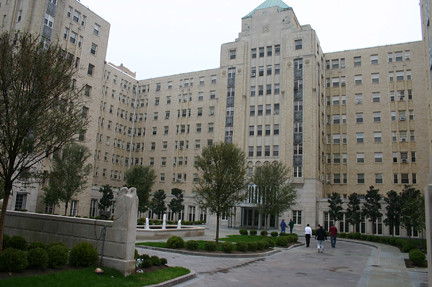
Of course, there are plenty of examples of successful "high rise" apartment and condominium projects all over the country, from apartment buildings along 16th Street or Connecticut Avenue in DC, to the exclusive condominium buildings on Lake Michigan in Chicago or high-end housing in Manhattan, and comparable housing in those and other cities around the country.
Kennedy Warren Apartments, Washington DC
Kennedy-Warren Apartments, Washington, DC.

In short successful housing isn't merely a function of its form--design is not destiny--it's also a function the economic and social mix present within the communities.

We call this demographics, but what if "the demographics" of the tenants aren't favorable to the development of strong public housing communities?

Do we take that for granted, or do we work to build the systems and programs, what we might call the "social infrastructure," that might be needed to seed and build community?

Neal Peirce has a column, "A Nation of Public Housing," about public housing in Singapore. Singapore, known for strong "social control" systems and social engineering (you go to jail for littering, etc.) extends this to their public housing programs.

Most housing in the city-state is publicy provided.  There are strict guidelines for getting in--you have to have a job and be married (unless you're 35+ years).

The Pinnacle @ Duxton – The tallest public housing project in SingaporeFlickr image by William Cho of The Pinnacle@Duxton housing project in Singapore.

The housing is well designed, but all towers, given the city's population density.  From the article:

Plus, Singapore is redefining public housing design in a dramatic fashion. Standing at ground level, one gasps with amazement at the height and drama of the new Pinnacle housing project, opened in 2009 on a prime center-city piece of land.

And why? Soaring upward from ground level are no less than seven 50-story apartment towers. And “not just towers” — the seven as actually linked, made a single community and project, because they’re connected by skybridges. One, on the 26th floor, offers residents a children’s playground, an outdoor gym, and a quite amazing 800-meter long jogging track. And on the 50th floor, there’s a sky garden and 360-degree viewing deck.

It’s in the nature of high-rises to be far more impersonal than communities of more human scale. But of one plans high-rises with care — social as well as physical — the results can be highly positive. And as the world — Asia a prime example — adds billions more people, attractive and livable high rises can make a dramatic difference.

There are a variety of unit sizes, and the cost is about 20% of household income, and people can "move up" to larger units or different communities as their households and lives change.  Singapore also subsidizes social clubs of all types, and these programs are also present within public housing projects.

The public housing program also confers to the tenant a kind of ownership interest in the apartment that can be sold, which helps build not only the "sense of ownership" that is the heart of US housing policy for owner-occupied housing but financial equity and household wealth.

While public safety systems and penalties reduce the kind of vandalism and decline often associated with public housing in the United States and in Europe, the ability to generate a type of ownership equity (not unlike how "rent to own" programs are used to sell properties in weak real estate markets) means that renters are incentivized to take good care both of their units and their social housing community more generally.

Getting back to the New York Times article, which was taken by people as a defense of modernism, as the writer made the point that the issue with Pruitt-Igoe wasn't modernism per se, but how the project was conceived and executed.  From the article:

Like Pruitt-Igoe, Penn South was a midcentury slum-clearance project. Designed by Herman Jessor as a modern cooperative for working class families, backed by the International Ladies Garment Workers Union, it called for 10 buildings spread across 20 acres between Eighth and Ninth Avenues, from 23rd Street to 29th Street. It was not public housing. Two bedroom apartments cost $3,000 when the complex opened in 1962. (Those same apartments now sell for $100,000.) President John F. Kennedy stood atop a flag-decked dais in the bright May sun to dedicate it. 

Steady income from maintenance payments and retail units in commercial buildings the co-op owned guaranteed Penn South a stable income. Tax relief from the city shielded it from escalating real estate values. Residents poured money into improvements. Repeatedly they declined the right to sell their apartments at market rates, preserving the ideal of moderate-income dwellings, adding facilities for toddlers and the elderly, playgrounds, a community garden and a ceramics studio.


But he glosses over the "ownership" piece, although he does make the point that the federal housing program was restricted in its ability to develop complete communities in the face of opposition by anti-housing forces nationally and locally, and that by comparison Penn-South is owner occupied and run as a cooperative venture by the tenants while Pruitt-Igoe was managed by outsiders (in this case the local housing authority) as "public housing." 

So the Penn-South cooperative used the revenues from the project to reinvest in community-oriented improvements, such as playgrounds, while public housing developments typically don't have that option.

Note also that the point about inclusion of retail is important.  This typically is considered illegal as part of federally-supported housing projects, which I think is a mistake.  If retail can be sustained as part of a project it should be included, not unlike the little shopping center at the heart of Old Greenbelt in Maryland.  After all, as Professor Alex Wall says "commerce is the engine of urbanism."  In Penn-South and Greenbelt, retail spaces also generate revenue that supports other civic and community priorities and investments.

While form is important, e.g., the "lessons" learned by Oscar Newman in what he called "Defensible Spaces", I think that the real lesson is that the importance of form is not merely about the physical, but extends to "soft" form issues and includes social, economic, and programmatic elements of form as well.

Without attention to all the elements that construct positive community, negative community can be generated just as easily, generating havoc and deterioration. 

Lessons

1.  Commit to the creation of high quality housing that lasts as opposed to value-engineered construction that doesn't last (the money might not be there for rebuilding when the time comes...);
2.  Inclusion of civic amenities (playgrounds, etc.) built into the project to build complete communities;
3.  Complementary social and community support and development programs;
4.  Provision of a variety of housing sizes and places to live;
5.  Elements of ownership: tenant has equity position/ownership interest in the property which can be sold/transferred, and contributes to the household wealth portfolio;
6.  Depending on the location of the project, integration of retail and other commercial spaces.

Labels: , , , , , ,