Rebuilding Place in the Urban Space

"A community’s physical form, rather than its land uses, is its most intrinsic and enduring characteristic." [Katz, EPA] This blog focuses on place and placemaking and all that makes it work--historic preservation, urban design, transportation, asset-based community development, arts & cultural development, commercial district revitalization, tourism & destination development, and quality of life advocacy--along with doses of civic engagement and good governance watchdogging.

Saturday, March 14, 2009

Should every public space be programmed?

This article in the Boston Globe, "Not happy with restaurant offering," discusses how some residents oppose converting a pavilion on Long Wharf to a restaurant, arguing that having a regular place without glitz is worthy in and of itself, that there is room for "quite" public space.

I have some sympathy for this position. Every space doesn't need to be programmed, include piped in music, etc.

Labels: , ,

Friday, June 06, 2008

Explore the Anacostia River for fun and in terms of thinking about the connection of the city to the water

---------------
The post below is from August 2006, but is worth repeating in the context of this item from today's Washington Post Weekend Section, in the "In Town" feature on page W3:

Row, row, row your boat gently down the Anacostia. Don't know how? Here's your chance to learn.

The Anacostia Community Boathouse Association and the
Capital Rowing Club host National Learn to Row Day[, on the Anacostia River in Washington, DC] a clinic to introduce residents to rowing, including technique, equipment and on-the-water instruction. Saturday from 10 to 4 at the Anacostia Community Boathouse, 1115 O St. SE. FREE

This sounds like a lot of fun, but I am spending all weekend dealing with new house issues.

-----------------

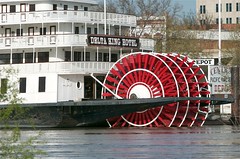
Delta King Hotel
Originally uploaded by MousseFromSacto.

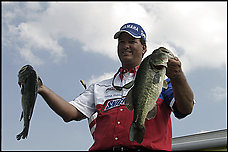
For Stren Series, Anglers Hit the Potomac.jpgChris Baumgardner of Gastonia, N.C., finished in second place on the third day of the tournament. (Photos By Dayna Smith -- The Washington Post)

The Sacramento riverboat hotel, Delta King, image by MousseFromSacto via Flickr.

1. A couple weeks ago, Charles County sponsored an fishing contest. How's the fishing in DC? Enough for competitive fishing on the Outdoor Life channel? See "For Stren Series, Anglers Hit the Potomac," from the Post.

2. DCist has a pretty good idea about the two finalists competing for the contract from the Anacostia Waterfront Corporation to rebuild the Southwest DC Waterfront--in the blog entry "A New Anacostia Waterfront Imagined," they put the two proposals online:

The presentations by the two can be viewed here and here, though beware -- they're large .pdf files.

I haven't reviewed both proposals yet, but I was pleasantly surprised by the one I did page through, the PN Hoffman-SBER proposal, which includes a variety of participants including the Project for Public Spaces, and a number of educational and cultural offerings.

3. Speaking of educational and cultural offerings, and thinking more than just about a riverboat hotel or hostel, and maybe even a warship. (I know these are pretty typical.)

Sacramento has such a hotel (see "Sacramento digest: Riverboat's new manager") apparently there are hostel houseboats in Europe, and Calvert County Maryland is working to land a battleship as a tourist attraction. See "Some See Future for Destroyer in Solomons" subtitled "Backers Want to Turn Ship Into Museum That Allows Students to Stay Overnight."
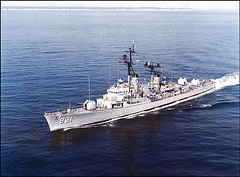
PH2006071900037.jpgCalvert County commissioners are considering a proposal to dock the USS Forrest Sherman in Solomons. (USS Forrest Sherman Foundation)

(Also see "Naval Warship Museums Problems And Potentials.")

4. Maybe a way to get around the gaming thing would be to do what they did in Mississippi (until Hurricane Katrina), allow gaming on boats in the Gulf of Mexico. How about a gaming cruise on the Potomac? (I am not likely in favor of such.)

5. And speaking of the waterfront, one of the Commissioners of the DC Commission on the Arts and Humanities, Carl Cole, makes the point that DC doesn't have a "port authority" to deal with such issues, such as promoting river-based business.
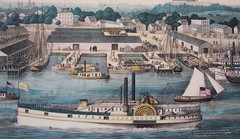
Maritime Heritage of Southwest DCThis image of Maritime Heritage in Southwest DC is cropped from a history trails sign.

See "Cruising the Midwest," an AP story that appeared in today's Express. Note that there used to be a big trade in boat-ship based travel out of DC. One of DC's first African-American millionaires, made his money in the steamboat trade. In the midwest, the Great Lake Cruising Coalition works to make river- and lake-based boat tourism a reality.
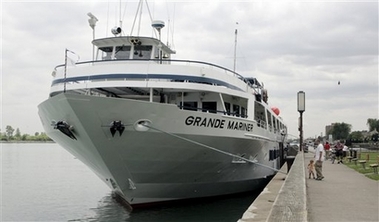
Great Lakes Cruises on Yahoo! News Photos.jpgThe Grande Mariner cruise ship is shown docked in Wyandotte, Mich., on June 13, 2006. By the time the Grande Mariner and its 65 passengers reach Chicago four days after seeing Detroit, they will have traveled through the Erie Canal and four of the five Great Lakes. (AP Photo/Carlos Osorio)

6. And of course, we need to link up with Prince George's County Maryland's Anacostia Trails Heritage Area, and work together jointly to promote tourism and improvement of the area. Among the many things they do (in association with the Parks Dept. of the County) are river tours of the Anacostia, starting at the Waterfront Park in Bladensburg, and going south into DC.

7. Speaking of DC, I keep meaning to mention the great efforts of Washington Parks and People and their restoration of the Watts Branch Park, now called the Marvin Gaye Park. Also see "Reviving the Roots Of an R& B Legend," subtitled "Park Could Be Homage to Marvin Gaye," and "Getting Its Groove Back," subtitled "A Park Under Restoration Will Be Renamed Today for Marvin Gaye," both from the Washington Post.
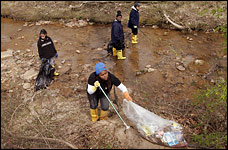
Getting Its Groove Back.jpgWatts Branch Park is officially rededicated as Marvin Gaye Park on what would have been the singer's 67th birthday. There is much yet to be done, but the 1.6-mile-long park is well on its way to being turned into what one activist calls the "east-of-the-river equivalent of Rock Creek Park." Washington Post photo.

8. And how about kayaking, faux-beaches, volleyball, and more fun stuff?
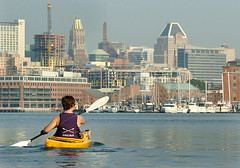
baltimoresun.com - Canton Kayak Club member.jpgA Canton Kayak Club member takes in the sunrise at the Inner Harbor. (Sun photo by Elizabeth Malby)Jul 13, 2006
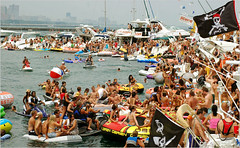
Boat rave, waterfront, ChicagoBoat rave, waterfront, Chicago. New York Times photo.
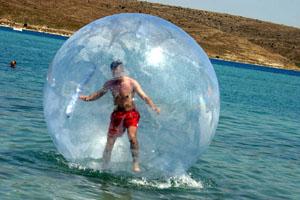
Water ballWater balls...

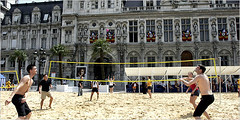
Paris Plage, Urban BeachParis Plage, an August urban beach tradition. Bernard Bisson, Getty Images.

Labels: , , ,

Monday, July 16, 2007

10 STEPS TO GOOD URBAN PLANNING

(This is reprinted from the Philadelphia Daily News)

By HARRIS STEINBERG

Editor's note: Foxwoods casino will be presenting its building and design plan to the Planning Commission tomorrow, so we wanted expert advice on how to judge the value of this and other major city design proposals. We asked Harris Steinberg, director of PennPraxis of the School of Design at the University of Pennsylvania, who, since October, has been working with the commission and a 46-member advisory group to shape a civic vision for the central Delaware (from Allegheny to Oregon, and the river to I-95). (Learn more about the project at www.planphilly.com). Here are 10 steps to good urban planning:

1. STREET SMARTS

Does the project respect the Philadelphia block structure or does it sprawl over many acres? Does the building squarely meet the sidewalk or float in a suburban-style landscape?

Philadelphia city blocks are easy to walk along with a fine-grained city street grid that disperses multiple building uses and traffic efficiently.

2. DOES SIZE MATTER?

How big is the project? Macy's and Wal-Mart are both big retail boxes but Macy's (the old Wanamaker's) sits on a city street with parking below grade and shop windows on the sidewalk. Wal-Mart is an island surrounded by a sea of surface parking. Which would you rather walk past?

3. CITIES ARE FOR PEOPLE

Cities and riverfronts are made for people. Is the development pedestrian-friendly, designed in a way that will encourage walking, biking, strolling and jogging? Is there public art to lift the spirit?

Do the public spaces encourage people to linger and socialize or is it a gated community designed to keep the public out?

4. WATERFRONT TRAINING

Does the development support public transit, or is it solely dependent on cars? Look for development that reduces our carbon footprint and promotes mixed-use, transit-oriented projects.

5. PAVING PARADISE

How are cars handled? Are they parked discretely out of sight, underground or behind buildings? Or is the site overwhelmed by parking (on the surface or in garages)? Storing cars takes up a lot of room and sucks the vibrancy out of urban areas.

6. SELF-AWARENESS

Can you see the water from the street or does the development create a wall between the public and the water? Think about how you don't know there's an ocean out there when you drive down Pacific Avenue in Atlantic City. You want to be able to see the river as you move along the river.

7. EDGE CONDITION

Public access to the river's edge is your right. After all, the river's edges are held in public trust by the commonwealth for the people of the state. Make sure that development allows you to gracefully get to the water to boat, fish, relax and exercise. And once you're there, make sure you can walk and bike north and south along the river.

8. WHERE'S THE BEEF?

What does the ground floor of the development look like? Are there shops and cafes, hair salons and dry cleaners? Or are there blank walls, mechanical rooms, loading docks and parking garages. Make sure that the ground floor has active, people-oriented spaces and places.

9. BUILD ON THE PAST

Does the development respect our history or destroy it? How are existing structures from the industrial past used in the new development? Will the new building be a future landmark?

10. RESPECT FOR THE RIVER

The river and its edge are part of a significant ecosystem. Does the development respect the watershed? Does it skillfully manage storm water, reduce greenhouse gases and contribute to the quality of life of the river wards?

These are the basic building blocks of sound urban planning. They put people first. It's the city's job to establish the street grid, create parks and open spaces, and lay down rules that the development community follows. It's the developers' job to build projects that respect the public's right to live, work and play along generous streets, sidewalks and public spaces that connect us with the river and each other. *

The Central Delaware Advisory Group meets on July 23, 8 a.m., at 1515 Arch St., 18th floor. The public is invited.

Labels: , ,

Monday, May 28, 2007

Fishing in DC

Somehow I missed this, from "Angry star can't hold candle to fish," in the Baltimore Sun.
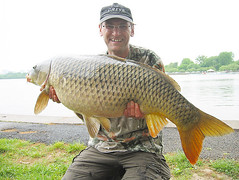
Carp-In at Washington's Tidal Basin.
John Tillbrook of England shows off the 38-pound carp he caught Saturday May 5th, during the Carp-In at Washington's Tidal Basin. (Photo courtesy of Mark Metzger via Baltimore Sun. May 8, 2007

Labels: ,

Tuesday, May 08, 2007

Speaking of the Anacostia Waterfront (a/k/a another meeting I will miss)

From Jeff Davis, Ward 6 Neighborhood Planner, 202-442-7704:

Hill East Waterfront Zoning Meeting - May 16 - 6-8:30 PM
Mt. Moriah Baptist Church, 1636 East Capitol Street

Brought to you by the
DC Office of Planning in conjunction with the Anacostia Waterfront Corporation

- 6:00-6:30pm Open House (to look at boards/presentation materials
- 6:30-8:00pm Meeting ,

NEA presentation will be given on the proposed zoning of the Hill East Waterfront, also known as Reservation 13. The intention of the zoning langauge is to create a framework in which the Public Reservation 13 - Hill East Waterfront Draft Master Plan can be implemented. Please come and let us know if we have got it right. Tell your neighbors, and bring a friend! For more information or to RSVP, please contact Jeff Davis.

Labels: , , , , ,

Bike Tour: the Good, the Bad, and the Ugly!Urban Design and Transportation Planning along the Anacostia River Waterfront

From Chris Carney of the Sierra Club:

Saturday AM, May 12. Meet at Eastern Market (Orange/Blue) - Washington, DC. Join us to explore transportation, urban design, and other environmental issues (by bike!) on both sides of Anacostia River between Benning Road and 11th Street. Enjoy about seven miles in roughly two hours of scenic views with several stops to discuss the ways in which the built environment affects the quality of life. RSVP for start time: contact Chris Carney at 202-237-0754 or Ralph Garboushian at 202-674-3027.
--------
One thing I am really not up to speed on are plans for the Anacostia River. Too much to try to keep track of...

Labels: , , , , ,

Sunday, February 25, 2007

2 things to learn from Baltimore's Harborplace

From "Brewery's lease could shake up Harborplace roster again," in the Baltimore Business Journal.

1. As always, about the loss of authenticity. Hey, I like Capitol City Brewing Company, but Baltimore has its own brewing history, which could be utilized to develop brew pub "concepts." But having a tapas place, Irish bar, etc., hardly makes the Inner Harbor any different from anywhere else.

2. Interestingly, the rents in Harborplace and near Harborplace run $35-$40/square foot according to the article.

Rents are key. Why is it that rents in marginal commercial districts in DC are about $30/square foot?

See:
-- Retail and Authenticity: Continued
-- (Why aren't people) Learning from Jane Jacobs
-- Is there a link between historic designation and chaining up of retail in neighborhood commercial districts?
-- Dupont Circle's changing retail environment covered in today's Post
-- Nurturing independent retailiers through creatively reducing capital requirements
-- (Why aren't people) Learning from Jane Jacobs revisited
-- Clarendon (Arlington Virginia)
-- Forcing Displacement by the disconnection of tax assessment models from public policy goals;
-- Testimony -- Historic Neighborhood Retail Business Property Tax Relief Act
-- (and this shorter sum up) Globalization of the DC real estate market catches neighborhood commercial districts up in the wake.

Labels: ,

Saturday, February 24, 2007

How to Turn a Waterfront Around

PPS's newest e-newsletter edition is about Waterfronts. This particular article lists 13 key steps for turning waterfronts around. Because it's really about "rebuilding" or "strengthening" places, for the most part, the points are universal.

1. Make public goals the primary objective
2. Create a shared community vision for the waterfront
3. Create multiple destinations: The Power of Ten
4. Connect the destinations
5. Optimize public access
6. Ensure that new development fits within the community's vision
7. Encourage 24-hour activity by limiting residential development
8. Use parks to connect destinations, not as destinations unto themselves
9. Design and program buildings to engage the public space
10. Support multiple modes of transportation and limit vehicular access
11. Integrate seasonal activities into each destination
12. Make stand-alone, iconic buildings serve multiple functions
13. Manage, manage, manage

Another article in the issue, "Mistakes by the Lake, River, or Sea," complements the other. Too often people focus on the good, without calling attention to the mistakes.

Where Waterfronts Go Wrong

Mistake #1: Single-Use Developments, Not Multi-Purpose Destinations
Mistake #2: Domination by Autos
Mistake #3: Too Much Passive Space or Too Much Recreation
Mistake #4: Private Control, not Public AccessMistake #5: Lack of Destinations
Mistake #6: A Process Driven by Development, Not by Community
Mistake #7: Design Statements

Labels: ,

Wednesday, August 23, 2006

Anacostia roundup


Delta King Hotel
Originally uploaded by MousseFromSacto.

For Stren Series, Anglers Hit the Potomac.jpgChris Baumgardner of Gastonia, N.C., finished in second place on the third day of the tournament. (Photos By Dayna Smith -- The Washington Post)

The Sacramento riverboat hotel, Delta King, image by MousseFromSacto via Flickr.

1. A couple weeks ago, Charles County sponsored an fishing contest. How's the fishing in DC? Enough for competitive fishing on the Outdoor Life channel? See "For Stren Series, Anglers Hit the Potomac," from the Post.

2. DCist has a pretty good idea about the two finalists competing for the contract from the Anacostia Waterfront Corporation to rebuild the Southwest DC Waterfront--in the blog entry "A New Anacostia Waterfront Imagined," they put the two proposals online:

The presentations by the two can be viewed here and here, though beware -- they're large .pdf files.

I haven't reviewed both proposals yet, but I was pleasantly surprised by the one I did page through, the PN Hoffman-SBER proposal, which includes a variety of participants including the Project for Public Spaces, and a number of educational and cultural offerings.

3. Speaking of educational and cultural offerings, and thinking more than just about a riverboat hotel or hostel, and maybe even a warship. (I know these are pretty typical.)

Sacramento has such a hotel (see "Sacramento digest: Riverboat's new manager") apparently there are hostel houseboats in Europe, and Calvert County Maryland is working to land a battleship as a tourist attraction. See "Some See Future for Destroyer in Solomons" subtitled "Backers Want to Turn Ship Into Museum That Allows Students to Stay Overnight."
PH2006071900037.jpgCalvert County commissioners are considering a proposal to dock the USS Forrest Sherman in Solomons. (USS Forrest Sherman Foundation)

(Also see "Naval Warship Museums Problems And Potentials.")

4. Maybe a way to get around the gaming thing would be to do what they did in Mississippi (until Hurricane Katrina), allow gaming on boats in the Gulf of Mexico. How about a gaming cruise on the Potomac? (I am not likely in favor of such.)

5. And speaking of the waterfront, one of the Commissioners of the DC Commission on the Arts and Humanities, Carl Cole, makes the point that DC doesn't have a "port authority" to deal with such issues, such as promoting river-based business.
Maritime Heritage of Southwest DCThis image of Maritime Heritage in Southwest DC is cropped from a history trails sign.

See "Cruising the Midwest," an AP story that appeared in today's Express. Note that there used to be a big trade in boat-ship based travel out of DC. One of DC's first African-American millionaires, made his money in the steamboat trade. In the midwest, the Great Lake Cruising Coalition works to make river- and lake-based boat tourism a reality.

Great Lakes Cruises on Yahoo! News Photos.jpgThe Grande Mariner cruise ship is shown docked in Wyandotte, Mich., on June 13, 2006. By the time the Grande Mariner and its 65 passengers reach Chicago four days after seeing Detroit, they will have traveled through the Erie Canal and four of the five Great Lakes. (AP Photo/Carlos Osorio)

6. And of course, we need to link up with Prince George's County Maryland's Anacostia Trails Heritage Area, and work together jointly to promote tourism and improvement of the area. Among the many things they do (in association with the Parks Dept. of the County) are river tours of the Anacostia, starting at the Waterfront Park in Bladensburg, and going south into DC.

7. Speaking of DC, I keep meaning to mention the great efforts of Washington Parks and People and their restoration of the Watts Branch Park, now called the Marvin Gaye Park. Also see "Reviving the Roots Of an R& B Legend," subtitled "Park Could Be Homage to Marvin Gaye," and "Getting Its Groove Back," subtitled "A Park Under Restoration Will Be Renamed Today for Marvin Gaye," both from the Washington Post.
Getting Its Groove Back.jpgWatts Branch Park is officially rededicated as Marvin Gaye Park on what would have been the singer's 67th birthday. There is much yet to be done, but the 1.6-mile-long park is well on its way to being turned into what one activist calls the "east-of-the-river equivalent of Rock Creek Park." Washington Post photo.

8. And how about kayaking, faux-beaches, volleyball, and more fun stuff?
baltimoresun.com - Canton Kayak Club member.jpgA Canton Kayak Club member takes in the sunrise at the Inner Harbor. (Sun photo by Elizabeth Malby)Jul 13, 2006

Boat rave, waterfront, ChicagoBoat rave, waterfront, Chicago. New York Times photo.

Water ballWater balls...

Paris Plage, Urban BeachParis Plage, an August urban beach tradition. Bernard Bisson, Getty Images.

Labels: , ,