Rebuilding Place in the Urban Space

"A community’s physical form, rather than its land uses, is its most intrinsic and enduring characteristic." [Katz, EPA] This blog focuses on place and placemaking and all that makes it work--historic preservation, urban design, transportation, asset-based community development, arts & cultural development, commercial district revitalization, tourism & destination development, and quality of life advocacy--along with doses of civic engagement and good governance watchdogging.

Saturday, July 19, 2008

B'more and the DIY culture #3

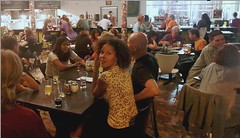
The Dogwood restaurant is a hip place in Hampden, on "The Avenue," 36th Street. Hampden Village is a creative commercial district near the Johns Hopkins Campus, south of Roland Park and The Rotunda, not too far from Penn Station and downtown.

The daytime restaurant is less expensive, more deli oriented. The nighttime restaurant is not cheap, uses locally sourced produce and is a hiply designed place. It was great. For a "neighborhood" restaurant, it's definitely better than most places I can think of in DC neighborhoods (not necessarily Georgetown, Downtown, or Dupont Circle, but those places are neighborhoods that are also regional destinations).

Hampden Village and Federal Hill are definitely interesting commercial districts.

Dogwood is interesting too because the chef has created a companion culinary school (not unlike what DC Central Kitchen does) that is a scholarship-based program "for those recovering from addiction, homelessness, and incarceration." The restaurant is top notch.

For years, I have suggested that culinary-school-based restaurant-education programs could be a way to bring restaurants to underserved areas in the city.

Dogwood's doing it, and the food is awesome--one of the best meals I've had the past year, including better than my b-day meal at the lamented, now closed, Colorado Kitchen. (Maybe not better than the first night of service meal at Dr. Granville Moore's on H Street NE, but in my opinion, every meal after the first night has never compared to that initial experience...)

Labels:

Saturday, September 29, 2007

Universities and urban revitalization

See "As University City expands, paradox abounds," from the Philadelphia Inquirer. The photos that accompany the story are great. The photos of the Dock Street brew pub recently opened in the area of University City discussed in the article--Cedar Park or the area around 50th and Baltimore Avenue--illustrate the importance of quality restaurants as augurs of revitalization. The article discussed how the residents had to beat back the opposition of a nearby church in order for the establishment to open.
Dock Street Brewery & Pub, Philadelphia Cedar Park neighborhood
Photo by John Costello, Philadelphia Inquirer.

-- Richard's Rules for Restaurant Driven Revitalization.

The University City Business Improvement District is also worth checking out. Rather than be funded by a slice of taxes on properties (because the nonprofit organizations that dominate University City don't want to create the precedent of their accepting being taxed), the organizations pay voluntary (but large) assessments. Members include the University of Pennsylvania, the Penn Hospital System, and Amtrak.

Click here for their current annual report.

Labels: ,

Thursday, August 16, 2007

Gastropubs

1. From Wikipedia:

A gastropub is a British term for a public house ("pub") which specializes in high-quality food a step above the more basic "pub grub." The name is a portmanteau of pub and gastronomy and was coined in 1991 when David Eyre and Mike Belben opened a pub called The Eagle in Clerkenwell, London. They placed an emphasis on the quality of food served, though The Eagle was not the first pub to offer good food.
Gastropubs usually have an atmosphere which is relaxed and a focus on offering a particular
cuisine prepared as well as it is in the best restaurants. Staying true to the format requires a menu that complements the assortment of beers and wines the gastropub offers.

2. From LA, see "The York: Your neighborly gastropub," from the Los Angeles Times.
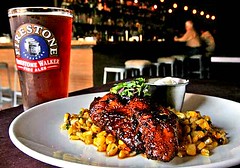
Blackened catfish, The York, Highland Park, Los Angeles
Blackened catfish is served on a bed of grilled corn kernels in brown butter. The York is open daily from 5 p.m. to 2 a.m.(Christina House / For The Times)

3. The Spotted Pig in New York, see "Behold the Gastropub," from the Online Food Section.

4. And maybe, Dr. Granville Moore's Brickyard, on H Street NE. Although they have a very small kitchen, which limits what they can do. But clearly they have a talented chef.
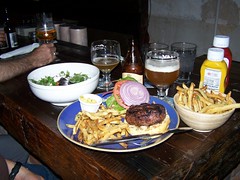
Damn good food, Dr. Granville Moore's, H St. NE

Labels: ,

Tuesday, August 14, 2007

Marginal revolution and linkage

I've never broken that mythical 1,000 unique visits/day number. I've come close a time or two, after a Wonkette listing. Marginal Revolution linked to one of my posts yesterday, and once again I was just short of 1,000 visits, maybe today?

Anyway, I sent an email to Tyler Cowen, an economics professor at GMU and author of the said blog, in response to the piece that featured him, in last week's Post Food section. It was about applying economic principles to choosing a restaurant. See "An Economist's Palate, Applied to Dining Around D.C."

His second Rule: go where there is competition, actually under-reported economic principles.

Really his point is about agglomeration economies and clustering effects (Saxenian and others). While he was focusing on "ethnic food" (and the sociological theory of invasion-succession is relevant there) the same kind of general point about agglomeration benefits can be made of the dining options available in Bethesda. The food is general, not likely to be super unique, but the number of restaurants has clustered there, to be close to large numbers of mobile residents of Montgomery County. Plus they have the Landmark Theaters and Barnes and Noble, and other attractions.

So we had an e-conversation about it... and he included a link to Richard's Rules for Restaurant Driven Revitalization.

Labels: ,

Friday, August 10, 2007

H Street, that Great Street

Frozen Tropics has a link to a Washington Post "Going Out Gurus" post about H Street evening establishments. There are a couple comments on the FT entry. All are good, about the experience on H Street, and how it is not likely to appeal to the kind of people who hang out in Georgetown a la "Late Night Shots."

Last night I was on the corridor for a moment and I noticed that while the "Brickyard" -- Dr. Granville Moore's -- was packed, many of the other establishments had but a few people inside.

That might communicate something about the need for the basics--good and interesting food and tasty drinks--which the Brickyard provides in copious quantities. That "entertainment" destinations are more likely to be lively on Friday and Saturday nights, while the neighborhood tavern-like places may be able to have decent business every night of the week.
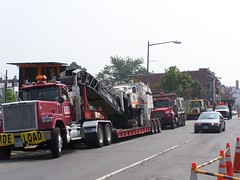
Street reconstruction on H Street
Street reconstruction is coming to H Street. In the short run, this will reduce business somewhat. In the long run, it will strengthen business.

Labels: , ,

Tuesday, August 07, 2007

Revitalizing urban commercial districts requires many things

Damn good food, Dr. Granville Moore's, H St. NE
Damn good food and drink, Dr. Granville Moore's, H St. NE

but it all comes down to attracting customers that are willing to spend money--enough money on goods and services so that businesses can pay their rent, employees, and make a profit. And when the rents are paid, the buildings can be maintained. When many businesses are successful, it's easier to attract additional businesses to vacant buildings. It's a mutually reinforcing circle.

In short you need (a lot of) customers. And customers need a reason to come and a reason to spend money.

Similarly, I've been thinking more and more about dayparts, stages in commercial district revitalization, and Jane Jacobs principle about "mixed primary uses"

From "Old Oakland becoming the place to be once again: New bars and eateries revitalize area's nightlife," from the Oakland Tribune (courtesy of DC1974):

Anchors of the first wave that finally got going in the late 1980s — the Pacific Brewing Co. (1988) and, later, Le Cheval — are still going strong. Others didn't make it when the Old Oakland energy started to sputter. It was looking pretty bad by the early 2000s, despite the hopping Farmers Market, Cafe 817 and G.B. Ratto's International Market — all of which closed by sundown. Nearby restaurants didn't stay open much later.

It was like natural selection for entertainment spots. The weak gave way, to be replaced by a new species of eateries and bars. Overall, 20 businesses have opened in the area in recent years, said Oakland's marketing manager, Samee Roberts.

Creating a night life to attract a younger crowd was the key to surviving since 2000, said Ken Ham, owner of the Grand Oaks Grill and Bar on Washington Street at the lower end of Old Oakland's borders (7th to 10th streets between Broadway and Jefferson).

Catering to the lunch crowd from the nearby shops and offices puts money in the till. But it's booze that turns a real profit.
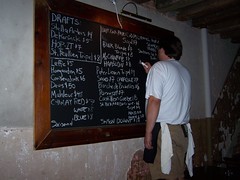
Writing on the Chalkboard, Dr. Granville Moore's, H Street NE, DC
Writing the list of beers on the chalkboard on opening night, Dr. Granville Moore's.

I wrote a blog entry a few days ago about the new Dr. Granville Moore's on H Street, but the computer crashed... but that place illustrates the importance of creating a destination--they have excellent Belgian beers, more than 50, each with a special glass, and excellent food, focusing on moules and frites, but including fine salads, burgers, risotto, and other items.

I think it proves the point made in Richard's Rules for Restaurant Driven Revitalization that restaurants in places unable to attract customers from outside the immediate area have to have a more general cuisine. But if you are part of a destination, your business can be more specialized and become a destination in its own right. (Which illustrates Jacobs' point about places with density being able to have and support a more diverse array of choices.)

From the article:

The fringes of Old Oakland still look mangy, especially at night. The CityTeam homeless shelter has held on through it all, against the forecast years ago that it would be pushed out as the area went hip. Now city officials want to lure residents to the area. That's the impetus behind building a slew (567 to be exact) of housing units on the borders of the area. More residents (1,000 as a result of the new units) equals more business is the basic idea.

Meanwhile, Ham is toying with the idea of turning his place into a sports bar, instead of a bar and grill. "Creating night life brings people in. More people make it feel safer," he said. "The area is coming along."
Joe Englert, Dr. Granville Moore's, belgian -- soft opening
Joe Englert's decision to open taverns, music places, and related establishments in a three block area of H Street NE (note that this distance is equivalent to 6 blocks in length, one block is double sized the normal DC block, another is triple sized)--all with interesting concepts providing reasons for people to visit, consume (spend money), and come back again has accelerated the revitalization of the H Street commercial district by 5 to 7 years (in my opinion).

Labels: , , ,

Monday, July 23, 2007

What to do late at night

1. Some restaurants open all night in DC have problems. (See this piece from DCist.) But not The Diner in Adams-Morgan. Granted, late night places can be a magnet for people with problems.

2. My fondest memories from college in Ann Arbor involve diner-like places such as Steve's Lunch --where I ate my first Korean food--or Angelo's--a recorded song has been done about this place. Tastee Diner is gross by way of comparison, and Murry and Paul's in Brookland could be great, but sadly isn't the kind of place that generations of CUA students will revere. We know too about the sad demise of the Ohio Restaurant on H Street NE.
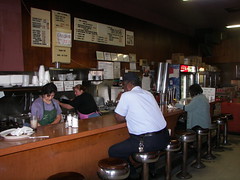
Counter, Murry and Paul's, Brookland
Counter, Murry and Paul's, Brookland.

3. DC1974 alerts us to the demise of a diner in Oakland, California. See "East Oakland all-night diner represents last of dying breed: Nikko's about the only place left in town for round-the-clock eats," from the Oakland Tribune.

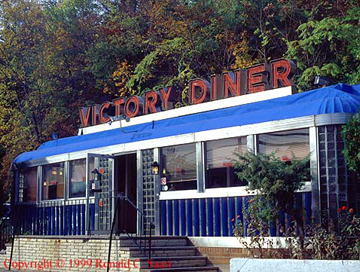
4. Which reminds me of the American Diner Museum and its list of diners for sale. Recently Peter Sefton alerted me to the availability of this place, on Staten Island currently, and available for $15,000.
Victory Diner, Staten Island
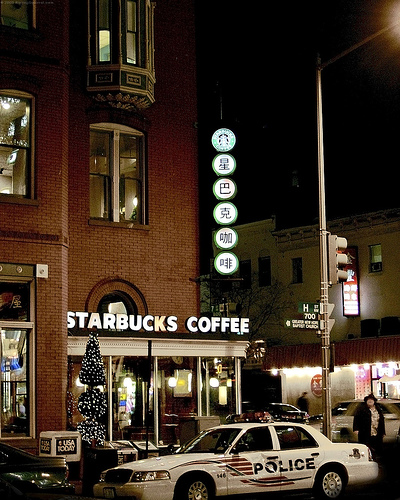
5. While the newly renamed Penn Quarter Living tells us that the 7th and H Street NW Starbucks is now open 24 hours on the weekends. See "7th And H Starbucks Turns 24 Hours On Weekends." The CVS has been open 24/7 for some time. (And they have pretty good clerks too. Things move fast despite the long lines.)
Chinatown Starbucks Coffee on Flickr - Photo Sharing!.jpg
Flickr photo by Racing Squirrel.

Labels: , ,

Thursday, July 05, 2007

Big Bear Cafe in Bloomingdale, DC illustrates two urban revitalization principles

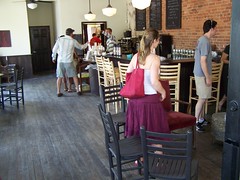
Big Bear Cafe, Bloomingdale neighborhood, DC
Big Bear Cafe, Bloomingdale neighborhood, featuring wood floors salvaged in part from Community Forklift.

Big Bear Cafe is a new coffee shop that has opened up at 1st and Florida Avenues (and R Street NW) in the Bloomingdale neighborhood. I like the vibe--wood floors, exposed brick, and nice outside seating.

The proprietors also helped bring to the neighborhood a Sunday farmers market located immediately adjacent to the Cafe on the little "stub" block of R Street between 1st street and Florida Avenue.
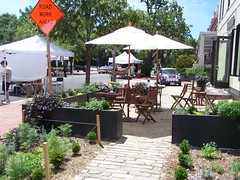
Side patio (Florida Avenue/R Street), Big Bear Cafe, Bloomingdale neighborhood, DC
Patio on the Florida Avenue/R Street NW side of the establishment.

1. Speaking of the vibe, Big Bear Cafe is an example of restaurant-driven revitalization. You need reasons for people to get out of their houses and walk to places within their neighborhoods. In places with a dearth of retail, restaurants help make it happen.

See "Richard's Rules for Restaurant-Driven Revitalization."

I always think that "quality" goes without saying but alas, it doesn't. It's key to provide high quality--not necessary at the height of design but attractive--design, food quality, and customer service.

2. Layering. Fred Kent of the Project for Public Spaces talks about layering in the article "Pride of Place: Fred Kent and the Project for Public Spaces," from the April 2005 issue of Governing Magazine. He calls for building a critical mass of attractions that bring people out and together, saying:

“If you have a children’s reading room inside and a playground outside, then you put a coffee shop, a Laundromat and a bus stop right there, you will create the busiest spot in your community.”

Coffee shop + farmers market + including outside seeing visible to others coming by + bus stop + park across the street

Well, you should get the picture.
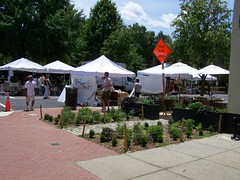
Bloomingdale Farmers Market
Bloomingdale Farmers Market.

Labels: , , , , ,

Sunday, July 01, 2007

From a walkability and the perspective of smaller scale buildings and businesses Silver Spring is grotesque

So using that as an example of how H Street NE should build parking lots to accommodate theatergoers from the suburbs is likely a mistake. See yesterday's letter to the editor by Fran Rothstein, "No Place to Park," in the Post:

I've been a subscriber to H Street's African Continuum Theatre Company for several years. Parking near the theater has never been easy, and the June 25 Business story on H Street's resurgence suggests it will only get worse. We can't even get to the theater early to park and eat dinner, because there are no restaurants, just fast-food places and bars.

Without a Metro stop and with no parking lots, H Street won't ever rival U Street, as the article claimed it does. Silver Spring is a terrific success story, yet even with a Metro stop its popularity is tied to the safe parking lots that are free on evenings and weekends.

Why not emulate that strategy on H Street?

Uh, because. Things will get better because what transportation researchers call "accessibility"--places to go and things to do--will increase, in close proximity, allowing people to travel on foot from place to place. And with a coming streetcar system, mobility--the ability to get to and from places efficiently and quickly--will only increase.

If Ms. Rothstein would take the bus she could take the 70 from Silver Spring and transfer to the X bus at 7th and H Streets NW--but it would take a long long time. The thing to do is to have shared parking systems. People are working on that. But Hechinger Mall is there with plenty of parking. Other places too. The real issue is accessibility. Likely someone like Ms. Rothstein doesn't think dinner at Cluck U Chicken is the be all and end all of a night out. Many of us have been making the same arguments for many many many years...

See "About H Street Main Street -- My opinion," originally written in August 2004.

This is interesting because a similar response happened on the HistoricWashington e-list in response to the article about testimony re: zoning (from the Current reprinted in a blog entry a couple days ago).

This was my response:

Re: In Europe people use public transportation because it is very convenient and available. It is not in the DC metropolitan area.

The whole point with transportation policy [in DC] is to focus on DC. My area of focus isn't the metropolitan area. The most significant part of my testimony wasn't recounted in that article. That is that transportation and land use planning and zoning must be intertwined into a linked paradigm. Without doing so, DC will become more like the suburbs. That has been happening for 50 years anyway because the zoning code is oriented to support driving rather than walkability and transit.

In other writings I make the pont that at the core of the city, which I define on the northwest to be from Van Ness and to Brookland on the northeast, down to Foggy Bottom on the west and to Stadium-Armory on the east, where there are 29 subway stations, that the transit system acts "monocentrically" rather than "polycentrically." The latter is a system oriented to the suburbs, the former is a transit system for the people within that 15 square mile area.

It's interesting for me because most of the time I've lived in the core of the city--in the H Street and Capitol Hill neighborhoods--which may not have amenities (the definition of accessibility in transportation research lingo means places to go) but has urban form and density. Now I work in Brookland, which is fundamentally automobile centric--having been developed originally as a trolley suburb.

In Capitol Hill many people don't drive, or drive rarely. And people walk to places. People walk to the subway, at distances that can be much greater than 1/4 mile. In the area north of H Street, things have changed considerably since the opening of the NY Avenue subway station, and much greater use of the subway station, and people walking on the streets to and from work, is happening there. In Brookland, people walk to the subway some, but mostly people drive. You rarely see bike riders in Brookland. The commercial district is mostly patronized by drivers.

Your suggestion of not doing anything, or supporting the car, only means that automobility will supplant foot-based urbanity. I choose to not go that route. Fortunately, the car lovers aren't the ones likely to go testify before the Zoning Commission.*
--------
* That's not really true. Most neighborhood-based testimony in cases before the Zoning Commission and the Board of Zoning Adjustment ends up being very pro car.
--------

Note that supporting neighborhood commercial districts and walking communities and urban form supports historic preservation in a city where most of the neighborhoods, especially at the core of the city, were constructed before 1920.

In 2002, DC Office of Planning released a very good report on "transit oriented development."

TOD is big amongst smart growth proponents.

But the reality is that TOD is merely gussying up for the 21st century the urban and development form of the walking (1800-1890) and transit city (1890-1920) eras.

A major point that I made in my testimony is that in the context of the region, because of the density of transit connections in the core, DC once again possesses competitive advantage around mobility--the ease and speed of getting around--because of transit, whereas the auto-dependent suburbs experience more and more congestion (on roads like Rockville Pike and Rte. 7 and other key arterials) which can't be addressed in fundamental ways because it is impossible to solve focusing on cars as the solution.

The reality is that cars are the problem.

The subway can move 21,000+ people/per hour in the equivalent of one lane mile of road. A freeway can move about 2,000 cars/hour in one lane mile of road. An arterial maybe 1,300 cars/hour.

As I said in the testimony, zoning should be about maintaining, strengthening, and extending the qualities that make DC a great place to live, work, and visit.

Strengthening the urban form and mixed use principles strengthens accessiblity and makes transit more efficient.

And that's what I advocate for, along with historic preservation, civic engagement, good government, commercial district revitalization, the development of independent retail, etc.

Labels: , , , , ,

Thursday, June 07, 2007

Retaining independent retail downtown...

The Free Ride blog of the Express reports that Reeves Bakery is going to close because they can't negotiate favorable lease terms. Interesting turn of events, along with the impending closure of the independent Benson's Jewelers store on the other side of the block on F Street NW... (See "Eating Around: Reeves Bakery Is Closing.")

Indicators of the difficulties of retaining independent retailers downtown given how properties tend to be owned by national (and international) companies?
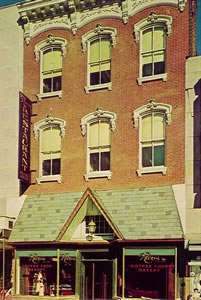
Old Reeves Bakery
An earlier edition of Reeves Bakery in an Italianate commercial rowhouse building.

Labels: ,

Thursday, April 19, 2007

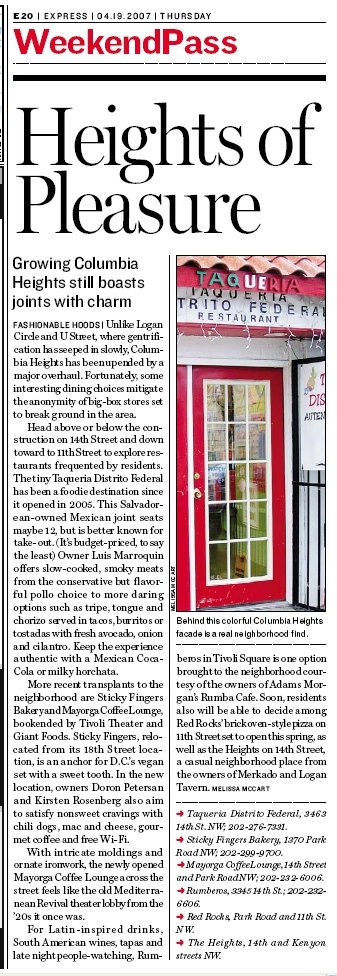
Speaking of how (independent) restaurants drive revitalization of neighborhood commercial districts

is this article from today's Express:

Restaurants Drive Revitalization

Labels: ,

Thursday, February 01, 2007

Brand promise and differentiation

AP reports, in "Seattle-Area Coffee Shops Show Some Skin," that some Seattle coffee shops are taking on Hooters-like tendencies to differentiate their store from all the other coffee shops in the Seattle region--which is the home of Starbucks.
Drive up window, The Sweet Spot Cafe drive-through espresso stand
Barista Valerie Stults is seen in the window of The Sweet Spot Cafe drive-through espresso stand, Tuesday, Jan. 23, 2007, in Shoreline, Wash. The business is one of many in the Seattle area that seek to perk up coffee sales with scantily-clad servers and special costume-themed days. (AP Photo/Ted S. Warren)

Labels:

Monday, January 29, 2007

A certified organic restaurant

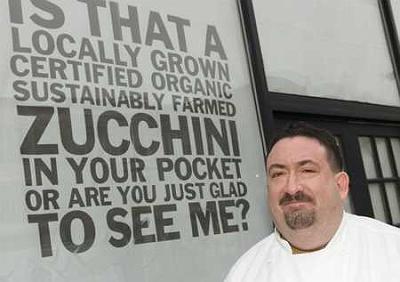
'Chef
Chef Michael Altenberg stands outside the site of his new organic restaurant "Crust" at 2056 W. Division in Chicago. (Jon Sall/Sun-Times)

According to "Wicker Park to get first organic pizzeria," in the Chicago Sun-Times, the Wicker Park neighborhood in Chicago will be home to one of only four certified organic restaurants in the U.S. From the article:

At Crust, a restaurant slated to open next month in Wicker Park, the menu will read like this: Flatbread pizzas made with organic mozzarella, organic Italian sausage and organic wheat. Organic lettuce drizzled with organic Thousand Island dressing. Organic milkshakes and organic soft drinks. For martini drinkers -- organic vodka.

But to chef and owner Michael Altenberg, long a champion of sustainable agriculture, that's still not enough. So he's going further, pursuing organic certification for the entire restaurant. If successful, Crust will be the first eatery in the Midwest -- and only the fourth in the nation -- with that status.

Labels:

Wednesday, September 07, 2005

Richard's Rules for Restaurant-Driven Revitalization (Updated)

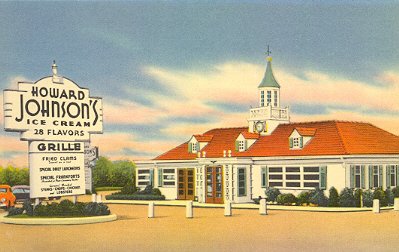
Howard Johnson's PostcardTimes Changed, but Howard Johnson's didn't.

I am updating this entry slightly with some additional points (entry originally from March)

Elise Bernard's Frozen Tropics blog cites an entry from Neal Takamoto's Cool Town Studios blog about attracting patrons to emerging urban districts.

From Neal:

Steven Gartner, president of Metro Commercial Real Estate, the revitalization of urban retail follows four phases. Gartner played a leading role in Center City Philadelphia's expanding retail scene and many of its economically-growing neighborhoods.

1. Local restaurants, started by great chefs. Or visionary entrepreneurs who know great chefs. People will venture out to on-the-edge neighborhoods for acclaimed food, often in tiny venues. They'll take even more risks for top live music.

2. Larger format restaurants that represent more of an investment and draw a larger audience from a larger geographic area. Essentially the same people as above who now have a more established customer base.

3. Locally-owned specialty retail shops, including art galleries. Yes, but only after there's a base population of diners and entertainment seekers that provide the foot traffic.

4. National chains, the risk-averse businesses that hike up rents, this only happens if there is a weak sense of community, otherwise the local residents prefer independents that support their economy and culture.
__________
I think it's important to think about this in terms of the demographic and perception status of the neighborhood. All neighborhoods and commercial districts can be categorized as healthy; transitioning, emerging; and distressed (using criteria developed by the DC Office of Planning). And each type probably can be further split into early, middle, and later stages.

Healthy commercial districts are not without issues, but the issues vary. Even a district like Adams-Morgan is probably considered transitioning, as is Barracks Row. In some respects, Richard's Rules for Restaurant-Based Revitalization apply more to transitioning, emerging, and distressed commercial districts. But that makes sense, since those are the districts most in need of "revitalizing." (For issues regarding problems engendered by the Late-Night Economy, see this entry, "Restaurants and liquor licenses", from April.)

My rules are focused on building business from the people who are already present in your retail trade area, people who aren't patronizing your commercial district, because in their opinion "there's nothing there."

It's our job as revitalizers to make sure that "the there is there."

Chef-driven restaurants aren't necessary to drive revitalization, although they are nice to have and can be decent draws--but really how great was La Brasserie at driving the growth of the 300 and 400 blocks of Massachusetts Avenue NE? Downtown is still pretty bleak at night despite the number of high quality restaurants such as Occidental, Red Sage, and others. (7th Street is a different story, see below.)

Revitalization is dependent on restaurants. A complete destination has places to see and things to do, things to buy at interesting places to shop, and places to dine.

Without restaurants, where are people going to be able to go to the restroom? If they can't go to the restroom, they won't be able to linger and spend time in your commercial district. Patrons of your commercial district will end up being very purposive--when they visit it is for a specific reason, and they leave when they are finished, without taking the time to explore and patronize other retail and service businesses in your commercial district.

Restaurants that augur revitalization have five characteristics, and these characteristics support high patronage amongst a core group of customers that will frequent the restaurant from 2-5 times/month, at least in the beginning. This level of patronage is necessary to provide the cash flow needed to stabilize the risk involved in opening up in a secondary market. Remember the 80/20 rule?--80% of your business comes from 20% of your customers. Ignore this at your peril.
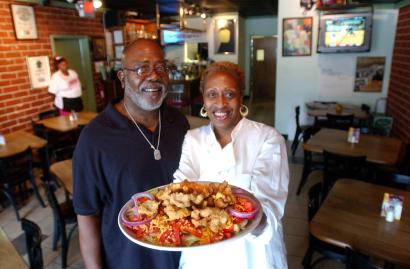
Green Apple Bar and GrillT. Levette Bagwell/AJC. Willie Broughton and his wife, Ruby, owners of the Green Apple Bar and Grill, show off a fried chicken salad on the one-year anniversary of their opening. Before he retired, Willie Broughton already had determined that he eventually would open a bar at the site.

The rules are:

1. Relatively appealing cuisine that isn't too specialized; food that is attractive to a large number of people--Italian, Mexican, and "American," seem to work best. You want at least 100 customers/nite. These days Thai food is moving into this category. Chinese seems to have lost its appeal. Restaurants like Indian, Caribbean, etc. are just a bit too specialized, and therefore don't get the weekly or at least a couple times/month patronage that such restaurants need especially when they are located in emerging commercial districts.

Think Banana Cafe, La Loma, La Lomita vs. Capitol Hill Tandoor or Phish Tea--the latter two have a cuisine specialized enough that local patrons come maybe once every couple months, so they need to draw on a much larger trade area than restaurants that have a more "approachable" cuisine.

2. Good food; it doesn't have to be stunning but it better be good. (Perhaps Mexican restaurants illustrate this point the best.)

3. Good, good plus, or better service; waiting isn't fun, and neither is dealing with a server that doesn't help you get what you want with a modicum (ideally none) of problems.

4. Competitively priced; you can't have drinks at $8 or most of your entrees costing $13-$20. If your prices aren't competitive and maybe a little less expensive than the market, you won't get that frequent patronage that is necessary for your success. Pitchers of margaritas or sangria are good, maybe not pitchers of beer, which seem to attract a rowdier more alcohol-centered clientele.

5. Nice interior; it doesn't have to be stunning or a $300,000 interior renovation, but it can't be threadbare, and it has to be appealing.

IMO, restaurants in the area like Banana Cafe, La Loma, and La Lomita exemplify these characteristics. Other restaurants and coffee places that are leading the revitalization of their commercial districts include include Tryst and The Diner which have brought life back to Adams-Morgan during the day, Boss Shepherds (now Peppers) on 17th Street NW in Dupont Circle, Dos Gringos in Mt. Pleasant (they have an absolutely killer Vegetarian Chili), and Mocha Hut and Colorado Kitchen in the greater Brightwood area.

Probably the best example in Washington, DC is Jaleo on 7th Street, which anchored the revitalization of the East End of downtown and is as significant, if not more so, than the MCI Center). Jaleo opened in 1993, years before MCI. Somehow, this restaurant is just as trendy as it was when it opened, and most every weekend they go through $100,000 worth of food (wholesale cost). Now there are a dozen top notch restaurants within a couple blocks of Jaleo, some owned by the same company like Cafe Atlantico and Zaytinya, and these restaurants rely very little on events at the MCI Center for driving patronage.

I have worked in hospitality for awhile, and I find that what distinguishes quality operations from those that struggle is a failure to focus on the guest and the guest experience. The restaurant industry is one of the most competitive retail categories but is still a retail category where independent businesses can thrive and the "barriers to entry" are surmountable.

There is a great resource for restauranteurs, a subscription website called Restaurant Owner, with scads of resources. Reading trade magazines at the very least (Restaurant Business, Fresh Cup, Specialty Coffee Retailer, etc.) is a good place to start because as I say "to stay the same is to fall behind, because your competitors are constantly improving and new places are always opening." If you don't go anywhere else, or read anything, how do you learn?
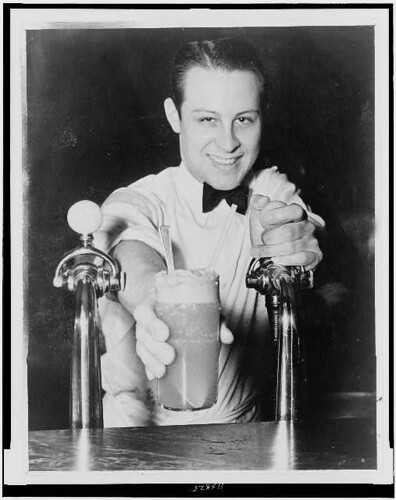
Soda JerkSoda jerk" passing ice cream soda between two soda fountains] / staff photo by Alan Fisher New York World Telegram and Sun archives. Library of Congress.

Quality restaurants share some other characteristics

1. Understanding that you work for the guest, because after all, that's who pays everybody. (I know a restauranteur desperately trying to build his bar business, but he adamantly believes that "soft rock"--remakes of the Beatles and Supertramp, and the occasional Carpenters song is the music that should be played. Compare that to the jukebox at the soon to reopen Capitol Lounge.)

2. Listening to guests and employees.

3. Taking in and responding to this feedback. If you don't respond, listening doesn't matter.

4. Never fool yourself about what quality is. We all know the saying "You can fool some of the people all of the time, but you can't fool all of the people all of the time." Well, if you are the proprietor of a small business, you can never afford to fool yourself. If you don't provide quality and you refuse to accept the truth, whose fault is failure?

5. Focus on what matters. Until you ensure that your production, service, and ordering and inventory systems work and are robust, gloss (such as balloons) is a waste of your time and energy.

6. Developing robust training and production systems. This sets you up for success by reducing the likelihood of error. The Restaurant Owner website is full of downloadable templates, manuals, and worksheets that can be customized. Weak systems put you behind before you even open your doors to today's customers

7. Having a sound business model. Understand your metrics and dayparts. Have a (business) plan based on reality and develop your business and marketing plan accordingly. It's possible to (re)build service and production systems if they are flawed. But a business model that can never yield profits is unworkable.

8. Perseverance and continuous process improvement. To repeat: to stay the same is to fall behind, because your competitors are constantly improving and new places are always opening.
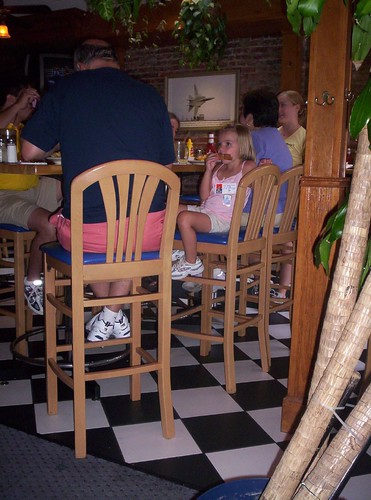
Restaurant

Labels: ,