Rebuilding Place in the Urban Space

"A community’s physical form, rather than its land uses, is its most intrinsic and enduring characteristic." [Katz, EPA] This blog focuses on place and placemaking and all that makes it work--historic preservation, urban design, transportation, asset-based community development, arts & cultural development, commercial district revitalization, tourism & destination development, and quality of life advocacy--along with doses of civic engagement and good governance watchdogging.

Friday, March 27, 2026

Urban Land Institute Technical Advisory Panel report for the Uptown neighborhood of Minneapolis

ULI is an organization of developers and other stakeholders involved in real estate development.  They have regional chapters and an annual meeting.  The Institute publishes a magazine and has an extensive publishing program, complemented by reports and works produced by the individual chapters.

Their books and reports are top notch, and read well over the years.  I've been fortunate to be able to get "media credentials" to attend local meetings, even the national, but I haven't been able to go.

Technical Advisory Panels bring together a group of members selected as knowledge experts to come up with ideas for knotty problems in communities, usually with a focus on commercial development.  (The American Planning Association, American Society of Landscape Architects, and American Public Transportation Association have similar programs.)

While years ago I found the report on what to do for DC's Central Library wanting--it illustrated a problem with planning engagements more generally, if you're given a limited scope, your ability to be visionary and expansive is significantly constrained--generally the reports are top notch, and always worth reading to boost your knowledge and get new ideas.  

WRT the library, I had better ideas ("The DC Central Library, the Civic identity and the public realm," 2011, "Civic assets and mixed use: Central Library edition," 2013).  But generally, ULI hits a lot more home runs on TAPs than strikeouts.

The Minneapolis Star-Tribune reports ("Five great ideas to improve Uptown, the Twin Cities’ most enduring commercial hub") on the release of a report (UPTOWN REBOUND: A STORY OF ABUNDANCE) for the Uptown District.  

I haven't read it yet, the ST columnist highlights five points:

  • Form a business improvement district
Gosh, this is so basic it's amazing cities have to be told.  The overarching city government generally lacks the capacity and funding to provide extranormal management and development of a city's subdistricts.  BIDs are one tool.  Main Street programs another.  And Pennsylvania has come up with a Main Street like program for neighborhoods.

-- "Basic planning building blocks for urban commercial district revitalization programs that most cities haven't packaged: Part 1 | The first six," (2020)
-- "Basic planning building blocks for urban commercial district revitalization programs that most cities haven't packaged: Part 2 |  A neighborhood identity and marketing toolkit (kit of parts)," (2020)
-- "Basic planning building blocks for urban commercial district revitalization programs that most cities haven't packaged: Part 3 | The overarching approach: destination development/branding and identity, layering and daypart planning," (2020)
-- "Basic planning building blocks for "community" revitalization programs that most cities haven't packaged: Part 4 | Place evaluation tools," (2020)
-- "Planning programming by daypart, month, season: and Boston Winter Garden, DC's Holiday Market, etc.," (2016)
-- "Richard's Rules for Restaurant (Food) Based Revitalization, Salt Lake City and DC's Chinatown," (2024)
-- "Commercial district activation issues in smaller communities: Phoenixville, Pennsylvania," (2023)

Turns out Minneapolis has a real estate firm that works on activating spaces in a curated fashion ("Max Musicant's company brings commercial spaces to life," MST).

  • Buy the Seven Points parking ramp
Photo: Eric Roper, MST.

They call parking structures ramps in Minnesota.  But owning one provides a revenue stream and a way to support parking management strategies, in a manner that can bootstrap what I call a transportation management district.  

The TAP suggests it provide free parking, but as the foundation of a shared parking system throughout the district.

  • Create a "Lake Loop" connecting Uptown to the Chain of Lakes
Lake Loop concept.  Graphic: Blake Siette, ULI.

Minneapolis is defined by its network of parks, trails, and lakes.  Apparently Uptown isn't well connected to the existing network.  
  • Rebrand Girard Avenue as "Uptown Alley"
Apparently the street is broken up here and there by more pedestrianized spaces.  The Panel recommends that this characteristic be strengthened, by converting the Avenue into a continuous people space (no cars).

Photo: Eric Roper, MST.

I think such proposals are great.  But then you really do need a BID because to be successful, such spaces need to be highly programmed and managed.

As it is, Minneapolis already has problems adequately managing Nicolett Mall ("The trouble with Nicollet Mall: It’s boring now," MST, "How to Fix Nicollet Mall," MPLS St. Paul Magazine, "Nicollet Mall needs bikes and other wheeled wanderers," MinnPost).

-- "Planning urban design improvements at the neighborhood scale: Dupont Circle, DC," (2019)
-- "More about making 17th Street between P and R a pedestrian space on weekends," (2019)
-- "Planning for place/urban design/neighborhoods versus planning for transportation modes: new 17th Street NW bike lanes | Walkable community planning versus "pedestrian" planning," (2021)
-- "Now I know why Boulder's Pearl Street Mall is the exception that proves the rule about the failures of pedestrian malls," (2005)

  • Extend the Como-Harriet Streetcar.
Apparently it's a historic streetcar operated by volunteers during the summer, on weekends.  It runs between the Lake Harriet Bandshell and a stop in front of Lakewood Cemetery. 

I didn't know they had one.  Similar streetcars operate or have operated in Dallas, Memphis, and Savannah.   

But the reporter says it could go further into Uptown and connect to the Midtown Greenway, a major cycle trail in a "ditch" that had been a railroad.  

He quotes the director of the Trolley Museum, saying they don't have the capacity or the money (an estimated $10 million) to do it.  How about not making the parking ramp free, and using some of the revenues to pay for the streetcar extension and perhaps expansion to Friday service.

Conclusion.  I definitely have to read the report.  But I can make a quick "judgement" based on the recommendations pulled out by Eric Roper (also see his article, "Momentum is building for a rebirth of Uptown").  

The report suggests multiple ways to increase access to and connectedness within the Uptown district, in part by leveraging existing resources.

Seems like a lot of exciting ideas.  I am looking forward to reading it.

Labels: , , , ,

Wednesday, January 07, 2026

Long Branch, Montgomery County: Main Street manager job | Purple Line

GGW's job listings include one for a Main Street Manager for the Long Branch district of Montgomery County, housed in the Montgomery Housing Partnership (a CDC focused on housing affordability and community building).  

I'd be interested in it because of the long term potential of the area.  Sparked by the opening of the Purple Line light rail line in 2027/2028.

Long Branch Station under construction

OTOH, Main Street managers aren't planners so much as event developers and event managers.

=======

In October 2018 ("Montgomery County Maryland Parks Department Speaker Series: David Barth, Wednesday October 3rd"), Montgomery County Parks Department brought in David Barth ("David Barth, Rest in Peace," 2022) to do consulting training with department staff and a public talk about his approach to (parks) planning called "High Performing Public Spaces".

They reached out to him via the then chair of the planning commission, because of how much I talked him up in the blog.  David sadly is no longer with us, but I learned a lot from his writings, and occasional in-person encounters at planning projects.

In 1950 an art deco shopping complex opened on Flower Avenue, anchored by a theater and a Giant Supermarket.

Where they had him do the onsite work was in Long Branch.  Long Branch is a part of Montgomery County (not Takoma Park, which it is next to) that is heavily Hispanic and more low income.  

Don't forget Takoma Crossroads.  Long Branch abuts Takoma Langley Crossroads another lower income, minority majority area, that spans both Montgomery and Prince Georges Counties.  Both areas will have Purple Line light rail stations, which will open in late 2027 or January 2028 at the latest.  Parts of the east side of New Hampshire Avenue are in Takoma Park.

One public investment is a bus transit station now, for buses but will complement the forthcoming light rail station. ("Takoma Langley Crossroads Transit Center: A Critical Evaluation").  PGC had a neighborhood investment program for the neighborhood for awhile, but the program dissipated.

New Ave initiative.  Takoma Park has a New Ave corridor revitalization initiative for the part of New Hampshire Avenue in the area within the city.  While the website hasn't been updated for years, a number of projects are underway.

There is work to create a continuous bikeway along the Avenue, although the hills are serious (e-bikes!).  And the city updated part of its master plan to address other parts of the city roughly abutting these areas, west of New Hampshire Avenue.  There is a placemaking initiative with Dance Exchange, an arts group based in the city.

The County planning department created a Long Branch Sector Plan, but in 2013.  The area is ripe for a new plan, with the coming of the Purple Line.

Long Branch is an unincorporated part of Montgomery County.  Long Branch is an area of the county that they've done more economic development investment given the area's lagging status compared to West County ("East County, Montgomery County, Maryland: Council redistricting spurs ideas for revitalization," -- I never did write the second piece, but the transformational concepts are also here, "St. Louis: what would I recommend for a comprehensive revitalization program? | Part 1: Overview and Theoretical Foundations" and "National Community Planning Month | Civic Involvement").

I can't remember if I did the site visit with them, or if I just went out there and did my own site visit and analysis (comparable to what I did in Silver Spring (or both), "Setting the stage for the Purple Line light rail line to be an overwhelming success: Part 1 | simultaneously introduce improvements to other elements of the transit network").  It seems that I never wrote it up as a blog entry.  

Later the Parks Department created an initiative to improve parks and open space in the area, which is ongoing.  

A community development corporation is needed to jumpstart development.  I advocated in the meeting for doing advance investment there in association with the Purple Line and station area planning.  They made the point that because of the economic demographics, developers weren't going to be first movers.   

That's among the reasons I advocated for a community development corporation serving the Purple Line transit shed ("PL #6: Creating a transportation development authority in Montgomery and Prince George's County to effectuate placemaking, retail development, and housing programs in association with the Purple Line," "Revisiting creating Public Improvement Districts in transit station catchment areas").
(The Montgomery Housing Partnership may be functioning like that as it relates to Long Branch.)
Equity planning.  Note that I'd been thinking about that area for awhile (I used to shop by bike in the area), contrasting Long Branch and the Takoma Langley Crossroads area (New Hampshire Avenue and University Boulevard) with DC, talking with a person working for the light rail program at the time about the concept of "Social Urbanism" as practiced in Latin America, and my grand jury experience.  This led to my writings about equity planning.

-- "An outline for integrated equity planning: concepts and programs," 2017
-- "Equity planning: an update," 2020
-- "Social urbanism and equity planning as a way to address crime, violence, and persistent poverty: (not in) DC," 2021 
-- "Black community, economic and social capital: the Englewood neighborhood of Chicago/Chicago," 2021

And yes, I used a graphic by David Barth to show how you can think about equity planning as a system.  I never redid the graphic, but I wanted to add lines (like on a subway map) connecting the "bubbles" with "subway lines" denoting transportation, education, community and social services, media, etc. laying out a way to think about all this at the community scale.

Assets.  There are some great assets in Long Branch--a library and a separate recreation center, both which could be redeveloped as more mixed use and active spaces ("Neighborhood libraries as nodes in a neighborhood and city-wide network of cultural assets").  

(New York City has done/is doing a number of projects with housing above libraries, "New library/community space + 100% affordable housing mixed use building in New York City").

The Giant supermarket is a site with a lot of redevelopment potential, as other supermarkets elsewhere in the region have been re/developed with a store on the ground floor and housing above.  

This apartment-grocery store building in Petworth DC replaced a single story Safeway that had been fronted by a parking lot.

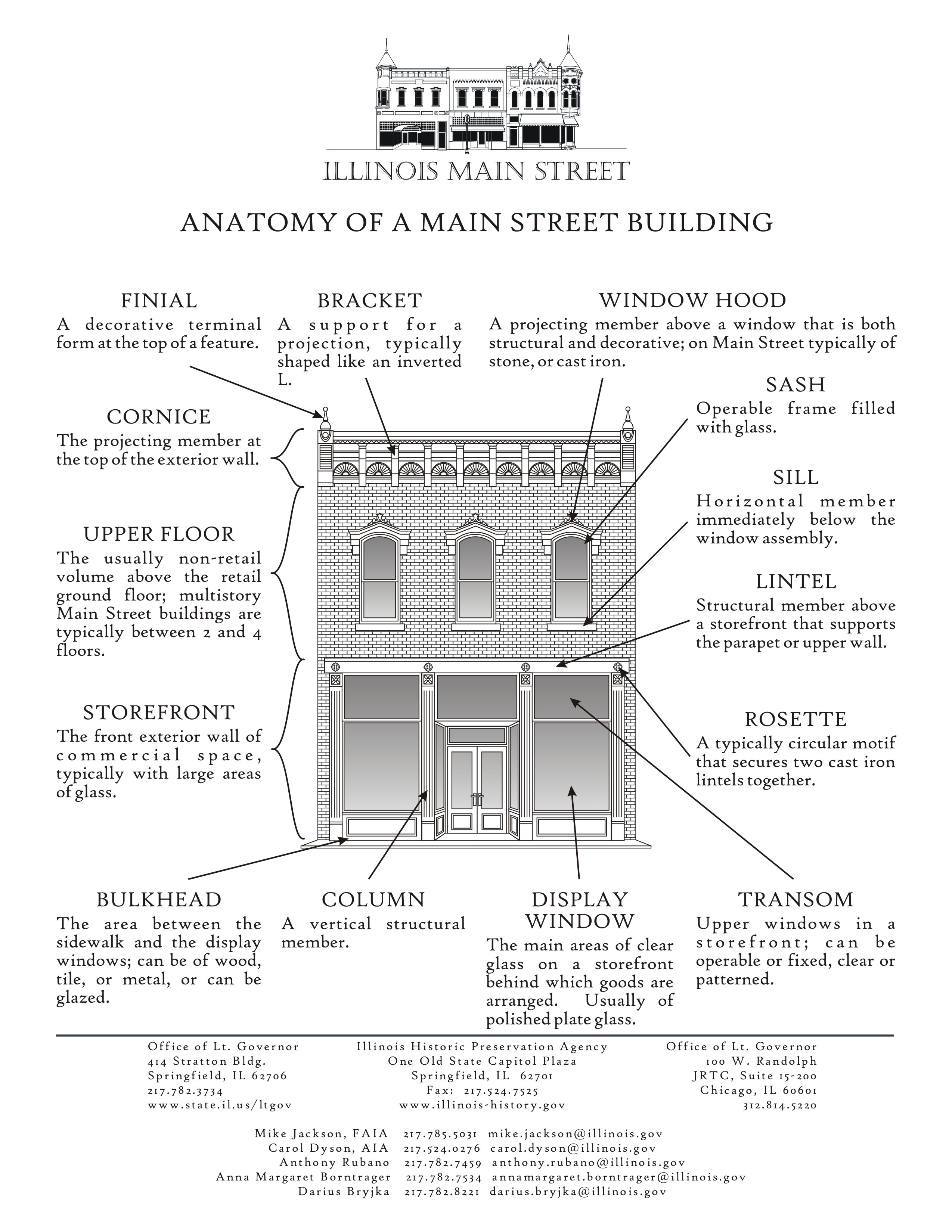
There are a nice couple blocks of traditional commercial storefronts on Flower Avenue ("a long life for long branch: tools to preserve independent retailers," UMD student studio), including the old theater that is used as a church.

If I remember right, there is other land with development opportunity in the area.

Conclusion.  Long Branch + New Hampshire Avenue + Takoma Langley Crossroads has a lot of potential.

But, like with any revitalization program, and this one doesn't necessarily have a strong plan to start out with, it will take years to come to fruition.

One more thing.  Maybe Long Branch should be annexed by Takoma Park.  Although it would mean up to a doubling of property taxes as properties would pay both the city and county tax.  That's probably no go in these times of an affordability crisis.

Blog entries outlining a comprehensive approach to commercial district revitalization 

-- "Basic planning building blocks for urban commercial district revitalization programs that most cities haven't packaged: Part 1 | The first six," (2020)
-- "Basic planning building blocks for urban commercial district revitalization programs that most cities haven't packaged: Part 2 |  A neighborhood identity and marketing toolkit (kit of parts)," (2020)
-- "Basic planning building blocks for urban commercial district revitalization programs that most cities haven't packaged: Part 3 | The overarching approach: destination development/branding and identity, layering and daypart planning," (2020)
-- "Basic planning building blocks for "community" revitalization programs that most cities haven't packaged: Part 4 | Place evaluation tools," (2020)

Blog entries outlining a comprehensive approach to neighborhood revitalization

-- "The need for a "national" neighborhood stabilization program comparable to the Main Street program for commercial districts: Part I (Overall)." (2020)
-- "To be successful, local neighborhood stabilization programs need a packaged set of robust remedies: Part 2." (2020)
-- "Creating 'community safety partnership neighborhood management programs as a management and mitigation strategy for public nuisance programs: Part 3 (like homeless shelters)." (2020)
-- "A case in Gloucester, Massachusetts as an illustration of the need for systematic neighborhood monitoring and stabilization initiatives: Part 4 (the Curcuru Family)." (2020)
-- "Local neighborhood stabilization programs: Part 5 | Adding energy conservation programs, with the PUSH Buffalo Green Development Zone as a model," (2021)

Labels: , ,

Monday, October 20, 2025

BTMFBA + programs to lease the properties to local businesses | Philadelphia

This isn't exactly a new point.  The first BTMFBA entry referenced the Paris SEMAEST program, which is a community development corporation charged with owning and renting properties and leasing them to local businesses, and less than prevailing rates, as well as supporting new business development.

The series presents entries exploring this, expanding on it, or examples that offer new wrinkles.

-- "BTMFBA: the best way to ward off artist or retail displacement is to buy the building," 2016

-- "From BTMFBA to "community right to buy"," 2024
-- "BTMFBA: maintaining arts spaces in the face of rising real estate values | Seattle, New York City," 2024
-- "New form of BTMFBA in San Francisco," 2023
-- "A wrinkle on BTMFBA: let the city/county own the cultural facility, while you operate it (San Francisco and the Fillmore Heritage Center)," 2021
-- "BTMFBA: Baltimore and the Area 405 Studio," 2021
-- "Revisiting stories: cultural planning and the need for arts-based community development corporations as real estate operators," 2018
-- "BMFBTA revisited: nonprofits and facilities planning and acquisition," 2016
-- "BTMFBA: artists and Los Angeles," 2017
-- "BTMFBA Chronicles: Seattle coffee shop raises money to buy its building," 2018
-- "Dateline Los Angeles: BTMFBA & Transformational Projects Action Planning & arts-related community development corporation as an implementation mechanism to own property," 2018

There is an article in Philadelphia Magazine, "How One Store Became Ground Zero For West Philly’s Gentrification War," about the continued failure of the commercial district of Baltimore Avenue to revive.  This is a problem throughout Philadelphia.  

Many districts were built when suburban shopping malls didn't exist, and local department stores were often anchors in local districts--long before most legacy regionally-based department store groups were merged into and branded as Macy's ("Germantown neighborhood of Philadelphia is finally improving").

The article addresses various tensions in the community wrt the improvement of Baltimore Avenue, which is in the University City District BID interest area.  

It's a surprise that they've had problems moving forward, given the various successful UCD initiatives in other areas.  

Dollar Stroll event, 2022.

And it's not like UCD isn't putting energy into the district, which is also served by trolley transit.

Tensions include:

In discussing the situation, the author contrasts with two other commercial districts in the city, Passyunk, and Kensington.  Both have locally focused revitalization organizations, which buy, rehabilitate, hold, and rent to local businesses, with rent incentives and other technical assistance. From the article:
By contrast, in South Philly the transformation of East Passyunk Avenue was underwritten by the Passyunk Avenue Revitalization Corporation, which started purchasing buildings up and down the avenue in the early 2000s, fixed them up, and rented them out at competitive rates. To this day, many of East Passyunk’s hottest properties are still owned by PARC, including the buildings that house restaurants Supérette, Mish Mish, Ember & Ash, and River Twice.
The Waxery was the Kensington Corridor Trust's first commercial tenant. 
(Photo by Melissa Simpson)
... But there are other models. The Kensing­ton Corridor Trust acquires properties in Kensington and stewards them according to a neighborhood trust model, keeping rents low and giving residents a say in what kinds of businesses open. According to their criteria: “Businesses should have a purpose that does not further denigrate or diminish the neighborhood (such as private developers, alcohol and tobacco sales or smoke shops, check casher businesses, pawn shops, cash for gold shops, smoke/hookah shops, and other extractive businesses that are predatory to the community).”
H Street NE, DC.  Interestingly, the discussion of new entrants being discount stores on Baltimore Avenue reminds me of my experience with the revitalization of H Street back c. 2002.  The first new store that entered the district after the new revitalization plan was a Family Dollar.  Most of us were extremely disappointed.

The building has housed a "variety store" for decades.  Before the company went out of business, it was a G.C. Murphy.

It took the focused investment of the Joe Englert restaurant group to shift the trajectory towards a more nightlife positioning, with the addition of multiple restaurants and taverns in a relatively short period of time ("Joe Englert, DC nightlife impresario, dies | Lessons about nightlife-based revitalization," 2020) although unbeknownst to us, in part this was subsidized by venture capital funded low cost ride hailing, since H Street could have better transit service (it's got great bus service, a streetcar, at least for awhile, and is close to Union Station's Red Line Metrorail service) ("H Street NE nightlife district, failing?,"2023).

The real problem for H Street ("Things to See & Do on H Street NE," Destination DC) is that DC is small and within a three mile distance, it faces competition from the Wharf, Downtown, Union Market, the Southeast Waterfront/Navy Yard, and Barracks Row/Eastern Market/Capitol Hill.  

But it's still a far cry from 2002, with a Whole Foods Supermarket, a great independent bookstore, taverns and restaurants, the Atlas Performing Arts Center, and other amenities.  

Which is another confirmation of the need for a plan and an implementation organization ("Updating the best practice elements of revitalization to include elements 7 and 8 | Transformational Projects Action Planning at a large scale," 2024).

Top down versus implementation versus lack of implementation.  The author, based on past experience, argues that what people think of as "top down" initiatives in East Passyunk ("Living in East Passyunk: A Neighborhood Guide," Philadelphia Magazine) and Kensington are somehow corporate and don't involve the community.  Which is completely opposite of the reality.

East Passyunk’s beloved Singing Fountain / Photograph by Jeff Fusco

It's a good contrast of why Baltimore Avenue is "down" despite its advantages of proximity to the University of Pennsylvania and other assets, while the East Passyunk and Kensington Corridors are on an upward trajectory ("Five Years In, Philly’s Kensington Corridor Trust Is Building Momentum," NextCity)--although the Kensington neighborhood has some of the worst drug problems in the US.

Besides investing in real estate, the Passyunk group uses lease revenues on public space improvement and maintenance, such as capturing an empty "triangle" and making it into a pocket park, with a "Singing Fountain."  The organization has spent a lot of time "curating the retail and restaurant mix" ("Out Passyunk Avenue leader previews continued revitalization," Philadelphia Gay News). 

Community boards.

The trust's largest acquisition has been this mixed-use building at the corner of Kensington and H Street, featuring 18 residential units and two commercial storefronts. (Photo by Melissa Simpson)

Both the PARC and KCT have community-led boards, although PARC is more corporate.  The KCT has an interesting history.  It was formed out of resident response to the plans by a neighborhood focused real estate firm, Shift Capital.  People wanted more involvement by the local community and the KCT was created out of that desire.  

The organization is led by a community board, something that the people concerned about Baltimore Avenue and its future could develop similarly.  From the article:
At the top of Kensington Corridor Trust’s structure is the actual neighborhood trust, also known legally as a perpetual purpose trust. Under the model, the trust is governed by a trust stewardship committee, which in this case consists of nine members elected from residents and local business owners within the trust’s catchment area. The trust entity holds the deeds to the properties in the portfolio, and the trust stewardship committee makes major strategic decisions like setting rents, determining what types of businesses to allow as tenants, or defining the catchment area — ensuring major decisions align with the trust’s overall purpose and goals. Last year the stewardship committee extended the catchment area by one more block along Kensington Avenue.

 Many community revitalization organizations have boards primarily made up of members from the "grassroots."  One example is the Dudley Street Neighborhood Initiative in Roxbury, Boston, written up in the book Streets of Hope: The Fall and Rise of an Urban Neighborhood.

Another is the Gateway Community Development Corporation, focused on the revitalization of the Rhode Island Avenue Corridor as it emanates from Washington, DC into Price George's County.  Years ago membership for community members was $5 and it included voting rights and the right to run for the board.  Now it's $25 but it includes other benefits.

The Neighborhood Service Districts in SF are a mix of property owners, business owners, and residents.  The Green Benefits District there has property owners, residents, and environmental advocates as members.  Etc.

Conclusion.  Baltimore Avenue's revitalization sputters because it doesn't have a focused community development group committed to buying, rehabilitating, and owning real estate, which it uses to curate and improve the commercial district.  Kensington and East Passyunk Avenue are nearby examples.

The building in East Falls where Johnny Mañana's was located (the restaurant closed in 2016).

But Philadelphia has similar examples, such as in the revitalization of the Manayunk district ("Manayunk Canal and the Schuylkill River are connected again after 85 years," Philadelphia Inquirer), East Falls ("East Falls revival may be stirring," 2008, "Town By Town: A lot is happening in East Falls,"2013, PI), Ridge Avenue in Roxborough, etc.   

I learned about East Falls at a conference in 2003, where they had just experienced the opening of a restaurant in a former check cashing outlet the year before, and they were giddy, especially in that it had patio dining.

Labels: , , , ,

Tuesday, September 02, 2025

An important quote on transit from Seattle's mayor

System map at full buildout, Seattle LINK light rail.  The distance from Downtown Seattle to Everett is about 30 miles. It's about 35 miles to Tacoma.

Apparently, there is an issue with funding and staging for Sound Transit's Seattle focused Link light rail.  Extensions recently are more about spreading the system outward, polycentrically rather than more intensively on the core of the system.  

One of the reasons it's had major ridership growth is because of extensions to major activity centers in the city, such as the University of Washington.

Years ago, a UMN Center for Transportation Studies report, Economic Impacts of Transitways, Part 1: The Hiawatha Light Rail Line," made the point that the best return on investment for transit spending was on intensifying on the core.  

But most systems that are expanding tend to have a more suburban agenda, because of politicians, and pressure to receive the same kinds of resources as the "big, bad city."  

This is a big issue with the Frontrunner rail service in the Wasatch Front.  It keeps getting extended to new urban development spots amidst the sprawl, rather than focusing on extensions to significant places, like Logan, the home to Utah State University, and intensifications in the Salt Lake Metropolitan Area (I think there should be an underground of I-80 rail line to Park City, and one under I-215 to the University of Utah campus, in particular the research park.)

Seattle mayor Bruce Harrell held a press conference on the issue in the Puget Sound region ("Mayor Harrell: Don’t backtrack on Ballard, West Seattle light rail," Seattle Times).  And he said:

“We must deliver in the densest communities with the greatest ridership,” Harrell declared, in support of the two city extensions. “It’s almost Econ 101. Go where the action is, go where the jobs are.”

Image of NoMa by Skyline Scenes.

I'm not sure I fully understood this until 2004, when the Metrorail system in DC opened its first infill station, the New York Avenue/NoMa station ("NoMa: The Neighborhood That Transit Built," Urban Land Magazine, 2004-2014 10 Years and Growing Success Built on Transit).  

It's a textbook example of this, what a former director of the Metrorail system called "developer oriented transit."

But it was already a great location, just north of Union Station, still in the core of the city.  My lesson was "transit investment when done right, is the urban revitalization intervention with the fastest return on investment."

Graphic from a 2006 Washington Post article.

One unintended consequence was that it made the north part of the H Street neighborhood more accessible to transit, leading to residential in-migration of higher income residents.

This in-migration helped the provision of retail and entertainment amenities in the area, such as a Whole Foods supermarket and an amazing independent bookshop, although the nighttime economy of H Street NE has suffered partly because of competition from other nearby districts, and the loss of ride hailing subsidies by venture capital.

The graphic only covers office space.  At least one dozen multiunit residential buildings have also been built.

Labels: , , , , ,

Monday, August 04, 2025

Two CVS sites in Boston to be converted to housing

CVS store in Petworth DC.

One of the problems in a mixed use commercial district is chain stores like pharmacies don't want to operate in mixed use multi-story buildings.  

At later stages of the development of these corporations, real estate property management shifted away from local decision making in favor of decisions made at the corporate level.

In turn, the companies often sold off their property or developed new sites with long term leases with real estate investment trusts, who wanted single use not multiuse "plays."

-- "Problematic outcomes as real estate investment trusts buy more "high street" retail real estate" (2015)
-- "Further evidence of DC being an international/national real estate market," (2018)

That means that it's very hard for a local commercial district to move a company like CVS to store site development that is mixed use.

That's a big issue in DC.  While CVS has stores in mixed use developments, they also have single site developments which they seem to refuse to be open to redevelopment.  Sites include Georgia Avenue in Petworth, Georgia Avenue in Shaw, Georgia Avenue in Brightwood Park, and on Cedar Street in Takoma.

In Baltimore, rather than build a true mixed use multistory building, CVS constructed a store with a fake second story.

IN DC's Columbia Heights there is a CVS with a true second floor rented to a charter school but I don't know the mechanics of how that happened.

But the Boston Globe ("Long a drug store, this key spot on Beacon Hill could soon be apartments") and the Boston Business Journal ("Housing work begins at former Allston CVS") have articles about projects there involving the conversion of CVS sites to multiunit housing, using the empty air space presented by the store before.

I don't know why they didn't in turn contract to move into the space as ground floor retail.  Although it could because companies like CVS and Walgreens are closing stores after a mad spree of expansion, and this is a cheap way to close a store but fortunately and inadvertently adding value to the commercial district.

I think there is something else too.  CVS was founded in Pawtucket, Rhode Island, and opened stores in Boston long before they had a national real estate development and management strategy.  My sense is that these sites in Boston were owned by local property owners that CVS engaged with early on in their development as a corporation, and those property owners were probably willing to make a deal--and let a lease run out--unlike REITs.

Visually, the new developments will be a big improvement.

And for commercial district revitalization managers, it's worth finding out how these transactions happened, in hopes that they can duplicate such changes in their own community.

CVS at 155 Charles Street in the Beacon Hill neighborhood.

It will be replaced by a 12 unit apartment building
with ground floor retail.

CVS at 1270 Commonwealth, Allston neighborhood

It will be replaced by a 206 unit apartment building with ground floor retail.

Labels: , , , , , ,

Monday, July 28, 2025

Revitalization of the wholesale food Union Market in DC to a consumer focus

Was a major project I was involved in from a grassroots perspective, in the face of an urban renewal focused effort by Ward 5 interests (bowling alley, etc.).  See "Retail planning and the Florida Market" [2009].  I'm reminded because the Washington Post had an article over the weekend about remaining wholesalers ("The last wholesalers of Union Market"), and a couple months ago there was an article about the last original vendor in the DC Farmers Market selling out ("Soko Butcher Shop Takes Over Historic Harvey’s in Union Market," Eater).

Photo: Craig Hudson, Washington Post.

Since then it has been massively revitalized, beyond anything I could imagine.  Mixing apartments and hotels, with food counters and restaurants, with a marked shift to prepared foods.

With the broadening and upscaling of the range of stores and restaurants ("All the places to eat and drink at Union Market" and "D.C.’s Minetta Tavern is an alluring chip off the old block in N.Y.," Post), you could argue that "gentrification of the market" isn't any different than urban renewal.

=====

Produce vendor Joe Giordano shown in a 1993 Inquirer Magazine feature about peaches. Michael Bryant / Staff Photographer

Cf "A landmark food business in the Italian Market has closed after a century," Philadelphia Inquirer, which discusses vacancies in a similar market there, Italian Market.  

The produce business has changed with competition from supermarkets and other retailers, of course, but more recently has suffered with the rise of delivery, said John Giordano, 64, who started working in the store at age 5 when he got home from kindergarten.

“Our business has moved into wholesale — pizza places, restaurants, and everything like that,” Giordano said Saturday, as he and workers cleaned out the property, setting out boxes of bric-a-brac salvaged from an upstairs apartment to offer to passersby. The garage doors were rolled down, unheard-of on a Saturday.

Revitalization Lessons.  In terms of Italian Market as a whole, it's proof to maintain it as best as possible, you need a manager.  In Union Market, that manager became Edens Realty which bought out one property holder with a preponderance of parcels, leaving Edens with the critical mass necessary to make significant change ("Two years in, Union Market thrives," Post, "Vendor's Game: Meet the Chef Behind Union Market," Washington City Paper).

Labels: , , , , , , ,

Tuesday, November 21, 2023

A follow up on the H Street article: Learning from Philadelphia | More sophisticated daypart, retail, cultural, and experience planning

-- "H Street NE nightlife district, failing?"

One of the problems with nightlife districts in DC is that retail wise they are unbalanced, focused on the night (not like how Wrigleyville by the Cubs Stadium changed once the Cubs moved from daytime to night time games; the retail was pushed out by taverns etc., see It's Hardly Sportin').

The problem is that even though we talk about restaurant or sports events patrons (like attendees of baseball games) also spending money on retail as part of their trips, increasingly people aren't interested in doing so.  It's why entertainment districts like Navy Yard and The Wharf in DC have pretty limited retail separate from the eating and drinking.

It might be that more neighborhood embedded districts, like Eastern Market ("Eastern Market DC's 150th anniversary last weekend | And my never realized master plan for the market") or H Street have a better shot at developing the retail offer.  But it has to be very focused.  And the advantage of people walking to and from transit stations (this benefited the small Upshur Street district on the 800 block in Petworth) has been diminished by the decline in transit use because of post-covid WFH.

Note that last weekend was Celebrate Petworth, the annual community festival.  It's much smaller than the H Street Festival, which is now the largest street festival in DC.  But maybe more attention needs to be paid to smaller events, and figuring out how to leverage the big festival for retail, not just eating and drinking.

It's even harder with the effect of e-commerce.  That being said, taverns and other nightlife establishments, hair salons, and medical marijuana dispensaries is unbalanced.  The Main Street commercial district revitalization program needs to have an active program of retail recruitment and support, and work to get area residents to patronize the retail.

WPVI-TV in Philadelphia reports on how the Center City District BID works on these issues ("Things to do in Center City Philadelphia: District seeing continued growth as number of businesses approach pre-pandemic levels").  Note that the Center City BID is one of the best in the country in terms of addressing such issues.  But the district has also had a lot more legacy retail and restaurants compared to sub-downtown districts like H Street NE.

From the article:
... Philadelphia ranks fourth in the country in the average daily number of pedestrians downtown -- behind New York City, Chicago and Boston. Those average daily numbers are considered a big deal for places like the Christmas Village at Love Park, which is filled with small businesses that are open every day through Christmas Eve. 

"A lot of small businesses don't necessarily have brick-and-mortar retail stores, so events like this are a significant source of their income," said John Oleski, owner of Kylie's Canine Treats. 

The CCD annual retail report is filled with promising signs of continued growth. Action News has been going through some of the new data and found that foot traffic in the heart of Center City reached 83% of 2019 levels, while residents reached 126%.

But the "neighborhood" Main Streets don't have the kinds of resources as a downtown focused BID like Center City.  They need more sophisticated technical and other supports from the city's planning office and small business office. 

Separately, Philadelphia is investing in Jeweler's Row to increase patronage ("City leaders plan changes to Jeweler's Row to attract more tourists in Philadelphia," WPVI-TV).  Part of the aim is to attract tourists visiting nearby Independence Hall, the National Park focused on the story of the American Revolution.  

Although it's tough to get those types of visitors to spend significant money on retail.  So called "cultural heritage tourists" are more focused on consuming places not things.

A big lesson from covid is that cities need to invest even more in their commercial districts, rounding them out as more balanced from retail and restaurants to include events and other experiences.

-- "From more space to socially distance to a systematic program for pedestrian districts (Park City (Utah) Main Street Car Free on Sundays)," 2020

Again, what is required is a much more sophisticated approach to daypart, retail, cultural, and event planning.  

It's tough in DC because there are so many smaller districts in DC outside of Downtown.  There are tons of Main Street programs, but they are more focused on events, less on planning and active business recruitment, although what I suggest in the Eastern Market piece:

Develop a premier food and retail business development/entrepreneurship program to identify and train potential business operators, to help them develop robust concepts, and to link them with space, financing and vendor support.  Complement this with business development services for existing businesses, and recruitment of existing businesses.  I would open this to anybody, whether or not they aim to open businesses in the Eastern Market district, Capitol Hill, or DC.  (I suggested something like this to the DC Main Street program in 2003, but it was too ambitious for them to understand.) 

The aim of course is to help businesses develop and be successful and to locate them in the Eastern Market district. That includes improving the merchandising abilities of the existing vendors.

Such programs and relatedly, business plan development and competitions, should really be run at the scale of a city.

Retail store development.  In terms of nurturing, growing and expanding strong retail concepts I have this piece, "Designing Brand Identity," although this table is updated, in the 2009 blog entry, "Retail and Restaurant Check Up Surveys." 

There's also a story in the Washington Business Journal, "After two decades, Old Town Alexandria's The Shoe Hive hasn't just survived — it's thrived and branched out," about a shoe store in Alexandria.

My experience in DC is that this is hard.  Some people have developed good, replicable concepts that surprisingly can work in more than one retail district.  

But they don't necessarily have the skill set to pull it off, and to differentiate between places it is more likely to work and less likely to work.

One example of such a store is Lou Lou Boutiques, which started out in Virginia horse country and now has 12 stores along the East Coast (I think some have closed, that at one point they had more than 13).  

Once it became successful, developers and retail lease brokers sought them out to open stores.  Probably with a good bit of tenant incentives--which are good, but if it's a bad location in terms of the store's business model, aren't enough.

Over the years, visiting various commercial districts, I've come across a bunch of great stores that had the ability, but not necessarily the capacity, to expand.

More on retail success.  "Why ask why? Because" (2007) was a response to criticism of the Main Street program when some businesses failed on the Brookland commercial corridor.  The point I made was that business failure needs to be understood not merely a declarative statement, and that a business support program can only do so much.  

The article outlines what a journal article called "retail mixes" but what I prefer to call retail store subsystems (using the concept of organizational subsystems as discussed in Social Psychology of Organizations by Katz and Kahn).    To the three mixes outlined in the article:

  • goods and services
  • communications
  • physical distribution
I added:
  • store operations
with the aim of helping retailers create more robust and successful business concepts and models.  The reason that the stores failed in Brookland had to do with weak systems and business models mostly, but also some certain stores needing a larger customer base (a/k/a "retail trade areas") than was proximate in the neighborhood.   From the entry:
The Rosenbloom article discusses the Trade Area Mix, linking broad market demand to the possibility of store (and commercial district) success: 
  1. Trade Area Geography: the geographical extent of the trade area
  2. Trade Area Demand: the level of consumer demand within the geographically delineated trade area
  3. Trade Area Heterogeneity: the mix of consumer market segments within the trade area and the diversity of consumer demand for products and services. The greater the demand, the higher degree of heterogeneity, characterized by more offerings.
When someone says "That store closed, the X commercial district is a terrible place to do business," the reality is a lot more complicated. Was it the owner [and management]? The concept? The commercial district? The property? Access to capital? 

And it's not either/or, it can be and/and/and... For example, the Brookland commercial district has some significant spatial and access issues. Just like I write about "intra city sprawl," commercial districts need to ensure intensity and critical mass.

Labels: , , , , , , , ,

Monday, November 20, 2023

H Street NE nightlife district, failing?

The Washington Post has an article, "H Street was once a symbol of D.C.’s rebirth. Now it’s barely holding on," about the decline of the H Street NE entertainment district in DC, because of a rise in crime, loss in patronage, and closure of many businesses.

Since my claim to fame in urban revitalization is H Street NE:

-- "360 Apartment building + Giant Supermarket vs. a BP gas station, which would you choose?," 2013
-- "The community development approach and the revitalization of DC's H Street corridor: congruent or oppositional approaches?," 2013
-- "DC and streetcars #4: from the standpoint of stoking real estate development, the line is incredibly successful and it isn't even in service yet, and now that development is extending eastward past 15th Street," 2015
-- "The streetcar and the new potential for H Street retail revitalization," 2016

this is an important piece.

My overall take is that revitalization and commercial district success requires constant, ongoing management.  You can never stop ("MAIN STREET NICHES IN A MASS SALES WORLD," Neil Peirce, 2004).

And probably the death of Joe Englert, the impresario who helped develop many of the early establishments on the corridor, many with particularly interesting and creative business models, hasn't helped.  

In a way, he did more to revive the corridor than the city or the Main Street group I helped found, as he brought buildings, capital, vendor relationships, operators, and creative concepts together in multiple locations ("Joe Englert, DC nightlife impresario, dies | Lessons about nightlife-based revitalization," 2020).  Even more than the Atlas Theater rehabilitation.  While important, it doesn't attract enough patrons to carry an entire corridor.  

As Project for Public Spaces says, you need multiple attractions.

That being said, a Reddit entry in response to the article makes some excellent points that I wouldn't necessarily have come up with, not being there any more.  Although some people said the article overstated, that it focused on business failures, and not all the businesses, many opened within the last 18 months, that are succeeding.

1.  H Street isn't well connected to the Metrorail network.  (Been addressing that for decades. That's why I advocated for the separated blue line although now I think it should be a separated silver line.)  Union Station and NoMA are on the eastern edge, and it's a long slog to walk to the main destinations on the H Street corridor.  

The streetcar that's there is poorly connected and short--it needs to be extended east and west, which the city has really screwed up on--making a one seat ride to the commercial district easy.  It's not well connected to Union Station, and alternatively could have been connected to NoMA station.  If Union Station gets expanded as is planned, that will be corrected, but that's at 15 years away.

2.  Despite the lack of a good Metrorail connection, Venture capital subsidized Uber rides back in the day made it easy and relatively inexpensive for people to get to and from H Street.  Now an Uber ride to the corridor costs $25 ("Farewell, Millennial Lifestyle Subsidy," New York Times).

3.  There's lots of competition in terms of night life districts, including the nearby Union Market and Navy Yard, both of which are much better served by Metrorail.

4.  Loss of music venues that would attract at least some people every night.

5.  More currently, inflation stoked restaurant and tavern prices has led many people to reduce their patronage of such establishments.

6.  H Street is wide and full of traffic and not so congenial for pedestrians.  Less of an issue, but an issue.

7.  Another point that's kind of interesting--commenting that residents aren't really patronizing the corridor (except for maybe the grocery stores), indirectly points out the difference between the demographics of residents versus those of commercial district patrons.  

You have to have money to be able to buy residential real estate in DC.  You have to have money to be able to afford to rent in a newly built apartment building.  So the people living in the area are maybe older and less likely to be going out to a tavern multiple times per week.  And they might rather be spending money on mortgage or rent than a high priced meal.

8.  And finally, crime.  But the other nightlife districts in DC have equally concerning crime problems too.  But no question public safety matters.  Maybe it's worth segmenting.  Crime against businesses.  And crime against patrons.  Both are bad.  Both have effects.

Ultimately, I think the two biggest issues are:

  • the poor connections to Metrorail and the squandering of the opportunity of the streetcar and 
  • the failure to do ongoing management of the offer, using daypart planning, especially in terms of maintenance of anchors to keep people coming throughout the week, not just on weekends.

Speaking of daypart and retail planning, the article says that there are 20 marijuana dispensaries on H Street.  That certainly seems like an overconcentration.  

Ironically, one of my early issues was overconcentration of liquor stores on H Street--I was even featured in a Post article about it in 2003.  Then it was about loitering, littering and crime. And I raised the issue using academic research ("Spatial dynamics of alcohol availability, neighborhood structure and violent crime," Journal of Studies on Alcohol).

Many articles on marijuana dispensaries--but this focused primarily on recreational consumption, not just medical--found a strong association with increased crime, but found it declined over time ("Marijuana Dispensaries and Neighborhood Crime and Disorder in Denver, Colo," Justice Quarterly, press release explaining the article).  

My sense, since they are "medical" and the people don't consume the stuff nearby, that it's less of an issue.  But there is probably an association with crime, and in any case this contributes to a lack of retail diversity.

But transportation is the biggest issue, better connections making it easier for people to go to other nearby districts, some of which (as I wrote about in the Eastern Market piece) are more carefully managed to be constantly "on."  

This is a derivative of "Central Place theory," which I extend some in terms of thinking about intra-city districts.  I summarize this as when you have a choice between two or more districts, you choose to visit the one that's easier to get to, with more and better options ("Updating the post The "soft side" of commercial district revitalization," 2016).

If H Street doesn't measure up, it will lose out.

An idea. The problem with the streetcar is it's truncated. Until that's corrected I would upgrade the buses on H Street--the X2 line is a workhouse, but dowdy--to double deck buses.  But the city really needs to step up on the streetcar, which it has failed at for 10+ years.

Labels: , , , , , , ,