Rebuilding Place in the Urban Space

"A community’s physical form, rather than its land uses, is its most intrinsic and enduring characteristic." [Katz, EPA] This blog focuses on place and placemaking and all that makes it work--historic preservation, urban design, transportation, asset-based community development, arts & cultural development, commercial district revitalization, tourism & destination development, and quality of life advocacy--along with doses of civic engagement and good governance watchdogging.

Monday, July 28, 2025

Revitalization of the wholesale food Union Market in DC to a consumer focus

Was a major project I was involved in from a grassroots perspective, in the face of an urban renewal focused effort by Ward 5 interests (bowling alley, etc.).  See "Retail planning and the Florida Market" [2009].  I'm reminded because the Washington Post had an article over the weekend about remaining wholesalers ("The last wholesalers of Union Market"), and a couple months ago there was an article about the last original vendor in the DC Farmers Market selling out ("Soko Butcher Shop Takes Over Historic Harvey’s in Union Market," Eater).

Photo: Craig Hudson, Washington Post.

Since then it has been massively revitalized, beyond anything I could imagine.  Mixing apartments and hotels, with food counters and restaurants, with a marked shift to prepared foods.

With the broadening and upscaling of the range of stores and restaurants ("All the places to eat and drink at Union Market" and "D.C.’s Minetta Tavern is an alluring chip off the old block in N.Y.," Post), you could argue that "gentrification of the market" isn't any different than urban renewal.

=====

Produce vendor Joe Giordano shown in a 1993 Inquirer Magazine feature about peaches. Michael Bryant / Staff Photographer

Cf "A landmark food business in the Italian Market has closed after a century," Philadelphia Inquirer, which discusses vacancies in a similar market there, Italian Market.  

The produce business has changed with competition from supermarkets and other retailers, of course, but more recently has suffered with the rise of delivery, said John Giordano, 64, who started working in the store at age 5 when he got home from kindergarten.

“Our business has moved into wholesale — pizza places, restaurants, and everything like that,” Giordano said Saturday, as he and workers cleaned out the property, setting out boxes of bric-a-brac salvaged from an upstairs apartment to offer to passersby. The garage doors were rolled down, unheard-of on a Saturday.

Revitalization Lessons.  In terms of Italian Market as a whole, it's proof to maintain it as best as possible, you need a manager.  In Union Market, that manager became Edens Realty which bought out one property holder with a preponderance of parcels, leaving Edens with the critical mass necessary to make significant change ("Two years in, Union Market thrives," Post, "Vendor's Game: Meet the Chef Behind Union Market," Washington City Paper).

Labels: , , , , , , ,

Thursday, July 17, 2025

Urban grocery stores round up

DC is overstored for grocery stores, at least west of the river, while supermarkets in the poorest area ("east of the river") are minimal.  There are so many stores that it's hard to find tenants for all the proposed spaces.  

The Washington Post article, " A developer promised a supermarket for a new neighborhood. Now it can’t deliver," describes how a developer in Greater Brookland wants to cut the size of a previously approved supermarket space by half--likely for a specialty grocer, like Sprouts, rather than a full line store like Safeway or Giant.

NYC proposes city-owned stores in "food deserts" ("New York might experiment with city-run grocery stores. How do they work?," Washington Post). Chicago has proposed something similar. I think that's insane.  Governments lack the capacity to run an operation like a supermarket which requires a lot of skill and ability to pivot--I think of DC's Eastern Market, under management by the local government real estate office as a perfect example because of their failure to act with alacrity.  

OTOH, some public markets like in Baltimore seem to be reasonably well managed.

In Seattle the large multi-store cooperative PCC has reopened a store it closed in Downtown, but with a much greater focus on grab and go and prepared foods ("PCC back in downtown Seattle with a smaller store and downsized ambitions," Seattle Times).

The PCC Corner Market, as it’s called, is roughly a third the size of its 20,000-square-foot predecessor, with a much narrower selection that the co-op hopes will outperform the original store, which closed less than two years after opening after lackluster sales. 

The new format, which focuses on deli, lunch and breakfast items, and lots of grab-and-go selections, essentially replicates what was generating most sales in the first store. Although that store’s deli did a brisk trade, it couldn’t cover the expenses of a full-sized store in the middle of downtown still missing much of its pre-pandemic workforce, Srinivasan said. “It just didn’t pencil.”

The new downtown format, by contrast, is tailored to a lunchtime worker-and tourist-crowd. There is a plethora sandwiches, hot pizza and a salad bar, but fewer dry goods and PCC staples like fresh produce and meat.

“I think this model makes a lot of sense,” added Maria Diamond, who works nearby, as she emerged from the store Tuesday. “I think the full store was a lot for this community to support.” PCC’s smaller format, its first, may also reflect moderating expectations for downtown recovery. In June, downtown worker foot traffic hit its highest level since March 2020, when COVID-19 emptied out downtown offices, but is still 66% of what it was in June 2019, according to cellphone data posted by the Downtown Seattle Association. PCC signed the lease for the original store in 2018.

(The Downtown Alliance) Rendering of a new building proposed at Salt Lake City's Pioneer Park, designed to house portions of the Downtown Farmers Market and activate the downtown green space year-round.

Salt Lake proposes a public market building at Pioneer Park ("Finally, a solution for Pioneer Park? SLC, Downtown Alliance to make it a year-round home for the farmers market," Salt Lake Tribune), home to one of the nation's best Saturday farmers markets held during the spring and summer, with an abbreviated winter market following.  

For the same reason that PCC shut their original store, customers wanting prepared foods, not foods they need to prepare. I don't think it will work.

Blocks downtown are big and a lot of the residential buildings are a ways away, so walking won't be that convenient.  

Another indicator of failure being more likely is that is food halls in Greater Downtown only have marginal success ("Food hall in SLC development closes after not getting enough customers, manager says," SLT).

The standalone location of Ruby Snaps cookies, which are sold from the shop and also wholesale.  Photo: Fransico Kjolseth.  Salt Lake Tribune).

For people not living downtown, they will have to pass dozens of grocery stores to get there--there are at least 20 supermarkets within a 3-5 mile radius of where we live plus lots of specialty stores (Hispanic, Middle Eastern, Indian, Japanese, Chinese). 

I do think a plan could work if focused on artisanal food producers like Ruby Snaps cookies ("Dough Girl's new name is a "Snap") or kolaches ("At this Sugar House spot, selling cupcakes then sandwiches then brownies have all failed. Here’s what’s next," SLT).  I say this as one standalone store focusing on brownies shut down about a year ago.

I understand the need for activation, but this isn't the solution.  I do think it could be okay on the day that the farmers market operates, but that's for a few Saturdays per year.

A kind of salvage store chain in Boston, focused on providing lower cost food for lower income patrons shut down ("Local nonprofit grocery store chain Daily Table to close all locations," WGBH/NPR).

Daily Table, a nonprofit local grocery chain in Boston, Cambridge and Salem, is closing its four locations in the coming days. With federal cuts to hunger relief programs, along with the rising prices of food and other challenges dating back to the COVID-19 pandemic, its board of directors decided to shutter the remaining locations after shrinking its footprint earlier this year.

“It’s a very sad day for us because for 10 years we’ve been able to serve communities,” Doug Rauch, Daily Table’s founder and chair of the board of directors, told GBH News. “They counted on us for truly affordable fresh fruits and vegetables — and not just fresh fruits, vegetables, but prepared meals, too.”

For the past 10 years, Daily Table has served neighborhoods across Greater Boston by working alongside each community to make affordable, nutritious food accessible to all. More than three million customers went to the grocery stores, the board of directors wrote in an email to customers.

Also see: 

-- "Grocery stores in cities: the failure of the "15 minute grocery store"," (2023)
-- "Eastern Market DC's 150th anniversary last weekend | And my unrealized master plan for the market," (2023)

Labels: , , , , , , ,

Thursday, November 11, 2021

Seattle preservation: Pike Place Market, Neptune Theater, and the Cinerama

AP photo by Ted S. Warren.

Just a couple weeks ago was the 50th anniversary of the saving of the Pike Place Market, which is one of the signature public markets in the U.S.  

The market district is known for sparking the creation of Starbucks as an international chain as well as the national Sur La Table kitchen store retail chain.

And it's one of Seattle's most visited tourist attractions, which is a strength and a weakness, in that tourists tend to not purchase food to be prepared for meals later, making it harder for fresh-food businesses to survive.

Sadly, the signature Pike Place News magazine stand closed in 2019 ("Newsstands closing in San Diego and Seattle: revisiting cultural retail planning for books and periodicals").

In the 1960s, like many other inner city landmarks, Pike Place was on the decline, and the city proposed an urban renewal project that mostly would have eradicated it.  

Councilman Sam Smith. left, and Councilwoman Mrs. Phyllis Lamphere were among the pickets at City Hall yesterday. Virtually all were protesting the Pike Plaza urban-renewal plan. Mrs. Lamphere, who supports the urban-renewal plan, was in a sense picketing pickets. At center was Victor Steinbrueck, architect and a leader of Friends of the Market, an organization backing preservation of the Pike Place Market area. Eighty to 100 persons picketed the building yesterday noon. Friends of the Market contends urban renewal would destroy the market's spirit and result in mistreatment of market-area residents and businessmen. Some city officials contend the market is in disrepair and cannot be saved without the investment of public money. 4/2/1971 (Greg Gilbert / The Seattle Times)

A community campaign to save it, comparable to similar campaigns at the time, across the country (like the one in DC that ended up saving the Old Post Office building, see "Old Post Office: This iconic building played an important part in preservation history in DC," DC Preservation League), culminated in a citizen-initiated referendum where a majority of citizens voted to save the market by rejecting the urban renewal proposal.

They created the Pike Place Market Preservation and Development Authority which owns, manages, and operates the market, but also operates low income housing as a way to help keep people off the streets.

-- Inside Pike Place Market: Building a Model Public Market into the 21st Century, digital book

In October, the Seattle Times published two articles on the anniversary ("How Seattle pulled together 50 years ago to preserve Pike Place Market — and the soul of the city" and "The Save the Market campaign taught Seattle how — and why — to fight").

2.  The Neptune Theater.  The ST also has an article about the 100th anniversary of the Neptune Theater, which opened as a movie house but today is a live performance venue ("Seattle’s Neptune Theatre, celebrating 100 years, is full of memories and magic").  

The Neptune was a movie theater for most of its 100 years, becoming a performing arts venue only in the past decade. After the movie screen was taken out, a stage was built for the live performances. The chairs on the floor, at center, can be taken out so the crowd below can stand during shows. (Ellen M. Banner / The Seattle TImes)

It's operated by the Seattle Theater Group (" Behind the screens at century-old Neptune Theatre," MyNorthwest), which also operates the Moore and Paramount Theaters.

3.  Cinerama.  A current Seattle preservation matter is how to save the Cinerama theater ("Seattle needs a hero to save beloved Cinerama," Seattle Times).  The building isn't historically designated and there is a petition to "save it."

Cinerama opened in 1963, fell into disrepair as the center city declined, and then was revived.

While it has been closed since the pandemic, you'd think it wouldn't be a problem "saving it" since it is owned by the heirs of Microsoft co-founder Paul Allen. 

But according to the paper, it's no longer of interest to the firm, which spearheaded the creation of the "SoDo district," attracting to it Amazon's headquarters and other signature tenants.  From the article:

In May 2020, Vulcan announced that it was closing its Arts + Entertainment division, as well as its filmmaking entity, Vulcan Productions. Cinerama, which was closed for renovations, was suddenly shuttered “for the foreseeable future.”

It's also an illustration of my point that community cultural master plans should incorporate broader guidance on private facilities, in case conditions change, and create city/county-wide initiatives that can buy, hold, build (if necessary), and operate cultural assets such as these.

-- "BTMFBA revisited: nonprofits and facilities planning and acquisition," 2016
-- "Revisiting stories: cultural planning and the need for arts-based community development corporations as real estate operators," 2018
-- "Reprinting with a slight update, "Arts, culture districts and revitalization" from 2009," 2019

It is interesting though on the juxtaposition of the "new" issue of the Cinerama in contrast to the anniversary of the saving of Pike Place Market.

Option 1What the "save" campaign should do is petition the Allen Family and the Vulcan firm to donate the building to a new nonprofit to run the theater, ideally with a tie-off grant to put it in a secure financial position.

Seattle already has an example of this, the Grand Illusion Theater in the University District ("Explore Seattle’s romantic — and vanishing — historic moviehouses," ST).

DC has a related but somewhat dissimilar example, but there are many across the country.  In 2001, Loews Theaters closed it and to make it harder for a competitor to use, they stripped out the seats and equipment.  Residents, fearing it would close, created an initiative that successfully bought the building and they continue to operate it today ("The Avalon Theatre Birth – and Rebirth," Historic Chevy Chase).

Option 2Work with a larger nonprofit entity, such as how the Penn Avenue Arts Initiative in Pittsburgh has supported the development of arts related anchors in their arts district ("Artists bring flourish to Penn Avenue," Pittsburgh Post-Gazette, "A Transformed Penn Avenue," Pittsburgh MagazineVacancy to Vitality in Pittsburgh’s East End: Penn Avenue Arts Initiative, case study, Metris Arts Consulting). and how the Pittsburgh Cultural Trust and the Playhouse Square CDC in Cleveland operate multiple venues ("The Howard and Lincoln Theatres: run them like the Pittsburgh Cultural Trust/Playhouse Square Cleveland model," 2012).

Seattle has analogues to Pittsburgh and Cleveland with the Seattle Theatre Group, a nonprofit operating three theaters, and the Seattle International Film Festival, which also operates three theaters.

Another option could be working with the Grand Illusion Theater.  But it seems to me like SIFF or STG would be stronger options in terms of experience in operating multiple properties.

Option 3Work with a for profit entity.  For me, the McMenamins Group comes to mind ("The McMenamin Brothers," Northwest Travel & Life).  Originally focused on Portland, today they operate cinemas, brew pubs, and inns throughout the Pacific Northwest. 

They are super focused on historic preservation ("Preserved in alcohol: Case studies of adaptive reuse projects by McNenamins, Inc.," PhD thesis). 

One of their signature properties is the Baghdad Theater in the Hollywood district of Portland, to which they added food and drink.  

The firm's interest in preserving cinemas--not all in historic buildings--has been key to the maintenance of neighborhood-based cinemas in Portland.

But the Puget Sound region has its own local cinema-focused firm, Far Away Entertainment, which is focused on preserving the operation of cinemas in smaller towns and historic buildings, including two in Seattle, the Admiral and the Varsity ("Growing Big by Sticking with Small Theaters," Kitsap Sun).

Conclusion.  Unlike many communities it seems as if there are three potentially viable options for preserving and operating the Cinerama as an ongoing cultural venue.

I would find it hard to believe that Vulcan Realty would be against exploring these options.  

Labels: , , , , ,

Tuesday, June 25, 2019

Eastern Market's business issues are more complicated than street closures on weekends

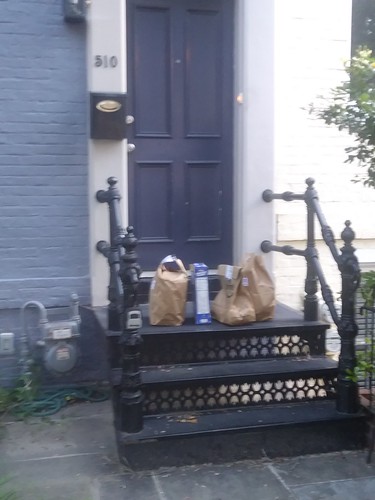
Amazon Prime grocery delivery, about two blocks from Eastern Market
Amazon Prime grocery delivery, about two blocks from Eastern Market.  (Bad photo.  I will try to capture this again.)

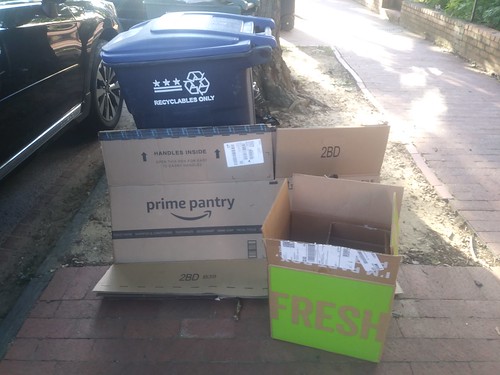
Amazon Prime Pantry and Hello Fresh boxes in recycling, Capitol Hill
E-commerce food delivery boxes in recycling, Capitol Hill.

Eastern Market is DC's primary public market.  Dating to the 1870s, it is a public food market of the type that existed before supermarkets.  In 2007 I joined the Community Advisory Committee and a few months into that tenure, the building burned and was closed for three years for renovation.

Shortly after the reopening, the Mayor (Fenty) agreed to closing on the weekends, 7th Street SE in front of the market.

7th Street SE at Eastern Market

Ever since, the inside food vendors have been fighting this, arguing that it's the primary cause of their loss of business.

I keep arguing it's a potential strength, a differentiator, and that the reason for their decline in sales is far more complicated.

Since the time I've been on the CAC, when starting out there had been 3 Safeway supermarkets and 1 specialty market (Yes! Organic Market) and no other major competitors in their "retail trade area":

- 8 new supermarkets have opened in their retail trade area (1 Safeway, 1 Giant, 3 Harris-Teeters, 2 Whole Foods, 1 Walmart)
- as well as 3 specialty supermarkets (2 Trader Joe's and 1 Aldi)
- and more stores just outside of the retail trade area
- and many more farmers markets have opened in the RTA and across the city, reducing the need for people to go to Eastern Market for "the experience"
- mainline supermarkets began delivering groceries
- alongside direct e-commerce food sales, in particular by Amazon
- and the creation of meal kits as a line of business, both through online commerce and for sale at grocery stores
- the rise in eating out-of-home (restaurants)
- as well as the rise of restaurant meal delivery
- a revitalized Union Market district
- and two other "experience" quarters have opened nearby--the Navy Yard in Southeast and The Wharf in Southwest, competing for visitors
- not to mention that increasingly, people say they don't like to or don't know how to cook.

But the reality is that the whole of the supermarket business has been roiled and no firm is immune.

Right now, the DC-Baltimore area Shoppers Food Warehouse chain is shutting down illustrates the competitive situation. Major companies like Kroger and Albertsons (owners of Safeway) are trying to figure out how to maintain success in an ultra-competitive market. Firms continue to merge or go out of business. Etc.

Granted, providing assistance to car-based customers is inadequate--although I've been arguing the market should do delivery since 2007--but closing the street is the least of their worries.  They should be figuring out why people who live on Capitol Hill aren't shopping there.

Labels: , , , ,

Thursday, December 07, 2017

A note on food halls

Dueling stories, positive ("Why Millennials, Landlords Love The American Food Hall," Bisnow) and negative ("The Inflated Promise of the American Food Hall," New Yorker Magazine) make it important to discern what's going on with food halls.

I've written about the phenomenon of food halls a bunch over the past few years.  Food halls are like public markets in that they are seemingly shared spaces, but (1) they aren't run by cities but by real estate companies, so they are very much for profit opeartions, and (2) they tend to sell prepared foods, not fresh foods.

With the demise of traditional retail, real estate developers looking to keep their properties leased and attractive have seized on food halls as "a product" ("How artisan food halls are transforming malls," JLL Real Views)..

In DC, Union Market is a food hall, and food halls are opening in the suburbs ("DC's 'Top Chef' supersizes it: A preview of Isabella Eatery," WTOP Radio). Events DC has suggested creating a food hall as part of its redevelopment of the RFK campus even though it is less than one mile from DC's Eastern Market and about two miles from Union Market.

A few months back I wrote an update to the "Richard's Rules for Restaurant-Based Revitalization" oeuvre ("Destination restaurants as a call for revisiting "Richard's Rules for Restaurant-Based Revitalization""), making three points:

  • Establishments serving regulars/neighborhood residents have a more positive impact on commercial district improvement. Neighborhood residents have different interests from "foodies" visiting a high profile restaurant in a neighborhood with which they are otherwise unfamiliar.  Residents visit and buy from other neighborhood-based retailers, if not on the same trip to the restaurant.
  • Food tourists are unlikely to support neighborhood retail. "Food tourists" choosing to eat a high profile restaurant are visiting the restaurant but not the place or what else is there. Even if they become regulars at the restaurant rather than one-time customers, they are still not likely to explore the district beyond the restaurant. They definitely aren't interested in extending their trip by shopping local retailers.
  • But the publicity value of destination restaurants can be leveraged.

Also see the 2016 piece, "Successful retail today often includes food, experiences, social elements, and isn't rote."

Similarly, we need to think in a more nuanced way about the value of food halls, for both patrons and the operators. 

While destination restaurants are great for neighborhood commercial districts in terms of generating publicity and buzz, they may not support other revitalization goals.  The same goes for food halls.  If tenancy doesn't work out for a vendor, they could lose tons of money even if the property owner still does well.
  • Food halls targeting daytime office workers are not likely to be a super good thing for operators, especially those seeking to sell unique products.  This gets back to the point about how office workers support a very narrow category of food service--quick service--and expensive eats.
  • Food halls developed to be more of a destination and focused on evening and weekend dayparts are likely to be successful for operators
  • Provided that the format isn't over-used and/or that the population-base is large enough to support multiple competitors
Office districts tend to not have a particularly high quality range of food service options.  Think of this in your area.  I know with the DC area, Crystal City, Rosslyn, and the Carlyle District in Northern Virginia, most federal districts across the metropolitan area (e.g., Suitland, L'Enfant Plaza), etc., are quite dull restaurant-wise.

In a time when capital reigns supreme, labor tends to not feel as if it has the leeway to be able to go out for a long lunch.  Maybe people do so every few weeks/once per month.  Otherwise, they are looking for a quick and cheap bite--which is why chains like Panera have been on the rise for awhile.  So for all the talk about "mixed use" and how office supports retail development, the reality is something different.

One of the places where I first noticed the burgeoning food hall movement is in Orange County, California, a large suburban county with 3.1 million residents in Southern California("Your guide to Orange County food halls," Los Angeles Times; "Are There Really Eight? We Check In On OC's Food Halls," OC Weekly; Orange County Could Teach LA a Few Things About Food Halls," EaterLA).

While there are many examples, the food section of the OC Mix, a redeveloped furniture complex, and the Anaheim Packing District adaptation of a former fruit packing building are the ones that stick out.

But these food halls target the shopper looking to shop and or seeking out unique experiences.  They are destinations, and they are focused on night-time and weekend business, which is the time of day when retailers and restaurants make most of their sales.

These are destinations not focused on center city office workers, although they probably get some of that sort of business given their proximity to office districts in Anaheim and Costa Mesa.

OC Mix has a number of high quality vendors, from coffee to food to cakes, complemented by interesting retail. Sadly, the Surfas restaurant supply store that was open to the public closed ("What's happening with Surfas, the great SoCal cooking shop," Los Angeles Times).

I've worked hard trying to duplicate this moist, rich chocolate cake recipe.  I've come close, but haven't been able to match it.

For example, the regional SusieCakes chain has a store there, which sells some of the best cakes I've ever tasted.  How many times have you purchased items at a market and said "that's one of the best foods I've ever tasted?"

The Packing District is like Union Market in DC, but probably 10 times better in terms of the quality of the food on offer--but by contrast, Union Market creatively uses what would otherwise be crappy parking lots and loading docks for programming and events which constantly attract new audiences.

That being said, the Packing District is plenty programmed, which makes sense given that it is run by one of the nation's most creative retailing operations ("Most Influential 2014: Shaheen Sadeghi led an independent revival in Anaheim," and "Can anti-mall and Packing House developer work his Midas touch," Orange County Register).


The vendors don't all succeed, and yes, there is little fresh food sold separate from prepared meals and items, although some vendors may have little markets as part of their offering, but likely the  average transaction is much higher in what I would call a "destination food hall" versus an "office worker/daytime food hall".

The Mike Isabella operation in one of the nation's largest malls in Tysons in Fairfax Virginia will be more like the destination food halls in Orange County and is more likely to be successful, provided it can overcome its mall location and whether or not it will generate repeat customers seeking out its offerings whether or not they come to shop--over time, even upscale "food courts" (one of the first was in Oakland County Michigan back in the mid-1970s, called Tally Hall) get tired and either get refreshed or shut down in favor of something else.

Recommendations for vendors.  In short, if as a vendor, you're looking at an office worker oriented food hall, be sure your product makes sense as a quick service item.  Focus, maybe sell the best possible corned beef sandwich, or falafel, something really good.  Otherwise, find a location where the demographics are a better fit for what you're trying to do.

Labels: , , , , ,

Friday, August 04, 2017

National Farmers Market Week, August 6-12 and the food sector

-- Farmers Market Coalition resource page for National Farmers Market Week

According to the USDA press release:
On Friday, Aug. 11, USDA’s flagship Farmers Market in Washington is hosting several special events on the National Mall at 12th Street and Jefferson from 9 a.m.–2 p.m. and adding a special Night Market from 4 p.m.–8 p.m. Special guests include the Farmers Market Coalition, the official chef of the Washington Capitals Robert Wood, and the U.S. Army Band.
Infographic from the Farmers Market Coalition.

Farmers markets.  I have a past blog entry on reasons why communities create farmers markets here, "The reason(s) why a farmers market is created shapes the type and mix of vendors allowed to sell."

The Neighborhood Notes blog in Portland has a good entry on creating successful farmers markets, "Ingredients of a successful farmers market," which references this market study of farmers markets, Portland Farmers Markets/Direct-Market Economic Analysis: Characteristics of Successful Farmers Markets.

Farmers markets as a retail activation device.  One of the disconnects in a city like DC is that farmers markets are used as a way to "get people to come to our commercial district" as an activation (and placemaking) device, with less interest on the overall functioning of "the food system."

In practice it means that DC has "way too many farmers markets" in terms of them all being able to be successful and thrive, especially on the most popular day--Saturday.   For example, on Saturdays within a couple square miles there are four markets at 14th and U Streets NW, 14th and Park Road (Columbia Heights), Petworth at Georgia Avenue and Upshur Street, and at 14th Street and Colorado Avenue.

Contrast this to Baltimore, which has fewer markets, but each one is much bigger, with greater variety, and less expensive food, compared to DC markets.  But you do have to travel farther to get to those markets.  On the other hand, each market tends to be "much better" than the typical DC farmers market.

Similarly, Salt Lake City only has a couple farmers markets (granted the city is half the population of DC), but the Downtown Farmers Market on Saturday has to be one of the best in the United States, in the top 10--and that means, compared to markets in Southern California, Portland, and New York City.  No farmers market in DC functions at that level. 

"Concentration"--just having a couple markets rather than many dozens makes that possible.

I sit on the board of DC's public market, Eastern Market, and I am constantly amazed at all the new competition that the market continually faces, from new supermarkets to new farmers markets--one just opened up in the Capitol Riverfront district on Sundays, and one is likely to open at The Wharf development in Southwest next year.  And EventsDC, which controls the RFK stadium campus, proposes to create a "food hall," there, less than one mile from Eastern Market.

I noticed that FreshFarm Markets moved its Thursday Penn Quarter Market from a closed block of 8th Street NW to the large sidewalk plaza on F Street in front of the Smithsonian Reynolds Center arts museums, becoming much more central and visible.

Food security.  In the past I wrote that "I wish that DC did more focused food security and food market planning and coordination than it does," although now there is a Food Policy Council in DC.  Interestingly to me, I don't think they've ever reached out to DC's public market, Eastern Market.

Toronto's Food Policy Council is a good model for what can be done in this arena, although many other communities have set up similar food policy councils, following the example of Toronto.

Community Foodworks is a DC nonprofit that is active in this area, running a number of farmers markets, a farm, and outreach activities.  They publish "food access" brochures for many of the city's wards, but they don't seem to be available online.

One of the "problems" in food security planning is that oddly enough, some times it doesn't include supermarkets in the planning.

When Aldi, a "hard discount" store, first opened in DC, I found illuminating one of the quotes in an article from the Washington Post, "Grocery store openings boost underserved communities in D.C. region."
"I’ve been praying that they’d bring a store like Aldi’s or Wal-Mart to this neighborhood because that’s where we spend our money,” Davis said. “The stores where consumers spend most of their money is outside of D.C. This is going to improve everything in the neighborhood.”

City officials said having a branch of Aldi, which is known for low prices, will help meet several needs. 
It made me realize that in planning for a community's retail mix, we don't necessarily aim to cover all price points in a retail category, and that facilitating access to lower cost food--including supermarkets not just farmers markets (although in DC, farmers markets tend to offer high priced food, not low priced food, e.g., a couple weeks ago at the Takoma Farmers Market, granted an organic-focused market, one vendor marked pints of raspberries for $10 each)--ought to be a part of retail planning.

Satisfying multiple market segments with one farmers market.  One problem with organic-food oriented farmers markets is that as a rule the items are expensive, and I personally can't stomach "paying that much for food," when I know I can buy nonorganic items for 1/4 the price--although I happily buy specialty organic items that are unique.

You don't see this at most farmers markets, but a few of the vendors at the Takoma Farmers Market on Sundays sell "seconds" produce at a deep discount.  A couple vendors are the deepest, selling their defective tomatoes, cucumbers, stone fruit, and apples for up to 75% off, while the other vendors might discount items by 33% to 50%.

I buy that defective produce knowing that for some recipes "perfect" ingredients are not required, especially tomatoes for making gazpacho and in recipes where the tomatoes are cut up finely, apples and peaches for pies and other sweets, etc.

In the supermarket world, this type of sales and pricing is called "salvage" ("Salvage Grocery Stores: The Next Big Thing In Food Isn't Even New," Modern Farmer).

Separately, there is a trend of more chain supermarkets selling "ugly produce" at a discount to standard produce, both to reduce food waste and to round out their pricing and segment strategies ("'Ugly' fresh produce gets hipper for grocers, but there's one problem -- supply," CNBC).  Technically, "baby carrots" are produced by grinding down "ugly" carrots, as a way to make sellable produce out of what otherwise would be wasted.

More farmers markets, especially the highest-priced ones, should do this.

Markets as opportunities for nexus on environmental issuesThis year, contracting with Compost Cab, DC has set up food scraps/compost drop off programs at a market in each ward, for example in Ward 1, it's the Columbia Heights market on Saturdays, and in Ward 6, it's at Eastern Market.

(Granted it's something I suggested that DC do for many years, but I shouldn't be too critical that it takes 4-8 years for programs to be initiated, should I?)

Maybe the next step could be pizza box composting at farmers markets.  Most people just toss them into recycle bins, but because they are soiled they aren't recyclable ("wish recycled") and if not diverted, make recyclable paper and cardboard less usable.


Nevertheless, millions of pizza boxes are put in recycle bins
North Carolina State University has created a program to capture pizza boxes in a separate process ("Pizza Box Composting Gets College Try: Campus arms race to go green nets creative efforts to deal with the greasy containers," Wall Street Journal) which is easier for them to do compared to individual households because they can focus on dormitory buildings.  From the article:
College students love pizza. They also love recycling.  But their pizza boxes are virtually unrecyclable, thanks to the cheesy, greasy residue left behind on the cardboard bottoms.  What’s a poor school to do?
At North Carolina State University, the answer is the Pizza Box Composting Project—dumpsters placed at eight locations around campus that since early last year have helped turn approximately 16,000 grease-stained boxes into fertilizer.
(Because I hate tearing up pizza boxes for composting, I prefer that we make pizza from scratch.  The problem is that when the urge for pizza arises, we don't usually have fresh pizza dough ready for cooking.  Yes, I used to just toss pizza boxes into recycling, knowing that the firm that processes DC's recycling has a chipper in their facility for pizza boxes, separate from the recycling stream.)

Trends in the food sector

Food Halls are exploding.  Speaking of "retail activation," food halls, which are a variant of public markets but usually focused on prepared foods, with maybe a bit of selling of fresh food, are exploding as the retail sector declines generally and real estate developers and property managers need to absorb space.

-- "How artisan food halls are transforming malls," JLL Real Views
-- The Successful Integration of Food & Beverage Within Retail Real Estate, International Council of Shopping Centers

Home delivery/meal kits.  Affecting farmers markets is the growing demand for home delivery of food, as well as "meal kits," where preparable meals are purchased--usually delivered, but more and more supermarkets are offering them as well.

I realized that meal kits need to be considered not in terms of being more expensive than buying "fresh food," but in terms of being cheaper than restaurant meals.  So the issue isn't that the average meal is double the cost of fresh food, but $5-$8 cheaper than a restaurant meal, and more gourmet than the average home cooked meal.  Plus now Blue Apron is positioning itself as "farm-to-table."

Hard discounting/Lidl and Aldi.  Lidl is a competitor to Aldi, another "hard discounter," in Germany where both are based, and around the world.  Hard discounters offer mostly private branded goods and generally lower costs on produce--20% to 40% cheaper than traditional markets and generally cheaper than Walmart (although they are aiming to be price competitive at locations where they compete).

Aldi has been active in the US market for a couple decades and is currently expanding ("German grocery chain Aldi expands stores," Fortune Magazine), while Lidl has just entered the market and aims to grow fast. Lidl aims to differentiate by being a bit more "upscale" ("German grocer promises high quality, low prices; US supermarkets take notice," CNBC).

By comparison, the Aldi shopping experience can be grim, but people accept it in return for significant savings.  (I buy produce and certain basic goods at Aldi, but over the years have found that most of their private label "more processed" items don't measure up.)

In the UK, Lidl and Aldi have significantly reshaped the supermarket industry there, putting great pressure on those firms. 

While it is reported that Walmart is responding to Lidl I think that the real issue is over time, Lidl especially will put pressure on traditional supermarkets, which have gone through rounds of shrinkage in the face of waves of competition first from Walmart and then from the larger more successful chains, especially Kroger, which operates nationally, but from superior regionally focused chains too, like HEB in Texas, Giant-Eagle in Pennsylvania, Publix in the South, and Meijer, first in Michigan and now expanding.

Amazon-Whole Foods and supermarkets as a real estate product.  This is more about Amazon purchasing a system that can support its Amazon Fresh grocery service than it is fixing Whole Foods and lowering their cost basis, although their cost basis is likely to be improved as a result of being exposed to Amazon's pricing discipline.  Amazon likely doesn't care about expanding Whole Foods.  They don't need to be "nationwide," just present in those areas that have a preponderance of Amazon Prime members, so they can use the stores to support home delivery of food (along with other Amazon products).

It will put more pressure on supermarkets though, which except for weaker companies (e.g., Marsh Supermarkets in Indiana just went out of business, a wholesaler with stores--Strack & Van Til, just went out of business in Illinois, etc.) tends to be one of the strongest segments of today's declining retail property sector.

While these articles are older, they support the point, although there will be a sorting between stronger and weaker strip centers.

-- "Strip Malls turn heads," Realtor Magazine
-- "Most likely to succeed: Strip centers anchored by grocery stores," Real Estate Journal

This article is new, about a shopping center in Bowie, Maryland:

-- "At Hilltop Plaza, Fortified Property Group And Rappaport Find A Neighborhood Stronghold," Bisnow

For example in Southeastern Virginia, Wegmans and Publix have entered the market and this is leading to consolidation and closures of supermarkets by existing companies.

This sorting will impact strip centers as those with the more competitive supermarkets will do better than those with weaker players.

Labels: , , , , , ,

Friday, July 28, 2017

Top 10 Public markets in the world according to Tasting Table

Ferry Building in the US makes the cut but not Pike Place Market in Seattle, which arguably is better--but doesn't have outdoor farmers markets, unlike the Ferry Building.  See "Super Markets
Excuse us while we get lost in the world's best food markets
."

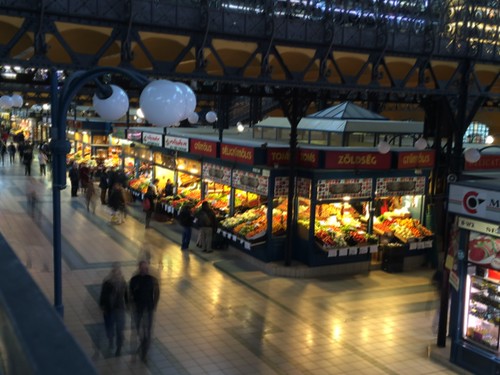
The other day I was watching the episode on Budapest from "Bizarre Foods: Delicious Destinations" and they went to the Budapest Central Market.
Central Market motion

Interestingly, they reported that the market is split into two, one for tourists and the other for residents. The side for tourists has souvenir shops and non-local foods, while the market for residents is locally-serving and focused on highlighting local ingredients--like paprika--and unique offerings.

It's an interesting way to deal with the problem of touristification of markets, which ends up crowding out fresh foods to take home to prepare in favor of prepared foods, restaurants, and souvenir stands.

They went down in the basement, to a place that pickles various vegetables, and the basement was still attractive on the verge of beautiful, providing a reason to do down below, when much of the time below ground floor space tends to not be attractive for retail offerings.
P1310042

Pike Place Market has a basement but it's not beautiful, with low ceilings and it verges on dank.
Novelty store in the basement of Pike Place Market in Seattle.

One of my laments about Eastern Market is that "it is too small" and to be more central to DC's foodways it needs to be bigger/have more vendors.

One major lost opportunity with the renovation of the building post- the 2007 fire was that "we didn't dig out the basement and make it part of the food and retail offer."

The images from the Budapest Central Market's basement drilled that home to me, that if the basement was developed, and developed "to be beautiful" it wouldn't be sub-optimal space, unlike the basement at Pike Place Market.

Labels: , ,

Wednesday, May 07, 2014

Parking, parking, parking: Eastern Market DC

As I've said before, I'd like to dub somehow a video from The Brady Bunch tv show, where one sister character, Jan, complained that everything in the house was about "Marcia, Marcia, Marcia" to say "Parking, parking, parking." Parking has the same level of resonance in local politics and transportation planning.


I got so angry a couple months ago at the monthly Eastern Market Community Advisory Committee on which I sit about "parking, parking, parking" that I haven't been motivated enough to attend the last couple meetings in the face of sickness/rain, etc.

7th Street SE at Eastern Market The inside food vendors continually complain about (1) the weekend closure of 7th Street SE in front of the market, because of the "loss of parking" and (2) how people park longer than they should in the unmetered parking spots behind the market.

WRT the former, I keep suggesting valet parking setups, coordinated parking information systems (there are parking lot and structure options in the area but most people don't know about them, and delivery services--wrt delivery, every time I bring it up one of the vendors belittles my comments and I am pretty f*ing sick of it to the point where I am really tired.

Main aisle, Eastern Market, DCI've been making the same points more or less, since 2007, as well as that there should be an Eastern Market district master plan, a Capitol Hill Destination Development and Management Plan, and the creation of a Transportation Management District to deal with the mobility issues, which concern transit, biking, delivery, public space management, etc.

It gets pretty tiresome to say the right and same things over and over and over.

It turns out that the inside vendors are again asking for the street to be reopened on the weekends because they say this is why their business has declined. Capitol Hill Corner has a post about it, "Eastern Market struggles with its identity" and the comments are pretty pointed, and generally don't support the vendor position.

Like most of the commenters in the CHC blog post, I too have argued that part of the issue with a drop off in sales has to do with a myriad of factors--increased competition (more than 6 new or renovated supermarkets have opened in Eastern Market's retail trade area over the past few years, with at least two new stores in the Capitol Riverfront and a Whole Foods going to H Street NE, plus a revitalizing Union Market food district that is heavily programmed), a failure to be innovative in marketing (while prices of produce are way too high, meat and seafood prices compare to counter prices at local supermarkets), a need to manage the destination better, a failure to address mobility questions intelligently and systematically, and a change in demographics with younger residents less likely to be able to cook and needing some education on how to do so.

(That's why there needs to be a market study and plan...)

I also make the point that the vendors are seriously wrong in believing that the parking spots on 7th Street were a significant benefit to weekend business because they weren't metered on the weekends.  All of the spaces next to the market shed were used by vendors, as probably were most of the other spots on the east side of the street (I don't remember the exact number but on the east side of the street there are fewer than 12 parking spots).  In any case, they didn't turn over.

Still, they could step up and support valet parking and delivery while instead they continue to oppose such "innovative" responses.

WRT the latter issue, I keep saying, "meter the spots." The vendors respond about how other supermarkets don't have meters etc. But just as how national and international policy makers are ignoring macroeconomics as it relates to post-recessionary policies ("Why economics failed," New York Times), they are ignoring economics.  Or as Paul Krugman writes:
"But policymakers just keep finding reasons not to do the right thing."
People will overconsume what they don't have to pay for.  In fact, parking meters were created not to make money, but to spur turnover of parking spots in commercial districts, to support commercial activity.

If the inside vendors want people to be able to drive and shop, they have to discourage long term parking.  The only way to do so is to meter the spots.  They argue instead to pay someone to monitor the spots, but that is an unnecessary labor cost.

Labels: , , , , ,