Rebuilding Place in the Urban Space

"A community’s physical form, rather than its land uses, is its most intrinsic and enduring characteristic." [Katz, EPA] This blog focuses on place and placemaking and all that makes it work--historic preservation, urban design, transportation, asset-based community development, arts & cultural development, commercial district revitalization, tourism & destination development, and quality of life advocacy--along with doses of civic engagement and good governance watchdogging.

Monday, September 29, 2025

Retail roundup: nonprofit public market opens in Anacostia | City owned markets | Experience retail

Retail in low income communities.  Eater reports, "A José Andrés-Backed Cafe Named for Marion Barry Opens in Ward 8," that a public market form of business has opened in Ward 8 to sell locally grown produce and prepared foods.  

Marion Barry Avenue Market brings aisles of fresh produce and fast-casual soul food to Anacostia, an underserved community with access to only one major grocery store until now. Named in honor of the late D.C. Mayor Marion Barry, whose life and political legacy is closely tied to Ward 8, the market and cafe debuts to the public on Saturday, September 27. Spearheaded by urban food justice nonprofit Dreaming Out Loud, the project is partly backed by Longer Tables Fund — celebrity chef José Andrés’ philanthropic arm that connects at-risk communities with affordable food options. Breakfast, lunch, and dinner is served daily for pickup and on-site dining across indoor communal tables and a garden patio. There’s also a demo kitchen to host classes around cooking and nutrition. The market is stocked with locally grown fruit and vegetables sold at a sliding-scale price with voucher‑friendly options, too (1303 Marion Barry Avenue SE).

I'm pretty sure I suggested something like this many many years ago, but I can't find an entry.

However, with the news that Starbucks is closing their Anacostia store ("Anacostia Starbucks closure stings, even as some see a neighborhood ‘renaissance’," Washington Post).  WRT the Starbucks closures across the country ("Why Starbucks is closing hundreds of stores," CNN, "This is why your Starbucks just closed," Boston Globe) either the stores are unprofitable or marginally profitable, but even if profitable the return on investment is likely less than the cost of capital. Hence closure.

WRT both the Starbucks story and the Marion Barry Avenue Market, it reminds me of the now 13 year old entry:

-- "In lower income neighborhoods, are businesses supposed to be "community organizations" first?"

Re-reading it, it's damn good, and is on my mind in part because I am working on a piece on how to build an entrepreneurship ecosystem in low income neighborhoods.  

The points made then are equally relevant today in terms of how to provide retail options in neighborhoods that can't support traditional retail business models.

New urbanists and the desire for neighborhood retail/the 15 minute city.  This also comes up for higher income communities and how new urbanists clamor for corner stores ("Bring Back the Corner Store," Planetizen, "Reviving neighborhood stores, CNU)), like the good old days ("The Corner Store: At the Intersection of Memory and Time," Post).  

The problem is that retail business models don't support stocking stores at this micro-scale, where goods can be sold reasonably cheaply.  

The same goes for the 15 minute city.  Retail business models don't work at the scale of a 3/4 mile walking distance, you need to draw on a much larger radius to generate the number of customers needed for success.  

The proof of this is NYC and other large cities.  There, small corner stores work because of the population density, and there are some business cooperatives like Key Foods Group that focus on that market.  Even so, store models needing larger customer bases cluster in the city equivalent of a regional shopping district, like Union Square, with its Whole Foods Market.

I counter always with the example of the Spar business group in Europe (and other countries) which has a system set up to support small stores.  

Similarly, a wholesale business in Poland is set up to support small stores there, as 40% of the shops are run by local businesses (at least in 2011, when I read the story ("The man who bet on tradition," Financial Times).

... For while many Poles were entranced by the prospect of choice and consumer plenty that the new shops offered – a stunning contrast to the empty shelves and shoddy goods that had been a hallmark of communism – many others remained loyal to the mom-and-pop shops that exist in every Polish neighbourhood. Those are the shops that Eurocash supplies with produce and other goods, often on a cash basis.

“We believed in the future of independent retail – that there will always be a space for small shops,” says Mr Amaral, who splits his time between Poznan in western Poland and his native Portugal.

... here are about 150,000 small shops in Poland, the highest number in the European Union, and of that about a third are family owned. In all, small shops make up 40 per cent of Poland’s retail food shops, while supermarkets, hypermarkets and discount shops have about 42 per cent of the market – a vastly different picture than in most other European countries, where big retailers dominate.

If we had wholesaler systems focused on providing items at good prices to small stores, then it could work.  Without that, it doesn't.  That's why you have chains like 7-11.

City owned groceries.  Are suggested for "food deserts."  It's a mistake.  First, because of the wholesale/pricing issue.  Second, because city governments usually lack the ability to be innovative and spry at the scale of a retail business.  Chicago was going to do it and stepped back ("A closer look at Mamdani's proposal for city-owned grocery stores," Chicago Tribune).  Zohran Mamdani has it as a campaign plank ("A closer look at Mamdani's proposal for city-owned grocery stores," Spectrum News).

A comment in the NYC article is off base. The person worked for Whole Foods and used the Department of Defense PX stores (commissary) as an example of nonprofit stores selling cheaply.  But the volume of these stores on military bases exceeds that of large scale supermarkets.  They may have free rent too.  Although the Pentagon wants to drop the business ("Pentagon wants out of the grocery business, asks industry for proposals," San Antonio Express-News).  From the article:

The department also will consider closing "all or a portion" of existing commissaries if a commercial chain has nearby stores that can offer the same 23.7% discount that the military markets provide.

Interesting, because for years low PX prices were a marketing point for enlistment.  But apparently, some of the low costs come from the Pentagon picking up back office costs like ordering. 

Small for profit businesses have a hard time.  So do nonprofits trying their hand at it ("Nonprofit grocery chain Daily Table to shut down operations," Boston Globe).

-- "Grocery stores in cities: the failure of the "15 minute grocery store"," 2023

Cities might be able to make a go of it if they band together and create a common brand, operations systems, and vendor relationships ("Why ask why? Because," 2007) to share across a network of small grocery stores in poor neighborhoods, where they would share the back office systems and negotiate a good or at least better product cost rate with a national food distributor.

Department stores as experiences. The Wall Street Journal has an article, "Can the French Reinvent America’s Broken Department-Store Model?," on the opening of a branch of the Paris-based Printemps department store in NYC.

Printemps New York is following the European department-store playbook of serving up enough food and drinks, exhibitions and other activities to keep shoppers occupied far beyond the fitting room. The store in Manhattan’s financial district was designed to evoke a luxurious Parisian residence. It more closely resembles a chic nightspot than it does a suburban Macy’s. The new store features an espresso cafe under a green-and-white circus tent, three other restaurants, hand-painted tiles, a champagne bar and spa chairs for mini-facials and head massages.

I think the article misses the point in that experience-based retail at the department store scale is limited to big cities/urban populations, at least in the US.

Department stores in the US have long since shifted to a more utilitarian model with limited pizzazz outside of NYC stores like Macy's and Bloomingdales.

What suburbanite is going to go to a suburban Macy's for a sit down meal, even if British department stores are known for exemplary food options, and when it was a great experience in the past (as a child I ate at the Hudson's restaurant, and on a road trip to Chicago during college, in Marshall Fields' restaurant).

Although apparently one of NYC's best Italian restaurants is in the Herald Square Macy's.

When Downtown department stores close, generally there is a loss in the range of retail experiences in the city.  But many people don't care because they aren't looking to shop so much as they are looking to buy quickly, and move on.

This is a point similar to that of corner stores in New York City neighborhoods.  They survive because of density.  Same with experience-oriented department stores.  They are unique.  A destination.  Appropriate for center cities but not likely to be successful in the suburbs.

Labels: , , , , , ,

Thursday, July 17, 2025

Urban grocery stores round up

DC is overstored for grocery stores, at least west of the river, while supermarkets in the poorest area ("east of the river") are minimal.  There are so many stores that it's hard to find tenants for all the proposed spaces.  

The Washington Post article, " A developer promised a supermarket for a new neighborhood. Now it can’t deliver," describes how a developer in Greater Brookland wants to cut the size of a previously approved supermarket space by half--likely for a specialty grocer, like Sprouts, rather than a full line store like Safeway or Giant.

NYC proposes city-owned stores in "food deserts" ("New York might experiment with city-run grocery stores. How do they work?," Washington Post). Chicago has proposed something similar. I think that's insane.  Governments lack the capacity to run an operation like a supermarket which requires a lot of skill and ability to pivot--I think of DC's Eastern Market, under management by the local government real estate office as a perfect example because of their failure to act with alacrity.  

OTOH, some public markets like in Baltimore seem to be reasonably well managed.

In Seattle the large multi-store cooperative PCC has reopened a store it closed in Downtown, but with a much greater focus on grab and go and prepared foods ("PCC back in downtown Seattle with a smaller store and downsized ambitions," Seattle Times).

The PCC Corner Market, as it’s called, is roughly a third the size of its 20,000-square-foot predecessor, with a much narrower selection that the co-op hopes will outperform the original store, which closed less than two years after opening after lackluster sales. 

The new format, which focuses on deli, lunch and breakfast items, and lots of grab-and-go selections, essentially replicates what was generating most sales in the first store. Although that store’s deli did a brisk trade, it couldn’t cover the expenses of a full-sized store in the middle of downtown still missing much of its pre-pandemic workforce, Srinivasan said. “It just didn’t pencil.”

The new downtown format, by contrast, is tailored to a lunchtime worker-and tourist-crowd. There is a plethora sandwiches, hot pizza and a salad bar, but fewer dry goods and PCC staples like fresh produce and meat.

“I think this model makes a lot of sense,” added Maria Diamond, who works nearby, as she emerged from the store Tuesday. “I think the full store was a lot for this community to support.” PCC’s smaller format, its first, may also reflect moderating expectations for downtown recovery. In June, downtown worker foot traffic hit its highest level since March 2020, when COVID-19 emptied out downtown offices, but is still 66% of what it was in June 2019, according to cellphone data posted by the Downtown Seattle Association. PCC signed the lease for the original store in 2018.

(The Downtown Alliance) Rendering of a new building proposed at Salt Lake City's Pioneer Park, designed to house portions of the Downtown Farmers Market and activate the downtown green space year-round.

Salt Lake proposes a public market building at Pioneer Park ("Finally, a solution for Pioneer Park? SLC, Downtown Alliance to make it a year-round home for the farmers market," Salt Lake Tribune), home to one of the nation's best Saturday farmers markets held during the spring and summer, with an abbreviated winter market following.  

For the same reason that PCC shut their original store, customers wanting prepared foods, not foods they need to prepare. I don't think it will work.

Blocks downtown are big and a lot of the residential buildings are a ways away, so walking won't be that convenient.  

Another indicator of failure being more likely is that is food halls in Greater Downtown only have marginal success ("Food hall in SLC development closes after not getting enough customers, manager says," SLT).

The standalone location of Ruby Snaps cookies, which are sold from the shop and also wholesale.  Photo: Fransico Kjolseth.  Salt Lake Tribune).

For people not living downtown, they will have to pass dozens of grocery stores to get there--there are at least 20 supermarkets within a 3-5 mile radius of where we live plus lots of specialty stores (Hispanic, Middle Eastern, Indian, Japanese, Chinese). 

I do think a plan could work if focused on artisanal food producers like Ruby Snaps cookies ("Dough Girl's new name is a "Snap") or kolaches ("At this Sugar House spot, selling cupcakes then sandwiches then brownies have all failed. Here’s what’s next," SLT).  I say this as one standalone store focusing on brownies shut down about a year ago.

I understand the need for activation, but this isn't the solution.  I do think it could be okay on the day that the farmers market operates, but that's for a few Saturdays per year.

A kind of salvage store chain in Boston, focused on providing lower cost food for lower income patrons shut down ("Local nonprofit grocery store chain Daily Table to close all locations," WGBH/NPR).

Daily Table, a nonprofit local grocery chain in Boston, Cambridge and Salem, is closing its four locations in the coming days. With federal cuts to hunger relief programs, along with the rising prices of food and other challenges dating back to the COVID-19 pandemic, its board of directors decided to shutter the remaining locations after shrinking its footprint earlier this year.

“It’s a very sad day for us because for 10 years we’ve been able to serve communities,” Doug Rauch, Daily Table’s founder and chair of the board of directors, told GBH News. “They counted on us for truly affordable fresh fruits and vegetables — and not just fresh fruits, vegetables, but prepared meals, too.”

For the past 10 years, Daily Table has served neighborhoods across Greater Boston by working alongside each community to make affordable, nutritious food accessible to all. More than three million customers went to the grocery stores, the board of directors wrote in an email to customers.

Also see: 

-- "Grocery stores in cities: the failure of the "15 minute grocery store"," (2023)
-- "Eastern Market DC's 150th anniversary last weekend | And my unrealized master plan for the market," (2023)

Labels: , , , , , , ,

Tuesday, March 14, 2023

Downtown retail doesn't work the way people think

Given the prevalence of the development of shopping malls over the past 70 years, central business districts (downtowns) have long since been supplanted as major retail centers, with the exception of a few major cities like Manhattan (New York City), Chicago, and San Francisco (Union Square), where the retail stores remained high profile destinations, especially for visitors--not residents.

Very early in my involvement in such matters, I saw a presentation by a person from an urban economics consulting firm, where he said that the average office worker supported 1.5 s.f. of (convenience retail) and 5.5 s.f. of (quick service) restaurant.

In short you needed many thousands of workers to support a small amount of retail, and what the office workers were interested in was pretty limited, pharmacy, dry cleaners, shoe repair, etc.

Similarly, with restaurants, the support was for quick service places like Quiznos, Corner Bakery, Potbelly, Au Bon Pain, etc., not high quality sit down restaurants.  Although again, larger commercial districts were capable of supporting some.

Then there was a study of Southwest DC's business district, which found that 65% of the time, government workers brought their lunch, making it that much harder to support retail and food in districts dominated by federal buildings.

And that was before the impact of e-commerce.

And it turns out office workers aren't particularly intrepid.  They just aren't that interested in exploring the area around where they work.  And shopping in the area where they work, or coming home from work in the work city, as opposed to the residential city, doesn't seem to be of interest either.

And that was before covid, which has accelerated work from home.  Most commercial districts have half the number of employees coming to work that they did before.

So it's difficult for other retail categories like apparel, home furnishings, etc., to survive in downtown centers.  Frankly, they do better in areas with residential-supported commercial districts.

So to me, that Target is closing a downtown Philadelphia store after seven is years no suprise ("Target to Close Center City Store. Here's Why," ).  Fewer office workers.  Office workers aren't that interested.  E-commerce.  Not enough residents nearby to act as frequent customers.

Similar to the announcement of Walmart closing a store on the outskirts of Downtown DC, my reaction was it just wasn't located close to lots of potential and frequent customers ("Walmart to close one of its three DC stores").

Labels: , ,

Wednesday, March 01, 2023

Walmart to close one of its three DC stores

During the period of the (post) 2008 recession, Walmart, recognizing that it achieved about as much growth as it could in the suburbs and exurbs, decided to focus on cities.  DC, not being particularly sophisticated politically, was ripe for the picking, and local elected officials welcomed them with open arms.

I and many other residents were opposed on business grounds, although yes they would hire people and make available goods often not available in various neighborhoods.  Another big issue was urban appropriate building form.  It turned out that Walmart didn't care very much.  They would be fine with mixed use buildings (two of the three in DC were such), which they didn't seem okay with before.  But at the same time, they were fine with single use buildings too, so long as that was a location they wanted.

Sadly, many prominent urbanists thought that this was a breakthrough decision by Walmart when it wasn't.

I was involved in opposing the Walmart that ended up being built up the street from my house -- and ironically a second Walmart was built 1.25 miles from our house, in the other direction in Fort Totten, making our area likely the most densely served by Walmart of any other area in the US.

But the elected officials wanted it to happen -- JOBS! JOBS! JOBS! -- and for the most part it was a matter of right use so it couldn't really be opposed successfully.  And an area of DC law that offered a way to oppose the entry -- the environmental impact law -- was underdeveloped, and those lawyers who were willing to oppose except for JOBS! JOBS! JOBS! weren't sophisticated enough to follow that line of reasoning.

I ended up writing many entries on the issue:

-- "Walmart: in the city, vs. of the city," 2011
-- "Lessons from Walmart's foray into DC," 2011
-- "Wal-mart plays hardball with DC," 2013
-- "What community benefits are supposed to be versus what people think they are about," 2013
-- "More Walmart in DC," 2013
-- "6Ps, Walmart in DC and "I hate to say I told you so"," 2014
-- "Lessons from Walmart's foray into Washington, DC," 2011
-- "Piling on City Council for Walmart," 2013
-- "I hope for Aspen Hills' sake that Montgomery County is smart enough to learn from DC's planning errors with regard to Walmart's entry," 2012
-- op-ed piece, Washington Business Journal, "Temper Walmart glee with planning"

Anyway, Walmart first proposed five stores, then a sixth in response to calls for equity in the area East of the River.  They built three ("First Walmart Stores In D.C. To Open Dec. 4, Will Employ 600 People," WAMU/NPR, 2013):

  • Georgia Avenue NW
  • Fort Totten NE
  • 50 New Jersey Avenue NW

The store on New York Avenue never came to be.  Nor did a store on East Capitol.  And the store site that they agreed to later to appease elected officials and opponents, in the Skyland Center, ended up being dropped as well ("Walmart will pay DC $1.3 million over canceled plans for SE store," WTOP radio).

Now they've announced an upcoming closure of the store in Lower NW DC ("Northwest DC Walmart location closing March 31," WTOP radio).  

"Sadly," of the three it has the best building, a traditional design mixed use style that fits in with nearby buildings including the Government Printing Office. 

I argued that they chose this location because their lobbying/government affairs national offices were located there as well.


 And it had one of the best transportation demand management signs I've ever seen in a retail store.


But it wasn't particularly close to teeming amounts of residential population, so I'd say it was a bad location, and I'm not surprised.  It probably had issues with personnel and "shrink" as well.

Walmart Fort Totten, photo by Beyond DC

Walmart Georgia Avenue NW

The store has underground parking but refuses to allow it to be shared with local businesses. 

The site was originally approved for a mixed use development with 400+ apartments above, which would have generated more income, sales, and property tax revenues for the city. But with the recession, the developer wanted quick and easy money and sold the development rights to Walmart--a 75 year lease, with renewables. Walmart paid for everything including constructing the building. 

FWIW, this is the building that many urbanists said heralded a new day for Walmart's urban design and city appropriate design.

====

Mea culpa.  Here in Salt Lake we do shop at Walmart, just for a couple items.  The store is a bit farther from us than the two in DC. In DC, I did buy a bunch of shipping supplies there while preparing to move.

Labels: , , ,

Tuesday, January 17, 2023

Grocery stores in cities: the failure of the "15 minute grocery store"

For the last few years, the concept of the "15 minute city" has been touted, the idea that you can meet most of your needs in a 15 minute walkshed--a radius of about three quarters of a mile ("How '15-minute cities' will change the way we socialise," BBC).

Conceptually, I think it's a great approach, especially in terms of the urban design, placemaking, concentration and communitarian elements, and the provision of the necessary transit levels of service to backstop it. 

But it doesn't work in terms of how the retail sector and the delivery of entertainment at the local scale is organized, especially for grocery stores and pharmacies. 

Sure you could have corner stores. Then again, I was looking at a convenience store yesterday wrt testimony I'm preparing for a matter in Salt Lake City, and they were selling milk for $6.09 per gallon, when it's about $3.50 at supermarkets. 

From a retail standpoint, the 15 minute city works best in dense very high income areas.

Photo: Trent Nelson, Salt Lake Tribune.

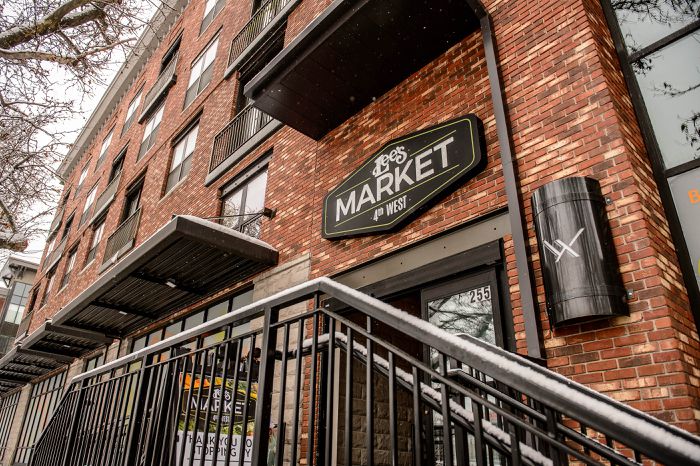
Salt Lake.  Last fall, less than two years after opening, a small grocery store closed in the Marmalade district of Salt Lake, on the city's near westside ("Lee’s Market to close its 400 West location in Salt Lake City on Friday," Salt Lake Tribune).  

Lee's Marketplace was opened by a small supermarket group that is a member of the Associated Food Stores cooperative.  They operate a number of regularly sized stores outside of Salt Lake City proper.

This store, on the ground floor of an apartment building, was small, but well stocked, and the firm extended sales prices on featured items to this store as well--many companies that have a mix of larger and smaller stores don't extend special pricing to the small stores.  

It opened just before covid and that stunted it ("Salt Lake City’s Marmalade neighborhood get its first grocery store in decades," SLT).

Salt Lake also has the Harmon's chain, which is upscale and has three stores, one in the city, that are significantly smaller than a traditional supermarket.  There is another firm, the Corner Store, which has two small stores in the area, with a branch nearby in the Gateway development.

There are other mainline (large) supermarkets nearby--within a couple miles, including Smith's owned by Kroger, Lucky's, a Rancho--Hispanic, and the Downtown Harmon's, which is an exquisite store--smaller than a normal store, but large enough, with premier bakery, meat, and seafood departments, along with a cooking school, grill for eat-in, and other features, a form of which are present in most of the other Harmon's locations.  Plus the area isn't that far from the corridor with a Target, Walmart, Costco, and a restaurant supply store open to the public.

Even though the Lee's was outside of our neighborhood, we shopped there occasionally because it is a couple blocks from the house of close friends.

People commented that the store closed because rents must have increased, or because of shoplifting from students at West High School across the street.

I responded, it's obvious they didn't have enough business and that's why they closed.  From the article:

Badger wrote that the “decision to close the store is the result of the lack of volume coming into the store from the surrounding areas, the COVID-19 pandemic, and public accessibility.”

The market was employing “the urban store format you would find a high-density city like, New York, Chicago, or Boston was a test for our company,” Badger wrote. “Unfortunately, we found this style of shopping is not yet conducive to the Salt Lake City area.”

First, even though the immediate neighborhood didn't have a supermarket, it's not like people didn't eat, and therefore, already had relationships with existing grocers.  So the market needed to do ongoing, serious marketing.  I was thinking back to when I was a child in Detroit 50+ years ago--back then, stores didn't insert weekly circulars in the local newspapers, they delivered them door-to-door.  Lee's probably needed to do something like that. 

Second, the store wasn't particularly well located.  The neighborhood has a nascent commercial district, although it's disjoint and not set up for success from an urban design standpoint, and that's not where the Lee's was located.

Third, opened in anticipation of lots of new multiunit buildings and residents, the construction and renting of such units hasn't moved fast enough to boost the patronage of Lee's, if people even knew they were there.

Basically, to survive Lee's needed minimal even zero rent for years, until the customer base built up to the point where the store could survive.

As it is, I am amazed at how many grocery stores there are here, in part a function maybe of people eating in more than the national average.  There are 20 grocery stores within a five mile radius of where we live, and even more slightly outside that distance.  Including ethnic and specialty stores, major discounters, a restaurant supply store that sells to the public, etc.  So many more options than we had in DC (although I do miss Aldi).

Lesson: as much as people like me advocate for expanded urban grocery options, the reality is that to make stores work requires a lot to go right.  And this is true in all of the other examples below.

Wrigleys was one of the supermarkets that existed during my childhood in Detroit.  Except for Kroger, based in Cincinnati, all those stores--Wrigleys, Packers, Great Scott, Chatham, Farmer Jack's--have closed.

The kind of intense door to door marketing I remember from my childhood is necessary these days to alert area residents that a store even exists, given that most people don't read local newspapers and other forms of local media that would inform them that such a store exists.

Salt Lake Food Coop initiative.  Similarly, for a number of years, at least five, there's been an effort to  create a food coop in the city.  I don't see how it can succeed given the high level of grocery store penetration and the failure of small artisan food businesses here ("Small businesses closing in Salt Lake," KSL).    Although an issue with the food businesses is the rising cost of ingredients.

Interestingly, there already is a cooperative in suburban Murray, I don't see why they aren't working on just opening a branch in the city.

Like with the Good Food stores mentioned below, from the outset, food cooperatives tend to focused on a niche audience.  That being said the success of cooperatives in Minneapolis-St. Paul, and the upscale Coopertunity Market in Culver City ("Revisiting Takoma Junction and the Takoma Co-op development issue | A chance to start over") shows success is possible.  

Richmond, Virginia: Market @25th is unprofitable too, but has a deep pocketed investor.

I think I've mentioned the small for profit market, Market@25th in Richmond, created by a philanthropist.

Like the stores in DC and Salt Lake, it's part of a mixed use development.  And like the DC example, it's part of an urban revitalization effort.

It's a social enterprise-like store, but it's funded by a philanthropist, with the aim of being profitable ("Richmond’s Market At 25th Shaped By History, Needs Of Church Hill Residents," Virginia Public Media).  

Which is a good thing because it's lost tons of money ("Church Hill's new grocery store has lost millions in 6 months, but owners are committed to 'the market with a mission'," Richmond Times-Dispatch).  From the article:

[Steve] Markel, vice chairman of the Henrico County-based specialty insurer Markel Corp., and his wife, Kathie, announced in 2016 that they would bankroll the construction of a grocery store in the city’s East End.

The area is home to some of the city’s poorest families. Residents have lower life expectancies than in wealthier parts of the city, a disparity Markel said necessitated investment aimed at improving health outcomes.

To that end, Markel helped finance the mixed-use development at 25th Street and Nine Mile Road. It includes 42 apartments, retail and office space and a new culinary school that J. Sargeant Reynolds Community College plans to open in 2020.

The 25,000-square-foot grocery store is the centerpiece of what Markel said this past spring was a “philanthropic” venture.

“The grocery store is really a symbol of creating a healthy neighborhood and a vibrant neighborhood,” he said. “Not only was it about food and vegetables and fruit, it was about jobs.”

If the store were fully nonprofit, or super undecapitalized, it's likely that it would have closed.  Typically, nonprofits don't have the funding to be able to make it through the long period of losses before profitability is attained.

Oakland, California.  Last year, an independent community grocery store closed on the Westside of Oakland ("Why West Oakland’s only full-service grocery store closed after less than 3 years," Oaklandside).  

It was undercapitalized and didn't have enough business to sustain the slow period of growth associated with opening.  Like for the Lee's, the pandemic provided extra hurt.

Photo: Michelle Gomez, DCist/WAMU-NPR.

Washington, DC.  Good Food Market stops selling unprepared food ("Good Food Markets Closes Ward 8 Grocery Store As It Pivots To Prepared Food," DCist).  

Over the years, the nonprofit Good Food Market has opened stores in DC and Prince George's County ("Good Food Markets Open Location in Prince George’s County," Washington Informer), including in DC's Anacostia neighborhood ("Mayor Bowser Celebrates Grand Opening of Good Food Markets in Ward 8," press release).  

They've just stopped selling groceries and are only selling prepared foods, defeating the purpose of opening stores in so called food deserts, as prepared foods cost a lot more than perishable and nonperishable food stuffs.

Opening stores in low income communities.  Many years ago, I wrote this, "In lower income neighborhoods, are businesses supposed to be "community organizations" first?" (2012), in response to an earlier failure of a grocery store attempt in DC's East of the River, by the area's Yes Market Natural Grocery group. 

FWIW, I am an advocate of social enterprise focused efforts in such communities, but they need to be well capitalized and it must be understood that achieving profitability will be very difficult.

Grocery shopping routines.  One of the problems with how advocates think about grocery shopping is they forget that we eat every day.  While it may suck to have to travel to a store, most people have developed patterns and practices of food shopping to accommodate their needs and situations.

Just because a store opens doesn't mean that people change their shopping patterns to patronize it.  And in a city like DC, it may make more sense to provide shuttle services to residents in understored areas to be able to go to the stores in nearby areas--for example on H Street, primarily in NE DC, in a two mile distance, albeit some off the corridor, there is a Walmart, Giant, Whole Foods, Safeway, Aldi, Trader Joes, Harris-Teeter, Streets--an independent upscale market, and a market district.

Rather than funding an undercapitalized minimarket, sometimes, at least initially maybe just provide shuttle services to existing grocery stores?

Labels: , , , , , ,

Friday, November 29, 2019

Shopping local during the holidays: Small Business Saturday and beyond


-- "Mass consumerism is destroying our planet. This Black Friday, let’s take a stand," Guardian
From the article:
Today, in austerity Britain (and, yes, for all the talk of spending promises, austerity is still here), the idea of excessive consumerism seems to have lost much of its resonance. Memories of consumerism and easy credit seem to have become tainted by the recession. Academics have observed how Britons felt ashamed of their pre-crash consumerism and (wrongly) felt personally accountable for the austerity that followed, identifying particular consumer objects – such as expensive tracksuits and conservatories – as symptomatic of a flaw in the national character.

For many consumers, shopping has become mixed with guilt and a sense of responsibility as it increasingly depends on credit card debt and the labour of poorly paid and precarious workers – and it has a heavy environmental toll. Buying something today is also an experience drained of fun: it often entails making sure you are in when the package arrives, unpacking it and realising that it isn’t what you wanted.
Not in the U.S. But it should. And more people are cutting back. If you are going to buy stuff, why not make choices on what and where you buy in order to have more economic impact locally?

-- "Before you jump on the sales train, ask yourself: do you need this?," Guardian


The holiday shopping season is touched off by so called "Black Friday," the day after Thanksgiving.

Although plenty of stores open on Thanksgiving, although some companies remain holdouts.  And many others are starting their holiday promotions earlier and earlier ("What Does ‘Black Friday’ Even Mean Anymore?," New York Times.; "‘Everything is always marked down’: Black Friday has become just another day of sales," Washington Post).

The big chains offer lots of deal busters to get shoppers in stores, and over the past few years stores have been opening earlier and earlier, including no longer waiting til Friday and opening on Thanksgiving.

Promotion of independent commercial districts and stores can be a hit or miss phenomenon.  Some retailers are good marketers, many are not.

The "Main Street commercial district revitalization approach" was developed to bring new resources to commercial districts, beyond that which are normally possessed by the typical business owner.

An example of a national program designed to promote small business, but that is realized only if local businesses and commercial districts organize to leverage it is Small Business Saturday.

The event was created a few years ago by the American Independent Business Alliance, the group that actively promotes the "Shop Local" movement,.to promote holiday shopping at local and independently owned businesses, as opposed to how most holiday shopping is focused on big box stores and national chains,

Museum Store Sunday/Cyber Monday/Giving Tuesday.  Other "interest groups" have jumped on the bandwagon and have developed companion days riffing off Black Friday.

E-commerce retail aims to make the Monday after Thanksgiving their biggest shopping day of the season and year, calling it Cyber Monday, which now has greater sales volume than Black Friday.

Nonprofit organizations promote receiving fundraising donations on the Tuesday after Thanksgiving, Giving Tuesday.

A few years ago, the Museum Store Association created Museum Store Sunday.  Definitely there are exemplary museum stores such as the MoMA Design Store, the National Building Museum's gift shop, the book sections at museums like the National Gallery.  Since people don't think of museum gift shops outside of visiting a museum's galleries, it makes sense to do a promotional event ("Museum Store Sunday fills shopping gap no one knew they had" and ""Museum Store Sunday: Shop small businesses off the beaten holilday path," USA Today).

Small Business Saturday.  For the past few years, the event has been sponsored by American Express, which originally offered inducements to card members as an incentive to shop local on that day.

They continue to put a lot of money into marketing, advertising, and promotional support.

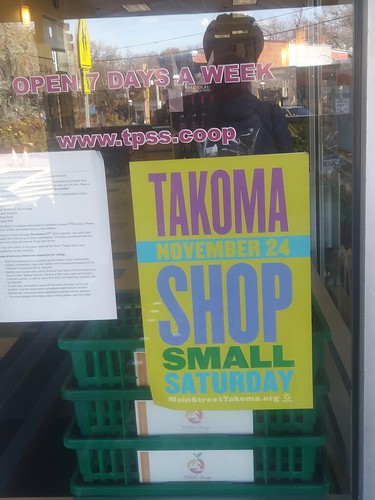
That affiliation with American Express was too corporate for Takoma Park's Old Takoma Business Association, which created its own parallel event but without signing on to the American Express effort.

Takoma Park Maryland Shop Small Saturday
The economic value of shopping locally.  Research results are piling up demonstrating the thesis that spending money in stores based locally has greater economic benefit than shopping in chain stores, which buy few services locally (excepting labor) and don't spend profits locally.

See "Economic impact of locally owned hardware stores vs. big box stores," which discusses an economic impact study done by the North American Retail Hardware Association, which also produced "shop local" holiday promotional materials for this holiday season.

Reminders to shop local are necessary.  A big campaign promoting shopping at independently owned stores and in traditional, usually town-city based shopping districts as opposed to shopping malls, reminds people that spending money at locally-owned stores is important.

The reality is, with so many other marketing messages, people need to be educated and reminded.

Hopefully, the kind of inducement previously offered by American Express to their cardholders isn't required.

I think this is likely to be the case, because so many other retailers and independent shopping districts are now participating in the program, and marketing to consumer bases that goes beyond the segment comprised of American Express credit card holders.

Still, as traditional commercial districts begin skewing their mix of businesses and attractions to food and drink, it becomes harder to "shop locally" at the neighborhood scale, but more possible for "regionally serving small business districts."

By that I mean places with a strong representation of quality independent shops selling goods, like Manayunk or South Street in Philadelphia, Carytown in Richmond, Hampden in Baltimore, to some extent Alexandria, Virginia in the DC area, although many commercial districts have some retail outlets that people can still visit--it might be reconditioned or resale of goods stores though.

The North Park commercial district in San Diego has a great gateway sign.  San Diego funds business improvement efforts with the equivalent of a BID assessment, but many of the programs are organized as "Main Street" programs, which are more volunteer-based groups compared to staff-driven "downtown" associations driven by property owners.

One example of how a county business promotion division is using "Small Business Saturday" as a way to promote its businesses and business districts is Macomb County, Michigan.  See "Macomb County Shops Make Big Deal of Small Business Saturday," C&G Newspapers.

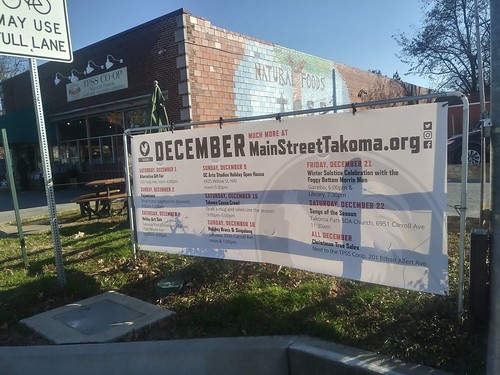
Signboard listing holiday events in Takoma Park's Old Town Takoma commercial district.  

Holiday marketing beyond Small Business Saturday. Many community business districts have figured out the holiday season, providing a large number of events and activities in a coordinated fashion.  And they market these events as part of a comprehensive calendar.
Line up of Holiday Events, 12/2018, Main Street Takoma Park, Maryland

In the DC region, Fredericksburg, Virginia, Frederick, Maryland, and Takoma Park, Maryland do a particularly good job.

In the Petworth neighborhood of DC, this year marks the 14th edition of the Upshur Street Crafts Fair on  Saturday December 1st.  (Last year they did it two weekends in a row, I guess that didn't work out.)

Artisans sell items from booths on the street, and retail stores and restaurants participate as well. 

For the few years, the Friends of the Petworth Library have held a book sale at the library in conjunction with the event too.  That's a particular smart example of leveraging existing events for other purposes, "latching on" and extending the value of the event by adding complementary activities.

Holiday Markets.  More cities are sponsoring holiday markets, modeled after the famous Christmas markets in Germany.  DC has its Downtown Holiday Market, on F Street between 7th and 9th Streets NW, next to the Smithsonian Museums there.  Baltimore has created a similar event.  Although I will say that a city needs to have a reasonably large population to make such an event work.

Hanukah.  The Jewish holiday of Hanukah isn't a gift-oriented holiday, although gift giving has become an element of it because of how the event and religion exists alongside other traditions.

More communities are recognizing that religious traditions other than Christian need to be better acknowledged when planning such activities.

NYC lights a menorah each year in Manhattan, billed as the "World's Largest Menorah," during the week long "Festival of Lights" in early December.

(Because of DC being the National Capital there are National Christmas Tree Lighting and Menorah Lighting events, but they don't have ramifications for stoking retail buying in traditional commercial districts.)

Labels: , , , ,

Friday, November 23, 2018

Shopping local during the holidays: Small Business Saturday and beyond


The holiday shopping season is touched off by so called "Black Friday," the day after Thanksgiving.

The big chains offer lots of deal busters to get shoppers in stores, and over the past few years stores have been opening earlier and earlier, including no longer waiting til Friday and opening on Thanksgiving.

Promotion of independent commercial districts and stores can be a hit or miss phenomenon.  Some retailers are good marketers, many are not.

The "Main Street commercial district revitalization approach" was developed to bring new resources to commercial districts, beyond that which are normally possessed by the typical business owner.

An example of a national program designed to promote small business, but that is realized only if local businesses and commercial districts organize to leverage it is Small Business Saturday.

The event was created a few years ago by the American Independent Business Alliance, the group that actively promotes the "Shop Local" movement,.to promote holiday shopping at local and independently owned businesses, as opposed to how most holiday shopping is focused on big box stores and national chains,

Cyber Monday/Giving Tuesday.  Other "interest groups" have jumped on the bandwagon and have developed companion days riffing off Black Friday.  E-commerce retail aims to make the Monday after Thanksgiving their biggest shopping day of the season and year, calling it Cyber Monday, while nonprofit organizations promote receiving fundraising donations on the Tuesday after Thanksgiving, Giving Tuesday.

For the past few years, the event has been sponsored by American Express, which originally offered inducements to card members as an incentive to shop local on that day.

They continue to put a lot of money into marketing, advertising, and promotional support.

That affiliation with American Express was too corporate for Takoma Park's Old Takoma Business Association, which created its own parallel event but without signing on to the American Express effort.

Takoma Park Maryland Shop Small Saturday

The economic value of shopping locally.  Research results are piling up demonstrating the thesis that spending money in stores based locally has greater economic benefit than shopping in chain stores, which buy few services locally (excepting labor) and don't spend profits locally.

See "Economic impact of locally owned hardware stores vs. big box stores," which discusses an economic impact study done by the North American Retail Hardware Association, which also produced "shop local" holiday promotional materials for this holiday season.

Reminders to shop local are necessary.  A big campaign promoting shopping at independently owned stores and in traditional, usually town-city based shopping districts as opposed to shopping malls, reminds people that spending money at locally-owned stores is important.

The reality is, with so many other marketing messages, people need to be educated and reminded.

Hopefully, the kind of inducement previously offered by American Express to their cardholders isn't required.

I think this is likely to be the case, because so many other retailers and independent shopping districts are now participating in the program, and marketing to consumer bases that goes beyond the segment comprised of American Express credit card holders.

Still, as traditional commercial districts begin skewing their mix of businesses and attractions to food and drink, it becomes harder to "shop locally" at the neighborhood scale, but more possible for "regionally serving small business districts."

By that I mean places with a strong representation of quality independent shops selling goods, like Manayunk or South Street in Philadelphia, Carytown in Richmond, Hampden in Baltimore, to some extent Alexandria, Virginia in the DC area, although many commercial districts have some retail outlets that people can still visit--it might be reconditioned or resale of goods stores though.

The North Park commercial district in San Diego has a great gateway sign.  San Diego funds business improvement efforts with the equivalent of a BID assessment, but many of the programs are organized as "Main Street" programs, which are more volunteer-based groups compared to staff-driven "downtown" associations driven by property owners.

One example of how a county business promotion division is using "Small Business Saturday" as a way to promote its businesses and business districts is Macomb County, Michigan.  See "Macomb County Shops Make Big Deal of Small Business Saturday," C&G Newspapers.

Signboard listing holiday events in Takoma Park's Old Town Takoma commercial district.  

Holiday marketing beyond Small Business Saturday. Many community business districts have figured out the holiday season, providing a large number of events and activities in a coordinated fashion.  And they market these events as part of a comprehensive calendar.
Line up of Holiday Events, 12/2018, Main Street Takoma Park, Maryland

In the DC region, Fredericksburg, Virginia, Frederick, Maryland, and Takoma Park, Maryland do a particularly good job.

In the Petworth neighborhood of DC, this year marks the 13th edition of the Upshur Street Arts & Crafts Fair on  Saturday December 1st.  (Last year they did it two weekends in a row, I guess that didn't work out.)

Artisans sell items from booths on the street, and retail stores and restaurants participate as well. 

For the few years, the Friends of the Petworth Library have held a book sale at the library in conjunction with the event too.  That's a particular smart example of leveraging existing events for other purposes, "latching on" and extending the value of the event by adding complementary activities.

Holiday Markets.  More cities are sponsoring holiday markets, modeled after the famous Christmas markets in Germany.  DC has its Downtown Holiday Market, on F Street between 7th and 9th Streets NW, next to the Smithsonian Museums there.  Baltimore has created a similar event.  Although I will say that a city needs to have a reasonably large population to make such an event work.

Hanukah.  The Jewish holiday of Hanukah isn't a gift-oriented holiday, although gift giving has become an element of it because of how the event and religion exists alongside other traditions.

More communities are recognizing that religious traditions other than Christian need to be better acknowledged when planning such activities.

NYC lights a menorah each year in Manhattan, billed as the "World's Largest Menorah," during the week long "Festival of Lights" in early December.

(Because of DC being the National Capital there are National Christmas Tree Lighting and Menorah Lighting events, but they don't have ramifications for stoking retail buying in traditional commercial districts.)

=======
Had the Macy's Thanksgiving Parade on tv a bit yesterday, while cooking.  Eventually changed from NBC to CBS because the latter focused more on the parade than all their various special sponsor promotions.

I can't remember which channel it was, but they featured a short story on how Ebay is a great option for holiday shopping.  Considering they were showing the "Macy's" Parade and that Macy's is primarily a "brick and mortar" store and that the department store category is declining in response to changes in shopper behavior along with e-commerce, I thought that was pretty ironic.

Of course, when NBC's feed did an interview with the CEO of Macy's, I helped offered the tv some suggested questions, such as "how many stores might you be closing next year?"

-- "A reckoning on 34th Street," video, CNBC-TV
-- "As Macy's shrinks its stores, CEO Jeff Gennette says this is what he will do with the extra space," CNBC-TV

Labels: , , , ,

Thursday, October 18, 2018

Retail failure, leveraged buyouts/private equity, and "fraudulent conveyance"

There's lots of coverage in the media about business failure of retailers like Toys R Us ("Who Killed Toys 'R' Us? Hint: It Wasn't Only Amazon," Wall Street Journal), the Bon Ton Department Store chain, and now the bankruptcy of Sears as a product of private equity control of these businesses.

That's true.

Private equity loads onto the business tons of debt, usually alongside big and costly management fees to the owners, and high "salaries" for the people at the top of the corporation.

Often the real estate is separated from the operating business.  And they care zero about the effects on workers or communities.

From the standpoint of setting up a business for success, what these steps do is set up the business for failure, because only in the best of business conditions--growth, growth, growth--does the business have enough cash flow to operate the business. Even if operations are successful, the debt load makes it difficult to set aside any money for investment in capital improvements.

Recession; a shift of even a small amount of sales to e-commerce competitors, the need to invest in e-commerce and IT; etc. is enough to drive the company into failure, even if a number of the store locations remain profitable.

But this isn't new.

My best friend in college used to say that I read the business section of newspapers like most guys read the sports section.  So I remember the various failure of other retail chains over private equity type circumstances.

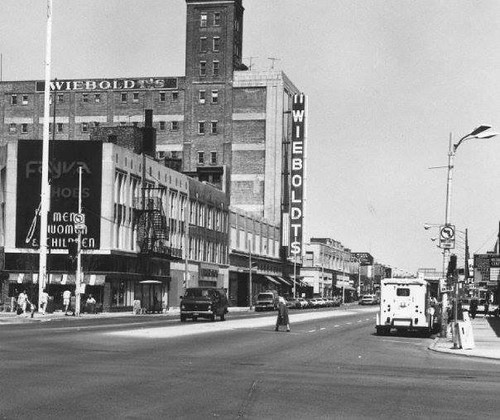
The Wieboldt's store in Lakeview ( Lincoln Ave and School street) the first two floors are commercial and the other floors have been remodeled into beautiful condos, "The Tower Lofts" -1601 w school st. Xsport's address and entry is at 3240 N Ashland AveThe Wieboldt's store in Lakeview ( Lincoln Ave and School Street). Today, the first two floors are commercial and the other floors have been remodeled into condos, "The Tower Lofts

The first that I can remember is the failure of the department store chain in Chicago, Wieboldts.

The company started in a neighborhood, expanded to other neighborhoods and outlying towns and eventually opened a downtown store.

They failed after a leveraged buyout.  A lawsuit with the argument of "fradulent conveyance" was mounted--fraudulent conveyance meant that the buyout set up the company on a path to failure that was foreordained.

-- WIEBOLDT STORES, INC., individually and on behalf of its Official Committee of Unsecured Creditors, Plaintiff, v. Jerome M. SCHOTTENSTEIN, et al., Defendants (1988)

From the suit:
Wieboldt's complaint against the defendants concerns the events and transactions surrounding a leveraged buyout ("LBO") of Wieboldt by WSI Acquisition Corporation ("WSI"). WSI, a corporation formed solely for the purpose of acquiring Wieboldt, borrowed funds from third-party lenders and delivered the proceeds to the shareholders in return for their shares. Wieboldt thereafter pledged certain of its assets to the LBO lenders to secure repayment of the loan.

The LBO reduced the assets available to Wieboldt's creditors. Wieboldt contends that, after the buyout was complete, Wieboldt's debt had increased by millions of dollars, and the proceeds made available by the LBO lenders were paid out to Wieboldt's then existing shareholders and did not accrue to the benefit of the corporation. Wieboldt's alleged insolvency after the LBO left Wieboldt with insufficient unencumbered assets to sustain its business and ensure payment to its unsecured creditors. Wieboldt therefore commenced this action on behalf of itself and its unsecured creditors, seeking to avoid the transactions constituting the LBO on the grounds that they are fraudulent under federal and state fraudulent conveyance laws.
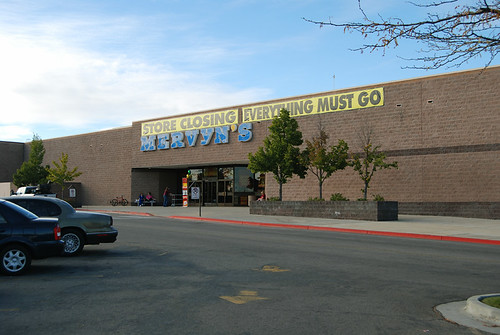
Mervyn'sSimilarly, the West Coast-based Mervyns chain had been owned by what is now called Target.

When they were sold in 2004 to private equity buyers, Sun Capital, the real estate assets were separated from the operating stores, and come a recession, the company failed, lasting for not quite five years under private equity ownership.

Real estate operators acquisition of department store companies.  But there were other examples too, of retail companies bought for their real estate assets, including the Taubman shopping mall company buying the DC based Woodward & Lothrop Company (1984) and Philadelphia's Wanamakers Department Stores (1986), and eventually selling the locations and shuttering the companies.

Canadian real estate developer Robert Campeau ended up starting the consolidation of many retail department store companies into the national Macy's chain, buying Allied Stores (1986) and Federated Stores (1988).  Those companies became bankrupt and Macy's ended up merging with them(1994), eventually repositioning what had been regional chains into one brand, Macy's, with a national footprint.

In short, when non-retailers buy retail companies, especially for financialization opportunities and/or to harvest the value of real estate, it usually doesn't bode well for the retailer nor for the employees.

Labels: , , , ,

Saturday, September 08, 2018

New York Times special section: "The Empty Storefronts of New York"

Last Sunday, the New York Times published a special section on "The Empty Storefronts of New York." Besides the print section, it's also online.

It's powerful.

But it's a complicated issue.

Canal and Lafayette Streets, Chinatown, Manhattan, NYT photo.

Problems

1. NYC has the same issue that we have in DC in that as the real estate market has been reproduced in terms of being reorganized on an national and international basis, so that properties (and concomitant commercial taxes) have escalated in price beyond what normal retail businesses can reasonably pay.

I used to testify about this a lot, until I finally realized that the DC City Council didn't care, and I was wasting my time.

-- "Revisiting the issue of neighborhood commercial district property tax methodologies," 2013
-- "Avoiding the real problem with DC's property tax assessment methodologies," 2007
-- "Tax Policy Hurts D.C.'s Local Businesses," letter to the editor of the Washington Post, 2007
-- "Testimony -- Historic Neighborhood Retail Business Property Tax Relief Act," 2006
-- "Forcing Displacement by the disconnection of tax assessment models from public policy goals," 2005
-- "Displacement of retail businesses through increasing property tax assessments," 2005

2.  What has happened is that in hyper strong markets, buildings are valued as assets, not merely as "envelopes" for business activity "today."

As a result valuations for the buildings are much higher than they would be if buildings were valued only in terms of their ability to generate rents.  With higher valuations, rents for retail spaces have gone beyond what would be justified in terms of the ability of the business to generate revenues from sales (based solely on sales per square foot). 

-- "Cleveland Park Retail: My off-hand evaluation, the rents are too high," 2009
-- "Commercial retail rents #2," 2009

3. For a long time, national and international firms, seeing "advertising value" from marquee stores in high rent districts were willing to pay higher rents that for those stores was uneconomic, but was justified for its contribution to "brand value."

4. In turn, that led commercial property owners to believe that higher rents were justified not just for high profiles spaces, but in general.

5. This is true even in "neighborhood districts" that mostly have local business proprietors not chains.

6. Separately, the other thing that is happening is a more discrete definition between neighborhood serving retail, mostly convenience (food, pharmacy) and services (dry cleaners, etc.), and sub-city but regionally serving districts, with larger stores and wider range of offerings--think how Union Square in Manhattan functions as a regional shopping district for Lower Manhattan.

That means more vacancies too as once locally offered retail included furniture, office supplies, apparel, electronics, etc., as well as categories that aren't normally around at all post-Internet such as travel agencies.

7.  Plus ongoing consolidation in retail, partly in response to the impact of e-commerce on traditional brick and mortar retail, but also financialization and other aspedts.

Solutions?

1. I do think that there needs to be an overt and separate valuation process for retail property.  Especially for neighborhood districts with local business proprietors and property owners--such districts shouldn't be valued and evaluated as if national and international property owners and retailers are active in that market.

2. Which should reduce taxes.

3. And lead to rent reductions.

4. I do think if necessary, a form of commercial rent control is reasonable.  Since high pricing is a function of forces external to the market for renting commercial real estate.

5. However, perhaps the most important response is to create a retail focused community development corporation to buy, hold, and rent retail space, modeled after the Paris Vital Quartier program implemented and managed by the SEMAEST CDC.

The program operates on a break even basis, and in some of the targeted neighborhoods, vacancies have declined by up to 40% ("Paris City Hall wants to revive Semaest," Les Echos).

The program has assisted more than 650 individual businesses and controls 730,000 s.f. of retail space.

-- Presentation
-- Paris SEMAEST Integrated Action Plan, (English), Urbact
-- "Emmanuelle Hoss, new managing director of the Semaest, a real estate company in the city of Paris," LSA Commerce & Transportation
-- "Social media to strengthen local commerce: The case of the Semaest in Paris," Urbact

=======
Blog commenter charlie has made the point for some time that as the retail sector consolidates, and even successful companies close stores, the value of retail space should decline and this will result in lower prices for buildings and therefore, lower commercial property tax assessments, impacting local government budgets.

-- "NYC's retail rents keep sliding with Fifth Avenue taking a beating," Bloomberg Businessweek

It's hard to say though in hyper strong markets where the property market is inter/national because of how buildings are valued as assets independent of their present value in terms of generating rents.

Labels: , , , ,