Rebuilding Place in the Urban Space

"A community’s physical form, rather than its land uses, is its most intrinsic and enduring characteristic." [Katz, EPA] This blog focuses on place and placemaking and all that makes it work--historic preservation, urban design, transportation, asset-based community development, arts & cultural development, commercial district revitalization, tourism & destination development, and quality of life advocacy--along with doses of civic engagement and good governance watchdogging.

Monday, February 24, 2025

February is African-American History Month: Urban planning history -- the attempt to make Roxbury a separate city from Boston

I was surprised to come across a Boston Globe article ("Roxbury, Mattapan, and parts of Jamaica Plain could have become a separate Black majority city. Here’s what happened") on a de-annexation proposal for Boston, where the predominately Black areas would create their own city called Mandela.  

Also see 

-- "Separatist City’: The Mandela, Massachusetts (Roxbury) Movement and the Politics of Incorporation, Self-Determination, and Community Control, 1986–1988," Trotter Review
-- "Africa in Boston: A Critical Analysis of Mandela, Massachusetts," libcom
-- "Black neighborhoods becoming Black cities: Group empowerment, local control and the implications of being darker than brown," Harvard Civil Rights- Civil Liberties Law Review, 1988

Greater Atlanta. More recently, in Greater Atlanta, there has been a "create your own city" movement to separate blacks and whites, by selectively incorporating county lands ("The Incorporation of New Cities Has Increased Racial Segregation in Metro Atlanta," JCHS, "Suburbs, Inc.: Exploring Municipal Incorporation as a Mechanism of Racial and Economic Exclusion in Suburban Communities," Russell Sage Foundation Journal of the Social Sciences).  This continues with a proposal to calve off the Buckhead District ("Georgia senators reject Buckhead efforts to leave Atlanta," AP).  

Schools.  Similarly, in Shelby County, Tennessee, which created a consolidated city-county school district, white residents began breaking off and creating their own school districts ("Merger of Memphis and County School Districts Revives Race and Class Challenges," New York Times, "Back to the future: A new school district secession movement is gaining steam," Washington Post).

Mandela versus electing Black leaders.  While the Roxbury initiative was voted on, twice, it didn't pass ("Separatist City of ‘Mandela’ : Boston Voting on Proposal to Let Black Areas Secede," Los Angeles Times).  From the Globe article:

The Mandela referendum was defeated overwhelmingly that year and lost again at the polls two years later. Yet the underlying idea behind the movement — to place decision-making power and resources in the Black community’s own hands — survives nearly 40 years later. As voters in those same neighborhoods have worked over the years to choose candidates they feel are most suited to transform Black Boston, the issues of disinvestment, inequality, and underrepresentation that Mandela hoped to address have still been top of mind. ...

The proponents’ asks focused on giving Black people decision-making power. They wanted hard-earned taxpayer dollars to funnel back into these neighborhoods, and not other parts of Boston with more historic investment. They wanted to control development. They wanted better outcomes for students in Boston Public Schools, which was dominated by kids of color. And they wanted full political representation from their blocks, not just the few Black firsts that had penetrated Boston City Hall in the years prior. 

 “It was about ownership,” said Kambon, director of the Black Community Information Center in Roxbury. “We want to control our own destiny. We have the resources and the people power to make it happen.”

Black leaders, black city, no change?  I was thinking about this in terms of how many center cities around that time, majority Black, were starting to become Black led, although this was another 5-8 years after Roxbury.  And how Black elected leadership didn't make a lot of difference to urban outcomes compared to their more recent white predecessors.

Detroit, Cleveland, Chicago (in the 1980s), Washington, DC, Los Angeles were among the cities electing Black mayors.  And Atlanta.

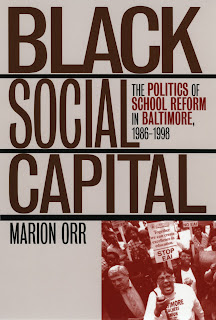
A point in the book Black Social Capital: The Politics of School Reform in Baltimore, 1986-1999 about Black "takeover of public school boards" is pretty apt, that Blacks could get control only once resources for improvement were pretty much dissipated.  The federal government stopped giving extra money to cities, as their needs were increasing.

Atlanta: the city too busy to hate ("How Atlanta became the 'city too busy to hate'," Yahoo).  The difference in success between Atlanta and the others was likely because at the time Atlanta was a growing city, while the others were shrinking.  

Labels: , , , , , ,

Monday, February 17, 2025

February is African-American History Month: Art History and Prominent Black Artists

Typically, African American or Black History Month is about "regular" history and how Black Americans have experienced the US.  I take it a little further in my piece on transportation history ("African American History Month and Transportation: February 4th | Transit Equity Day," 2025), and have written about creating "history trails" in systematic ways ("Four points about presentation of African American History in the context of Black History Month | reprint with an addition about the US Civil Rights Trail (versus the Dixieland Trail)," 2024).

I'm the last person to be able to write about art history generally, or in terms of African-Americans specifically, but that seems like a great topic area to celebrate during the month as well.  I don't recall a lot of art presentation in the context of Black History Month.  

Although yes, we see exhibitions all the time of Jacob Lawrence, Sam Gilliam, and contemporary artists Kehinde Wiley and Kara Walker.

For example, the Boston Globe has an article, "Art Review: Has John Wilson’s time arrived? He’s been here all along," on a retrospective at the Museum of Fine Arts on the sculptor John Wilson.  Who I hadn't heard of, but hell, I can pretty much only identify Rodin and Wiley as sculptors generally, given my lack of knowledge

“Eternal Presence” (1987), sculpture by SMFA alumnus John Wilson at the Museum of the National Center of Afro American Artists in Roxbury. Photo: Alonso Nichols

“Father and Child Reading” by John Wilson. PHOTO: COURTESY OF ROXBURY COMMUNITY COLLEGE

Also see, "Sculpting a Legacy: The Art and Impact of John Wilson," Tufts Now.

Labels: , , , , , , , ,

Tuesday, February 06, 2024

Four points about presentation of African American History in the context of Black History Month | reprint with an addition about the US Civil Rights Trail (versus the Dixieland Trail)

February is Black History Month

-- "Transit equity day, Sunday 2/4/24, in honor of Black History Month, Rosa Parks, and the significance of transportation history to African-American History," 2024
-- "Three ideas about presentation of African American History in the context of Black History Month | reprint with an addition about the US Civil Rights Trail (versus the Dixieland Trail)," 2024

The first two sections were published last year and are reprinted.

1.  Creating state-wide and regional history networks for African-American cultural interpretation.  One of the problems with creating African-American history museums is that while it is supported politically, once a museum is created they tend to not be well patronized.  Many have had serious budget problems.

Virginia Civil War Trails directional markerWhen I was doing work with some people in Cambridge, Maryland--where Harriet Tubman lived, and there is a small museum in Cambridge and more recently, the National Park Service created the Harriet Tubman Underground Railroad National Historical Park--I came to the conclusion that rather being satisfied with creating one off museums; local history trails; and the like, why not, using the example of the multi-state Civil War history trail, create regional and multi-state African-American history trails, incorporating existing assets.

The Civil War multi-state trail program includes more than 1000 sites in Maryland, North Carolina, Pennsylvania, Tennessee, Virginia and West Virginia--six states.  (In fact, DC should participate too.)

But states could create statewide African-American trails of sites, museums, places, etc. too.

South Side Station historic marker, Petersburg, VA:  Lee's Retreat, Virginia Civil War Trails

I wrote about this in more depth in "6Ps and cultural planning and the failure to create a network of African American historic sites across the DMV" (2016) in response to articles spurred by the opening of the Smithsonian National Museum of African American History and Culture.

Many local culture professionals argued it would be a boon to other African American history sites and facilities in the area, whereas I thought that it wouldn't happen on a trickle down basis, that an overt network of such assets, facilities, and sites needed to be created.

Local DC does have a history trailBaltimore has a variety of relevant sitesRichmond has a Slave Trail, there is the Alexandria Black History Museum, among many such resources across the region.  Just think how much stronger and more powerful these trails could be linked up as part of a broader system.
DC African-American Heritage Trail sign, Georgia Douglas Johnson Residence

2.  How about a month long "Doors Open" event during Black History Month.  "Doors Open" events were pioneered in Europe, and are when a community's culture organizations band together to provide a coordinated schedule of events, usually over a weekend, where people get free access to various cultural sites and events, many of which are not normally open to the public.

In North America, Doors Open Toronto is probably the biggest.  The Toronto Star even publishes an event guide. (2011 Doors Open Toronto Guide)

But Open House New York Weekend  is increasingly a big deal.  Pittsburgh created Doors Open Pittsburgh.

In DC the Dupont-Kalorama Museums Consortium has had a district-specific Doors Open event for many years, as do the art galleries on Upper Wisconsin Avenue in Georgetown, but including the participation of AU's Katzen Center for the Arts and the Kreeger Museum.  It's not exactly the same, but Georgetown Glow, an outdoor sculpture walk in December and January is growing into a great event.

My latest idea is that during February, Black History Month, community cultural organizations should organize a common calendar of events, along the lines of "Doors Open" events, where a community's cultural organization organize a weekend, week, or month of related activities.

In the DC context, ideally federal assets like the NMAAHC, the Frederick Douglass National Historic Site, and the Carter G. Woodson Home National Historic Site would also participate as well as the area PBS stations, etc.

A regional example from Southern California, Pacific Standard Time, a cross-museum program promoting California arts, spearheaded by the Getty Museum, shows how this can be done across jurisdictions.

3.  US Civil Rights Trail and historiography/critical race theory
.  I didn't realize that such a multi-state history trail had been created along the lines, until I was doing some ephemera research ("Travel the U.S. Civil Rights Trail," AAA World).

Long before white supremacists got worked up over "Critical Race Theory" ("What Is Critical Race Theory, and Why Is It Under Attack?," Education Week) I've been interested in the issue of historiography, especially the interpretation of Civil War in terms of "the Lost Cause."  


Often this idea of National Myth/National History is termed "civil religion" ("Can America's 'Civil Religion' Still Unite The Country?," NPR).

I was sad that President Obama didn't avail himself of the opportunity to give a major speech at the 150th anniversary of the Battle of Gettysburg.

Where this comes up with the US Civil Rights Trail is that I came an earlier form of the trail, but of Dixieland, and the Dixieland Trail and the promotion of "the unique culture of the South."


The Dixieland Trail was an automobile route organized and promoted by the travel divisions and state development boards of Georgia, Kentucky, North Carolina, South Carolina, and Tennessee. This map, featuring artwork by Logan Bleckley dated 1962, was issued by the Tennessee Department of Conservation and shows the manufactured highway meandering about the five participating states. Sixty-five different locations of interest are numbered and labeled and a variety of illustrated vignettes highlight important industries, recreational opportunities, and the natural beauty across the region.

Another version of the brochure, probably dating to the 1970s.

By contrast, the Civil Rights Trail covers 15 states, and should include more, like DC and Maryland.  But talk about different approaches to historiography, and the need to discuss it.


4. Some DC stories.  I lived in the H Street neighborhood starting in the late 1980s.  I followed urban issues but I wasn't involved.  Around 2000 I decided if I didn't get involved the neighborhood would continue to languish.

Sometime in 2000 or 2001 I went on a road trip with a college friend from Ft. Lauderdale to New Jersey and we stopped in cities known for historic preservation like Savannah and Charleston.  I came back thinking my neighborhood was no less beautiful then those, just different.

Eventually I got roped into running "a history study" for the neighborhood, with the idea that would lead to creation of a historic district.  Instead, I got diverted in Main Street historic preservation based commercial district revitalization.  But the study was detailed enough that in some academic treatise I am criticized as a gentrifier.  At the same time, I got more interested in DC's local history.

The Front Page Restaurant, Dupont Circle.  Shut down when WeWork bought the building.  It's decorative claim to fame was a bunch of newspaper pages posted throughout the restaurant, mostly from the now defunct Washington Star.  One of the pages was classified ads from WW2, organized in some categories--housing and jobs--by race.  I was floored, because at the time that was less than 50 years before.

Uline Arena, E.B. Henderson
.  One of the buildings I helped save was the old Uline Arena, site for professional hockey, basketball and other events. 

In the process of documenting the building for preservation, we learned that local civil rights activist (and DCPS official) E.B. Henderson coordinated an every event protest for almost two years in the late 1940s, to get the building desegregated ("Civil rights, public accommodations laws, and religious belief exceptions," 2016).

Carter Woodson home.  Woodson taught at Howard University and was the founder of the Association for the Study of African American History and African-American History Month.  

His house was owned by Shiloh Baptist Church which let it rot ("Losing my religion: Shiloh Baptist Church and Neighborhood Destabilization," 2005).  The church otoh wanted plaudits for "saving" the building. Eventually the National Park Service bought and restored it.

I was talking about it at a community meeting in Shaw once, and made the point that it was a shame that the building was in its sorry state, because that building is significant to American History, not only to "black history."  The person was surprised: "I never thought of it that way."

This company had restaurants in DC and other major cities.  It was party to a public accommodations lawsuit that was decided in 1953.

Public accommodations protesting and organizing in DC.  In the early 1950s, activists like Mary Church Terrell led campaigns against department stores and restaurants over segregated spaces.  Howard University students even led a "counter strike" at restaurants in the 1940s, although it's not well known ("How One Woman Helped End Lunch Counter Segregation in the Nation’s Capital," Smithsonian Magazine).

These were among the battles that pushed nondiscriminatory public accommodations laws forward.

Labels: , , , , , , , ,

Wednesday, March 01, 2023

Buckhead District of Atlanta looks to secede from Atlanta

Predominately white district ("Richest Atlanta District Inches Closer to Seceding From City," Bloomberg).  A kind of edge city, but within the city, not on the outskirts of the metropolitan area.  It's competitive with Downtown for commercial property location and development. It accounts for 38% of the city's tax revenue.  So its leaving would cripple the city economically.

Definitely counter to my call for cities and counties to merge, to create bigger, more viable polities.

It's being pushed by the State Legislature, especially the Senate.  The House may oppose, but unlikely.  The city would be forced to divvy up civic assets at a price favoring Buckhead.

It seems pretty ugly.

Labels: , , , ,

Tuesday, January 04, 2022

Why Did Keisha Lance Bottoms Quit? -- New York Magazine article | The Growth Machine and addressing economic inequality

One year when I was still in Ann Arbor, I ran for City Council in a Ward that at the time was still traditionally Republican because the guy who normally ran wasn't interested in doing so that particular year and there wasn't anyone else.

At that time, like many places, local elections were in the Spring, on a cycle different from national elections, making it less likely for college students to vote, so Republicans tended to have a majority.  This changed a decade later when Ann Arbor's local election cycle was made co-terminate with the national election cycle.

When I worked at the Center for Science in the Public Interest, it turned out that the person running the Americans for Safe Food project had, years before, run for Congress in Iowa.  He lost, but made the point that his campaign helped lay the groundwork for the subsequent election of Tom Harkin.

Anyway, we were sitting at the lunch table one day, maybe in 1990, talking about DC, and with the difficulties so serious, we wondered why anyone would run to be the mayor.

And then, I didn't even know about the urban sociology theory of the Growth Machine.

====

New York Magazine has an article about Keisha Lance Bottoms, the black woman who until recently had been Mayor of Atlanta, with seemingly endless possibilities in state and national politics.  

Instead she chose not to run for reelection as she crashed and burned over rising crime in Atlanta--to the point where the city's most exclusive area, Buckhead, a large driver of property tax revenue, is agitating to secede from Atlanta and create its own city ("Buckhead's proposed secession from Atlanta goes under the microscope," Axios), a number of police killings, covid, the George Floyd killing and how it drove local progressive politics, and the difficulty of being the Democratic mayor in the state's largest city, when state politics are dominated by Republicans.

From the article:

... Her time in office seemed to have sobered her; the magical transcendence that marked her inauguration had given way to a recognition that a lot would go unfinished. “I’m not God,” she said. “In the same way the groundwork for so many things was laid by previous mayors, I’m laying the groundwork for mayors to come as well.”

Whether her successor builds on that legacy remains to be seen. But the deeper question about Bottoms’s tenure haunts other American cities, too, especially after George Floyd — whether the demands of being a Black mayor are at odds with making those cities work for all Black people.

The article discusses the difficulties of balancing neighborhood revitalization with downtown development, and how over the last few decades of the "Atlanta Miracle" downtown development has been the winner.  

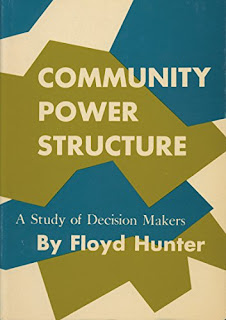
Interestingly, the political science theory of the urban regime was first explicated in an analysis of Atlanta ("Atlanta: Floyd Hunter Was Right," Who Rules America; "DC Growth Machine Update," 2010.)  

From the New York Magazine article:

... “An established, as well as rising, Black middle class could only benefit from a city in which the racial priorities but not the class priorities had changed,” writes historian Ronald H. Bayor. As Andrew Young, the city’s second Black mayor, once remarked, “Politics doesn’t control the world; money does. And we ought not to be upset about that.” To this day, Atlanta’s Black working class and poor are routinely left behind — their neighborhoods bisected, left to deteriorate in the shadow of new sports stadiums; their economic needs deprioritized in new business ventures welcomed by the city government.

Black mayors are tasked with managing this order on the tacit condition they don’t change it. You get the sense that many, from Jackson to Bottoms, are driven by the apprehension that boom times are fragile — that this experiment in Black rule, for all its successes, could just as easily fall apart and vindicate the racists. Atlanta’s economic momentum is already under threat from its mostly white Northside. The local cityhood movement, in which mainly rich communities in Georgia break off to form small cities, has recently enticed Buckhead, Atlanta’s wealthiest district. The big reason its leaders have given for wanting to secede is crime. And the easiest way for mayors to perform seriousness on the matter is to throw money at cops, to greet Black suffering with nightsticks and gun barrels.

This reminds me, albeit a little differently, about a point made by Marion Orr in Black Social Capital: The Politics of School Reform in Baltimore, 1986-1999, how African Americans achieved "control" of municipal institutions in big cities but only after their heyday had passed, and in a time of reduced economic circumstances, making it almost impossible to achieve the big aspirations that seemingly having control unleashed.

In Baltimore, the city had long since been outspanned by the suburbs.  By contrast, Atlanta is growing, albeit marked by poverty with a strong Downtown core and a number of large corporations are headquartered there, with firms continuing to relocate there (for example Mercedes Benz, a large State Farm facility, etc.).  

In Atlanta, the contract between the largely white economic elite and the black political elite ensured that political control remained  subservient to the interests of property and capital, that neighborhood and black economic and social improvement would always take a back seat.  

==== 

One of Bottoms' initiatives is called One Atlanta, a poverty reduction initiative along the lines of my recommendations for St. Louis ("St. Louis: what would I recommend for a comprehensive revitalization program? | Part 1: Overview and Theoretical Foundations," "St. Louis: what would I recommend for a comprehensive revitalization program? | Part 2: Implementation Approach and Levers") or DC ("Social urbanism and equity planning as a way to address crime, violence, and persistent poverty").  

But the funding is paltry, less than $35 million over 5 years, drawn from proffers from a development agreement ("Atlanta City Council authorizes agreement for mayor's One Atlanta initiative," Newsbreak).  Coordinated through a newly created Mayor’s Office of Equity, Diversity and Inclusion, the initiative aims to provide:

  • A safe and welcoming city 
  • World-class employees, infrastructure and services 
  • An ethical, transparent and fiscally responsible government 
  • Thriving neighborhoods, communities, and businesses 
  • Residents who are equipped for success
[and is charged with] ensuring more equitable access to economic and workforce development opportunities across the city and developing equity champions across citywide departments.

Separately, the Atlanta Beltline initiative has been underway for almost two decades.  It's a smart growth project leveraging the once extant circumferential rail line.

MARTA, the metropolitan subway system, has been developing new expansion plans and some of the previously resistant suburban counties, facing serious transportation difficulties, are more open to adding public transit to the mix.

A number of businesses have decamped for the suburbs, including the Atlanta Journal Constitution newspaper and the Atlanta Braves--counter to trends in other center cities. 

I'd say that in legacy cities in the Midwest and Northeast, many corporations are relocating back to the center city from the suburbs.  But in the growing sprawling places in the South and West, there is still the strong trend of suburbanization of commerce.

--  "Could bringing premier regionally headquartered business enterprises to the Pennsylvania Avenue Corridor be key to its renewal and revitalization?," 2014
-- "A lesson that seeing is believing: Panasonic's new building in Newark, NJ as an example, positive and negative, in businesses coming back to the city center," 2015
-- "Corporate headquarters relocating to the center city: GE chooses Boston," 2016**

** Note that GE's subsequent crash and burn ended up making the relocation not particularly lucrative for the City of Boston ("GE breakup creates uncertainty around Boston HQ," Boston Business Journal).  There are only 200 employees at the Boston headquarters, while there were 800 employees at the GE campus in Stamford, Connecticut.

Labels: , , ,