Rebuilding Place in the Urban Space

"A community’s physical form, rather than its land uses, is its most intrinsic and enduring characteristic." [Katz, EPA] This blog focuses on place and placemaking and all that makes it work--historic preservation, urban design, transportation, asset-based community development, arts & cultural development, commercial district revitalization, tourism & destination development, and quality of life advocacy--along with doses of civic engagement and good governance watchdogging.

Tuesday, January 13, 2026

Trump's F****** with Culture and Civil Society Harms the Nation and Washington DC

Normally government moves pretty slow. The pace at which President Trump is destroying institutions and enriching his family, while spending much of his time playing golf, staying up late, and tweeting, is unprecedented. It's almost impossible to keep track.

Good thing he had the Heritage Foundation's Project 2025 blueprint to destroy progressive leaning government! ("The year Trump broke the federal government," Washington Post).

Including attacking nonprofit, progressive leaning organizations ("Trump's Secret War Against Vital Nonprofits," Alliance for Justice, "What is Trump doing to US nonprofits and philanthropies?," Devex. "Progressive Nonprofits Condemn Trump’s Targeting of George Soros and His Foundations," Chronicle of Philanthropy, "Senate GOP Ramps Up Attacks on Left-Wing Nonprofits," NonProfit Quarterly).

MAGA-fying civic education ("Trump Administration Announces New Civics Effort With MAGA-Aligned Groups," NYT) plus prayer in schools ("Trump wants prayer back in schools. Boston has a cautionary tale," Boston Globe).

And specific attacks on "blue" states although not limited to culture ("Trump is waging war on Democrat-led states," Globe).

Banner at the Kennedy Center calling it the "Nation's Cultural Center."  Photo by Bonnie Cash/UPI.

Because the arts and education are seen as dominated "by the left" the Trump Administration has been militant about defunding organizations that support or practice these disciplines.

The same goes for nonprofit organizations involved in human services, agriculture and other fields.


Work continues on the construction of the ballroom at the White House on 9 December in Washington DC, where the East Wing once stood. Photograph: Pablo Martínez Monsiváis/AP

Here's a line up of some of the destruction.

And building grandiose monuments to his ego

President Donald Trump addresses a dinner for donors who have contributed to build the new ballroom at the White House, Wednesday, Oct. 15, 2025, in Washington. | John McDonnell/AP Photo
Photo: Nathan Howard, Reuters.

Massive banners with Trump’s face are adorning some federal buildings in DC. 
Democrats are crying foul.  CNN photo.
Armored vehicles drive during the Army's 250th anniversary parade in Washington, D.C. 
Alex Wroblewski/AFP via Getty Images
  • And he wants his face on coins even though the law says living people can't be so honored.
The U.S. Mint released three prototype designs for a $1 coin featuring President Donald Trump 
to celebrate the country’s 250th anniversary this year. 

====

In DC, he also wants to take over the public golf courses ("Trump’s self-serving takeover of D.C. public golf is bad news for all," The Athletic/NYT).

Labels: , , , , ,

Tuesday, November 25, 2025

State of Utah Long Term Risks report

I was struck by the book The Fifth Risk, in its discussion about the Energy Department during the Obama Administration, and their emphasis on identifying and managing risk.  From the ReadyRoom blog entry "Risk Management Book Club #2: The Fifth Risk":

The book's title comes from MacWilliams's assessment of the risks faced by the country at the time of this transition: nuclear accidents; nuclear attacks from North Korea and Iran; an attack on the electrical grid; and project management, "the fifth risk." MacWilliams, a professional risk manager, believed the seamless transition of responsibility at DOE was key to its ability to protect the country.

In a post, I argue that a city's elected officials and stakeholders should see themselves as risk managers ("Town-city management: "We are all asset managers now"," "Learning the wrong lessons from risk management: GFC, Boeing (+ deregulation)"), and how like with large settlements because of police department misconduct, that's an indicator of a failure to manage risk ("Killing people is seen as a routine outcome, not as an indicator of the need for change: Orange County Sheriff's Department versus Fullerton Police Department," "Where is the risk management approach to police misconduct and regularized killings of citizens?").

So the fact that the State of Utah Legislature's Auditor General has produced a report on the long term risks faced by the state, High-Risk List" Identifying and Mitigating Critical Vulnerabilities in Utah – 2025, is quite interesting. (The report is modeled after one produced by the Government Accountability Office at the start of each new Congress.) The top ten risks are:

  1. Meeting Utah's water needs 
  2. Aging water infrastructure 
  3. Education pathways to in-demand professions
  4. Insufficient behavioral health capacity 
  5. Planning effective transportation 
  6. Public workforce shortages 
  7. Improving housing affordability 
  8. Utah's energy policy 
  9. Threats to cybersecurity and data privacy 
  10. Federal revenue diversification
In fall 2022, the Great Salt Lake hit its lowest water level since record keeping began. The lake’s elevation sank to nearly six meters below the long-term average. Photo: C. Yamane

I'm surprised the possible dissipation of the Great Salt Lake is not listed separately ("‘Last nail in the coffin’: Utah’s Great Salt Lake on verge of collapse," Guardian, "The Great Salt Lake Is Drying. Can Utah Save It?," New York Times, "The Great Salt Lake is shrinking. What can we do to stop it?," Science News).

Nor the impact of Climate Change and the Environment--a state that emphasizes outdoor tourism in particular skiing ought to be thinking about the long term effects of less snowfall, especially with the possibility of Utah being the permanent site of the Winter Olympics ("What will it take to save the Great Salt Lake by the 2034 Winter Olympics? It depends on whom you ask.," Salt Lake Tribune). 

And air quality, especially in the winter--I'm amazed that the EPA gives the Salt Lake Valley a pass on this ("Booming Utah’s Weak Link: Surging Air Pollution," "‘We Can’t Let the Kids Go Outdoors’: Our New Reality on the West Coast," NYT).  

I hope "agricultural priorities" is an element of water needs. Air quality ("Booming Utah’s Weak Link: Surging Air Pollution," "‘We Can’t Let the Kids Go Outdoors’: Our New Reality on the West Coast," NYT)  The face is 80% of water use is for agriculture, and half that goes to alfalfa production which is mostly shipped overseas for cattle feeding.  So China basically is getting Utah's water for cheap.  From the NYT:
While climate change has contributed to extensive water shortages in the Southwest, the Great Salt Lake’s decline is mostly human-caused. Agriculture uses 71 percent of the water that would otherwise flow to the lake, and cities use around 17 percent, according to research compiled by the Great Salt Lake Strike Team, a group of climate scientists, policy analysts and state regulators.

I don't see how Utah's energy policy is deserving of a call out and the more general issue of Climate Change and the Environment is not.

Chevron refinery at night.

Utah as a petro state.  I haven't fully read the report, but for a few years I've argued that Utah is a petro state, that the concept of nations as petro states ("The Petro States of America," Bloomberg) can be thought of sub-nationally.  

There are five refineries in Salt Lake and North Salt Lake, refining oil from Utah and Wyoming. Much of it is sold to markets outside the state.  And the state is getting approval for a railroad on federal lands to ship out crude oil for refining overseas.

Except for California, policy in petro states in the US and Canada favors fossil fuels, although Utah is gambling on nuclear energy ("Utah unveils plans to bring nuclear hub to Brigham City," Salt Lake Tribune).  

Another element of a petro state is its place within the automobile economy.  Utah doesn't have any auto manufacturing plants, but two of the ten largest car dealership groups are based in the state, adding their voice too fossil fuel supremacy.  

And road building, more than transit extension, is the top priority of the Utah Department of Transportation.  

The State Legislature even goes to the extent of trying to prevent "traffic calming" initiatives in Salt Lake City ("Bill giving UDOT veto power over some SLC street projects moves to governor’s desk," Salt Lake Tribune).

Technically, Utah is more of an extractive resources economy.  25% of the state budget comes from taxes on copper mining--but the state is second to Minnesota for copper production.  The oil thing is just a chaser.  Coal is an element that's up there too ("Mining is big business in Utah — to the tune of billions of dollars per year," Salt Lake Deseret News).

No takers.  An EV charging station in Moab, Utah.

Yet from the air quality and Olympics angle, were I state leaders, I'd push for the concept of EV only sales of automobiles by 2035 ("US Senate votes to block California 2035 electric vehicle rules," Reuters), the year after the Olympics, as a way to shift away from fossil fuels and to improve air quality and limit the impact of higher temperatures brought on by climate change.

(Rick Egan | The Salt Lake Tribune) New home construction in Saratoga Springs on Thursday, Dec. 3, 2020.

I'd say sprawl/urban development form--the Salt Lake Valley is the epitome of the sprawl, despite all you read about Utah being ahead of the pack in environmental planning ("The Utah Model: Lessons for Regional Planning," Brookings)--is also a risk in terms of water use, energy use, air quality, climate change and the environment, etc. ("More suburban sprawl won’t fix Utah’s housing affordability problem," "Utah launches all-out push to build thousands of new ‘starter homes’ that you might be able to afford," "Many Utahns ‘stuck’ with hourlong commutes amid housing crisis," Salt Lake Tribune).

I'd also add the risks of continual tax reduction and political homogeneity.  The state prides itself on growth--expecting to add 2 million more residents by 2065.  The legislators constantly cut taxes, saying "we need to share the benefits of growth" when the fact is, growing places need to spend more on creating new infrastructure and replacing aging infrastructure*, not less.  A city and county risk is frequent interference and law preemption by the State Legislature.

=====
Flickr photo by Steven Vance.  It's a nice park....

* One example is the park I'm on the board of--one building in dire need of replacement is 61 years old.

We have tens of millions of dollars in unfunded capital improvement projects.  One source of funds we'd normally rely on, won't happen until 2029, because it needs to go on next year's ballot, and after a ballot failure last year, the County Mayor is postponing it to the next cycle.

Budget cutbacks mean a bunch of projects we intended to start in 2027 won't be funded, as the County looks to increase property tax by 20%--the first property tax increase in 6 years--and of course, people are up in arms ("Salt Lake County mayor proposes nearly 20% property tax increase," KUTV).  And our park is but one site in an array of hundreds that have serious capital needs.

Labels: , , , ,

Monday, November 24, 2025

Zohran Mamdani is the next NYC Mayor: what that means for progressive politics

UP to election day on November 4th, conservative Democrats, Republicans ("New York Republicans Unite in Attacking Mamdani," New York Times) and the editorial pages of the Wall Street Journal and newly decidedly right wing editorial pages of the Washington Post were up in arms about the possibility of a "socialist Muslim" becoming mayor of the US's largest city.  The Times was equivocal but resigned.

The New York Post of course was pretty shrill.

Note that there are or have been some great Muslim mayors in big cities ("The Meaning of a Muslim Mayor," The Nation).  

Naheed Nenshi in Calgary--termed out, now leader of the New Democratic Party at the provincial level ("Nenshi's former aides see an eerily similar story in New York City mayoral candidate Zohran Mamdani," National Post, "Naheed Nenshi leaves behind a historic legacy as Calgary mayor," Toronto Globe & Mail).

Sadiq Khan in London ("London’s Mayor Says Mamdani’s Victory Mirrors His Own," New York Times, "Muslim mayor, Jewish voters, Trump rage. London’s lessons for Mamdani.," Washington Post).

Mamdani won pretty decisively ("Mamdani wins New York City mayoral race, in a historic victory for progressive," NPR).  Mamdani victory speech.

Trump, after having called him a communist, met with him this week and spoke well of him ("Trump-Mamdani meeting marked by surprising moments of praise. Here are 9 memorable quotes," CBS News, "Mamdani, Trump’s expected slugfest turns into a lovefest as president says socialist will make NYC ‘greater than ever before’," New York Post).  

The Business Development Board of Palm Beach County is funding a campaign to advertise in New York City with hopes of drawing interest from New York-based businesses and industries. These efforts include advertisements that call on businesses to “break up” with New York. (Courtesy/Business Development Board of Palm Beach County)

South Florida communities have placed billboard ads in NYC seeking to recruit fearful businesses and residents ("Palm Beach County leaders launch campaigns to poach New York-based businesses," Ft. Lauderdale Sun-Sentinel, "Those NYC billboards sent a message, just the wrong one, to Miami Beach residents Read more at: https://www.miamiherald.com/opinion/editorials/article312950849.html," Miami Herald), but for the most part, there are far more reasons to stay in NYC ("New York’s Golden Handcuffs: Why the City Has a Special Hold on the Rich," Bloomberg, " Wealthy Buyers Say, ‘Mamdani Who?’ Some are underbidding with the hope of a real-estate panic — but not having much luck," Curbed) than to live in South Florida.

Many conservatives fear that Mamdani will be successful ("Mamdani’s Surreal and Shrewd Pragmatism," New York Times).  From the New York Magazine article "Zohran Mamdani’s Next Act":

We had nearly a year of discussion and debate before voters gave the go-head to Mamdani’s core four promises: freeze the rent, expand early education, make buses fast and free, and open one government-owned grocery store in each borough to help ease New York’s endemic hunger problem. “The residents of the city have spoken, and it’s been very clear, and they’ve done it in amazing numbers, and their response to the Mamdani campaign is that this has to happen,” Dean Fuleihan, a veteran government manager who will be Mamdani’s first deputy mayor, told me. “So I don’t see it as a question of choice.”

Progressives are happy ("A Socialist in the White House," The Nation).  I do fear some of his platform is a bit unrealistic.  Like government run grocery stores. 

But if he can make headway in general, it will be great for revitalizing the Democratic Party-progressive agenda (" How Mamdani built an ‘unstoppable force’ that won over New York," "Mamdani’s victory is a rebuke to the failed strategies of the Democratic party," "Improbable victory for city’s first Muslim mayor offers new playbook for fight against Trump," Guardian, "Zohran Mamdani and the politics of trying," Boston Globe), "Will Mamdani’s Victory Advance a Solidarity Economy in New York City?," "How New York City Mayor-Elect Mamdani Is Bridging Climate Preparedness to Kitchen Table Concerns," NonProfit Quarterly).

However an op-ed in the Post suggests that a contrast between the more centrist "bread and butter" political agenda by the new SF mayor and Mamdani's progressive agenda will be interesting ("Let the natural experiment in Democratic governance begin"). Also see, "Tensions between renters and homeowners challenge Mamdani housing plan," Washington Post.

Labels: , ,

Tuesday, October 14, 2025

Minneapolis television news anchor creates documentary saying that Minneapolis is a shithole

According to the Minneapolis Star-Tribune, "What to make of ‘A Precarious State,’ the new film that sees Minneapolis through a dark lens." Rick Kupchela produced it, paid for it to be broadcast on local television--it's on YouTube too--in advance of Minneapolis' mayor election.

Billed as a public education campaign, the film, “A Precarious State,” has drawn some 300,000 views on YouTube and aired statewide on ABC affiliates last week as a paid advertisement.

Asked if it was released to influence city elections, Kupchella, in an interview with the Minnesota Star Tribune, said it wasn’t, but he also said it was necessary to release the film while it was still relevant.

The film doesn’t interview or mention Mayor Jacob Frey, who’s battling several challengers for a third term, but a woman who appeared in the documentary told the Star Tribune she agreed to be in it after she was told it would portray Frey in a positive light.

Kupchella won’t say who paid for the film, though he did tell the Forum of Fargo-Moorhead that it was produced with the help of “business and community leaders.” He said donors weren’t eager to come forward publicly in today’s supercharged political climate. “I think it’s a very important story that we uncovered here,” he said in an interview.

He says state school results are poor, city crime is out of control, that the city is socialist--like Seattle some Democrat Socialist of America members sit elected to City Council and this year the mayoral campaign features another ("Minneapolis mayoral candidate Omar Fateh is a democratic socialist. Here’s what that means," MST).  DSA representatives are in the State Legislature and on St. Paul's City Council as well.

=====

Interestingly, American Prospect has an article, "The ad campaign for capitalism," about the national business community's campaign in the 1970s to save capitalism.

And Rolling Stone on billionaires wanting to control politics, "The Right’s Secret Plan to Help Billionaires Buy Elections."

And it turns out Trump's proposed university compact ("Trump Offers All Colleges Preferential Funding Plan Rejected by MIT," Bloomberg, "Inside the Trump Administration’s Assault on Higher Education," New Yorker) was provided in draft form by a trustee of the Wharton Business School at Penn ("The Billionaire Behind Trump’s Deal for Universities," New York Times).  Note that even if a college president is against signing, a conservative board might force the university to agree ("‘One-sided deal’: College presidents see Trump offer rife with peril," Politico).

Speaking of socialists ("America's Socialist Experiment," TwinCities PBS), Professor Joshua Freeman argues that the ostensibly Fiorello LaGuardia, NYC's mayor during the Depression, had a socialist agenda ("How Mayor Fiorello La Guardia Transformed New York City," Jacobin).

Labels: , , , ,

Saturday, August 02, 2025

Despite what Trump and Fox News says, cities are pretty good places to live

 About Seattle, "A Seattle visitor’s guide:  Riots, bad drivers, the big dark and overrated Dick’s burgers. Locals and experts tell the truth,." Seattle Times.

Josh Cruz, 38, head of marketing for a small software company, moved here from St. Petersburg, Fla., with his partner. Cruz belonged to a group of fans of the Tampa Bay Lightning hockey team. “One of the first literal responses I got from a conservative colleague was, ‘What are you gonna do there? Join antifa?’

“I took it to mean he watched too much Fox News,” Cruz says about his fellow hockey fan. He says his mom also asked about the protests that were portrayed as riots. “I told her the news focuses on one group of three people as the night ended, (who) did one stupid thing,” he says.

... Jeff Asher, co-founder of the firm, says, “From a crime perspective, Seattle is just like any major city. If crime is your main concern, then you shouldn’t be visiting any major American city.”

Friends and neighbors were in Portland recently it's fine, which is probably why housing prices are high ("Buying a Home in Portland Is More Expensive Than You Think") Wall Street Journal).

High demand for housing in Forest Hill Queens ("Home Buyers Are Paying Millions to Experience the ‘Fairy Tale’ of Forest Hills," Wall Street Journal).

SF isn't a cesspool.

Trump and his LA military incursions were a way to satisfy his base ("Newsom Slams Trump For ‘Brazen Abuse of Power’ as L.A. Mayor Imposes Curfew," New York Times), not based on reality ("Trump wants to 'liberate' Los Angeles, residents say 'no thanks'," Reuters), and the National Guard and Marine troops he sent there have left ("More than 1,000 National Guard troops leaving L.A. Newsom says Trump’s ‘political theater backfired’," Los Angeles Times), "Marines Will Begin Withdrawing From Los Angeles," New York Times).  

The "rioting" was limited to a couple blocks of demonstrations, with riot police and Trump's federal police and troops escalating the situation.

Although yes, Seattle, SF and Portland reached progressive overreach in the early 2020s, and the electorate dialed back, voting a bit more to the center than to the left.  This is particularly evident in Seattle.

In SF, a Levi Strauss heir connected to the business community won the mayoralty.  And the super progressive prosecutor was recalled out as crime climbed.

OTOH, also in Boston, the Downtown housing market is stagnant ("As housing prices in Mass. soar, they’ve remained stagnant in downtown Boston. Here’s what that means for the city").

It's so obvious on article comments that are negative on particular cities that the writer has no real experience with cities.  The same with Fox News and of course Trump ("‘Cesspools,’ ‘Hellholes’ and ‘Beautiful Places’: How Trump Describes the U.S.," New York Times, "Trump keeps brutalizing immigrants because he's failing at everything else," USA Today), "The politics of fear," New Yorker).

Fox trumps up crime in cities before elections especially and it probably had an effect in increasing the number of Republican House members from New York State ("Crime coverage on Fox News halved once US midterms were over," Guardian).


=====

In Boston's election for mayor, Josh Kraft, of the New England Patriots and a conservative, is running, figuring he had a chance like Daniel Lurie in SF.  His polling is terrible ("Can the Josh Kraft campaign be saved?," Boston Globe).

Labels: , , , , , , ,

Monday, February 24, 2025

February is African-American History Month: Urban planning history -- the attempt to make Roxbury a separate city from Boston

I was surprised to come across a Boston Globe article ("Roxbury, Mattapan, and parts of Jamaica Plain could have become a separate Black majority city. Here’s what happened") on a de-annexation proposal for Boston, where the predominately Black areas would create their own city called Mandela.  

Also see 

-- "Separatist City’: The Mandela, Massachusetts (Roxbury) Movement and the Politics of Incorporation, Self-Determination, and Community Control, 1986–1988," Trotter Review
-- "Africa in Boston: A Critical Analysis of Mandela, Massachusetts," libcom
-- "Black neighborhoods becoming Black cities: Group empowerment, local control and the implications of being darker than brown," Harvard Civil Rights- Civil Liberties Law Review, 1988

Greater Atlanta. More recently, in Greater Atlanta, there has been a "create your own city" movement to separate blacks and whites, by selectively incorporating county lands ("The Incorporation of New Cities Has Increased Racial Segregation in Metro Atlanta," JCHS, "Suburbs, Inc.: Exploring Municipal Incorporation as a Mechanism of Racial and Economic Exclusion in Suburban Communities," Russell Sage Foundation Journal of the Social Sciences).  This continues with a proposal to calve off the Buckhead District ("Georgia senators reject Buckhead efforts to leave Atlanta," AP).  

Schools.  Similarly, in Shelby County, Tennessee, which created a consolidated city-county school district, white residents began breaking off and creating their own school districts ("Merger of Memphis and County School Districts Revives Race and Class Challenges," New York Times, "Back to the future: A new school district secession movement is gaining steam," Washington Post).

Mandela versus electing Black leaders.  While the Roxbury initiative was voted on, twice, it didn't pass ("Separatist City of ‘Mandela’ : Boston Voting on Proposal to Let Black Areas Secede," Los Angeles Times).  From the Globe article:

The Mandela referendum was defeated overwhelmingly that year and lost again at the polls two years later. Yet the underlying idea behind the movement — to place decision-making power and resources in the Black community’s own hands — survives nearly 40 years later. As voters in those same neighborhoods have worked over the years to choose candidates they feel are most suited to transform Black Boston, the issues of disinvestment, inequality, and underrepresentation that Mandela hoped to address have still been top of mind. ...

The proponents’ asks focused on giving Black people decision-making power. They wanted hard-earned taxpayer dollars to funnel back into these neighborhoods, and not other parts of Boston with more historic investment. They wanted to control development. They wanted better outcomes for students in Boston Public Schools, which was dominated by kids of color. And they wanted full political representation from their blocks, not just the few Black firsts that had penetrated Boston City Hall in the years prior. 

 “It was about ownership,” said Kambon, director of the Black Community Information Center in Roxbury. “We want to control our own destiny. We have the resources and the people power to make it happen.”

Black leaders, black city, no change?  I was thinking about this in terms of how many center cities around that time, majority Black, were starting to become Black led, although this was another 5-8 years after Roxbury.  And how Black elected leadership didn't make a lot of difference to urban outcomes compared to their more recent white predecessors.

Detroit, Cleveland, Chicago (in the 1980s), Washington, DC, Los Angeles were among the cities electing Black mayors.  And Atlanta.

A point in the book Black Social Capital: The Politics of School Reform in Baltimore, 1986-1999 about Black "takeover of public school boards" is pretty apt, that Blacks could get control only once resources for improvement were pretty much dissipated.  The federal government stopped giving extra money to cities, as their needs were increasing.

Atlanta: the city too busy to hate ("How Atlanta became the 'city too busy to hate'," Yahoo).  The difference in success between Atlanta and the others was likely because at the time Atlanta was a growing city, while the others were shrinking.  

Labels: , , , , , ,

Thursday, March 09, 2023

DC's crime bill overturned by Congress

 -- "Senate votes to block controversial DC crime bill," CNN

I haven't written a blog entry on this, just comments, and comments on Washington Post article.  While the revision of DC's criminal code, in some quarters the changes were perceived to be more lenient, in the face of a significant rise in the city's murder rate, crime involving guns, car jackings, and continued escalation of youth-involved crime.

I write that for the most part, DC's legislators have it pretty good.  They are a city-state, with control over the tax revenues generated within the city, and for the most part, not having the kind of oversight that is typically performed by State Legislatures, which may be quick to preempt local control in favor of corporate and cultural warfare goals.

But the fact is that Congress does have the final authority on approving local legislation, even though the DC Home Rule Act of 1973 pretty much created local control of local governance.

The city's legislators, many of whom lack substantive experience of cities in the period of the 1970s through the 1990s when many were in serious decline, and had problematic public safety, didn't realize that at times they need to manage the narrative and "manage up.'  In this case, how the law would be perceived in the world of public opinion, and the competition between Republicans and Democrats.

This letter to the editor ("The D.C. Council’s crime bill put statehood further out of reach") expresses it pretty well:

I have supported home rule since moving to D.C. in 1974. I proudly wear my “51” hat. But after a 2020 election when perceptions of being soft on crime hurt many Democratic candidates, the D.C. Council’s tone-deaf response was to enact a law that forces its allies to make a choice between supporting home rule or increasing their own electoral vulnerability. Not surprisingly, they are opting for their own survival.

So, rather than attacking President Biden and Congress for likely blocking the D.C. criminal code reform, the D.C. Council should own this fiasco. It might well happen again with the bill allowing illegal immigrants and other noncitizens to vote in local elections. It’s doubtful the council could have come up with any other bill that is more likely to provoke GOP reaction.

Democrats, who lost control of the House of Representatives in the 2022 election because of crime demonization being particularly effective in Greater New York City, didn't want to be on the wrong side of this issue.  Although there is criticism in some quarters about doing the wrong thing because of politics ("Biden puts reelection over principles with D.C. decision," Washington Post).

When President Biden announced last week that he wouldn't veto a disapproval resolution, the new DC crime bill was toast.

====

FWIW, I find it hard to believe that anyone who lived in DC during the period of great disorder, would ever want a return to those times.  It was terrible, and for me, personally very costly.

My lesson is that the forces of disorder are always pushing, and you cannot yield.

Few people seem to fully grasp that urban revival in the 2000s was sparked by significant public safety improvements.

At the same time, I recognize the problems of police brutality, the carceral state and overpolicing of people of color, warrior policing, etc.

Sadly, the "defund the police" messaging was another lost opportunity to control and shape the narrative, which should have been redefining what public safety means, looks like, and how it is delivered, because criminalization of social problems and having police officers be first responders when they are often not the right choice is not serving American society very well.

-- "The fine line between urban/center city chaos and order," 2020
-- "The opportunity to rearticulate public safety delivery keeps being presented," 2021
-- "Is it too late to change the messaging on "Defund the Police"? How about "Reconstruct Policing"?," 2020
-- "Towards a public safety model that is broader than policing," 2020

Note that my writings on equity and social urbanism come out of a desire to try to break the cycle of urban poverty. Sadly, DC has definitely failed on this dimension.

-- "Social urbanism and equity planning as a way to address crime, violence, and persistent poverty: (not in) DC," 2021

Which came out of my experience on grand jury duty in 2013:

In 2013 I was on grand jury duty.  Each jury had a specialization--ours was drugs and guns mostly, but we still dealt with murders, assaults, and other violent crimes.  

The lesson after three months was that DC spends billions of dollars each year--police, emergency services, health and social services, criminal justice, education, etc., in the communities where crime is persistent--just to keep the neighborhoods and people within them at equilibrium/the same--not to improve.

Labels: , , , , , , , ,

Wednesday, March 01, 2023

Buckhead District of Atlanta looks to secede from Atlanta

Predominately white district ("Richest Atlanta District Inches Closer to Seceding From City," Bloomberg).  A kind of edge city, but within the city, not on the outskirts of the metropolitan area.  It's competitive with Downtown for commercial property location and development. It accounts for 38% of the city's tax revenue.  So its leaving would cripple the city economically.

Definitely counter to my call for cities and counties to merge, to create bigger, more viable polities.

It's being pushed by the State Legislature, especially the Senate.  The House may oppose, but unlikely.  The city would be forced to divvy up civic assets at a price favoring Buckhead.

It seems pretty ugly.

Labels: , , , ,

Mayor Lori Lightfoot not reelected in Chicago

 Interesting video on Chicago NBC 4.

Didn't make a lot of friends during her period in office.  Underresourced for the campaign.  Chose to campaign against former County Commissioner now US Representative Jesus "Chuy" Garcia, who ended up not in the top two, but fourth.  On the defense from the outset because of crime.

Former School Superintendent Paul Vallas and Cook County Commissioner Brandon Johnson won the top two positions, and now are in a run off ("Former CPS CEO Paul Vallas secures spot in runoff election for Chicago mayor," Chicago Tribune).

This NBC4 video of Rep. Garcia's concession speech is interesting because he ties his campaign to the community organizing tradition of former Mayor Harold Washington, who defeated the Daley political machine (sadly Washington died in office, leaving his mission unfinished) and the building of Latino political power in Chicago, the rise in the number of Hispanic alderpersons, etc.

Labels:

Thursday, October 06, 2022

La Manplesa: documentary on the Latino "riots" in the Mount Pleasant neighborhood of DC, 1991

It's being broadcast now.  In the DC area, PBS World Channel isn't available although some of its programming is broadcast on Maryland Public Television secondary channel, MPT2.  But not tonight..

-- "La Manplesa: An Uprising Remembered," PBS World Channel, "America ReFramed" documentary series

On May 5th, 1991, people took to the streets of Washington D.C.’s Mount Pleasant neighborhood to protest the police shooting of a young Salvadoran man, Daniel Gomez. Through testimony, song, poetry, and street theater, LA MANPLESA: An Uprising Remembered weaves together the collective memory of one of D.C.’s first barrios and dives into the roots of the '91 rebellion.

-- "Mount Pleasant Riots," WETA-TV "Washington in the 90s" 
-- "1991: Mount Pleasant," Patrick Scallen,Washington History,Vol. 32, No. 1/2, Meeting the Moment: SPECIAL ISSUE (FALL 2020), pp. 35-37 (3 pages)

Latino emigration to DC was tied to unrest in Central and South America.  The Latino population in Mount Pleasant tracks to the 1940s, and it continued with each round of unrest, especially in and from El Salvador.

I had only lived in DC for about 4 years when this happened.  I was struck by the irony of the "oppression" of people of color by other people of color.

-- "Black on brown racism," 2009

From "The Painful Lessons of Mount Pleasant: Alienation Felt by Hispanics Caught Mayor and City Off Guard," by Christine Spolar, Washington Post, May 12, 1991, A1:

But the sudden spotlight on the Hispanic community has irritated some black leaders, opening a window on the politics of the 1990s in this majority-black city. Poor blacks and poor Hispanics could find themselves in competition for city help as the District's fiscal crisis deepens. ... The clearest challenge to the fledging efforts by Hispanics came from council member H.R. Crawford (D-Ward 7).

"If they don't appreciate our country, get out," he said Thursday. he also said he did not want violence to be rewarded with city programs, and added that the city needed to be concerned with "legitimate members of the community."

At the time, I shook my head, because that sounded like an almost verbatim quote from White racists opposed to equal rights for African-Americans, during the time of the Civil Rights Movement. It made me reflect on how far the nation had come, and how at the same time, as a people we had not moved forward far at all. .

Interestingly, later then Mayor Sharon Pratt Dixon said she mishandled the response ("Former D.C. Mayor: Ferguson Pols Should ‘Own Up To The Concerns’ Of Community," NPR). From the article:

Ultimately, as with Ferguson, we recognized that we had a deeper problem and we had to be more aggressive in owning up to the problem. And the leadership of the city had to say, ‘We understand why you’re angry, this isn’t an appropriate behavior for your anger but we’re going to do something about it.’ So we did let them know in a more personal way that we heard them and we’d address their concerns,” she said.

In the wake of the riots, the U.S. Commission on Civil Rights produced a 173-page report (Racial and Ethnic Tensions in American Communities: Poverty, Inequality, and Discrimination. Volume I: The Mount Pleasant Report) highlighting the causes of the disturbances in Mt. Pleasant, among which was a police department that did not reflect or understand the city’s growing Latino population, said Pratt.

“I don’t think we had been aggressive enough in embracing this new population that was developing in the city. We did not have enough officers who could speak Spanish, not enough officers who we’re attuned to the cultural differences that may exist. And we had fallen behind in that regard,” she said.

The commission also proposed a number of solutions, including police reforms and increased Latino representation within the city’s government.

The city did create a number of outreach initiatives and directed more funding to various Latino organizations.  But the 2009 blog entry indicates that the problem continues.

Labels: , , , ,

Sunday, April 17, 2022

Seattle Times column on the impact on Washington State from Idaho's anti-public health policy: States as "laboratories of autocracy"

 Back when government was not about culture wars but helping people, there was the phrase "states as laboratories of democracy" referring to how many best practices adopted by the federal government, like Social Security, were pioneered by states acting innovatively.  (Although this at times was difficult for states because they didn't have the funding capacity possessed by the federal government.)

-- "A Progressive Call to Arms: Laboratories of Democracy," Harvard Political Review

In our heightened political environment, since the Obama Administration, Republican-led states have have used their ability within the federalism system to be resistant to change.  This was particularly pronounced with states being resistant to Medicaid expansion as a part of the Affordable Care Act ("State Politics And The Uneven Fate Of Medicaid Expansion," Health Affairs).

But also in a significant expansion of States suing the federal government over progressive policies.  (Similarly, Democratic run states frequently sued the Trump Administration over its practices.)

Now, states like Florida, Texas, Idaho, and Oklahoma on health care, immigration, election rules, abortion, public health, and other topic areas, are actively restricting rights, programs, and access.  


The Seattle Times is a newspaper with center-right politics.  

So the column by Danny Westneat, "With COVID-19 and now abortion, WA is Idaho’s civilization. Can that hold?," is striking in how it describes the negative impact on Washington state health care systems from Idaho's backwards policies on covid 19 vaccination now, and likely anti-abortion policies in the future.

From the article:

The pandemic fractured America. It exposed, and then accelerated, the widening of some cultural and political chasms between the red areas of the country and the blue. 

The hope was that as the disease crisis subsided, these cracks might shrink back to something more resembling “normal.” But what if a larger seismic event has been triggered that now can’t be, or won’t be, stopped? 

I’ve been wondering this with respect to our neighboring red state, Idaho. 

Recently the news came out over there that during the delta phase of the pandemic last fall, Idaho in desperation had shipped more than 2,000 patients to Washington because its hospitals were so overwhelmed with unvaccinated COVID-19 sufferers that they had to ration medical care. 

“During this period, Washington Gov. Jay Inslee criticized Idaho’s leadership for ‘clogging up’ his state’s hospitals,” the Idaho Capital Sun reported. “Data from Idaho’s and Washington’s health departments back up this criticism.”

The news organization looked at patient-transfer data and found that, even as Idaho’s Republican political leaders resisted many COVID control measures and the state was among the worst for getting vaccinated, its sick residents were being exported for care to hospitals here, mostly in Spokane but also to both Harborview and the UW Medical Center in Seattle. 

This had a predictable ripple effect. “Today in my state, Washington citizens in many cases cannot get heart surgery, cannot get cancer surgery that they need, because we are having to take too many people of unvaccinated nature and unmasked, many of whom come from Idaho, and that’s just maddening frankly,” Inslee said at the time. ... 

I’m recounting this tale of political malpractice because, incredibly, it’s all about to be repeated — except with abortion this time. 

Idaho lawmakers just banned abortions there after about six weeks of pregnancy. They added one of those vigilante clauses that deputizes family members to sue doctors for damages. The law was stayed temporarily by the courts last week, but it’s similar to a Texas law that the U.S. Supreme Court allowed to stand. 

Already Idaho women are coming to clinics in Washington. A reproductive care clinic in Pullman reports 43% of its patients now are from Idaho. This past week, Planned Parenthood began renting space near the Idaho border in Oregon to get ready for women making abortion treks over from Boise. 

Idahoan demand for abortions here is expected to increase fourfold if the ban is upheld there, according to a forecast from an institute that studies reproductive health care.

Conclusion.  Increasingly, we are becoming two nations.  And it does not bode well.  Why is it that "state's rights" concepts are mostly being pushed not to improve the quality of people's lives but to diminish quality of life.

Labels: , , , ,

Wednesday, January 05, 2022

Pontiac Michigan: a lagging African American city in one of the nation's wealthiest counties

I've written about Oakland County, Michigan vis a vis Detroit, and how the multi-decade County Executive, L. Brooks Patterson, spent a lot of time working to keep the county ascendant at the expense of the majority black center city.

-- "The rise of Oakland County is built on Detroit's fall," 2014
-- "One more idea about Detroit: merging not with Wayne County but Oakland County," 2019
-- "Revisiting stories: the death of L. Brooks Patterson, County Executive, Oakland County, Michigan," 2019
-- "Michigan politics as an illustration of the impact of the decline of industry on social capital," 2020

Oakland County has not quite 1.3 million residents and the population is roughly 75% white and 14% black.  Located immediately north of Detroit, later waves of black outmigration from the city led to significant demographic changes in communities like Southfield and Oak Park, which are now majority black.

Built on the earlier success of the auto industry, as of the 2010 Census, Oakland was the seventh wealthiest county in the US--and the second wealthiest, after Fairfax County, Virginia, of places with at least one million residents.

The county has lots of office parks, Oakland University, and an industrial promotion initiative called Automation Alley, aimed at keeping its industrial base competitive.  While definitely a suburban community, it has a number of traditional town centers predating suburbanization, like Royal Oak, Ferndale, and Birmingham, and Pontiac, the county seat.

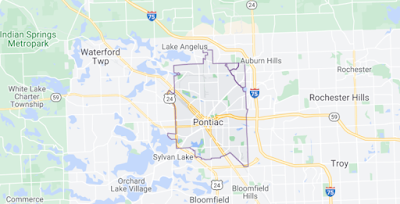
Pontiac, about 20 miles north of Detroit, is the Oakland County seat, but in the 1970s, the county government began relocating most of its facilities to a new automobile-centric headquarters campus in adjacent Waterford Township, with criminal justice facilities (courthouse, jail) remaining in the city.  This removed the valuable energy government office districts can provide to city economic health.

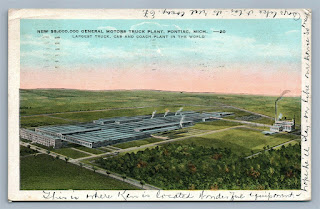
When I lived in Michigan, Pontiac was known for its industry--home to GM's Pontiac Motors division when that brand still had verve, but also GM's extensive medium truck and bus manufacturing operations, and for being a majority black community in a predominately white community.

It was one of the first cities in Michigan to employ busing to achieve school integration, and it was challenged violently, with bombings of buses in 1971.

Pontiac is about 20 square miles, while Oakland County is 907 square miles.  Today the city has about 60,000 residents, down from a peak of 85,000 in 1970.  The population is about 52% black, with over 20% of the population below the poverty line. By contrast, the overall poverty rate in Oakland County is 7.8%.

Deindustrialization.  At its peak, GM had 30,000 employees working at various plants in Pontiac, and was the largest property holder and paid the most in property taxes ("Pontiac, Michigan feels brunt of GM's pain," Reuters).  

But GM's dissolution of the Pontiac brand, the sale of its bus manufacturing operations, and the cessation of the manufacturing of large trucks led all but one of GM's facilities to close there by 2010. 

Now there are a few hundred employees, at a single facility.

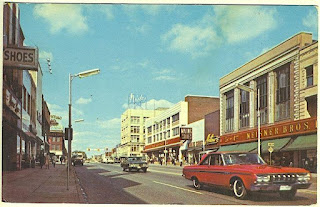
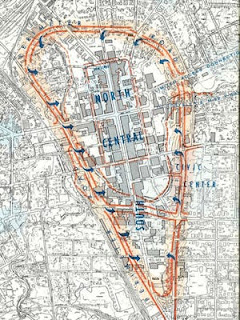
The city also suffered population outmigration and went through some iterations of urban renewal, including the construction of a ring road around the city, to facilitate car-based commuting traffic, at the expense of walkability and the economic health of the Downtown.

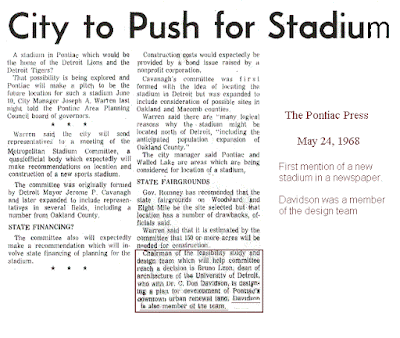
Football stadium. As part of an earlier period of outmigration from the center city, for a time, the Detroit Lions football team relocated to a covered stadium built in Pontiac, called the Silverdome, although the team returned to Detroit in 2002.  

(For a time, the Detroit Pistons basketball team played at a suburban arena in nearby Auburn Hills/Auburn Township.  Chrysler moved from inner city Highland Park to Auburn Township as well.)

Being located on the edge of the city, by freeways, the stadium provided zero energy to Pontiac's core.  

Although Pontiac was hardly an exception, as other suburban stadium and arena projects across the county also had minimal positive impact ("Framework of characteristics that support successful community development in association with the development of professional sports facilities").

Deindustrialization was a problem across the state and the state failed to step up.  Like Detroit and Flint ("The real lesson from Flint is about municipal finance," 2016), Pontiac was one of a set of legacy cities in Michigan that because of the drop in property and income tax revenue from population shrinkage and deindustrialization went into bankruptcy, being the first to do so in 2011.  Plus, the economic multiplier effect.  Each auto job supports 3-4 other jobs.  Not all are local (e.g. parts plants from afar) but many are, furthering job losses and economic decline.

Even when plants stayed open, automation often reduced employment by as much as 75%.  It occurs to me that in multiple cities across Michigan, facing similar problems, not limited to GM or Chrysler or Ford:

  • Battle Creek (Case Equipment moved to Kentucky), Bay City (GM), Benton Harbor, Detroit, Flint (GM, Buick), Jackson, Kalamazoo (Upjohn and GM, see "Former GM plant in Kalamazoo finds second life as successful business park," Kalamazoo Gazette--while successful the industrial park replacing the GM plant has 1/8 of the workforce), Lansing (Oldsmobile), Pontiac (Pontiac, GM Truck), Saginaw (GM)  
that like the Massachusetts Gateway Cities Initiative, the State of Michigan should have developed a state-wide initiative addressing deindustrialization and its impact on center cities across the state ("Growth Ideology in a Period of Decline: Deindustrialization and Restructuring, Flint Style," Social Problems, 1992, "Understanding Resilience Through Regional Responses to Economic Restructuring," dissertation, 2010).

Instead, later Republican administrations focused on cities declaring bankruptcy, fitting their narrative of incapable cities run by Democrats, rather than developing a broader economic revitalization initiative.

Pontiac looks to do Downtown street calming.  A recent article in the Detroit Free Press, "State agrees to unwind Pontiac's Woodward 'Loop' that leaders say strangles their downtown," says that the city is going to get rid of the ring road, in an attempt to reapply more city-centric urban design principles. From the article:

When it opened in 1964, the design of Pontiac’s Woodward Avenue Loop — formerly called Wide Track Drive — was hailed as a triumph.  (Wide Track was named after a Pontiac Motors marketing campaign for its cars.)

Its swaths of one-way pavement unsnarled bottlenecks and shunted GM workers as well as parts-laden tractor-trailers through Pontiac’s downtown and to half a dozen bustling factories. The high-capacity roadway played into the dreams of midcentury designers, on a binge they called urban renewal.

The road re-routing created a set of five one way streets, each five lanes wide.  It was decidedly anti-urban, facilitating car movement over people and a thriving downtown.  

Moving the government center and the creation of Pontiac Mall, on the border of the city and Waterford Township, were other actions that redirected economic activity away from Pontiac's Downtown to other parts of Oakland County. 

Why does Pontiac lag in the midst of great wealth?

And I hate to admit, reading that article, that I hadn't ever really thought about the reality that while Oakland County is wealthy and white, could that wealth have been harnessed to spur the economic revitalization of Pontiac, to reverse the steady drumbeat of decline?

Deindustrialization and outmigration?  It's not just deindustrialization, although that's a factor.  Pontiac was on the decline long before GM shut down its plants, just like many other cities across the state, the Midwest, and the nation.

Lack of political longevity?  The now deceased County Executive L. Brooks Patterson was in office for 27 years.  Certainly, unlike Mayors who are in office for usually no more than 2 terms, he had the opportunity to address Pontiac's poverty over the long term.  (Community revitalization is a multi-decade process, see "Main Street Niches in a Mass Sales World," 2004.)

Lack of attention to revitalization needs in legacy communities?  It's not like Patterson wasn't paying attention to the needs of inner ring suburbs, as Oakland County is the first and only county in the US to have created a county-wide Main Street commercial district revitalization program, which it did in 2000.  Pontiac participates, and has had a Downtown Development Authority for decades.

Tax harmonization.  Could the county have applied various tax harmonization strategies, like what has been done in Greater Minneapolis, or how various counties share sales taxes with legacy communities. (This likely would have required approval by the state legislature.)

Best practice county revitalization initiatives.  To be fair, plenty of counties have areas of persistent poverty.  But should this be the case?   

Are we taking poverty for granted, especially when it is co-terminate with race?

Recently I made this point about Montgomery County, Maryland and how its East County section remains a laggard ("East County, Montgomery County, Maryland: Council redistricting spurs ideas for revitalization | Part 1 -- Overview").  

Fairfax County, Virginia has been working on the revitalization of the Route 1 Corridor for decades ("Fairfax County’s Richmond Highway area ripe for development during next decade," Virginia Business).  And both counties are comparable to Oakland in terms of wealth.

The most typical initiatives focus on inner ring suburbs. But Pontiac is different as it was never a suburb in the traditional sense, but a stand-alone city, secondary to the center city, but significant and unitary, with its own economy, newspaper, civic institutions, etc.

Previous entries call attention to Hennepin County, Minnesota ("A County and Its Cities: the Impact of Hennepin Community Works"Journal of Urban Affairs) and Oklahoma City--not a county exactly, but the city is larger than other city-counties like Philadelphia or San Francisco ("Change isn't usually that simple: The repatterning of Oklahoma City's Downtown Streetscape"). 

Maryland had/has a couple of smart growth related initiatives.  The "Community Legacy Revitalization Program," is a state program funding revitalization planning and projects in existing places, and there was a similar initiative at the county scale in Baltimore County under former County Executive Jim Smith ("Community renaissance set down in writing," Baltimore Sun; "Baltimore County Confronts Suburban Decline").  

Is it racism or the "soft bigotry of low expectations"?

Pontiac is a little place, 60,000 residents and 20 square miles.  In the midst of great wealth. 

From the standpoint of money, political administrative longevity, and political capacity, there's no reason that Pontiac should have continued on its negative trajectory.  Just like the way that cities like Bilbao have been renewed, using an approach that I call "transformational projects action planning." 

-- "Why can't the "Bilbao Effect" be reproduced? | Bilbao as an example of Transformational Projects Action Planning," 2017
-- "Economic restructuring success and failure: Detroit compared to Bilbao, Liverpool, and Pittsburgh," 2014
-- "Minneapolis Super Bowl: Urban Revitalization and Transformational Projects Action Planning," 2018
-- "Downtown Edmonton cultural facilities development as an example of "Transformational Projects Action Planning"," 2018

there's no reason that Pontiac couldn't have been improved similarly.

It seems like economic revitalization there ought to be a straightforward process although granted they went through a bunch of flawed urban renewal iterations and severe deindustrialization

10 Pontiac School District buses were destroyed in an attack by the Ku Klux Klan.  Detroit News photo.

On the other hand, L. Brooks Patterson did start his political career defending opponents to busing and school integration.  In Pontiac! ("RIP, L. Brooks Patterson, Racist," Detroit Metro Times, "Busing set off Democratic debate flare-up, but does it still matter in Detroit?," Detroit News).

While Patterson's campaign "against" Detroit and Wayne County could be termed to be more a kind of "economic county-ism," racism was an issue.

But wrt Pontiac, perhaps it was more about benign neglect in the context of institutionalized and/or structural racism, and the failure of the state to think systematically about deindustrialization and its impact across the state.

The default is to see Pontiac/blacks as perennially poor, as a condition not particularly amenable to change.

While it's rare for counties to develop revitalization programs the way that Hennepin County did--which it did out of desperation, facing severe property tax revenue losses in the face of economic and population decline in Minneapolis--we can raise the bar for counties like Oakland, where overall they are fine economically, but possessing severe pockets of poverty and decline.


Some recommendations.

1.  The State of Michigan should develop a program addressing deindustrialization more systematically, using the Massachusetts Gateway Cities Initiative and "Hennepin County Works" program as models.

2.  Oakland County should make "leveling up" Pontiac its number one economic development priority.

3.  Building on the nascent road dieting effort and examples of successful communities nearby like Royal Oak ("Downtown Royal Oak social district opens this weekend -- Here's what to know," Fox2 Detroit, "Baker College to Build Flagship Metro-Detroit Campus in Downtown Royal Oak," "Royal Oak and Rochester Downtowns Win National Awards," OC Times) and Birmingham, focus on redeveloping the residential and retail possibilities Downtown.

-- Reinventing Suburban Business Districts (ULI)
-- Reinventing America's Suburban Strips
-- Revitalizing Distressed Older Suburbs
-- Putting the Urban in Suburban: Art and Business of Placemaking
-- "The secret to a successful suburb: Lakewood, Cleveland Heights and the Inner-ring Divide," Cleveland Plain Dealer

4.  Develop a revitalization plan using the Transformational Projects Action Plan approach, with Oklahoma City's Metropolitan Area Projects program and the downtown streetscape program as best practice models..

5.  Why not merge Pontiac into Oakland County?  This would make County prioritization of Pontiac revitalization unavoidable.

6.  Baring that, why not consolidate Pontiac and Waterford Township (Michigan makes it almost impossible now for cities to annex townships.  Waterford is 92% white and has 72,000 residents). But combining the two would make it tied as the state's third largest city, and would add the stronger residential tax base of Waterford.

7.  Consider merging the Pontiac School District with adjoining school districts, like Waterford. This is difficult, as communities like local control of schools.  

OTOH, a majority of Oakland County school districts are shrinking and consolidation could be advantageous, especially if combined with a MAP 4 Kids program of construction and other improvements like the second phase MAP program in Oklahoma City ("MAPS for Kids wraps up," Daily Oklahoman).

Labels: , , , , , , ,