Rebuilding Place in the Urban Space

"A community’s physical form, rather than its land uses, is its most intrinsic and enduring characteristic." [Katz, EPA] This blog focuses on place and placemaking and all that makes it work--historic preservation, urban design, transportation, asset-based community development, arts & cultural development, commercial district revitalization, tourism & destination development, and quality of life advocacy--along with doses of civic engagement and good governance watchdogging.

Monday, August 11, 2025

Trump's takeover of DC's police: a warning and another episode in his anti-urban (blue voters) agenda

FBI and Border Patrol officers in Washington, D.C., on Sunday. Photo: Andrew Leyden/Getty Images

It's in all the media that Trump has taken over the DC police department ("Trump Deploys National Guard to D.C., Moves to Take Over City’s Police Department," Wall Street Journal), even though crime is on the decline ( "Trump says crime in D.C. is out of control. Here’s what the data shows," Washington Post).  

Eugene Scott of the Boston Globe argues its more about warning blue cities to back off ("The real reason Trump deployed the National Guard to Washington: This is the president’s latest attempt at retribution and signaling to other liberal cities how little tolerance he has for criticism").

President Trump’s decision to dispatch the National Guard to Washington, D.C., to combat violent crime despite data showing violent crime at a 30-year low isn’t about solving an actual problem. It is his latest attempt at fulfilling a frequent campaign promise centering on retribution and signaling to other liberal cities how little tolerance he has for continued criticism of his policies. And if past is prologue, few groups will suffer more from this approach to governing than the Black and Latino youths who are often blamed for systemic crises in America’s major cities.

Military police in the Gallery Place business district of Washington, DC.  Reddit photo.

While the president’s impetus for his latest action was couched in concerns about ongoing acts of violence, Trump’s frustration with the city may be rooted in deeper, long-standing issues with some of America’s most influential cities — and the people who occupy them.

Internet meme. 

Trump has long characterized cities with large Black and Latino populations as places of decay and chaos. Trump’s issues with the urban core arguably reached their zenith when he called for the death of five Black and Latino teenagers wrongfully convicted in 1989 of the assault and rape of a white woman jogging in New York City’s Central Park — something he has doubled down on despite the convictions being vacated. In both Trump’s first and current presidential terms, the act of criticizing Los Angeles, Chicago, and Washington, D.C., became a far more common pastime of the president than praising what makes them great.

Also see this past entry, opining about Trump's frequent criticizing of cities without any interest in supporting improvement.

-- "Elijah Cummings, President Trump and Revisiting 'The Urban Agenda'" (2019)

Labels: , , ,

Thursday, March 09, 2023

DC's crime bill overturned by Congress

 -- "Senate votes to block controversial DC crime bill," CNN

I haven't written a blog entry on this, just comments, and comments on Washington Post article.  While the revision of DC's criminal code, in some quarters the changes were perceived to be more lenient, in the face of a significant rise in the city's murder rate, crime involving guns, car jackings, and continued escalation of youth-involved crime.

I write that for the most part, DC's legislators have it pretty good.  They are a city-state, with control over the tax revenues generated within the city, and for the most part, not having the kind of oversight that is typically performed by State Legislatures, which may be quick to preempt local control in favor of corporate and cultural warfare goals.

But the fact is that Congress does have the final authority on approving local legislation, even though the DC Home Rule Act of 1973 pretty much created local control of local governance.

The city's legislators, many of whom lack substantive experience of cities in the period of the 1970s through the 1990s when many were in serious decline, and had problematic public safety, didn't realize that at times they need to manage the narrative and "manage up.'  In this case, how the law would be perceived in the world of public opinion, and the competition between Republicans and Democrats.

This letter to the editor ("The D.C. Council’s crime bill put statehood further out of reach") expresses it pretty well:

I have supported home rule since moving to D.C. in 1974. I proudly wear my “51” hat. But after a 2020 election when perceptions of being soft on crime hurt many Democratic candidates, the D.C. Council’s tone-deaf response was to enact a law that forces its allies to make a choice between supporting home rule or increasing their own electoral vulnerability. Not surprisingly, they are opting for their own survival.

So, rather than attacking President Biden and Congress for likely blocking the D.C. criminal code reform, the D.C. Council should own this fiasco. It might well happen again with the bill allowing illegal immigrants and other noncitizens to vote in local elections. It’s doubtful the council could have come up with any other bill that is more likely to provoke GOP reaction.

Democrats, who lost control of the House of Representatives in the 2022 election because of crime demonization being particularly effective in Greater New York City, didn't want to be on the wrong side of this issue.  Although there is criticism in some quarters about doing the wrong thing because of politics ("Biden puts reelection over principles with D.C. decision," Washington Post).

When President Biden announced last week that he wouldn't veto a disapproval resolution, the new DC crime bill was toast.

====

FWIW, I find it hard to believe that anyone who lived in DC during the period of great disorder, would ever want a return to those times.  It was terrible, and for me, personally very costly.

My lesson is that the forces of disorder are always pushing, and you cannot yield.

Few people seem to fully grasp that urban revival in the 2000s was sparked by significant public safety improvements.

At the same time, I recognize the problems of police brutality, the carceral state and overpolicing of people of color, warrior policing, etc.

Sadly, the "defund the police" messaging was another lost opportunity to control and shape the narrative, which should have been redefining what public safety means, looks like, and how it is delivered, because criminalization of social problems and having police officers be first responders when they are often not the right choice is not serving American society very well.

-- "The fine line between urban/center city chaos and order," 2020
-- "The opportunity to rearticulate public safety delivery keeps being presented," 2021
-- "Is it too late to change the messaging on "Defund the Police"? How about "Reconstruct Policing"?," 2020
-- "Towards a public safety model that is broader than policing," 2020

Note that my writings on equity and social urbanism come out of a desire to try to break the cycle of urban poverty. Sadly, DC has definitely failed on this dimension.

-- "Social urbanism and equity planning as a way to address crime, violence, and persistent poverty: (not in) DC," 2021

Which came out of my experience on grand jury duty in 2013:

In 2013 I was on grand jury duty.  Each jury had a specialization--ours was drugs and guns mostly, but we still dealt with murders, assaults, and other violent crimes.  

The lesson after three months was that DC spends billions of dollars each year--police, emergency services, health and social services, criminal justice, education, etc., in the communities where crime is persistent--just to keep the neighborhoods and people within them at equilibrium/the same--not to improve.

Labels: , , , , , , , ,

Sunday, July 24, 2022

Gerrymandering in Utah

Top right, how Republicans organized the state's House districts after the 2020 Census.

The biggest reason I didn't want to move to Utah (we moved to join our household with my wife's aging parents, her father, who had dementia, died in February) is because the politics are so nasty.  Utah is one of the reddest of the red states, with a Senator and Congressmen who abetted the insurrection, a State Legislature that is 70% Republican and 90% Mormon, and gerrymandering designed to dilute the progressive counterbalance of Salt Lake County.

But I thought it would be okay, because Salt Lake County and City is pretty progressive, all things considered.  But since we moved here in Fall 2019 it's only gotten worse--partly because I am now more familiar at a granular level of the b.s.

Gerrymandering is even worse than before.  If districts were organized fairly there would be one Democratic Party represented House district in Utah.  But Republicans use the "organizing concept" of linking rural and urban areas as a method for diluting Salt Lake County by making districts as wedges.  Salt Lake County is about 1/3 of the state's total population.  In the 2010 cycle they divided Salt Lake County into three of the four districts.  In the 2020 cycle, into all four of the districts.

Republicans aver that the reason that Democrats don't get elected to statewide office is because of lack of organization, not because they way they organize political districts is designed to prevent Democrats from developing critical mass and building outward.

And the Governor says when progressives complain, "Vote."

Before we moved here, a referendum was passed to have an independent redistricting commission.  But referenda are not binding, and the Utah Legislature vitiated the process.

Good thing that the Supreme Court said that gerrymandering isn't a violation of the Constitution.

Was in Montana over July 4th.  Montana, Idaho and Wyoming ("Rigid brand of national politics in state capitols is likely to have economic consequences," Washington Post) are even worse.  But that's no consolation.  People we had dinner with were saying "well Utah must be better you have Romney."

Romney's done one good thing.  He is still a conservative corporate Republican and isn't working to reorient the state politics away from authoritarianism, let alone national politics.  But he has good pr.

Preemption of local action.  The other thing that the State Legislature is very good at is laws directed at Salt Lake City, taking away local authority, such as to create historic districts.

It's a very aggravating situation.

Labels: , ,

Thursday, May 14, 2020

Conflict of laws and jurisdiction in pandemic management: San Diego County and Native American owned casinos

Federally-recognized Native American tribes are considered nations somewhat independent of states and local jurisdictions. 

Of course that includes large and small "reservations," but also casinos ("Casinos Lead to Tribal Sovereignty Woes," AP; "Reconciling the Paradox of Tribal Sovereignity: Three Frameworks for Developing Indian Gaming Law and Policy," Nevada Law Journal [2003]).

San Diego County has no ability to forbid the Kumeyaay Nation from reopening the Sycuan Casino or the San Pasqual Band of Mission Indians from reopening the Valley View Casino ("County to call on feds to help block tribal casinos from reopening Monday," San Diego Union-Tribune; "Valley View and Sycuan casinos plan to reopen next week," Riverside Press-Enterprise).

Even though if people become sick from the coronavirus, it is the County, its hospitals and public health agencies, that will have to deal it.

Labels: , , , ,

Wednesday, December 04, 2019

Managing the brand promise of cities in the face of corruption

==========
Update: 12/4/2019

The DC City Council did vote, 12-0, to trigger the process of expulsion, which will require a hearing at which Councilmember Evans has the opportunity to make his case, before a final vote ("D.C. Council votes to recommend Jack Evans for expulsion," Washington Post).
===========

Officials and stakeholders as managers of the city's identity and "brand."  In 2005 I wrote a piece about commercial district revitalization making the point that if we think of ourselves as "destination managers" we will make places great for both residents and visitors.

In 2008, I extended this concept to city elected and appointed officials and stakeholders as a community's collective of "brand managers" responsible for the brand promise of a community:

In 2015 I extended this even further, that officials and stakeholders need to see their roles as the managers of a community's assets, and I've been meaning to do this around risk management too, although I have written about that in the context of lawsuits around policing.

Failure as indication of system failures that should be addressed.  For example, Chicago spends many tens of millions of dollars every year in settlements concerning police misconduct. You'd think that elected officials would take that as an indicator of a problem with the police department, and look at the need for management, process, and policing reforms, rather than merely a "cost of doing business."

The "Brand Promise" of a local government should be managed.
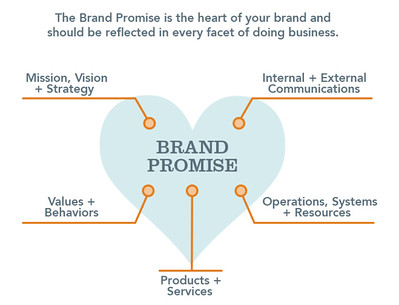
Brand Promise
From "Living up to your brand promise," R+M Agency

DC City Council is faced with an equally tough "brand promise" decision over what to do about Councilmemmber Jack Evans, who looks to be guilty of significant ethics violations and misuse of his office to do "consulting work" on the side.

In DC, the Councilmember job is considered part-time, so all but the Council Chairman can have side jobs. Typically the jobs Councilmembers get, outside of teaching, are with companies doing business with the city, and it's what I call "designing conflict in," setting up a structure and process that builds in opportunity for graft, corruption, and the trafficking of confidential information.

The Post has an article, "Most D.C. lawmakers want to boot Jack Evans from committees, but not the council," about how the City Council is torn on what to do: (1) to let the voters decide; (2) to censure him and strip him of all his committee memberships; or (3) to expell him from the Council, which they have the power to do.

From "Brand promise vs. tagline?: what's the difference,," SimpleStrat.

Separately, a recall petition has been filed, although Evans is challenging up to one-third of the signatures, and next year the Ward 2 position is up for reelection anyway, and already six people have filed their intent to run.

But combining the roles of (1) destination managers; (2) brand managers; (3) asset managers; and (4) risk managers, the City Council is all of that for the City of Washington.

They are responsible for communicating the city's values in vision and practice.


I used to get into "arguments" about the brand of Eastern Market, DC's public market, while sitting on the Community Advisory Council for the organization.

The "Inverted Jenny" is probably the most famous stamp printing error for the US Postal Service.

One instance was during the reconstruction of 7th Street SE, we came up with branded manhole covers, and some were received with a typo. For obvious reasons, the manufacturer didn't want them back (too heavy to pay for shipping), and they said we could have them. The decision was made to sell them for fundraising purposes. 

I objected stating that if our brand is valuable, then we should make the hard choice and discard items that have a typo.  Because being error free was more important than making a little bit of money.

I was the only dissenting vote.

Similarly, I would make the argument that each individual business contributes to the collective, the whole of the brand for Eastern Market, and that businesses that don't measure up need to be addressed.  That didn't go over well either.

Manage the brand: Expel Jack Evans.

Jack Evans is one element of the brand of DC City Council.  He is the longest sitting Councilmember.

Councilmembers need to make the tough decision and:

(1) Make Councilmember jobs full-time and banning outside income, with the possible exception of teaching.

(2) Expel Jack Evans.

If the voters want him back, like Adam Clayton Powell, he can run again next year and make his case ("New York voters restore Powell to his congressional seat," Politico).

But the City Council as "brand managers" of the city's brand promise as well as the City Council's brand promise, need to take a stand.

====
I've been doing some research in the Washington Post backfile and came across an article from the 1970s probably about corrupt practices in DC government, and how this doesn't justify statehood, with the response, why should DC be held to a higher standard than existing states.

While I have come around to that position, it doesn't justify not taking a strong stand against corruption and ethics violations.

On that score, DC City Council lags.

Labels: , , , , , , ,

Tuesday, October 22, 2019

Amazon’s growing spending on Seattle politics includes a spate of donations from Jeff Bezos’ ‘S Team’

Headline from the Seattle Times. From the article:
Earlier this year, 11 members of Amazon’s so-called “S Team” — senior leaders who report directly to Amazon founder and CEO Jeff Bezos — started writing checks to a group of Seattle City Council candidates and a political-action committee. For most of the executives, it marked their first donations to Seattle council races.

The local political spending of Amazon’s top executives, along with a record-setting $1 million contribution to a pro-business political-action committee last week, underscore the company’s desire for a more accommodating council in the city where it occupies nearly 50 buildings and has more than 50,000 employees. ...

Amazon’s local political awakening began in earnest in 2017, as the Seattle City Council started a public discussion of a “head tax” on big businesses to fund housing and homeless services. That year, the company donated $350,000 to a business PAC to help get Mayor Jenny Durkan elected. ...

Amazon’s $1 million donation last week to the Civic Alliance for a Sound Economy (CASE), a PAC associated with the Seattle Metropolitan Chamber of Commerce, was the largest outlay by a corporation or other single player in a Seattle city election. It came on top of $400,000 Amazon gave earlier to CASE to spend on the election.
Amazon isn't happy at Seattle's attempt to pass a "head tax" on employees for large corporations.

Since corporations game their taxes, and most cities don't levy income taxes, this is a way to get at taxing corporations.

The Seattle City Council passed the tax at $250 per employee, but later reversed it.  According to Geekwire, Amazon has more than 50,000 employees based in Seattle, so the tax would have raised at least $12,500,000 per year.  (See the discussion on District 1 Seattle Council Member Lisa Herbold in this election endorsement article from The Stranger.)

Even so, Amazon announced they would be moving a major division to suburban Bellevue ("Amazon details plan for Bellevue expansion, bringing several thousand jobs in coming years," Seattle Times).

Seattle's City Council, like San Francisco, tends to be quite liberal/progressive and has one of the nation's only Socialists, Kshama Sawant.

======
It does provide some scary thoughts concerning Amazon's entry into Arlington County, Virginia.  Then again, Virginia is a Dillon Rule state which means that the State Legislature must authorize by law, the ability of local governments to act.  In other words, no legislation on head taxes at the local level unless previously enabled by the State Legislature.

Labels: , , , ,




