Rebuilding Place in the Urban Space

"A community’s physical form, rather than its land uses, is its most intrinsic and enduring characteristic." [Katz, EPA] This blog focuses on place and placemaking and all that makes it work--historic preservation, urban design, transportation, asset-based community development, arts & cultural development, commercial district revitalization, tourism & destination development, and quality of life advocacy--along with doses of civic engagement and good governance watchdogging.

Saturday, July 04, 2026

Fourth of July | US 250th anniversary of the Declaration of Independence

There's far too much going on for me to be able to write something pithy and searing about the state of American Democracy, other than my contribution to a Utah commemoration of the anniversary last week at the opening of the Museum of Utah History.

Below, it's the last of the line of red bars.

There is an article in the Toronto Star, "How does former foreign affairs minister John Manley see America today?," interviewing John Manley, former minister, about Canada's relationship now with the US.  Which has deteriorated in so many ways ("Trump threatens not to renew USMCA as Carney talks trade strategy with premiers," "North American free trade is gone, dead and buried," Toronto Globe & Mail).

It's not very good.  

One example is Trump holding Canada hostage over the new Gordie Howe International Bridge.  Canada paid for it because the US wouldn't contribute and the Detroit-Windsor crossing is key to trade between the two countries, the auto industry, and Canada-Michigan, Canada being Michigan's largest trading power ("For people in Detroit and Windsor, Gordie Howe bridge delay fits a familiar – and frustrating – pattern," "Canada built the Gordie Howe bridge. Trump weaponized it," "Donald Trump can’t open the Strait of Hormuz, so instead he’s blocking the Strait of Detroit," Toronto Globe & Mail).  

The new bridge will correct transportational bottlenecks that result from the current set up.

The owner of the private Ambassador Bridge, which is the major above-ground link between the two nations, but the bridge dumps its traffic into a neighborhood not set up to facilitate very well the movement of the truck traffic towards the freeways, has made lots of donations to Trump ("Trump keeping Gordie Howe bridge closed to help donor, Michigan senate candidate claims in ad," AP).

The Gordie Howe International Bridge in Windsor on Thursday. Canada picked up the tab for the recently-completed bridge, but it still hasn’t opened because Trump doesn’t want it open, writes Tony Keller. Photo: Dax Melmer/The Globe and Mail

From the interview:

How truly democratic is the U.S. today?

We need to remember that every institution has some fragility to it. And that it requires all of us to remain vigilant. Democracy is not something to be taken for granted. It takes work. We have to inform people. We have to educate people. Literacy is a prime requirement in a democracy. We have to preserve the independence of voices that can be critical of what those in power are doing, holding them to account. I think (journalist) Anne Applebaum uses the analogy that we tend to think of democracy like we go to the tape in the kitchen and pour ourselves a glass of water. It’s way more complicated than that. It’s like when we had to go up the hill to the well and pump some water out in order to get a drink. That’s what democracy is. It requires work.

This is so true.  As despondent I am about the state of the nation today, especially how Republicans put party before country, how they have abdicated their responsibility as co-equal members of the Legislative Branch to be lapdogs of the President, how the rule of law is disregarded ("Electing a Federal Attorney General and a Chief Inspector General | Expanding Democracy") and how the conservative majority of the Supreme Court is overtly Republican in many of its rulings, we still have to try to work Democracy, to improve it, to push back against the transgressions.

=======

"American flags are everywhere this weekend. But the symbol has become politicized to a degree unseen before," Boston Globe.

Partisans at each end of the political spectrum use the flag to disparage the patriotism of the other side. Politicians on the right literally wrap themselves in the banner to proclaim their love of country. And protesters on the left wave the flag at mass demonstrations as a rallying cry to protect or expand American rights.

... For many at that time, the flag symbolized a transcendent sense of broad national purpose, even if large swaths of the population still struggled to claim their rights or bitterly criticized the government. This Fourth of July, even flying the flag at home can have political, demographic, and racial overtones.

About 70 percent of Republicans, and 60 percent of Americans ages 60 and older, fly the flag at least during national holidays, according to an April survey by The Associated Press and the National Opinion Research Center at the University of Chicago.

Conversely, about 60 percent of Democrats and independents said they never fly the flag, including about 75 percent of Democrats under 45, the survey showed. In addition, only about 30 percent of Black adults said they ever display the banner.

I'm more with Zohran Mamdani in his speech on Friday ("Zohran Mamdani rebukes Trumpism with pro-immigrant speech for US’s 250th birthday," Guardian). 

“Patriotism has never been about pretending our nation is without flaws,” the New York mayor said. “Patriotism is every act of righteous dissent. It is every march led under the heavy sun. It is every protest held a decade before its time. It is precisely because we love this nation that we will not leave it.”

Labels: , , , , , , , ,

Tuesday, March 11, 2025

The "nonprofit industrial complex," city government and service delivery

The Baltimore Sun has a commentary, "Baltimore is being strangled by the nonprofit industrial complex," criticizing the city for making a grant of almost $1 million to an organization with a limited track record.
A $900,000 grant by the Baltimore Children and Youth Fund (BCYF) to a nonprofit organization known as Thrive Arts Inc. in 2022 is the latest evidence that Baltimore’s version of the “nonprofit industrial complex” wields too much power. 

As reported by The Baltimore Sun, Thrive Arts was incorporated in 2021 but lost its corporate charter last year after failing to file tax returns for three straight years, and is [legally] now defunct.
It was an extraordinarily large grant for a small organization with no proven track record. Yet to be confirmed is how much of the $900,000 was disbursed to the grantee and spent on the purposes for which it was intended or returned to the city.
I do intend to do a book review on the book Nonprofit Neighborhoods: An Urban History of Inequality and the American State, which discusses how cities began outsourcing dealing with inequality and social issues to nonprofits.  This brief blog entry is by the author too, "The Origins of the Nonprofit Industrial Complex."

I have written many times over the years about problems with DC government grants and nonprofit execution.  

This is in the news more recently because of alleged bribes to a councilmember ("Trayon White expelled from the DC Council for corruption but he’s free to run for his old seat," AP) and government employee ("Former DC government official charged with taking bribe,"NBC4) by a grantee eager to secure their place in the system.

But it's been an issue for a long time, in fact the organization in Baltimore that is criticized by the author is similar to one that engaged in improper grant making in DC ("Harry Thomas, former D.C. Council member, is sentenced to more than three years in prison," Post), leading to the jailing of a Councilmember.

Minneapolis had some terrible problems/mistakes during covid, when it granted tens of millions to a grantee to provide meals, when the grantee had zero capacity to do so ("Minneapolis man admits to stealing at least $3.8 million from COVID-19 relief programs," KARE-TV).

Thinking about this I have five main points:

1.  A lot more money needs to be invested in capacity development and technical assistance for nonprofits, especially those receiving government grants.

2.  There must be transparency with the grant making process--something definitely not present in the Baltimore example.  An RFP and open call process with deadlines and decision making criteria.

3.  Accountability mechanisms must be in place to ensure that the right stuff is being done with the money and that it gets results.  This has been an issue with violence prevention programs in many places, including DC, where one recipient of funds recently was imprisoned for murder ("Former D.C. Violence Interrupter Sentenced for His Involvement in Drive-By Shooting," Washington City Paper, "Violence Interrupters Push Back Against Calls for Defunding," Washington Informer,  Many cities are putting hopes in violence interrupters, but few understand their challenges," NBC News).

4.  Evaluation of success and failure needs to be built into the program ("D.C.’s Violence Intervention Programs To Receive In-Depth Evaluation,".DCist").

5.  Ethics training is mentioned in the academic literature as being important.  I wonder...

=======

=======
I just came across this, I haven't read it.  From the Journal of Business Ethics article, "The Labyrinth of Corruption in the Construction Industry: A System Dynamics Model Based on 40 Years of Research," :

Abstract 

The academic literature has viewed drivers of corruption in isolation and, consequently, failed to examine their synergistic effect. Such an isolated view provides incomplete information, leads to a misleading conclusion, and causes great difficulty in curbing corruption. This paper conducts a systematic literature review to identify the drivers of corruption in the construction industry. Subsequently, it develops a system dynamics (SD) model by conceptualizing corruption as a complex system of interacting drivers. Building on stakeholder and open systems theories, the proposed SD model shows how the complex reinforcing relationship between authoritative, organizational, cultural, and financial drivers of corruption further increases corrupt practices. The new model also provides lessons that can be helpful in the development of policy frameworks to control corruption in the construction industry. To achieve success in the fight against corruption, the findings of this research suggest that (1) corruption must be understood at both the organizational and state levels, (2) anticorruption practices must be informed by ethically grounded stakeholder management strategies, and (3) anticorruption reforms must go hand-in-hand with strategies to tackle the economic downturn.

No wonder corruption is so endemic.  It's embedded deep within the system.  Below is the diagram from the article showing the dimensions of corruption within construction.


Labels: , , , , , ,

Thursday, January 16, 2025

(Reprint) Electing a Federal Attorney General and a Chief Inspector General | Expanding Democracy

Confirmation hearings for Pam Bondi as the AG ("Pam Bondi Needs to Explain Whose Side She’s On,"  Bloomberg, "Trump’s Attorney General Pick Admits There Is an Enemy List After All," New Republic, "The Perplexing Case of Pam Bondi," New York Times) from the first article:

It’s hard to imagine a more important role in the incoming presidential administration than that of attorney general. President-elect Donald Trump has signaled that he plans to use the Justice Department to pardon Jan. 6 rioters, seek retribution against those who have opposed or investigated him, and deport millions of undocumented immigrants.

It’s a good sign that Bondi’s hearing is scheduled to span two days — that should accommodate extensive questioning. There are many questions that deserve answers, but here are five key areas: 

  1. Election denials.
  2. Retribution
  3. Loyalty tests
  4. Favoring donors
  5. Conflicts of interest

This raises the question of loyalty: Does she consider her client the president, or the American people? And if Trump asks her to carry out an order that is illegal or unconstitutional, will she refuse it? What will be the policy for recusal for her and for other attorneys?

reminds me of an idea I've had for 17 or so years, making the federal Attorney General an executive office elected official with the agency and its reporting agencies like the FBI, independent of the President.  From the NYT:

As attorney general, Ms. Bondi would oversee 94 regional U.S. attorney’s offices staffed by over 6,000 federal prosecutors, plus the F.B.I.; Drug Enforcement Administration; Bureau of Alcohol, Tobacco, Firearms and Explosives; U.S. Marshals Service; and Bureau of Prisons, with an annual budget over $37 billion.

But, more than prior presidents, Mr. Trump has made clear that he expects unwavering devotion from his appointees. And the attorney general more than other cabinet members must at times exercise independence from the president, particularly with respect to criminal charging decisions. The question, then, is whether Ms. Bondi can do that as the attorney general, despite her prior work with and around Mr. Trump, or whether she will enable his worst instincts.

Most problematically, Ms. Bondi publicly supported Mr. Trump’s false claims that the 2020 election was stolen from him. After the election, she proclaimed that “we won Pennsylvania,” and she invoked “evidence of cheating” and “fake ballots.” Ms. Bondi also went beyond rhetoric; she worked with other Trump advisers to build a strategy in Pennsylvania to use those false claims to challenge the 2020 election results in the courts — unsuccessfully, it turned out.

The justification of this concept is that law belongs to "the people" and is supposed to be free of bias.  And how the first Trump Administration weaponized the Department of Justice 

It likely will be worse this time.

Our country is too divided to be able to make necessary changes to government structure, like the small state bias of the Senate and the existence of the Electoral College versus the popular vote for deciding the winner of the Presidential election.  This is another item that should be added to that list.

=====

Published 4/20/21

Today's Washington Post reports ("DHS watchdog declined to pursue investigations into Secret Service during Trump administration, documents show") that the Inspector General for the Department of Homeland Security rejected calls for some investigations of the US Secret Service.  

While the IG said they had limited resources and other priorities, it is also alleged that they didn't want to do the investigations because it would implicate the Trump Administration.

A big problem with the Inspector General process, and this is true of both Democratic and Republican administrations, although Trump took the abuse to new heights ("The internal watchdogs Trump has fired or replaced," CBS News) is that the positions are appointed by the President and the Executive Branch isn't fond of criticism and investigations of what it does ("Congress may not like when Trump fires an inspector general — but it can’t stop him," Federal Times).

Actually this is true at all levels of government.  They don't like oversight.  In fact I wrote about this wrt education test scandals in DC in 2013:

-- "Why inspector generals often don't seek the whole truth..."

For than a decade, I've argued that the Federal Attorney General, to whom reports the Department of Justice, including the FBI, should be popularly elected, because the law and criminal justice system belongs to and derives from "the people," not the President.

-- "Ideally, the Federal Attorney General would be separately elected," 2017

1.  Elect the Attorney General/Make the Department of Justice an independent Executive Branch agency.  Note though in response, some people argue with justification that this could politicize the legal process and the Department of Justice even more than can occur currently.  

Again, Trump took the politicization of the Department of Justice to new lows, with his chief henchman William Barr, who has always pushed an "Executive Power" agenda ("What to do with an attorney general who disdains justice?," Washington Post).

I have to believe my alternative would be better.  The campaign would definitely raise the profile of law, Constitutional Law, and the federal criminal justice system.

My concept, although just like with locally and state elected Attorney Generals, it's possible this wouldn't work out the way I want it to, is that this would provide an independent check on the abuse of Executive power of the President and the Executive Branch.

What I would do is have this position elected in the off Presidential election cycle, with the idea that this could boost voter turnout in the election cycle that usually suffers a reduction in voting.

Like with the President, there should be a two term limit.

2.  Federal Inspector Generals.  After reading today's article, it occurs to me the same thing should happen with the Inspector General position.  Create a Chief Inspector General and directorate.  Have that person popularly elected, in the off-year election cycle, with a two term limit.

And have all the various Inspector Generals report to the Chief Inspector General, not to their specific agency, and by extension, the President.

-- Association of Inspectors General
-- Council of Inspectors General on Integrity and Efficiency

The model of oversight would be the various cities that have Public Advocate or Comptroller or similar positions that take their responsibilities for oversight super seriously.

Another model is the California Civil Grand Jury process, where county-specific civil grand juries are appointed for a one year term to investigate local government functioning.  This is a process different from the grand juries convened to consider criminal matters.

Labels: , , , , ,

Wednesday, October 12, 2022

Montgomery County Maryland Planning Board resigns

 Holy s*.  From the Washington Post article "Montgomery planning board resigns amid scandals, at council’s urging":

All five members of the Montgomery County Planning Board resigned Wednesday after the county council said it had “lost confidence” in the board and needed to “reset operations” following weeks of escalating misconduct accusations, media leaks and damaged staff morale.

The council, which appoints the board, voted unanimously in a closed session Tuesday to ask the entire board to resign, according to two people familiar with the vote. Those who didn’t resign would have faced a public hearing seeking their removal, the people said.

The upheaval in the planning agency’s governance has shocked even longtime political observers in a county accustomed to intense development spats. It follows a trail of scandals and leaks that has dogged one of Montgomery’s most influential institutions since mid-September.

“The Council has lost confidence in the Montgomery County Planning Board and accepted these resignations to reset operations,” said Montgomery council president Gabe Albornoz (D-At Large). “We are acting with deliberate speed to appoint new commissioners to move Montgomery County forward. We thank the commissioners for their service to our county.”

Casey Anderson, chair of the Montgomery County Planning Board, in Forest Grove Park in Silver Spring in 2018. (John Kelly/The Washington Post)

I'm saddened by this.  Casey Anderson, the chair, was someone I met through bike advocacy, and in 2010, as a member of the Planning Board, he invited me to present on "best practice suburban bicycle planning" at the Montgomery County Planning smart growth series, based on the work I was doing at the time in Baltimore County.  

I talked about "the back story" of how I was approaching this from my perspective as an urban person committed to smart growth and sustainable mobility, and the lessons I had been learning.

The presentation helped me figure out some stuff too.

Later I gave a presentation to the Citizens Federation and I think it helped up the County's game on bicycle planning, even if not perfect.  We became friends, not just acquaintances. Although we talked shop from time to time over the years--never ex parte communication though.

A few years later, I actually helped him write his cover letter for his candidacy as Chair of the Planning Board, for which he was selected.  He was toward the mandatory maximum of two terms as Chair, with about a year left ("Montgomery County, Md., has 421 parks. This guy wants to visit every one," Washington Post).

Because I always talked up parks planner David Barth ("David Barth: Rest in Peace"), he even brought him in to do some training and consulting for the County Parks Department.

But lately the board has been wrent with a bunch of issues, and Casey screwed up too by not following policy ("Montgomery council docks pay of official who kept alcohol in office," Post) and being arrogant or at the very least, choosing poor language ("New complaint filed in Montgomery County planning controversy," Post), 

The lesson is that even if you're great at what you do, and I can't think of many people better than Casey on smart growth and sustainable mobility issues, there is going to be lots of opposition* regardless, so you don't ever want to do anything that gives your opponents an advantage -- you know the line "give them an inch, they'll take a mile."

Give no inches.

In the DC region, Montgomery County is one of the foremost jurisdictions when it comes to the thoroughness of their planning.  It might not be the most visionary, but it's decently visionary.  They do good things.

It's unusual in two ways.  First, in theory (although it's not longer really true), Montgomery and Prince George's Counties have a coordinated planning system created by the Maryland State Legislature in the 1920s to complement the efforts of the then named National Capital Parks and Planning Commission operating in Washington, DC.(NCPPC grew out of the famous McMillan Commission, a Senate special committee.)

(When DC was run by the federal government, the National Capital Parks and Planning Commission ran parks and planning.  In 1973, when DC gained Home Rule, the city took on local planning responsibility, while the National Capital Planning Commission (and the Commission on Fine Arts) remained as bodies responsible for federal planning as it relates to DC and in some cases the metropolitan area, while the National Park Service still has primary responsibility for a majority of park space in DC.)

The joint planning agency for MoCo and PGC is called the Maryland National Capital Parks and Planning Commission, which runs planning and parks in Montgomery County (the Executive Branch runs Recreation functions separately) and planning, parks, and recreation in Prince George's County.  But these many decades later the two counties mostly have independent planning regimes and little coordination when it comes to land use, although the MNCPPC structure still exists and there are some joint functions.

Second, Montgomery County is the only jurisdiction in the United States, where the planning (and parks) function is not part of the Executive Branch, but is under the Legislative Branch, in this case the Montgomery County Council.

====

* Opposition to land use planners and planning as a matter of course.  Even in the best of times there is a lot of opposition to planning and planners.  I've written about this a lot.  The problem is that planners have two responsibilities, while most citizens involved in planning take on only one.

Planners are responsible not just for making neighborhoods great, but for dealing with a wide range of other planning responsibilities--economic development and growth, transportation, equity, etc.--while for the most part residents only care about keeping their neighborhoods the same.

This leads to what I think of as planning processes that are flawed from the outset, where consensus may never be possible.

Of course, it's even worse because I don't think planners ever define these sets and spheres of responsibilities and the conflicts and constraints that result.

Maybe, as Casey would say to me, people will always oppose, regardless of the rightness and fitness of the proposal, regardless of how much they learned about planning principles.

And actually, I think he's somewhat right.  But I do know that without laying out those various and sometimes conflicting responsibilities, you're setting yourself up for if not failure, at least disappointment.

Because land use planning is about managing not preventing development, you're always going to get plenty of citizens calling the system corrupt.

It's not corrupt--well, not usually.  Sometimes it is.

But mostly it's capitalism.  It's the Growth Machine.

But interestingly, in matters of land use development, the average citizen expresses a kind of socialism, that the group is more important--and that no development is better.


--------------------------

This also reminds me of my joke that local government workers in DC went to work with the idea that they needed to be on the straight and narrow so that they wouldn't be subject of an article in the Washington Post Metro section and definitely not on the front page.  These debacles in MoCo have been the subject of multiple Metro section articles.


Labels: , , , , ,

Thursday, May 19, 2022

The Growth Machine in Anaheim, California gets socked with a corruption probe

Urban Fortunes: The Political Economy of Place is the book which expands the original argument first laid out by Professor Harvey Molotch in the journal article "The City as a Growth Machine."

Growth Machine theory is from urban sociology and posits that local political and economic elites, despite intra-elite competition, are overall unified in terms of the commitment to an economic growth agenda centered on real estate development and land use intensification.

Political science has a similar theory, called Urban Regime.  I think GM is better on the overall explanation of why local elites do what they do, while UR is better at explaining at how it operates.  

Where GM theory is particularly insightful on various elements of the land use intensification agenda, from Downtown revitalization to sports stadiums and arenas, conference centers, and in particular, the role of local media--fully dependent of the success of the local region for its own success, being dependent on advertising revenues generated primarily from sales to local businesses--in cementing this agenda.

As I said, UR theory is best for explaining how the Growth Coalition works.  In the paper, "Now What? The continuing evolution of Urban Regime analysis," political science Professor Clarence Stone writes:

An urban regime can be preliminarily defined as the informal arrangements through which a locality is governed (Stone 1989). Because governance is about sustained efforts, it is important to think in agenda terms rather than about stand-alone issues. By agenda I mean the set of challenges which policy makers accord priority. A concern with agendas takes us away from focusing on short-term controversies and instead directs attention to continuing efforts and the level of weight they carry in the political life of a community. Rather than treating issues as if they are disconnected, a governance perspective calls for considering how any given issue fits into a flow of decisions and actions. This approach enlarges the scope of what is being analyzed, looking at the forest not a particular tree here or there. [emphasis added, in this paragraph and below] ...

By looking closely at the policy role of business leaders and how their position in the civic structure of a community enabled that role, he identified connections between Atlanta's governing coalition and the resources it brought to bear, and on to the scheme of cooperation that made this informal system work. In his own way, Hunter had identified the key elements in an urban regime – governing coalitionagendaresources, and mode of cooperation. These elements could be brought into the next debate about analyzing local politics, a debate about structural determinism.

I've written about this in a bunch of blog entries about other communities, as well as about DC:

-- ""Columbus Way" merely another example of "Growth Machine/Urban Regime" theory," 2019
-- "Minneapolis growth machine," 2015
-- "If you don't know urban political theory, it's likely that you don't understand local land use: St. Louis: DC; etc.," 2012
-- "Smaller town revitalization planning: No, Thomas Friedman is not a sage," 2018
-- "The Growth Machine needs to be subtle when it comes to elections | Voters need to see some benefits," 2020

Graphic from "Public-Private Partnership Model Used in the Taipei Central Station Project Research," Mou Chung Tseng, National Taipei University.

Usually, it's pretty much out in the open, in that groups like the chamber of commerce and other organizations--in DC the Federal City Council ("THE DISTRICT'S POWER BEHIND THE SCENES: Washington Post-connected business group wields influence over city's legislative agenda," and "The DC Lobby," The Common Denominator)--are the organized growth coalition, which includes leaders of major locally-based corporations, real estate developers, bankers, university presidents, media leaders, etc.  

In NYC you have REBNY, the Real Estate Board of New York and the Partnership for New York City as the leads, with plenty of other groups in a secondary position.  Plus business improvement districts (which often have ex-government officials as leaders), etc.

Elected officials are more "fellow travelers," not so much stated "card carrying" members of the group.  But aligned and integrally involved ("Meet the Lobbyists, Developers, and Insiders On Bowser’s ReOpen DC Committees," Washington City Paper).

Anaheim has its "growth coalition" too, centered around Disneyland first and foremost as well as professional sports operations, especially the Anaheim Angels baseball team and stadium.

But unlike in other places, apparently the group operates more "secretively" and has involved the sharing of confidential city information with business interests, putting it more into the zone of corruption rather than mutual cooperation ("Secret retreats and a powerful ‘cabal’: Corruption probe reveals who really runs Anaheim," Los Angeles Times).

Hence the probe.

Note that DC has corruption issues too.  See:

-- "Managing the brand promise of cities in the face of corruption," 2019
-- "Wow: Revisiting DC's Corruption Caucus," 2019

Labels: , , , , , , ,

Tuesday, April 20, 2021

Electing a Federal Attorney General and a Chief Inspector General | Expanding Democracy

Today's Washington Post reports ("DHS watchdog declined to pursue investigations into Secret Service during Trump administration, documents show") that the Inspector General for the Department of Homeland Security rejected calls for some investigations of the US Secret Service.  

While the IG said they had limited resources and other priorities, it is also alleged that they didn't want to do the investigations because it would implicate the Trump Administration.

A big problem with the Inspector General process, and this is true of both Democratic and Republican administrations, although Trump took the abuse to new heights ("The internal watchdogs Trump has fired or replaced," CBS News) is that the positions are appointed by the President and the Executive Branch isn't fond of criticism and investigations of what it does ("Congress may not like when Trump fires an inspector general — but it can’t stop him," Federal Times).

Actually this is true at all levels of government.  They don't like oversight.  In fact I wrote about this wrt education test scandals in DC in 2013:

-- "Why inspector generals often don't seek the whole truth..."

For than a decade, I've argued that the Federal Attorney General, to whom reports the Department of Justice, including the FBI, should be popularly elected, because the law and criminal justice system belongs to and derives from "the people," not the President.

-- "Ideally, the Federal Attorney General would be separately elected," 2017

Note though in response, some people argue with justification that this could politicize the legal process and the Department of Justice even more than can occur currently.  

Again, Trump took the politicization of the Department of Justice to new heights, with his chief henchman William Barr, who has always pushed an "Executive Power" agenda ("What to do with an attorney general who disdains justice?," Washington Post).

I have to believe my alternative would be better.  The campaign would definitely raise the profile of law, Constitutional Law, and the federal criminal justice system.

My concept, although just like with locally and state elected Attorney Generals, it's possible this wouldn't work out the way I want it to, is that this would provide an independent check on the abuse of Executive power of the President and the Executive Branch.

What I would do is have this position elected in the off Presidential election cycle, with the idea that this could boost voter turnout in the election cycle that usually suffers a reduction in voting.

Like with the President, there should be a two term limit.

2.  Federal Inspector Generals.  After reading today's article, it occurs to me the same thing should happen with the Inspector General position.  Create a Chief Inspector General and directorate.  Have that person popularly elected, in the off-year election cycle, with a two term limit.

And have all the various Inspector Generals report to the Chief Inspector General, not to their specific agency, and by extension, the President.

-- Association of Inspectors General
-- Council of Inspectors General on Integrity and Efficiency

The model of oversight would be the various cities that have Public Advocate or Comptroller or similar positions that take their responsibilities for oversight super seriously.

Another model is the California Civil Grand Jury process, where county-specific civil grand juries are appointed for a one year term to investigate local government functioning.  This is a process different from the grand juries convened to consider criminal matters.

Labels: , , , , ,

Wednesday, January 13, 2021

Government organizational failure as standard operating procedure

Even before the pandemic response, the media reported on various federal government failures throughout the Trump Administration.  More recently in an article about the transition to the Biden Administration, was the mention that the key policy units supporting the Secretary of Treasury have had staff reductions in the range of 40%.

Obviously, the failure of the federal government's public health response ("How the CDC failed public health officials fighting the coronavirus," "The CDC chief lost his way during COVID-19. Now his agency is in the balance," USA Today) to the coronavirus is the ultimate example of this cross the board failure, although many state governments have been equally culpable ("Judge: South Dakota can’t use COVID-19 to delay trial," AP)--Florida and Taiwan have about the same population but Florida has over 23,000 deaths from covid, while Taiwan has 7.  

-- "US virus death toll hits 350,000; surge feared," AP, January 3rd, 2021

The coronavirus response alone ranks #1 in the Organizational Failure Hall of Fame.

AP photo

This is the logical result of 40+ years of the neoliberalism paradigm, which exalts the private sector at the expense of the public sector, not only denigrating government but defunding it, so that the criticism of public response as inadequate comes true because of the hollowing out of government staff and expertise.

But some recent reports bring this up the topic of organizational failure yet again.  It's so typical that it appears as if failure is the preferred outcome.

As I wrote in November, I don't like to bandy about the word "corruption" when it comes to government. Corruption has a specific meaning and the word is too often misused when people excoriate politics and politicians. 

But there is no question that putting "politics" over "governance" and quality outcomes has subverted and degraded what government does and can do, in ways that dis-serve the public.

Even if individual officials are not corrupt, we have created "corrupt systems" where dysfunction is the standard outcome.

-- Corrupt Cities: A Practical Guide to Cure and Prevention, World Bank
-- "DC ethics legislation misses the point: focus on what produces corruption as a regular outcome, not monitoring," blog entry, 2011
-- Spring 2015 issue of the alumni magazine of the International Anti-Corruption Academy

1.  Flint water crisis.  AP reports ("Michigan plans to charge ex-Gov. Snyder in Flint water probe") that the State of Michigan will be indicting previous government officials (Republicans, including former Governor Rick Snyder) over their creation of and failed response to the Flint Water Crisis.

All they needed to do was spend less than $100,000 to treat the water, once they changed from "Detroit water" to water from the Flint River.  But state officials inexplicably said that treating the water was unnecessary and this led to lead leeching into the water.  At the time, the city, bankrupt, was under the direct control of the state government.

Put that in perspective when reading about how a settlement of $641 million is being negotiated to settle various suits ("$600-million Flint water crisis settlement bills pass state House, move to Gov. Gretchen Whitmer," MLive/Flint Journal, "Critics say they are "gravely concerned" about proposed Flint water crisis settlement," Michigan Public Radio).  

$100,000 is 1/6410 of this cost alone.  The state government is providing $600 million towards the settlement, which is funded by a bond.  So with interest costs the cost to the state is likely to be more than $1 billion in total over time.

Outside of indictments, and it's hard to get criminal charges sustained for these kinds of organizational failures, how can accountability be imposed?

Trump supporters try to break through a police barrier, Wednesday, Jan. 6, 2021, at the Capitol in Washington. As Congress prepares to affirm President-elect Joe Biden's victory, thousands of people have gathered to show their support for President Donald Trump and his claims of election fraud.(AP Photo/John Minchillo)

2.  US Capitol Police fail to adequately respond to reports of likely attack on the Capitol.  Wow, just wow.  Talk about organizational failure ("With big budget but little accountability, long-troubled Capitol Police face questions after siege," Washington Post).  

Even though Trump has been amping up Republicans by falsely claiming the election was stolen, and with reports of the potential for violence ("FBI report warned of ‘war’ at Capitol, contradicting claims there was no indication of looming violence," Washington Post), the USCP treated the event as a "normal demonstration" and didn't increase staffing beyond a normal day, nor did they institute basic protocols to defend the Capitol in the face of the potential for violence.

3.  And yes, while the coronavirus is #1 in organizational failure, the federal government public health response continues to be inadequate, now with regard to rollout of vaccination ("Vaccines were a chance to redeem failures in the U.S. coronavirus response. What went wrong?," Washington Post).

Instead of coming up with a master plan, giving it to states, and then modifying it, the CDC asked each state to come up with its own plan.

This reminds me of when I was a commercial district revitalization manager in DC.  There were 11 Main Street programs.  They would ask us to each respond to some type of program, rather than providing a best practice template.  I thought this was a massive waste of resources and a failure to leverage potential network effects (benefits) from having multiple programs in one city.

This was the problem with Obamacare too.  They should have piloted it with a few states, with a master website instead of rolling it out at once, and with different websites for every state.  Then they should have upgraded everything based on one year's experience.  Did the 2.0 reboot.  Rolled it out to more states, tweaked it some more, and then with 3.0 rolled it out to the rest of the country.

The vaccination program probably doesn't need that many iterations.  But certainly it could be done a lot better.

Who knew there is a

-- World Immunization Week, held the last week of April, sponsored by the World Health Organization, UNICEF and other organizations

Honorable mentions

Aerial photo of flooding in downtown Midland, Mich., Wednesday, May 20, 2020. (Photo: Kelly Jordan and Junfu Han, Detroit Free Press).

4.  I wrote about this in May, but Michigan is also notable for another federal-state failure, last year's failed dams on the Tittabawassee River, which flooded the City of Midland.  "Displacing a problem doesn't solve it: an example of how restrained regulation can cost millions of dollars | Flooding in Mid-Michigan from a dam break."

Instead of correcting the problem, when the dam owner failed to act, the Federal Energy Regulatory Commission took away its hydroelectricity generation permits, and kicked the oversight responsibility to the state.  What they should have done is appointed a receiver and fixed the dams.

5.  The failure to adequately regulate Washington Gas and requirements to replace regulator valves prone to failure, which contributed to the explosion of a furnace room in a suburban Maryland apartment complex, killing 7 and injuring scores more ("Faulty vent and regulator caused deadly Silver Spring explosion, federal investigators say," Washington Post), "Washington Gas Light fined over program linked to 2016 Md. apartment blast," Standard & Poor's Global).

6.  WMATA operations and management ("Metro Safety Commission Finds ‘Distractions, Fear, Threats and Conflicting Instructions’ in Control Center," Loudoun Now).


Etc.

Labels: , , , , ,

Sunday, September 27, 2020

Not that I want to defend management failure and unnecessary death, but that was an outcome determined by a corrupt system

Getty Images photo.

On Friday, former leaders of the Holyoke Soldiers' Home in Massachusetts were charged with criminal abuse and neglect, over the coronavirus-related deaths of 76 people ("Two Charged in Coronavirus Outbreak at Veterans’ Home That Left 76 Dead," New York Times).

But the fact that the Superintendent: (1) was a political appointee, (2) unqualified, (3) made bad decisions (4) especially in times of extreme circumstances, (5) amid inadequate resources, especially staff, contributed to and produced the "failures." 

From the Boston Globe story "At Holyoke Soldiers’ Home, moral accountability lingers for Charlie Baker":

It’s the story of how easily we forget about old people, especially those who live 90 miles away in Western Massachusetts. It’s the story of how politicians pay tribute to veterans on holidays but somehow never make those vets a year-round priority. 
It’s also the story of how political connections pave the way for employment, even for the difficult and specialized job of running a facility that promises veterans “care with honor and dignity.” According to the report prepared by former federal prosecutor Mark W. Pearlstein, Walsh, a decorated Marine Corps veteran with no experience in health care or long-term care, was encouraged by a state lawmaker to apply for the superintendent’s job.
... During the June 24 press conference, Baker also said, “The first time I ever met him [Walsh], or talked to him was when we swore him in.” But according to Walsh’s attorney, William Bennett, on April 27, 2016, Walsh was interviewed, separately, for 20 to 30 minutes each, by Baker, Lieutenant Governor Karyn Polito, and then-Baker chief of staff Steve Kadish.

Nursing homes in general are under-funded, staff are poorly paid, there aren't enough staff, etc.

This is likely doubly true of "veterans" nursing homes run by states.

The "system" produced the conditions that led to these deaths. 

But there aren't criminal charges in store for the people who created those conditions.

======

Four years ago, in the run up to the local elections, I was talking with my neighbor about voting and she said that she made her choice on whether or not the person was qualified to be mayor. I said why, "they're running for council." 

She made the point that the more capable and qualified the candidate the better we would be served. She's right of course. 

Putting people into positions when they are barely or un- qualified is catastrophic when circumstances require extraordinary response. (This by the way is why the line "never let a crisis go to waste" is mostly a story of unrealized opportunities. Most people aren't capable of rising to the occasion.)

Corrupt systems.  I don't like to bandy about the word "corruption" when it comes to government.  Corruption has a specific meaning and the word is too often misused when people excoriate politics and politicians.  

But there is no question that putting "politics" over "governance" and quality outcomes has subverted and degraded what government does and can do, in ways that dis-serve the public.

Years ago, blogreader EE shared with us a book published by the World Bank, Corrupt Cities: A Practical Guide to Cure and Prevention and I wrote about it in this 2011 piece, "DC ethics legislation misses the point: focus on what produces corruption as a regular outcome, not monitoring." 

While the book focuses on "developing nations," the reality is that corruption in government works the same way everywhere it occurs. 

As the authors write: 

Corruption = monopoly + discretion of public officials - accountability.

My piece listed 9 particular issues (although there are more) with the way things work in DC.  

Even though legislation was passed to reduce conflicts, most of the areas I identified as rife with the potential for conflict weren't addressed.

IACA is the International Anti-Corruption Academy, which was formerly known as the International Association of Crime Analysts, and they provide technical assistance and training world-wide.. This particular issue of their alumni magazine  focuses on local government and features an interview with one of the authors of the book Corrupt Cities and his work as the Mayor of La Paz, Bolivia. 

One quote: 

"The problem is not corrupt individuals.  It's corrupt systems." 

"Islands of Integrity and Effectiveness," discusses the five point system to limit corruption that was derived from the work that led to the book: 
  • Breaking monopolies by increasing competition in activities and service delivery
  • Decreasing discretion in decision making by establishing and enforcing clear rules and procedures
  • Strengthening accountability and transparency mechanisms of activities/service delivery by effective management of information and data
  • Increasing the probability of being caught and punished by establishing effective control mechanisms
  • Decreasing the relative value of the gain versus the loss, by creating incentives and motivation for honest performance and behaviour.
I realize that the kinds of recommendations I've made over the years wrt DC governance and politics in various entries absolutely reflect those points, especially the first three, but also the last two.

Labels: , , , , , ,

Monday, May 25, 2020

DC Ward primary election races remind me of my thought that the city needs either more wards or two councilmembers per ward

DC is the nation's only city-state, except that it's not a state.

Although in this case, Congress still has oversight, but for the most part except in areas of policy where political points can be scored, it's benign.  Except for the restriction on the city's ability to tax non-residents, which even prevents the city from taxing professional athletes.

What this means in practical terms is that a State Legislature doesn't control what the city can do, often at the benefit of exurban and rural areas, and the city keeps all of its income and sales tax revenues, thereby having a more balanced set of revenue streams, compared to most other local jurisdictions which are reliant on property taxes.

There are city-states in other countries such as Mexico City and Paris, which are national capitals, and Hamburg in Germany which is an urban state, but not a national capital.

In those cases, these states are no different than other states/departments in the rest of the country.

Generally a city-state is predominately urban, so it doesn't have bifurcated policy and representation divvied up, often in unfair ways, between cities, suburbs, and rural areas.

The Metropolitan Studies Center at Brookings Institution argues that "metropolitan areas" should be the primary way to organize the country at the sub-federal scale, and city-states are one of the best expressions of this idea ("Metropolitan Revolution book review," 2013).

DC is about 60 square miles (1/3 of that is federal land), with more than 700,000 residents.  While it has more residents than some states, it doesn't have voting representation in Congress.

It has an elected mayor and an elected City Council with 13 members -- 4 at large members, a Chairman elected at large, and 8 members each representing a ward.  (And an elected "state" school board which has limited oversight of actual schools.)

By comparison in a typical state, you have a lot more opportunity for holding elected office including seats on local town, city, and county councils, judges and prosecutors, school boards, state representatives and senators, statewide officials like Governor, and federal Representatives and Senators.

The set of Post articles on the primary elections in Ward 2 ("The eight Democratic hopefuls running for Ward 2"), Ward 4 ("In Ward 4 council race, incumbent Brandon T. Todd faces a progressive challenger"), Ward 7 ("Vincent Gray in Ward 7 D.C. Council race faces a long list of challengers"), and Ward 8 ("article to come") where this year even incumbents are facing a fair number of opponents, a number of which whom are worthy of consideration, makes me think of the lost opportunities in having such a restricted number of political representatives.

It could be worth having more Councilmembers, as a way to make politics somewhat more competitive, to provide more opportunities for minority party representation such as Green, Working Families, Socialist Alternative (like in Seattle and Minneapolis) or even Republican.

(Note that many commentators lament that DC lacks political competition.  That's true.  But what they mean is that there aren't Republicans holding office.  But that's not really DC's fault.  The Republican Party has changed and because the city is pretty progressive politically, that doesn't fit with the kinds of Republicans that tend to run these days, who are more out of the wack job side, which is less appealing to urban residents.)

Making DC Council bigger.  The past entry, "Continued musing on restructuring DC's City Council (mostly)" (2013) lists a number of transformational measures for DC City Council and elections.

Summary recommendations

1. Increase the number of wards [or]
2. Increase the number of councilmembers
3. Move the legislature to part-time service and reduced pay
4. Reduce the size of councilmember staff
5. Increase the research capacity of local government
6. Institute term limits for elected officials.
7. Change the date of the primary election to extend the electioneering period.
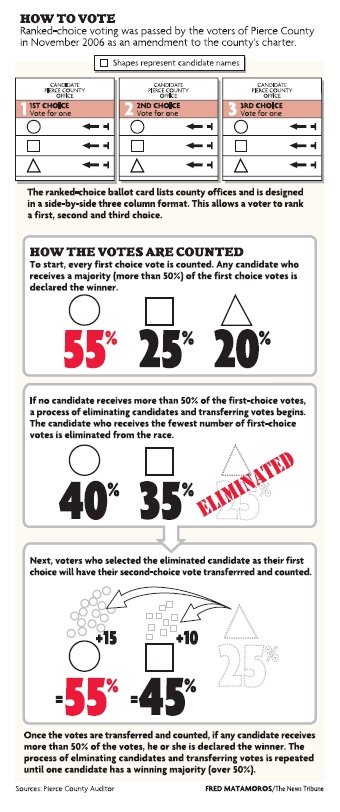
8. Institute ranked choice voting for local elected officials.
9. Institute additional campaign finance limits for local elections.
10. Create an elected public advocate/ombudsperson.
11. Reconstitute a school board with oversight over pre-K to 12 public education, traditional and charter schools.
12. Build civic capacity and infrastructure.

Such changes are even more relevant today because at the time it was written, DC's population was about 620,000.  Now it's 706,000.  So each ward councilmember today represents 88,000+ residents, when before it was 77,000.

Council districts will be redrawn after this year's Census.  As population has increased in the western side of the city, those districts will shrink in size, while eastern districts will continue to expand westward.

Statehood proposal.  The proposed "Constitution for the State of New Columbia" created in 2016 proposes a 21 member House of Delegates.   It basically proposes a structure comparable to that in my 2013 piece.  8 Legislative districts each with two members, one elected in each two year election cycle, with 4 at large members, two elected in each cycle, and a Speaker of the House elected at large.

There's something to be said for having a unicameral legislature in a small place like DC. But in the current form with 13 members,i t's too easy to pass legislation when you only need 7 votes.

More councilmembers per ward.  One problem with monopoly representation within a ward is that it allows the Councilmember to control much of the political discourse and activity within a ward. 

That's why I suggest that each ward have two councilmembers, each serving a four year term, with a two year overlap. This allows for intra-ward competition and polycentric politics.

If DC went to this format, then I'd recommend an increase in the number of at-large representatives too, from two per election cycle to three for a total of six.

That could be as many 23 Councilmembers including the Chair who generally only votes where there is a tie, which is a lot, but instead of 7 votes you'd need 12 to pass major legislation, and that would be a good thing. Salaries could be reduced some to save a bit of money, which would of course be redirected to having more Council staff.

More wards?
As the city increases in population, shrinking the population of wards by adding to the number could help keep wards more intimate and accessible.

An alternative would be to still have monopoly representation within wards, but to have say 11 or 13 Wards instead of 8.

By adding one more at large representative to each election cycle simultaneously, that would be a Council size of 18 with 11 wards and 20 with 13 wards.

In an 11 ward structure, each Councilmember would represent about 64,000 residents; a 13 ward structure, 54,000 residents.
Ranked choice voting graphic, Pierce County Washington

Ranked choice voting.  So many candidates in the ward primary elections is an argument for ranked choice voting ("D.C. Council?s Ward 2 election is a great argument for ranked choice voting," Post).

It's more complicated, but it allows people to indicate first, second, third, etc. choices, and as candidates are eliminated, a more diverse set of candidates can be elected--note that it's possible, not probable.

DC is most likely to elect Democrats to elected office, but the fact is that the candidates vary considerably in terms of their progressiveness, ethics- ness, raceness, etc.

So the ability to rank candidates would help more progressive candidates get elected when a typical election has multiple "good" candidates running and just one "bad" candidate, and the bad candidate has a built in advantage because his/her supporters don't split their votes.

Peirce County, Washington used ranked choice voting for a couple of elections, but it was repealed in 2009.  This diagram is from the Tacoma News-Tribune circa 2008 and is used with permission.  San Francisco started using ranked choice for local elections in 2005.

Civic infrastructure improvements will be the subject of a separate entry.

Labels: , , , , , ,

Wednesday, December 04, 2019

Managing the brand promise of cities in the face of corruption

==========
Update: 12/4/2019

The DC City Council did vote, 12-0, to trigger the process of expulsion, which will require a hearing at which Councilmember Evans has the opportunity to make his case, before a final vote ("D.C. Council votes to recommend Jack Evans for expulsion," Washington Post).
===========

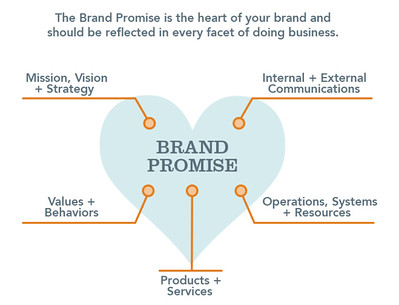
Officials and stakeholders as managers of the city's identity and "brand."  In 2005 I wrote a piece about commercial district revitalization making the point that if we think of ourselves as "destination managers" we will make places great for both residents and visitors.

In 2008, I extended this concept to city elected and appointed officials and stakeholders as a community's collective of "brand managers" responsible for the brand promise of a community:

In 2015 I extended this even further, that officials and stakeholders need to see their roles as the managers of a community's assets, and I've been meaning to do this around risk management too, although I have written about that in the context of lawsuits around policing.

Failure as indication of system failures that should be addressed.  For example, Chicago spends many tens of millions of dollars every year in settlements concerning police misconduct. You'd think that elected officials would take that as an indicator of a problem with the police department, and look at the need for management, process, and policing reforms, rather than merely a "cost of doing business."

The "Brand Promise" of a local government should be managed.

Brand Promise
From "Living up to your brand promise," R+M Agency

DC City Council is faced with an equally tough "brand promise" decision over what to do about Councilmemmber Jack Evans, who looks to be guilty of significant ethics violations and misuse of his office to do "consulting work" on the side.

In DC, the Councilmember job is considered part-time, so all but the Council Chairman can have side jobs. Typically the jobs Councilmembers get, outside of teaching, are with companies doing business with the city, and it's what I call "designing conflict in," setting up a structure and process that builds in opportunity for graft, corruption, and the trafficking of confidential information.

The Post has an article, "Most D.C. lawmakers want to boot Jack Evans from committees, but not the council," about how the City Council is torn on what to do: (1) to let the voters decide; (2) to censure him and strip him of all his committee memberships; or (3) to expell him from the Council, which they have the power to do.

From "Brand promise vs. tagline?: what's the difference,," SimpleStrat.

Separately, a recall petition has been filed, although Evans is challenging up to one-third of the signatures, and next year the Ward 2 position is up for reelection anyway, and already six people have filed their intent to run.

But combining the roles of (1) destination managers; (2) brand managers; (3) asset managers; and (4) risk managers, the City Council is all of that for the City of Washington.

They are responsible for communicating the city's values in vision and practice.


I used to get into "arguments" about the brand of Eastern Market, DC's public market, while sitting on the Community Advisory Council for the organization.

The "Inverted Jenny" is probably the most famous stamp printing error for the US Postal Service.

One instance was during the reconstruction of 7th Street SE, we came up with branded manhole covers, and some were received with a typo. For obvious reasons, the manufacturer didn't want them back (too heavy to pay for shipping), and they said we could have them. The decision was made to sell them for fundraising purposes. 

I objected stating that if our brand is valuable, then we should make the hard choice and discard items that have a typo.  Because being error free was more important than making a little bit of money.

I was the only dissenting vote.

Similarly, I would make the argument that each individual business contributes to the collective, the whole of the brand for Eastern Market, and that businesses that don't measure up need to be addressed.  That didn't go over well either.

Manage the brand: Expel Jack Evans.

Jack Evans is one element of the brand of DC City Council.  He is the longest sitting Councilmember.

Councilmembers need to make the tough decision and:

(1) Make Councilmember jobs full-time and banning outside income, with the possible exception of teaching.

(2) Expel Jack Evans.

If the voters want him back, like Adam Clayton Powell, he can run again next year and make his case ("New York voters restore Powell to his congressional seat," Politico).

But the City Council as "brand managers" of the city's brand promise as well as the City Council's brand promise, need to take a stand.

====
I've been doing some research in the Washington Post backfile and came across an article from the 1970s probably about corrupt practices in DC government, and how this doesn't justify statehood, with the response, why should DC be held to a higher standard than existing states.

While I have come around to that position, it doesn't justify not taking a strong stand against corruption and ethics violations.

On that score, DC City Council lags.

Labels: , , , , , , ,

Wednesday, November 20, 2019

A note to President Trump and DC Councilmember Jack Evans

-- "Former Baltimore mayor Catherine E. Pugh charged with wire fraud, tax evasion," Washington Post

As a State Senator and later as Mayor of Baltimore, Ms. Pugh sat on the board of the University of Maryland Medical System. UMMS and other entities which had business before Ms. Pugh bought lots of copies of her children's books. (UMMS also had self-dealing practices with other board members.)

It took awhile after this came out, but then she resigned as Mayor.  She's just been charged.

Not quite a "quid pro quo" along the lines of Ukraine vis a vis President Trump but close enough.

Similarly, DC Councilmember Jack Evans solicited business using his DC Council email address, and represented organizations with business before the DC City Council or the Washington Metropolitan Area Transit Authority, where he was a board member.

-- past blog entries using the keyword: corruption, and especially
-- "Wow! Revisiting DC's corruption Caucus," which is particularly good on local government issues

He hasn't resigned yet, although he agreed to step off the board of WMATA.  A recall petition has just been submitted.  And he hasn't been charged yet, although investigations are ongoing.

Labels: ,

Saturday, August 03, 2019

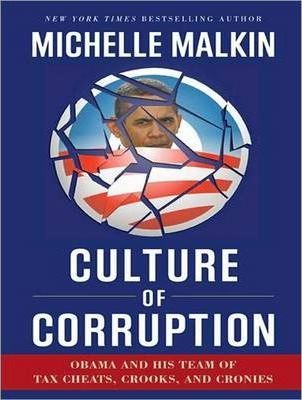
Michelle Malkin needs to update her book

While traveling I mislaid my ethernet cable (the wifi card doesn't work well in my computer so I need to plug it into the router), so now that I am back home I went up the street to the thrift store to buy a cheap replacement.

Then I wandered over to the book section.

I saw this book and laughed at the title, given the scalar difference between the Obama Administration and the Trump Administration in terms of "lawlessness," corruption, and respect for due process and the rule of law.

Just like now that a Republican is in the White House so federal debt is no longer an issue -- so long as it is used to fund tax cuts for the wealthy and corporations ("Republicans shrug at deficit," Washington Post) -- the same seems to be true of corruption.


See:

-- "Trump's Corruption: The Definitive List," New York Times
-- "Trump's corruption is getting worse. He has a hidden enabler," Washington Post
-- "Corruption Is the Tie that Binds for Trump-Era Republicans," The New Republic
-- "Welcome to the Post-Post-Corruption Era of the GOP," New York Magazine
-- "Morning Joe: Trump Administration Most Corrupt Since Harding"

Labels: , , ,