Rebuilding Place in the Urban Space

"A community’s physical form, rather than its land uses, is its most intrinsic and enduring characteristic." [Katz, EPA] This blog focuses on place and placemaking and all that makes it work--historic preservation, urban design, transportation, asset-based community development, arts & cultural development, commercial district revitalization, tourism & destination development, and quality of life advocacy--along with doses of civic engagement and good governance watchdogging.

Tuesday, July 14, 2026

Parking, parking, parking -- Chicago | A rare opportunity to reverse a really bad decision

Parking meter sign in Chicago.

In the pre Trump days the line was that "social security is the third rail of politics," that you try to mess with it you get burned.  Locally, I joke the issue is parking.

Chicago has lots of structural deficit issues, primarily a massive pension liability, and over the years the young Daley Administration in particular the choice as to employ stratagems to fix massive budget deficits. 

The biggest was to sell off, well lease off, parking meters for 99 years.  The contract is onerous, requiring the city to pay the concessionaire for closed streets, like for festivals, or taking out parking spaces for bike share stations or to add to the public space.  From the Bloomberg article "Morgan Stanley’s $2.5 Billion Parking-Meter Sale Roils Chicago Council":

For almost two decades, Chicago has been stewing over a $1.15 billion deal to Chicago Parking Meters, LLC Selected as Winning Bidder for the 36,000 parking meters to an investor group led by Morgan Stanley. Now, with the meters set to change hands, the city council is seizing on an opening to push back.

The original purchasers have already made their money back and then some, and look to sell of the next 57 years of the concession for $2.53 billion.  Mayor Johnson put in a bid to buy it back, but for some reason he backed off ("Mayor Johnson finally explains his decision to bid $3.2B for parking meters before walking away," Chicago Sun-Times).

The City Council has to approve the transfer, and they are looking for concessions.  Meanwhile,  Alderman Jason Ervin proposed the creation of a public infrastructure trust/bank funded by the city's pension funds, to buy back the contract and to make other public infrastructure investments ("We should vote no on the parking meter transfer for the sake of a better investment policy," Chicago Tribune).

That's actually a good idea.  

North Dakota's State Bank ("The ‘Secret Sauce’?: Understanding the Success of the State Bank Of North Dakota," Government Finance Research Center, UIC) and the Quebec Pension Fund, CDPQ--Caisse de dépôt et placement du Québec, have been successful at intra-state/province investment.  

The pension fund is building the REM transit system in Montreal--but they got a super sweet deal from the Province that's as outrageous as the concessions made on the original parking contract in Chicago.

The REM in Montreal launched its second section earlier this year.  People really ride it.

I worry some about these kinds of set ups because while they need accountability and transparency mechanisms, at the same time there needs to be a hard wall against political meddling.  

E.g., you don't want Aldermen able to force through loans, the way they have veto power over development within their wards?  

Or, when the US Government gave a massive loan to GM during the Great Financial Crisis, local dealers under threat from consolidation called their Congressional representatives to lobby to keep their franchise.  Etc.

Chicago's track record on infrastructure doesn't make me hopeful they can make the turn from a corrupt orientation to an above board infrastructure bank, but I'm hopeful.  E.g., when Norway created its Sovereign Investment Fund, it drew upon the experience with Mideastern states, oil revenues, and investments with the aim of yielding real investment rather than wasting the money ("Stop Calling All Wealth Funds Sovereign: Father of Norway’s Fund," Bloomberg).

Maybe Chicago should hire people from Norway to run their bank...

To me, they shouldn't have sold off the parking meter concession to begin with.  And it's rare to be given the opportunity to reverse such a bad decision.

Labels: , , , , , ,

Tuesday, March 11, 2025

The "nonprofit industrial complex," city government and service delivery

The Baltimore Sun has a commentary, "Baltimore is being strangled by the nonprofit industrial complex," criticizing the city for making a grant of almost $1 million to an organization with a limited track record.
A $900,000 grant by the Baltimore Children and Youth Fund (BCYF) to a nonprofit organization known as Thrive Arts Inc. in 2022 is the latest evidence that Baltimore’s version of the “nonprofit industrial complex” wields too much power. 

As reported by The Baltimore Sun, Thrive Arts was incorporated in 2021 but lost its corporate charter last year after failing to file tax returns for three straight years, and is [legally] now defunct.
It was an extraordinarily large grant for a small organization with no proven track record. Yet to be confirmed is how much of the $900,000 was disbursed to the grantee and spent on the purposes for which it was intended or returned to the city.
I do intend to do a book review on the book Nonprofit Neighborhoods: An Urban History of Inequality and the American State, which discusses how cities began outsourcing dealing with inequality and social issues to nonprofits.  This brief blog entry is by the author too, "The Origins of the Nonprofit Industrial Complex."

I have written many times over the years about problems with DC government grants and nonprofit execution.  

This is in the news more recently because of alleged bribes to a councilmember ("Trayon White expelled from the DC Council for corruption but he’s free to run for his old seat," AP) and government employee ("Former DC government official charged with taking bribe,"NBC4) by a grantee eager to secure their place in the system.

But it's been an issue for a long time, in fact the organization in Baltimore that is criticized by the author is similar to one that engaged in improper grant making in DC ("Harry Thomas, former D.C. Council member, is sentenced to more than three years in prison," Post), leading to the jailing of a Councilmember.

Minneapolis had some terrible problems/mistakes during covid, when it granted tens of millions to a grantee to provide meals, when the grantee had zero capacity to do so ("Minneapolis man admits to stealing at least $3.8 million from COVID-19 relief programs," KARE-TV).

Thinking about this I have five main points:

1.  A lot more money needs to be invested in capacity development and technical assistance for nonprofits, especially those receiving government grants.

2.  There must be transparency with the grant making process--something definitely not present in the Baltimore example.  An RFP and open call process with deadlines and decision making criteria.

3.  Accountability mechanisms must be in place to ensure that the right stuff is being done with the money and that it gets results.  This has been an issue with violence prevention programs in many places, including DC, where one recipient of funds recently was imprisoned for murder ("Former D.C. Violence Interrupter Sentenced for His Involvement in Drive-By Shooting," Washington City Paper, "Violence Interrupters Push Back Against Calls for Defunding," Washington Informer,  Many cities are putting hopes in violence interrupters, but few understand their challenges," NBC News).

4.  Evaluation of success and failure needs to be built into the program ("D.C.’s Violence Intervention Programs To Receive In-Depth Evaluation,".DCist").

5.  Ethics training is mentioned in the academic literature as being important.  I wonder...

=======

=======
I just came across this, I haven't read it.  From the Journal of Business Ethics article, "The Labyrinth of Corruption in the Construction Industry: A System Dynamics Model Based on 40 Years of Research," :

Abstract 

The academic literature has viewed drivers of corruption in isolation and, consequently, failed to examine their synergistic effect. Such an isolated view provides incomplete information, leads to a misleading conclusion, and causes great difficulty in curbing corruption. This paper conducts a systematic literature review to identify the drivers of corruption in the construction industry. Subsequently, it develops a system dynamics (SD) model by conceptualizing corruption as a complex system of interacting drivers. Building on stakeholder and open systems theories, the proposed SD model shows how the complex reinforcing relationship between authoritative, organizational, cultural, and financial drivers of corruption further increases corrupt practices. The new model also provides lessons that can be helpful in the development of policy frameworks to control corruption in the construction industry. To achieve success in the fight against corruption, the findings of this research suggest that (1) corruption must be understood at both the organizational and state levels, (2) anticorruption practices must be informed by ethically grounded stakeholder management strategies, and (3) anticorruption reforms must go hand-in-hand with strategies to tackle the economic downturn.

No wonder corruption is so endemic.  It's embedded deep within the system.  Below is the diagram from the article showing the dimensions of corruption within construction.


Labels: , , , , , ,

Monday, July 18, 2022

‘Systemic failures’ in Uvalde school massacre, report finds

I don't know what to think about this.  

The report by the Texas State House of Representatives ("Uvalde report: 376 officers but 'egregiously poor' decisions," Associated Press) says that a state or federal law enforcement agency could have taken control of the response to the mass shooting event at Robb Elementary School in Uvalde, Texas, where 19 children and 2 teachers were killed and it took more than an hour for the police to engage with the shooter.

Like all government agencies, law enforcement agencies are very conscious of jurisdiction, and definitely a federal agency wouldn't step in unilaterally.  The report says that the Texas Department of Public Safety is tasked with the responsibility for dealing with mass shootings and could have taken control. Or that they or the US Border Patrol could have asked for control.

But that takes time, negotiations between the local department and the state agency etc., unless they already have a memorandum of understanding in place.

Why the chief of the school district police department, Pete Arredondo, or the acting chief of the city police department, Lt. Mariano Pargas, didn't step up and declare they were incident commander and act accordingly is beyond me.

It's definitely a great example of my belief that most people and organizations are bad at decision making, and even worse in crisis conditions.

It's accentuated by lots of different agencies in small places. While I understand the value of subsidiarity and having agencies organized and focused on smaller units, there is a lot to be said for scale.

Also see "America is resigned to mass shootings — but not to cops who fail to act," Washington Post. From the article:

An infuriating new report on the shameful police response to the Uvalde, Tex., school shooting “absolves no one,” according to The Post’s print headline. A better way to put it would have been that the report “implicates everyone” for delaying more than an hour while 19 children and two teachers were dying or lying dead.

But the question here is not whether the existing system could have been made to perform better. It’s whether we need a whole new system to confront the mass shootings that have become a tragic fact of American life. ...

But because we have effectively decided to tolerate school shootings and other mass killings of innocents, we need a system in which schools and other vulnerable institutions, such as churches and even shopping malls, are more effectively locked down. We need a system in which it is clear who is taking charge of the police response and in which incidents are considered “active shooter” until proved otherwise.

The reports on Uvalde make clear just how poorly every single tripwire that might have prevented the shooting functioned.

===

-- "Not that I want to defend management failure and unnecessary death, but that was an outcome determined by a corrupt system ," 2020

Labels: , , , , , ,

Thursday, May 19, 2022

The Growth Machine in Anaheim, California gets socked with a corruption probe

Urban Fortunes: The Political Economy of Place is the book which expands the original argument first laid out by Professor Harvey Molotch in the journal article "The City as a Growth Machine."

Growth Machine theory is from urban sociology and posits that local political and economic elites, despite intra-elite competition, are overall unified in terms of the commitment to an economic growth agenda centered on real estate development and land use intensification.

Political science has a similar theory, called Urban Regime.  I think GM is better on the overall explanation of why local elites do what they do, while UR is better at explaining at how it operates.  

Where GM theory is particularly insightful on various elements of the land use intensification agenda, from Downtown revitalization to sports stadiums and arenas, conference centers, and in particular, the role of local media--fully dependent of the success of the local region for its own success, being dependent on advertising revenues generated primarily from sales to local businesses--in cementing this agenda.

As I said, UR theory is best for explaining how the Growth Coalition works.  In the paper, "Now What? The continuing evolution of Urban Regime analysis," political science Professor Clarence Stone writes:

An urban regime can be preliminarily defined as the informal arrangements through which a locality is governed (Stone 1989). Because governance is about sustained efforts, it is important to think in agenda terms rather than about stand-alone issues. By agenda I mean the set of challenges which policy makers accord priority. A concern with agendas takes us away from focusing on short-term controversies and instead directs attention to continuing efforts and the level of weight they carry in the political life of a community. Rather than treating issues as if they are disconnected, a governance perspective calls for considering how any given issue fits into a flow of decisions and actions. This approach enlarges the scope of what is being analyzed, looking at the forest not a particular tree here or there. [emphasis added, in this paragraph and below] ...

By looking closely at the policy role of business leaders and how their position in the civic structure of a community enabled that role, he identified connections between Atlanta's governing coalition and the resources it brought to bear, and on to the scheme of cooperation that made this informal system work. In his own way, Hunter had identified the key elements in an urban regime – governing coalitionagendaresources, and mode of cooperation. These elements could be brought into the next debate about analyzing local politics, a debate about structural determinism.

I've written about this in a bunch of blog entries about other communities, as well as about DC:

-- ""Columbus Way" merely another example of "Growth Machine/Urban Regime" theory," 2019
-- "Minneapolis growth machine," 2015
-- "If you don't know urban political theory, it's likely that you don't understand local land use: St. Louis: DC; etc.," 2012
-- "Smaller town revitalization planning: No, Thomas Friedman is not a sage," 2018
-- "The Growth Machine needs to be subtle when it comes to elections | Voters need to see some benefits," 2020

Graphic from "Public-Private Partnership Model Used in the Taipei Central Station Project Research," Mou Chung Tseng, National Taipei University.

Usually, it's pretty much out in the open, in that groups like the chamber of commerce and other organizations--in DC the Federal City Council ("THE DISTRICT'S POWER BEHIND THE SCENES: Washington Post-connected business group wields influence over city's legislative agenda," and "The DC Lobby," The Common Denominator)--are the organized growth coalition, which includes leaders of major locally-based corporations, real estate developers, bankers, university presidents, media leaders, etc.  

In NYC you have REBNY, the Real Estate Board of New York and the Partnership for New York City as the leads, with plenty of other groups in a secondary position.  Plus business improvement districts (which often have ex-government officials as leaders), etc.

Elected officials are more "fellow travelers," not so much stated "card carrying" members of the group.  But aligned and integrally involved ("Meet the Lobbyists, Developers, and Insiders On Bowser’s ReOpen DC Committees," Washington City Paper).

Anaheim has its "growth coalition" too, centered around Disneyland first and foremost as well as professional sports operations, especially the Anaheim Angels baseball team and stadium.

But unlike in other places, apparently the group operates more "secretively" and has involved the sharing of confidential city information with business interests, putting it more into the zone of corruption rather than mutual cooperation ("Secret retreats and a powerful ‘cabal’: Corruption probe reveals who really runs Anaheim," Los Angeles Times).

Hence the probe.

Note that DC has corruption issues too.  See:

-- "Managing the brand promise of cities in the face of corruption," 2019
-- "Wow: Revisiting DC's Corruption Caucus," 2019

Labels: , , , , , , ,

Wednesday, January 13, 2021

Government organizational failure as standard operating procedure

Even before the pandemic response, the media reported on various federal government failures throughout the Trump Administration.  More recently in an article about the transition to the Biden Administration, was the mention that the key policy units supporting the Secretary of Treasury have had staff reductions in the range of 40%.

Obviously, the failure of the federal government's public health response ("How the CDC failed public health officials fighting the coronavirus," "The CDC chief lost his way during COVID-19. Now his agency is in the balance," USA Today) to the coronavirus is the ultimate example of this cross the board failure, although many state governments have been equally culpable ("Judge: South Dakota can’t use COVID-19 to delay trial," AP)--Florida and Taiwan have about the same population but Florida has over 23,000 deaths from covid, while Taiwan has 7.  

-- "US virus death toll hits 350,000; surge feared," AP, January 3rd, 2021

The coronavirus response alone ranks #1 in the Organizational Failure Hall of Fame.

AP photo

This is the logical result of 40+ years of the neoliberalism paradigm, which exalts the private sector at the expense of the public sector, not only denigrating government but defunding it, so that the criticism of public response as inadequate comes true because of the hollowing out of government staff and expertise.

But some recent reports bring this up the topic of organizational failure yet again.  It's so typical that it appears as if failure is the preferred outcome.

As I wrote in November, I don't like to bandy about the word "corruption" when it comes to government. Corruption has a specific meaning and the word is too often misused when people excoriate politics and politicians. 

But there is no question that putting "politics" over "governance" and quality outcomes has subverted and degraded what government does and can do, in ways that dis-serve the public.

Even if individual officials are not corrupt, we have created "corrupt systems" where dysfunction is the standard outcome.

-- Corrupt Cities: A Practical Guide to Cure and Prevention, World Bank
-- "DC ethics legislation misses the point: focus on what produces corruption as a regular outcome, not monitoring," blog entry, 2011
-- Spring 2015 issue of the alumni magazine of the International Anti-Corruption Academy

1.  Flint water crisis.  AP reports ("Michigan plans to charge ex-Gov. Snyder in Flint water probe") that the State of Michigan will be indicting previous government officials (Republicans, including former Governor Rick Snyder) over their creation of and failed response to the Flint Water Crisis.

All they needed to do was spend less than $100,000 to treat the water, once they changed from "Detroit water" to water from the Flint River.  But state officials inexplicably said that treating the water was unnecessary and this led to lead leeching into the water.  At the time, the city, bankrupt, was under the direct control of the state government.

Put that in perspective when reading about how a settlement of $641 million is being negotiated to settle various suits ("$600-million Flint water crisis settlement bills pass state House, move to Gov. Gretchen Whitmer," MLive/Flint Journal, "Critics say they are "gravely concerned" about proposed Flint water crisis settlement," Michigan Public Radio).  

$100,000 is 1/6410 of this cost alone.  The state government is providing $600 million towards the settlement, which is funded by a bond.  So with interest costs the cost to the state is likely to be more than $1 billion in total over time.

Outside of indictments, and it's hard to get criminal charges sustained for these kinds of organizational failures, how can accountability be imposed?

Trump supporters try to break through a police barrier, Wednesday, Jan. 6, 2021, at the Capitol in Washington. As Congress prepares to affirm President-elect Joe Biden's victory, thousands of people have gathered to show their support for President Donald Trump and his claims of election fraud.(AP Photo/John Minchillo)

2.  US Capitol Police fail to adequately respond to reports of likely attack on the Capitol.  Wow, just wow.  Talk about organizational failure ("With big budget but little accountability, long-troubled Capitol Police face questions after siege," Washington Post).  

Even though Trump has been amping up Republicans by falsely claiming the election was stolen, and with reports of the potential for violence ("FBI report warned of ‘war’ at Capitol, contradicting claims there was no indication of looming violence," Washington Post), the USCP treated the event as a "normal demonstration" and didn't increase staffing beyond a normal day, nor did they institute basic protocols to defend the Capitol in the face of the potential for violence.

3.  And yes, while the coronavirus is #1 in organizational failure, the federal government public health response continues to be inadequate, now with regard to rollout of vaccination ("Vaccines were a chance to redeem failures in the U.S. coronavirus response. What went wrong?," Washington Post).

Instead of coming up with a master plan, giving it to states, and then modifying it, the CDC asked each state to come up with its own plan.

This reminds me of when I was a commercial district revitalization manager in DC.  There were 11 Main Street programs.  They would ask us to each respond to some type of program, rather than providing a best practice template.  I thought this was a massive waste of resources and a failure to leverage potential network effects (benefits) from having multiple programs in one city.

This was the problem with Obamacare too.  They should have piloted it with a few states, with a master website instead of rolling it out at once, and with different websites for every state.  Then they should have upgraded everything based on one year's experience.  Did the 2.0 reboot.  Rolled it out to more states, tweaked it some more, and then with 3.0 rolled it out to the rest of the country.

The vaccination program probably doesn't need that many iterations.  But certainly it could be done a lot better.

Who knew there is a

-- World Immunization Week, held the last week of April, sponsored by the World Health Organization, UNICEF and other organizations

Honorable mentions

Aerial photo of flooding in downtown Midland, Mich., Wednesday, May 20, 2020. (Photo: Kelly Jordan and Junfu Han, Detroit Free Press).

4.  I wrote about this in May, but Michigan is also notable for another federal-state failure, last year's failed dams on the Tittabawassee River, which flooded the City of Midland.  "Displacing a problem doesn't solve it: an example of how restrained regulation can cost millions of dollars | Flooding in Mid-Michigan from a dam break."

Instead of correcting the problem, when the dam owner failed to act, the Federal Energy Regulatory Commission took away its hydroelectricity generation permits, and kicked the oversight responsibility to the state.  What they should have done is appointed a receiver and fixed the dams.

5.  The failure to adequately regulate Washington Gas and requirements to replace regulator valves prone to failure, which contributed to the explosion of a furnace room in a suburban Maryland apartment complex, killing 7 and injuring scores more ("Faulty vent and regulator caused deadly Silver Spring explosion, federal investigators say," Washington Post), "Washington Gas Light fined over program linked to 2016 Md. apartment blast," Standard & Poor's Global).

6.  WMATA operations and management ("Metro Safety Commission Finds ‘Distractions, Fear, Threats and Conflicting Instructions’ in Control Center," Loudoun Now).


Etc.

Labels: , , , , ,

Saturday, October 24, 2020

DC elections: a clear need for ranked choice voting, and expansion of the size of the City Council

A few election cycles ago, candidate for Council Matthew Frumin made the point that is was coming onto the 40th anniversary of Home Rule (2013), and that it would be a worthwhile exercise to assess the experience, and make changes as necessary.

Home Rule, or the creation of a DC City Charter, was when Congress passed a law creating an independent local government for DC, which previously had been run as a unit of the Executive Branch with severe oversight by Congress.  Because DC was then a majority black city, this was also seen as a civil rights issue.

I thought Frumin had a good idea and of course, nothing's come of it.

Many candidates should mean ranked choice voting.  This year's elections, both with the Ward 2 Council seat--where 8 candidates vied for the seat in the Democratic primary, which was won by a young woman with limited connections to the city and a lot of family money for the campaign and the At Large race, where 23 candidates are vying for the two spots ("D.C. at-large council race exposes city's racial divides," Washington Post) screams out for the need for "ranked choice voting."

Sample ballot, DC 2020 Election

I've argued for more than a decade that DC should do this.  It's an overwhelming Democratic city--96% of us voted for Hillary Clinton, so when seats come open, it's a scrum, and with so many candidates, people get elected with less than a majority.  For example, Brooke Pinto won the Ward 2 primary with less than 29% of the vote.  Usually there are more votes cast in total for the other candidates rather than the winner.

In RCV, you vote for X number of candidates, ranking them 1, 2, 3, etc.  If there isn't an outright winner, the candidate with the least votes is eliminated with their preferences redistributed.  This process continues until one candidate receives a majority of preferences.  Maine moved to this format because third party candidates ended up leading to Republican wins.

Pierce County, Washington tried this in 2008, but people didn't like it and they reversed it.  (Graphic used with the permission of Fred Matamoros, when he was at the Tacoma News Tribune.)

District vs. at large voting.  Generally, courts have held that at large voting allows the majority to extinguish minority representation (AT-LARGE VOTING FREQUENTLY ASKED QUESTIONS, NAACP Legal Defense Fund).  

District based voting with fairly designed districts should provide for the representation of minorities provided they are geographically concentrated.  One recent example is Anaheim, California, where the shift to geographical districts led to Latinos being elected to the Council where they had been represented previously.  (Although ranked choice voting could have made a difference as well.)

Like a number of cities, DC has a mix of wards and at large representatives.  There are 8 wards, each with one Councilmember, and 4 at large positions.  Four wards and two at large positions are up in each election cycle.

The Council is roughly 50% black and 50% white, and neither Asians nor Latinos have been elected to Council

At-large Council.  The at large positions have an interesting requirement.  Recognizing the city is overwhelmingly Democratic, one seat in each cycle is reserved for the non-majority "party."  (Philadelphia has a similar provision.)  What that meant for many years is that there were "Statehood Party" and/or Republican representatives on Council, holding one of those seats.

In the 1988 election, Democrat William Lightfoot realized there was a work around to run for that seat.  He gave up his Democratic Party affiliation and ran as an independent, getting elected.  Since then, more Democrats have done this.  Hilda Mason, the Statehood Party stalwart was defeated by an "independent" in 1998.

Republican Councilmember Carol Schwartz likely would have stayed on Council as long as she wanted, but in the 2008 election cycle, conservative Republicans got "cute" and ran a candidate against her in the primary.  She lost, but the party Republicans didn't realize that Democrats were voting for Schwartz because of her qualities, not out of a sense of a need for "political competition" and their candidate was crushed in the general election.   Since then, an "independent" (Democrat) has picked up that seat.

This year's scrum is the result of "independent" David Grosso, choosing to step down.

More Councilmembers for more representation?  In the past, I've argued for many changes to DC 's governance set up, including:  (1) adding a Councilmember to each ward; (2) considering adding up to three wards; and (3) adding more at large representatives to complement a larger proportion of ward-based representatives.

-- "Incremental piecemeal fixes to DC politics and governance mostly don't help," 2013

One advantage of making the Council bigger is that it would be harder to pass legislation.  Now you only need 7 votes.  This is the source of the criticism that the Council is more progressive policy oriented and less concerned about "business."

While the "too progressive/not business friendly" sentiment is expressed in the Post article about the At Large election what comes across more is that as the city's demographics change, white progressives are trumping black moderates, although this isn't restricted to whites, as in the 2020 Ward 4 primary, progressive black candidate Janeese Lewis George defeated the pro-business incumbent Brandon Todd, in large part with the votes of white progressives.

Making the Council larger could help address both concerns.

Adding a Councilmember to each ward.  I've favored this for a long time as a way to create intra-ward political competition by eliminating political monopoly.  

Since the racial composition of ward representation is 50/50, adding a representative to each ward would add 4 black Councilmembers and either 4 white Councilmemers or 3 white and 1 Latino (Ward 1, although Latinos are being displaced from the ward as the housing stock appreciates in value).

Rather than having four wards up for election in each election, one Council seat would be up for all eight wards.

But while it is likely to add more white and black members, it's not likely to result in the addition of Latino Councilmembers strictly on the basis of geography.

Creating more wards.  Arguably you could add wards too, although with two representatives per ward, there probably wouldn't be a need to have more wards, but it would increase representation theoretically, by reducing the number of people represented by each councilmember, and providing the capacity for more access.

The current population of the city is 720,000, so each ward comprises about 90,000 residents.  Adding 3 wards would have each ward be comprised of about 66,000 residents.

But because the city's population is shifting towards majority white and this population is mostly west of the Anacostia River, likely this would tip the Council demographic to majority white.  

So this would be problematic.  Easier and fairer to not create more wards, but add one Councilmember to each ward.

Adding at large seats.  Figuring an addition of 8 ward-based council members, I'd add two at large members, one for each cycle.

That would make for a 22 member City Council, chaired by the 23rd member, the Council Chair.

Second Party in DC.  Technically, there isn't much of a "second party" in that the Republicans are pretty weak, given the progressive bent of the electorate, although Republicans have been on Council in the recent past--David Catania (although he first won in a special election in 1997, and probably many people voted for him at first, not realizing he ran as a Republican), Carol Schwartz, and at the outset of Home Rule, Black Republican Jerry Moore.   

With two representatives per district, there would be an increased likelihood that a moderate Republican could win a seat in either Ward 2 or Ward 3.  But the person would have to be liberal on social issues and reasonable on budget issues.

But as long as the fiction of independent Democrats persists, the likelihood of a Republican winning an at large seat is remote.

Third PartiesStatehood-Green.  At the outset of Home Rule, an independent Statehood Party had Julius Hobson on Council.  He died in office, and Hilda Mason replaced him.  She lost a bid for reelection in 1998 and since then the party, which subsequently merged with the Green Party in DC, has not been successful at getting anyone elected to either ward or at large seats.  I do think it would be possible, but they don't have a particular strong brand and electioneering capacity.

But again, with two representatives in each ward, it'd be possible for them to mount more successful challenges and win seats.  With a beachhead of a ward seat, it'd be possible for them to win seats at large, especially with the addition of 

Working Families.  Last year, in Philadelphia, the Working Families Party was successful in running for an at large seat, beating out a seat that had long been held by Republicans ("‘Regular people’ over Wall Street: How the Working Families Party could shake up Philly City Hall," Billy Penn).  With a larger DC City Council, they could make a play for seats here.  The party is active in the city, but hasn't run candidates.

Conclusion.  Aim for the creation of a more diverse Council, including the possibility of true third party participation.  (Although the current "power elite" isn't likely to favor either.)

1.  Adopt ranked choice voting to allow for greater intra-party competition and to increase the possibility of second and third party representation.

2.  Increase the size of the City Council by adding one representative to each of the city's 8 wards.

3.  Increase the size of the City Council by adding two at large representatives, adding one new representative to each election cycle.

With a 23 member Council it will take 12 votes, not 7 to pass legislation, making it a bit more difficult to pass legislation.

With more ward members it should create the possibility for second and third party representation, thereby creating a foundation to build upon for mounting successful campaigns for at large seats.

Ranked choice voting will support intra-ward political competition as well as ensure that third party candidacies don't create spoilers.

Labels: , , , , ,

Sunday, September 27, 2020

Not that I want to defend management failure and unnecessary death, but that was an outcome determined by a corrupt system

Getty Images photo.

On Friday, former leaders of the Holyoke Soldiers' Home in Massachusetts were charged with criminal abuse and neglect, over the coronavirus-related deaths of 76 people ("Two Charged in Coronavirus Outbreak at Veterans’ Home That Left 76 Dead," New York Times).

But the fact that the Superintendent: (1) was a political appointee, (2) unqualified, (3) made bad decisions (4) especially in times of extreme circumstances, (5) amid inadequate resources, especially staff, contributed to and produced the "failures." 

From the Boston Globe story "At Holyoke Soldiers’ Home, moral accountability lingers for Charlie Baker":

It’s the story of how easily we forget about old people, especially those who live 90 miles away in Western Massachusetts. It’s the story of how politicians pay tribute to veterans on holidays but somehow never make those vets a year-round priority. 
It’s also the story of how political connections pave the way for employment, even for the difficult and specialized job of running a facility that promises veterans “care with honor and dignity.” According to the report prepared by former federal prosecutor Mark W. Pearlstein, Walsh, a decorated Marine Corps veteran with no experience in health care or long-term care, was encouraged by a state lawmaker to apply for the superintendent’s job.
... During the June 24 press conference, Baker also said, “The first time I ever met him [Walsh], or talked to him was when we swore him in.” But according to Walsh’s attorney, William Bennett, on April 27, 2016, Walsh was interviewed, separately, for 20 to 30 minutes each, by Baker, Lieutenant Governor Karyn Polito, and then-Baker chief of staff Steve Kadish.

Nursing homes in general are under-funded, staff are poorly paid, there aren't enough staff, etc.

This is likely doubly true of "veterans" nursing homes run by states.

The "system" produced the conditions that led to these deaths. 

But there aren't criminal charges in store for the people who created those conditions.

======

Four years ago, in the run up to the local elections, I was talking with my neighbor about voting and she said that she made her choice on whether or not the person was qualified to be mayor. I said why, "they're running for council." 

She made the point that the more capable and qualified the candidate the better we would be served. She's right of course. 

Putting people into positions when they are barely or un- qualified is catastrophic when circumstances require extraordinary response. (This by the way is why the line "never let a crisis go to waste" is mostly a story of unrealized opportunities. Most people aren't capable of rising to the occasion.)

Corrupt systems.  I don't like to bandy about the word "corruption" when it comes to government.  Corruption has a specific meaning and the word is too often misused when people excoriate politics and politicians.  

But there is no question that putting "politics" over "governance" and quality outcomes has subverted and degraded what government does and can do, in ways that dis-serve the public.

Years ago, blogreader EE shared with us a book published by the World Bank, Corrupt Cities: A Practical Guide to Cure and Prevention and I wrote about it in this 2011 piece, "DC ethics legislation misses the point: focus on what produces corruption as a regular outcome, not monitoring." 

While the book focuses on "developing nations," the reality is that corruption in government works the same way everywhere it occurs. 

As the authors write: 

Corruption = monopoly + discretion of public officials - accountability.

My piece listed 9 particular issues (although there are more) with the way things work in DC.  

Even though legislation was passed to reduce conflicts, most of the areas I identified as rife with the potential for conflict weren't addressed.

IACA is the International Anti-Corruption Academy, which was formerly known as the International Association of Crime Analysts, and they provide technical assistance and training world-wide.. This particular issue of their alumni magazine  focuses on local government and features an interview with one of the authors of the book Corrupt Cities and his work as the Mayor of La Paz, Bolivia. 

One quote: 

"The problem is not corrupt individuals.  It's corrupt systems." 

"Islands of Integrity and Effectiveness," discusses the five point system to limit corruption that was derived from the work that led to the book: 
  • Breaking monopolies by increasing competition in activities and service delivery
  • Decreasing discretion in decision making by establishing and enforcing clear rules and procedures
  • Strengthening accountability and transparency mechanisms of activities/service delivery by effective management of information and data
  • Increasing the probability of being caught and punished by establishing effective control mechanisms
  • Decreasing the relative value of the gain versus the loss, by creating incentives and motivation for honest performance and behaviour.
I realize that the kinds of recommendations I've made over the years wrt DC governance and politics in various entries absolutely reflect those points, especially the first three, but also the last two.

Labels: , , , , , ,

Wednesday, December 04, 2019

Managing the brand promise of cities in the face of corruption

==========
Update: 12/4/2019

The DC City Council did vote, 12-0, to trigger the process of expulsion, which will require a hearing at which Councilmember Evans has the opportunity to make his case, before a final vote ("D.C. Council votes to recommend Jack Evans for expulsion," Washington Post).
===========

Officials and stakeholders as managers of the city's identity and "brand."  In 2005 I wrote a piece about commercial district revitalization making the point that if we think of ourselves as "destination managers" we will make places great for both residents and visitors.

In 2008, I extended this concept to city elected and appointed officials and stakeholders as a community's collective of "brand managers" responsible for the brand promise of a community:

In 2015 I extended this even further, that officials and stakeholders need to see their roles as the managers of a community's assets, and I've been meaning to do this around risk management too, although I have written about that in the context of lawsuits around policing.

Failure as indication of system failures that should be addressed.  For example, Chicago spends many tens of millions of dollars every year in settlements concerning police misconduct. You'd think that elected officials would take that as an indicator of a problem with the police department, and look at the need for management, process, and policing reforms, rather than merely a "cost of doing business."

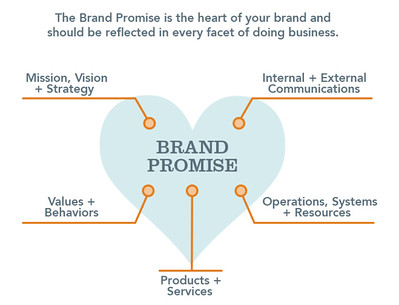
The "Brand Promise" of a local government should be managed.

Brand Promise
From "Living up to your brand promise," R+M Agency

DC City Council is faced with an equally tough "brand promise" decision over what to do about Councilmemmber Jack Evans, who looks to be guilty of significant ethics violations and misuse of his office to do "consulting work" on the side.

In DC, the Councilmember job is considered part-time, so all but the Council Chairman can have side jobs. Typically the jobs Councilmembers get, outside of teaching, are with companies doing business with the city, and it's what I call "designing conflict in," setting up a structure and process that builds in opportunity for graft, corruption, and the trafficking of confidential information.

The Post has an article, "Most D.C. lawmakers want to boot Jack Evans from committees, but not the council," about how the City Council is torn on what to do: (1) to let the voters decide; (2) to censure him and strip him of all his committee memberships; or (3) to expell him from the Council, which they have the power to do.

From "Brand promise vs. tagline?: what's the difference,," SimpleStrat.

Separately, a recall petition has been filed, although Evans is challenging up to one-third of the signatures, and next year the Ward 2 position is up for reelection anyway, and already six people have filed their intent to run.

But combining the roles of (1) destination managers; (2) brand managers; (3) asset managers; and (4) risk managers, the City Council is all of that for the City of Washington.

They are responsible for communicating the city's values in vision and practice.


I used to get into "arguments" about the brand of Eastern Market, DC's public market, while sitting on the Community Advisory Council for the organization.

The "Inverted Jenny" is probably the most famous stamp printing error for the US Postal Service.

One instance was during the reconstruction of 7th Street SE, we came up with branded manhole covers, and some were received with a typo. For obvious reasons, the manufacturer didn't want them back (too heavy to pay for shipping), and they said we could have them. The decision was made to sell them for fundraising purposes. 

I objected stating that if our brand is valuable, then we should make the hard choice and discard items that have a typo.  Because being error free was more important than making a little bit of money.

I was the only dissenting vote.

Similarly, I would make the argument that each individual business contributes to the collective, the whole of the brand for Eastern Market, and that businesses that don't measure up need to be addressed.  That didn't go over well either.

Manage the brand: Expel Jack Evans.

Jack Evans is one element of the brand of DC City Council.  He is the longest sitting Councilmember.

Councilmembers need to make the tough decision and:

(1) Make Councilmember jobs full-time and banning outside income, with the possible exception of teaching.

(2) Expel Jack Evans.

If the voters want him back, like Adam Clayton Powell, he can run again next year and make his case ("New York voters restore Powell to his congressional seat," Politico).

But the City Council as "brand managers" of the city's brand promise as well as the City Council's brand promise, need to take a stand.

====
I've been doing some research in the Washington Post backfile and came across an article from the 1970s probably about corrupt practices in DC government, and how this doesn't justify statehood, with the response, why should DC be held to a higher standard than existing states.

While I have come around to that position, it doesn't justify not taking a strong stand against corruption and ethics violations.

On that score, DC City Council lags.

Labels: , , , , , , ,

Wednesday, November 20, 2019

A note to President Trump and DC Councilmember Jack Evans

-- "Former Baltimore mayor Catherine E. Pugh charged with wire fraud, tax evasion," Washington Post

As a State Senator and later as Mayor of Baltimore, Ms. Pugh sat on the board of the University of Maryland Medical System. UMMS and other entities which had business before Ms. Pugh bought lots of copies of her children's books. (UMMS also had self-dealing practices with other board members.)

It took awhile after this came out, but then she resigned as Mayor.  She's just been charged.

Not quite a "quid pro quo" along the lines of Ukraine vis a vis President Trump but close enough.

Similarly, DC Councilmember Jack Evans solicited business using his DC Council email address, and represented organizations with business before the DC City Council or the Washington Metropolitan Area Transit Authority, where he was a board member.

-- past blog entries using the keyword: corruption, and especially
-- "Wow! Revisiting DC's corruption Caucus," which is particularly good on local government issues

He hasn't resigned yet, although he agreed to step off the board of WMATA.  A recall petition has just been submitted.  And he hasn't been charged yet, although investigations are ongoing.

Labels: ,

Sunday, August 25, 2019

Designing conflict in versus designing conflict out

From time to time I make the point that "planning and zoning is supposed to improve quality of life," and when routine outcomes from those processes don't do that, it's an indicator that the processes aren't designed properly.

What I say is that the point of planning is supposed to "design conflict out" rather than "design conflict in."  That's one of the justifications for separated uses, which are now excoriated by us pro-urbanists, but have their roots in how residential and industrial areas used to be cheek by jowl in cities, and because of limited environmental regulations at the time, the negative impacts on residential uses were tremendous.  E.g., bad air quality, dust, noise, etc.

0824191621
I went to the 17th Street Festival yesterday -- I like festivals because nonprofits and other civic use functions often have tables -- and one person was carrying a clipboard with a poster about how Ward 2 Councilmember Jack Evans should be recalled, because of various ethical transgressions.

Later I went out to dinner with some people I ran into at the Festival, and we were talking about Jack Evans among other things, how wrt the city transgressions (not the WMATA transgressions), they would have been illegal had he sent the email from his personal account.  One of the people had come across an article damning the Washington Post over its long time support of Evans ("WaPo Complicit in Corruption of DC Council's Corporate 'Concierge'," Counterpunch).

Designing ethical conflicts into City Council

Years ago, blogreader EE shared with us a book published by the World Bank, Corrupt Cities: A Practical Guide to Cure and Prevention and I wrote about it in this 2011 piece, "DC ethics legislation misses the point: focus on what produces corruption as a regular outcome, not monitoring."

In response to the heated discussion about Evans, I said "well in the past plenty of Councilmembers like Jim Graham and David Catania had similar conflicts, as does current sitting Councilmember Anita Bonds." That doesn't even get into people who had to resign because of other transgressions (Kwame Brown) or went to jail (Harry Thomas Jr., Michael Brown).

Potential for ethical failure is built into the position.

This comes about because Councilmembers are allowed to have second jobs. They are supposed to avoid conflicts of interests, but like with "pay to play" in electioneering fundraising, when you allow second jobs, or consulting, it creates opportunity for ethical transgression, because the most motivated of potential employers likely want to leverage the ability of the politician to affect events under the purview.

The one thing I hope comes out of this is a permanent ban on second job income, with the exception of teaching and independent writing.

0824191515Unintended consequences of public funding for DC local elections

We also talked about the various people running for the Ward 2 position, and how the new law providing public financing of for local elections, by providing a 5x match of locally raised funds, could have the consequence of having the opposite effect that was intended.

The idea was to promote a more grassroots approach, with less reliance on donations from corporate sources or out of state interests; but because such large amounts of money are involved now ("Challengers to Jack Evans flex new financial muscle under new D.C. public finance law," Washington Post), it may have the unintended impact of lessening the need to be grassroots, because a relatively small number of donations can trigger such a big return.

Designing conflicts into the 15th Street Cycletrack

The people at dinner are involved in various Dupont Circle/Ward 2 civic matters and we discussed cycletracks among other things.  One that come up is a proposal for one on 17th Street ("17th Street in Dupont could get a protected bikeway," Greater Greater Washington), which even though I am a hardcore cyclist, I disagree that it is needed for one, but also because I have a better way to leverage 17th Street for sustainable mobility purpose.
Basically the idea that we need to remake more streets, at the very least, one in every ward, as sustainable mobility corridors, along the lines of what I suggested for Silver Spring's Fenton Avenue, although with different recommendations for 17th Street (more about that later):

-- PL #5: Creating a Silver Spring "Sustainable Mobility District"
-- "Part 1: Setting the stage"
-- "Part 2: Program items 1- 9"
-- "Part 3: Program items 10-18"
-- "Part 4: Conclusion"

Anyway, they didn't know about the recent study which called attention to engineering design flaws in the 15th Street Cycletrack ("IIHS Study: Some Protected Bike Lanes Leave Cyclists Vulnerable to Injury," press release). The conflicts are that there are a lot of curb cuts/driveways/alleys along the route, and each presents the opportunity for conflict.
15th Street cycletrack, DC

By contrast, most cycletracks are designed to have minimal opportunity for the incursions of curb cuts, driveways, and alleys. Hopefully, the same mistakes won't be made in other settings.

But it's not really correctable because even if the section of the cycletrack from Rhode Island Avenue to U Street functions less well, it's part of a well used cycletrack which in turn is a key element of the growing bikeway network across the city.

It is however, addressable.  I'd probably add sensors and a flashing light set up to the areas that are determined to be key problems, just like pedestrian HAWK signals.

Labels: , , ,

Saturday, August 03, 2019

Michelle Malkin needs to update her book

While traveling I mislaid my ethernet cable (the wifi card doesn't work well in my computer so I need to plug it into the router), so now that I am back home I went up the street to the thrift store to buy a cheap replacement.

Then I wandered over to the book section.

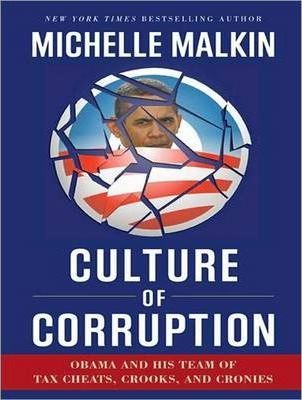
I saw this book and laughed at the title, given the scalar difference between the Obama Administration and the Trump Administration in terms of "lawlessness," corruption, and respect for due process and the rule of law.

Just like now that a Republican is in the White House so federal debt is no longer an issue -- so long as it is used to fund tax cuts for the wealthy and corporations ("Republicans shrug at deficit," Washington Post) -- the same seems to be true of corruption.


See:

-- "Trump's Corruption: The Definitive List," New York Times
-- "Trump's corruption is getting worse. He has a hidden enabler," Washington Post
-- "Corruption Is the Tie that Binds for Trump-Era Republicans," The New Republic
-- "Welcome to the Post-Post-Corruption Era of the GOP," New York Magazine
-- "Morning Joe: Trump Administration Most Corrupt Since Harding"

Labels: , , ,

Elijah Cummings, President Trump and Revisiting "The Urban Agenda"

Before the 2004 Presidential Election, I came up with this idea to try to get a presidential candidate to run on an urban agenda, so it could be articulated and communicated.

I created a blog called "The Urban Agenda" and the idea was that it would be a group blog.

I talked to people like Joe Riley, then the Mayor of Charleston about the idea of an urban agenda as a distinct element of a presidential campaign, and others.

I never could get much of a commitment from other people to contribute to the blog and it died as I directed my attention to this blog, which is why I am so impressed by the achievements of Greater Greater Washington in terms of being a blog produced by a group mostly of volunteers (now they paid coordination).

But the reality is that my idea wasn't realistic.  Not because we can't come up with an urban agenda.  But because people who run for president do so because -- even if they are delusional -- they think they can win.

Candidates aren't interested in running as a novelty, even though the point is to shape the national agenda in significant ways, because these new ideas will merely be co-opted and incorporated into the agendas of mainline parties, which is what third parties were known for in the late 1800s and early 1900s.

Their definition of success is winning, not shaping the long term agenda of the nation.

It's interesting to me that the mayors running in this round for the 2020 election, Bill DeBlasio of NYC and Pete Buttigieg of South Bend, Indiana, aren't running on what I would call an "urban agenda" -- although I haven't read Pete Buttigieg's book. (Mayor Gil Garcetti of Los Angeles considered running too.)

In any case, South Bend isn't that significant of an example of a revitalizing city when it comes to the kind of urban agenda I was thinking about.

When I first came up with the idea, the concept was a comprehensive approach to revitalization and poverty reduction, which would have included investments in housing, transportation, other infrastructure, commercial district revitalization, business development, workforce development, health and wellness care, etc.

Now the agenda would have to include policing, dealing with crime from a public health perspective, but also the "quick draw" culture that seems to result in a lot of unnecessary death.

Trump, Republicans as anti-city

Because Trump is a real estate developer, and many of his projects are in cities, many people thought he would be pro-city, and at the very least pro-investment in infrastructure and transit especially, which is particularly important to cities.

But while he likes "to build," being a bully and narcissist, he can't help but see cities as opponents, because center cities and metropolitan areas tend to vote Democratic, even in states where the electoral votes end up going Republican.

It kills him that most every metropolitan area in the US voted for Hillary Clinton.  To him that's unforgivable.  So he is continuing the anti-city tone of the Republican Party in his Administration, which features hardcore Tea Party representatives in key positions, especially Mick Mulvaney, who is director of the Office of Management and Budget and sets the budget priorities of the Administration.

The Tea Party movement has pushed the Republican Party to the point where it is one of the most conservative right parties in the world ("What Happened to America's Political Center of Gravity?," New York Times) mostly features representatives from rural and exurban locales.

Weighting of political parties on a left-right continuum
Weighting of political parties on a left-right continuum. New York Times graphic based on data from the Manifesto Project.


(In the new book American Carnage: On the Front Lines of the Republican Civil War and the Rise of President Trump, author Tim Alberta makes the important point that Trump's thrust of "Make America Great Again" is a reformulation but continuation of the "Tea Party" thrust in Republican politics.  "'American Carnage' Explores How Trump Won Over The Republican Party," WBUR/NPR).

Therefore the idea of a campaign run on an urban agenda is all the more relevant given the anti-urban agenda as expressed by the Administration of President Trump generally -- anti-immigrant, reduction in support for transit, reduction in support for cleaner energy, deregulation, reduction in the SALT deduction from federal taxes which disproportionately impacts cities, selection of a Secretary of HUD who is completely unqualified, voter suppression which disproportionately affects people of color and cities, etc.

Trump attacks Baltimore area Congressman Elijah Cummings. Last weekend, Trump tweeted negative comments about Rep. Cummings.
... Cumming (sic) district is a disgusting, rat- and rodent-infested mess. If he spent more time in Baltimore, maybe he could help clean up this very dangerous & filthy place.

"Why is so much money sent to the Elijah Cummings' district when it is considered the worst run and most dangerous anywhere in the United States? No human being would want to live there. Where is all this money going? How much is stolen? Investigate this corrupt mess immediately!"
The anti-city anti-people of color bent of the Trump Administration has been reiterated more recently by President Trump in his attacks on Representative Elijah Cummings, of Baltimore ("Better to have a few rats than to be one," Baltimore Sun).

Yes, Trump doesn't care about cities and his closest acquaintances say he is racist, but the motivation of his animus is the fact that Rep. Cummings chairs the House Committee on Oversight and Reform, which can't help but hold hearings on various acts of the Trump Administration.

Yes, Baltimore has big problems -- more about that in a follow up post.  Baltimore is also a great place, despite its problems.  As this episode of the PBS show, "Samantha Brown's Places to Love" indicates.


But ironically, most of Rep. Cummings' district is in Howard and Baltimore Counties (in fact, when I did the bike and pedestrian plan for Western Baltimore County, a goodly portion of this area was in the 7th Congressional District). It has a bit of Baltimore sure

What have you got to lose by voting for President Trump?

It brings me back to Trump's challenge to African-Americans in the 2016 Election campaign, imploring them to vote for him, "because what do you have to lose," making the point that in his opinion the Democratic Party hadn't done all that much for Blacks, despite their steadfast support.

Clearly there is plenty to lose ("Trump Asked Blacks, "What Do You Have to Lose? Apparently Our Civil Rights," Black Press USA).

The Hate U Give is a movie you should watch

The Hate U Give is a movie (based on the book by Angie Thomas) running on HBO right now. I was flipping channels the other night, and caught it at least one third of the way in. 

It's about a police officer killing a black youth during a traffic stop, and the impact on the girl who was in the car and witnessed the shooting.

That impact extends to her family, her relationships at the private school she attends on scholarship, and their community.

The dialogue and filming isn't always scintillating, but I think it's a pretty good movie that does a good job of communicating about this issue and turmoil present within inner city communities, which most supporters of President Trump likely have little direct experience with.

Labels: , , , , ,

Wednesday, July 17, 2019

Why expertise doesn't matter in politics? | ideology, special interests

Robert Samuelson, the economics columnist for the Washington Post, wrote about the death of "policy entrepreneur" Alice Rivlin as an illustration of the failure of knowledge to drive policy ("America has an enduring cycle of disappointment").

(Separately, there is an op-ed in the New York Times, by principal investigators of a study that looked at whether or not state legislators were interested in systematic polling information about the opinions of their constituents on issues under consideration, "Politicians Don't Actually Care What Voters Want." They found little interest on the part of legislators and limited congruence between the electorate and elected officials.)

Samuelson suggests policy entrepreneurs are failing because:
(1) It may be that the problems they attacked were tougher than expected. Eliminating poverty, combating climate change and controlling health costs are hard tasks individually, let alone together.

(2) Elected politicians, who wielded the real power, found many of these ideas too unpopular. Take climate change. Almost everyone outside the Trump administration (it seems) is against it; but there's little enthusiasm for the actual policies -- higher fossil fuel prices or energy controls -- that might have some effect.

(3) The policy entrepreneurs may have discovered that they aren't as smart as they thought they were. Put differently, they may have exaggerated their understanding of the things they were trying to change.

Whatever the cause or causes, the historical reality is unforgiving. Policy entrepreneurship hasn't and won't disappear. But the hoped-for gains have been conspicuous by their absence. There is an enduring cycle of disappointment. Solutions are rarely equal to problems. It is a sobering legacy.
Yes the problems are hard. Yes ideas are unpopular, sometimes, but that is partly because of poorly dealing with them. And yes, people often have a limited sense of "the problem."

But I think he misses the point.

We've moved from a concept of "positivism" and the development of evidence-based policy and a respect for expertise (although to be fair, for centuries policy and practice has been more about reflecting "positions" on issues, not evidence) to a much more rigid focus on ideology and an ecosystem of special interests -- wealthy funders of organizations and media that support these positions -- that pushes ideologically-based positions regardless of evidence.

Policy and practice should be about achieving "optimality" based on expertise and knowledge. It should also be about "evidence" whenever it can be adequately collected. 

Yes sometimes I feel like the focus on evidence can be misguided even though absolutely, replication in other settings is essential. The issue of "what gets measured gets done" is problematic when you're not measuring the right thing or creating measures is time consuming and difficult. But still, so many programs continue to be developed irrespective of a consideration of past outcomes.

But like with "policy entrepreneurs" maybe not being so smart, a lot of it has to do with problem definition. Like with health care you need to approach the matter in tranches. Health insurance was set up to regularize income for hospitals, not to improve health outcomes. OTOH, the National Health Service in the UK was set up to improve health outcomes.

Separating the provision of health and wellness development, the ability to go to a doctor for simple things as well as for dealing with many diseases that are partially behavior related (heart attack, hypertension, obesity, diabetes, etc.), which are called chronic conditions, requires a different approach (these elements of the health system are called primary care) from how you deal with catastrophic and emergency care needs (cancer, heart attack, accidents, etc.) which are part of the secondary care system.

But by continuing to define "health care" through "health insurance," a fundamental rethinking isn't occurring.

So it is timely that the Center for American Progress has a presentation on Monday, about how this works at the state level.  From email:
Laboratories for Corruption
How Special Interests Are Driving Harmful State Policies


July 22, 2019, 12:00 p.m. - 1:30 p.m. ET

Center for American Progress
1333 H Street NW, 10th Floor
Washington, DC 20005

RSVP

Not in D.C.? Bookmark this link to watch the live webcast

Opening remarks:
Winnie Stachelberg, Executive Vice President, External Affairs

Featured panelists:
State Sen. Dinah Sykes, (D-KS)
Lisa Graves, President, Board of the Center for Media and Democracy; Co-Founder, Documented Investigations
Naomi Walker, Director, Economic Analysis and Research Network at the Economic Policy Institute
Danielle Root, Associate Director of Voting Rights for Democracy and Government, Center for American Progress

Moderator:
Sam Berger, Vice President of Democracy and Government Reform, Center for American Progress

Federalism encourages states to act as "laboratories of democracy," wherein states experiment with untested ideas and policies to gauge their effectiveness and potential value elsewhere. This mantle of states being laboratories for democracy can be used to promote policies that advance the public good. But states can also be used as a testing ground for policies that skew political and economic power toward corporations or billionaires and away from everyday Americans.

Many harmful state policies—such as irresponsible tax cuts, deregulation, and attacks on unions and essential workplace protections—are byproducts of corporate lobbying and conservative special interest groups whose main purpose is to help the rich and powerful exploit and manipulate the lawmaking process.

Please join the Center for American Progress for a discussion on how corporations and special interest groups promote state policies that make corporations and wealthy donors richer, at the public's expense. It will also examine how lawmakers backed by these groups further corrupt democratic processes to maintain power and keep harmful policies in place.

Labels: , , , , , ,