Rebuilding Place in the Urban Space

"A community’s physical form, rather than its land uses, is its most intrinsic and enduring characteristic." [Katz, EPA] This blog focuses on place and placemaking and all that makes it work--historic preservation, urban design, transportation, asset-based community development, arts & cultural development, commercial district revitalization, tourism & destination development, and quality of life advocacy--along with doses of civic engagement and good governance watchdogging.

Monday, October 13, 2025

Climate change makes "ordinary living" a lot more risky

=====

This is mostly "old" writing that was in the draft folder, from 2022.

=====

Remember those Parkay Margarine ads? "You can't fool Mother Nature."

1.  Waterfront development.  The New York Times asks why are we still building on waterfronts, given sea level rise ("Why Is New York Still Building on the Waterfront?").  I have to admit I push waterfront based revitalization initiatives and don't always think about this.

The answer: people want to live on the water and it makes money.

Ricardo Arduengo/AFP via Getty Images. An aerial image shows the only access to the Matlacha neighborhood destroyed in the aftermath of Hurricane Ian in Fort Myers, Fla., on Sept. 30, 2022.

2.  Hurricane and Superstorm prone areas.  Florida.  The Times reports that many people can't afford to rebuild in the face of Hurricane Ian.  

And Florida actually improved its building codes, making them stronger in dealing with the effects of hurricanes, albeit that was when the state was run by Democrats ("South Florida, Tulsa, and Santa Fe as examples of regulatory success and Texas as an example of regulatory failure").  The problem is that as hurricanes become more powerful, those building codes need to be extended across the state.

-- To Save America's Coasts, Don't Always Rebuild Them"
-- "Rethinking Building in Storm-Prone Areas"
-- "Three Ways to Build Back Smarter After Hurricane Ian"
-- "Hurricane Ian's Financial Toll Threatens Florida's Real Estate Market"

3.  Casualty insurance.  Plus, most for profit insurers are leaving Florida, leaving the property insurance market to a state owned insurer of last resort, which can never be capitalized to the rate necessary to cover likely risks ("Will 2022 bring the collapse of the Florida homeowners insurance market?," Bankrate).

... I used to get angry when a person involved in selling insurance argued against creating historic districts in DC because the houses wouldn't be able to get insurance.  I would say, "what about Georgetown, Dupont Circle, Capitol Hill, etc.?"

But it would definitely be a lot higher if there were regular risks from weather. 

New York City.  The Times reports, "‘If We Wait, People Will Die’: New Yorkers Still Fend for Themselves in Storms," on how residents in Greater New York are taking steps to protect themselves in the face of severe rains, flooding, Superstorms, Hurricanes, etc. Especially as the effects are not limited to those abutting rivers and waterfronts.  From the article:

Whatever lessons had been learned after Sandy, which brutalized the area with storm surges, coastal flooding and widespread power outages, they didn’t prepare people for the storm risk that Hurricane Ida exposed: flash floods intensified by climate change, and aging sewage systems that cannot absorb storm water fast enough. In the aftermath of Ida, policymakers are still grappling with blind spots in their post-Sandy recovery plans, and homeowners and renters are wondering what, if anything, they can do to protect themselves from rapidly deteriorating conditions. ...

“Our structures are a lot more vulnerable than we thought,” said Eric Klinenberg, a sociology professor and the director of the Institute for Public Knowledge at New York University. “The challenge is more extensive than we recognized, it’s going to cost more than we budgeted, and it’s more urgent than we expected.”

In hindsight, Sandy stands as a book end — the beginning of an era of stronger and deadlier storms, capped a year ago by Ida, a Category 4 hurricane that managed to catch people unaware after making landfall days earlier in Louisiana.

 (We had to add a second sump pump to our DC house, after the terrible rain event a couple years ago, where as much as 5 inches of rain fell in less than an hour in Northwest DC and Montgomery County.  Our area is a little worse because there's an undergrounded creek which leads to a high water table.)

Also see "The Disaster to Come: New York’s Next Superstorm," NYT.

4.  Emergency management failures in Lee County, Florida led to more than 100 deaths ("Facing a Dire Storm Forecast in Florida, Officials Delayed Evacuation" and "Vulnerable and Trapped: A Look at Those Lost in Hurricane Ian," New York Times). "Thanks DeSantis."

Aerial view of the flooding of the Guadalupe River near Kerrville, Texas, on Saturday July 5th, 2025. Photo via U.S. Coast Guard/UPI

5.  Speaking of "if we wait, we will die," that's what happened in Texas earlier this year, with river flooding ("Why Texas Hill Country, where a devastating flood killed more than 135 people, is one of the deadliest places in the US for flash flooding," The Conversation, "24 dead in Texas floods and more than 20 children missing from a girls summer camp," AP).  

Despite past experience with bad flooding, local authorities punted on funding emergency warning systems, partly because they didn't want to spend the money, even with grants as part of the funding mix.  Emergency siren systems are more effective in the middle of the night when people are mostly asleep, and when the flooding happened ("Texas state leaders call for more sirens, flood gauges and mitigation efforts," Texas Tribune).

6.  Wildfire.  Oregonians aren't happy about having to cover the cost of wildfire risk ("Oregon tried to inform residents about wildfire risk. The backlash was explosive," Grist Magazine). From the article:

Last summer, after a series of devastating wildfires, the Oregon state legislature passed a sweeping bipartisan bill to protect against future blazes. The law unlocked money to develop new building codes in vulnerable areas and help residents who wanted to fireproof their homes. It reached the governor’s desk with support from Portland-area Democrats and rural Republicans alike.

Before state officials could implement the new regulations, though, they needed to figure out which areas faced the greatest fire danger. For this reason, the bill required the state forestry department to create a comprehensive wildfire risk map within a year, assigning a risk score to every household in the state. The forestry department finished the map right on time in June. It then mailed a letter to every homeowner who was in a high-risk zone, alerting them that new regulations would be coming soon.

The first version of the Oregon Wildfire Risk Explorer map, published earlier this year. The state retracted the map after public outcry. Oregon Wildfire Risk Explorer

This seemingly anodyne mapping measure produced a frenzy of backlash from every corner of the state. Hundreds of residents showed up at public meetings to berate state officials for designating their homes high risk, and hundreds more wrote in to contest their risk status. Many argued that the state was going to make their insurance more expensive and their property less valuable.

The same Republican lawmakers who had supported the wildfire bill then pounced on the map as an example of state overreach. In early August, the state caved and withdrew the map, vowing to spend another year gathering feedback before releasing a final version. In a tight race for state governor that will be decided next week, the Democratic candidate has distanced herself from the old version of the risk assessment, saying the revision “must address concerns from property owners.”

Like covid, fire pretty much ignores politics.

In Washington State, given federal cutbacks to the US Forest Service and Federal Emergency Management Administration, more wildfires are expected ("WA’s wildfire future: More volatile forests amid slashed budgets," Seattle Times). 

In 2019, Texas paid for billboards in California making fun of electricity shortages in the summer.

7.  Electricity.  With extreme cold and extreme heat, electricity demands are now high throughout the year, rather than peaking and dropping, with demand approaching the edge of capacity.

Supply failures are increasingly likely because of increased demand by Internet data centers ("AI Data Centers Are Sending Power Bills Soaring," Bloomberg, "Big Tech’s A.I. Data Centers Are Driving Up Electricity Bills for Everyone," New York Times, blog entry, "Data centers").

Hundreds of people died in Texas in 2021 because of utility failures in winter ("Talk and lying versus doing: The electricity crisis in Texas is produced by state regulatory failure").  And it turned out that when electricity fails, so do water systems, furthering the negative impacts of the failures.

Drought and power generation.  Note that in the West, where a majority of federal dams generating electricity are located, drought is making it tougher for the dams to be able to generate electricity in the face of water levels dropping below water entranceways for the generating systems ("Lake Powell forecasts show hydropower generation is at risk next year as water levels drop," Colorado Sun).

8.  Extreme heat and deaths.  Communities in hot regions are experiencing a lot more heat-related deaths in the summer, as a result of extreme temperatures having disproportionate effects on those of lesser means. 

More cities are appointing "chief heat officers" to plan for and address the effects ("Planning for heat/climate change | Public health" and "Climate change is already here in many US communities | "Heat Officers" versus Climate Change Officers").

Columbia South Carolina has a pilot program measuring heat islands ("Scientists look for help to exactly measure Columbia’s heat," AP).

9.  Flooding and impact on stormwater and water treatment infrastructure.  Rain events are a lot stronger than they were when most communities built their stormwater capture infrastructure.  Now it is common for the piping to be overwhelmed during storms.  

In 2022, rain-related flooding overwhelmed the water treatment infrastructure in Jackson, Mississippi ("EPA determines water in Jackson, Mississippi, is safe to drink two months after treatment plant failure," CNN), calling attention to how racism leads to underfunding of urban needs, but also the reality that there are billions of dollars in unfunded needs for improvements to existing sewer, stormwater, and water treatment infrastructure.

A man rides his motorcycle through a flooded street in the Melrose Park neighborhood in Fort Lauderdale on Friday. (Carline Jean/South Florida Sun Sentinel)

Last Friday, the Fort Lauderdale Sun-Sentinel reported on high-tide induced flooding there ("Heavy rain during high tide swamps Broward roads ahead of weekend cold front").

Residents on the west side of Salt Lake City were flooded out a couple weeks ago, after the strongest rain event in 120 years--rain also made entry into the foundation wall of our bedroom ("The Oct. 4 rainstorm is just one example of the severe weather in our future," Salt Lake Tribune, "Salt Lake City mayor issues emergency declaration in response to weekend flooding," KSL-TV).

People clean up on Sunday, after Saturday’s historic rain caused significant flooding in a Rose Park neighborhood. Salt Lake City Mayor Erin Mendenhall declared a state of emergency over the flooding late Monday. Wesley Barton, KSL-TV

10. Systems of local government finance, created when the US was growing, are hard pressed to meet demands for new infrastructure needs induced by climate change ("The real lesson from Flint is about municipal finance," 2016).

Labels: , , , , , ,

Monday, October 06, 2025

Public Power week: October 5-11 | Let's think more broadly about utility issues

This week is Public Power Week, calling attention to public power producers (federal dams) and local utilities in electricity (and sometimes gas) that are owned by the local government.  The webpage calls these "community owned utilities."  

-- promotional resources

The American Public Power Association doesn't represent public water utilities (although some local governments are exploring the possibility of harnessing energy from temperature-controlled water streams).

October is also National Energy Awareness Month ("October is National Energy Awareness Month," 2021).

Roots in the rural electrification movement.  Public power organizations grew out of the Rural Electrification movement in the 1930s.  

Since outside of center cities it was rural, some public power utilities exist on the outskirts of cities, like the Southern Maryland Electric Cooperative in Suburban Maryland.  

The ones, like SMEC, that buy electricity from traditional sources just like "investor owned" utilities, don't have a lot of pricing discount compared to those based on hydroelectric power sources.

Community power boards.  Interestingly, with the TVA, many of the communities have community owned utilities, called Electric Power Boards, although TVA like other federal dams, sell power to both for profit and non profit utilities.

Some, like the EPB in Chattanooga, sell cable and Internet services--they did this because they needed an Internet backbone to run their system of smart meters, and made it more robust and a separate service for their customers.  It's an economic development tool ("Chattanooga, Tenn., Makes Economic Case for Municipal Broadband," Government Technology, "The Infrastructure Success Story in Chattanooga," American Prospect) as well.

Drought and power generation.  Note that in the West, where a majority of federal dams generating electricity are located, drought is making it tougher for the dams to be able to generate electricity in the face of water levels dropping below water entranceways for the generating systems ("Lake Powell forecasts show hydropower generation is at risk next year as water levels drop," Colorado Sun).

Local governments want to buy out investor owned utilities.  Some municipalities like Ann Arbor ("Ann Arbor residents plan ballot initiative to dump DTE and begin shifting city toward public power," Michigan Advance), or previously Montgomery County explore(d) taking over electricity services but the cost of buying out the utility is too high.  

-- "Publicly-owned utilities as a way to move sustainable energy policy and practice forward + better operation," 2020

Already in Ann Arbor, the city "sustainable energy utility"--other cities have them too, like DC, is working to build a parallel system to DTE ("Ann Arbor’s sustainable energy utility aims to build the electric power grid of the future − alongside the old one," The Conversation).

The city, with voters’ strong support, is launching its own sustainable energy utility. This new utility won’t replace DTE Energy, the local investor-owned power company, or even use DTE’s wires.

Instead, Ann Arbor will slowly build out a whole new modern power system, starting with installing rooftop solar and battery storage and reducing energy usage in individual homes and businesses whose owners opt in. The city then plans to expand by connecting homes and neighborhoods into microgrids and by using community solar and networked geothermal to allow broader access to clean energy.

When their multi-state utility went bankrupt, the City of Portland tried to buy the city electric utility infrastructure but were denied by the Bankruptcy Court.

LA has a municipal power authority, while San Diego has the capability to do it, but keeps selling franchise rights to San Diego Gas & Electric.  While not cheap either, LA's electricity costs are significantly less than SDGE.

Should California buy PGE.  Because of the wildfire issue, it's even been suggested that the State of California should buy and operate Pacific Gas & Electric, to get them focused on service, and hardening, not just generating profits ("Let’s end the devastation by making PG&E public," San Francisco Chronicle).  Regardless, the Wall Street Journal, "Here are 5 fixes for PG&E," suggests fixes:

  1. Stop running equipment til it breaks [and only then replacing it].
  2. Use predictive tools to assess risk.
  3. Regulate utility safety separate from rates.
  4. Manage forests more aggressively.
  5. Threaten PG&E's monopoly franchise.

Utility costs are rising.  While not directly a part of the Public Power Week promotion, it should be part of National Energy Awareness Month and provides an interesting opportunity to think about that state of utility costs--electricity and gas--in the US.  Because most markets are profit driven and prices are based on international and national pricing systems, prices are going up.

Over the past 15 years, many companies switched from coal to natural gas because prices were cheaper.  This has combined with increased solar and wind energy to keep prices down, until recently.

But now that international systems for selling and delivering natural gas have been developed, US electricity costs are trending higher, because utilities have many more competitors ("Fracking didn't drive down PA energy bills. What happened?," Spotlight PA).

The Trump Administration is addicted to fossil fuels.  One reason is because the Trump Administration is deliberately de-supporting cheaper forms of electricity generated by solar and wind power ("Trump’s hatred for renewables means the US is falling behind the rest of the world," Guardian, "Puerto Rico’s rooftop solar boom is strengthening grid resilience — why is a federal board trying to stop it?," UtilityDive, "New Report Examines Fossil Fuel Ties of Dozens of Trump Administration Hires," Inside Climate News, "The Trump administration's war on wind & renewable energy," KALW/NPR).

It's also de-funding a wide range of clean energy programs ("US green energy forecast cut by half under Trump despite global surge in solar and win" Financial Times).  From the article:

The IEA said a major factor in the US downgrade was President Trump’s One Big Beautiful Bill Act, which has sped up the end of tax credits for green developments. Permits for wind and solar projects on federal land or waters have also been suspended.

“With the pushing forward of deadlines, renewable capacity additions are now projected to peak in 2027, then decline in 2028 and remain stable through 2030,” the IEA said. 

Doubling back on "conservative fuels/a conservative economy" [I read about this idea recently but I can't find the citation--that for example fossil fuels are conservative and renewable energy sources progressive) reduces US economic competitiveness and resiliency.

Focusing on coal, to some extent oil, and the revived interest in nuclear power ("The New Nuclear Age: Why the World Is Rethinking Atomic Power," Goldman Sachs, "Trump dreams of nuclear as he axes grid projects," Politico) will only increase rates. 

Conservative state action against "progressive power" is an increasing problem as well ("Blaming the Wind for the Mess in Texas Is Painfully Absurd," New Yorker, "With Federal Support for Wind and Solar Waning, States Are Trying to Push Policy Through on Their Own," Inside Climate News

Other issues are:

Labels: , , , , , , , , ,

Wednesday, December 19, 2018

Top energy stories

1. Oil.  It's cheap and will remain so.  A few years ago that wasn't what was predicted.

The US is now a big exporter.  OPEC is on decline.  But fracking-produced oil wells generate most of their production in the first two years, so for oil production to remain high, wells will need to be continually drilled.  But since firms aren't really making money, is this sustainable?

-- "The Petro States of America," Bloomberg Businessweek, 2014
-- "The Dark Side of America's Rise to Oil Superpower," Bloomberg Businessweek, 2018

2.  Coal.  Since it's cheaper to fuel electricity generation with natural gas, coal production continues to decline, despite calls for increased use by the Trump Administration.  Another impact of natural gas as fuel for electricity generation is reduced labor.  NG electricity production requires a lot less labor than coal.

3.  Electric cars.  Are a way to reduce demand for oil, which hurts Saudi Arabia and Russia.  And reduces the "need" for the US to be involved in Mideast affairs as a way to ensure a continuous supply of oil to support the US's sprawl economy.

It's had an effect on those countries, clearly.  But the Trump Administration isn't interested in leveraging that economic effect to change the way those countries act.

But cheap oil makes electric cars less cost effective on an economic basis, without tax credits, and the Trump Administration is making noise about electric car tax credits.

4. Electricity generation and transmission.  I went to a presentation sponsored by BASF and produced by Atlantic Magazine, the Summit on Infrastructure and Transportation, and one of the presenters was Bruce J. Walker, Assistant Secretary, Office of Electricity, U.S. Department of Energy.  He actually made me feel confident about the Trump Administration in this area. He has extensive experience in the utility industry.

He distinguished between reliability and resiliency, making the point that the grid is very reliable, but what concerns him is "resiliency" especially in the face of changes in the mix of energy sources.  Coal use for electricity generation is way down, natural gas is way up, and wind and solar power is becoming a larger source.

I learned a new term "second contingency."  That is how the electricity transmission system is designed, so that if two major transmission lines fail simultaneously the system can still function.

Later on a coffee break I spoke with him at length about the problems and redesign of the grid in Puerto Rico. I missed a session as a result but it was well worth it. He was awesome.  He has a design for the PR system that goes to the fourth contingency in reliability.  (He even drew on a napkin the system, the problems--most of the demand is in the San Juan area but the power plant there is sub-optimal and they were rely on electricity from power plants more than 60 miles away--a problem when the transmission system goes down in a hurricane.)

Electric cars will also increase the demand for electricity and increase demands on the electricity grid.

5. Sustainable energy.  Off shore wind is a real opportunity for coastal states, but not a whole lot is happening in the US compared to Europe.  The one benefit of being a laggard is advances in technology and engineering mean that larger more efficient turbines can be deployed (a la Gerschenkron's thesis of the economic advantages of "backwardness.")

Another of the presenters at the Atlantic Summit on Infrastructure and Transportation was Tom Fanning, CEO, Southern Company. Southern Company is the nation's most innovative "traditional utility" and heavily invested in renewable energy. Another impressive presenter--actually virtually every presentation and presenter was great (which is rare).

His point was that they could manage the decline of the company as the electricity business model changed, or they could be forward, and shape and ride the changes and maintain profitability and position.

-- Southern Company Bets Big," POWER Magazine

Recently, I read a long article about the company's efforts in renewable energy but I can't remember where it was published.

6. Car industry efficiency requirements.  The Trump Administration aims to reduce car gasoline efficiency requirements, rolling back a continuous raising of the standards.

One of the plants GM will close makes the Chevrolet Cruze, in Lordstown, Ohio.  GM photo.

Yet, President Trump is not happy about GM closing manufacturing plants, which happen to make gasoline powered cars.  Over the last few years, Chrysler first and then Ford announced that they are mostly cutting back on car production and instead focusing on trucks and SUVs.

More than 0% of the market for vehicles is SUVs.  They aren't making money producing cars.

And without stronger requirements for fleet "efficiency" of course car companies aren't going to be able to sell cars, based on their legacy business model and business conditions.  So that's one of the spillover costs.

There need to be increased efficiency requirements for light trucks and SUVs.

7.  Natural Gas.  Fracking produces a lot of it. Prices are down as demand increases.  More is being produced for export through liquification (LNG) and shipment.  There are a few export terminals in operation, including in Maryland and there is interest in building more.  Note that Australia is in the odd position of exporting LNG through long term contracts and they are having a problem meeting domestic demand.

8.  Carbon taxes.  The unrest in France over an increase in energy costs as an energy efficiency measure has a lot of causes beyond attempting to deal with the environment.  But it does demonstrate that getting people to willingly pay more money for energy is difficult.

Washington State did not vote in favor of a carbon tax in the recent election.  But states are doing more, for example, the Regional Greenhouse Gas Initiative, a group of nine Northeast and Mid-Atlantic states have created a “cap-and-invest” system for power plant emission reductions.

Labels: , , , , ,

Tuesday, June 06, 2017

Pittsburgh area elected leaders publish ad in local newspaper, affirming commitment to addressing climate change

PennEnvironment, a statewide citizens advocacy group focused on environmental matters in the State of Pennsylvania, alerts us to how elected officials from the City of Pittsburgh, Allegheny County,  local representatives in the State Legislature, and the Congressman representing Pittsburgh, Mike Doyle, put together an advertisement running in today's Pittsburgh Post-Gazette, affirming their commitment to addressing climate change through responsible and responsive local actions. 

Below is an image of the ad.


I'm not always a fan of federalism and subsidiarity, because "state's rights" can be used as a way to restrict freedoms and do the wrong thing, rather than to respect freedoms and do the right thing.

Fortunately, the reality is that despite President Trump's repudiation of the Paris Climate Agreement, federalism and subsidiarity the basic economics of energy production and renewable energy, and the risk management necessity of planning for resiliency in the face of more severe weather events, most reputable businesses many of our states, cities, and counties, and us as individuals will continue to take actions that aim to reduce greenhouse gas emissions.

But it does mean at least in the intermediate term that we're not likely to see an increase in the federal gasoline excise tax--which could be the biggest force for change in terms of fuels used for motor vehicles--cars and trucks account for 25% of oil consumption, nor advances in regulations and programs aimed at generating pro-environmental outcomes:

- the Trump Administration reversed a regulation that forbade coal ash discharges into rivers--and rivers are the primary source of the nation's drinking water
- the Trump Administration aims to shrink the EPA
- the Trump Administration keeps proposing to practically eliminate programs to improve the water quality and other environmental elements of the Chesapeake Bay and the Great Lakes
- the Trump Administration proposes to give federal lands to the states, so that these public lands can be "developed"
etc.

Pittsburgh's history of environmental degradation.  Ironically given the ad mentioned above, and not mentioned in the ad at all, is Pittsburgh is a classic historical example of the impact of industrial practices which paid no heed to environmental protection. 

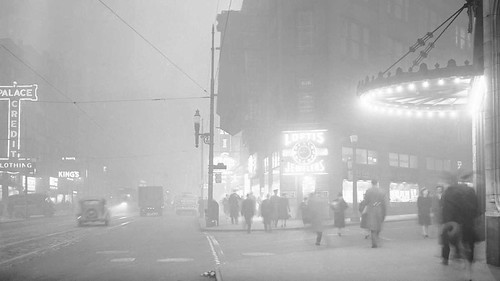
The city's air quality was so bad as a result of the release of pollutants into the air from steel production that typically, stores and streetlights had to be used during what should have been daytime.

See "A Revitalized Pittsburgh Says the President Used a Rusty Metaphor," New York Times.
Day time smog in Pittsburgh, !944
Midday in downtown Pittsburgh in 1944. As thick smog blanketed the city, drivers used their headlights, and storekeepers switched on their signs. Photo: Walter Stein, Associated Press.

Labels: , , , ,

Sunday, January 24, 2016

Minnesota GreenStep Cities website

Came across this website, which provides support for the sustainability efforts of local governments across the State of Minnesota.

-- Minnesota GreenStep Cities

From the homepage:
Minnesota GreenStep Cities is a voluntary challenge, assistance and recognition program to help cities achieve their sustainability and quality-of-life goals. This free continuous improvement program, managed by a public-private partnership, is based upon 29 best practices. Each best practice can be implemented by completing one or more actions at a 1, 2 or 3-star level, from a list of four to eight actions. These actions are tailored to all Minnesota cities, focus on cost savings and energy use reduction, and encourage civic innovation.

The website is focused on cities/government agencies as the prime actors. The 29 best practices are organized according to five categories:

-- Buildings & Lighting
-- Land Use
-- Transportation
-- Environmental Management
-- Economic and Community Development

The participating cities are organized into three tranches, based on the level of sustainability achieved.


Labels: , , ,

Tuesday, February 04, 2014

Clean energy is not without risks: Clean Currents goes out of business

There was a firm, Clean Currents, that bought wind-generated electricty and sold it to customers in DC, Maryland, Virginia, feeding the electricity into the service grid.

As the cost of electricity on spot markets has shot up as much as 500% during the polar cold snap, they were inadequately hedged and declared bankruptcy.

-- "Clean Currents turns off its lights after January's polar vortex spiked energy prices," Washington Post
-- "Cold and unhedged: How the polar vortex drove Clean Currents out of business," Business Journals
-- "Clean Currents wins Washington Business Journal Green Business of the Year," press release, 2010

Similarly, post-Fukushima responses in Germany and other countries that led to cessation of the use of nuclear power and substitution with "clean" energy has led to significant price increases ("After Fukushima: Could Germany's nuclear gamble backfire?," CNN).

Labels: , ,

Saturday, June 02, 2012

Solar panels and historic districts: not a simple decision

Left photo:  simple bungalows on the 800 block of Van Buren Street NW.  These houses are not in a historic district.

Middle photo: simple bungalow on the 800 block of Van Buren Street NW with the addition of solar panels on the front roof.

Earlier this week GGW reported in "Preservation staff reject solar panels on Cleveland Park home," that DC's historic preservation office rejected a project to install solar panels on the roof of the building, out of a belief that it would significantly impact the architectural style of the house, vis-a-vis its inclusion in the Cleveland Park Historic District.

The article cites a piece by Matt Yglesias, who makes an interesting (but obvious) point:

The preservation process narrowly excludes every single factor except for historic "compatibility." In most public decisions, officials weigh a variety of factors against one another. Here, the board must ignore the value of environmental sustainability, the economic impact, and even the owner's hardship or religious freedom. 

He thinks this is a bad thing.  I don't.

The reason I disagree with Yglesias is obvious.  Historic compatibility is the whole point of having historic preservation zoning to begin with.  Why else would you go through the trouble to document the cultural and architectural history of a neighborhood if your aim wasn't to preserve the neighborhood?

Part of this comes down to the "greater good."  Most religious objections to historic preservation regulations are spurious.  Most individual hardship arguments are personal, immaterial to the house so much as the owner's financial condition.

While I think there should be revolving funds and other support programs to assist people who can't otherwise afford maintaining a house to historic preservation standards, in my experience, most individual hardship arguments are spurious as well.

The same goes for "economic impact."

The reason that historic preservation guidelines work the way they do is to preserve the great economic value present in the historic district as a whole, a point that Yglesias seems to miss.  The reality is that in most communities with historic district regulations, the historic districts have significantly higher values than comparable undesignated areas.  In fact, historic preservation tends to be the most reliable urban revitalization tool, especially for neighborhoods.

Plus, most of the time, changes in buildings made as a result of "personal freedom" are not made with no impact on others.  Changes that reduce the architectural integrity and other place qualities and values of individual properties can reduce the value of neighboring properties significantly, such as how living next to an empty, foreclosed house has been found to have a negative effect on property value of abutting houses averaging $150,000 per property.  (Research I've seen on the impact of architecturally inappropriate changes shows a property value reduction of around $60,000 for abutting and nearby properties.)


By repositioning the value and identity of neighborhoods around historic preservation, neighborhoods are stabilized and become more competitive in terms of metropolitan residential landscape.

This has been an essential element of the "back to the city" population movement and can't be ignored by cities focused on maintaining the place and economic value of their communities.

The current policy with regard to solar panels, which I think is reasonable, considers addition of solar panels on the front, visible portion of the house to be out of character, and therefore requests for such changes are routinely denied.

Certainly, the images above, showing the same types of houses on the 800 block of Van Buren Street NW, one with solar panels, the others without, demonstrates that there is no question that the building with solar panels looks significantly different.

That being said, dealing with how residential energy generation impacts historic buildings needs to be constantly monitored and considered (even though generally, historically designated houses tend to be far more "sustainable" than non-designated houses), especially if you want historic neighborhoods to remain in demand and (somewhat) flexible as homeowner preferences change.  This was a point made a couple years ago in a Scientific American blog post, "Are old houses doomed? The conflict between historic preservation and energy efficiency."

Given the reality that "traditional solar energy" is still significantly subsidized (and frankly, probably geo-thermal systems make more sense economically, especially for single family detached homes with decent sized yards), it makes sense to not be overly hasty in taking up and approving new types of treatments impacting historic districts, without necessarily waiting for better alternatives.  

The more commonly available technology, the "traditional" solar panel may not be the best choice.  Clearly there are many newer alternatives that appear to be more historically-appropriate than products that are more typically available.  Our focus should be on supporting the historically-appropriate options and not supporting the inappropriate options.

Below left: solar tiles; below right: solar shingles.


Given how this Angie's List article, "Go green, save green with a solar metal roof," describes the installation of a metal roof with solar laminate panels in Louisville, Kentucky (image by Maggie Harmon), clearly the technological developments underway with solar electrical generation are significant and multiple and deserve careful consideration, with a focus on yielding historically-appropriate outcomes that ideally also work for homeowners interested in deploying solar energy applications.

 And I'd like to see Hardie board that works as solar panels (it would be great for west facing side of our house, which gets terrific sun in the afternoons, including in winter).

Another tricky issue by the way is the addition of house-appropriate wind turbines.  This was an issue in Baltimore County when I worked for the Office of Planning there in FY10.  And it is coming up more frequently in New York City.  Washington is a windier city than people realize, and small wind turbines could be worth considering.  They'd be easy to pop on top of office buildings, but maybe more out of place in residential neighborhoods.


Image: Skystream 3.7 residential wind turbine, Atlanta, Georgia, deployed in a neighborhood that is eligible for historic designation.  CityData photo.

Preservation NJ has a good blog post about these issues,"Solar panels & other renewables in historic districts."  

And I think it makes sense for the Historic Preservation Office to have a standing committee, including citizens, to advise the office on sustainability related matters, at the same time recognizing that haste makes waste.

Labels: , , , , , , ,

Saturday, March 03, 2012

Gasoline station price sign, Sherman Avenue, Washington, DC

Sunoco gasoline station sign, ultra gas greater than $4 per gallon

Labels: , ,

Thursday, March 01, 2012

Presentation tonight: Making Performance Public: Mandatory Disclosure of Energy Use in Buildings


First image: Kiosk at the University of Richmond displaying the Lucid Building Dashboard.

Second image from the article "US DOE Innovation Ecosystem Initiative Catalyzes Growth, VC Funding for FirstFuel Software" from the Fraunhofer Institute USA CleanTech Notes blog.


Thursday March 1, 2012
6:30pm - 8:30 pm
National Building Museum
401 F Street NW
Washington, DC

Nearly a dozen municipalities across the country have passed new laws mandating property owners to measure and publicly release the energy use of their buildings. City representatives from Seattle, New York City and San Francisco will discuss the challenges of implementing new reporting requirements and the impact this information is having on local real estate markets. This program is presented in collaboration with the Urban Land Institute.

Participants include:

• Jayson Antonoff, Energy and Climate Change Policy Advisor, City of Seattle
• Barry Hooper, Private Sector Green Building Specialist, San Francisco Department of Environment, City and County of San Francisco
• Laurie Kerr, Senior Policy Advisor, New York City Mayor’s Office of Long Term Planning and Sustainability
• Charles Leitner, Chairman, Greenprint Center for Building Performance, Urban Land Institute
• Matthew Wald, Journalist, New York Times (moderator)

- webpage for the presentation


-----
This is an extension of the idea of "what gets measured gets done" the point from the book In Search of Excellence. But I'd argue it's not just the measurement but the display of the measurement that makes a big difference too.

At building management issues on this topic, every presenter pretty much says that the building is its most efficient at the moment it is delivered (opened for use) and that it declines significantly from that point.

Labels: , , ,

Sunday, February 12, 2012

"Sometimes Jesus is trying to f* me over": climate change edition

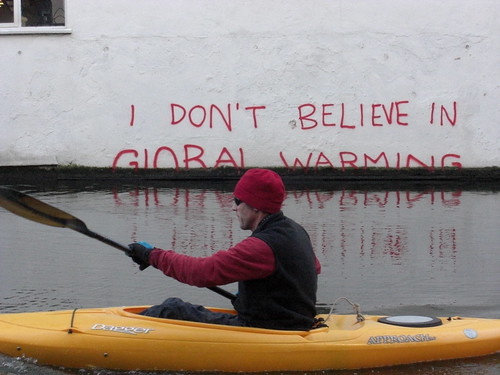
BANKSY -  GLOBAL WARMING
Banksy graffiti, Regent Canal, London. Flickr image by John19701970.

The title is a quote from someone I worked with at the Center for Science in the Public Interest, circa 1989.

But poor Jesus gets blamed or used for all sorts of nefarious purposes, including denying climate change.

From An Evangelical Declaration on Global Warming by the Cornwall Alliance:

WHAT WE BELIEVE
1. We believe Earth and its ecosystems—created by God’s intelligent design and infinite power and sustained by His faithful providence —are robust, resilient, self-regulating, and self-correcting, admirably suited for human flourishing, and displaying His glory. Earth’s climate system is no exception. Recent global warming is one of many natural cycles of warming and cooling in geologic history.

2. We believe abundant, affordable energy is indispensable to human flourishing, particularly to societies which are rising out of abject poverty and the high rates of disease and premature death that accompany it. With present technologies, fossil and nuclear fuels are indispensable if energy is to be abundant and affordable.

3. We believe mandatory reductions in carbon dioxide and other greenhouse gas emissions, achievable mainly by greatly reduced use of fossil fuels, will greatly increase the price of energy and harm economies.

4. We believe such policies will harm the poor more than others because the poor spend a higher percentage of their income on energy and desperately need economic growth to rise out of poverty and overcome its miseries.

WHAT WE DENY
1. We deny that Earth and its ecosystems are the fragile and unstable products of chance, and particularly that Earth’s climate system is vulnerable to dangerous alteration because of minuscule changes in atmospheric chemistry. Recent warming was neither abnormally large nor abnormally rapid. There is no convincing scientific evidence that human contribution to greenhouse gases is causing dangerous global warming.

2. We deny that alternative, renewable fuels can, with present or near-term technology, replace fossil and nuclear fuels, either wholly or in significant part, to provide the abundant, affordable energy necessary to sustain prosperous economies or overcome poverty. [they have a point here]

3. We deny that carbon dioxide—essential to all plant growth—is a pollutant. Reducing greenhouse gases cannot achieve significant reductions in future global temperatures, and the costs of the policies would far exceed the benefits.

4. We deny that such policies, which amount to a regressive tax, comply with the Biblical requirement of protecting the poor from harm and oppression.

A CALL TO ACTION
In light of these facts,

1. We call on our fellow Christians to practice creation stewardship out of Biblical conviction, adoration for our Creator, and love for our fellow man—especially the poor.

2. We call on Christian leaders to understand the truth about climate change and embrace Biblical thinking, sound science, and careful economic analysis in creation stewardship.

3. We call on political leaders to adopt policies that protect human liberty, make energy more affordable, and free the poor to rise out of poverty, while abandoning fruitless, indeed harmful policies to control global temperature.

Labels: , , , ,

Friday, May 27, 2011

Report Ranks States Most Vulnerable to Rising Gas Prices, Offers Solutions

NRDC Press Release

Better Transportation Policies Key to Reducing Dependence on Oil

Rising gas prices are hitting drivers all across the country, but states with smart transportation policies can help their drivers feel less pain at the pump, according to a new report released today by the Natural Resources Defense Council.

In the 2011 edition of "Fighting Oil Addiction: Ranking States' Gasoline Price Vulnerability and Solutions for Change," NRDC and David Gardiner & Associates analyze state policies that help drivers, including tele-commuting options, transit spending, efforts to reduce sprawl, and other options.

"There is no immediate solution to high gas prices, but smart transportation polices can reduce gas bills for all drivers, no matter where they live," said Deron Lovaas, NRDC's federal transportation policy director. "Better state policies that give residents transportation options, such as transit assistance and telecommuting options, can provide relief. Federal action -- such as increasing vehicle fuel efficiency standards to 60 miles per gallon -- would reduce oil price vulnerability across the board. We know we can't drill our way toward lower gas prices, so policies like these deliver."

According to the report, the 10 states that are doing the most to promote clean energy technologies and reduce their dependence on oil are: #1 California, #2 Oregon, #3 Massachusetts, #4 New York , #5 New Jersey, #6 Maryland, #7 Connecticut, #8 Rhode Island, #9 Washington, #10 Vermont. ...

Regardless of how urban or rural the state, transportation is something everyone needs," said Elizabeth Hogan, an analyst at David Gardiner and Associates and co-author of the report. "Many of the states where drivers are paying the most at the pump are the states offering drivers the least policy relief. Looking at all of the options available to state policymakers, it's clear which states are taking advantage of all the opportunities available to them."

The report recommends that states establish policies that reduce sprawl, reduce the number of miles that citizens need to travel in vehicles to get to work or school or other daily tasks, and promote accessible public transit systems.

On the federal level, the report also recommends stronger investment in public transportation and in the maintenance and repair of decaying infrastructure, as well as establishment of a national oil-savings objective.

----------
Note that while I criticized somewhat the recent Brookings Institution report on transit access, its conclusions dovetail with this report, although more focused on metropolitan areas, and their need to coordinate land use and transportation planning policies to reduce sprawl. Also see the Neil Peirce column, "Public Transit, Access to Jobs: Escaping Our “Exit Ramp” Economy," which extends this point.

Labels: , , , , ,

Friday, April 22, 2011

Earth Day and the Urban Metropolis as Energy Efficient, if not Green and Placemaking

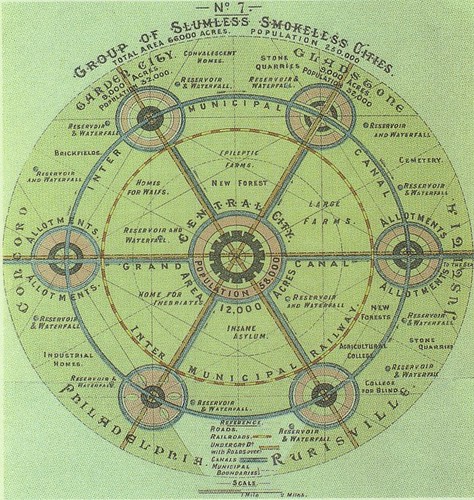
garden_city
From Garden Cities of To-morrow by Howard.

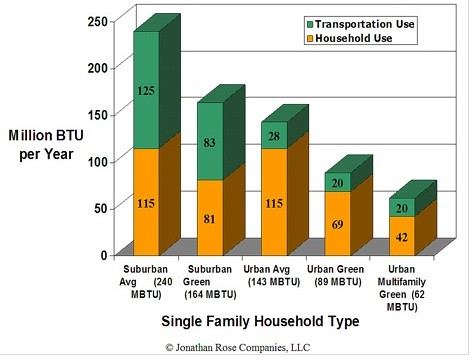
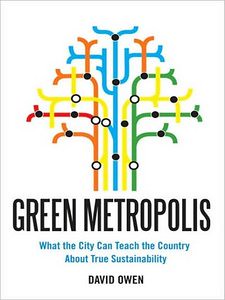
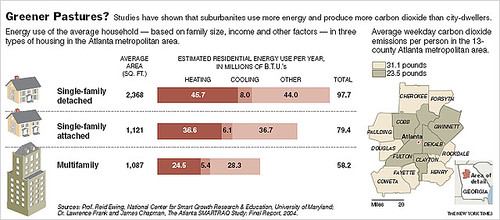
The Green Metropolis argument, laid out in a book authored by David Owen, is that per capita energy use is far lower for city residents--especially if there is a high quality transit system--than it is for suburban and rural residents. While there are issues with access to food, and the cost of bringing food to the cities, the reality is that this argument is pretty important.
Energy consumption: Suburban Sprawl vs. Green Urban
Most of the urban planning theories still prevalent in the field are about deconcentrating city living in favor of greener life in the suburbs. This is the so called "Garden City" movement that has shaped suburban land use development policy for 100+ years.

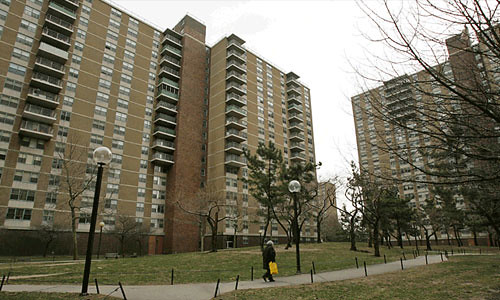
It creeps back into the city in the form of deconcentration arguments, as well as in the Tower in Park ideas (Corbusier's "Radiant City") that drove urban renewal policies. Not to mention in how everyone and their brother and sister believes every new building should be "LEED certified" not taking into account the embodied energy present in buildings, windows replaced with cheap vinyl-based products, etc., or how every building project needs to incorporate green space, even if in locations that because of their spatial conditions and context, ought to be developed more densely, and also not taking more sophisticated positions with regard to making surfaces pervious, etc.
Tower in the Park
Green roofs are cool, but interestingly, the Institute for Local Self Reliance promoted the idea of growing vegetables on rowhouses in the Adams-Morgan neighborhood of DC in the early 1970s.

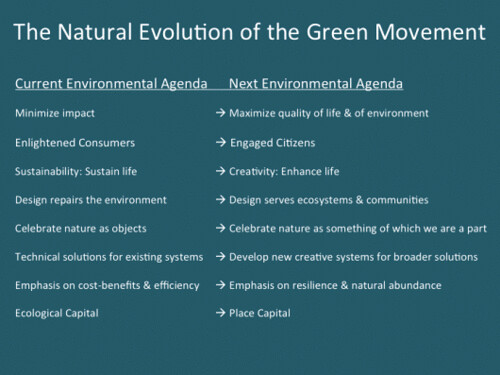
Fortunately, the Project for Public Spaces has released a set of articles about placemaking and environment in honor of Earth Day, focusing on the idea of "Place Capital."

To create wealth and prosper, societies everywhere seek to build capital, a production factor not often desired for itself but for its help in producing other goods. Today there are many kinds of capital: human, social, cultural, natural, and infrastructural.

What is Place Capital?

But it may be that a key to producing lasting wealth, and a way to efficiently build and leverage these other kinds of capital, is to focus on place. Place Capital can be defined as the shared wealth (built and natural) of the public realm – and it is increasingly becoming society’s most important means of generating sustainable growth.

The public places we most value, both in our communities and around the world, have this wealth and attract its preservation and expansion. Focusing on place can best build and leverage many kinds of capital, while often creating resilience and further innovation. Where Place Capital is strongest people actually compete to contribute to this shared wealth, often changing their behavior in ways that ultimately support the value the place gives to others.


Evolution-of-the-Green-Movement-PPS-530x397
Project for Public Spaces graphic.

Placemaking and city and the city's place in the environmental movement is worth thinking about in honor of Earth Day.

Like the work of David Barth, a parks planner at AECOM (formerly Glatting Jackson), whose ideas about parks planning and integrating the public realm challenge us to think about quality of life, public spaces, and civic assets in new ways, so to does this set of articles from PPS. E.g., see the past blog entry, "Complete Places are more than Complete Streets."

Labels: , , ,

Monday, April 18, 2011

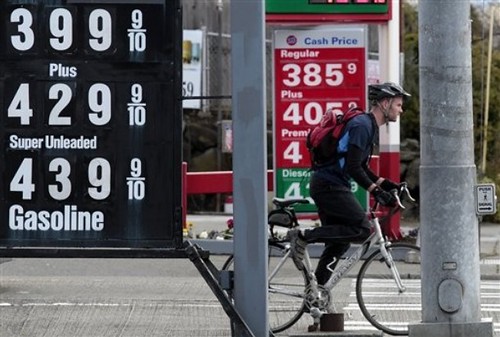
Photos like these need to be used to sell sustainable transportation...

ADDITION Gas Sales
A bicyclist passes a 76 station with fuel prices in the $4.00 range in Los Angeles Monday, April 11, 2011. With the price of gas above $3.50 a gallon in all but one state, there are signs that Americans are cutting back on driving, reversing a steady increase in demand for fuel as the economy improves.(AP Photo/Reed Saxon)

Gas Prices
A bicyclist waits at an intersection between competing gas stations and multiple posted gas prices Monday, April 18, 2011, in Seattle. Sens. Patty Murray and Maria Cantwell are blaming commodity speculators for pushing up the price of gasoline and the two held a news conference Monday in Seattle to call for federal regulators to crack down on speculation. The AAA auto club reports the average price of gas in Washington is $3.92, nine cents higher than the national average. (AP Photo/Elaine Thompson)

Labels: , , , , ,

Wednesday, March 16, 2011

In complex society, even great disaster planning isn't enough

In today's Post Steven Pearlstein ("Lessons from the long tail of improbable disaster") and Howard Meyerson ("We're not infallible ") have good pieces about the impact of disasters such as in Japan, on society and resiliency. From the Pearlstein piece:

Many scholars now think that the very complexity of modern life - including our transportation and communication systems, our economy and our social interactions - is directly implicated in the severity of catastrophes. In more complex systems, even small changes or perturbations can have disproportionate and unpredictable effects. The things that make our systems more efficient also make them more effective in spreading the impact of a catastrophe.

The lesson to be drawn from all this is not that we should roll back the clock and return to a simpler and less interconnected existence. It is, rather, that more attention must be paid to the extra risks that come with all the advantages of modern life. There may be a significant cost involved in preventing low-probability disasters, or having sufficient infrastructure to deal with them when they cannot be prevented. But as we are reminded by this week's events in Japan, that cost is likely to be less than the cost of ignoring those risks and doing nothing at all.

It seems obvious now that in areas subject to tsunamis, such as coastal Japan, that you shouldn't build nuclear plants in such locations. Of course, that wasn't what people were thinking 50 years ago, when they planned the plants at Fukushima.

On an e-list, Ian Perry sent this (reprinted with permission), in response to a conversation he had with a Japanese friend:

“Everything’s different”, are the words of my Japanese friend in Tokyo to describe the current situation there.

When I lived in Tokyo, I’d adjust my watch not by other clocks, but the train as it arrived at the station platform. Only twice in the year I was there was my train, which ran on 8 minute frequencies, not bang on time, being 4 minutes late on both occasions.

Today, my friend tells me that the trains are chaotic. They run not to timetable, but to the amount of available energy they have, and trains are also subject to the rolling blackouts, closing lines for parts of the day. My friend, who on the day of the quake spent 3 hours walking home (probably it would have been two hours or less walk for me) is working half days due to the lack of trains.

A fellow employee has like many Japanese started cycling. One lady at my friends’ office spent 4.5 hours cycling to work on a newly purchased bicycle, though my observations of Japanese cyclists was when I was overtaking them whilst walking... so the distance might not be so great.

My friend says that bicycles are too expensive for her to purchase, but many did purchase bicycles to get home after the quake and bicycles can be seen on the streets cleared of tsunami debris.

Petrol is being rationed where it is available, oil refineries have been devastated as well as the nuclear energy supply. This is making driving difficult. I’m informed that the car plants that make the Prius and other “green” Japanese cars are no longer functioning and the Just In Time (JIT) supply chain is in ruins. This affects car assembly throughout the world, so expect to see less new “greenwash” vehicles on our streets once the stockpiles are gone.

But... before you think that this will boost bicycle sales, Shimano, the world’s leading supplier of bicycle components/parts is Japanese. Although based in Osaka, it is possible that some of their components are made in the affected region of Japan, and if not, their production is likely to be affected by the lack of energy. Shimano has such a massive market share that we are likely to see changes in the bicycle market over the next months.

What is clear is that Japan will not have so much energy for many, many years as it did before the quake and tsunami. In all aspects of life, changes will need to be made to live of what can be produced safely, though Japan is “blessed” with the possibility of much geothermal energy. If Japan redesigns itself as it did intercity rail in the 1960’s we could see some fascination innovations. Interestingly, the Maglev train might be part of the solutions, apparently requiring less energy to run than trains on rails and this summer, the trains will not be "ice-cold". People will be moving much more in high humidity without air-conditioning.

Trains, cars, the fishing fleet that provides so much food to the nation, famous neon signs, escalators, moving walkways, the levels of electrical gadgetry are all affected (phones, heated toilet seats, etc.) and levels of air-conditioning are all affected. Even in 2003 Japanese office workers were being asked to turn off their air-conditioning as Japan did not have enough energy to run everything people had purchased and wished to use. Even in 2003, Japanese people believed Japanese nuclear power plants were dangerous and they had a poor reputation for safety and had tried to cover up a number of incidents... though a sloppy UK newspaper has only found concerns from 2008.

As we witnessed in Christchurch when a newly discovered fault destroyed that once beautiful city we do not know much about this planet. Hopefully the Japanese will take into account what we don’t know and what we don’t know we don’t know when rebuilding their infrastructures and systems.

The one thing that is clear is that the streets of Japan will be very different following the recent events and we may be able to learn many things from them.

--------

One of the big reasons that I favor sustainable transportation is that it can be more resilient in the face of oil shocks, although as the Japanese experience suggests, having transit systems being reliant on electricity does put them at risk from catastrophic failure as well.

Bicycling and walking give people options, but they need to be placed within a spatial pattern where tasks, errands, and trips can be accomplished relatively conveniently. This is what's called compact development.

Still, compact development is resilient in one sense--you can get around by walking or bicycling and energy use is quite efficient (see the argument by David Owen in Green Metropolis)--but is dependent in another, in that energy and water systems are vulnerable, and food typically comes from outside of the immediate area.

This is the crux of the James Howard Kunstler argument against skyscrapers in an era of diminishing energy resources, that you are intensifying the possibility that negative consequences can be catastrophic in the face of real disaster.

Labels: , , , , , ,

Tuesday, January 04, 2011

New years post #8: Shattering the myths of sustainability

(Still have a few more posts to go in this series of entries marking the new year.)
Book cover, Green Metropolis, by David Owen
The March 2010 issue of Architectural Record has a great editorial, "Emerald City: Shattering the Myths of Sustainability." It focuses on the book Green Metropolis (which is an extension of the argument in the New Yorker article "Green Manhattan") and the author's (David Owen) argument that compact development is the best green strategy, trumping technology like battery powered cars and frameworks like LEED certification. From the editorial:

Ratings systems, such as LEED, have a “fundamental weakness,” he thinks, as a “values-laden incentive system” that promotes individual buildings, particularly those produced by high-end developers.

Instead, we need to focus on systems of development more generally, in particular how land use impacts energy use, in particular transportation, and mass transit vs. personal transit.

In chapter after chapter, Owens punctures our myths surrounding the green movement with laser-guided precision in the hopes of clearing the air. His method is provocative, setting us up with teasers such as the following: “Most of the products, technologies, and practices popularly touted as sustainable are not sustainable at all.” Then he tells us, dispassionately, why. ...

With straightforward language and clarity of argument, a reportorial style rather than philosophical argument, Owens reminds us how much more efficient urban living can be. Rather than driving and expending petroleum-based fuel to reach the strip mall, the city dweller can often simply walk downstairs, or perhaps just down the block for the same purchase. The difference between a short walk and a long drive can be a major savings in energy usage and carbon footprint. And herein lies one of his major messages: In cities, large savings can occur regardless of the motivation of the citizen. It might seem unfair, but you don’t have to care to live more responsibly; the framework of urban life inevitably results in a more sustainable environment.

His points can be summarized as follows: In a world of finite resources, in which the actual number of human beings is increasing, our stewardship is best exercised by minimizing our footprint on the land. In other words, density offers the best solution for habitation. The density of cities, and the interdependencies they provide, point to the best solutions, rather than (sorry architects) designs for the most sustainable individual buildings, changes to energy recovery systems, or advances to the automobile — topics we expend a great deal of energy on ourselves. (If anything, he encourages less automobile usage, period, with greater reliance on mass transit or foot traffic.)


The point is not unlike Belmont's in Cities in Full, that recentralization of commerce, employment centers, housing, and transit is the best possible land use policy there is. And it supports the point that I make, that's in the first line in the introduction of the blog:

A community’s physical form, rather than its land uses, is its most intrinsic and enduring characteristic.

Getting urban form/urban design right from the outset is the most important principle for getting urbanism and therefore, the center cities, right.

Plus, I am so g* d* tired of hearing people clamor for LEED certified buildings at public meetings (meetings they often drive to). From the editorial:

Ratings systems, such as LEED, have a “fundamental weakness,” he thinks, as a “values-laden incentive system” that promotes individual buildings, particularly those produced by high-end developers.

Instead we need to focus on land use development as a system, and refocus the system on reducing energy use, that means towards compact development forms which support sustainable transportation--walking, biking, and transit.

As David Engwicht points out in Reclaiming Our Towns and Cities, cities were created to promote exchange of all types, and simultaneously, to reduce our need to travel in order to accomplish exchange. So land use and transportation policies shouldn't treat all forms of mobility as equal, but should be focused on reducing the need for motorized travel generally, but especially the automobile, which from a systems standpoint, requires massive inputs of land, roadway, energy, and other resources, when compared to the resource requirements of walking, biking, and transit.

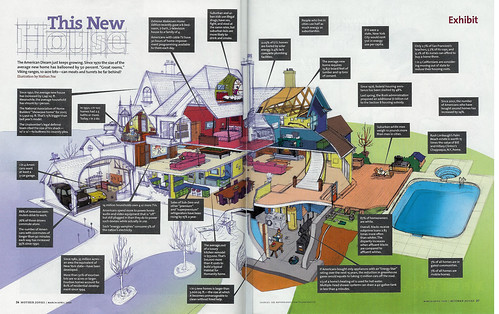
3 - an image of the typical suburban home

Energy consumption: Suburban Sprawl vs. Green Urban


Suburban energy consumption

Labels: , , ,