Rebuilding Place in the Urban Space

"A community’s physical form, rather than its land uses, is its most intrinsic and enduring characteristic." [Katz, EPA] This blog focuses on place and placemaking and all that makes it work--historic preservation, urban design, transportation, asset-based community development, arts & cultural development, commercial district revitalization, tourism & destination development, and quality of life advocacy--along with doses of civic engagement and good governance watchdogging.

Wednesday, September 17, 2025

Los Angeles Union Station Train Festival: September 20-21

In the 2000s Amtrak used to sponsor a Trains Day at some of their stations.  It was held in May, because that is the anniversary of the Golden Spike Celebration, commemorating the creation in 1869 of a transcontinental railroad system.

Amtrak stopped doing it, for budget reasons.

I've written a few blog entries suggesting that the US have a National Trains Month in May, which could include passenger and freight railroads, and not just Amtrak but regional commuter rail systems also.

-- "Modern railroad tourism promotion," 2018
-- "May should be National Train Month as a way to market and promote passenger rail," 2021
-- "Two train/regional transit ideas: Part 2 | Running tourist trains from Union Station," 2021

-- "May should be National Train Month: Rethinking promoting more comprehensively travel by train in the US," 2022

A number of railroad museums and transit agencies do hold similar kinds of events, not in May, and not coordinated into a national calendar.

Union Station in Los Angeles holds one such event, involving Amtrak, the regional Metrolink commuter rail service, and the LA Metro transit system.

-- Union Station Train Festival

(Similarly, I suggested DC's Union Station could be a focal point for rail transit promotion and marketing, in my submission on the DC State Rail Plan.)

LA's Union Station is pretty amazing, Spanish style colonial architecture on the outside, amazing art deco on the inside.

Labels: , , , , , ,

Thursday, April 11, 2024

Railroad tourism as a way to promote transit: Union Pacific's Big Boy steam locomotive journey

Valley Transit (San Jose) poster promoting transit use and transportation demand management.

I have three pieces about transit marketing around the idea of creating a National Trains Month, to be held in May, which is the anniversary of the creation of a transcontinental railroad system.  

-- "Modern railroad tourism promotion," 2018
-- "May should be National Train Month as a way to market and promote passenger rail," 2021
-- "Two train/regional transit ideas: Part 2 | Running tourist trains from Union Station," 2021

The idea is to promote all forms of rail transit, including freight (that's a way to have the big railroads help pay for the event.)  It is inspired by how Amtrak had National Trains Day/Weekend in the early to mid 2010s, as a promotional event.

The idea of leveraging grand train stations is also discussed in this entry from 2015, "New State Rail Planning Initiative in DC: First meeting Monday September 28th," suggesting DC Union Station as a point of leverage.

Traditional railroads often do promotions of their old steam engines.  And some do special lighted trains during the December holiday season.

Even though I am into railroads, for some reason, I am not enamored of steam.  

Nonetheless, Union Pacific is doing a run of its Big Boy steam locomotive from Wyoming to California and back in June and July, and I probably will try to see it when it's in Ogden ("Union Pacific releases new details about Big Boy tour; Ogden a major stop," Standard-Examiner).

It's exactly the kind of event I suggest needs to be pulled into a larger scaled schedule of events to promote railroads--freight and passenger--and rail-based forms of transit.

And special programs for kids.  Japan's local railroads sometimes have railroad-related playhouse areas.  The National Park Service has a railroad themed Junior Ranger booklet, Railroad Explorer

I think railroad passenger services, which are mostly commuter oriented, need to provide free days to give people an introduction to the service, and that could be done during a National Trains Month.

Railroad themed playground in the Depot District of Lacey, Washington.  Photo by Nikki McCoy.

Etc.

Labels: , , , ,

Friday, May 13, 2022

May should be National Train Month: Rethinking promoting more comprehensively travel by train in the US

 I started this post in 2019, and then I had to move west and I never finished it.  


1.  A Los Angeles Times article ("At 80, Union Station tries to reinvent itself for a rail future") about the upgrading of Union Station in Los Angeles reiterates  that train stations should be thought of as key "marketing touchpoints" for transit, based on how stations are key city and community hubs in cities like London, Hamburg, Paris, Tokyo, etc.

I wrote about this general idea in my comments in 2015 on the DC State Rail Plan with regard to DC's Union Station.  

The basic point in those comments was how to "Fully leverage Washington Union Station's potential as a portal and visitor center and as a focus point for marketing transit, specifically rail service."

A long time before, I made the point that bus shelters are "marketing touchpoints" for the transit system in multiple ways: (1) for the user; (2) for people walking or driving by and wanting information; and (3) more generally in terms of aesthetics and maintenance and how it communicates whether or not the community values transit, with poor condition shelters and stops with few if any amenities making clear that transit isn't valued.

This goes double for transit stations: subway; bus; railroads; and their combinations.


(Interestingly, only this year has the Federal Railroad Administration devolved to incorporate the kinds of ideas and not the best ones, that I suggested then.  But none on marketing. "Union Station overhaul removes parking spaces, adds underground facility," Washington Post.)

2.  Make May National Train Month.

The National Train Day that Amtrak did in the mid-2000s then dropped for budgetary reasons should be revived, involving the entire rail industry, but redeveloped into: 

(a.) Train Month.  One day out of 365 puts too much pressure, and people can only do one thing.  Train Month allows for more activities, spread out over an entire month, more attention, etc.; 


(c.) involving all types of train service, not just Amtrak, but all passenger train service, including regional commuter rail services

(d.) including freight railroad service; (e.) which could help with funding and visibility

(f.) also involving train and transit museums and tourist railroads.

Working with the American Public Transportation Association, the National Railway Historical Society and its local chapters, regional and state transportation museums, transit media such as Railway Age, Trains Magazine, Mass Transit, Classic Trains, Progressive Railroading, and Metro, and possibly with freight railroads and the Association of American Railroads, as well as excursion (tourist) railways, railroad passenger transportation agencies should revive the concept and create Train Month as a way to promote travel and transportation by rail, for commuting and leisure travel..

Ogden, Utah is home to the location of the Golden Spike National Monument, the place where the transcontinental railroad joined up.  The Ogden Standard-Examiner published a special book for the 150th anniversary.

-- "Golden Spike Centennial Edition," Ogden Standard-Examiner, 1969

But rather than one day, it should be done for the entire month of May designated  as National Train Month, spreading out activities over the course of the month by creating a calendar of events, coordinated at multiple scales (regional, state, national).

This would be timely especially given Amtrak's refocusing on expansion through their Amtrak Connects US program, calling for significant expansion of passenger rail service across the United States.


3. Other good models are various promotions especially tourism efforts by railroads in Japan, as featured on the NHK World television program, "Japan Railway Journal."  

In the late 1980s, Japan began privatizing the national rail system.  It broke it up into seven companies.  Some are capable of being independent, some are still government owned.  The regional JR services, usually with the foundation of high speed rail, are complemented by private railways operating on lines where the ridership is strong enough to maintain profitability, and by what are called third sector lines, which are a mix of privately run, privately owned, community owned or community subsidized.

Because the country is shrinking in population, especially in rural areas, railroads have focused on special tourism ventures to build ridership and revenues in the face of decline.  Some train stations have a small museum, there are efforts for engaging children (future riders!).  Using regional foods and special meals on trains.  Revitalization efforts.  Etc.

Although there are plenty of exemplary efforts outside of Japan.  Places that do special services for sports events or concerts.  Virginia Railway Express and its support of Clifton Days, a community heritage festival with a big dose of trains.  Souvenir tickets for children on the LIRR.  Various tourist railroads in the US.  Tourism promotion efforts by rail lines in England, and by AMT in Greater Montreal.  Etc.

4.  Train stations can be living "transportation and tourism museums."

Developing spaces and opportunities to present railroad history should be considered within the  program for the station's expansion.

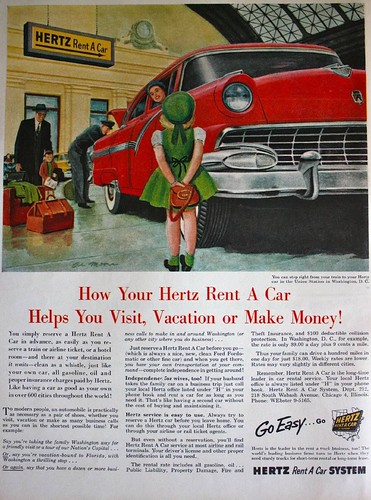
Hertz rental car ad, 1955, featuring Washington DC's Union StationThis 1955 Hertz rental car ad features Washington's Union Station.  Because Union Station is multi-modal (railroad, subway, local bus, inter-city bus, streetcar, tourist services, taxi, bicycle, walking) it's a good location for a transportation museum.

I see this as being done as a kind of joint venture with existing museums in a region, especially those museums already presenting aspects of railroad-related history with a local angle.

A "transportation" museum at a train station like Union Station  in DC wouldn't have to develop a large permanent collection.  

It could more be a place for existing museums to display items that would otherwise remain in vaults, complemented by changing exhibits curated both locally and developed by and with other transportation museums around the country.

Partners could include the National Museum of American History, the National Postal Museum, the National Railroad Historical Society Washington chapter, the B&O Museum in Baltimore, and the National Capital Trolley Museum.

Because of Washington's place as a leading tourist destination and the multimodality represented by Union Station, exhibits on other elements of transportation and visitation history would also be appropriate.

Private railcars on display at a railfan expo in Barstow, California.

Private railcar storage could be "displayed" to the public as part of the exhibit program also. [Note: when this was first written, Amtrak had an active program of renting space to privately owned passenger railcars, including at Union Station.  This has since been de-emphasized.]

The way active trains are staged within the St. Pancras Station in London shows this can be done.   There the Eurostar platform is placed above the ground floor retail.  The train engines were quiet, unlike comparable locomotive engines in the US.
Fire closes Channel Tunnel!  Eurostar trains stranded @ St Pancras London

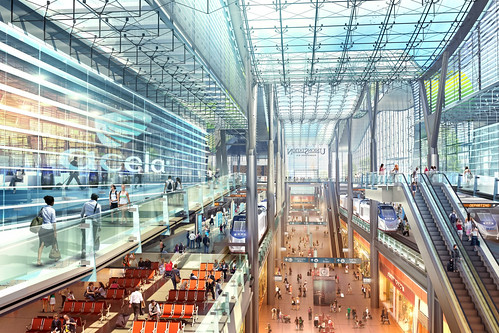
Renderings presented by Amtrak for a redo of DC's Union Station show something similar, the incorporation of the train shed into a kind of atrium, with active tracks.  I believe that this element has since been deemphasized in future planning for the station.
union-station-new-concourse

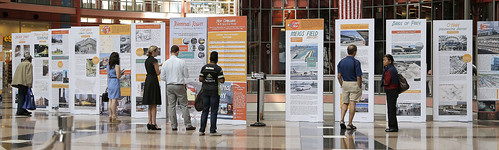
An example of the kinds of exhibits that could be presented is  the companion exhibit--shown here when staged at Chicago's Union Station--to the book Terminal Town, which covers all of the types of transportation terminals in Chicago.
Terminal Town Display at the James R. Thompson Center
“Terminal Town: Celebrating 75 Years of Travel to the Windy City,” exhibit on display at Thompson Center by the DePaul University’s Chaddick Institute for Metropolitan Development. Photo by Jamie Moncrief/DePaul University.

The Market Street Railway--the F Line streetcar--is operated in part as a living transit museum.

5.  Add excursion rail programs to big city train stations.  Many states have scenic-excursion railroads that are tourist attractions.  There are a number of these systems in Virginia, Maryland, West Virginia, and Pennsylvania, and the B&O Museum and the National Capital Trolley Museum have short tracks used for train riding.  NRHS chapters also organize excursion trips.

Most state rail plans do discuss, albeit briefly, excursion railroads and their place in the rail and tourism systems.  But they don't suggest integrating this into the passenger rail network as it currently exists.

For example, in the DC area, as a way to build interest and awareness of railroad service in the region, it could be worthwhile for the local commuter railroad agencies, MARC and Virginia Railway Express,  with the National Railway Historical Society and the proposed transportation museum in Union Station and the B&O Museum, to develop a special event railroad excursion program.

-- "Two train/regional transit ideas: Part 2 | Running tourist trains from Union Station," 2021

6.  Treating railroad stations within states and regions as a network.  I have been thinking about this for a number of months, after reading articles about railroad station efforts in Detroit ("MDOT wants to transform Detroit's 'cramped' Amtrak station into $57M hub with retail, more," Detroit Free Press) and Ann Arbor ("Ann Arbor tells feds it's willing to scale back $171M vision," Ann Arbor News), although I did make this point in a review of the Silver Spring Transit Center ("Multiple missed opportunities in the creation of the Silver Spring Transit Center," 2015; "Updating my review of the Silver Spring Transit Center: a few things I missed," 2018) and in "A well designed train station is a well designed train station: it's not about "luxury"," 2017.
and the Takoma Langley Crossroads Transit Center in Suburban Washington.

Of course the ultimate expressions of this idea are the station networks created by Southern Pacific in Southern California and the Boston & Albany Railroad's stations by H.H. Richardson, with landscaping by Olmstead.  

Santa Ana Train Station
Stations from San Diego to Santa Barbara express the California "Mediterranean" architectural style.

The efforts by Richardson and Olmstead, termed "railroad beautiful" influenced the development of the ideals of the "City Beautiful" Movement decades later.  (See "A Railroad Beautiful" and "The Treatment of City Squares--III; The Square Before the Railroad Station," House and Garden (2) 1902 and "Railroad Gardening," Standard Cyclopedia of Horticulture.)  

7.  Train stations as vital urban hubs.  In "A well designed train station" I wrote:

I think more than "building a station to serve luxury markets," the issue is the design of the station as a way to maximize the quality of the trip and the experience, specifically: 

-- quality of accommodations for passenger throughput generally (entry and exit, connections to other transit services) 
-- quality of accommodations for passenger throughput specifically to/from and on platforms 
-- centrality of its location (for example the recently in the news Michigan Central Station was deliberately constructed in a location outside of the center "to avoid congestion" thinking it could attract patronage regardless) 
-- its place and position as the anchor of the area transit system and the mixed use district in which it is placed 
-- amenities, especially retail and food service 
-- architectural design and aesthetics.

We don't have to reinvent, the basic principles were set long ago.  For example, the book pictured at right was first published in 1916.  I can't find the cite but there's an equally great book on this, dating to the 1890s.

There is the new Penn Station in NYC, which I haven't yet had the chance to visit.  Grand Central and Penn Station in New York City, Union Station in DC, somewhat 30th Street Station in Philadelphia are much closer to the example of European train stations as major city hubs as well as transportation hubs--multiple stations in London, the main station in Hamburg, Gare de Lyon in Paris, etc. are all fabulous places, community and city centers, and mobility hubs.

Granted in the US, most major cities lack the kind of density needed to be able to create that kind of facility, as shown by the failure of new stations like the Anaheim Regional Transportation and Intermodal Center (poorly located, not served by a lot of transit, waiting for HSR).  

Still, it's the model to aim for.

8.  Finally, another element is interpreting transportation history not just as part of community cultural history interpretation programs, but as a part of transit systems.  Many years ago, Passaic County, New Jersey included this idea as a section of their county transportation plan, including railroads, transit, roads, canals, and rivers.  

DC's history trail interpretation program could be a model for the creation of community-wide railroad history "trails," with Union Station as the hub of the interpretation system.  

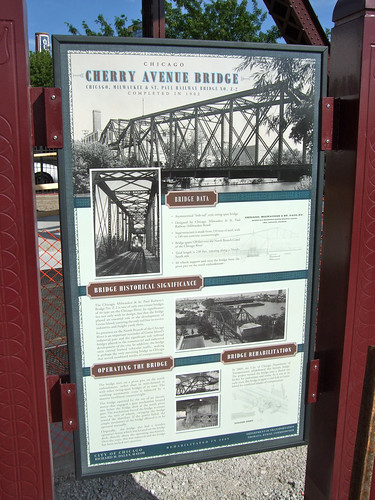
The sign below is in Chicago, and presents the history of a railroad bridge.  A handful of communities, the Ride Philadelphia program is one, information at the Queen Street Station in Lancaster, Pennsylvania is another, have transportation history interpretation programs that are good models.
Cherry Avenue bridge interpretation and facts
Cherry Avenue bridge interpretation sign, Chicago.  Flickr photo by Steven Vance.

Labels: , , , , , , ,

Monday, May 03, 2021

May should be National Train Month as a way to market and promote passenger rail

May 1st was the 50th anniversary of the first operating day for Amtrak, the National Rail Passenger Corporation.  

President Biden speaking in Philadelphia at an event honoring Amtrak's 50th anniversary
Photo: Voice of America

Amtrak was created to absorb from railroad companies increasingly focused on freight the obligations of providing passenger rail service.

The reality was that the long distance passenger services that the railroad companies pioneered became much less viable in the face of air travel and the automobile.

Amtrak was provided with privileged access to freight rail trackage and lower rates (neither was extended to commuter rail services independent of Amtrak), although freight rail service continued to be prioritized in a way that makes Amtrak service unreliable.

Joe Biden: a president who is pro rail.  With rail proponent and now President Joe Biden in office, Amtrak's prospects look a lot better after decades of being batted around by a Congress dominated by fossil fuel and automobile  interests, a overarching belief in the market over government action and little faith in the idea of public transit ("America's Amtrak moment could finally be here," CNN, "U.S. passenger railroad Amtrak asks Congress for $5.4 billion," Reuters).

National Train Day, a defunct promotion for rail passenger service.  For a few years (2008 - 2015), Amtrak sponsored National Train Day, but dropped it for budget reasons.

Originally, I didn't realize the significance of when it was celebrated, why they selected around May 10th, but it's because that is the anniversary day of the hammering of the Golden Spike in Promontory Summit, Utah, which marks the creation of a transcontinental railroad in the US, by creating a railroad line in the west, from Omaha and ending in Sacramento, which in turn connected to rail lines emanating from the Eastern US to Omaha.   

There is the Golden Spike National Historical Park in Promontory Summit, and the Utah State Railroad Museum at Union Station in Ogden.  There were big anniversary events in 1969, the 100th anniversary, and 2019, the 150th anniversary.

-- Spike150 anniversary website
-- 150th Anniversary Golden Spike special supplement, Ogden Standard-Examiner

In my in process set of articles on rearticulating passenger rail service in the United States, the third piece is about National Train Day as an element of marketing.  There are two main points.

1.  "Train Day" should be brought back, but as "Train Month" because one weekend is too difficult and too compressed to be able to promote passenger rail all across the US.

So National Train Day should be repositioned as National Train Month.

2.  Train Month should involve all sectors of the train industry, focused on passenger rail service but not exclusively.  But it should be much more expansive.  Not just national rail services by Amtrak, but regional commuter rail services, tourist railroads, train stations, railroad and transit museums, and related organizations and transit and trade media.  And freight railroads too.

This would provide lots of opportunities for events, and a lot of promotion.  It'd be a great time for advocacy groups to draw attention to their initiatives, etc.

And by involving multiple organizations, including the for profit freight rail industry -- which could use the opportunity to promote the energy savings value of freight railroad transportation as opposed to truck-based freight -- would ease the financial and organizational burden on Amtrak.

Many organizations are already doing events: leverage existing initiatives and add to them with a national calendar.  The recent post on tourist trains as an element of railroad transportation planning mentioned the B&O Railroad Museum, the Virginia Transportation Museum, Railway Heritage Days in Manassas, Virginia, and Clifton (Virginia) Day and various railroad transportation events.

There are plenty of similar activities across the country, such as Railroad Days at the Fullerton Train Museum in California, various events throughout the summer at the Illinois Railway Museum, tourism excursion trains, etc.

It may be like herding cats to get them to coordinate, but the wide array of organizations and assets makes a Train Month possible, and expands it far beyond Amtrak.

===========

Including transportation history as an element of transportation plans.  More than 10 years ago I saw a presentation by the planning director for Passaic County, New Jersey and what stuck out for me was how their transportation plan was transformational in that it included an element on transportation infrastructure, historical interpretation and tourism (Section 8: Scenic and Historic Byways), designed to integrate with the County's future heritage and tourism element of the Master Plan.  

Mostly "scenic and historic byways" are mostly thought of as roads ("Just in time for summer: 49 new National Scenic Byways and All-American Roads," Washington Post).  Passaic County expanded the definition to include transportation corridors more generally including rivers, canals, railroads, and historic trails and other transportation routes. 

Coming across that document definitely influenced my thinking about how the DC's State Rail should include a similar element (which didn't happen), focused on the place of Union Station and its potential as a real-life museum for the interpretation of DC, regional, and national transportation history.

And Ride Philadelphia, the transportation history display program in Center City Philadelphia, along with other displays I've seen in Walla Walla, Washington, Portland, San Francisco on their heritage streetcar line, and the display outside Queen Street Station in Lancaster, Pennsylvania.

Folks walking through the James R. Thompson Center in downtown Chicago Tuesday, Sept. 2, 2014, pause to view the “Terminal Town: Celebrating 75 Years of Travel to the Windy City,” exhibit on display. DePaul University’s Chaddick Institute for Metropolitan Development is launching a six-month community program to explore Chicago’s history and future as the epicenter of U.S. passenger transportation. “Terminal Town: Celebrating 75 Years of Travel to the Windy City,” opens a traveling exhibit Sept. 1-5 at the James R. Thompson Center, 100 W. Randolph St., and continues through the fall with tours, events and a new 300-page illustrated guide by transportation expert Joseph Schwieterman. (DePaul University/Jamie Moncrief)

I've also argued that transit stations and shelters should be used as touchpoints for delivering cultural history interpretation on local transportation history.  

In DC, it's been an issue about the preservation of an old trolley bridge in Northwest DC that was for the old 20 Streetcar line to Glen Echo Park ("Major setback in effort to save historic DC trolley bridge," WTOP).  


I argue that the bridge should be preserved, but it shouldn't be the responsibility of WMATA, since it isn't part of their active infrastructure portfolio.  Instead, the city should take it on.  But unlike Passaic County, DC's Department of Transportation doesn't think it's important.

Labels: , , , , , ,

Tuesday, April 27, 2021

Two train/regional transit ideas: Part 2 | Running tourist trains from Union Station

My comments on the DC State Rail Planning process in 2015, included an extended discussion on the place of Union Station as a hub within the regional rail passenger transportation system, including opportunities it presents as a way to deliver (1) visitor information services, (2) museum elements and (3) tourist-focused train transportation.  

From the blog entry [with updated text concerning Norfolk Southern]:

Many people are already riding trains as an element of their plans to visit DC and other cities in the region. It is a key element of the Amtrak Virginia program and generally Amtrak devotes a fair amount of marketing to tourism. 
Many states have scenic-excursion railroads that are tourist attractions. There are a number of these systems in Virginia, Maryland, West Virginia, and Pennsylvania, and the B&O Railroad Museum and the National Capital Trolley Museum have short tracks used for train riding. National Railway Historical Society chapters also organize excursion trips. 
Other state rail plans, including those for Virginia and West Virginia, do discuss, albeit briefly, excursion railroads and their place in the rail and tourism systems.  DC as a city-state has much different conditions than a typical state, and there is no opportunity for that kind of dedicated tourist attraction in the city. 
One example was the program between Norfolk Southern Railway and the Tennessee Valley Railroad Museum, which offered special excursion steam engine trains throughout the year on various segments of the Norfolk Southern system from 2011-2015.   
Since Norfolk Southern has trackage rights in DC, and trackage in Virginia is used for the VRE Manassas line, they would be a logical partner to work with to test and launch such a program out of DC. 
At the same time, rather than just approach this haphazardly, a detailed marketing program to simultaneously promote regional passenger service should be developed in association with this program. 
The DC State Rail Plan could make recommendations on excursion tourism as an element of the plan, both to serve tourist markets and as a way to market and promote passenger rail service. However, as a way to build interest and awareness of railroad service in the region, it could be worthwhile for MARC and VRE, with the National Railway Historical Society DC Chapter, the suggested transportation museum in Union Station, and the B&O Museum, to develop a special event railroad excursion program.

Surface heritage streetcar network in DC as a visitor transportation system.  A related, earlier piece suggested creating a heritage streetcar visitor transportation service on the National Mall, with major hubs at Union Station, Georgetown, and Arlington Cemetery ("A National Mall-focused heritage (replica) streetcar service to serve visitors is a way bigger idea than a parking garage under the Mall," 2013) with visitor information centers.  (I submitted similar comments to the National Capital Planning Commission's Visitor Element update process for the Federal Elements of the DC Comprehensive Plan.)


Union Station as an active train museum.  Amtrak has de-emphasized this, but for decades they would rent storage space to train car owners who use and/or rent out their cars (American Association of Private Railcar Owners).  In my State Rail Plan comments, I suggested these cars could serve as a kind of museum function, displayed in the some day to be expanded Union Station.

For example the DC chapter of the National Railway Historical Society operates the fully restored Dover Harbor Pullman car (photos below).


Excursion trains could be seen as part of the museum function too, perhaps in association with the B&O Railroad Museum in Baltimore, the DC chapter of the NRHS, and others.

Why not do excursion/tourist train trips on weekends on the MARC Camden and Brunswick Lines, and perhaps the VRE Manassas Line?  Last week I bought some "Baltimore Blonde" beer produced by Guinness at their "new" US brewery in Baltimore County, Maryland, which is near the St. Denis station on the MARC Camden Line, which doesn't operate on weekends.  

I was thinking that it would be cool to be able to get to that brewery by train ("Maryland’s new Guinness brewery is a destination for fans — and everyone else, too," Washington Post), and then had the eureka idea that the Camden line would be a perfect way to realize this idea of train tourism from Union Station.

Tourist trains on weekends between DC and Baltimore on the Camden Line would be possible because the line is minimally used.  

Steam locomotives have some environmental issues, but look cool.
Norfolk Southern No. 611 pulls a photographers’ special at the North Carolina Transportation Museum in May 2015. Photo: Jim Wrinn.

I'm not so sure about the MARC Brunswick Line, which goes from DC to Frederick, Maryland, and as far as Martinsburg, West Virginia.  I seem to recall that the line isn't used that much on the weekend.  But the distance from DC to Frederick is just a bit farther than the distance from DC to Baltimore on the Camden Line so it seems realizable.

Both the Camden and Brunswick Lines are owned by CSX Transportation, so the lines are primarily for freight.


The VRE Manassas Line is owned by Norfolk Southern, although from Alexandria to DC it also runs on CSX track.  From Virginia to DC, the big chokepoint is the two track Long Bridge across the Potomac River.  But there could be capacity on the weekends that doesn't otherwise exist during the week.  And while not benefiting Union Station so much, it could be possible to run some tourist trains not from DC, but from Alexandria's Union Station to Manassas and back, to stay on the NS trackage. 

VRE special event train at Manassas Station

At the very least, a Manassas Line tourist train excursion program could be experimented within in association with the Manassas Heritage Railway Festival in June. especially as pre-pandemic, it did include excursion train trips, but not with heritage equipment.  VRE offers a similar excursion trip in association with Clifton Day in October.  So clearly, these are events to build on and scale.

It would be awesome for NS to run one of their steam locomotives on this line, which was done in 2016 in association with that year's Railway Festival ("611 steam engine will return to Manassas," Potomac Local News) and the Virginia Transportation Museum.  VTM could be another partner for such a program.

This Southern Railway train traveled from New York to New Orleans, including stops in Baltimore and Washington.

These lines would be the place to focus with excursion trains, likely with the Camden Line and the B&O Railroad Museum to start, as they already run trains on a short length of track on their museum campus.

A Thomas the Tank Engine train shared across the lines would be a no brainer.


=================
NC Department of Transportation bought a retired Barnum & Bailey Circus Train, figuring to refurbish it for use, but they don't need it anymore and it's up for auction ("NCDOT bought part of a Ringling Bros. circus train and now isn’t sure what to do with it," "Miss your chance to own an old circus train car? NCDOT will try again to find buyer," Raleigh News & Observer).  That would be an opportunity to develop tourist train rolling stock for the DC area.


2.  While traveling to an artist education center in Pennsylvania, we discovered a large stock of train cars mouldering in Honesdale.  Apparently they are owned by a tourist railroad, the Delaware, Lackawaxen & Stourbridge ("Stourbridge Line adding locomotives," Tri-county Independent, "Donated train cars coming to Port Jervis museum," Times-Herald Record).  Maybe it would be possible to work with such an organization as joint partners, to better leverage their inventory of train cars and locomotives.

Neglected train cars left on Port Jervis tracks are impeding plans for a transportation museum. 
 Photo: Jessica Cohen, Gazette.

Labels: , , ,

Monday, April 26, 2021

Oscars at Union Station, Los Angeles

Really cool that the American Academy of Motion Pictures used Los Angeles Union Station as one of the "sets" for the Academy Awards ("The Oscars Roll Out the Red Carpet—at a Train Station," Wall Street Journal).  

Union Station is an art deco era station that is absolutely gorgeous, with most of its period features still intact, including fabulous art deco waiting room furniture.


The station is owned by the LA MTA, which has its headquarters nearby.  The station has subway connections, is the hub for the Metrolink commuter railroad system, Amtrak, and inter city bus services, and local transit buses too.  It has a nice bicycle station too, run by the Santa Monica Bike Center as part of the MTA Bike Hub program.

Unfortunately, the station isn't located in the center of Downtown, more on the outskirts, so it doesn't have the capacity to support retail and restaurants in the same way that major train stations on the east coast, like Penn Station and Grand Central Station in NYC, 30th Street Station in Philadelphia, Union Station in DC, North and South Stations in Boston, or European train stations, etc, even though it serves 100,000 commuters per day, the same throughput as DC's Union Station, but which is much more active, and somewhat more centrally located.

The newly restored ceiling in the historic ticket concourse at Union Station. 
Photo: Jason Armond / Los Angeles Times

Union Station has been undergoing renovation ("At 80, Union Station tries to reinvent itself for a rail future," "Art in L.A.’s Union Station has been hidden for decades. Now it prepares for an Oscar debut," Los Angeles Times) and at least the last time I was there, had an exhibit on the renovation process.


The use of the station for the Oscars is a great example of the ability to better utilize railroad stations as part of community cultural life.

Labels: , , ,

Friday, July 17, 2020

Access planning for transit stations: Europe

I just wrote about transit station access wrt Greater Tysons ("Tysons (Corner) 10 Years after the plan to make it more walkable: the necessity of implementation mechanisms") just a few days ago, and mentioned how the Regional Plan Association report Urban Design Manhattan influenced me in terms of thinking about access to stations in terms of both horizontal and vertical dimensions in a more systematic way.

Delft

ArchDaily has a piece, "Tunnel Vision: Europe's New Urban Pathways and Metro Stations," about recent access improvement initiatives in Amsterdam, Delft (Netherlands), Budapest, Rotterdam, and Zurich.

It's more focused on underground-specific linkages and monumental architecture rather than a systematic approach to developing access improvements.  But the images are still pretty cool.

Oh, another is Bicycle Dutch mentioned the opening of a new massive bicycle parking garage at a Netherlands train station ("A huge new bicycle parking garage in The Hague"). It has space for 700 bike share bikes, and 7,000 parking slots.

And there is an ad on the Washington City Paper website about public comments for the Washington Union Station Expansion Project (I couldn't seem to find the closing date), and I expect that my comments from a few years ago didn't go anywhere.

In those comments I stressed reconfiguring access on the front facing plaza, to the extent possible shifting the traffic underground, creating world class bicycle support programs, and adding visitor and museum functions.

I made the point that since Union Station is the only train station in the US owned by the Federal Railroad Administration/US Department of Transportation, they should aim to make it a best practice demonstration station for the rest of the country.

The concepts about visitor and museum functions build off my comments on the State Rail Plan and the entry calling for the creation of a heritage streetcar system (modeled after San Francisco) serving the National Mall, from staging points at Union Station, Georgetown, and Arlington County (Arlington Cemetery, the Iwo Jima Memorial, and Rosslyn).

It's unfortunate that planning-wise the US doesn't seem to have done a good job in terms of codifying best practice guidance, and working it into new projects going forward.

Past blog entries on station planning include:

-- "Transit, stations, and placemaking: stations as entrypoints into neighborhoods," 2013
-- "Transit stations as an element of civic architecture/commerce as an engine of urbanism," 2016 (this entry is more important for the comments, where I put in new information as I come across it)
-- "Revisiting creating Public Improvement Districts in transit station catchment areas," 2020, which updates slightly the original piece from 2016
-- "Transportation Infrastructure and Civic Architecture #3: Rhode Island Avenue Pedestrian Bridge to the Metrorail station," 2016
-- "Takoma Langley Crossroads Transit Center: a critical evaluation," 2016
-- "Updating my review of the Silver Spring Transit Center: a few things I missed in 2015," 2018

Plus I have a partially written series about re-thinking railroad passenger service planning and marketing in the US, which I guess I should get back to.

It was partially inspired by an article about the initiatives at Los Angeles Union Station ("At 80, Union Station tries to reinvent itself for a rail future," Los Angeles Times) along with programming on NHK World about transit service in Japan, the 150th anniversary of the Golden Spike last year, etc.

Los Angeles Union Station is very pretty, but because it's not in a thriving part of Los Angeles, the station lacks the kinds of ancillary functions in a station like retail and food, which tend to be amazing in main train stations in Europe because they serve so many people (for example, the Essen train station has a Lidl Supermarket, among other retail; the Hamburg station has an amazing array of retail and food options, etc.).  There is a smattering.

Labels: , , , , , ,

Sunday, November 11, 2018

Train station platform "safety"

A Newsday article, "Crowded Penn Station platforms have LIRR riders on edge - literally," discusses problems at Penn Station on Long Island Railroad platforms, because the platforms are too narrow for the number of passengers.

The article references Katherine Hunter-Zaworski, a professor at Oregon State University and a co-author of a forthcoming TCRP report on the subject, TCRP A-40 Manual to Improve Safety at the Platform-Train Interface (PTI). (Presentation by Professor Hunter-Zaworski on the outline for the report.)

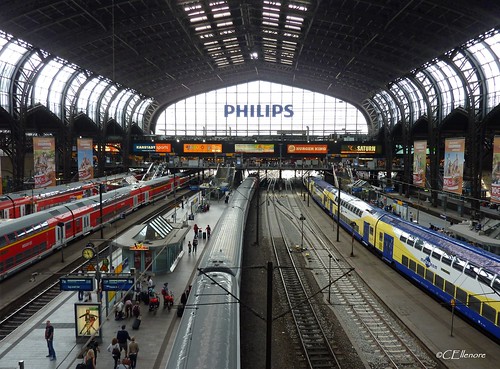
I am not well traveled, but I have been in train stations in Germany and the UK. The main station in Hamburg is as busy or busier than the busiest train stations in the US.

The big difference is that the platforms are much wider. Hamburg train station.
Hamburg Hauptbahnhof

Liverpool Lime Street Station
Liverpool Lime Street's magnificent roof

Penn Station
Untitled

Granted LIRR/MTA/Amtrak/USDOT don't want to reconfigure the trackage system under Penn Station because it would be an engineering and cost nightmare, but width of the platforms is the biggest issue. Without changing platform width, everything else is just dealing with the constraints.

It occurs to me in passenger train service there should be a manual like the Shared-Use Path Level of Service Calculator, to determine ideal widths of multi-use trails, based on regular usage numbers.

Labels: , , , , ,

Thursday, July 12, 2018

A well designed train station is a well designed train station: it's not about "luxury"

Interior, Grand Central Station.  Alexsandr Stickpin Photography. ("Grand Transit: MTA and Grand Central Terminal," Art History Today).

MobilityLab Express has an article, "Grand Central was designed for luxury travel. That’s why commuters love it," attributing the success of Grand Central Station in New York City to the fact that it was designed for long distance trains during the heyday of railroad passenger travel.

I don't agree.

It is a pretty station.  But virtually all big city railroad stations constructed before 1935 were similarly grand, even if the level of grandeur was scaled to the size of the city.  Grand Central Station was built to be both functional and aesthetically attractive.

But so was the Santa Fe railroad station in San Diego or Union Station in Denver, etc.  (Or for that matter, the Ferry Terminal Building in San Francisco.)
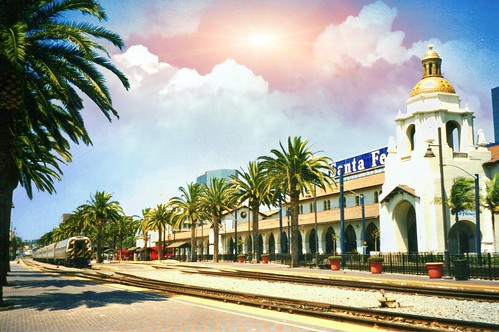
Union Station ~ San Deigo CA ~ Historic Building

In the postwar period and in the context of an automobile-centric transportation, the importance of design and aesthetics was stripped out of railroad station planning, whereas most train stations in the US are now built to be functional. (Separately, the train station preservation movement, both for use as transportation facilities or as adaptive reuse projects to maintain the building in the face of the loss of its function.)

NJ Transit platform at Penn Station.  Wikipedia photo.

Penn Station, while originally built with a beautiful façade, was built for both local--presumably not "luxury"--and intermediate distance travel primarily between Washington, Philadelphia, New York City and Boston, and according to some architectural historians was poorly designed as it relates to passenger throughput.

And anyone who uses the station knows how cramped the platforms are, which were created as part of the original station and retained after the above-grade building was demolished in the early 1960s.

I think more than "building a station to serve luxury markets," the issue is the design of the station as a way to maximize the quality of the trip and the experience, specifically:

-- quality of accommodations for passenger throughput generally (entry and exit, connections to other transit services)
-- quality of accommodations for passenger throughput specifically to/from and on platforms
-- centrality of its location (for example the recently in the news Michigan Central Station was deliberately constructed in a location outside of the center thinking it could attract patronage regardless)
-- its place as an anchor of the area transit system and the mixed use district in which it is placed
-- amenities, especially retail and food service
-- architectural design and aesthetics.

In my two trips to Europe, I have been in train stations in Hamburg, Essen, and Dortmund in Germany and in the UK, St. Pancras, Kings Cross, Euston, and London Bridge in London; Lime Street, the Liverpool airport station (some distance from the airport), and the Liverpool Central commuter rail station.

Hamburg especially impressed me.  It's one of the busiest stations in Europe with 650,000 people moving through the station, with connecting service from multiple underground lines, the main inter-city bus terminal nearby (with an underground connection across the street); superior placement and separation of tourist bus services from traditional local transit service; and it anchors both the city's pedestrian shopping district and the Spitallerstrasse transit mall.

The way local transportation intertwines but is separated to foster throughput with the Hamburg train station as the anchor to all the services is far superior to any train station I've experienced in the US, especially Union Station in Washington, where taxicabs, tourist buses, ride hailing pick up and drop off, and individual passenger pick up and drop off are all massed together--poorly--in front of the station.

But even smaller stations in Essen and Dortmund were similarly situated--adjacent to the main pedestrian shopping district, with inter-city bus and local transit services, and tourist bus services, all well integrated but separated as needed for optimum service provision.

Similarly, my more recent trip to the UK super impressed me in terms of the way the train stations were so massive, beautiful, full of amenities, and successful (even if there were wayfinding and other issues) and itinerant service problems on the Thameslink/Southern Rail and Northern Rail services.

Euston is an "old station" undergoing renovation so it was cramped--especially in the face of recent massive train service breakdowns. But it still has great underground and bus connections, and compared to just about any train station in the US, bike accommodations.

By contrast, each of the other stations I visited in London, all renovated more "recently," was amazing, and mixed longer distance service with commuter trains.

St. Pancras is also home to the Eurostar trains connecting London to the European continent, with decidedly luxury options, but that didn't make the station necessarily more beautiful or successful. (Although yes it is stunning inside and out.)
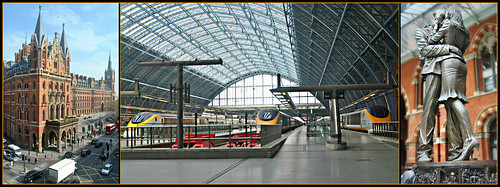
St Pancras International Station London

Similarly, in Liverpool, Lime Street station has longer distance and commuter trains, a "low level" (local underground) station, is adjacent to the main city local transit station at Queens Square, and anchors the adjacent pedestrian district.

The "airport" station is not at the airport but links to it, and has local and long distance train connections, plus local bus transit, and intercity bus transit.  It also provides for a dose of redundancy in that the station can be used for long distance trains while Lime Street station is closed for renovation, which was the case when I was leaving Liverpool.

Many of the Liverpool area local train stations have combined ticket office-retail stores run by Merseytravel and the "automatic" coffee dispenser at the Airport station ticket office (the coffee shop was closed by the time I got there) made excellent coffee!

(Note that I also visited the Victoria Coach bus station in London and the Liverpool One inter-city bus station in Liverpool.  The Victoria station is beautiful art deco outside and terrible inside.  I learned that the problem inside is multiple landowners and the inability of Transport for London to take control of the design, planning, and operation for the service.  The Liverpool One station is outdoors, but has good information and wayfinding systems, excellent platform shelters, and a ticket and information office run by the local transit authority.)

"Old" books on train stations.  I hate to admit that it wasn't until I saw a book by John Droege, Passenger Terminals and Trains, at an antique mall, that I realized it would be helpful to bone up on the historical literature on railroad station design and architecture.

The Droege book dates to 1916 but has been reprinted.  Carroll Meeks' The Railroad Station: An Architectural History dates to the 1950s.

The past blog entry "Transit, stations, and placemaking: stations as entrypoints into neighborhoods" (2013), discusses how, especially in the urban context, transportation infrastructure's aesthetic elements have often been ignored and this can have deleterious impact on quality of life.

After I wrote that piece, because the Wall Street Journal mentioned a 100 year old article on "railroad beautiful" I tracked down some early planning writings from the early 1900s on the aesthetic qualities and design elements of railroad systems, concerning both station grounds and the right of way and yard facilities.  The Boston and Albany Railroad was a leader in adopting such an approach.

See "A Railroad Beautiful" and "The Treatment of City Squares--III; The Square Before the Railroad Station," House and Garden (2), 1902 and "Railroad Gardening," Standard Cyclopedia of Horticulture. (These resources have been scanned for online access by the Hathi Trust.)

Transit station reviews.  I have written reviews of the Silver Spring Transit Center and the Takoma Langley Crossroads Transit Center, as well as submitted comments on the redesign and expansion of Union Station.

-- "Updating my review of the Silver Spring Transit Center: a few things I missed in 2015," 2018
-- "Takoma Langley Crossroads Transit Center: a critical evaluation," 2016
-- "DC Union Station EIS FRA -- Comments due November 9th," 2016

Clearly station designs today have a lot to learn from the station designers of yesteryear.  As do I.

Note that the Network Rail train station design manual is superior.

-- Guide to Station Planning and Design, Network Rail

But the US Federal Railroad Administration publication is good on the underlying principles, but provides limited direction in terms of specifics, and it doesn't give examples of supra-best practices, which would raise the expectations of planners and riders both.

-- Station Area Planning for High-Speed and Intercity Passenger Rail, Federal Railroad Administration, US DOT

Similarly the SEPTA guide for their light rail/trolley stations is a useful resource, but for a much different scale of transit service

-- Modern Trolley Station Design Guide, SEPTA

Labels: , , , , , , , ,