Investment vs. spending and DC's fiscal surplus: how about funding big, visionary projects
So DC has a $414 million surplus (partly because we won't spend money on where it needs to be spent, partly for other reasons). See "D.C. budget surplus should be saved, mayor says" from WJLA-TV.
Some DC elected officials want all of it to be put in the bank.
Mayor Gray has announced a willingness to invest $100 million in affordable housing ("Gray pushes affordable housing, pay raises" from the Washington Examiner).
I would argue that besides investing in "affordable housing" the city should do other targeted investment on items that are really really really really really important, but that the city doesn't appear to be addressing at all.
The point of investment is to "spend" money on items that are structural and have long term positive economic return.
Spending is disbursing money on items that have little long term impact, tend to not be about structural change, and have little if any economic return.
I can think of at least five items that qualify, although it would be a lot easier if the city had a public capital improvements budgeting process and program. (Most jurisdictions do this on a 6 year time frame, on a two year running plan. DC does something like this in the Chief Financial Officer's shop, but it's not a public process.)
1. Re-constructing the Georgia Avenue-Missouri Avenue intersection.
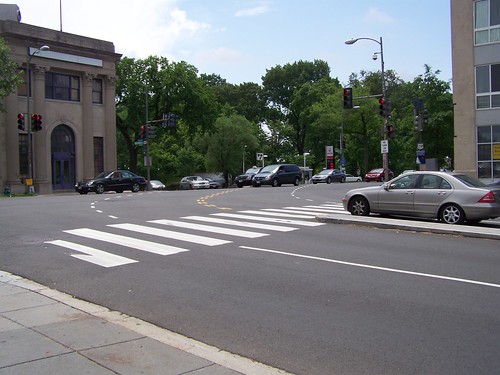
This came up in the "Walmart" report process I co-chaired for ANC4B (ANC4B Large Tract Review Report on Walmart, 5/2011, "Temper Walmart Glee with Planning," op-ed, Washington Business Journal). That intersection has an offset geometry from when the road was created in the 1860s and it has never been "corrected." Riggs Road-Missouri Avenue-Military Road is the only through east-west arterial in Upper Northwest (and the only through east-west arterial other than Michigan Avenue-Columbia, which is in "Middle" Northwest).
The intersection will only get worse as Upper Georgia Avenue gets redevelopment in this segment, from Missouri Avenue--the city's first Walmart will be opening up at this intersection--to at least the Walter Reed Army Medical Center complex, which has been deaccessioned, with 60+ acres going to DC for redevelopment into office, retail, and housing + various nonprofit uses (like charter schools) and 30+ acres (I think) for embassies. Other land use intensification opportunities exist along this corridor.
Now DDOT barely raised the issue of this intersection in their response to Walmart, but then DDOT was basically ordered by the city's elected officials, to make the project happen, not to mitigate the potential problems or come up with expensive projects to fix real, fundamental long term problems.
The ANC report mentioned that one option would be to build a circle and underground Missouri Avenue.
2. Create a massive economic, education, health, and social improvement initiative for Wards 7 and 8.
Sometime this year I will be writing a series of pieces on how a type of Harlem Children's Zone initiative needs to be created, like the Promise Neighborhood Initiative in Kenilworth-Parkside but much much much much much bigger, with a focus not just on children, but everything.
This would cost a lot of money--every year, not just as a one time expense.
But think of it this way. The city probably spends in direct costs in and as a result of these two wards between $1 Billion and $2 Billion !!!!!!!!!!!!!!!!!!!!! annually (on education, health care, uncompensated health care, police services, fire department, emergency medical services, the court, legal, and incarceration system, youth services including incarceration, social work, etc.) without seeing much in the way of "return on investment" leading to positive structural change in the community and for individuals and families.
3. Dealing in a concerted manner ("war on abandominiums") with the Abandominium crisis East of the River.
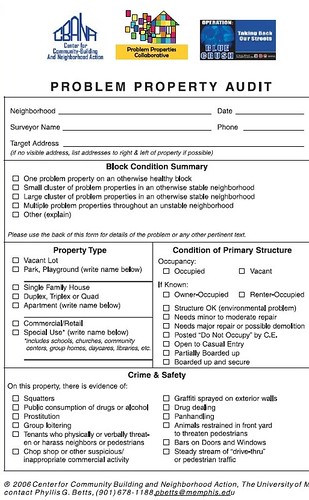
This should be seen as a separate and inter-linked element with the previous item.
So there was a great piece in GGW ("Abandominiums house Anacostia resentment") about widespread multiunit housing abandonment East of the River. My response was this entry "Deeper thinking/programming on weak residential housing markets is required: DC example, Anacostia," which laid out a program on how to deal with it.
While I don't think that widespread blight justifies violence (Post columnist Courtland Milloy wrote that it does, at least with regard to Metrobuses traveling through the neighborhood, see "At a hearing on why kids throw stones at Metro buses, no one spoke for the kids") clearly it contributes to it, anomie, etc., and it becomes a reinforcing negative force leading to further decline.
Make this a priority. Fund it. Make it happen. Improve the neighborhood.
4. Reconstructing other similar intersections/restoring lost circles/creating squares, etc.

The blog has discussed this ("It's time for a new "city beautiful" movement in DC," "Decking over I-395 should just be the beginning," "Public Squares and DC") with regard to Truxton Circle, Dupont Circle (pictured above), Scott Circle, and restoring the wide sidewalks in the Cleveland Park commercial district.
Using surplus monies for doing such projects makes a lot of sense to me.
5. Allocate money for planning, design, and engineering for the Separated Blue Line.
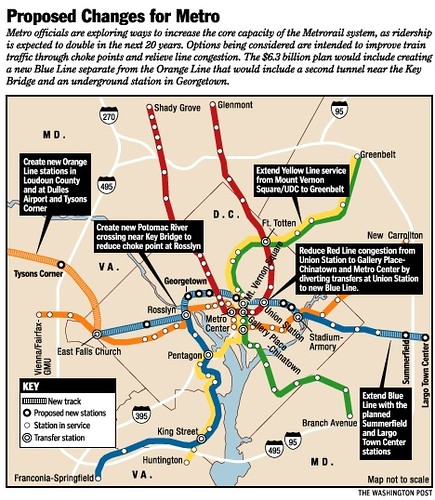
I write about this all the time, so I won't repeat myself...
Just do it. Start the process. Had it been done 11 years ago, it would be opening up in a couple years...
Labels: crime, human services, infrastructure, neighborhood revitalization, public education/K-12, public finance and spending, social exclusion, transportation planning, urban design/placemaking
posted by Richard Layman @ 6:22 AM&Permanent Link
Follow this blog
7 comments