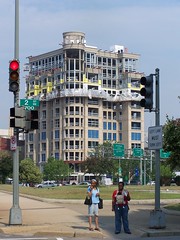
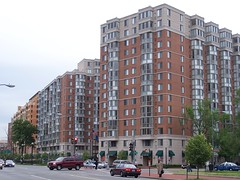
Rebuilding Place in the Urban Space

"A community’s physical form, rather than its land uses, is its most intrinsic and enduring characteristic." [Katz, EPA] This blog focuses on place and placemaking and all that makes it work--historic preservation, urban design, transportation, asset-based community development, arts & cultural development, commercial district revitalization, tourism & destination development, and quality of life advocacy--along with doses of civic engagement and good governance watchdogging.

Friday, March 04, 2005

Richard's Rules For Restaurant-Driven Revitalization

Elise Bernard's Frozen Tropics blog cites an entry from Neal Takamoto's Cool Town Studios blog about attracting patrons to emerging urban districts.

From Neal:

Steven Gartner, president of Metro Commercial Real Estate, the revitalization of urban retail follows four phases. Gartner played a leading role in Center City Philadelphia's expanding retail scene and many of its economically-growing neighborhoods.

1. Local restaurants, started by great chefs. Or visionary entrepreneurs who know great chefs. People will venture out to on-the-edge neighborhoods for acclaimed food, often in tiny venues. They'll take even more risks for top live music.
2. Larger format restaurants that represent more of an investment and draw a larger audience from a larger geographic area. Essentially the same people as above who now have a more established customer base.
3. Locally-owned specialty retail shops, including art galleries. Yes, but only after there's a base population of diners and entertainment seekers that provide the foot traffic.
4. National chains, the risk-averse businesses that hike up rents, this only happens if there is a weak sense of community, otherwise the local residents prefer independents that support their economy and culture.

I counter this with "Richard's Rules For Restaurant-Driven Revitalization." My rules are focused on building business from the people who are already present in your retail trade area, people who aren't patronizing your commercial district, because in their opinion "there's nothing there."

It's our job as revitalizers to make sure that "the there is there."

Chef-driven restaurants aren't necessary to drive revitalization, although they are nice to have and can be decent draws--but really how great is La Brasserie at driving the growth of the 300 and 400 blocks of Massachusetts Avenue NE? Downtown is still pretty bleak at night despite the number of high quality restaurants such as Occidental, Red Sage, and others. (7th Street is a different story, see below.)

Revitalization is dependent on restaurants. A complete destination has places to see, shop at, and eat. If you don't have a restaurant, where are people going to be able to go to the restroom? If they can't go to the restroom, they won't be able to linger and spend time in your commercial district. They will end up being very purposive--if they do come it is for a specific reason, and they leave when they are finished, without exploring other retail and service businesses along the corridor.

In my opinion, restaurants that augur revitalization have five characteristics, and these characteristics support high patronage amongst a core group of customers that will frequent the restaurant from 2-5 times/month, at least in the beginning. This level of patronage is necessary to provide the cash flow needed to stabilize the risk involved in opening up in a marginal area. Remember the 80/20 rule?--80% of your business comes from 20% of your customers. Ignore this at your peril.

The rules are:
  1. Relatively appealing cuisine that isn't too specialized; food that is attractive to a large number of people--Italian, Mexican, and "American," seem to work best. You want at least 100 customers/nite. These days Thai food is moving into this category. Chinese seems to have lost its appeal. Restaurants like Indian, Caribbean, etc. are just a bit too specialized, and therefore don't get the weekly or at least a couple times/month patronage that such restaurants need. (Think Banana Cafe, La Loma, La Lomita vs. Capitol Hill Tandoor as examples.)
  2. Good food; it doesn't have to be stunning but it better be good.
  3. Good, good plus, or better service; waiting isn't fun, and neither is dealing with a server that doesn't help you get what you want with a modicum (or preferably no) of problems.
  4. Well priced; you can't have drinks at $8 or most of your entrees costing $13-$20. If your prices aren't competitive and maybe a little less expensive than the market, you won't get that frequent patronage that is necessary for your success. Pitchers of margaritas or sangria are good, maybe not pitchers of beer, which seem to attract a rowdier more alcohol-centered clientele.
  5. Nice interior; it doesn't have to be stunning or a $300,000 interior renovation, but it can't be threadbare, and it has to be appealing.

IMO, restaurants in the area like Banana Cafe, La Loma, and La Lomita exemplify these characteristics. Other restaurants and coffee places that are leading the revitalization of their commercial districts include include Tryst and The Diner which have brought life back to Adams-Morgan during the day, Boss Shepherds (now Peppers) on 17th Street NW in Dupont Circle, Dos Gringos in Mt. Pleasant (they have an absolutely killer Vegetarian Chili), and Mocha Hut and Colorado Kitchen in the greater Brightwood area.

Probably the best example in Washington, DC is Jaleo on 7th Street, which anchored the revitalization of the East End of downtown and is as significant, if not more so, than the MCI Center). Jaleo opened in 1993, years before MCI. Somehow, this restaurant is just as trendy as it was when it opened, and most every weekend they go through $100,000 worth of food (wholesale cost). Now there are a dozen top notch restaurants within a couple blocks of Jaleo, some owned by the same company like Cafe Atlantico and Zaytinya, and these restaurants rely very little on events at the MCI Center for driving patronage.

Even though they don't have food yet, in my opinion R&B Cafe, the coffee shop on the 1300 block of H Street, is the first example of such an establishment satisfying these "principles" on H Street NE.

I describe Alphonso Morgan, the proprietor, thusly:

  1. He's smart.
  2. He perseveres. (i.e., he works his a** off).
  3. He listens.
  4. He responds. If you don't respond, listening doesn't matter.
  5. He knows what quality is. We all know the saying "You can fool some of the people all of the time, but you can't fool all of the people all of the time." Well, if you are the proprietor of a small business, you can never afford to fool yourself. If you don't provide quality and you refuse to accept it, whose fault is failure?

Those ought to be the characteristics of success.

Wednesday, September 07, 2005

Richard's Rules for Restaurant-Driven Revitalization (Updated)

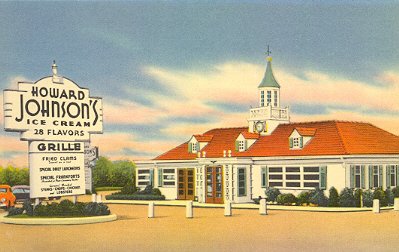
Howard Johnson's PostcardTimes Changed, but Howard Johnson's didn't.

I am updating this entry slightly with some additional points (entry originally from March)

Elise Bernard's Frozen Tropics blog cites an entry from Neal Takamoto's Cool Town Studios blog about attracting patrons to emerging urban districts.

From Neal:

Steven Gartner, president of Metro Commercial Real Estate, the revitalization of urban retail follows four phases. Gartner played a leading role in Center City Philadelphia's expanding retail scene and many of its economically-growing neighborhoods.

1. Local restaurants, started by great chefs. Or visionary entrepreneurs who know great chefs. People will venture out to on-the-edge neighborhoods for acclaimed food, often in tiny venues. They'll take even more risks for top live music.

2. Larger format restaurants that represent more of an investment and draw a larger audience from a larger geographic area. Essentially the same people as above who now have a more established customer base.

3. Locally-owned specialty retail shops, including art galleries. Yes, but only after there's a base population of diners and entertainment seekers that provide the foot traffic.

4. National chains, the risk-averse businesses that hike up rents, this only happens if there is a weak sense of community, otherwise the local residents prefer independents that support their economy and culture.
__________
I think it's important to think about this in terms of the demographic and perception status of the neighborhood. All neighborhoods and commercial districts can be categorized as healthy; transitioning, emerging; and distressed (using criteria developed by the DC Office of Planning). And each type probably can be further split into early, middle, and later stages.

Healthy commercial districts are not without issues, but the issues vary. Even a district like Adams-Morgan is probably considered transitioning, as is Barracks Row. In some respects, Richard's Rules for Restaurant-Based Revitalization apply more to transitioning, emerging, and distressed commercial districts. But that makes sense, since those are the districts most in need of "revitalizing." (For issues regarding problems engendered by the Late-Night Economy, see this entry, "Restaurants and liquor licenses", from April.)

My rules are focused on building business from the people who are already present in your retail trade area, people who aren't patronizing your commercial district, because in their opinion "there's nothing there."

It's our job as revitalizers to make sure that "the there is there."

Chef-driven restaurants aren't necessary to drive revitalization, although they are nice to have and can be decent draws--but really how great was La Brasserie at driving the growth of the 300 and 400 blocks of Massachusetts Avenue NE? Downtown is still pretty bleak at night despite the number of high quality restaurants such as Occidental, Red Sage, and others. (7th Street is a different story, see below.)

Revitalization is dependent on restaurants. A complete destination has places to see and things to do, things to buy at interesting places to shop, and places to dine.

Without restaurants, where are people going to be able to go to the restroom? If they can't go to the restroom, they won't be able to linger and spend time in your commercial district. Patrons of your commercial district will end up being very purposive--when they visit it is for a specific reason, and they leave when they are finished, without taking the time to explore and patronize other retail and service businesses in your commercial district.

Restaurants that augur revitalization have five characteristics, and these characteristics support high patronage amongst a core group of customers that will frequent the restaurant from 2-5 times/month, at least in the beginning. This level of patronage is necessary to provide the cash flow needed to stabilize the risk involved in opening up in a secondary market. Remember the 80/20 rule?--80% of your business comes from 20% of your customers. Ignore this at your peril.
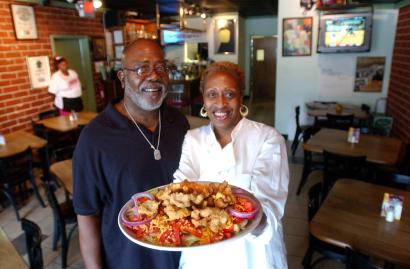
Green Apple Bar and GrillT. Levette Bagwell/AJC. Willie Broughton and his wife, Ruby, owners of the Green Apple Bar and Grill, show off a fried chicken salad on the one-year anniversary of their opening. Before he retired, Willie Broughton already had determined that he eventually would open a bar at the site.

The rules are:

1. Relatively appealing cuisine that isn't too specialized; food that is attractive to a large number of people--Italian, Mexican, and "American," seem to work best. You want at least 100 customers/nite. These days Thai food is moving into this category. Chinese seems to have lost its appeal. Restaurants like Indian, Caribbean, etc. are just a bit too specialized, and therefore don't get the weekly or at least a couple times/month patronage that such restaurants need especially when they are located in emerging commercial districts.

Think Banana Cafe, La Loma, La Lomita vs. Capitol Hill Tandoor or Phish Tea--the latter two have a cuisine specialized enough that local patrons come maybe once every couple months, so they need to draw on a much larger trade area than restaurants that have a more "approachable" cuisine.

2. Good food; it doesn't have to be stunning but it better be good. (Perhaps Mexican restaurants illustrate this point the best.)

3. Good, good plus, or better service; waiting isn't fun, and neither is dealing with a server that doesn't help you get what you want with a modicum (ideally none) of problems.

4. Competitively priced; you can't have drinks at $8 or most of your entrees costing $13-$20. If your prices aren't competitive and maybe a little less expensive than the market, you won't get that frequent patronage that is necessary for your success. Pitchers of margaritas or sangria are good, maybe not pitchers of beer, which seem to attract a rowdier more alcohol-centered clientele.

5. Nice interior; it doesn't have to be stunning or a $300,000 interior renovation, but it can't be threadbare, and it has to be appealing.

IMO, restaurants in the area like Banana Cafe, La Loma, and La Lomita exemplify these characteristics. Other restaurants and coffee places that are leading the revitalization of their commercial districts include include Tryst and The Diner which have brought life back to Adams-Morgan during the day, Boss Shepherds (now Peppers) on 17th Street NW in Dupont Circle, Dos Gringos in Mt. Pleasant (they have an absolutely killer Vegetarian Chili), and Mocha Hut and Colorado Kitchen in the greater Brightwood area.

Probably the best example in Washington, DC is Jaleo on 7th Street, which anchored the revitalization of the East End of downtown and is as significant, if not more so, than the MCI Center). Jaleo opened in 1993, years before MCI. Somehow, this restaurant is just as trendy as it was when it opened, and most every weekend they go through $100,000 worth of food (wholesale cost). Now there are a dozen top notch restaurants within a couple blocks of Jaleo, some owned by the same company like Cafe Atlantico and Zaytinya, and these restaurants rely very little on events at the MCI Center for driving patronage.

I have worked in hospitality for awhile, and I find that what distinguishes quality operations from those that struggle is a failure to focus on the guest and the guest experience. The restaurant industry is one of the most competitive retail categories but is still a retail category where independent businesses can thrive and the "barriers to entry" are surmountable.

There is a great resource for restauranteurs, a subscription website called Restaurant Owner, with scads of resources. Reading trade magazines at the very least (Restaurant Business, Fresh Cup, Specialty Coffee Retailer, etc.) is a good place to start because as I say "to stay the same is to fall behind, because your competitors are constantly improving and new places are always opening." If you don't go anywhere else, or read anything, how do you learn?
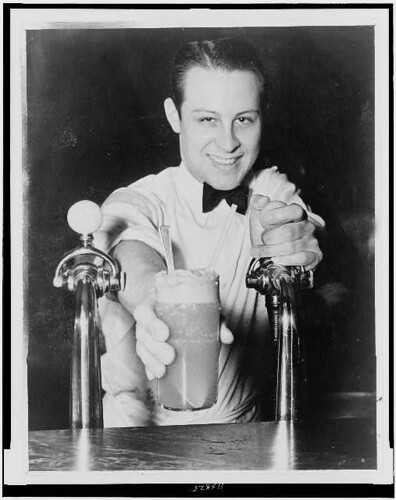
Soda JerkSoda jerk" passing ice cream soda between two soda fountains] / staff photo by Alan Fisher New York World Telegram and Sun archives. Library of Congress.

Quality restaurants share some other characteristics

1. Understanding that you work for the guest, because after all, that's who pays everybody. (I know a restauranteur desperately trying to build his bar business, but he adamantly believes that "soft rock"--remakes of the Beatles and Supertramp, and the occasional Carpenters song is the music that should be played. Compare that to the jukebox at the soon to reopen Capitol Lounge.)

2. Listening to guests and employees.

3. Taking in and responding to this feedback. If you don't respond, listening doesn't matter.

4. Never fool yourself about what quality is. We all know the saying "You can fool some of the people all of the time, but you can't fool all of the people all of the time." Well, if you are the proprietor of a small business, you can never afford to fool yourself. If you don't provide quality and you refuse to accept the truth, whose fault is failure?

5. Focus on what matters. Until you ensure that your production, service, and ordering and inventory systems work and are robust, gloss (such as balloons) is a waste of your time and energy.

6. Developing robust training and production systems. This sets you up for success by reducing the likelihood of error. The Restaurant Owner website is full of downloadable templates, manuals, and worksheets that can be customized. Weak systems put you behind before you even open your doors to today's customers

7. Having a sound business model. Understand your metrics and dayparts. Have a (business) plan based on reality and develop your business and marketing plan accordingly. It's possible to (re)build service and production systems if they are flawed. But a business model that can never yield profits is unworkable.

8. Perseverance and continuous process improvement. To repeat: to stay the same is to fall behind, because your competitors are constantly improving and new places are always opening.
Restaurant

Labels: ,

Tuesday, November 21, 2006

What has DC done right? (updated)

In a comment, Cableflame asks a very good question:

... reading your blog for a while, I've noticed that you're always pointing out things that other cities have gotten right. However, it makes me think... what has DC gotten right? ... I'd love to see you do an issue on the things that DC has that we've gotten right that other cities don't have.

I can't claim this is comprehensive or in order or exclusive to DC necessarily. In other words, other cities have done many similar things, but these are the things that I believe show off our city to great advantage.
------
4 more things added at the end, 1.5 of which I meant to write about at first, but forgot + 3 honorable mentions.
------
Here goes:

In the last 20-30 years? WMATA. The relatively closely spaced metro stations in the core of the city have provided the foundation for revitalization and repopulation of the center city, with great intra-city mobility at the center. (The problem is mobility in places where the subway doesn't go, which is supposed to be addressed by Bringing Back Streetcars, see below.)

In the last 10 years, putting teeth into the requirement of adding housing to create a living downtown. Having people living downtown creates a constituency to support revitalization and the provision of amenities that appeal to people besides office denizens.

You see the benefits of adding housing (and density) in what had been more commercial areas in other ways. More people on the street at more times of the day and night. In early September I walked one night from Reeves Center to McPherson Square. There were goodly numbers of people on every block!
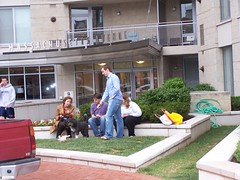
People on the street at 555 Massachusetts Ave. NW
You see people walking dogs on the 400, 500, and 600 blocks of Massachusetts Avenue NW. The Synagogue at 6th and I was renovated and people who aren't homeless even use the park across the street. Etc.

In the last 7 years. BID legislation. I favor BIDs although I think they should use the "Main Street model," focus more attention on the development of independent business, and add citizen members to the boards appointed outside of the BID-controlled nominating process because fundamentally these organizations are privatizing public spaces. (Pretty much, BIDs are controlled by property owners and they will only invest in the public realm and amenities to the extant the marginal return is revenue positive.) But in any case they are keeping the public spaces clean and they are contributing to marked improvements in public safety in those areas.

In the last 30 years or so? Historic preservation laws and the neighborhood preservation movement, which stabilized neighborhoods in the face of continued disinvestment in cities generally, and this city specifically. DC wouldn't be a place worth living in today if it hadn't been for the historic preservation movement. (DC's preservation laws are some of the strongest in the country although they were gamed more in the Barry mayoralty.)

The flipside of the strong neighborhood preservation movement has been an overfocusing of the preservation movement, away from Downtown and citywide issues. As a result, in the 1980s mostly, most of the historic buildings in downtown Washington were demolished in favor of boxy superbuildings on what became the equivalent of superblocks. People-based rhythms at the street level were destroyed. And memory has been erased.

In the last 5 years or so? The kind of mixed-use development happening in the 14th and U Street corridors. Many of the developers in that area seem to understand the fundamental importance of (and greater economic returns from) urbanity. Specific companies are Donatelli & Klein (the Ellington building) and Abdo Development. I hear good things about Jair Lynch too. We'll see. Of course, landing Whole Foods helped, so Carol Felix and the other people who organized this successful campaign deserve a big chunk of credit too.

Key priming action: 9:30 Club moving over to WUST Music Hall in the early 1990s. Frankly that communicated to many long before much else happened, that the area was going to improve. The then owner of the 9:30 Club, Cellar Door Productions, was well-respected, a nationally recognized player in the industry, and this communicated to investors that the U Street area would be a good place to start investing in. (And no, Reeves Center didn't do much of anything to improve this area. And it still doesn't.)

Some of the retail in that area is particularly good, some of the only places in the city with newly developing interesting independent retail, including Muleh, Garden District, Urban Essentials, Busboys & Poets (more a restaurant cafe than a bookstore but still cool as hell), Pulp, and some of those restaurants. Cake Love is a publicity phenomenon, but the product could be better.

And lest we forget, the Studio Theater staked out the area first, in the 1970s. More arts and culture uses came. And music--The Black Cat, and of course, I still miss the Metro Cafe (it's the last place I saw "Dead Girls and Other Stories"--whatever happened to that band?--I lost my CD!).

In the last 5 years, the infill NY Avenue Metro Station, which is pushing forward a needed transformation of the area north of Union Station. Already this station has had major impact on neighborhoods and a minimum increase in property value of $450 million just for the neighborhood immediately east. OTOH, it does put tremendous pressure on the Florida Market, as I have written about.

In the last 5 years, creation of an independent DC Department of Transportation with a greater focus on transportation, mobility, and the public realm and streetscape beyond the automobile. The developing success of Barracks Row (8th Street SE) is a perfect example of this. The initiative to bring back streetcars also derives from this change (or at least broadening) of mission. And Thomas Circle!

Thomas Circle (in the middle) before
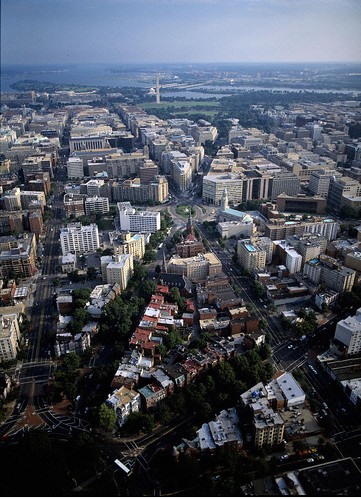
Thomas Circle in the middle
Advertising and commercial use are prohibited. Photo by Jason Hawkes for the Washington, DC Convention & Tourism Corporation (WCTC).

Thomas Circle after (rendering, but it looks pretty close, the dedication ceremony was a couple months ago...)
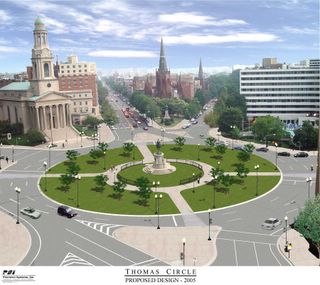
Thomas Circle Reconstruction, Washington, DC

I don't know exactly when, but not converting Eastern Market into a food court. It took awhile, and the fortuitous addition of a crafts market on the weekends further pushed forward transformation, but today the vibrance of the Eastern Market area of Capitol Hill makes the neighborhood a weekend destination for residents and visitors. The businesses on 7th Street are open on weekends now, and a Marvelous Market just opened, while at the other end of the street Port City Java opened in the summer. Now if you could get rid of the Washington Mutual mortgage office across the street (how was that use variance ever approved?) and replace it with Trader Joes, get Bread and Chocolate to stay open in the evening, fix the Eastern Market Metro Plaza, and figure out what to do with Hine Junior High School, the area will get even better.

In the last 10 years, the revitalization of 7th Street NW, the "East End." Many people attribute this to Abe Pollin and the creation of what was originally called the MCI Center, but it's much more complicated than that. The Shakespeare Theater, Jaleo, the galleries on the southern end started the renaissance in the early 1990s long before anybody ever thought that the Washington Bullets could ever come back to the city. But there is no question that the arena brings more people to the area, increased the willingness of suburbanites to sample the city, and changed the risk climate for investors and developers.
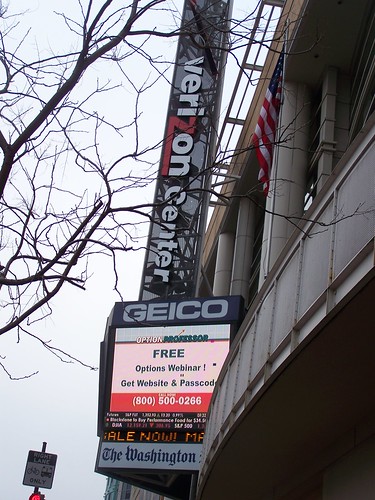
The restoration of many historic buildings by Doug Jemal in particular the west side of the 700 block contributes greatly, even as new denser buildings were constructed in the area. This is the longest stretch of downtown that maintains the historic rhythm of the street (with storefronts every 40 feet or so) for pedestrians, and it's exciting to see the vibrance and activity there, even if I am not about to go to Hooters. Now the Smithsonian Museums have reopened there, the Goethe Institut is there, and for fast food, Five Guys isn't so bad either... Of course, Chinatown has become Gallery Place, and if you're searching for an Asian neighborhood you need to go to Fairfax County. (Turn down the volume on the Verizon Center video screen!)

Remember the foundation of great urban experiences--in a "real" city--is based on walking!

And in the last month, the reopening of the Atlas Theater (which took 5 years). Jane Lang shows what can be done with a helluva lot of effort, gumption, the support of family and friends, and hard work. The Robeys of the H Street Playhouse deserve a good bit of credit for helping to get the Atlas Theater out of the clutches of a community development corporation which had mothballed the building with intentions to demolish, by their leading the "Atlas Theater Project." They ended up not getting the Atlas, but opened their own theater--a few years earlier--just down the street. (Arts uses like this are common augurs of revitalization across the county. But pulling together the financing and making it happen are hard. For every project. And every successful project deserves to be celebrated.) Honorable mention: Avalon Theater Project, and why can't we get Mr. McGinty to not be wacked out and allow the same with the Takoma Theater?

Plus, $%^&*, how did the AFI Theater end up in Silver Spring? I know, Doug Duncan offered them a lot of money to leave Kennedy Center! But imagine if this had happened in the Tivoli Theater or the Howard Theater instead. This would have speeded up revitalization of those areas by 5 years at least. (Of course, back then, DC was broke. It's hard to remember that in the face of today's success and demand for urban living.)

Sometime in the 1980s, the renovation of the Sumner School, on a long term lease with a developer. Rather than sell the property, Richard Hurlbutt of DCPS conceived of a long term lease arrangement where the developer could build an office building on the playground and use the Magruder School, while DCPS would convert Sumner School into a meeting center and archives, with the cost of rehabilitation and ongoing maintenance paid for and conducted by the developer. It's probably why it's the only DC Government facility that is adequately maintained, other than City Hall and the main DC Government buildings--the contractors know who butters their bread there. Lamentably, this pathbreaking example hasn't been used very often to shape other asset dispositions by the city.

In the last maybe 8 years, the Wayfinding signage program pushed forward by Joe Sternlieb and Anne Marie Bairstow, the Downtown BID and others. It took them three years to get the US DOT and other agencies to sign off. But the initial set of signs for downtown has been expanded to include most city neighborhoods, expanded into maps for bus shelters (something that WMATA has since taken up), and the history trails signs (see next entry). Yes, other cities have such programs, but those cities didn't have to convince the federal government to sign off on the creation of the program in the same way as DC.

In the last 8 years, the creation of what is now called CulturalTourismDC by Kathy Smith, to focus on the promotion of local cultural heritage, not just for visitors to the city, but for residents as well. Their activities include the twice yearly Walking Town set of tours around the city, as well as the very successful and important set of history trails (also funded in part by the DC Department of Transportation), guidebooks, and other information, the Call Box art program and other projects. Kathy Smith's book Capital Assets is very important, as was their initial project in the Shaw neighborhoood.

And happening now, the about to be launched bus shelter improvement program. DDOT contracted with Adshel to make this happen. It hasn't happened yet, but they are working on it, hard and it will start happening next year. We will get decent bus shelters (although I personally preferred a different design) that will communicate that transit is valued and important. Shelters will provide places to provide information specific to the neighborhood, commercial district, and possibly public art opportunities. Plus, they will be launching a bikesharing program comparable to carsharing. And the city is using the money paid for this (Adshel will sell ads for the shelters in commercial districts) to fund the Great Streets program (which I hope won't fail, but that's another story...).

In 1988, the reopening of Union Station. What a jewel! A lot of people, not just Daniel Moynihan, worked very hard to make this happen, and people work hard to help keep the station a great place today. Sure it can improve--the public realm outside needs a great deal of love applied. And how the hell did the Commission on Fine Arts approve the ugly parking structure on the back? The old part looks like a prison, the new part like public housing--both are bad! But at least the front of the building (ignore the cars and the jersey barriers) and the interior are fabulous. And at the time, this was one of the largest renovations of a historic train station in the U.S. (Relatedly, in 1991, the opening of an adaptively reused Post Office next door, with the addition of Capitol City Brewing Co. and the National Postal Museum, as well as offices in the rest of the building.)

Honorable mention #1: in the late 1980s, the opening of 800 N. Capitol Street NW, a post- modernist building that took its cues from the GPO Building. It bears some resemblance to the Harold Washington Library in Chicago. It shows decent design is possible outside of the boxy glassed in crap on K Street and Station Place.

Honorable mention #2: changing the laws to allow brewpubs, even if really only Capitol City Brewing Company seems to be making it. (And yes, many other cities have brewpubs, but Cap City has some good products...) Plus speaking of restaurants as destinations, Jaleo, Kramerbooks, Ethiopian restaurants in Adams-Morgan in the 1980s...

Honorable mention #3: Georgetown, Dupont Circle, and Adams-Morgan--vibrant places that made the city attractive during the decades when most center cities, including DC, were for the most part, declining and believed to have no comeback potential within.

Please add your own suggestions and thoughts in the comments...

Index Keywords: ;

Tuesday, March 10, 2009

You can honor people without vastly overstating the facts or going over the top


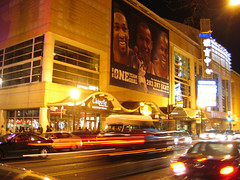
mci center gamenight
Originally uploaded by kmf164

(Flickr image of MCI Center by by kmf164.)

Yes, Verizon Center contributed significantly to the revitalization of the "East End" of Downtown. But it is by no means all due to Abe Pollin, despite the encomium to him in today's Post, "Pollin Has Always Seen the Potential," by sports columnist Mike Wise.

Call the area "Pollin Quarter," after the owner? Please. That's as bad as calling the entertainment part of H Street NE "the Atlas District" or the neighborhood south of Florida "SoFlo" when Florida Avenue is otherwise not a distinguishing characteristic that significantly defines the neighborhood.

One of the reasons that 7th Street NW is successful is that it is the longest stretch of historic buildings remaining extant downtown, that simultaneously maintain the historic rhythm of storefronts.

It also matters that there are other anchors in the area (a/k/a critical mass or layering), especially the Smithsonian Museums.

The Jaleo Restaurant helped revitalize 7th Street NW long before the Verizon Center was on the scene. And since people eat every day you can't understate the significance of this restaurant as well as the other restaurants opened by the same company in the Penn Quarter.

And why is it that most of the retail/restaurant businesses actually located within Verizon Center have failed over the years?

Another problem is that the events are scheduled early, which "encourages" people to go directly to the Arena after work, and not spend money in area restaurants and stores before the game, but instead spend such dollars in the Arena. So the kind of spillover benefits that in the old days could happen in the area around a sports facility (think Wrigleyville in Chicago or the area around Fenley Park in Boston) but doesn't necessarily happen (most baseball and football stadiums) don't happen for the most part, except for events held on Fridays--people will stay out later after the game--or Saturdays--people will stay out later after the game and/or go out beforehand.

I do think that the Verizon Center succeeds in part for reasons similar to how Madison Square Garden is in the heart of the city and well served by transit in New York City.

Outdoor video screen at the Verizon Center
Yes, I admit that the Verizon Center helps bring about "sampling" of the city by suburbanites and others who go to the game.

But the housing in the area, other retail (which largely isn't supported by attendees of events held in Verizon Center), and other attractions also contribute, and they contribute for far more days of the year and far more hours each day than events held inside of "that building."

Not to mention that development would have happened in the East End, to some extent, anyway, because of the elimination of any substantive land inventory available for redevelopment in the rest of the "Downtown."

Also see these past blog entries on the same topic:

-- MCI Arena as a way to re-engage suburbanites (11/2005)
-- Did MCI Center really miraculously improve DC's east end? (12/2005). If you read any of these entries, read this one

-- An interesting look back in time: Transformation in revitalization (9/2006)
-- Layering, location, and business failure as an indicator (12/2006)
-- Linkage + Complexity (11/2007)

One interesting thing about the Washington Times is that it appears as if they have assigned Tim Lemke, who used to report on business issues for the paper, to cover business-related sports issues. His articles are good. The Post needs someone to cover the same kind of beat. Tom Boswell does a decent job with sports-business issues, but he doesn't write about them all that often.

See Lemke's blog, "SportsBiz - Sports Business Commentary - Washington Times." And these articles from the Post, "Verizon Center Ticket Tax to Rise to 10%," "Verizon Center Operator Presents Case for D.C. Aid," and "Verizon Center To Prohibit Fans Bringing in Food."

Enough with the hagiography.
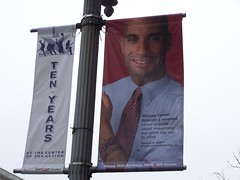
Banners for the Verizon Center anniversary, depicting Mayor Fenty

Labels: , , , , ,

Wednesday, October 30, 2019

New York Times listing of "Top 10" DC restaurants as an opportunity to briefly revisit Richard's Rules for Restaurant-Based Revitalization
Bad Saint restaurant, DC.

"10 Reasons Why Washington Is A Great Restaurant City"

Back when blogs were ascendant, I got a lot of play for "Richard's Rules for Restaurant-Based Revitalization," which listed a set of "rules" for how restaurants can spur revitalization of neighborhood commercial districts, and by extension cities.

I would get interviewed by journalists here and in other cities, to comment about restaurant and community development issues.

The original piece was partly a response to an article in the Philadelphia Inquirer, which discussed the success of neighborhood restaurants.  At that time, 2005, mostly the kind of chef-driven restaurants discussed in the article had zero chance of success in DC.

This restaurant, at 1330 Pennsylvania Avenue SE, has been successful for more than 30 years, although it was an outlier in that it isn't part of bigger commercial district.

At best, "neighborhood-focused" restaurants not too expensive, with decent service, and an accessible menu could succeed, at least in DC, but not chef-driven restaurants, which were more likely to be successful Downtown and in Georgetown.

But even then, not that many people were willing to venture to Downtown, fearing crime.

Chef Jose Andres' Jaleo has been a great exception, going strong since it first opened in 1993, and spawning other branches in Maryland and Virginia, and elsewhere such as Disney World and Las Vegas, commensurate with his growing fame.

I countered that restaurants to be successful needed to focus on developing neighborhood residents as frequent customers eating out at their establishment multiple times per week.

-- "Richard's Rules for Restaurant-Driven Revitalization (updated)," 2005, is the basic piece, with five rules and a list of elements denoting quality restaurants
-- "Revisiting Richard's Rules for Restaurant-Based Revitalization," 2010, discusses a couple restaurants which repositioned away from upscale to more "comfort" food, to better meet the desires of neighborhood consumers
-- "Updating Richard's Rules for Restaurant-Driven Revitalization," 2013, continues to discuss this in the context of commercial retail district development
-- "DC restaurants: location and equilibrium," 2014, ditto.
-- "A note on food halls," 2017
-- "Successful retail today often includes food, experiences, social elements, and isn't rote," 2016
-- "Destination restaurants as a call for revisiting "Richard's Rules for Restaurant-Based Revitalization"," updated this discussion some in line with the city pushing 700,000 residents making it possible to support the outward spread of restaurant creativity beyond regionally-serving restaurant clusters like Downtown and Georgetown.

"Restaurant tourists":  local eater-tourism as an analogue of architourism.  After the success of the Guggenheim Museum Bilbao, there has been a renewed focus on "architourism" as a way to draw visitors to cities ("The museum that changed a whole city: Guggenheim Museum Bilbao turns 20," Die Welt; "Why can't the "Bilbao Effect" be reproduced? | Bilbao as an example of Transformational Projects Action Planning").

Architourism is a phenomenon that dates back centuries, but it's new to cities thinking in more rigorous ways about how to attract tourists in the face of a multitude of competitive destinations.  (Cultural heritage tourism, which I tout often, is a variant.)

While of course, traditional tourists (people who don't live in your area coming to visit and staying/paying for at least a one night stay) are often a source of business for restaurants, we could say that an element of restaurant patronage is "eater-tourism," comprised of in-region residents going out to eat at places in their home metropolitan area, places that are acclaimed by the national media, from Bon Appetit and Food & Wine Magazines, to reviews in the New York Times or features on television shows such as Diners, Drive-ins and Dives or cooking shows featuring name chefs.

-- "The Guy Fieri Effect," Restaurant Hospitality
-- "The Diners, Drive-Ins And Dives Effect," Twin Cities Business Magazine

This is comparable to movies and television shows that feature particular areas or topics, like the movie "Sideways" and its effect on wine tourism ("'Sideways': 10 years later, hit film still makes waves in Santa Ynez Valley economy," KPCC-FM/NPR), or Frances Mayes book Under the Tuscan Sun later made into a movie, which still draws visitors to Italy, Peter Mayle's book, A Year in Provence, etc.

Chef Roy Choi hosts an interesting series on PBS SoCal, "Broken Bread." 

Island Press just released a book I plan to read and review, titled Food Town USA: Seven Unlikely Cities That Are Changing the Way We Eat.

Chef-driven restaurants primarily rely on non-neighborhood residents for patronage.  It's different today, somewhat, but what today's Times article states as a truth, that
"many new restaurants ... are also bringing fresh life to residential neighborhoods, where relatively low overhead enables creative risks".
has a number of caveats. It's not an absolute.

While some neighborhoods are capable of supporting one or two expensive destination restaurants, recognizing that the customer base for these restaurants is mostly derived from non-residents, the demand isn't unlimited, and some concepts probably work better in restaurant districts that are more central and have a larger customer base with positioning that isn't reliant on an individual restaurant "having to do all the marketing themselves."

(In DC, Metrorail access is a key element of the ability of some neighborhoods to draw patrons from outside the immediate area.)

Overspecialization is still risky.  Last year's "An update to Richard's Rules for Restaurant-Based Revitalization on the failure of wine bar restaurants in DC and Baltimore" discusses restaurant location as being one of five types, and the more local the district, the more risky chef-driven and/or specialized concepts.

This piece discusses this problem in terms of wine bars and the reality that during the week, the average person isn't likely to consume a lot of alcohol, so that wine bars etc. become special occasion destinations, which may not be enough to keep a business open.

What happens when the chef is too ambitious? The CityLab  2019 confab of international mayors just held in DC from Sunday to Tuesday featured a session with Chef Kwame Onwuachi, author of Notes from a Young Black Chef: A Memoir and operator of Kith & Kin on The Wharf, which is one of the restaurants highlighted in the Times article.

While I don't think the talk at CityLab 2019 covered restaurant issues in a manner that could provide insight to mayors, e.g.
  • they could have discussed in a focused way the process of financing restaurants
  • the difficulties faced by people of color in owning, launching and maintaining restaurants
  • providing special financing programs for restaurants (and groceries) in under-served neighborhoods
  • restaurants as social enterprise 
  • workforce training programs, e.g., DC's Food Policy Council is preparing reports on the DC Food Economy and a Food Workforce Workforce Development Strategy, etc.
it was an interesting presentation and Chef Onwuachi made me interested enough to want to read his book.

But because I entered the session late, I don't know if they discussed the spectacular failure of his first attempt at a restaurant in the Shaw neighborhood.

Besides setting up unreasonable expectations for what it would achieve, the cost of the meals, etc., Shaw Bijou had a business model that likely was unachievable in a neighborhood setting:

Really high prices and requiring a large amount of customers, likely not from the neighborhood, to fill the seats.

-- "What Happened at the Shaw Bijou?" Eater DC
-- "Chef Kwame Onwuachi Opens Up About the Shaw Bijou and Restaurant Racism in His New Memoir," Washingtonian Magazine
-- "Shaw Bijou, one of D.C.'s most expensive restaurants, has closed after less than three months," Washington Post

A few restaurants in DC manage to pull this off, like Rose's Luxury on 8th Street SE in Capitol Hill. But there isn't enough demand to support a large number of such restaurants across the city.

What happens when the name chef moves on from an acclaimed but neighborhood-based restaurant?  Restaurants featured in the Times piece, like Komi in Dupont Circle and Bad Saint on 11th Street in Columbia Heights, still are run by either the original chef-owners or original owners.

But Himitsu, one of the shining lights in Petworth, has changed its name ("D.C. Favorite Himitsu Will Change Its Name When Its New Chef Debuts," Eater DC) and chef because co-founder Kevin Tien not only moved on, he took his recipes with him ("Himitsu’s Founding Chef Is Leaving the National Standout That Helped Petworth Pop," Easter DC).

Will the new restaurant be able to succeed without a name chef?  If so, one element of repositioning might be to shift more towards serving neighborhood restaurants, rather than "food tourists."  But that means big changes to the menu, price points, and business model.

Practioners often aren't good at generating meta-theory.  One thing I've learned through observation is that practitioners tend to not be good at generating "meta-theory", the lessons and learning they need to be able to duplicate and replicate their success elsewhere and in places with different conditions.

Systematizing the "reproduction" of restaurants.  For restaurants this may matter less, because there is a differentiation between the financing side and the food side.

Able financiers ("Who Is Hilda Staples?," Washingtonian), although they sometimes bet on the wrong horse ("From 'Top Chef' stardom to bankruptcy: The rise and fall of Mike Isabella," Washingtonian) and restaurant groups ("Longtime D.C. restaurant group shifts focus to food halls as it expands beyond region," Washington Business Journal) develop the expertise to replicate success with different concepts and chefs.

Labels: , , , , ,

Monday, August 20, 2007

Why are people so damn good about asking the wrong question? (reprint from 1/23/2006)

----------
In honor of the two EXCELLENT comments to the entry on the Tysons Metrorail extension, see "Disingenuousness about Tysons subway service and aboveground vs. tunnel-based service ," I am reprinting this blog entry. Read the comments. They are very very good.

Also see "It's the (urban) design (compact development, mixed-use, connected, walkable, friendly to all mobility modes) stupid!"
----------
Google Image Result for http--eagle1.american.edu-~cm1916a-photo%20essay-images
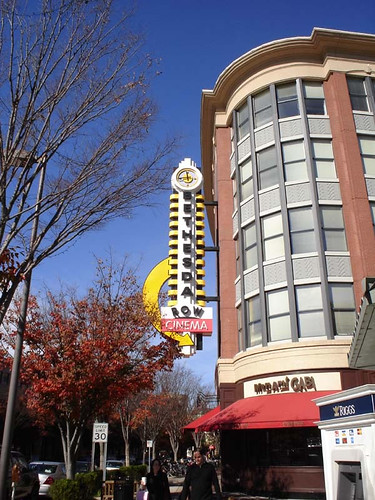
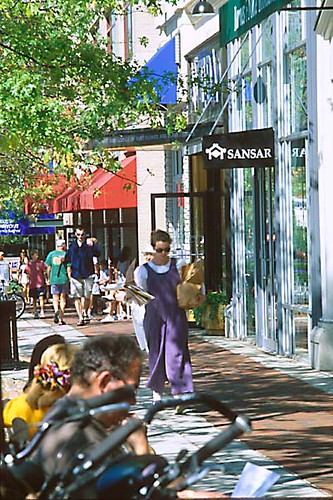
In "New Bethesda," which extends between Bradley Boulevard and Old Georgetown Road a grassy expanse has given way to Bethesda Row, a bustling strip of shops, trendy restaurants and a new movie theater. Photo by Carolyn Murphy. From the AU Student newspaper.

06bethesda.jpg
Bethesda Row. CNU photo.

Today's Examiner has an article and an editorial about the Metro West development in Fairfax. The article, "Senator: Few who live near Metro use it" says that few people in the area around the Vienna station walk to it. (They weigh in with an editorial that says the proposed development is too dense, "MetroWest is too much.")

This is a shock?

Have you ever been to any of the last stops on the various Metro lines?

They are desolate, disgusting places. (Glenmont isn't that desolate compared to the others, but it's not a pedestrian-oriented area in any case.)

I would be terrified to walk to the station. How many people even live nearby? Are there sidewalks and easy ways to get to the station?

But that shouldn't be a surprise, because out there, the stops are more like station stops on a railroad line. There is nothing urban and dense about these places. And they certainly aren't places conducive to fine pedestrian experiences.

At least this makes me feel better, that Virginia, not just DC, has some people as elected officials who aren't that swift... Ironically, the same issue of the Examiner has articles on mixed use development in Maryland, "Moving on up" about Prince George's County, and in Arlington, "Arlington approves condo project." Not everyone is tone deaf I guess.

I don't really want to get in the business of helping Fairfax County become a better place. It's all that we can do to try to make DC a better place. (Of course, we have Tom Davis to deal with too, just like Fairfax County.)

But I think State Senator Davis--Tom Davis' wife-- needs to read the Fairfax County planning report that I found last week, The Vanishing Land: A Plan for Preserving Open Space that was produced in 1962! When you have a development paradigm that is completely sprawl-based, it's going to be tricky "going backwards" and retrofitting appropriate density, at least in the beginning.
Google Image Result for http--www.virginiaplaces.org-graphics-interstate66.jpg.
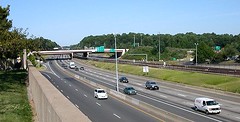
Interstate 66, looking east from Vienna Metro Station. Image from Virginia Places. Not too walkable....

Bethesda Row is a good example for Fairfax, not that it is a perfect example*. Unlike the area around the Vienna Metro Station, Downtown Bethesda has traditional urban design antecedents, but they had been supplanted in many cases, by planning for the car. Bethesda Row, anchored by a Barnes and Noble, movie theaters and popular restaurants like Jaleo, has created a new center for the community (note by the way the very big difference between Bethesda Row and what I think of as very antiquated thinking in terms of the urban renewal oriented projects in Silver Spring). (* the urban conglomeration of Bethesda is more like the City of Falls Church, if Sen. Davis needs an example closer to home.)

Sure people have to drive to it, but once they do, they park in an interior-block parking structure, and get around the area by foot, partaking of the various experiences and the great street.
BethesdaAll.jpg
Image: Cooper Carry. From the Cooper Carry website:

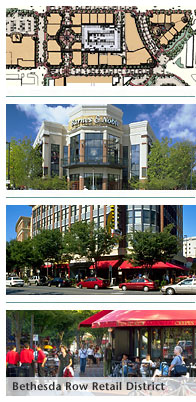
An excellent example of Cooper Carry's ability to bridge the public and private, Bethesda Row has rejuvenated downtown Bethesda, a transition district just outside Washington D.C. Set between a commercial core and several single-family neighborhoods, Cooper Carry undertook the redevelopment of an under-performing six-block district and masterplanned it for retail, office and residential mixed-use developments.

The masterplan was designed around an existing public parking garage. Thanks to a local tax innovation, local businesses pay parking taxes that the county uses to build parking garages and create Business Improvement Districts (BID). This created opportunities to add greater retail and entertainment spaces, including a multiplex arts theater. Two office buildings anchor the Bethesda project. The Jennings building is a single loaded, Class A office space built alongside the parking garage... The Woodmont East office building offers four floors of Class A corporate space over street retail and underground entertainment facilities. The attractive mixed-use environment was an immediate draw for corporate business. A major corporate technology tenant occupies three of the four office floors.


Successfully targeting a mix of local and national retailers and small businesses, the firm achieved its goal of drawing people into the neighborhood who might make it their home, not just their office. The result was the creation of a remarkably pedestrian-friendly environment that attracts people from each neighboring community. Wide sidewalks cut through a tree-lined corridor of outdoor cafes, shops, restaurants, offices, apartments and entertainment venues. The unique urban character of the new buildings mirrors that of the older buildings in Bethesda, and fountains and public art have helped create an inviting pedestrian environment and colorful, bustling center of urban life.
____________________________
Note: this is why I say that DC:

(1) can't afford to rest on its laurels;
(2) needs to focus on what makes cities great, and extend and nurture these competitive advantages (architecture, history, independent retail);
(3) because it doesn't matter that DC does better than Baltimore or Cleveland or Detroit, etc.;
(4) because our primary competitors are Alexandria, Arlington, and Montgomery County;
(5) our local competitors have plenty of developers ready to do pro-urban design pro-placemaking projects;
(6) meanwhile we throw away such opportunities in our own city.

washingtonpost.com.jpg
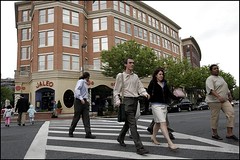
The other end of the complex depicted above. People walking in Bethesda. Washington Post photo by Marvin Joseph.

Labels: , , ,

Friday, November 29, 2013

An old letter of mine in the City Paper

I was searching for something else and found this from 2004. Think of this as a historical viewpoint of the opportunity to develop "an arts district" in the H Street NE neighborhood. I'd call it a nightlife district, but not really an arts district.


Heard on the Street
By Richard Layman • September 10, 2004

Chris Shott (Show & Tell, 8/27) and I probably have a lot in common. We’re card-carrying members of the creative class. We’re smartasses. We have high expectations, and we share the belief that many D.C. government initiatives, including the U Street arts zoning overlay, don’t set very high expectations. Where Shott and I probably disagree is about possibilities, creating great visions, and committing to work to achieve such visions.

Culturally driven urban revitalization is hardly a new phenomenon, even in D.C. We can see it especially along the 7th Street NW corridor from Pennsylvania Avenue past New York Avenue, at establishments such as Olsson’s, the Zenith Gallery, and the Shakespeare Theatre’s Lansburgh Theatre; in attractive neon signs in restaurant windows such as Andale’s and Jaleo’s; up the street to the latest incarnation at Ruppert’s; and in the artist studios in back alleys and loft buildings, many of which are now being lost to the real-estate boom and 21st-century urban clearance.

Even if the city government doesn’t try very hard to achieve best practices in the zoning aspects of cultural development, there’s nothing to prevent the Greater H Street neighborhood from setting high expectations and looking to other models and best practices, most often in other cities, for guidance in creating, setting, and implementing our own agenda.

Programs such as the Creative Alliance @ the Patterson in the Highlandtown Arts District and the wide variety of programs in the Station North Arts District, both in Baltimore; the variety of initiatives and working studios in the Penn Avenue Arts District in Pittsburgh; and the Via Colori street-chalking festival in the Short North Arts District in Columbus, Ohio, provide examples of how an arts district can be far more inventive with storefront spaces than the pharmacies, banks, and auto-parts stores that are allowed under D.C.’s pretty weak zoning overlay. Incentives are key. Baltimore provides a best-practice example with property and other tax-incentive programs that are specifically targeted to arts-related businesses and activities. Not to mention Artscape, a great model for an H Street Arts and Humanities Festival.

As everyone knows, real-estate prices, even in the H Street neighborhood, are pricing out artists. One way to address this problem, and to have greater impact besides, is to expand the idea of an arts district into the neighborhood beyond the commercial corridor. A proposed Negro Leagues Baseball Museum on the 900 block of 12th Street NE is in keeping with this idea. Properties along Florida Avenue such as Jimmy’s Tire provide great opportunities for arts-oriented reuses. So do properties in Trinidad, which for the time being are still cheaper than houses in the neighborhood to the south that more and more real estate agents are branding “SoFlo.” (I, for one, don’t favor that moniker.)

Another way to extend the impact of an arts district, and to leverage the presence of the Language Doctors translation service already present on H Street, is to work to improve the public schools in our greater neighborhood by creating a “cluster schools”–type initiative centered on visual, performing, and media arts, design, and language. This proposal would be comparable to but different from the extant Capitol Hill Cluster Schools or the Spanish-language program at Oyster School. Other neighborhood cultural resources that can contribute to this effort include our neighbor Gallaudet University and the possibility of an expanded community library, which could take on an arts-and-culture orientation.

The idea would be to include Ludlow-Taylor, Wilson, Miner, Gibbs, Wheatley, maybe Webb and Maury, and so forth in this initiative. Wilson Elementary already has a well-regarded French program, and the idea would be to expand this concept to the other schools with languages such as Spanish, Japanese, Arabic, Russian, Chinese, German, and more. This could have the happy benefit of adding a more international dimension to the greater neighborhood. (This is in keeping with the history of the neighborhood, which in its first 75 years mixed African-Americans, Irish, British, Scots, Italians, Germans, Russians, Greeks, and a smattering of Chinese and Japanese.)

Another aspect of the arts district concerns the streetscape, façade improvements, and other aspects of the built environment. First, complementing its successful Expressive Signs Project, the D.C. Commission on the Arts and Humanities is working out a project for artistic redesigns of H Street bus shelters. Second, H Street Main Street has applied to the D.C. Department of Housing and Community Development’s funding programs for H Street façade improvements. Awardees have not yet been announced, but we have our fingers crossed. Third, the D.C. Department of Transportation has planned $30 million of streetscape improvements, with construction anticipated to start sometime in 2006.

Add to this mix the probability of a streetcar/light-rail line connecting all of H Street to Union Station, and then to downtown and Georgetown, which will make getting to H Street much easier for people from throughout the region—giving them one less excuse to skip out on a great performance at the H Street Playhouse or the Atlas Performing Arts Center.

It’s not a stretch to take a chance on the H Street Arts and Humanities Festival. It is an opportunity to shape how people respond to and participate in the arts, both citywide and at the neighborhood level. Check out www.hstreetdc.com/festival if you want to learn more. And I hope that the Washington City Paper will consider taking out a booth.

-----
Interestingly with the last paragraph, that has definitely happened...

Labels: , , , ,

Wednesday, December 20, 2006

Layering, location, and business failure as an indicator

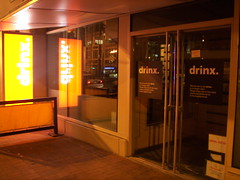
Drinx is closedNo restaurant located in this space, at 6th and F Streets NW, within the now-named Verizon Center, has ever been successful since the Arena opened in 1998.

Speaking of neighborhood blogs, had Gallery Place Living not written about it, I wouldn't have known that Red Sage restaurant is closing this Friday. Even though I did see it in GP Living, because I had happened to walk by last Friday, I did know that Drinx restaurant, located at 6th and F Streets NW within the Verizon Center, closed.

This brings up a couple points.

1. Like the incorrect nostrum that the Reeves Center* at 14th and U Streets NW brought about the improvement in that area, the other similar nostrum is the impact of the now-named Verizon Center on 7th Street NW as the augur of improvement in downtown's East End.
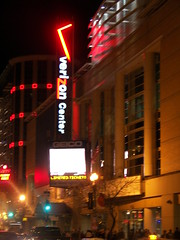
Verizon Center at night
I do think this is an important contribution, but as if not more important:

a. a decrease in the inventory of available developable land in the center and west of the Central Business District;
b. the fact that 7th Street NW from Pennsylvania to New York Avenues has the longest extant stretch of historic buildings;
c. plus ground floor retail that respects the historic rhythm and pacing of the pedestrian;
d. and that there are many other things to do over there as well (a/k/a the layering of multiple attractions-destinations), ranging from coffee shops (3 Starbucks, 1 Juan Valdez Coffee joint), the Shakespeare Theater, one of the most successful restaurants in the city--Jaleo--as well as other hip places such as Matchbox; newly opened Smithsonian museums, a 24 hour drug store, more retail (chains yes, but it's open), etc.

But I will admit that events at the Verizon Center help bring people downtown, especially those people who might not otherwise be willing to sample it (suburbanites).

2. However, because of the way that the sports teams schedule events to start at 7 pm, means that there is little spillover benefit to nearby businesses, because people scoot from work to their seats, without an interim stop at a local restaurant or pub. And because people work early and long hours, people tend to go out to other places in the area after events only on Fridays, Saturdays, and Sundays.
100_4914
3. Frankly, as I always say, and Drinx proves it, if Verizon (née MCI) Center was so great, then the retail wouldn't keep failing. But it does. Because it's high-priced and attempts to draw in people off from the street, when it is the excitement of the street that draws people to 7th Street.
Red Sage is closingUpstairs at the Red Sage.

4. Similarly, the Red Sage, once one of the hottest restaurants in the city, is closing, because they say that can't afford a significant increase in rents.

One of the problems the Red Sage has is it's a bifurcated concept, a fine dining restaurant in the basement, and a more casual dining place upstairs. And because the cost of the buildout was so expensive--ranging from specially cast ironwork for tables and chairs, to buffalo hides for chair and booth coverings, the restaurant needed to gross $10,000/day just to break even!

And downtown isn't as good a restaurant market as you think. The competition is fierce. Luncheon business is great (but for most places only 2 turns, because people don't come out to eat until 12:30 pm), but evening and weekend business can be really bad. Sundays too. And July and August, especially at night, are pathetic. Yet, because it's "downtown" restaurants continue to open there. They fail too. Although this will change as there are more things to do Downtown than just work.

(In fact, I think people like the owners of Cafe Deluxe are pretty smart--own a neighborhood lock, stock, and barrel, like their location in the Cathedral area--and you make tons of money with limited competition. The same goes for the folks at Lauriol Plaza on 18th Street NW in Dupont Circle.)

E.g., last Saturday as I was walking past the old Woodies building, which has signage announcing that West Elm will be opening a store there next year, people just ahead of me commented "We just went to Tyson's Corner to go to West Elm..."

And as DC1974 commented in an earlier thread, Downtown has an advantage over Tyson's and Georgetown in that it is less congested, and if you're on transit, a lot easier to get to and get around.

Still, rents matter, and the cost of buildout matters, and patronage matters. Despite the rent rates that building owners want, DC doesn't have the kind of pedestrian traffic necessary to justify very high rents, even Downtown.

* Back to the Reeves Center. If it were so great:
a. It wouldn't have taken 13-15 years after it was constructed for the neighborhood to improve;
b. The retail within the building wouldn't have gone through many iterations of failure;
c. Buildings across the street wouldn't be sitting on the market, empty, available for rent, for years and years with little activity;
d. There wouldn't be empty lots and used car lots within one block of the Reeves Center;
e. And probably there wouldn't be a McDonald's across the street either.

Index Keywords: ; ;

Saturday, November 18, 2006

Book details art of highrise entertaining

Moving right along on the 300 block of H Street NW
According to the article from the Toronto Star, there's no reason that dwellers of high-rise buildings should be afraid to entertain. From the article:

The season of entertaining is upon us and it's time to start planning a delightfully urbane cocktail party. Many condo owners cringe at the thought of entertaining because of their small kitchens and limited living areas. But Toronto's ultra food and event experts Dinah Koo and Janice Poon only see the positives in a condo party.

In their new book, The Cocktail Chef: Entertaining in Style, (Douglas & McIntyre, 2006, $35), Koo and Poon have worked through the kinks of entertaining in small spaces and created menus and party tips that take advantage of the new highrise urban lifestyle.

They point out when you live in a condo you have a great view and the whole big city is really your backyard. They have included party plans and menus designed for an open kitchen and "loft-o-minimum space," which they suggest the condo host prepare so there is very little last minute cooking.


"That leaves the kitchen open for bartending," says Koo and Poon. "The menu should be made up of fork food served on small plates so guests can stand and mingle." And let's face it — when you live in a small space you don't have lots of seating, so delicious nibbles like prosciutto stuffed with chèvre and walnuts with a balsamic and honey drizzle and pappadum shrimp can thrill your party guests without the mess of a sit-down meal..
400 block of Massachusetts Avenue NW, south side
I think this is something that needs to be taken up by some of the downtown DC blogs such as Gallery Place Living and Life in Mt. Vernon Square.
City Living is Hot and Sexy #3 (Dumont, 4th and Massachusetts Ave. NW, Washington, DC)Who needs Jaleo when you have top floor views?

Index Keywords:

Wednesday, May 24, 2006

Branding the city and the 'hood

One of my nemeses at H Street Main Street came up with this slogan for H Street: "We're over the hump." Did that refer to bad times in the past, or the H Street bridge over the railyard? In any case, as a slogan it needed work.

My own slogan--since dropped I'm sure--was "It's our neighborhood. It's our business." It was oriented to our "internal" market of current customers, residents, and businesses and centered upon my belief that until the people using or in proximity to the H Street Commercial District were active patrons, we had no business trying to market H Street to new market segments. (Kevin Palmer's logo was dropped as well, although the "new" logo is very similar, and modeled after the 500 block of H Street instead of the 400 block of H Street.)

Thinking about Downtown DC, what associations come to mind for you? Here are some of mine:

office buildings, Hechts, Warner Theater, National Theater, 7th Street, Jaleo, Red Sage, the relatively empty Pennsylvania Avenue, proximity to the National Mall, empty streets at night, restaurants.

Please let me know what associations you have. Would you consider the White House part of downtown?

Index Keywords:

Monday, January 23, 2006

Why are people so damn good at asking the wrong questions?

Google Image Result for http--eagle1.american.edu-~cm1916a-photo%20essay-images
In "New Bethesda," which extends between Bradley Boulevard and Old Georgetown Road a grassy expanse has given way to Bethesda Row, a bustling strip of shops, trendy restaurants and a new movie theater. Photo by Carolyn Murphy. From the AU Student newspaper.

06bethesda.jpg
Bethesda Row. CNU photo.

Today's Examiner has an article and an editorial about the Metro West development in Fairfax. The article, "Senator: Few who live near Metro use it" says that few people in the area around the Vienna station walk to it. (They weigh in with an editorial that says the proposed development is too dense, "MetroWest is too much.")

This is a shock?

Have you ever been to any of the last stops on the various Metro lines?

They are desolate, disgusting places. (Glenmont isn't that desolate compared to the others, but it's not a pedestrian-oriented area in any case.)

I would be terrified to walk to the station. How many people even live nearby? Are there sidewalks and easy ways to get to the station?

But that shouldn't be a surprise, because out there, the stops are more like station stops on a railroad line. There is nothing urban and dense about these places. And they certainly aren't places conducive to fine pedestrian experiences.

At least this makes me feel better, that Virginia, not just DC, has some people as elected officials who aren't that swift... Ironically, the same issue of the Examiner has articles on mixed use development in Maryland, "Moving on up" about Prince George's County, and in Arlington, "Arlington approves condo project." Not everyone is tone deaf I guess.

I don't really want to get in the business of helping Fairfax County become a better place. It's all that we can do to try to make DC a better place. (Of course, we have Tom Davis to deal with too, just like Fairfax County.)

But I think State Senator Davis--Tom Davis' wife-- needs to read the Fairfax County planning report that I found last week, The Vanishing Land: A Plan for Preserving Open Space that was produced in 1962! When you have a development paradigm that is completely sprawl-based, it's going to be tricky "going backwards" and retrofitting appropriate density, at least in the beginning.
Google Image Result for http--www.virginiaplaces.org-graphics-interstate66.jpg.
Interstate 66, looking east from Vienna Metro Station. Image from Virginia Places. Not too walkable....

Bethesda Row is a good example for Fairfax, not that it is a perfect example*. Unlike the area around the Vienna Metro Station, Downtown Bethesda has traditional urban design antecedents, but they had been supplanted in many cases, by planning for the car. Bethesda Row anchored by a Barnes and Noble, movie theaters and popular restaurants like Jaleo, has created a new center for the community (note by the way the very big difference between Bethesda Row and what I think of as very antiquated thinking in terms of the urban renewal oriented projects in Silver Spring). (* the urban conglomeration of Bethesda is more like the City of Falls Church, if Sen. Davis needs an example closer to home.)

Sure people have to drive to it, but once they do, they park in an interior-block parking structure, and get around the area by foot, partaking of the various experiences and the great street.
BethesdaAll.jpg
Image: Cooper Carry. From the Cooper Carry website:

An excellent example of Cooper Carry's ability to bridge the public and private, Bethesda Row has rejuvenated downtown Bethesda, a transition district just outside Washington D.C. Set between a commercial core and several single-family neighborhoods, Cooper Carry undertook the redevelopment of an under-performing six-block district and masterplanned it for retail, office and residential mixed-use developments.

The masterplan was designed around an existing public parking garage. Thanks to a local tax innovation, local businesses pay parking taxes that the county uses to build parking garages and create Business Improvement Districts (BID). This created opportunities to add greater retail and entertainment spaces, including a multiplex arts theater. Two office buildings anchor the Bethesda project. The Jennings building is a single loaded, Class A office space built alongside the parking garage... The Woodmont East office building offers four floors of Class A corporate space over street retail and underground entertainment facilities. The attractive mixed-use environment was an immediate draw for corporate business. A major corporate technology tenant occupies three of the four office floors.


Successfully targeting a mix of local and national retailers and small businesses, the firm achieved its goal of drawing people into the neighborhood who might make it their home, not just their office. The result was the creation of a remarkably pedestrian-friendly environment that attracts people from each neighboring community. Wide sidewalks cut through a tree-lined corridor of outdoor cafes, shops, restaurants, offices, apartments and entertainment venues. The unique urban character of the new buildings mirrors that of the older buildings in Bethesda, and fountains and public art have helped create an inviting pedestrian environment and colorful, bustling center of urban life.
____________________________
Note: this is why I say that DC:

(1) can't afford to rest on its laurels;
(2) needs to focus on what makes cities great, and extend and nurture these competitive advantages (architecture, history, independent retail);
(3) because it doesn't matter that DC does better than Baltimore or Cleveland or Detroit, etc.;
(4) because our primary competitors are Alexandria, Arlington, and Montgomery County;
(5) our local competitors have plenty of developers ready to do pro-urban design pro-placemaking projects;
(6) meanwhile we throw away such opportunities in our own city.

washingtonpost.com.jpg
The other end of the complex depicted above. People walking in Bethesda. Washington Post photo by Marvin Joseph.

Labels: ,

Wednesday, December 28, 2005

Mumblings and grumblings

There's far too many things to write about than I have time to do so, so here's a grab bag of some (but only some) of the things bouncing around my brain right now--

1. I don't think my joke that polygamy is going to be legalized because a household now needs three incomes to be able to buy a house would go over too well in Manassas (See the Post article "New Crowding Law Draws Ire" Activists say changes to definition of family, residential limits in Manassas are anti-immigrant.)

2. I guess the belief that DC is a world-class city still hasn't repatterned the thinking of DC elected and appointed officials. (See "Land Sale Possible to Fund Stadium: Development Could Help Cover Project Overruns" from the Post.)

"We are looking to the development community to help," council member Jack Evans (D-Ward 2) said.

Evans and RallShe's no developer! Jack Evans and Marsha Ralls at a party last December. (Kyle Samperton -- Washington Life Magazine).

I laughed out loud when I read that... No wonder so many development projects get off scott free and provide little if any amenities-benefits beyond the minimum required. Help? Tokens are more like it.

3. It's a competitive market in the arts. I found an extensive brochure ("Strathmore News") for Strathmore Hall, the Montgomery County Arts facility, in the Cosi shop on Capitol Hill. It's about 22 miles away from Cosi, and farther away than the Kennedy Center.

4. Sometimes the best help you can get is to help yourself. Instead of looking for developers to help, once it was disclosed that the house was on the market, it took just two weeks for Montgomery County Maryland to commit to buy the house and the attached slave quarters cabin that was the home of Josiah Henson, the man whom Harriet Beecher Stowe used as a model for the Uncle Tom character in her 1852 novel on slavery, Uncle Tom's Cabin. (See the AP story "3BR, $1 Million. Plus: Uncle Tom's Cabin.")

Exterior, Uncle Tom's Cabin, Montgomery County, MarylandMatt Houston/Associated Press. Greg Mallet-Prevost's family is selling their house, whose attached cabin, an old slave quarters, was made famous by Harriet Beecher Stowe.

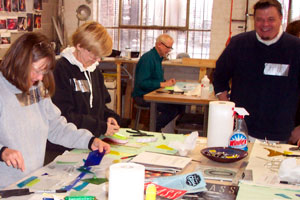
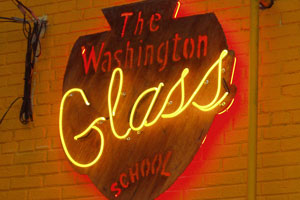
Meanwhile, two important foundations of the DC arts community, the Washington Sculpture Center and the Washington Glass School are being displaced by the new baseball stadium. This has been known for 16+ months. *The Glass School is now moving to Arlington County, and who knows what will happen with the Washington Sculpture Center. In either case, when the time came to make things happen, DC did not. (See "D.C. Seizes 16 Owners' Property for Stadium.")

*Note: I was unsuccessful in attempts to lure the Glass School to Brookland, Ivy City, or the H Street neighborhood. But we tried... Part of the difficulty: (1) their need for steady 800 volt electric current requires a dedicated electric transformer that Pepco charges $80,000 for, including installation; and (2) because the Glass School isn't really profitmaking, they can't afford rents much higher than $10/square foot. These constraints tend to require "subsidy," meaning municipal involvement and support. There wasn't any...

me-stadiumPatricia Ghiglino's art studio is on the site of a planned baseball stadium. To stay near the stadium would cost her hundreds of dollars more a square foot than she would receive from the sale, she said. (By Gerald Martineau - The Washington Post)

Washington Glass SchoolWashington Glass School.
Washington Glass School

5. In "Between the Holidays, a City Basks in Sunlit Silence," Will Haygood writes in the Post about how the city center is relatively empty in the week between the holidays. Except for 7th Street NW, and why is a matter of contention (MCI Center vs. pedestrian-centricity, impact of Jaleo, etc.) this is what downtown looks like already, at night and most weekends.

ST-EMPTYCITYA worker sweeps up on Pennsylvania Avenue yesterday, when much of the city was still on holiday. (By Michael Robinson Chavez -- The Washington Post)

6. In a letter to the editor today, the Vice Mayor of Purcellville, Virginia writes that "local leaders should manage growth." Without urban growth boundaries and mandated state planning, like in Oregon, it is the rare public official that can hold his/her ground when a developer offers to "help." (See "City as a Growth Machine: Toward a Political Economy of Place" by Harvey Molotch.)

dress_barn.jpgDress Barn and similar chain stores are being enticed into the District of Columbia with the lure of tax increment financing, see "D.C. to consider incentives for discount retail in NE," from the Washington Business Journal.

Kelo House, New London, ConnecticutThe home of Susette Kelo is shown in the Fort Trumbull section of New London Conn., in the Tuesday, Feb. 8, 2005 file photo. Kelo is one of several property owners in the area refusing to sell or leave their properties to make way for additional development. Alarmed by the prospect of local governments seizing homes and turning the property over to developers, lawmakers in at least half the states are rushing to blunt June's U.S. Supreme Court ruling expanding the power of eminent domain. (AP Photo/Jack Sauer)

Proposed Inter-County Connector, Maryland Suburbs of DCMany developers are happy to help develop the vacant and underutilized properties along the route of the now likely to be built Inter-County Connector Toll Road between upper Montgomery County and Prince Georges County Maryland. Washington Post graphic.

Index Keywords: