Rebuilding Place in the Urban Space

"A community’s physical form, rather than its land uses, is its most intrinsic and enduring characteristic." [Katz, EPA] This blog focuses on place and placemaking and all that makes it work--historic preservation, urban design, transportation, asset-based community development, arts & cultural development, commercial district revitalization, tourism & destination development, and quality of life advocacy--along with doses of civic engagement and good governance watchdogging.

Thursday, June 02, 2011

Ground up (guerrilla) art #1: Artung ad attack, Montreal

In Montreal, public space activists and artists executed an "art attack" on advertising kiosks in the public space, replacing the ads with images. The project, called Artung, is in part a response to advertising companies suing one of the city's borough governments, Plateau-Mont Royal, for banning the ad kiosks (45 in all) from their streets. (FWIW, this borough has the most number of members in the Bixi system there, and the most progressive local government political party, Projet Montreal, has the majority of seats and control of the borough government.)

From "ARTUNG! TURNS 200 MONTREAL ADS INTO WORKS OF ART" of the This is not an ad collective:

100 ad pillars and billboards across Montreal, owned by Pattison, CBS Outdoor and Astral Media were replaced today with community artwork. Artwork was created by 200 Canadian and International artists and installed by fifty public space activists operating under the name Artung!.

“Today, we transformed Montreal's outdoor ads into public works of art to send a message to advertising giants: to stop threatening residents of the Plateau with an unnecessary legal battle and immediately remove their visual pollution from the whole of Montreal’s cityscape,” said Vanessa Moraless, an Artung! campaigner.

Artung!'s action comes in response to threats made by Montreal's advertising giants to take the democratically elected Plateau Mont-Royal council to court for a November 2010 decision to ban 45 billboards in the borough. Jeannot Lefebvre, the industry spokesperson, argues the ban goes against the advertising companies’ right to freedom of expression and they'll legally pursue it until it is reversed.

According to Projet Montreal, each billboard only generates $1,000 in taxes for the city, an insignificant amount of revenue compared to profits made by these multi-national outdoor advertisers. Artung! supports the borough's decision to take action against billboards and the 78% of residents of the Plateau who favoured the ban.

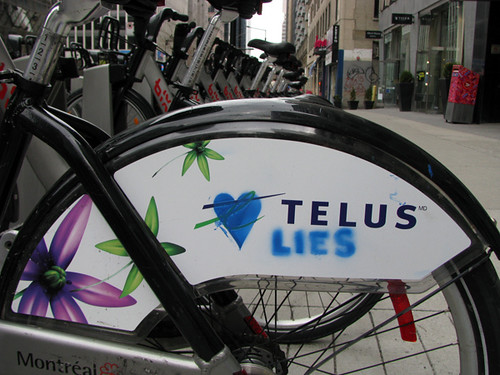
Erkin reminds us that Montreal activists, unnamed, also challenged Montreal Bixi's inclusion of sponsorship identification (advertising) on the bikes (and docks) upon this season's reintroduction of the city's bike sharing system. See "Bixi: from source of pride to target of vandals" from the Montreal Gazette and "Bixi ad backlash" from Spacing Montreal--the latter has a series of photographs of various graffiti attacks on the sponsorship identifications, illustrating a wide variety of messages and ideas that as the author of the piece says "have provided a new, mobile space for Montrealers to spread messages and/or express their creativity."
Bixi sponsorship ad backlash
Bixi sponsorship and vandalism, Montreal. Image from Spacing Montreal.

I'm of two minds about this. I understand why people are upset with "commodification of the public space" and the constant intrusion and escalation of the presence of advertising in more and more spaces in our lives.

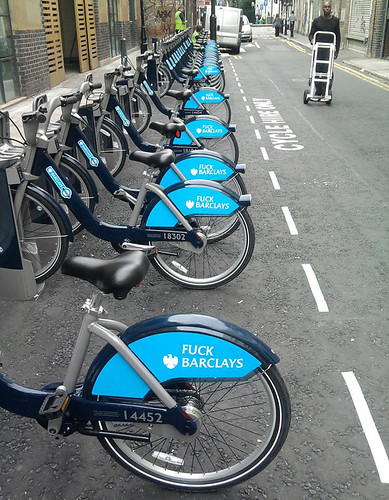
At the same time, part of my business is trying to sell bicycle sharing systems, and that involves, often, the sales of sponsorships and advertising (in fact, I want a map-advertising kiosk with two slots for advertising, not one, to be able to generate more revenue because the systems cost a lot of money to operate). E.g., while we didn't win the bid for the Chattanooga system, we lined up a commitment from a major banking corporation operating in the Southeastern U.S. to sponsor the system... of course, after we saw the first foray against ad sponsorship blocks on bikeshare bikes in London, we've had to add enhanced "graffiti" response plans to our operating programs...
Anti-Barclay protest stickers on bicycle sharing bikes, London

Labels: , , , ,

Tuesday, January 19, 2010

At best, National Harbor is equivalent to a shopping mall

So the claims about the inspiration behind its design being Las Ramblas in Barcelona seem a bit specious.
100_0522.JPG
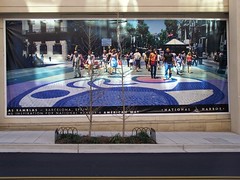
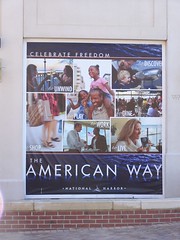
Large storefront sized banners are displayed on storefronts that haven't yet been leased out at National Harbor. This one compares National Harbor to Las Ramblas in Barcelona.

Finally went to National Harbor yesterday. Granted, in the winter there are many fewer people walking around, they aren't on the water so much, and there are few outdoor special events. (Although I imagine it was hopping during the special ice exhibit; "'Ice!' exhibit at National Harbor" from the Post.)

But it felt uncomfortable. Very little there isn't processed--chain restaurants, chain retail, and corporate stores like Peeps. And I can't imagine that any of the art galleries sell much art.
100_0528.JPG
Make sure you follow the rules when you're at National Harbor. (Although to be fair, comparable rules are in place at shopping centers too.)

Afterwards we went to Alexandria, and the contrast was striking. Alexandria is far more interesting. Interestingly, because National Harbor is close to Alexandria and relatively "far" from the core of Washington, the information displays for tourist information, at least in the hotel, are the same ones used in Alexandria, and for the most part, feature attractions in that city, not DC.

National Harbor, which is marketed as being "Washington, DC" has absolutely nothing related to DC, other than the Potomac River location and the old Awakening sculpture that was at Hains Point. Eventually, it will have DC's Children's Museum too--the museum, after having received tens of millions of dollars of support from DC Government, decamped a few years ago.
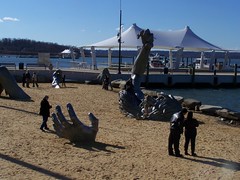
100_0493.JPG
The Awakening sculpture on the Potomac River at National Harbor.

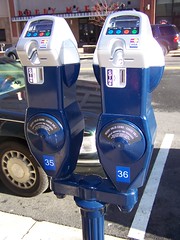
I did like how the parking meters (the complex has tons of parking structures, a couple hotels, and a time share "resort" building) have credit card readers built in.
100_0519.JPG

The commodification and reworking of the normal "National Experience" obtained by visiting to "Washington, DC" to better understand American Government, to instead promote the base sale of goods and service as "celebrating freedom" is pathetic but hardly surprising.
100_0501.JPG
A banner promoting consumerism as the high point of "the American Way." American Way is also the name of "the main street" in the complex.

This visit reinforced my earlier statements that Disney, opening a resort hotel at National Harbor, is doing no favors to DC (despite claims to the contrary by DC tourism officials). It's strictly a move to capture a share of the money people would normally spend traveling to and visiting DC.

Like how the Gaylord Convention Center cross markets the National Harbor property to convention clients that have stayed in their other properties such as in Nashville, like Disney will heavily market their "Prince George's shopping mall is really Washington, DC" location to customers who have visited their other properties, to divert these clients from staying in competitor locations, and spending their money at places like Marriott-branded hotels instead of lining the Disney pockets.
------------
The Las Ramblas comparison is "funny" because that place as an inspiration for National Harbor was suggested in a column in the Washington Post in 2005. The column inspired the following entry: (Why aren't people) Learning from Jane Jacobs, and later this one as a follow up: (Why aren't people) Learning from Jane Jacobs revisited.

This is a reprint of the first entry------------------------------

Michele Dyson is a (once or twice monthly) columnist for the Washington Post, writing about Maryland issues for the back page of the Outlook section. Last Sunday's paper had the column "National Harbor: Think Small to Make It Special," about the gargantuan development coming to Prince George's County along the Potomac River. From her piece:

National Harbor is the largest private investment in the history of Maryland. In essence, it's a $2 billion wager that carries enormous risk. Much of the county's economic future is at stake, along with Peterson's reputation and money. Peterson has said that National Harbor will be his version of Las Ramblas, the grand pedestrian walkway near Barcelona's port district. But Barcelona is Spain's second-largest city. It hosted the 1992 Olympics, and its port is one of the most important in Europe. Along Las Ramblas, a visitor encounters artists, a huge opera house, fabulous food, a red-light district and an open-air pet market. Does this sound like Prince George's County? (...)

Peterson built projects all over the region, but mostly in Northern Virginia. His office park, residential and mixed-use projects have been standard suburban fare -- office buildings off major highways, apartments, condos, townhouses, single-family homes and maybe a church or two. His big-box stores, gas stations and chain restaurants have come accompanied by the inevitable giant slap of a parking lot.


Peterson has built a lot of these cookie-cutter developments, and not much distinguishes one from another. That is until recently. Peterson's work in the revitalized area of downtown Silver Spring has residents and businesses speaking in glowing terms.(**) And his National Harbor model gives reassuring evidence that the prime riverfront property just might be in the right hands. The elaborate 8-by-10-foot model generates excitement.

But if National Harbor is to become a favored destination, like San Francisco's North Beach or Miami Beach's South Beach, it will have to generate a large base of loyal local regulars. It also will need out-of towners who are willing to make a special trip there. People make special trips because they enjoy the ambience and unique qualities of an area. Toward that end, National Harbor should forgo strip mall cuisine. If we are what we eat, National Harbor will be what it serves. Forget Starbucks and ESPN Zone, and think San Francisco's Cafe Trieste and our own Vienna Inn.

Neighborhood vitality and verve can be as long-lived as New York's Greenwich Village or as newly minted as Richmond's Carytown. These places flourish because their status as celebrated destinations helps recruit artisans, artists and small businesses. These in turn plant roots, take risks and build the kinds of enterprises that further enrich the physical setting. National Harbor can do no less. Chain stores won't fill its streets, but an outstanding assortment of accomplished small businesses might.
______
** (Actually I think that the "revitalization" of Silver Spring is no different from traditional urban renewal. It's not pedestrian friendly, and small businesses are losing out, so much so that Montgomery County is suggesting that additional incentives be provided to small businesses to preserve them.)

carytown3
Carytown photo by Steve Pinkus.

Like Ms. Dyson, I like Greenwich Village and Carytown in Richmond. In fact, Carytown is one of the more interesting commercial districts in the region--one that I've written about before. Yesterday's Richmond Times-Dispatch happened to have an interesting article on Carytown, entitled "Carytown: Where Change is Constant," about the ebb and flow of the retail businesses there.

And it included an incredibly important statistic--the average retail rent/square foot--In 1990, Carytown commercial rent was $10 a square foot. It's now about $18 to $20 a square foot.

National Harbor will be all new construction, meaning that prevailing rents will need to be a minimum of $60/sq. ft., and probably much higher (upwards of $120/sq. ft.). This makes it almost impossible to attract small businesses without serious subsidy.

One of the particularly grotesque aspects of the Inner Harbor in Baltimore is how, other than a couple local seafood restaurants like Phillips, it is now all chains--from ESPN Zone to California Pizza Kitchen. National chains, attracted by the large number of people-customers, have crowded out local businesses.

Sure the U.S.S. Constitution offers authenticity, but the Inner Harbor is for and about tourists, with little in the way of other authentic experiences.

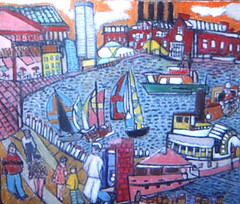
Baltimore.InnerHarbor.jpg
Would that Inner Harbor really looked like this. Title: Inner Harbor Media: Oil on Canvas, 1998. Size: 25" x 30, not framed. By Sy Mohr.

The rent statistic is interesting in another way. Even in "marginal" commercial districts in DC, such as H Street or Brookland, the floor of asking prices for rent is probably greater than $20/sq. ft. And these are for commercial districts far less successful than Carytown. This is why we need to be much more purposive in developing and incubating independent businesses.

One of the four rostrums from Jane Jacob's Death and Life of Great American Cities is the need for "a large stock of old buildings." This isn't because she is a preservationist, but because old buildings have lower carrying costs, particularly debt service, and this allows for the incubation of new businesses--retail, office, and other (it's part of the Richard Florida equation supporting the development of creative businesses).

This gets back to the point I make over and over again--the rule of thumb from the Main Street Approach is that a retail business pays 4%-10% of its annual revenues in rent (restaurants can and do pay slightly more). Figure it out backwards from what businesses can reasonably generate in revenues... yet the asking price for commercial buildings, asking prices for rent, and often the property tax assessments are completely out of whack compared to the revenue stream that successful businesses are likely to be able to generate.

This is why salon shops are dominant in many of the neighborhood commercial district, because they have a customer base that returns again and again, and the average transaction is high (a woman can easily spend $50-$150 getting her hair done) in comparison to the average retail business.

I agree that many of the retail businesses in our commercial districts are marginal, but they need help both to improve to be able to sell more, and the commercial districts need to improve more as well, in order to be able to draw greater numbers of patrons.
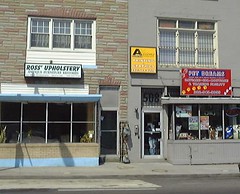
hstreetsign2
The place next store is available for rent! 500 block of H Street. Photo by Michael Berman.

Las Ramblas is a real city built up over centuries. When you build a development all at once, you can't have the ebb and flow of innovation, because high rents are the one uniform condition of such development.
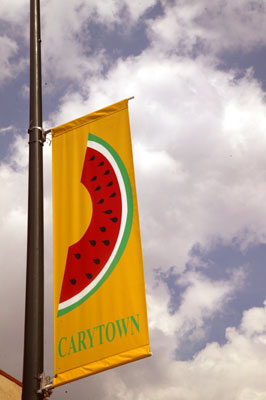
carytownbanner
The Carytown Watermelon Festival is a big street festival involving many of the merchants on the street. It's scheduled for Sunday August 10th.

Speaking of rents, last Wednesday's New York Times had an article, "Columbus Ave. Distances Itself From Broadway," comparing Columbus Avenue to Broadway, and how "more personal unique" chains are locating on Columbus vs. the big chains (Barnes and Noble, etc.) on Broadway. The retail rents on Columbus Avenue average $180/sq. foot. That means that for a 2,000 sf. space, the store needs to generate at least $3.6 million in annual sales...

[Added 7/2008, also see the New York Times article, "Offering Big Spaces, Amsterdam Avenue Is Catching More Retailers."]

------------
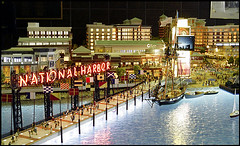
In order to ensure some taste of the center city, National Harbor ought to build and install a model of Washington, DC or some of the monuments and attractions and put it in a window for people to gawk at, just as people were gawking at the model of National Harbor installed in a vacant storefront window on "Fleet Street."
PH2005072201530.jpg
Photo: Preston Keres/The Washington Post. County unveils a $400,000 model of what the National Harbor project will look like.

Labels: , , , ,

Tuesday, March 31, 2009

Fundamental changes in behavior vs. "recycling"

The issue of bags at stores is more about waste and how we use resources than it is about recycling. Sure we can recycle bags, but better to not use either a paper (which is worse for the environment than plastic, see the third page of this article "The Green Issue - Climate Change - Environment - Energy Efficiency" from the New York Times Sunday Magazine) or a plastic (which uses up that limited natural resource, oil) bag at all.

Better to use a bag or backpack that you already have, one that will last for many years. Of course, you have to remember to carry such bags. (There are small rollup bags you can carry that when you open them up they can be quite big.) And this can be a problem if you are on foot or bicycle and don't have bags "in your car" and for whatever reason you don't have a bag.

But in the end, it's no big deal, and it's probably not even worth writing a letter to the editor of the Washington Post about. Now, Corinne Smeriglio of DC did write a letter (as did Andy Shallal of Busboys and Poets, in favor), see "Paper, Plastic -- and a Price" and in it she betrayed that she doesn't understand that this isn't about "recycling" bags but about how we use resources more generally. From the letter:

Sure, politicians like to posture as friends of the environment. But wouldn't more be accomplished by expanding existing recycling programs? The D.C. government should work to raise awareness of these programs and to partner with local businesses. Regular community cleanups are another opportunity to boost recycling.

The fact is, people need bags when they shop. And considering that the recession is causing hardships for so many people, now is not the time to increase consumers' costs. The District should find a better way to ensure a clean environment.

As the U.S. moves from an economy built on using more (what I call an extensive use of resources) and on waste to a more parsimonious and efficient economy (what I call an intensive use of resources), not using bags when you don't have to is one of the many small changes in every day behavior that people will have to make.

Note to Ken, no I still don't have panniers on my bicycle. So when I buy groceries and carry them home, eventually the bag straps tear and break (I often use those bags you pick up at festivals, they're pretty cheap).

In Baltimore at this cool store called Red Tree in Hampden, Suzanne found an amazing bag made out of recycled tire tubes. Sure it was $52, but it will likely never break. Unlike those bags from Trader Joes...
-----------------------------
David writes:

I suspect that Corinne Smeriglio is not writing as a concerned citizen but as an industry rep with an interest to protect. I've been googling and haven't found the connection. She seems to work at Venturehouse.

I don't see
a young white zeta tau alpha sister being particularly concerned about the poor having to pay a nickel for a bag.

The Washington Post consciously posts letters to the editor by industry insiders without noting their financial interest in the matter.

Labels: , , ,

Sunday, December 14, 2008

Chaining up of the city's "regional" commercial districts

---------
Update: another blog, Georgetown Metropolitan, has a related entry, "Baby’s Got Me Wrapped Up in Chains." I would aver that chains are most likely to be in the largest spaces, in Class A vs. Class B or C spaces, be more central--within 2-3 blocks of the Wisconsin Avenue and M Street intersection, and have significantly higher sales/square foot (not that we are privy to that info).

The GM blog is doing good work by actually going out and surveying all the businesses, and making assessments and calculations as a result.
---------

Today's Post has a column by Marc Fisher about chaining up in Georgetown. It's been happening for a long time, and in part has been pushed by Anthony Lanier, who has worked at acquiring properties and converting the tenants to national chains, which as the column, "This Is How Georgetown Goes Generic," points out, pay higher rents, and tend to be more stable and less risky tenants.
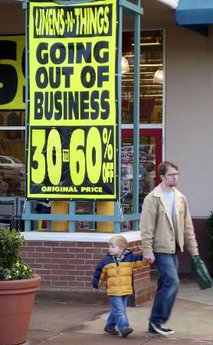
Linens n Things bankruptcy
Not every retail chain is successful, and even some of the stores attracted by Anthony Lanier have gone out of business. This image: Customers walk past a store advertising a going out of business sale in Fair Oaks, Virginia on Black Friday November 28, 2008. Shoppers turned up early for holiday sales at U.S. stores on Friday, but the annual pilgrimage appeared thinner this year and many consumers vowed to spend less due to a shrinking economy. REUTERS/Larry Downing (UNITED STATES)

I have written quite a bit about this, and have a Powerpoint presentation on this and various advantages that chains possess vis-a-vis locally owned stores. It's really about Georgetown's place in the regional retail landscape and the impact of touristification on the district as a destination focused on visitors, not residents.

Some of the entries on the topic include:

-- The hot real estate market Downtown and Georgetown
-- Speaking of flawed tax assessment policies: Warehouse Next Door to Close
-- Speaking of touristification
-- (Even) More about urban commercial district revitalization
-- The real estate market replicates commodity, not community
-- The grass being greener... (about Clarendon in Arlington, Virginia)
-- Clarendon (Arlington Virginia);
-- Dupont Circle's changing retail environment covered in today's Post

Ironically, a couple years ago, I was contacted by a Portuguese journalist doing a story on Anthony Lanier, who apparently has business interests in Portugal. And ironically/2, I am not against the idea of tax incentives being provided to him in order to land Nordstrom as a tenant in Georgetown Park Mall, to serve as an additional anchor and destination shopping attraction within the Georgetown commercial district--which competes not just within DC but within the regional retail landscape.

Here's the tricky question: we want successful commercial districts don't we? And these districts compete with other shopping districts across the region (i.e, Friendship Heights, Tysons Corner Shopping Center, Tysons Galleria, Montgomery Mall, Silver Spring, National Harbor, etc.)?

And we need to look at shopping districts in the city in a more nuanced fashion because not every neighborhood commercial district has the customer base able to support a full array of shopping choices. Therefore the commercial districts break out as a set of primary (regional) and secondary shopping districts supporting variably sized retail trade areas.

Georgetown and Friendship Heights (Mazza Gallery, Lord & Taylor, other shops, plus the stores across the border in Maryland including Saks and Bloomingdales) are the primary upper tier regional commercial districts in DC.

Downtown is developing that way, but is really dependent on what happens with the Old Convention Center site. The consolidation of Macys makes landing another anchor there very difficult (Nordstroms doesn't appear to be interested). Columbia Heights is developing as a mid-tier regional shopping district (Target, Bed, Bath & Beyond, etc.).

I was thinking about these issues yesterday and "shop local" because I went to Georgetown yesterday to get some gift stuff and spent more of my money in unique shops that are in fact chains: Urban Outfitters and Anthropologie (both owned by the same company). And so I was thinking about buying "local" spending money and sales tax revenues in the city vs. spending money at locally owned stores. In the long run locally owned stores recirculate far more money in the local economy. This is the difference between economic development and "building a local economy" and why it's not enough to just work on attracting chains to center city commercial districts.

But in honor of today's column, I am reprinting this one from 2006, which is particularly appropo given that this is the shopping season, and yesterday's Post reports that retailers are selling, in "Holiday Shoppers Rally for Retailers":

Is there a link between historic designation and chaining up of retail in neighborhood commercial districts?
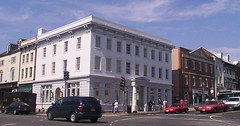
Wisconsin and M Street NW
Benetton, in the old National Bank of Washington Building at Wisconsin and M Streets NW, Georgetown. Another corner building at this intersection is occupied by Banana Republic. Photo by
Dan Malouff.

Catherine Magoulas, a student at Cornell, writes:

I have a question about the effect of historic preservation in Georgetown and its effect on the transformation of family owned businesses to corporate owned businesses. I was just wondering whether or not historic preservation itself is the cause/to blame for this movement. Any help on the matter would be greatly appreciated!

Richard Layman responds:

In my opinion, the answer is no. The transformation of the businesses in Georgetown results from as many as five different but interlocking trends.

1. The general dissolution of the independent retail business sector in the U.S. as the scale of stores and enterprise and nature of ownership within all sectors of the retail industry has changed significantly since 1950. A major piece of the change has been the consolidation of many regional and/or national chains into a handful of national chains, although in the past two decades the retail industry has been marked by the creation of large "big box" "category-killer" enterprises focused on a particular retail sector such as Home Depot in building materials and Staples in office supplies.

(This larger trend is illustrated by Macy's Department Stores, originally based in the NYC and SF regions, Two years ago it amalgamated a few hundred regional department stores into Macy's as the beginning of refashioning the company into a true national brand. This has been further accelerated by the acquisition of May Department Stores and the rebadging this year of independent regional chains such as Hecht's [East Coast], May Company [Missouri, Illinois], Marshall Fields [Illinois, Michigan, Minnesota, Wisconsin, Ohio] and others as Macy's branches far outside of the original NYC and SF regional footprint. This process has been going on for decades. E.g., in the early 1980s NJ and Brooklyn stores--Bamberger's and Abraham & Strauss respectively, were merged into Macy's, as were Boston's Jordan Marsh stores, as well as others.)

Change in retail has been massively accelerated by suburban outmigration. In the past forty years the amount of per capita retail space has grown by 400%, mostly at the expense of extant commercial space in the center city.

Cities that experienced decline, but not necessarily massive population decreases, such as the boroughs of Manhattan, Brooklyn, Queens, and Staten Island in New York City, and places like Portland, Seattle, and Boston, were able to maintain more than a subsistence level of local retail and so today have a thriving, albeit competitive and ever-pressed, independent retail sector, which is now able to grow in response to demographic trends favoring urban living, because the social, networking, and economic infrastructure supporting independent retail never withered away in those communities.

IMO, within the last two decades Washington, DC has been a particularly excellent example of these broad trends of decline for both locally-owned independent stores as well as what were at one time substantial regional chains--companies like Raleighs, W&L, Hecht's, Britches, Ginns, Jacobs-Gardner, Lunch Box, Hot Shoppes have been either dissolved or merged into other larger businesses.

2. The trend of the scaling up in size and geographic reach of various retail enterprises and their location into large, even massive privately owned shopping centers for shopping-exclusive activities in a controlled environment,* has been complemented by the creation of a national and global commercial property market, with national and international corporations participating as developers and financiers.

(* If the original question was broader, not focused on Georgetown, then there would be six points, rather than five, and this point about the creation of single-owner developed shopping centers would be separated out as a unique trend. It's less relevant to the specifics of Georgetown, although I have written before about Georgetown Park and its relative failure as a "shopping mall," because it attempts to draw in customers off from "the street," into their controlled mall environment, when it is the life and vitality on the street that is Georgetown's greatest attraction.)

This trend has resulted from the same material circumstances that shaped the scale and nature of the retail industry.

National/International real estate companies seek national/international retail tenants, with the assistance of regional and national real estate brokers. Anthony Lanier's development operation in Georgetown is a perfect example of this (cf. the bankruptcy of the tenant Hollis & Knight in the "furniture-design" subdistrict created by Lanier interests), and his deliberate and successful seeking of national-international tenants such as Pottery Barn and others, which has come at the expense of locally-owned businesses, including even the Georgetown Seafood Restaurant owned by a local restaurant chain. (So much for a restaurant in Georgetown linked to the history of the community as a port town created decades before the District of Columbia was even formed...)

To learn more about Anthony Lanier, see

-- What does Anthony Lanier think it will take to revitalize Georgetown as a shopping district? Simple: It will take a village;
-- My Kind of Town: Don't blink. You might miss Anthony Lanier's next big move in his kingdom of Georgetown; and
-- Developer Infuses Historic Properties With Commerce" from the New York Times.

This process of reproducing the local retail environment into a national and international market with national and international retail chains as tenants is multiplied many times over by other developers in this city and elsewhere. (In malls and other shopping centers, something similar happens in the types of stores presented because the companies negotiate master national leasing agreements covering multiple locations.)
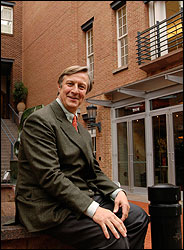
001
Carol T. Powers for The New York Times. Anthony M. Lanier, a Washington developer, has transformed Cady's Alley into a shopping area with a European flavor.


With regard to the points in (1) and (2) above, I had an article about this although oriented to Dupont Circle, in the January Intowner, which is available online.

This is further exacerbated by changes in the financing industry and the ability of developers to "factor" (get financing based on) the leases of "credit" (national chains and/or franchises) tenants. Banks won't make loans on the leaseholds of independent businesses.
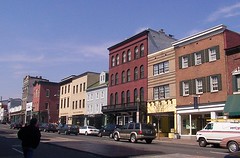
M Street Georgetown
M Street in Georgetown has national chains such as Barnes & Noble, Johnny Rockets, Steve Madden, Smith & Hawken, Pottery Barn, Body Shop, Urban Outfitters, Ralph Lauren, Haagen Dazs, as well as prominent regional chains such as Dean & DeLuca. Photo by
Dan Malouff.

3. Related to (2) is the impact of the DC property tax assessment model for commercial property, which treats neighborhood commercial districts the same way that properties are treated in the Central Business District (Downtown). Additionally, the property tax assessment methodology doesn't consider the use of the property, but merely the size of the lot, improvements, and the maximum development potential under zoning regualtions.

This further "produces" the DC real estate market into a national and international market, because the historic and/or eligible for designation properties in neighborhood commercial districts are not valued on the basis of their small floorplate and smaller retail trade area, but as if they are the same types of properties as those that typify the large office buildings in the Central Business District.

This results in seeming anomalies as the Takoma Theater being valued as if it could become condominiums, and ignoring the fact that the configuration and design of the building thoroughly shapes how this building can be used.

I testified about this before City Council twice (once extemporaneously when I serendipitously figured out this problem on the fly in response to a question by Councilmember Brown) and wrote about it in these blog entries:

-- Testimony -- Historic Neighborhood Retail Business Property Tax Relief Act;
-- Globalization of the DC real estate market catches neighborhood commercial districts up in the wake; and for the very first time in this blog entry from last year;
-- Displacement of retail businesses through increasing property tax assessments.

4. Probably the most significant aspect of Georgetown which has fundamentally changed the retail offer (or business mix) is touristification. Places like Charleston, Annapolis, Times Square in NYC, and Alexandria illustrate the same problem, and it is discussed in such tomes as The Tourist City by Judd and Fainstein. As the mix of customers has changed, the retail business mix has changed in response. Sometimes this is referred to as "Disneyfication." (See the syllabus for this course, "Tourism and Globalization," for relevant references.)

5. Finally, the Claremont Institute makes an interesting argument in one of their recent newsletters about the perhaps excessive regulatory "regime" in large cities. The cost of responding to and understanding various regulations is expensive, and this favors chains which can afford to (a.) hire commercial real estate brokers to represent them; (b.) develop in-house expertise to manage the process of dealing with regulatory agencies; and (c.) have the financial werewithal to withstand the regulatory process.

Bill McLeod of Barracks Row Main Street argues that it takes at least 18 months for an independent retail-restaurant business to open in DC, which is at least 6 months longer than in the suburbs. Eating rent and other opportunity costs for an extra 6 months or more is especially difficult for more lightly capitalized enterprises. (See this blog entry "It's hard to open retail businesses in the District of Columbia" -- -- for a link to the Claremont Institute article.)
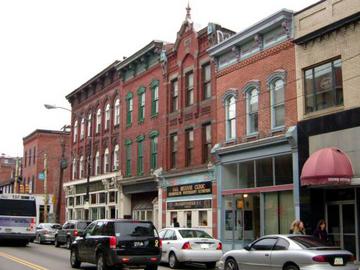
East Carson Street, Pittsburgh
East Carson Street, Pittsburgh. This
commercial district is in a "weak" real estate market and thrives today, 20 years after being selected as one of the first five pilot programs to test the Main Street model in the urban setting. Pittsburgh is the site for the 2006 annual meeting for the National Trust for Historic Preservation. Photo: Project for Public Spaces.

Actually, historic preservation, especially through the Main Street commercial district revitalization program of the National Trust for Historic Preservation, is probably the best general assistance tool for the preservation of locally owned businesses in neighborhood, town, and downtown commercial districts.

What historic preservation-based urban revitalization strategies do is provide a way to expand the customer base from beyond the immediate neighborhood or city. This is necessary because for the most part center city business districts have been supplanted by regional shopping centers that draw upon much larger retail trade areas. However, this is controversial because many residents believe serving the neighborhood should be the primary goal. Yet this ignores the difficult economics presented by micro-sized trade areas--not enough revenue and customer base to support unique offerings (this is discussed in greater detail in "(Why aren't people) Learning from Jane Jacobs").

The trick is to manage this process in such a way that authenticity is maintained rather than diminished. Georgetown has already lost this battle, partly because property owners such as Anthony Lanier have a deliberate strategy to "re"produce the retail mix towards a different demographic, and also because when people visit Washington, Georgetown is the primary tourist destination after people have finished their visits to landmarks and museums. (17 million+ people visit Washington each year.)

Because visitors to Georgetown comprise more than 50% of the customer demographic, rather than residents living within a 3-5 mile radius, the retail and restaurant business mix has been reshaped to meet the needs of visitors. Because the size of the visitor segment is so massive, it has overwhelmed the ability of authentic businesses and experiences to present viable business models in the face of rent and other pressures.
001
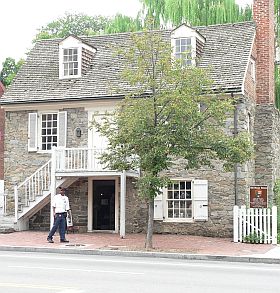
Old Stone House, Georgetown
. This building, the oldest extant in Georgetown, is out-of-place in a community where the sense of place provided by architecture and history has been supplanted by the experience of Georgetown as a place to shop or play, irrespective of historic elements.


Finally, Georgetown is further stressed by its prominence as one of the city's leading evening entertainment destinations (although places like U Street and Adams-Morgan are now seen as more hip). For the most part, Georgetown's residents don't typically "consume" this aspect of the commercial district's retail offer. Georgetown's verve started with the Kennedys living in Georgetown back in the 1950s..., but the trend continues. See "Bush Twins turn Spotlight on Bar" for one small example of this.

001
Michael Nagle for The New York Times. WINNER'S CIRCLE Young Republicans at an afterparty at Smith Point, a bar in Georgetown, on Inauguration Night. From "
Bush Twins Aside, the Party's Here."

001
Charles Ommanney / Contact for Newsweek. Smith Point: Center of D.C.’s preppy nightlife. From "
Jesus and Jack Daniel's In search of the Bush cultural footprint on the capital: a visit to the hot church and the hot bar," Newsweek. (This article provides good insight into how spaces are "reproduced" to reflect new conditions.)

The reality is that Georgetown has become a regional commercial district-destination, and its retail offer has changed to reflect this. That is the overall trend that encompasses all the others, and is unrelated to the fact that the neighborhood has been designated as a historic district. (Although I suppose it can be argued that the attractiveness of Georgetown to broader customer segments has resulted in part from the preservation of the historic architecture and urban design that contributes to the distinctive sense of place that Georgetown possesses.)

One of the factors this changes is the prevailing rents, which climb to a point that prices out neighborhood-serving businesses, because such businesses generate reduced revenue compared to businesses selling higher priced items to a larger customer base. Also see this blog entry from January, which comments on the "displacement" of art galleries from Georgetown: "Authenticizing Inner Harbor and maybe thinking about authenticity and Georgetown DC."

The current "battleground" over commercial authenticity is 14th and U Streets. This reviving commercial district has seen the addition of a number of chains, but at the same time this area is becoming the center of the city's local retail entrepreneurialism.

Compare this to the somewhat anemic commercial offer in the Greater Capitol Hill area because of the relatively light population density, and the limited attraction to non-area residents (with the exception of the Eastern Market district on weekends), which has meant that the area isn't overly attractive to chains (Starbucks, CVS, Quiznos) although more are coming (Dunkin' Donuts, Harris-Teeter). But this means that most retail remains independently-owned, however, the number of retail categories represented is quite limited.

For other resources on some of these issues, highly recommended is the article "Main Street at 15," by Kennedy Smith, and published in 1995 in the National Trust's Forum Journal. Also, Cities: Back from the Edge by Roberta Gratz is particularly excellent about this general point of preserving local business sectors as a fundamental part of historic preservation-based urban revitalization methods. (Also see Community Economic Development Handbook by Temali, and maybe Organizing for Community-Controlled Development published by Sage.)
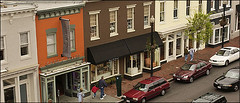
002
Carol T. Powers for The New York Times. Historic buildings along M Street in Washington that had fallen into disrepair have been rehabilitated and turned into elegant shops. See "Developer Infuses Historic Properties With Commerce" for a larger version of this photo.


With regard to thinking about historic preservation, perhaps we should ponder the lyrics to a song by Eric Clapton:

It's in the way that you use it,
It comes and it goes.
It's in the way that you use it,
Boy don't you know.

And if you lie you will lose it,
Feelings will show.
So don't you ever abuse it,
Don't let it go.

Developers like Anthony Lanier "use" historic preservation in a fundamentally different fashion from the East Carson Main Street program in Pittsburgh. And in many respects, this comes down to the exchange value of place versus the use value of place. (See Urban Fortunes: A Political Economy of Place by Logan and Molotch.)

To repeat something I say all the time: the elements of DC's competitive advantage are architecture, urban design, and history. Any time public policy or the practices of private developers diminishes the value of these elements, the competitive advantage of the center city also diminishes.

Labels: , , , ,

Monday, September 22, 2008

That pesky real estate financing market

In the past I have written about the real estate market in the Central Business District being one of national and international actors--financiers and developers both--rather than strictly a local market. This poses a problem for neighborhood business districts, because for the most part, the commercial property tax assessment methodology treats commercial properties in neighborhoods more like downtown buildings. Since assessments are high, local retailers and other businesses get crowded out, such as the Warehouse Theater, which closed down, across from the Convention Center.

Now that the national-international real estate market is having extreme financial distress, it is affecting some of the "local" players in the industry. Today's Washington Post reports, in "D.C. Deals Relied On Lehman Funding: Bank Was Monument's Main Financing Source ," about how Monument Realty, which has relied on the now bankrupt Lehman Brothers organization, for the bulk of its financing, and how Archstone-Smith, another company with some issues, is a key player in the redevelopment of the Old Convention Center site.

The New York Times also reported on Lehman Brothers' aggressive participation in real estate deals across the country, in "Risky Real Estate Deals Helped Doom Lehman."

Likely, the real estate market downtown is going to slow as well, even though DC has been one of the strongest commercial real estate markets in the world. (The height limit reduces overall inventory, making the market pretty stable, with high demand, high prices, and quality returns.)

Still, there is some resistance (unless you're the DC government, see "Heavy Traffic Cited As Concern in Move For Housing Agency" from the Post) to paying downtown rents in areas that aren't in downtown and lacking in amenities. See "Though Developers Built It, The Tenants Did Not Come" (and the announcement of the building here, "Next Up: the Baseball Stadium") and "NoMa Gets Gentrified, Now Waits For Tenants: Lean Times Make Area a Tougher Sell" from the Post.

Labels: , , ,

Monday, August 25, 2008

Market development vs. market disconnect

I didn't adequately explain "market development" in the earlier entry on cultural tourism. I won't go into it in great length. Suffice to say that market development is the process you have to go through to get people to buy your product. At that if what you are trying to sell is much different than what the reality is, or norms, you have to go to great and expensive lengths to convince potential customers of this.

An example is selling high-end arts products to low income demographics, or the value of a neighborhood shopping district as it is, rather than what it wants to be, or the local history value of DC vis-a-vis the world-wide attractiveness of the monuments and Smithsonian Museums and the National Gallery.

Another example of market disconnect is Whole Foods Markets trying to sell themselves to customers as a low cost option in supermarketing. I hate shopping there because it's so expensive. I prefer Giant, ethnic markets like PanAm International, or of course the Florida Market. Even DC area farmers markets seem very expensive compared to the Waverly Saturday Market or Baltimore Farmers Market in Baltimore. As long as Whole Foods sells cilantro for $1.68/bunch and it isn't organic--70 cents more than Giant, and $1.18 more than PanAm or the Florida Market, there is no way that they can claim that they are a low cost producer. Get over it. Market what you are. See "Grocers hype bargains to thrifty public" from the Baltimore Sun.

Now if you are trying to change your position in the marketplace, i.e. a commercial district like H Street NE, that's one thing. You change your position by adding new destinations attractive to your target audiences. Whole Foods isn't gonna start changing their product mix to compete with Shoppers Food Warehouse.

Labels: ,

Friday, August 01, 2008

Wasteful consumption

I wonder from time to time about the fact that commercial district revitalization revolves around (in part) stoking the ability to meet the demand for unneeded stuff, as alluded to in this article, "New Linens-N-Shit Opens," from The Onion.

Labels: ,

Thursday, July 17, 2008

burbtalk

I think it's fair to say that everybody wants the same thing--nice places to live--but we disagree on (1) what it means to be a nice place and (2) how to get there, meaning driving vs. other modes.

Just Up the Pike disagrees with my characterization of Silver Spring as a commodified urban renewal like place in "still sick: how to grow an old town in no time," discussing how people hang and do things and that it is an active vibrant place (yes, even I went to one of the open air AFI films a few weeks ago, although we left after awhile because we were bored).

And the automobile centric paradigm that marks the suburbs is another point on which we disagree. Generally, the distances between places in suburbs like Montgomery County make transit, walking, and bicycling time inefficient, although there can be exceptions, places within the broad region that are walkable communities (parts of Silver Spring, Wheaton, Rockville, and Bethesda qualify, among others).

Yes I think places like Bethesda Row and the new Rockville Town Center are well done (no photos to upload, but I checked it out a wee bit a few weeks ago, including the library) they just seem so antiseptic, corporate and commodified. But how can we expect people to not favor such environments, when for the most part, that's all they know (some time, watch George Lucas' first film, THX-1138 and think about its architecture--a mix of malls and airport terminals)?

Maryland Politics Watch, in "Wheaton: Ready, Aim, Aim, Aim," and Just Up the Pike, in "panel recommends town square, library move for downtown wheaton," cover the latest redevelopment planning exercise for Wheaton. These kinds of reports are always useful to read, regardless of the community they address. And if you read the report or skim the entries, it's clear that these planners also say the same kinds of things that I'd say or Dan would.

Also see these reports from the Urban Land Institute:

-- Reinventing Suburban Business Districts
--
Reinventing America's Suburban Strips
-- Ten Steps for Developing Successful Town Centers
-- Ten Steps for Rethinking the Mall

and the city version:

-- Ten Steps for Rebuilding Neighborhood Retail.

Also see my take on places like Silver Spring in "Lifestyle Centers vs. Traditional Commercial Districts: Imitation, Authenticity and the Public Realm" from the Smart Growth Around America newsletter (12/2006).

Labels: , , , ,

Monday, June 30, 2008

Commodification of graffiti

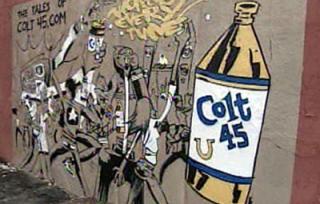
is nothing new. Pabst Brewing takes it to a new level in Philadelphia. (Almost 20 years ago I worked on a video called "Marketing Booze to Blacks," produced by the Center for Science in the Public Interest.) See "Residents object to malt liquor wall murals," from Denver's NBC-TV station.
Malt liquor billboard mural
NBC image.

More and more I appreciate the academic viewpoint of cultural studies, despite its being derided in many corners. The political economic/cultural/Marxist framework for understanding capitalism in all its aspects makes a lot of sense.

Labels: , ,

Sunday, December 09, 2007

!!!! #1 and #2

from the San Francisco Chronicle:

-- A Kids' Club For All Ages. From the article:

At the Peekadoodle Kidsclub, little Jonnie can get a haircut while sitting in a barber chair fashioned like a shiny red Mercedes at the same time Mom breaks a sweat in her yoga class down the hall. Afterward, while Jonnie learns how to clean and sprinkle spinach over a pizza in his cooking class, Mom can grab a latte at the cafe and hit the Wi-Fi-equipped business center to get some work done.

Of course, Jonnie's family must have a Peekadoodle membership - which starts at $2,000 annually - and he can't be any older than 5, the club's age limit. But once in, the family is privy to all the services offered in the 10,000-square-foot building: the padded playground with the replica Golden Gate Bridge and Victorian homes, the hip clothing store for kids, the adult fitness gym and the partially organic dining hall. The toddler development courses in cooking, music and photography cost extra (the 12-week pizza-making class, for example, is $500).

-- Culture Of Murder. Good article about street culture and death by murder in Oakland, California. The article provides the same kind of description as that in Code of the Street or Streetwise, both by Elijah Anderson.

Labels: , ,