Rebuilding Place in the Urban Space

"A community’s physical form, rather than its land uses, is its most intrinsic and enduring characteristic." [Katz, EPA] This blog focuses on place and placemaking and all that makes it work--historic preservation, urban design, transportation, asset-based community development, arts & cultural development, commercial district revitalization, tourism & destination development, and quality of life advocacy--along with doses of civic engagement and good governance watchdogging.

Friday, August 21, 2026

Factors undergirding the decline of economic clusters

Having the throne doesn't make your firm impregnable.  One of my lines is that once McDonalds made it to the top of the fast food restaurant industry, they were always going to lose market share as the segment was vulnerable to niche operators and new business models.  

They're still the King, but always on the defense.  It's difficult to come up with huge breakthroughs that maintain preeminence in the face of constant competition.

Agglomeration economics.  Business clustering, or agglomeration economies, occurs because a firm develops in a place for particular circumstances--access to resources, capital, transportation efficiency, etc.--and as the economic segment develops, support businesses, financing, and other firms are created, strengthening the place as the center of that industry.

But over time, other places compete for pieces of that industry, diminishing the strengthen and preeminence of the original cluster.  This is abetted by how older firms have higher costs, such as pensions and wages, because of a more mature workforce, etc.

There are a couple of good articles about this.  

Washington, DC as a center for business around government.  One is in Greater Greater Washington, "DC has officially lost over 83,000 jobs. The reality is even worse," about Washington DC's economic decline, which results from three things: (1) work from home as a response to covid meant people left the city for cheaper places to live while retaining their high "in Washington DC" incomes, shrinking the local economy and the demand for housing; (2) federal government shrinkage; and (3) decline in international business and tourism.

This is abetted by what is called the multiplier effect, how each direct job supports indirect jobs either within that industry, or in consumption related jobs.  So the 22,000 jobs cut by the federal government has a total effect of 66,000 to 88,000 lost jobs.

DC's competitive advantages.  When I first got involved in revitalization 25 years ago, I identified what I believed were DC's primary competitive advantages.

These were, before covid and work from home, the city's competitive advantages.  WRT the federal government, the city also has to contend with the disinvestment agenda of the Republican party, including relocation of agencies to other parts of the county.

  1. The steady employment engine of the federal government.
  2. Historic residential, commercial, and civic architecture
  3. Historicity (the nexus of people and place)
  4. Walking City Urban Design.
  5. Transit Network allowing for mobility without automobile dependence

Foremost was the steady employment engine of the federal government, even though long before the Trump Administration, other states and Congressmembers cherry picked agencies for their communities, like West Virginia at the behest of Senator Robert Byrd, a bunch of agencies are in Maryland, etc.  

Wholesale dismantling of agencies and bureaus like the Agency for International Development or the Department of Education both reduce the capacity of government to perform--which supports the neoliberal principle that government is less effective than market-based solutions--and the employment advantages to DC.

Just as bad, both Trump Administrations have moved agencies out of the city as a stratagem to reduce government capacity and employment, in moves like placing the USDA Economic Research Service in Kansas City or BLM to Grand Junction, Colorado--a majority of the extant employees didn't move. 

This is happening with the Forest Service division of USDA, which is consolidating, firing people, and moving its headquarters to Utah--a state at the center of fighting for the sale of public lands or their use for mining, oil production, etc., rather than for conservation.

The destruction of the US Agency for International Development wiped out the "international organization and contractor" economic cluster.  Etc.

Hollywood: LA and film and television production.  Los Angeles became the center of film production because it had a lot more sun than most places, which meant filming was rarely interrupted by negative weather.  But even Greater LA couldn't "stand in" for all environments, which led to Vancouver, British Columbia becoming an alternative.

And like McDonald's, Hollywood, the King of media production, always was vulnerable to losing elements of its business environment.  More and more places began offering tax incentives and other inducements that California didn't think it needed to provide.  To the point where the loss of business was substantial and too far along to reverse.

The LA Times covers this in "How L.A. stopped being Hollywood’s leading star."  From the article:

Film activity in the L.A. region plummeted in the second quarter of this year, with shoot days for feature films and TV productions falling 20% and 30%, respectively, compared with already anemic levels from a year ago, according to FilmLA.

The fallout has been devastating for local film crews and businesses. L.A.’s signature industry has shed some 57,000 jobs in the past four years, while more than 80 film and television production services businesses have closed since 2022. The production crisis has even become a political flashpoint alongside affordability, crime and homelessness in the race for mayor and governor.

The story of how L.A. steadily lost much of its homegrown industry to other locales is a tale of hubris, escalating costs, political inaction and fierce competition from states and countries hungry for a piece of the Hollywood pie. California eventually adopted a very limited film tax credit plan in 2009, but even then production had already gone elsewhere.

Additional lessons: changes in production and technology are "earthquakes" in industry tradition that support industry shake up and relocation.

-- "Next Level Clustering of Business away from the Midwest" (2022)

Emerging versus mature markets.  There are many ways to look at how to assess vulnerability.  One is the Alexander Gerschenkron thesis of "the economic advantages of backwardness."  His point is that established economies have vast investments in maintaining legacy systems of production.  While emerging economies can adopt the latest technologies without having to strand billions of dollars in previous investments.

The perfect example is China and electric cars.  Its automobile industry was nascent and did focus on traditional technology at first.  But as the new technologies of EVs were developed, just on the basis of the size of its market, it was well positioned to be a first mover in the field.  This was probably furthered because China isn't a large oil producer and therefore centering its car industry on alternatives to the internal combustion engine had other benefits of reducing demand and dependence on oil for transportation.

New technologies within industries.  This is an issue within industries as well.  The US automobile industry is a good example as the development of electric cars has allowed new entrants, although Tesla is the only real successful firm in the car market.  The truck sector, the most profitable for the old Big 3, faces competition from new entrants like Rivian.  But even so, because the US automobile market is so mature, with demand for "only" a few million vehicles per year, it can't compete with China.  

Film and video is another example.  Not only was Hollywood vulnerable to other states angling for a piece of the production pie, but as the industry atomized and vastly expanded from four main broadcast channels to hundreds, and then from centralized to decentralized distribution such as through streaming via the Internet IT infrastructure.

Now the big companies are all Internet based--Netflix, based in the SF Bay as is Apple, and Amazon, using its Prime platform as a media delivery system, is based in Seattle.  The traditional firms keep merging, and none seems to have the heft to make video streaming content profitable, unlike Netflix.

Centralized versus decentralized distribution.  This repeats from above.  Video media is a primary example.  But its enabled by the Internet and its massive "back of the house" information technology infrastructure.

It's comparable to the difference between "big iron" more centralized computing as typified by Boston and Route 128 businesses like Data General versus the microcomputer oriented Silicon Valley.  This is discussed by AnnaLee Saxenian in Regional Advantage: Culture and Competition in Silicon Valley and Route 128 (review).

Which has also spawned "cloud computing," although the foundations of such systems, starting with ADP payroll processing, are quite old. Amazon and Microsoft make a majority of their profits from cloud computing services--which is also driving the demand for data centers.

The Internet as a platform has similarly made direct distribution, complemented by extensive package delivery systems, much cheaper than before, allowing companies to sell products directly to customers with minimal transaction costs.

Previously, wholesale and large scale retail stores were the primary distribution points for goods, because this minimized transaction costs for the producer and the customer.

Electricity is now proving vulnerable to decentralized delivery through the adoption of solar energy systems and distributed energy resources (batteries) at the point of individual households and businesses ("Are plug-in DERs going to spark a grid revolution?," Volts).

New versus old companies and legacy cost structures.  New companies have the advantage of small workforces earning less money and benefits than established companies.

High fixed costs, e.g., for the automobile industry pensions and insurance for current and retired workers, make it harder to take risks.  

Marketing's Five Ps: Product, Price, Place, Promotion, and People.  There's a maxim in business: your choice of price, quality, or speed of delivery, pick any two.  The 5 Ps are the shorthand for how products have been developed and promoted.  Changes in the conditions of any of those Ps provide a space for business opportunities to develop, threatening existing agglomeration economies of various business segments.

Source: Corporate Finance Institute.

For example, place means where a product is sold, but also how it gets there.  Cheap gas and the highway network trumped railroads.  Before railroads, many industries developed across the country, such as stove production, because the cost of transporting heavy items was so high.

Promotion no longer means the newspaper or broadcast television, but all sorts of digital media.  This has made Facebook and Google the largest sellers of advertising, supplanting traditional firms.  And social media--yes there are paid influencers--mean businesses and products can get great exposure without payment of any kind.

Labels: , , , , ,

Wednesday, December 11, 2024

The town (or place) that art saved(?): arts as revitalization versus arts as community building

I suppose there is a book out there, modelled after The Town that Food Saved, about the arts.  The issue I have been attuned to going on 20 years is revitalization focused arts programming versus what I call arts as community building.  

The way of specifying the difference is a program versus a one off activity creating a mural, etc.  It's not that the latter isn't important, but it isn't a program with objectives, and it's the program that makes a difference in revitalization (Developing and Advancing a Cultural District Tools: Resources, and Templates for Creating a Successful Cultural District, Americans for the Arts)

Another way to think about this is sustained efforts ("Building the arts and culture ecosystem in DC: Part One, sustained efforts vs. one-off or short term initiatives," 2015).  My entry on arts districts and arts as consumption versus arts as production is about this kind of approach ("Reprinting with a slight update, "Arts, culture districts and revitalization"," originally 2009, revised 2019).  The entry discusses arts as production versus arts as consumption, relying on the writings of John Montgomery, the components of arts districts, and facilities as infrastructure.

Or from Urban Regime theory:

An urban regime can be preliminarily defined as the informal arrangements through which a locality is governed (Stone 1989). Because governance is about sustained efforts, it is important to think in agenda terms rather than about stand-alone issues. By agenda I mean the set of challenges which policy makers accord priority. A concern with agendas takes us away from focusing on short-term controversies and instead directs attention to continuing efforts and the level of weight they carry in the political life of a community. Rather than treating issues as if they are disconnected, a governance perspective calls for considering how any given issue fits into a flow of decisions and actions. This approach enlarges the scope of what is being analyzed, looking at the forest not a particular tree here or there. [emphasis added, in this paragraph and below] ...

By looking closely at the policy role of business leaders and how their position in the civic structure of a community enabled that role, he identified connections between Atlanta's governing coalition and the resources it brought to bear, and on to the scheme of cooperation that made this informal system work. In his own way, Hunter had identified the key elements in an urban regime – governing coalitionagendaresources, and mode of cooperation. These elements could be brought into the next debate about analyzing local politics, a debate about structural determinism.

So much about the arts in community and revitalization is the lack of a program.  Also see: 

-- "Gaps in Parks Master Planning: Part Five | Planning for Public Art as an element of park facilities"
-- "Gaps in Parks Master Planning, Part Six | Art(s) in the Park(s) as a comprehensive program "

Murals as community building: Philadelphia.  Can murals be a gateway to a more developed revitalization program?  Philadelphia is known for their mural arts program, which is massive ("Philadelphia's Mural Arts program will bring expertise, funding to Detroit," Detroit Free Press).  

But while it contributes to neighborhood stabilization and gets people involved, does it truly harvest the interests and needs of the community in terms of improvement of the local micro-economy?

I think it comes down to most artists involved in such programs not being interested in revitalization.  Often, city arts functions are part of the "economic development" cluster of city agencies.  But I'm not sure good the average arts council is on these functions either.  If, and that's a big if, cities want to achieve revitalization objectives from mural projects too, they're going to have to plan for it.  For example, Arts Councils probably need to add some economic development planners.

Springfield Missouri Museum of Art.  Somehow I came across a program by the museum which had community members go through the collection, especially items in storage and create exhibits of their reactions.  Again, I think this is community building. nd building awareness and interest in the institution and the community ("House of Art(s) to open at the Springfield Art Museum," Springfield News-Leader), "Drury Students to help with De-Installation of Springfield Art Museum Exhibit," Ozarks First, "Space as event as ouevre," Gerard Nadeau).  But that isn't revitalization, and again ikely that's not a goal of the museum.  From the first article:

In collaboration with Drury University's Art of Space, led by assistant professor Gerard Nadeau, the museum is erecting the outdoor House of Art(s) on the northwest corner of the museum's grounds. 

 Sarah Buhr, the museum's curator of art, says the project has been in the works for months and is funded with money from Missouri Arts Council grants. Buhr says the idea for the outdoor exhibit was born after members of Art of Space visited the museum. "We gave them a small tour of our storage spaces in our collection and a challenge: Think of a project that would connect with the interior of the museum from the outside," she says. 

The Drury students came up with the idea for the House of Art(s). Large weatherproofed panels that were painted by artists throughout the community will form the walls of the space. Plexiglas panels will form a sort of roof, to protect the contents.

Arts as revitalization.  Below are listed programs that I think qualify as arts as revitalization.  The list is by no means comprehensive.  There are dozens and dozens of such districts in the US and abroad.

Murals as community branding: City of South Salt Lake.  In SLC, SSL is considered "inner city." If they only knew.  SSL has a bunch of industrial land, is adding apartments, doesn't really have a center but claim to be creating one ("South Salt Lake’s “downtown” has been a bust so far. Its new transit station areas plan aims to change that," Building Salt Lake), although they have the opportunity because of a heavily used Trax station just a couple blocks away from State Street.

Main Street in Salt Lake is more a dividing line between east and west than a Main Street per se, that function is fulfilled by State Street  (Hwy 89, which crosses the entire state).  In SSL, Main Street is mostly a lot of low rise industrial, and so in today's post industrial society, brewpubs qualify zoning-wise, so there are many.

Nothing Lasts mural and Apex Brewing.  It's hard to develop vitality in a corridor when most of the buildings are fronted by parking.

This corridor has been targeted by SSL as the site for an annual Mural Fest in May ("Mural Fest draws international attention to new art in South Salt Lake," KSL-TV), where artists create new murals to add to the outdoor gallery.  It's comparable to Wynnwood Walls in Miami (see below), but the large size of the blocks and car dependency make it hard to develop a walking culture, especially because many of the buildings still function as industrial.

While SSL has designated this area as a Creative Industries Zone, I don't think it's had the same kind of impact of Portland's Central Eastside industrial zoning for small and artisan businesses.  Still, the very visual murals have been a way for the city to differentiate and develop an identity separate from Salt Lake City.

Pittsburgh.  I read a bunch of articles over the weekend from the Pittsburgh Post-Gazette, and these are about mural projects ("North Side mural project will bring a splash of color to blighted streets," "New Sharpsburg public art highlights the borough's vibrant community and indigenous history," "“TThe Strip Mural,” on the Hermanowski building in the Strip District.9MORE Strip search: A Penn Avenue mural is filled with Easter eggs to the neighborhood it honorss,")

Pittsburgh Glass Center is one of the anchor institutions that was recruited by the Penn Ave. Arts Initiative.

OTOH, Pittsburgh has at least two national best practice examples of arts districts, one is the Pittsburgh Cultural Trust, operating Downtown and in other parts of the city ("The Howard and Lincoln Theatres: run them like the Pittsburgh Cultural Trust/Playhouse Square Cleveland model," 2012, "Pittsburgh Cultural Trust maintains diverse real estate portfolio to support arts," Pittsburgh Post-Gazette; "How the Arts Drove Pittsburgh's Revitalization," The Atlantic) at a bigger scale, more arts as consumption, and the Penn Ave. Arts Initiative, which is more a bottom up effort focused on expanding the work and array of art as production, centered on artists who live in the neighborhood, complemented by the development of arts anchors, sponsored by two neighborhood improvement associations along the avenue ("Artists revitalized Penn Avenue by creating Pittsburgh’s longest-running monthly art festival," NextPittsburgh, "Creating Place: The role of Community Development Corporations in Pittsburgh’s neighborhoods," 

Artfields, Lake City SC.  There is an educational television program I saw over the weekend, "Towns in Tune," featuring two communities, one in Canada, one in the US.  

The US program focused on Lake City, SC, a town which crashed in association with the decline of tobacco and other crops.  An initiative, called ArtFields, is both an 11 day event, held in spots around the community, an organization, and an ongoing program including galleries, public art, and arts education.  

They do interesting things, and is an example of a town that art saved, as business has increased, vacant storefronts have been occupied and became thriving businesses, a stream of tourists, etc.  Surprisingly the small community has access to a ton of money, through the generosity of Darla Moore, a hedge fund operator, who grew up there.

"Tin Man" by Bill Secunda, is on display at the Amway Grand Plaza Hotel in Grand Rapids. At 17 feet tall, it towers above pedestrians and traffic and is seen "offering to us his most prized possession, his heart." Chris DuMond, Special To The Detroit News

Grand Rapids, Michigan.  Art Fields is modelled after the Art Prize program in Grand Rapids, Michigan.  It's  a two week festival, with decent monetary prizes for artists ("ArtPrize to transform Grand Rapids in two weeks," "Why ArtPrize had a bigger economic impact in 2023," WOOD-TV,  "ArtPrize returns to downtown Grand Rapids. Here's what's different this year," Detroit News, "15 years later, can ArtPrize still wow Grand Rapids?," Grand Rapids Press).

Amanda Browder’s Spectral Locus, 2016, included in ArtPrize’s Project 1 biennial. Photo: Tom Loonan/Project 1.

Last year, they had over 700,000 attendees at 50 events.  Pieces are placed at hundreds of venues across the city, from coffee shops to an auto body shop, helping to make connections and generating income for local businesses.

Like Lake City, the program had a big donor, originally the DeVos Family.  Grand Rapids didn't need saving, it's one of the most thriving communities in Western Michigan, but you can never be successful enough.

Unfortunately, with covid, the program started disbanding, but was revived by the city and other entities ("ARTPRIZE DISSOLVES BOARD, ENDS COMPETITION," ArtForum, "ArtPrize calls it quits after 13 years," Grand Rapids Press).  Obviously there is a lesson there too.

Baltimore.  The Station North Arts District, anchored by Penn Station, Maryland Institute College of Art and the University of Baltimore, has always impressed me.  It shines during Artscape, a weekend art festival run by the city through a separate nonprofit but government agency, but more recently Artscape has had problems because of city over involvement, rain wrecking most of one festival, and covid, "Artscape will return to Midtown and Station North in 2024; 11 new members join BOPA board of directors," Baltimore Fishbowl).

The Made in Baltimore market was part of Artscape 2023. Baltimore's Artscape festival returned in September 2023 after a three-year hiatus. Photo by Ed Gunts.

The district has many anchor organizations and buildings, with space for arts and organizations and programs ("Art Space: Former Station North Funeral Home Transforms Into a Community Art Hub," Baltimore Fishbowl).  Anchoring institutions include the Maryland Film Festival and theatres, and the Johns Hopkins theatre and film programs (the campus is a couple miles away).

A parking lot in the Station North arts district will become the setting for a six-story, 160-unit apartment building designed for artists, under a plan by The Severn Companies and CAM Construction..

Art House Baltimore is the name of the project.It  will house a community gathering space, management offices, a telework lounge, a fitness center, covered parking and about 13,000 square feet of commercial space that can accommodate a mix of artist studios, a makerspace and a café. The residences will be a mix of one-, two- and three-bedroom apartments.

And there is a good program for developing live work housing for artists.  It used to be that Jubilee Housing of Baltimore was the main actor, but now for profit developers are active too ("Artists’ housing: Six-story, 160-unit, $37 million apartment building proposed for Baltimore’s Station North area," Baltimore Fishbowl).

Both Station North as an arts district and the Penn Ave.. Arts Initiative have "an advantage" in that they are still weak real estate markets, so property prices, while rising, aren't the same kind of hindrance as they are in strong real estate markets ("Central Baltimore Partnership and Johns Hopkins unveil new plan for Station North," Fox5 Baltimore).

-- 2024 Station North Economic Development Implementation Roadmap

It is interesting that the University of Baltimore and MICA weren't also conveners of the study.  And 10 years ago I suggested that Morgan State should have moved their architecture school to the district ("Morgan State University should move their architecture and planning school to Downtown/Station North Arts District," ).

Baltimore Office of Promotion and the Arts has sponsored other big annual festivals and events, including a book festival and winter light festival.

In 2025, Artscape will be run by the city, not  BOPA, and will move to Memorial Day weekend

The State of Maryland has an arts district designation program, which has some benefits to artists like tax exclusions on sales of art made within the district, but it's pretty limited.

-- State Cultural Districts, Policy Brief, National Assembly of State Arts Agencies

Mural by Reinier Gamboa.

Wynnwood Arts District, Miami.  Was created by gallerists, but a few years later the Wynnwood Walls program of mural production was created to extend the arts district to the outdoors and increase foot traffic and visibility ("n Miami, the Murals Are the Message," New York Times).  

It's become one of the city's arts centers, with galleries, five museums, private collections presented to the public, artist studios, performance spaces, various festivals, and Art Basel Miami ("Breathing Life, and Art, Into a Downtrodden Neighborhood," New York Times).

Interestingly, as rents rose the number of galleries shrunk from 70 to 10.  So the Wynnwood district is an example of arts uses preparing a neighborhood for reproduction of space in ways that displace the pioneers.  

Prince Edward County, Ontario. A rural community development program that pre-dates Lake City is the Creative Rural Economy initiative in Ontario ("Canada’s underrated answer to the Hamptons – halfway between Montreal and Toronto," Telegraph).

This economic and community development program focuses on food, agriculture especially wine, arts and related activities ("Creativity, Tourism and Economic Development in a Rural Context: the case of Prince Edward County," Journal of Rural and Community Development)

North Adams/Pittsfield/Williams College/Williamstown: Massachusetts Museum of Contemporary Art. In Western Massachusetts, between Albany and Boston, MassMOCA, the Massachusetts Museum of Contemporary Art was created to show large works over the long term, in previously abandoned very large manufacturing facilities.  

I think this was one of the first arts districts I came across, when I first started working on urban revitalization ("MassMoCA: What Dallas can learn from a museum in rural Massachusetts," Dallas Morning News, "Mass MoCA sees momentum through 25 years," "How can a museum grow a creative ecosystem?," and "North Adams and Mass MoCA look to the future," BTW Berkshires, "Mass Moca, the museum that almost wasn't, celebrates 20 years," Art Newspaper).

From Art Newspaper:

The museum does not collect, which is another break from the institutional norm. It has some long-term installations, such Sol LeWitt’s dedicated wall-drawing retrospective that has an astounding 40-year run (it remains up until 2043). Only Mass Moca had the space and entrepreneurial spunk to do it. 

... Mass Moca is an anomaly in another respect: the museum has 37 commercial tenants that now generate $50m in economic activity for the region annually. The commercial rents are an essential part of the museum's financial model. This hybrid use of space will—and should—inform future museum expansions. 

Mass Moca is also different in the role performing arts play in its programming. Around half the museum's resources go to dance, theatre, film, concerts and festivals. Of the museum’s 300,000 annual visitors, around a third come for the performing arts. ... Few museums truly integrate the performing arts with the visual arts, although almost all great artists have been passionately engaged with the music and theatre of their times. Though this seems like a no-brainer, so thorough and organically united a programme is rare.

(An educational film on the project, "Downside UP," influenced one of my H Street Promotions Committee members, and we came up with an expanded concept for an arts district on H Street NE in Washington, DC.  While there are some organizations and plenty of eating and drinking establishments that have opened in the two decades since, no way is it an arts district.

We proposed incorporating the schools, and off street buildings into the program, and a couple of then abandoned city-owned buildings, when property was still "cheap" but it didn't come to pass.)

While the museum is super cool and some related businesses have opened, the area hasn't succeeded in becoming an arts district draw in the way that the other districts.  From the Boston Globe article, "Has Mass MoCA accomplished what it set out to do 25 years later,":

Mass MoCA has delivered on its artistic promise. It now ranks among the largest contemporary art museums in the country. Innovative long-term loans ensure works by art-world heavyweights fill its galleries. Lively music festivals draw tens of thousands of visitors each year, while its cavernous halls enable contemporary artists to create exhibitions at a scale seldom realized in the United States. One 2017 study put its annual lift to Berkshire County at just more than $50 million.

But the numbers tell a less convincing story when it comes to the museum’s economic impact on the people of North Adams. The median annual household income here — according to the latest estimates around $49,525, or roughly half the statewide figure — has grown by about $2,300 when adjusted for inflation over the past quarter century. Though it’s impossible to say where the city would be without Mass MoCA, the median household income has grown statewide by roughly $10,000 during that time, nearly four and a half times greater than in North Adams.

The lessons here are (1) you need a revitalization plan to extend beyond an anchoring facility, to make purposeful connections between potential assets, because (2) trickle down isn't enough, and (3) regardless it can take decades to see results.

Leimert Park, Los Angeles as a model of a POC centric commercial district.  Many years ago Leimert Park in Los Angeles was featured in the Washington Post as a black-business district ("Los Angeles's Black Pride: Taking In the Retro Vibe of Leimert Park," places, 2006).  

I visited it back then and wasn't impressed.  But it provided the bones for a model.  Especially with amped up investment.  The issue back then was disinvestment, not the concept.

-- "How a gentrifying Leimert Park is ending up in Black hands," Los Angeles Times
-- "Purchasing power: Leimert Park merchants come together to buy their building," Los Angeles Standard
-- "Leimert Park Art Village: The Struggle with a Sense of Place," PBS SoCal

Since 2007 when I saw it, there has been a lot of new investment in the district, not just adding rail transit service, but in revitalizing what had been an old theater into a multifaceted cultural center.

Leimert Park is decently organized, and successfully campaigned for a more directly accessible transit station as part of a new line being developed to serve their area.  Also see "Leimert Park plays to its own beat," USC, and "Leimert Park: where does it go from here?," KCET--the latter article discusses how since the approval of the transit station, an unknown buyer has purchased many properties in the district. 

The Vision Theater in Leimert Park Village will be a cultural anchor and will bring new customer segments to the commercial district throughout the day and into the evening,  Photo from Horizon and Skyline blog.  

Also see "Leimert Theater: Envisioning a Neighborhood Landmark," KCET.  

Key to the revitalization program has been the retention of existing businesses and the incorporation of new arts and culture anchors (Leimert Park's World Stage hopes to keep the music playing" and "Play festival heralds impending revival of L.A.'s Vision Theatre," Los Angeles Times), along with park refurbishments, streetscape improvements, and other public space improvements.  

Indianapolis.  Again when I first became involved in revitalization, I learned that Indianapolis was one of the first, if not the first, cities to create a cultural (arts) district programThe state later developed its own program.

At that time, they designated 5 areas, invested a lot in urban design, public art,. and sustainable mobility connections between the districts and Downtown.  They've since added two more districts.

A key anchor is the Indianapolis Cultural Trail, which provides high quality biking and walking connections to and within the districts ("The new Indianapolis Cultural Trail is a masterpiece of bike-friendly design Cleveland should emulate," Cleveland Plain Dealer).

The trail connections are pretty cool.  Many business have created back door entrances to facilitate patronage by people on the trail.

The UK and London's Cultural Capital programs.  One of the things the UK lost access to with Brexit is the Cultural Capital program sponsored by the EU.  Liverpool very successfully participated back in 2008.  So the UK created its own program, and London followed, creating its Borough of Culture program..

The UK program designates cities every other year.  Next year it's Bradford ("Why Bradford is the UK’s most underrated cultural city break," Telegraph, "‘The UK is invited’: Bradford reveals 2025 City of Culture lineup," Guardian).

Wandsworth is the Borough of Culture for 2025.  Two programs are selected on a four year cycle.

My criticism is that two to four years isn't enough time to build a program and improve civic assets.  Bradford is finding it tough ("Bradford races against the clock to finish works in time for city of culture," Guardian).

Arabianranta in Helsinki.  Is a good example of an arts as production district, anchored by the Aalto school of arts and design, and various other ventures ("Developing Creative Quarters in Cities: Policy lessons from “Art and Design City Arabianranta, Helsinki," Urban Research and Practice, 2013).

Large institutional arts districts. All of the arts districts listed above are a kind of ground up district, whereas there are many "arts districts" across nations featuring multiple large institutions, usually presenting institutions focused on arts as consumption.  The Dallas Arts District, /BAM Arts District associated with the Brooklyn Academy of Music.  Arts districts associated with City Beautiful, like Cleveland, etc.

You could call the Smithsonian Museums on the National Mall in DC an example except it's not managed that way.

Not arts districts per se but a program of adding or improving cultural institutions on a city-wide scale.  A couple cities come to mind that have invested heavily in the arts and culture, although the facilities haven't been grouped together.  Bilbao is one example ("Why can't the "Bilbao Effect" be reproduced? | Bilbao as an example of Transformational Projects Action Planning".  Also, Edmonton and Toronto ("Downtown Edmonton cultural facilities development as an example of "Transformational Projects Action Planning"").

Labels: , , , , ,

Thursday, March 21, 2024

Flexible spaces: WeWork-like but not shared space

Inside The Cloud Room, a co-working space in Seattle’s Capitol Hill neighborhood that is thriving as workers seek a space that is not home and not the office. (GeekWire Photo / Kurt Schlosser)

The concept of shared spaces used for smaller businesses long predated WeWork.  For example, a competitor is taking over a shuttered WeWork facility in Seattle ("What’s next for the former WeWork space on Capitol Hill," Seattle Times).  From the article:

The company rents to a mix of individual workers, small businesses and companies looking to downsize their office space and secure shorter lease terms. Flexible office space can cost more per square foot than traditional offices but at the same time allows employers to cut costs by renting larger spaces like conference rooms only when they need them, Hughes said. Centrl’s two LA locations are nearly 90% occupied, he said. 

The number of individual coworking memberships has bumped up a bit since before the pandemic, “but it hasn’t changed dramatically,” Hughes said. “What has changed dramatically is the meetings.” Desire from workers and companies for meeting space “has grown dramatically over the last couple of years,” he said. 

The coworking business bets on companies small and large looking for shorter lease terms and flexible space they can easily scale up or down, in contrast to long-term traditional office leases.

The new idea in WeWork was to add "Silicon Valley like fun amenities" like beer on tap, coffee, ping pong tables and make it a big common space (hot desks).  

But they tried to scale it up far beyond what the potential level of business was and they crashed.

But there has long been a need for small, lower cost, space, which is one of the four points made by Jane Jacobs in Death and Life of Great American Cities ("Jane Jacobs and the Value of Older, Smaller Buildings," Journal of the American Planning Association, "Big Data Backs Jane Jacobs: Cities Need Old Buildings," Smart Cities Dive).  The NTHP did a report, Older, Smaller, Better Measuring how the character of buildings and blocks influences urban vitality, on this a few years ago and found:

  1. Older, mixed-use neighborhoods are more walkable. 
  2. Young people love old buildings.
  3. Nightlife is most alive on streets with a diverse range of building ages.
  4. Older business districts provide affordable, flexible space for entrepreneurs from all backgrounds.
  5. The creative economy thrives in older, mixed-use neighborhoods. 
  6. Older, smaller buildings provide space for a strong local economy. 
  7. Older commercial and mixed-use districts contain hidden density.

Note that while I am hard core preservationist, this wasn't about historic preservation to Jacobs, but abou the economics of buildings, rentable space, and small business development ("Relearning and retaining (or not) old lessons: Urban economics, agglomeration economies, and adaptive reuse of "a large stock of old buildings"").

Typically this space was in core downtowns ("Even as WeWork goes bankrupt, co-working is poised to survive and thrive in other spaces," GeekWire).  

But in cities that are bigger and had more big buildings spread around the city, it's possible to do this in neighborhoods.  

And neighborhood business districts should try to have this kind of space anyway, to support a wider range of business development.  The Penn Avenue Arts District in Pittsburgh is a good example of this, and ideas about the development of "arts as business" as opposed to "arts as presentation and consumption."

These Philadelphia Inquirer articles discuss two projects there.

"Ken Weinstein wants to bring a version of South Philly’s Bok Building to Nicetown"  

The office market may be in the midst of one of its weakest periods ever, but Northwest Philadelphia developer Ken Weinstein is confident there is appetite for small working spaces in the city’s neighborhoods. 
That’s why he wants to convert and expand an old industrial and office building at 3939 Germantown Ave., known as the Olympian, into a towering space for nonprofits, start-ups, artists, and service providers. The project cost is estimated at $12 million. 
“Everyone talks about the softness in the office market right now, and that’s certainly a reality,” said Weinstein, president of Philly Office Retail. “But we’re finding that it doesn’t exist as much with small offices as it does with large offices, and it doesn’t exist as much in the neighborhoods outside of Center City.” 

The building to be converted.  Photo: Tyger Williams, Philadelphia Inquirer.
Weinstein has included flex spaces in four of his other projects, with space ranging from 11 to 23 units. All of them are occupied, and have waiting lists. That’s why he decided to try the model on a larger scale in North Philadelphia’s Nicetown neighborhood. 
Taking inspiration from South Philadelphia’s Bok Building  — Lindsey Scannapieco’s redevelopment of a former public high school into a popular warren of small businesses and studios — Weinstein wants to bring 115 “flex spaces” to the Olympian. These could be used for anything from art studios or yoga practices to small nonprofits and tech start-ups. 
Scannapieco’s successful renovation of a derelict public high school is almost four times as large by square feet as Weinstein’s project would be, and it offers no parking. Almost three-quarters of the business owners live in South Philadelphia, and three out of five do not drive. Its uses range from a bakery to therapy to a fine art school that occupies an entire floor.
The BOK  Building ("South Philly’s BOK building, known for its rooftop bar, is carving out space for creatives").

From the article:
The 340,000-square-foot Edward W. Bok Technical High School, which opened in 1938 but closed in 2013, has become a go-between, particularly for homegrown creatives who didn’t have the space or resources to work at home, and whose current setup could lack such necessities as heating. 

Unlike traditional office space, class A or otherwise, the BOK building has developed a reputation for being unfussy. It rents out for as little as six months and leases as much as an entire floor (10,000 square feet) or as little as 72 square feet for a jeweler who said that was all she needed for her and her tools — and who later designed Scannapieco’s wedding ring. 

Homegrown creatives are “really critical to a city,” Scannapieco said, noting that she spoke last month at a Philadelphia Arts + Business Council event about the role of art and development. 

Photo: Tyger Williams, Philadelphia Inquirer.

During the pandemic, BOK absorbed some of the costs of rent to keep tenants, providing what Maillie called “rent relief,” as well as rent deferments. Scout has assumed the cost for some tenants’ rents, either fully or partially, since last April, Maillie said — “no strings attached.” Of 118 applications, Scout was able to provide “some level of support” to 94% in an effort to maintain its 200-some tenants. Scout itself received $138,800 in coronavirus Paycheck Protection Program funds last April, according to federal data. 

“We came out pretty intact because of that,” Scannapieco said, noting that she then began to see interest from potential new tenants. Currently, about 70% of their tenants live in the neighborhood, she said, and 52% of BOK’s businesses are owned by women.

Labels: , , , , ,

Monday, May 22, 2023

Economic impact of big name concert tours: Taylor Swift in Philadelphia


In line before the concert, "Taylor Swift and 69,000 of Her Closest Friends Descend on Philadelphia," Philadelphia Magazine.

According to the urbanism blog Billy Penn ("Taylor Swift’s tour stop was a boom weekend for Philly, with hotel rooms nearly selling out — at $450 a night"), Taylor Swift's concert contributed to a hotel booking rate of over 90% in Philadelphia's Center City, and a significant increase in pricing.  Although other events also contributed to this, including the University of Pennsylvania graduation.

SEPTA ridership was higher, and some food establishments had stronger business.

Again, I'd say a lot of hotel revenue and transportation (airline, rental cars, for out of area visitors) are captured by non local entities.

Still, it's interesting to think about concert attendance in terms of in-area and out of area visitors, and the differentiated economic impact.

========

More entries about music performance as an element of cultural planning

-- "Song remains the same," 2011 
-- "Ground up (guerrilla) art #2: community halls and music (among other things)," 2011
-- "Leveraging music for cultural and economic development: part one, opera," 2017
-- "Leveraging music as cultural heritage for economic development: part two, popular music," 2017
-- "Culture planning and radio: local music, local content vs. delivery nodes for a national network," 2019
-- "Under threat: Austin's music industry as an element of the city's cultural ecosystem and economy," 2016
-- "Revisiting cultural plans having elements for retail: music instrument stores," 2020
-- "DC's music venues ask for government support," 2020
-- "Thinking anew about supporting community radio," 2019
-- "Revisiting community radio," 2020

Labels: , , , , ,

Monday, April 03, 2023

Adaptive reuse of a high school to a concert space in Portland, Oregion: Revolution Hall

A friend just visited Portland and she and her friends attended a concert, and hung out on a rooftop deck, in a venue that had once been Washington High School, now called Revolution Hall.

Laying the groundwork.  Most cities aren't capable of a willingness to entertain such an idea.  Portland is "exceptional" in that it does.  But I attribute this in large part to the groundbreaking approach of the McMenamin brothers ("Vision and Versatility: The Story of McMenamins," Spirited Magazine, "Preservation Brotherhood," Chicago Tribune, 2004).

First, they started buying movie theaters like the Baghdad Theater on Hawthorne Avenue, and added brewpub functions to help them survive.  In the process they've helped to preserve neighborhood embedded cinemas across the city.

From that they moved to taking on other historic buildings in the city, focusing on tavern and food related operations.  From "The McMenamin Brothers," Northwest Travel and Life):

“I’ve always gone with what just feels good,” says Mike McMenamin, 64, the senior of the two.

Few business plans get very far with a “what feels good” engine behind it. Mike’s laid-back persona belies the astute business savvy within. It turns out what feels good to Mike and Brian feels good to a lot of people, not only those who share their boomer generation, but younger guests as well.

“We sell an experience,” Brian says. A McMenamins property is a destination, not just a place you bed down for the night or grab a meal. The “experience” Brian refers to is unique to McMenamins. And the devil is in so many detail.

... Armed with inspiration, the brothers went into business together in the early ‘80s. McMenamins was born. It has since grown to include nine hotels (with two more in the wings), dozens of pubs and restaurants, movie theaters, spas, music venues, a coffee roaster, and a winery, brewery, cidery and distillery.

“We always try to reach out and be part of the community,” says Brian. This is the offspring of an implicit karma philosophy of doing the right thing. For the McMenamin brothers, it’s not amassing an empire that matters, it’s that each property, each venue is a part of the community where it resides—in the community, for the community.

Kennedy School.  The second key element is the example of Kennedy School, also involving the McMenamins, which has been converted into a bed and breakfast, the Kennedy School Hotel, with a brewpub-restaurant and special event facilities ("From Portland, cues for Philly school-building reuse," WHYY/NPR).  From the article:

A lesson in creative thinking

Neighbors had successfully campaigned to have the Kennedy School historically designated, but several attempts to find an appropriate redevelopment failed. The McMenamins, developers of hotels, brewpubs and entertainment venues in Oregon and Washington, won city approval for their proposal.

It took creative financing, but more importantly, creative thinking. As a result, The Kennedy School‘s 57-room hotel may be not be the weirdest thing in Portland, but it is among the most unique.

The school remains a vital community gathering point by offering public meeting space and through events. The auditorium is now a movie theatre, with weekly matinees and infant-friendly showings; lectures and community events are held in the old library and classrooms; weddings happen in the former gymnasium.

Start with a plan.  I use this case as an example of the difference between issuing a Request for Proposals versus creating a master plan first.  With an RFP, you're at the mercy of the respondents, with a plan, you lay the groundwork for possibilities--hopefully, because a plan can also constrain possibilities--and a community consensus for what can be done.

Portland did a plan for Kennedy School first.  And only after the plan was finished and adopted did they issue an RFP.

-- Kennedy School Master Plan, Portland

And McMenamins was the winning respondent to the subsequent RFP.

They've since gone on to do similar and even more innovative projects across the Pacific Northwest.

Conclusion.  At the same time, the McMenamins have created a/the space in cities like Portland, but also in adjoining states, for the consideration of creative and innovative adaptive reuse projects, that wouldn't normally be considered by most communities, especially for old school buildings still located within neighborhoods.

Their idea of "community citizenship," that the building will remain in the community and they need to be responsive in part to be good neighbors, is also atypical of many developer-operators.

McMenamins has also motivated other organizations to take on similar kinds of projects, and be successful at it.

(Note this argument about the importance of "laying the groundwork" for innovation was also made in an entry about urban design improvements in Downtown Oklahoma City, see "Change isn't usually that simple: The repatterning of Oklahoma City's Downtown Streetscape.")

Labels: , , , , , , ,

Friday, June 10, 2022

DC: Home Rule Music Festival at Walter Reed, Saturday

The Washington Post reports ("Home Rule Music Festival keeps the spirit of Black Fire Records alive") on a music festival to be held tomorrow at the Parks at Walter Reed, the redeveloping former site of the big Army hospital, which is on Georgia Avenue, a half mile or so from the Takoma Metrorail Station (also on the 70s Georgia Avenue bus lines).  From the article:

In the 1970s, Washington-based Black Fire Records was simultaneously an incubator and reliquary of D.C.’s African American music and culture and a living symbol of the Black Power and Black Consciousness movements. Charvis Campbell wanted to celebrate it. 

“We had to do something in the spirit of Black Fire,” said Campbell, owner of Petworth’s HR Records and head of its adjacent nonprofit, the Home Rule Music and Film Preservation Foundation. To start, he invited Richmond-based saxophonist James “Plunky” Branch — who co-founded Black Fire with local jazz DJ Jimmy “Black Fire” Gray (who died in 1999) and led a jazz band called the Oneness of Juju for the label — to perform in D.C. in 2021. 

“I was so enamored with this guy,” Campbell recalled. “The stories he told, the music — he just had it all. And on the way out, I talked to Plunky, and I was like, ‘We got to do a documentary. Any way I can help?’ He said, ‘Sure, let’s talk about it.’”

The story is interesting for at least three reasons:

1.  It's about a 1970s era music label, based in DC and focused on recording and distributing area music.  They were focused on Black Power and DC Home Rule issues among others.

2.  They've developed a documentary about the label, and (1) and (2) are interesting from the standpoint of cultural plans including elements on documenting relevant local cultural history, including music.

-- "More on cultural planning and community history documentation elements," 2018
-- "Culture planning and radio: local music, local content vs. delivery nodes for a national network," 2019
-- "NBC4 asks if DC can become a concert capital like Nashville, Austin, and New Orleans?," 2019
-- "Leveraging music as cultural heritage for economic development: part two, popular music," 2017
-- ""Turn it down" doesn't mean "turn it off": It's not always about race--the issue of (go go) music broadcasted at 7th and U Streets NW," 2019
-- "Local music used to define communities: today with radio chains and national music distribution systems, not so much," 2021

This New York Times article on Black Fire Records, "The Small, Black-Owned Record Label That Made a Big Impact in 1970s D.C.," is a great example of the kind of documentation I'm thinking about.

3.  It's a free concert, on the Walter Reed site, and afterwards they will show the documentary, The Black Fire Documentary.

I'm not particularly interested in that particular type of music, but the history is interesting, and if we still lived in Manor Park, it'd be about 1.5 miles away, and easy to get to.

Labels: , , , ,

Friday, March 10, 2017

Leveraging music as cultural heritage for economic development: part two, popular music

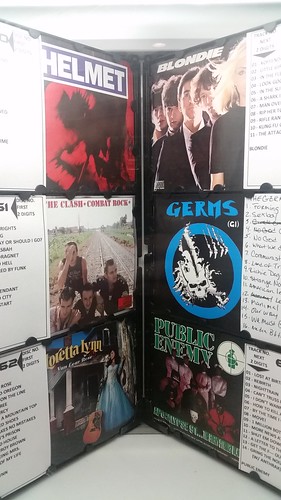
Jukebox at the Slash Run Restaurant, Upshur St. NWBesides the great hamburgers and the poblano rings, a big reason I like going to the Slash Run tavern on Upshur Street NW is their killer jukebox, which includes albums by The Vibrators, Iggy Pop. the New York Dolls, etc.

For some discussion about codifying a community's musical heritage and music as an element of a city's cultural ecosystem, see "Song remains the same" and "Ground up (guerrilla) art #2: community halls and music (among other things)."

DC.  DC Music Download and Listen Local First DC are local music promotion and development initiatives.

The music presentation company IMP (It's My Party) is still independent and a force in the industry even as the industry otherwise consolidates. Their 9:30 Club was an early anchor for the revitalization of the U Street corridor--they moved to that area in the early 1990s. 

Unsuccessful in getting the ability to remake the Uline Arena into a concert facility (instead it's an REI and offices), IMP is opening a new club as part of The Wharf development in Southwest DC ("9:30 Club's I.M.P. Announces New $60 Mil. Washington D.C. Venue," Billboard).

Chicago ignoring the potential of rhythm and blues.  I've touted Chicago as one of the rare cities that has a master plan for the promotion of music both in terms of cultural heritage and the arts as well as for economic development.  (Austin and Seattle also focus some attention on the support of music as an element of cultural and economic planning.)

But Crain's Chicago Business argues ("Blues is Chicago's most famous cultural export. Why don't we do more to promote it?") that the city ignores the economic opportunity present within the history of the city as a major center for the presentation of rhythm and blues music. From the article:
Though Chicago dwarfs New Orleans, Memphis and St. Louis in population and economic might, a weekend in any of those places drives home the missed opportunities back home. All three cities have museums dedicated to telling the music's story; tours and branded districts where people can walk in the footsteps of legends; airports, parks and streets named in their honor, life-size statues for tourist selfies; and, of course, an abundance of live music clubs that all three cities actively help promote throughout the year.

Chicago's failure to acknowledge seminal figures who were born or made their most influential recordings here—Muddy Waters, Curtis Mayfield, the Staple Singers, Jimmy Reed, Mahalia Jackson, Louis Armstrong, Chuck Berry, Sam Cooke, Thomas Dorsey and Benny Goodman—has become an opportunity elsewhere.

Memphis brands itself as "Home of the Blues and Birthplace of Rock 'n' Roll"; New Orleans claims native son Louis Armstrong with an airport and downtown park named in his honor though he made his most influential recordings in Chicago; and last year St. Louis opened the National Blues Museum, a $13 million, 23,000-square-foot institution revitalizing its downtown riverfront.

Chicago has none of that. ... Memphis is a textbook example of how changing attitudes toward its musical past helped turn its economy around. By the 1990s city officials were indifferent to its many legacies because they assumed the stories were known and there was nothing new to say. That changed when Kevin Kane became head of the Memphis Convention & Visitors Bureau. He switched the city's slogan from "Give Me Memphis" to "Home of the Blues and Birthplace of Rock 'n' Roll" and rebranded the city to highlight its music heritage. That meant creating an entertainment district along historic Beale Street where music is played seven nights a week to 4.5 million visitors each year, courting the Smithsonian Institution in Washington to build the Memphis Rock 'n' Soul Museum with $2 million in grant money and helping the Blues Hall of Fame open with $250,000 in startup costs. Coming up is a redevelopment of the area around Graceland featuring a new 200,000-square-foot complex and 450-room hotel.

Perhaps Memphis' greatest success is the 2003 opening of the Stax Museum of American Soul Music, a 17,000-square-foot nonprofit complex built on the site of the original Stax Records label that is connected to a successful charter school and music academy. The destination, which got city incentives, helped revitalize the surrounding area west of downtown, now nicknamed "Soulsville."

Today Kane says tourism is a $3.2 billion industry that attracts 11 million visitors a year and supports 20,000 jobs. He says Memphis' rebirth is due to officials who ultimately bought into the global perception of the city as a music destination.
Nashville: moving beyond country music, but still wanting to preserve country music heritage. Nashville is known as the center for country music, but the music scene there is wider than what people think.

The Associated Press ran a great story, "Guitar plays second fiddle as Nashville symbol," a few years ago about the city's then new branding campaign, which is focused on promoting Nashville as "Music City," not "Country Music City."

 A sign bearing music notes in Nashville, Tenn. The guitar, an iconic symbol of Nashville's music scene, is beginning to play second fiddle as the city's visual ambassador. Music notes and symbols are emerging in Nashville's logo as city promoters seek to illustrate the variety of music, in addition to country music, that is made in the city. (AP Photo/Mark Humphrey)

There are ongoing issues too with the loss of buildings associated with that history in the face of development pressure.

"Preservation" of buildings in the Music Row District (not formally designated historic) is tough now because many of the buildings are "obsolete" and not necessarily still used for music-related activity. And the real estate market is strong, so the prices offered to property owners for "old" "obsolete" buildings are very attractive.  But at the same time the city's "Music City" brand, for tourism (Nashville's Convention Center has the Music City name) and business development, is based on this history.

According to the Nashville Business Journal ("Nashville halts future development on famed Music Row"), galvanized advocates and the recently created Music Industry Coalition have successfully petitioned the local planning commission for a development moratorium, to give them time to assess historic assets and come up with a plan for retention of the most important.  (Also see "Momentum builds to preserve Music Row" from the Nashville Tennessean.)

A moratorium on development gives the community a chance to catch up building and zoning regulations to current conditions, rather than let the velocity of the real estate market run roughshod over other considerations.

Working with the National Trust for Historic Preservation, the Music Industry Coalition proposed the creation of the Music Row Cultural Industry District, focused on maintain the district as a center for arts production (see John Montgomery's work, "Cultural Quarters as Mechanisms for Urban Regeneration. Part 1: Conceptualising Cultural Quarters" and his later book, The New Wealth of Nations for the difference between arts consumption/presentation versus arts production).

-- "A New Vision for Music Row: Recommendations and Strategies  to create a Music Row Cultural Industry District Nashville, Tennessee"
-- "Executive Summary, A New Vision for Music Row"
-- "Recording Studios on Nashville’s Music Row: Directory for group tours and special events
-- "Music Row Design Plan Draft," Nashville Metro Office of Planning

Austin: still "The Live Music Capital of the World?".  I've written a bunch about Austin and the place of music in its cultural ecosystem, Austin Music People is the trade association for the music industry in that city.

These days the city is known for the big South by Southwest extravaganza, which started as a musician promotion event and morphed into a wide ranging "conference" on creative-digital innovation.  I've often felt that the PBS show "Austin City Limits" doesn't get enough credit for helping to anchor that city's music industry.

Notions Capital calls our attention to an NPR story, "The Struggles Of Austin's Music Scene Mirror A Widened World." According to the piece, the income Austin musicians earn from live performances is on a long term decline.

One of the problems might be their "brand," which is focused on presenting live music--Austin as "The Live Music Capital of the World."  Not only are they losing venues as the city intensifies through the triple development whammy of being the state capital, home to one of the nation's largest universities, and a major center for the IT industry, they are losing artists as housing costs rise, but also, as people age they tend to "go out less."  From the article:
Pitts' work culminated in the voluminous Austin Music Census he commissioned and released in 2015. It found that, as revenues continued to grow for the larger events, the city was bleeding jobs within the local music economy.

"We were seeing a real decline across the board in what we called our primary music economy. At the same time, we were seeing an uptick in revenue from the festival economy. SXSW, Austin City Limits — those folks were doing really well," says Jennifer Houlihan. She is the former executive director of a local music industry advocacy group, Austin Music People, and now the director of business development of a local music business, Nomad Sound. Houlihan worked with Pitts during her time with Austin Music People.

"As Austin has become more expensive and attractive — particularly to tech companies," she continues, "a lot of our folks [members of the local music industry] that work for tips and minimum wage can't afford it anymore." She says the city is losing its largely middle-class creative folks to the suburbs. ...

Technology isn't going anywhere, but without a focus on grassroots creation and local vibrancy, much of its distributive value may wither, as creators are barred from growing into their own.
To be successful as a destination presenting live music, you have to constantly replenish the audience. As entertainment trends and audiences morph, at what point do you get diminishing marginal returns from this focus?

Similarly, it's hard to focus on small venues as the industry continues to consolidate.  For example, more people go to big multi-performer shows, and a few firms, particularly Live Nation, control more parts of the industry (vertical integration) and venues.

Nashville chose to deal with the widening and consolidation of the music business by broadening its reach and appeal to more segments of the audience and market.

Mike Ness has an "Orange County" bumper sticker on his guitar. Photo: Matt Masin, Orange County Register.

Orange County.  House of Blues (an illustration of consolidation within the industry, as their venues across the country allow them to sign artists to a tour of their "circuit") which is owned by Live Nation, recently moved within Anaheim to a new facility.  Social Distortion--one of the early bands as part of the County's punk movement--was the opening act ("Social Distortion rocks the brand new House of Blues," Orange County Register). From the article:
Orange County’s own Social Distortion seemed like the perfect act to open the new House of Blues location, now at the Anaheim GardenWalk, and as hundreds of fans gathered early Tuesday night to be the first inside the brand new venue, they could be overheard chatting about why their favorite local band was indeed the best choice.
Music presentation chains are capable of playing the local card as well as anybody.  Plus, for people who don't go to similar establishments elsewhere, as far as they're concerned, House of Blues in Anaheim is a local institution.

-- Opening Social Distortion song, "Don't Drag Me Down," played at the House of Blues, Anaheim, 2/28/2017

Conclusion.  Part three is "BTMFBA revisited + maintaining the cultural ecosystem in the face of  urban intensification/"supergentrification."

Labels: , , , , , ,