Rebuilding Place in the Urban Space

"A community’s physical form, rather than its land uses, is its most intrinsic and enduring characteristic." [Katz, EPA] This blog focuses on place and placemaking and all that makes it work--historic preservation, urban design, transportation, asset-based community development, arts & cultural development, commercial district revitalization, tourism & destination development, and quality of life advocacy--along with doses of civic engagement and good governance watchdogging.

Monday, March 25, 2024

Quote on housing that's very apt: "As demand for housing rises, Philadelphia’s neighborhoods can either remain affordable or remain low-density. They cannot do both"

This is true everywhere, not just in Philadelphia.  It's relevant to both strong and weak markets, because even in weak markets, there probably isn't enough housing.

In the discussions about school closures in Salt Lake City, the g word, gentrification came up.  People blamed it for the decline of families in the center city--therefore a bunch of center city schools were on the chopping block--when that is a trend that is national, that people with no children or few children tend to live in the core, while people with families tend to live in the outer city or the suburbs.

Similarly, the West Side of Salt Lake is more heavily minority and equity issues for the West Side are touted all the time.  But it's complicated.  First, the west side is really three sections: the part that is east of the railroad tracks, so it's really part of "the east".  The residential section west of the freeway and railroad tracks.  And farther out, the mostly industrial section of the west side.  

My thing about the west side is that it doesn't have centers, the equivalent of commercial districts on the east side like 9th and 9th ("In Salt Lake City, a dynamic enclave gives new life to neighborhood," Washington Post) or 15th and 15th ("Thinking about the opportunities for success with neighborhood commercial districts: comparing Manor Park in DC to 15th and 15th in Salt Lake," 2021).  

There are two commercial districts on major streets (North Temple, Redwood Road), but there aren't neighborhood commercial districts.  

A lot of retail on the west side looks like this.

There are some putative attempts but they are disjoint urban design wise, not very compact.  There needs to be a focused program to develop them into coherent wholes ("Lee's Market to close its 400 West location in Salt Lake City" and "Lee's Market is reopening in Salt Lake City," Salt Lake Tribune, "Grocery stores in cities: the failure of the "15 minute grocery store"," 2023;. "Fairpark neighborhood in Salt Lake gets new coffee shop: A team of business owners on the west side of SLC saw a ‘desert’ for coffee shops, so they’ve opened their own," Tribune).

Stoneground Bakery sells wholesale and retail, baking and selling from an industrial building on the west side that isn't part of a commercial district.

And, not unlike how there is all kinds of outlier commercial retail space in the other part of the city, space that isn't part of a commercial district, the same is true of the west side, there are a bunch of interesting businesses there, but like how mayors say more people need to work in the office ("'We need more London Underground commuters on Fridays to help shops, restaurants and pubs'," My London, "Mayor of Washington, D.C., pushes for workers to return to the office," NPR), these buildings need to be in business districts to better generate economic activity that cross promotes other businesses.

I haven't figured out how to write it up, but Salt Lake City and County have invested in a lot of social infrastructure like libraries and recreation centers on the west side, but they haven't been developed in a manner that promotes the development of centers.

Lack of centers is blamed on disinvestment, but again I think that's a stretch.  

I think back in the day when the center city downtown was so thriving, it was close enough to the west side that there wasn't a big push to develop retail districts there.  There was no need.

Especially because back then and today the population of the city (210,000) and the west side is small.  

Like a lot of Salt Lake west side is mostly single family housing.  People may earn less, so the properties languish some, but as economically deprived areas go, Salt Lake's Westside isn't so bad.

But people claimed such issues were relevant to the proposed school closures on the west side also.  Whereas like in center city it is about demographics, and lack of enough population to support full classrooms at existing schools, even if west side households tend to have more children.  

If you want to support schools, you need more population, and given the housing demographics there, that means multiunit housing.  It is happening, but in the North Temple corridor mostly, and closer to the east side.  

So a lot of this addition to the housing stock isn't going to help the schools on the west side, because it is clustered east.

So this op-ed in the Philadelphia Inquirer, "What the ‘poop building’ tells us about affordable housing in Philadelphia," feels very relevant to me because it's merely about numbers and demographics.  

I wrote about this wrt retail within the entry on the Bridge Park ("Revisiting the 11th Street Bridge Park project as an opportunity rather than a folly: a new revitalization agenda for East of the River, DC"), but it's the same about housing affordability.  If you want it, you need a lot of housing.  Just like if you want retail, you need way more people than you realize--many thousands, not hundreds.

A sign on a fence in 2021 expressed the opposition of some West Philadelphia residents against the construction of an apartment building at 48th Street and Chester Avenue. Photo: Tom Gralish, Philadelphia Inquirer.  

Otherwise, especially with single family housing districts, there isn't enough to keep it low cost as demand rises and supply doesn't ("Understanding the DC housing market: demand for urban living, not the construction of new housing, is the driving force").

The article discusses how a Philadelphia neighborhood could have had as redevelopment a multiunit building with 76 units, 20% affordable.  Instead, to placate resident opposition, it will become 22 luxury rowhouses:

Philadelphia’s neighborhoods can either remain affordable or remain low-density. They cannot do both. Squirrel Hill, a cozy corner of Southwest Philadelphia, was given this choice. We overwhelmingly chose the latter. Other neighborhoods would do well not to copy our mistakes. 

... One neighbor, objecting to density, dismissed the apartments as “slum housing.” Meanwhile, the neighborhood group Protect Squirrel Hill referred to the four-story mixed-income project as a “monstrosity,” fearing an apartment building would gentrify the neighborhood. 

... But new development did not cause the neighborhood to become whiter, wealthier, and less affordable. Take a walk around the neighborhood and you will see that essentially no new development has occurred. Data from the U.S. Census Bureau estimate that the number of housing units here decreased by 132 over two decades. The building that once stood on the site of the dog park hosted 61 apartments. 

... When housing supply is constrained, property owners have more power to dictate prices; new residents and existing tenants must compete for units. Research supports this intuition, finding that new apartments lower, rather than raise, the risk of rent hikes and displacement. Even market-rate development “frees up” low-income units; blocking development has the opposite effect.

... Neighbors used the guise of housing justice to block the development. Other times, we wore no such mask. But in each case, we have chipped away at affordability, walkability, and the urban fabric that makes this neighborhood diverse, unique, and sustainable. When we frame the fight over an apartment building as a community-stands-up-to-greedy-developer story, the tenants who might have called the new building home are forgotten and erased. And when a building gets blocked, those tenants don’t vanish into the ether.

(There is a project in my neighborhood where a church is selling out to be redeveloped as housing.  Someone complained about it as "gentrification."  While there are apartments on that street, the fact is our zip code is the highest income in Salt Lake.  By definition it can't be gentrification.)

The article mentioned how one person against the development suggested a bird sanctuary or a cat oriented project instead of the dog park it would replace.  That's like the anti-76ers arena people suggesting small ground up grassroots development projects for Market Street, the downtown retail district of Philadelphia ("Penn professors spearhead workshop reimagining uses for proposed 76ers arena site near Chinatown," Daily Pennsylvanian, "Community groups say forget 76ers arena plan" WHYY/NPR).

Labels: , , , , , ,

Tuesday, May 03, 2022

Public housing and property values: Alexandria, Virginia as a not generalizable case?

Urban Institute did a study of public housing in Alexandria, Virginia--a super high value housing market, marked by historic housing in the core that is in high demand, and proximate to the public housing there--and said that public housing doesn't reduce property values ("What Does Affordable Housing Do to Nearby Property Values?," Bloomberg).

The public housing is probably maintained better than the typical public housing agency. The properties are intermingled in super high value residential areas, which is atypical.  The article also acknowledges that the public housing in Alexandria doesn't have the poor design and construction values typical of public housing. 

I think the wrong lessons will be drawn from this--people across the country will tout that "public housing" doesn't reduce property values, and this will be used to justify public housing construction in the face of nimby opposition elsewhere.

The real lessons are:

(1) High quality public housing (and actually it's been rebuilt, it had been old and tired) 

(2) that is well managed

(3) built with quality architectural design and construction values

(4) is well located

(5) intermingled in high value residential areas (with access to high quality amenities)

(6) works better, is valued more highly and doesn't impinge on market rate housing values.

The fact is that most public housing authorities are financially strapped, poor property managers of ugly and poorly constructed buildings that are often not well located.

DC would be an interesting case study as well.  Most people don't know that Capitol Hill has the most amount of public housing of most any neighborhood in the city, and the neighborhood is extremely high valued despite the presence and proximity of public housing.

But the public housing that is there tends to be problematic in terms of design and construction value, and association with nuisance behavior and crime.  

For example, Kentucky Courts and Potomac Gardens are on the edge of Capitol Hill. Super problematic, ugly ("Police identify two men fatally shot near Potomac Gardens in Southeast Washington," Washington Post). 

Potomac Gardens

Regardless of their poor condition and crime problems, the demand for nearby high quality historic housing supersedes the nuisance value of the public housing. 

Although that is the case now that the demand for urban living has changed--20 years ago, that wasn't the case ("THE NEIGHBORHOOD SYMBOLIZED D.C. GENTRIFICATION -- THEN SOMETHING WENT VERY WRONG," Washington Post).   The neighborhood needed more residents in order to counter nuisance forces, and that came with the addition of various multiunit housing developments, as well as the continued rehabilitation of formerly vacant properties.  

Plus, once the demand for urban living switched to positive c. 2000, the city experienced greater numbers of higher income households moving into the city, including in Capitol Hill.

During the HOPE6 Clinton years another public housing project, Ellen Wilson Dwellings, was de-socialed, where only 25% of the units remained for low income after reconstruction ("Dream City," 1999, "'Hood winked," 2002, Washington City Paper). 

A different project, located on the other side of the Southeast-Southwest Freeway, the Arthur Capper Dwellings (now called Capper-Carrollsburg) was demolished and rebuilt as mostly as market rate rowhouses with some public housing organized as rowhouse apartments intermingled ("Old D.C. Housing Projects Give Way To New," 2012, WAMU/NPR). 

After.  Photos: JDLand

Before.

Those houses are plenty expensive.  I don't know the quality of the management of the public housing properties.  They seem to be well maintained.  

What's fascinating to me is there's an owners association for the development that precludes membership and participation by tenants in the public housing units--it's the equivalent of "poor doors" in New York City ("The “Poor Door” and the Glossy Reconfiguration of City Life," New Yorker).

Labels: , , , ,

Wednesday, January 12, 2022

I don't think this guy has a lot of experience with new construction

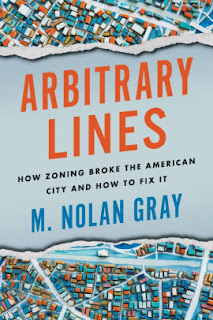
M. Nolan Gray is a writer and PhD student in planning at UCLA.  He has a piece in the Atlantic, "Noisy and Unsafe: Stop Fetishizing Old Homes," with the subhead "Whatever your aesthetic preferences, new construction is better on nearly every conceivable measure," criticizing "old housing."  

It's not an anti-preservation piece per se, but he argues that new construction is better than old construction.  The impetus for the article is that his 1958 apartment building in Los Angeles is noisy.

I'd say, based on my experiences in "new" housing, that is, houses and multiunit buildings constructed  after1960, and houses built before 1930, he isn't correct.  Most older buildings were constructed to last, weren't constructed primarily out of a desire to minimize cost.

WRT noise, that meant thick walls.  Etc.

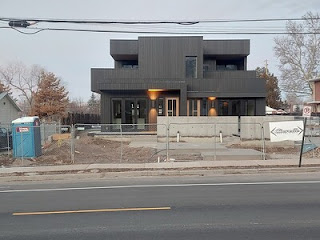
This weird looking house has been under construction for a couple years now.  It's on 2100 East in Salt Lake City.

Plus, so much of new housing, either single family housing or multiunit, is ugly.

Poor construction is a problem of the ages, today and in the past, and yes many places are inadequately insulated, which is an element of noise suppression.  But for many types of building materials, in particular wood (lumber), fixtures, and appliances, older is better--wrt appliances, analog often works better and definitely can last decades longer ("How Long Do Appliances and Parts of Your Home Last?," This Old House).

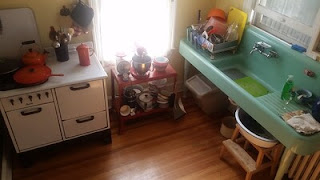
Kitchen sink from mid-1920s, oven from the 1930s, although it needs repair as hinges failed in late 2018.

New materials aren't designed to last.  Our 1929 house still has functioning fixtures from when it was built (kitchen sink and bathtub), and windows.  The 1960s Kenmore washer and dryer were still functioning when we had to move.  (The tenants broke the washer.  Had we still lived there, it probably would still be in service.  The washer had original fill hoses for more than 50 years.)

The oven lasted about 80 years, but the hinges broke and repair was expensive (so we kept the oven to fix in the future and got a new one).

The windows that were replaced by the previous owner sometime in the last 20+ years are all failing.  The 90+ year old windows for the most part are fine (or have been fixed so they can last another 90 years).

M. Nolan Gray is a "market urbanist"-- that is someone who supports cities but favors "the market" over urban or "government" planning, has authored at least one book on zoning as the scourge of the city.  

Granted zoning has many problems, but people are too quick to blame "government" for the problems, when many of those problems were created by private sector influence on government policy, the reality of how "the market" works for property, especially housing, and resident opposition to change of any kind("not in my backyard" or nimbyism) .

The problems are heightened by a different kind of planning failure, but one that nimbyism refuses to acknowledge, that today's population is significantly higher than it was when most zoning codes were developed in the 1950s, and is higher than when most traditional cities were built out, so there isn't nearly enough extant housing relative to today's demand. 

US Population

1930 -- 123 million
1940 -- 132 million
1950 -- 151 million
1960 -- 180 million
2020 -- 337 million

Those problems are accentuated by the fact that today almost 50% of US households are one person, further increasing demand relative to earlier periods.

I do need to read the book.  But...

The zoning problem is a dependent variable.  The independent variable is the failure to acknowledge and address that population increases need to be met with more housing supply, along with the simultaneous failure to adequately provide funding for housing for the segment of the housing market that can't afford market-rate housing.

-- "Understanding the DC housing market: demand for urban living, not the construction of new housing, is the driving force," 2021

I am not super "math-y," but the recent exponential frothiness in the housing market has to do with reaching a kind of tipping point in many markets, when the amount of vacant housing relative to supply is minimal, less than 5%.

Besides the fact that today's housing is built at today's costs for land, labor and materials, so additions to supply today only lead to price slackening over multi-decade periods of time, as long as demand remains greater than supply even with new additions to supply, prices won't drop.

Labels: , , , , , ,

Friday, September 14, 2018

DO PEOPLE OBJECT TO DEVELOPMENT—OR MOSTLY DEVELOPERS MAKING MONEY? A UCLA study shows that a desire to punish developers drives anti-homebuilding attitudes.

Back decades ago when I was involved in business, I read the book How I Raised Myself From  Failure to Success In Selling by Frank Bettger.  (He sold insurance.)

He made the point that when people say "no" about buying, they have a "public" objection that sounds good, but a deeper objection that doesn't sound good that they don't want to state.  He always would say in response, "Yes, but what is the real reason you don't want to buy?" and that would usually lead into a deeper conversation.
“Regardless of whatever you’re selling, you must get to your prospect’s true objection.“ 
Sightline Institute calls our attention to this paper from researchers at UCLA, "Opposition to Development or Opposition to Developers? Survey Evidence from Los Angeles County on Attitudes towards New Housing."

It reminds me of the arguments made by Frank Bettger.

Granted, lots of new projects are poorly designed, don't fit in well with historic architecture, etc., but plenty of new projects are decent enough, providing new amenities that help to build stronger commercial districts and more interesting neighborhoods.

(The problems with many projects are really about failure of planning systems to provide better requirements and oversight to produce as a matter of routine better projects, instead of value engineered aesthetically-challenged projects.)

Excoriating developers is a form of misdirection and an attempt to hide self-interest.  I believe that people arguing against a project because greedy developers are the beneficiaries making profits, and benefit extra-normally is a form of mis-direction, of making palatable their opposition to projects, opposition that they would have anyway in all likelihood, even if the project was of high quality, even if it were constructed on a nonprofit basis.

I have to read the paper but I think that people seize on the “developers making money” trope merely as a way to criticize a project that they oppose generally, regardless of “developers making money.” This is capitalism after all.

1.  In LA, transit activists who say rail is for whites fought against Measure J calling it "corporate welfare” for the companies that design and build rail systems ("Foes of transit sales tax extension face uphill battle," Los Angeles Times; Bus Riders Union: Transit Justice, Not Corporate Welfare – No on Measure J," Streetsblog LA

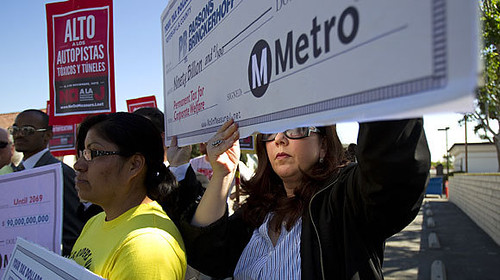
Note the photo in this LA Times article, showing a “corporate welfare” check from LA MTA (Metro) to Parsons Brinckerhoff:
Protest against rail transit in Los Angeles
Lisa Korbatov, right, of Beverly Hills joins Rosa Miranda of the Bus Riders Union holding blank checks highlighting Measure J's corporate sponsors and beneficiaries during an October rally. (Gina Ferazzi / Los Angeles Times / March 31, 2013)


2.  In Suburban Maryland outside DC, saying that the light rail program exists merely so “developers can make money” has been mentioned by opponents in letters to the editor in the Washington Post and the now no longer published Gazette suburban newspapers.

3. In my own community, “developers making money” has been used to criticize proposals for a multiunit housing building on the Metrorail station property, etc.


I think in all of these cases, concerns raised about developers, construction companies, and engineering consulting groups like Parsons making money is misdirection.

They’re just seizing on that trope to provide what they think is an argument that doesn’t appear to be self-serving.

=====
Years ago, Dan Malouff, an area resident, planner, and blogger made a good comment about opposition to conversion of no longer needed schools to housing or other worthy uses, when people would say no, they'd rather have a park--for example opposition to construction on a "park space" on Georgia Avenue ("DC residents: Plan to replace public housing will jeopardize popular popular," Washington Post), is ironic because the park replaced a demolished building and was specifically termed temporary.

He made the point that opponents to such adaptive reuse projects seize on a park use as the least worse alternative (not his language) to any form development whatsoever.

I think he's right.

Labels: , , , , ,

Thursday, July 20, 2017

Purple Line moves forward

Light rail in Minneapolis.  Flickr photo by Nick Benson.

Various media outlets report today that some of the legal limbo that held up moving forward on the Purple Line has ended ("Federal court ruling enables Purple Line to move ahead," WBAL-TV).

The ruling keeps a separate lawsuit fighting the project overall in play, while approving the environmental impact findings that had been approved earlier, rather than requiring a new environmental impact study taking into account degradation of the quality of the Metrorail system and the concomitant drop in ridership.

Rather than write a big long new post, it's an excuse to call attention to previously written pieces on the subject:

1.  With the Purple Line, Prince George's County has been given a second chance to reposition its land use planning and development paradigm around transit connectivity, which it didn't do with the Metrorail.

-- "The future of mixed use development/urbanization: Part 3, Prince George's County, where's the there?," 2011
-- "A recommended new planning direction for Prince George's County," 2011
-- "Another lesson that Prince George's County has a three to five year window to reposition based on visionary transportation planning," 2011
-- "Frustration #3: the talk about transit oriented development and Prince George's County," 2013

2.  At this time, the Purple Line is as close as we're going to get to a Crossrail-type project, but even though it's nothing like the scale of projects in London and Paris, it does have the ability to strengthen significantly the fixed rail transit network in Metropolitan Washington--which is why some of the reasoning in the early holdings on the lawsuit was misguided.

-- "Maybe the Purple Line light rail project in Suburban Maryland is a lot bigger deal than is recognized (It's our Crossrail)," 2016

3.  The Purple Line ought to be seized as an opportunity to drive other complementary changes across the transit network, to make the Purple Line more successful from the outset, and to improve significantly the transit network.

-- "Setting the stage for the Purple Line light rail line to be an overwhelming success: Part 2 | proposed parallel improvements across the transit network," 2017

This piece lists 19 items to improve the existing transit network, leveraging the development of the Purple Line as a way to do so:
  • Change the WMATA Metrorail map so that it includes the Purple Line and regional railroad services
  • Integrate the Purple Line light rail line into the Metrorail fare system
  • Integrate MARC fares into the SmarTrip/ CharmCard fare media system
  • Introduce bi-directional passenger rail service between DC and Frederick on the MARC Brunswick Line
  • Consider charging DC-Montgomery County trips on a bi-directional Brunswick Line using the Metrorail/Purple Line tolling/fare schedule. That would treat mileage from railroad trips in the context of a complete (linked) trip on railroad+subway+light rail as a single fare
  • The White Flint Sector Plan calls for an infill MARC station. Plans to build that station should be accelerated as part of this proposal
  • Provide integrated train arrival information screens at Metrorail, Light Rail, and MARC stations
  • Provide integrated bus arrival and departure information screens at Metrorail, Light Rail, and MARC stations
  • Bus service in certain corridors between DC and Maryland should be extended and/or frequency increased to better link these areas to the new light rail service
  • Montgomery County bus system improvements with the launch of the Purple Line and bi-directional service on the MARC Brunswick Line should include launch of planned Bus Rapid Transit services
  • Rearticulate, rebrand, and reposition-extend the Prince George's County TheBus bus transit service. Change the name of the service and the graphic design of the bus livery
  • Consider a redesign and rebranding of the metropolitan area's bus systems into an integrated framework, comparable to that of GoTransit in the Raleigh-Durham area
  • Set the opening of the Purple Line as the deadline for the integration of the MARC Penn Line and VRE Fredericksburg Line into one combined railroad passenger service
  • Set the opening of the Purple Line as the deadline for the implementation of a full-fledged integrated Night Owl bus network for the DC metropolitan area
  • Create a cheap weekend pass to use the local transit network, especially Metrorail
  • Incorporate quantum improvements in bicycle facilities across the mobility network in association with the launch of the Purple Line
  • Rearticulate transportation demand management programming and services in conjunction with the PL launch, including a single network of "customer information centers"
  • WMATA should upgrade its Metrorail station bus shelters
  • Create "sustainable mobility" corridors in Silver Spring (and other places), complementing the new PL.
4.  To accomplish the various local economic and equity development goals and objectives stated by various groups, stakeholders, and elected officials, Montgomery and Prince George's County need to create a bi-county development authority.

-- "Purple line planning in suburban Maryland as an opportunity to integrate place and people focused initiatives into delivery of new transit systems," 2014
-- "Quick follow up to the Purple Line piece about creating a Transportation Renewal District and selling bonds to fund equitable development," 2014
-- "To build the Purple Line, perhaps Montgomery and Prince George's Counties will have to create a "Transportation Renewal District" and Development Authority," 2015

5. The Purple Line affords the opportunity for Montgomery and Prince George's County to rethink their brand and identity as it relates to "design."


-- "Using the Purple Line to rebrand Montgomery and Prince George's Counties as Design Forward," 2017

6.  The Purple Line is an opportunity to reposition Silver Spring for Montgomery County and New Carrollton Maryland for Prince George's County.

Silver Spring:

Fenton Street, East-West Highway, and Wayne Avenue, Silver Spring, as building blocks for a Silver Spring "Sustainable Mobility District"
-- "
Part 1: Setting the stage"
-- "Part 2: Program items 1- 9"
-- "Part 3: Program items 10-18"
-- "Part 4: Conclusion

New Carrollton:

-- "Making over New Carrollton as a transit-centric urban center and Prince George's County's "New Downtown"," 2017 (an update of a piece from 2014)

======
While it seems crazy, I think that steps for planning extensions to the Purple Line on either end should get underway also.

Labels: , , , , , ,

Friday, April 17, 2015

When historic preservation gets a bad name: Spring Valley edition

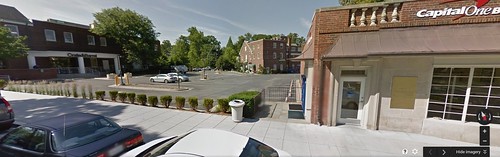
Parking Lot, Spring Valley Retail Center
Parking lot at the Spring Valley Retail Center. Google Street View image.

The Washington City Paper reports ("A Lot to Lose: Can a Parking Lot Be an Historic Landmark?") that Spring Valley residents fighting a development proposal that would replace a parking lot with a building at the Spring Valley Retail Center--once an outlying department store for the now defunct Garfinckel's chain but now best known for having an expanded Crate & Barrel furniture store, are arguing that the parking lot is fundamental to the form of the complex and should be protected as a historic landmark.

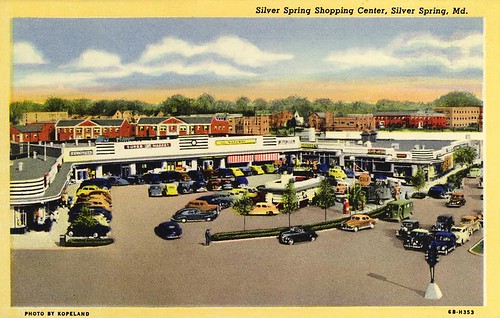
The article discusses the work of architectural historian/American Studies Professor Richard Longstreth, but not specifically his journal article on the development of parking-centric shopping centers in the region ("The Neighborhood Shopping Center in Washington, DC, 1930-1941").  The Park and Shop in Cleveland Park and the Silver Spring Shopping Center are the most prominent examples.  (Carytown in Richmond has a great example as well.)
Silver Spring Shopping Center
Silver Spring Shopping Center vintage postcard.

Interestingly, smart growth advocates have criticized historic preservationists for arguing that parking lots in the case of the Silver Spring or Connecticut Avenue park and shops are integral to the overall ensemble, and that without saving the parking lot, the site loses its relevance as an historic landmark and artifact.

Spring Valley Shopping Center. 

But all parking lots aren't equal or worth saving and a strong case can be made that the parking lot at the Spring Valley Retail Center doesn't possess architectural and cultural significance, even though the park and shop across the street, the Spring Valley Shopping Center, like the Cleveland Park and Silver Spring examples, does rise to the level of saving, were the issue to come up.

This effort is an example of nimbyism, of residents opposed to any development whatsoever seizing on historic preservation laws and regulations as a way to subvert the project.  In DC law, in most instances, only do historic preservation protections require citizen involvement and more focused review.

I was thinking about this the other day, seeing a building going up next to I-395 on 2nd Street NW, and remembering the rowhouses that had been there.  Years ago a tenant in one of the buildings contacted me, wanting to file a historic landmark nomination, not so much to save the buildings but as a negotiating tactic with the property owner.  I said a nomination wouldn't be approved and it's a lot of effort to engage in a sure-to-fail effort, and I didn't agree to help.

Instead of people seizing on historic preservation processes as a tool to try to stop any project, whether or not the site/building is of historic significance, there should be building regulation review processes that provide for citizen input while recognizing that opposing development as a matter of course shouldn't be privileged as part of the review process, that instead decision-making should be judicious.

In the meantime, people who aren't preservationists mis/using preservation tactics end up demeaning and diminishing the historic preservation movement and process more generally, which makes articulating a strong historic preservation message all the more important.

Labels: , , ,

Saturday, October 16, 2010

Lions, tigers, bears and lightly clad runners -- "Oh my!"

(With apologies to The Wizard of Oz.)
http://3.bp.blogspot.com/_rdxXtYJpYXE/S8lPmg-p9EI/AAAAAAAAAoY/M8xGFcOfxR0/s1600/Burka.jpg
People in burkas. Image source.

Another funny bit in the Hill Rag comes from the article on the proceedings of ANC6C ("ANC 6C Report") and resident reaction to a fitness facility in a commercial-residential district on the 200 block of M Street NW and the presence of people running around outside in the neighborhood. The reaction is not dissimilar to the reaction in Williamsburg, Brooklyn to a bike lane with lightly clad women. (See "Vigilantes Repaint Bike Lane in Williamsburg" from NBC TV.) Although there are legitimate issues about a certificate of occupancy, and the proper zoning, which is also discussed in the article, and was what the ANC focused on.

From the article:

The two residents also described how Primal Fitness does not have treadmills like most area gyms, relegating members to running around the neighborhood wearing what they describe as skimpy clothing. “This is not acceptable in a residential neighborhood,” Keys said. “We have schools there, we have day care centers, we have churches.”

The commission, however, decided after much discussion not to include the runners in their conditions for approving the gym’s occupancy. “We can’t specify that they can’t run outside,” said Commissioner Anne Phelps.

Since when are schools, day care centers and churches somehow oppositional to physical fitness?

The whole point of "walkability" is what we might think of as "natural or utilitarian" fitness, exercising in the course of normal activities--walking or biking to work or school or on errands, etc. Sure, running is a purposive activity that it is an end in and of itself, but the city is supposed to be for everyone, including runners not wearing burkas.
http://www.currybear.com/wordpress/wp-content/uploads/2010/04/hijabbeach.bmp
Running in hijabs. Image source.

While DC's obesity rate is the lowest in the nation compared to other "states" there is no question that within certain demographics, the rate is in fact, high, and the trends are not favorable.

Also see the press release from the DC Department of Health, "District Releases First Ever Obesity Report And Obesity Action Plan" and the report, Obesity in the District of Columbia.

Labels: , , ,