Rebuilding Place in the Urban Space

"A community’s physical form, rather than its land uses, is its most intrinsic and enduring characteristic." [Katz, EPA] This blog focuses on place and placemaking and all that makes it work--historic preservation, urban design, transportation, asset-based community development, arts & cultural development, commercial district revitalization, tourism & destination development, and quality of life advocacy--along with doses of civic engagement and good governance watchdogging.

Tuesday, October 20, 2009

K Street Transitway comments accepted until October 30th

See the DC Dept. of Transportation website: REMINDER: K Street Environmental Assessment (EA) Comments Due.

- K Street Transitway Environmental Assessment

I like Alternative 3 because of the inclusion of bikeways. It's more of a "complete street" design and we need prominent examples of dedicated bike facilities in the city, especially Downtown-- why not on K Street? But Alternative 2 is a flexible alternative where the curb lane could be an additional bus-only lane in rush hour for instance.
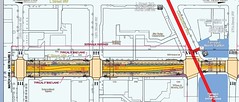
Alternative 3, K Street Transitway

In either Alternative 2 or 3, optimizing how space is used from the face of the buildings on either side of the street, including the sidewalks, parking and service lane, side medians, and the through streets more optimally serves more people "more better."

What it will do is move transit along more quickly, provides for better vehicle throughput, and if constructed properly, as good if not better experience on the street for pedestrians (note that the K Street and Connecticut Avenue intersection is probably the #1 intersection in the city in terms of the volume of crossings Monday through Friday), and ultimately, for the ground floor businesses as well.

At the expense of some onstreet parking.

The real question here is about "prioritization," throughput, and optimality. And what it makes sense to focus upon, and upon what criteria it makes sense to use in coming to a decision.

The Thomas Jefferson Planning District in Albemarle County, Virginia has a nice illustration of what it means to focus on optimality, in their Street Capacity Demonstration (although they should have included one shot of a bus with 40 passengers too). It's similar to the graphics produced in Berlin, Tampa, and elsewhere called "packing the pavement."
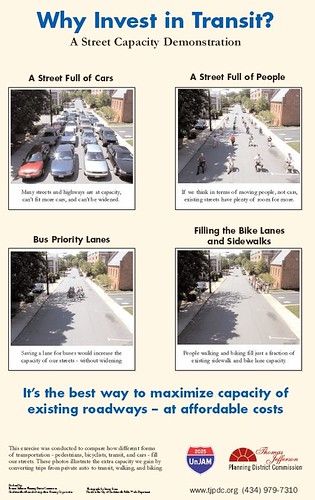
Street Capacity Demonstration, Thomas Jefferson Planning District
From a throughput standpoint, it makes sense to prioritize transit and the through lanes, and to be less concerned about providing a limited amount of parking spaces on the street--note that a DDOT official says there are about 300 on street parking spaces on K St. in the impacted area, and more than 15,000 spaces in parking garages and/or on-street within one block of either side (L or I Streets) of K Street.

Or as Abraham Lincoln is alleged to have said in the famous case where he represented the railroads that wanted to build a bridge over the Mississippi River vs. the riverboat interests which opposed the bridge: which interests are more important, traveling up and down the river or crossing the river?

Throughput and mobility optimality should be seen as the most important goal and objective, rather than the more narrow objective of maintaining parking on K Street.

The goal is extending the qualities of the livable city and continuing to improve DC's competitive advantages around transit efficiency.

E.g., look what is being proposed for the "42nd Street Transitway" in Manhattan--no cars. See "A Quieter, Calmer (and Car Free) 42nd Street" from Wired about the proposal from the Institute for Rational Urban Mobility about what they call vision42 and "Making New York's 42nd St. a Different Sort of Thoroughfare" from the New York Times.
Making New York's 42nd St. a Different Sort of Thoroughfare
Illustration: Mathieu Delorme.

Remember that ultimately, the K Street transitway is also supposed to support streetcar service from Minnesota Avenue, along H Street NE, to Union Station, along K Street in NoMA, Mount Vernon Triangle, and Downtown, to Georgetown (and probably with a connection to the Rosslyn Metro and a turnaround there--just like the old days).
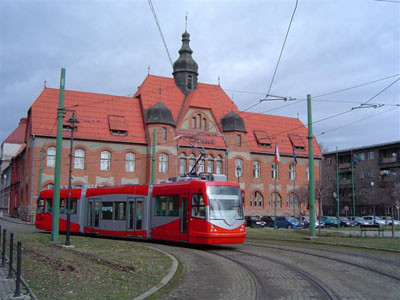
DC Streetcar in the Czech Republic
DC Streetcar being tested in the Czech Republic.

A couple weeks ago I went to a fabulous presentation about transportation demand management programming in Arlington County. (I went to four conferences/presentations in two weeks, plus an exhibit in Philadelphia on a Saturday. That plus work and commuting means I haven't written up any of them.)

But I was thinking that while Arlington does site planning for transportation demand management, and Alexandria has hired an Arlington staffer to do the same thing, we really need to have a "parking planner" assigned to deal with parking optimization in the Central Business District.

Of course, really what we need is a "transportation management district" to manage optimality and throughput overall, rather than a strict focus on parking (a "parking management district").

But even so, to best use the parking resources available along K Street, parking information systems, wayfinding, and management of the available resources must be coordinated (with suasion and legal requirements if needed) in order to reap the full benefits of the extant resources.

I'd rather see a focus on that, than on concerns about the loss of a minimal amount of parking.
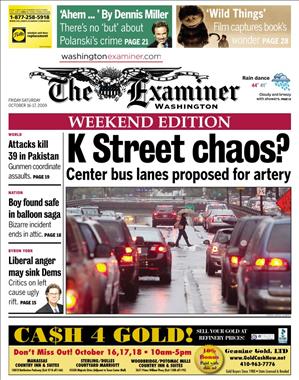
Washington Examiner cover, 10/16/2009

The real chaos is in promoting suboptimal transportation decisions, which seems to be the position of the Washington Examiner, judging by their recent choice of words on the cover of the 10/16/2009 issue.

Labels: , , , , , ,

Saturday, April 19, 2008

The other thing bothering me about the DC City Council proposals/legislation on parking


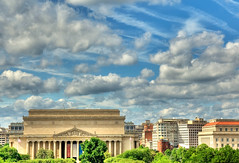
Clouds above DC
Originally uploaded by eugene

(HDR image of clouds above DC by Eugene.)

Is that they are focused on "outsiders" while giving residents a free ride and encouraging driving.

See the "Curbside Parking Management Proposal," from the Councilmember Tommy Wells website, and "Council weighs taxing free employee parking," from the Examiner. The curbside parking management proposal has been enacted.

2. My transportation wish list said this about parking:

Speaking of parking and curbside management, change the residential parking permit system in DC to one that emphasizes the privilege, rather than the right, to park. 40% of the people in DC do not own cars. Why should the 60% that do be privileged with practically free parking spaces?

a. Residential parking permits should cost a lot more generally. As you probably know, Prof. Shoup estimates that the value of the public space on the street is about $1800 annually.

b. There should be a limit on how many residential parking permits can be issued per household. Only one car can fit in front of a typical rowhouse. Multiple cars per household should be discouraged.

c. The rate for residential parking permits should go up considerably for each additional permit per household address.

d. Parking permit rates should be weighted according to how large a car is, and its carbon footprint (maybe). One of the big problems I'd say anecdotally is that people in the city may only be buying one car, but it is much much larger than it used to be (an SUV). This further reduces available parking inventory for residents.
The Ford F-350 is wider than the typical Capitol Hill rowhouse
The Ford F-350 is wider than the typical Capitol Hill rowhouse.

3. A DC Residential Parking Permit costs $15/year. And there are big swathes of the city where you can park in neighborhoods without even needing a permit.

4. There is an informal e-list of a few of us (mostly DC people) discussing urbanism, one person wrote yesterday, about New York City, but virtually everything he says is applicable to DC (italic emphasis added):

New York does too much to encourage driving. They underprice access to road space and public parking spaces in dense parts of the city. Personal driving from one location to another in Manhattan is an extravagant use of valuable real estate. Right now it’s rationed by congestion; which is wasteful since lost time is not a gain to anyone. It should be rationed by price, which is a benefit to someone, and can be used to reduce other taxes and/or improve services.

New York charges only $1.50 an hour for curb parking. The going rate for private parking, needless to say, is a lot more. The market-clearing price would likely be between $5 and $15 per hour. NYC should raise on-street rates to whatever yields 85-90%% occupancy, vary the rates by time of day and day of week, and eliminate time restrictions (no longer necessary to encourage turnover if the rates are market-clearing). Circling-related traffic congestion would end, which might provide room for expanded sidewalks or streetscaping where needed.

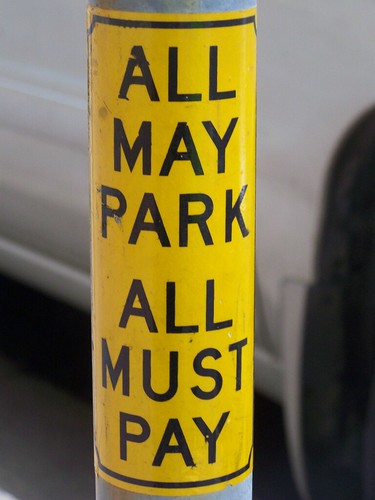
New York lets residents park free in many areas of Manhattan and dense parts of Brooklyn . That should be ended; all on-street spaces should be paid at a market-clearing rate and made available to all with no time limits. “All may park, all must pay”.


Revenues from parking should be returned to the neighborhood through BIDs or parking benefit districts, or local property tax abatements. Free parking is a major subsidy for auto ownership, especially where land prices are as high as they are in Manhattan.

Paid parking will also change the political dynamic of new development. Rather than opposing new commercial development to protect their free parking, the neighbors will welcome the added revenue, much of which will come from people who don’t live in the neighborhood.

City agency use of on-street parking spaces should be paid at the same rate as the general public. It should come out of the budget of the agency using the space. City agencies will then have an incentive to economize their use of on-street space. ...

Parking pricing is not the whole solution. London-style congestion tolling is also needed, but pricing parking correctly would be a major step in the right direction. ...

Whatever scarce road space Manhattan has available should be used for necessities and high-value uses such as deliveries, taxis, and police/fire/EMS/utilities, or space-efficient modes such as walk, bike, and bus.

All may Park All Must Pay (Rosslyn)
That's the goal. We aren't there yet.

5. Also see Vehicle Registration and Title Fees (DC) and Rates of Vehicle Excise Duty (UK).

Labels: , , , ,

Wednesday, December 05, 2007

How to reduce rush hour traffic into DC by as much as 50% (on certain routes)

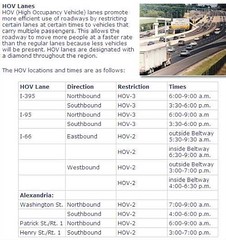
HOV restrictions in Virginia
Virginia HOV restrictions. Image from City of Alexandria website.

A couple months ago I met Patrick Hare, an ex-resident of Brookland, DC, and a planner, and the person who, while working for Montgomery County, came up with the idea for the Metropolitan Branch Trail. (See Geared to Everyone's Interests-A Brookland Bike Trail, Washington Post, Sep 24, 1989; b.08.)

He also told me about another idea he had, that just as Alexandria has instituted HOV-2 restrictions on certain roads during rush hour traffic periods, DC should do the same thing (HOV Lanes: Not Just for Highways, Washington Post; Jan 20, 1991; b.08).

I have been thinking about this quite a bit since. The other day, I pondered after paying attention to in-bound morning traffic on Rhode Island Avenue, Constitution Avenue, and Pennsylvania Avenue.

Since most of the cars have only one occupant, requiring that to use the roads during peak periods, two (or more) people would need to be in each car would likely cut traffic by almost half.

Labels: , ,

Thursday, November 01, 2007

More transit

(Not intentionally, but I tend to write thematically, many days being transit or commercial district revitalization, other days historic preservation, etc.)

1. The Massachusetts Bay Transportation Authority has opened a new line. From Progressive Railroading:

MBTA launches service on Greenbush Line

Yesterday, the Massachusetts Bay Transportation Authority (MBTA) officially opened the Greenbush Line, the agency's 13th commuter-rail corridor.

MBTA now has completely restored the historic Old Colony Railroad, which ceased operations in 1959 and was used to create the Greenbush Line. The authority restored the other portion of the Old Colony Railroad — now known as the Middleborough/Lakeville and Kingston/Plymouth branches — 10 years ago.

The $512 million Greenbush Line features seven stations and serves the towns of Braintree, Weymouth, Hingham, Cohasset and Scituate, Mass. MBTA will provide 12 round trips between Boston's South Station and Greenbush Station in Scituate each weekday and eight round trips on weekends. The authority expects the line to serve about 8,600 weekday riders.

Also see "Greenbush at last" and "High hopes ride Greenbush rails" from the Boston Globe.

2. Not that this is anything new, but in NYC, the Permanent Citizens Advisory Committee to the MTA suggests that transit passes be seemless between railroad and subway/bus commuting systems. See "Group advocates 'freedom ticket'," from AMNew York.

Read PCAC's latest report, A Long Day's Journey into Work, which looks at transportation options in four areas that have long commutes into Manhattan: Southeast Queens, Co-Op City Bronx, Southwest Staten Island, and Red Hook Brooklyn.

Labels: , , , ,

Tuesday, October 30, 2007

Union Station, Washington, 100th anniversary

From email:

Today in History:

On Sunday, October 27,1907 the last B&O train departed from the New Jersey Ave. station (2:52 A.M. the "Duquesne Limited" for Pittsburgh) and the 1st train arrived (B&O train #10 6:50 A.M. from Pittsburgh) into the partially completed Union Station. The Old B&O station was abandoned and demolished between February 5 and March 15,1908 to the regret of no one at the time.

3 weeks later ......

On Sunday, November 17,1907, the 1st PRR trains operated in and out of Washington Union Station. The other rail lines from south also commenced usage at that time. The B&P station (also called Union Depot) and adjacent Mall trackage abandoned after last departure that morning. It wasn't until March 4,1908 that the keys to the old station were given to the Federal Government at 2:15 P.M. The station was demolished after August 1908 following a lengthy debate as to possible other uses, none of which materialized for a variety of reasons. On June 24,1908, the first street car service began operating to Union Station, more than 8 months after opening, compliments of DC City Commissioners.
---------
For some great writing about the history of Union Station, check out Bill Wright's in process dissertation, which he is sharing with the public, at Washington Union Station.

I didn't know, but he's giving a sold out talk as part of a National Railway Historical Society presentation this Saturday. Too bad it wasn't part of the DC Historical Studies Conference, also this weekend.

Labels: , , ,

Ferry commuting on the Potomac

I don't care so much about this, as I am more focused on transportation and mobility within the core, but I think working on such modes as ferry commuting is fine. It's particularly interesting when you think about how rivers and bodies of water were the main transportation routes in the country into the early part of the 20th century.

The Manassas Journal-Messenger reports, in "Ferry boat trial deemed a success," about a test of ferry service on the Potomac. (Thanks to Bacon's Rebellion for the link.)

Labels: , ,

Wednesday, October 10, 2007

(Bus) Transit centers

Uptown Transit Center, Minneapolis
Uptown Transit Center, Minneapolis. Note the quality brick facade and clock. Photo from the Metropolitan Council website.

I don't think there's a good example in the DC region of a bus-oriented transit center that is both attractive and capable of accommodating a large amount of bus service. Most of the centers I am familiar with are attached to subway stations.

And judging by the renderings, the coming Silver Spring Transit Center looks to be a behemoth with no comparison to the grand (train) stations of old, despite the comparable size.
Rendering of the planned Silver Spring Transit Center
Rendering of the planned Silver Spring Transit Center. (Parsons, Brinckerhoff, Quade & Douglas Inc.-Zimmer, Gunsul, Frasca Partnership)
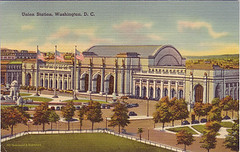
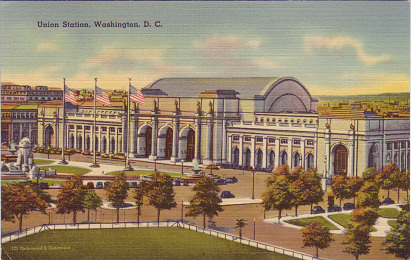
Union Station, Washington, postcard
Union Station, Washington, postcard. Granted the architect for Union Station was given a lot more money to design a grand building...

Minneapolis is a bus-based transit system and has produced a fair number of relatively attractive bus stations that provide comfortable accommodation in relatively attractive settings.

I bring this up because the process is moving to create a (bus for now, bus and light rail later) transit center at the Takoma/Langley Park Crossroads at New Hampshire Avenue and University Boulevard on the border of Takoma Park (Montgomery County) and Prince George's County. See "Md. Proceeding With Transit Center at Takoma/Langley Crossroads," from the Montgomery Extra section of the Washington Post.

This piece from the Metropolitan Council in the Twin Cities region, "Transit centers help attract new riders, boost system efficiency: Large facilities provide more frequent service, customer amenities," explains the Transit Center concept there.

Labels: , , ,

Thursday, September 27, 2007

The principle of mixed primary uses

In Death and Life of Great American Cities, Jacobs writes about Pittsburgh's Oakland district to explain the point of mixed primary uses. She said that if the arts institutions were located downtown (now they are by the way) then parking structures used by office workers during the day could be used by arts patrons at night, thereby not requiring specific investment in the creation of parking lots dedicated to a single use, as required for the Carnegie institutions in Oakland.

The Austin American-Statesman reports, in "Austin considers entering the parking business: City would build and own garages, primarily downtown," (registration required for article access) that the City of Austin is considering the creation of a parking authority which would build and operate public parking structures. Laudably, they would dedicate the revenue stream not just to parking for cars, but would support investment in other transportation modes as well.

But here is the real problem. From the article:

"There are tens of thousands of parking spaces downtown that don't get used after hours even as we have remarkable demand after hours," Wynn said.

If you deal with that first, maybe you don't need to spend a couple hundred million dollars on parking structures to begin with.

Labels: , , , ,

Sunday, September 16, 2007

The investment concept can be elusive

Thomas Viaduct, Spanning Patapsco River, Elkridge, Howard County, MD.
Baltimore & Ohio Railroad, Thomas Viaduct, Spanning Patapsco River, Elkridge, Howard County, MD. Library of Congress photo.

(Image via w...)

Blair Kamin, the Pulitzer Prize-winning architecture writer for the Chicago Tribune has a great piece about infrastructure, "The way we move--and live."
Bridge Collapse
Collapsed section of the I-35W bridge in Minneapolis, Minnesota. The murky, swirling waters of the Mississippi river hampered the work of divers Thursday searching for up to 30 people still missing after a huge bridge collapsed late Wednesday, killing at least four.(AFP/Getty Images/Scott Olson)

Neal Peirce's new column, "Big, Bad New Tax Still The Best Road Deal," makes the point that the cost of replacing the collapsed bridge in Minneapolis will cost $300 million, but repairing it before it collapsed would have cost $2 million.
--------
When I worked at the Center for Science in the Public Interest many years ago, I used to joke about the director that his philosophy was "show me what you can do with absolutely nothing, and I will give you a very little bit." On the other hand, the organization figured out that it had to invest in direct marketing in order to make money from its newsletter. At the time I worked there we spent $1 million/year on direct mail, and had 240,000 subscriber-members. (Since then, circulation has tripled.) But I used to grouse that while they understood the investment concept as it related to membership development, they didn't understand that the investment concept needed to be applied to other areas of the organization, including the publishing section that I managed.

Labels: , ,

Wednesday, September 05, 2007

Federal Department of Transportation Funding

Federal Transport Spending, FY08
Image from Transit Miami.

I have been meaning to write about Mary Peters' op-ed in the Washington Post from a couple weeks ago about how we don't need to raise gasoline excise taxes--despite the fact that the fund is supposed to be dissipated by 2009--in the face of perceived increased highway infrastructure needs, because so much of the money spent is expended on wasteful earmarks, and if only those could be eliminated, there would be beaucoup bucks...

(See "The Folly of Higher Gas Taxes.")

A week before the Peters piece ran, the Wall Street Journal ran a great piece, with lots of numbers, about the state of the federal excise tax for gasoline, "The Gasoline Tax: Should It Rise?" (8/18/2007), but it isn't available online as open access.

The blog Transit Miami created and ran this graphic, which illustrates the truth of the matter.

Maybe there is a bunch of money in that funding stream expended on walking and bicycling, but of the 97% of spending on transportation, I can't imagine it's all that big a percentage... And sure there are wasteful earmarks, like bridges to serve 300 people, but overall most of the earmarks are likely doing reasonable things, just changing (often not for the good) the priority and timing of the improvement.

This isn't the WSJ piece I was referring to, "Fuel-Efficient Cars Dent States' Road Budgets," but it's interesting nonetheless.

Labels: , , , , ,

Wednesday, August 22, 2007

It's time to create the "Port Authority" of Montgomery and Prince George's Counties

1. Otherwise the Purple Line transit line may never get built.

Probably the only way to build the line, given how the State of Maryland's transportation priorities are focused on the Inter County Connector, HOT lanes on I-95 north of Baltimore, and maybe Baltimore, not to mention dealing with the infrastructure ramifications of military base expansion in the Fort Meade area due to the BRAC process, is to create an "urban renewal district" that can sell bonds with repayments based on the anticipated gain in property and other tax revenues.

Note that I am not so familiar with the proposed route that I have a sense about how much new value will be created. One of the problems is that it takes quite a while for the new value to kick in, at least 12-15 years...

The Interstate, or Yellow, Line in Portland, Oregon was built using such a method.

And of course, the Port Authority of New York and New Jersey funds projects that benefits both states, such as transportation projects like the PATH subway trains.

Closer to home, the Gateway Georgia Avenue Revitalization Corporation operates in both Silver Spring, Maryland and in the Upper Georgia Avenue section of DC.

2. And efforts in Takoma Park to improve New Hampshire Avenue and University Boulevard will be harder to pull off without the creation of a bi-county authority. This is because one side of New Hampshire Avenue is in MoCo, the other in PG, and in different parts of the corridor, value capture varies by county, based on the opportunities presented. But to pay for it all, you need the tax increment revenue increases from both sides of the street.

------
Note that the Port Authority of New York and New Jersey gets no taxes, only revenues from operations and fees such as the airports, etc., and a bi-county authority in Montgomery and Prince George's Counties couldn't operate in the same way.

Nonetheless, a local authority in those two counties would be a logical extension of the legally combined, but in reality separated, bi-county Maryland-National Capital Park and Planning Commission, which is supposed to manage planning in those two counties in ways that are complementary to the federal presence in the District of Columbia. (Each county has its own planning operation and procedures.)

Labels: , , , , ,

Sunday, August 12, 2007

Lessons for the American Automobile Association from Minneapolis

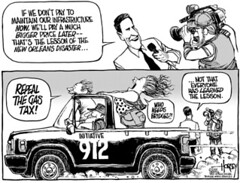
Editorial Cartoon, David Horsey, Seattle Post-Intelligencer, 09/11/2005
Editorial Cartoon, David Horsey, Seattle Post-Intelligencer, 09/11/2005.

Lon Anderson, the spokesperson for the Midatlantic chapter of the American Automobile Association, has a short op-ed in today's Washington Post about the need to invest in maintaining the road infrastructure, in particular, bridges. See "Lessons for D.C. From Minneapolis." He does write this:

Locally and nationally, we have neglected our transportation infrastructure for years. Lawmakers at the state and national levels have refused to raise the taxes needed to provide the money for necessary highway and bridge construction and maintenance. While funding levels have stagnated, the numbers of vehicles and miles traveled on our roads and bridges have soared, as has the cost of building and maintaining them. Recently, some funding spigots have begun to open, but the maintenance backlog is enormous.

but he doesn't come out overtly in favor of a tax. Right now the Federal Gasoline Excise Tax is 18.4 cents per gallon. With increased mileage efficiency the tax doesn't necessarily increase with the number of miles driven.
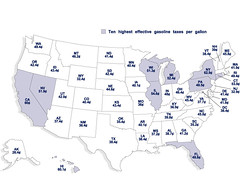
State gasoline excise tax rates
State gasoline excise tax rates. Source: The Tax Foundation.

Also see this blog entry from a couple years ago about the pro-automobility agenda of the AAA, "AAA is an automobile lobby, first, last and always."

Friday's Post has a front page story with this headline, "Bush Rejects Gas Tax To Fund Bridge Repair, Decries Hill Spending." I'd love to see the AAA advocate for a higher gasoline excise tax. See "Acute Pain at the Pump Stalls Gas Tax Revenue," from the Washington Post, 2005. From the article:

Rising gas prices are the latest reminder to officials that the gas tax is no longer sufficient to finance transportation programs. "The gas tax is becoming almost inadequate as a principal source of highway funding," said Martin Wachs, a professor at the Institute of Transportation Studies at the University of California at Berkeley. Governments have "failed to increase the gas tax anywhere near what they need to maintain its spending power." Wachs noted that some localities are picking up the slack; 23 California counties have voted for sales taxes for transportation.

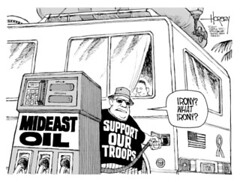
Editorial cartoon by David Horsey, Seattle Post-Intelligencer, 8/10/2007
Editorial cartoon by David Horsey, Seattle Post-Intelligencer, 8/10/2007.

From "Gas Prices Breaking Records Every Day," from ConsumerAffairs.com

AAA Mid-Atlantic Government and Public Affairs Director Lon Anderson told a gathering of automobile enthusiasts earlier in the week that big oil is simply “ripping off” consumers. “Where is the hurricane,where is the new international tension,” Anderson asked? “You ask the oil companies that while they are raking in record profits.”

Labels: , ,

Friday, August 03, 2007

Minnesota bridge collapse, infrastructure demands, and the question of how do you pay for all those roads?

Minnesota bridge collapse
BRANDI JADE THOMAS / AP. Cars are strewn on the collapsed portion of the Interstate 35W bridge, which stretches between Minneapolis and St. Paul.

Twin Cities reminder: Care for what we have

... a pointed reminder about the need for vigilance in the inspection and maintenance of our own state's 3,000 bridges and another 4,000 watched over by cities and counties.

Engineering experts at Washington State University and the University of Washington have a short list of usual causes of major bridge failures. In the case of the Minnesota collapse, the scouring away of soil around underwater concrete piers might be the first place to look. The erosion of the soil can be hard to spot during inspections because loose soil settles when the river is calm, explains Marc Eberhard, a UW professor of civil and environmental engineering.

The erosion of bridge supports brought down a span 20 years ago on the New York Thruway. Another suspect is fatigue, from the stresses and strains on steel parts flexing with the loads they carry. Small cracks can be fatal.

Corrosion is another enemy, and the failure of a single pin in 1980 helped bring down an Interstate 95 bridge over the Mianus River in Connecticut. For Minnesota, think weather extremes and de-icing solvents.

The age of the Minneapolis bridge is a factor as well. Since its construction in 1967, bridges simply are not built that way anymore. They now incorporate redundant design features intended to back up and compensate for failures of individual support elements. Washington has only a handful of steel-truss bridges, but it has plenty of old spans that do not incorporate modern engineering lessons.

This is a time when public officials earn their keep by ensuring that public safety is being watched over and timely work is being done. No one in the Seattle area who heard of the Minnesota tragedy did not think of the Alaskan Way Viaduct and, secondarily, the warp and woof of a storm-tossed 520 floating bridge. Those replacement plans are where, exactly?

Professor Kenneth L. Carper, of the WSU School of Architecture and Construction Management, quotes an engineer who investigated the Connecticut bridge collapse: "Imagination and fear are among the best tools for preventing tragedy."
----------------
From the Washington Post, also see "D.C. Area Bridges Need Pricey Repair Work," and "Collapse Spotlights Weaknesses in U.S. Infrastructure. From the latter article:

Diminishing tax revenue and surging costs have put a double squeeze on state transportation departments, transportation experts said. While federal gas tax rates have remained at 18.4 cents a gallon since 1993, construction costs have been increasing 20 percent a year in some areas. The price of steel, oil and concrete are all up, partly driven by demand for raw materials in China, where the government is busy laying out a national highway system of its own.

For drivers, it's an acceptable risk to have a bad accident or other road problem significantly impact their trip, so long as it isn't that often.

People's unwillingness to pay taxes in the face of ever-increasing cost demands for building roads--the $700 million "mixing bowl" in Springfield or the $2 billion+ plus Wilson Bridge--shows that the desire for a free lunch is strong.

This letter to the editor in the Richmond Times-Dispatch is from August 2006:

Politicians Squander Gasoline Taxes, Mark Johnson, Midlothian, Virginia:

The recent letter from Ray D. Pethtel is one of the most startling things I've read in some time. Pethtel, identified by you as a past transportation commissioner, laments the fact that "only 16 percent of the cost of gasoline today is a result of state and federal taxes."

Let's get this straight: Fully one-sixth of what I pay to gas up my beat-up pickup truck doesn't fund exploration for future oil or natural gas deposits and their development. It doesn't go toward research of alternative energy sources; it doesn't go to the greedy oil companies as profit; it's not used in any way to reduce our dependence on foreign sources for energy. It goes to state or federal coffers to be spent on, presumably, transportation.

Forty-eight cents of the $2.85 I paid for a gallon of gasoline today goes to the government -- and we still have transportation woes? This is not a revenue problem; this is a problem with government.

The last biennial budget passed by the General Assembly was for $74 billion, the one previous was for $62 billion. Somewhere in that $6-billion per-year increase is enough money to address any transportation issues. That's what voters were saying in the Mason-Dixon poll Pethtel tries to discount.

A. Barton Hinkle is an op-ed columnist for the RTD. He writes a fair bit about transportation. One of the things he clued me into awhile ago, and is mentioned in the column that I will be quoting from, "Road Rage: Keep These Points in Mind As Transpo Debate Proceeds," is that new construction of highways create a "mathematical dilemma" for state departments of transportation-highways:

Current budget growth accelerates future budget growth. That's because VDOT has to spend money on maintenance as well as construction. A dollar spent on construction this year creates demand for maintenance dollars in future years. The faster VDOT spends money on road-building now, the faster it will have to spend on maintenance later.

He also writes:

THE SITUATION is not unique to Virginia; 21st-Century Highways, a book by the Virginia Institute for Public Policy and the Heritage Foundation, cites a 1996 study commissioned by the Federal Highway Administration. It found similar diminishing returns on investment: "The federal highway program produced extremely high benefits in its early days, as new direct routes were created and the network became more complete, but . . . the value of these benefits declined as the interstate system neared completion."
Bridge Collapse
Collapsed section of the I-35W bridge in Minneapolis, Minnesota. The murky, swirling waters of the Mississippi river hampered the work of divers Thursday searching for up to 30 people still missing after a huge bridge collapsed late Wednesday, killing at least four.(AFP/Getty Images/Scott Olson)

Labels: , ,