Rebuilding Place in the Urban Space

"A community’s physical form, rather than its land uses, is its most intrinsic and enduring characteristic." [Katz, EPA] This blog focuses on place and placemaking and all that makes it work--historic preservation, urban design, transportation, asset-based community development, arts & cultural development, commercial district revitalization, tourism & destination development, and quality of life advocacy--along with doses of civic engagement and good governance watchdogging.

Sunday, June 16, 2024

Megabus bankruptcy: merge inter-city bus services with Amtrak

 Mass transit that is privately run has been on a downward spiral for decades.  In the 1970s, railroads gave up their passenger services to Amtrak.  Privately owned bus systems, primarily Greyhound and Trailways, shrunk their systems, increased prices, and lost ridership.

In the 1990s, on the East Coast inter-city bus services grew because of "Chinatown buses," buses that ran between Chinatowns in Boston, New York, Philadelphia, DC, and to some extent Richmond.

The for profit carriers saw this and created new services, such as Bolt Bus and Megabus to provide service in high transit corridors like DC-Boston.  Then some of the companies branched out, created multistate regional hub services such as out of Chicago.

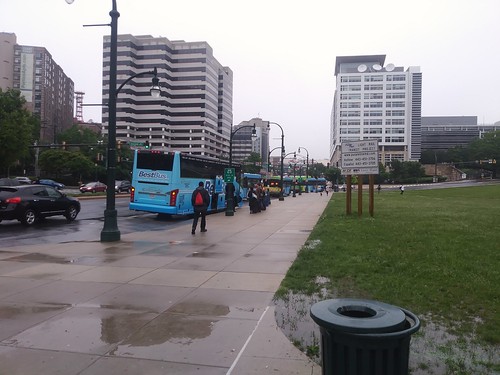
The Philadelphia Streets Department just moved the city's main Megabus stop from Arch Street to the newly reconstructed Schuylkill Avenue, a block south of 30th Street Station. But riders still wait on a sidewalk with no amenities. Inga Saffron / Staff

There's been a bunch of private equity activity, I haven't kept up.  

The last major switchover involved private equity selling off the real estate--terminals--leaving the riders and services to fend for themselves.  This has been covered some by the media ("Regional and multi-state inter city bus transportation. Thanksgiving is a time of big travel.," 2023). Especially by the Philadephia Inquirer ("Philly’s failure to improve conditions for intercity bus riders is an equity issue," "It’s time for Philly to build a proper bus station. Here are six possible locations.").

From the second PI article:

That’s good to hear because Philadelphia, like many American cities, has long undervalued the importance of its intercity buses. While SEPTA, Amtrak, Philadelphia International Airport, and the area interstates all receive government funding, long-distance bus service is privately run and operates with virtually no public subsidies, even though it serves a much poorer population. I never ceased to be amazed at the extreme contrast between the dismal, bunker-like space at Greyhound’s rented Filbert Street terminal and Amtrak’s soaring waiting room at Gray 30th Street Station. 

After the federal government deregulated the bus industry in 1982, some carriers stopped using the bus station and began picking up customers at sidewalk stops. The general lack of respect for this low-cost bus service may explain why the Streets Department thought it could dump Greyhound’s operation on Market Street with no amenities for travelers. 

Carroll and Mondlak told me that the city now sees intercity buses as a crucial part of Philadelphia’s transportation network, as important as trains, planes and highways. Besides ensuring that residents have access to an affordable form of long-distance transportation, they believe that intercity bus service also supports Philadelphia’s vital hospitality industry.

Cities and states should step in to ensure there is adequate shelter-terminal service provided to riders, in part as a transportation demand management effort.

Joseph Schweiterman, a professor at DePaul's Chaddick Institute, is one of the only professors who focuses on intercity bus.

Like how many states are investing in passenger rail expansion, Colorado is probably the most active state in developing an inter-city bus network at the state scale.  Bustang is the normal ineration, with winter service focused on skiing separately branded as Snowstand.

Because the US doesn't have a national transit plan, we don't have a plan for inter-city bus service.  

National Greyhound map/ad, 1941

I argued a few years ago, when Greyhound was for sale, that Amtrak should buy it.

-- "Two train/regional transit ideas: Part 1 | Amtrak should acquire Greyhound," 2021

Granted these are services of last resort, and the federal government is so far from being able to work in a bipartisanship way to ensure national transit service (thank you Republicans), but as far as national transit planning and equity is concerned it seems the way to go.

Especially since Megabus, owned by Coach USA, and Coach USA declared bankruptcy ("'A great alternative’: Riders fret over the future of low-cost Megabus after bankruptcy," Pittsburgh Post-Gazette), "sBus Carrier Coach USA Goes Bankrupt After Ridership Drops," Bloomberg).  From the PPG:

The bankruptcy comes just two years after Megabus added 22 new destinations from Pittsburgh to Central Pennsylvania and southern New York through a partnership with Fullington Trailways, a motor coach carrier based in Clearfield. 

The new service added routes to Indiana, Punxsutawney, State College and Bradford in Pennsylvania and Olean and Buffalo in New York, among other locations. The agreement also expanded Megabus service from Philadelphia (11 new cities), Harrisburg (9), State College (18) and New York City (14). 

 The low-cost bus service was a immediate hit with Pittsburghers when it arrived in the city in 2011. According to the Megabus website, a one-way ticket to New York City now costs $50, while a ticket across the state to Philadelphia is just $25. Reducing routes and facilities would bring less accessibility to riders, said Lexie Ditchkus, 27, of Scranton.

Coach USA is subdivided into 25 distinct businesses, and has entered purchase agreements with affiliates of The Renco Group, Inc. and AVALON Transportation, LLC for 16 of them, according to the company’s news release. The sales should “ensure uninterrupted passenger transportation,” according to court documents. 

Megabus is in the process of being sold, but no company has officially pursued purchase agreements. It will operate on an “ordinary course” pending the court’s decision. If a transaction does not occur, routes may be limited, according to the court document.

It's not like we don't know how this story goes.  Because of relatively short distances in Europe and less car ownership, private bus systems (which bought many of the companies in the US) are more economically viable.

Inter-city bus service should be combined with Amtrak, and a national transit system should be maintained and improved.

Labels: , , , , , , ,

Friday, November 24, 2023

Regional and multi-state inter city bus transportation. Thanksgiving is a time of big travel.

 This was in the Thanksgiving entry, but should be separated out.

==========

One overlooked segment in regional transportation planning is inter-city bus service/travel. 

Blog entries

Resources
-- "Building a better bus hub at Union Station," Washington Post, 2011
-- "The Navigator: Greyhound, leaving passengers out in the cold," Washington Post Travel Section, 2014
-- Intercity Bus Program Strategic Direction Report, Texas Department of Transportation, 2019
-- "Emergent Curbside Intercity Bus Industry: Chinatown and Beyond," Transportation Research Record, 2009
-- "The Curbside Bus Industry: A New Era of Bus Travel, masters thesis by Eileen Collins The Chaddick Institute for Metropolitan Development at DePaul University in Chicago has done a fair amount of research as well, in part focusing on the Midwest. -- Intercity Bus Research webpage
-- The Return of the Intercity Bus: The Decline and Recovery of Scheduled Service to American Cities, 1960 - 2007

Greyhound is the major US company, and over the last ten years it's been owned by foreign firms.  The previous owner sold off the real estate--many inner city terminals are big and worth a lot as redevelopment opportunities.  

Abandoned Greyhound bus terminal in Oakland, California.  Many stations were built during the era of art deco architecture and have wonderful details.

As terminals close, buses stop on the street, people queue outside with no protections.  Professor Joseph Schweiterman of DePaul University is rare in that he tracks this form of transportation and he wrote about it for MSNBC News ("Thanksgiving is a stressful time to travel. Why it may get worse for these passengers.").  

From the article: 
The past few months have been tough for many passengers using bus stations and curbside spots across the country. Amid a worsening bus station crisis, some city officials have become downright hostile to the key service because of perceptions that it causes theft, loitering and loss of neighborhood aesthetics. While dozens of airport terminal improvements are providing new conveniences for flyers, and as new federal dollars flow for train upgrades, more and more riders of intercity buses are, quite literally, being left out in the cold. 

... On Greyhound, the bus travel giant that reaches more U.S. cities than any other line, stations with spacious and climate-controlled waiting rooms have been shuttered in Charlottesville, Virginia, Cincinnati and Columbus, Ohio; Erie and Philadelphia, Pennsylvania; Knoxville, Tennessee; Louisville, Kentucky; Portland, Oregon, and Tampa, Florida. This has forced lines to move to curbside spots or more remote locations separated from downtown. Greyhound and its partners have suspended service entirely from two state capitals, Jackson, Mississippi, and Little Rock, Arkansas, because of their inability to find workable stations. Concern is high that Greyhound stations in Chicago; Charlotte, North Carolina; Cleveland; Dallas, and Kansas City, Missouri, could be the next to go. 

This crisis is unfolding as intercity bus lines more broadly seem to be enjoying a post-pandemic bounce... More people ride intercity buses than trains, but the lack of high-quality station arrangements raises questions about the mode’s future opportunities.

Three factors are at the root of the crisis. Many municipal governments, once allies, have adopted aggressive not-in-my-backyard stances toward intercity buses, fueled by the perception that bus stations may be unsafe places that generate criminal activity. Adding to this problem, dozens of stations came into the fold of a private real-estate holding company...

Meanwhile, many City Halls appear indifferent, highlighting the lack of clout bus travelers have in policymaking. ... Meanwhile, many City Halls appear indifferent, highlighting the lack of clout bus travelers have in policymaking.

Common sense dictates that intercity bus lines start using public transit terminals with around-the-clock security, restrooms and indoor waiting areas. The federal government has made giving intercity bus lines “reasonable access” to these facilities a funding requirement.
What to do about bus rider customer experience.  Note in my typology on the transit network at multiple scales ("Reprint (with editing): The Meta-Regional Transit Network," 2009), a commenter had to point out to me that I failed to include buses.  I have written about this from time to time, including problems with the set up at DC's Union Station, by comparing it to Toronto and Montreal ("Union Station bus terminal, DC," 2011).

Great 1950s brochure on the Port Authority Bus Terminal in NYC.  Flickr photo by Karen Yang (also see the brochure cover and back panel.)

There are a few examples I've come across where inter city buses are incorporated into existing public transit stations, although it isn't always done well.  DC's Union Station, Charlottesville, even the Silver Spring Transit Center are examples.  Hatmburg's bus terminal is adjacent to the main train station.  In Liverpool they have a separate intercity bus station, a number of blocks away from the main train station  and adjacent local public bus station, and but it's run by the local transit authority.  In Essen, the inter city buses stage at the back of the station.  (That's where I first saw bike racks placed on the back of intercity buses.)

One way to build stronger support for this, at least in core metropolitan areas, where commuter bus service exists, is to include better services for both commuter bus passengers and inter city bus passengers.  Similar to the decline in amenities and customer experience for inter city bus, commuter buses tend to use the public transit shelter infrastructure.
 
A start would be to require center cities to include provisions for inter city bus transit and services into local transportation plans, and for states to have equivalent plans.

Colorado may be the national leader, as it has created a statewide inter city bus transportation program called Bustang (with a derivative called Snowstang for ski service).  I don't know how it works though at the nexus of street, bus, terminal, and passengers.  And the state is still served by for profit bus services.  

Union Station Denver's underground bus terminal is used by public transit buses, I don't think inter city bus.  Design wise it's a great example of how a bus terminal can be integrated into transit stations.  Although this rendering is more lively than the actual.


SOM press release, 2014

When Greyhound was last up for sale, I suggested that Amtrak buy it ("Two train/regional transit ideas: Part 1 | Amtrak should acquire Greyhound," 2021).  Amtrak does provide some inter city bus service, called Amtrak Thruway, to fill in access gaps to its route network, even in outstate Maryland.

Labels: , , , ,

Monday, March 08, 2021

Train stations as mobility and community hubs: Union Station, DC and intercity bus service

Points about train station planning.  There are tons of references about train station planning, but in keeping with my concept of "transformational projects action planning," despite all those documents and initiatives, transit planners in a region don't start off by saying "the big train station is our most prominent marketing touchpoint for transit, and we should plan around it in a manner that promotes and strengthens the transit network."

Union Station is a perfect example of this.  It should be planned at many scales to best leverage the opportunities it presents.

Yes, the planning has been inadequate as it relates to other modes, including pedestrian and bicycling, but also surface transit, subway transit and commuter rail ("A "Transformational Projects Action Plan" for a statewide passenger railroad program in Maryland," 2019, "Virginia’s $3.7 billion rail plan called a ‘game changer.’ Here’s what we know about it," 2020, Post).

Like my point about better planning around maglev ("DC, Transformational Projects Action Planning, and the Baltimore-Washington Maglev project"), so much more ought to be considered.

Washington's Union Station not multimodal enough?  Union Station is in the news again because plans for the station's expansion, combined with the construction of a mixed use development over the trainyard between the station and K Street NE, are said to be too automobile focused ("Federal agency to revise design for Union Station overhaul, criticized for being too focused on cars," Washington Post) and stint on accommodation of buses--providing less space for buses ("Virginia’s $3.7 billion rail plan called a ‘game changer.’ Here’s what we know about it" Post).

In the planning process, I made extensive written and verbal comments about the accommodation of motor vehicle traffic, pedestrians, and bicyclists, and especially in terms of aesthetic dimensions.

(WRT pedestrians, I said the intersections on Massachusetts from North Capitol to 2nd Street, along First Street, and the unit block of G Street needed to be treated as a network.  I made points about access to the rear of the station from H Street NE beginning with planning engagements starting in 2001!)

Union Station should be a world class train station because its owned by the US Department of Transportation.  I made the point that since the station is owned by the US Department of Transportation, they should be focused on making it a national, if not world class best practice example of integration of multiple sustainable transportation modes.

I also have an extensive discussion of how Union Station can be better leveraged as a tourist information and cultural center, with museum and tourist train functions as well ("New State Rail Planning Initiative in DC," 2015).

The front of the station is chaos, mixing pedestrians, tourist buses, taxis and ride hailing vehicles, and personal automobiles doing pick up and drop off.  

These two parking lots in the foreground seem like a great place for a complementary inter city bus terminal for Union Station.

Alongside regional and long distance Amtrak service and Maryland (MARC) and Virginia Railway Express commuter trains, plus MARC Penn Line's weekend service, the station also mixes rental cars, a bit of car share vehicles, local transit buses, inter-city bus services (Greyhound, Bolt, etc.), and bicycles.

-- "Union Station bus terminal," 2011
-- "New bike parking facility at Maastricht train station in the Netherlands reminds me of the need to create high profile bike hubs in the US," 2018

This 1950s Hertz rental car ad promoted the idea that you would travel long distances by train, and then rent a car to get around your destination.  This ad mentions Washington's Union Station specifically.

Separating bus services by placing them on different sides of train stations in Germany.  In my comments I referenced what I saw with city train stations in Hamburg, Dortmund, and Essen, where transit buses were on one side of the station, tourist buses on another, and intercity buses on a third, although with Hamburg they are accommodated in a separate terminal, a short walk from the station, but proximate to a subway entrance.

Underground bus concourses in Denver and Brisbane.  My preference was to move most of the surface traffic--taxis and automobile pick up and drop off, and local transit buses, but not tourist buses--underground, in front of the station.  

Good examples of underground bus terminals are Denver's Union Station, where transit buses serve the station via an underground station.  And Brisbane, Queensland, Australia, where the Queen Street Station in the central business district, accommodates the inter city bus commuting services from the suburbs.  

Denver

But there are decent above-ground inter-city bus terminals in many places, including Montreal and Hamburg.  They have gates, good wayfinding signage, integrated arrival and departure screens, etc.

But given the underground train and subway tunnels as well as the possibility of expansion of these tunnels, to fit in all this would require a couple of levels, and the space probably doesn't exist.

Between the train tunnels, limited space, and the high construction cost of underground facilities, I can see why they might have blown off my recommendations.  But when you're building something to last two or three generations and such a signature facility, you really ought not to satisfice, because you'll pay the price for generations (like with Penn Station in New York City).

A couple other ideas about inter city bus at Union Station.   First Street NE.  According to the Post article, the plan is to shift the location of intercity bus from one deck of the parking structure, accessible from H Street NE, to First Street NE, with outside staging of platforms on G Street NE.  

The complaint, I think justified, is that it is not enough space.  Plus outside line up to get on the buses is not particularly comfortable for riders and is likely to be a visual and logistical mess.  Which is a high source of complaints aboutthe quality of intercity bus services now ("Taming the Inter City Bus Industry," Gotham Gazette).


Put it closer to New York Avenue.  One was to put the intercity bus terminal closer to M Street and the NoMA subway station, with an airport style walkway to Union Station.  This would put the bus terminal closer to New York Avenue, which is the main way the buses move north and south, easing congestion effects.  It would be difficult to do though.

My preferred alternative: Put it across the street, off Massachusetts Avenue.  Alternatively, the bus terminal could be built underground and above ground on the two Senate parking lots across from the Station/Post Office, between Massachusetts and Louisiana Avenues, bisected by E Street, as shown on the left section of the satellite image below.  With an underground passageway from Union Station.


That's along the same lines of the current station planning, but without the physical constraints, and offering indoor accommodations for riders.  Providing the Senate is willing to give up their parking lots.

To deal with the bus traffic and congestion, I would create an underground bus tunnel on First Street NE, between New York Avenue and the Union Station complex, connecting to the bus terminal. 

The Terminus Centre-Ville commuter bus station is proximate to commuter rail and subway stations.  Gates to buses are accessed from a central waiting area 

Wikipedia photo by Henrickson.

The Downtown bus terminal in Charlottesville, Virginia, serving both local transit and inter city bus services, has an analogous set up, although it's above ground.  A nice waiting sized waiting room with seats protects riders from the weather.  Queen Street Station in Lancaster, Pennsylvania too.  And many others

Labels: , , , ,

Friday, July 17, 2020

Access planning for transit stations: Europe

I just wrote about transit station access wrt Greater Tysons ("Tysons (Corner) 10 Years after the plan to make it more walkable: the necessity of implementation mechanisms") just a few days ago, and mentioned how the Regional Plan Association report Urban Design Manhattan influenced me in terms of thinking about access to stations in terms of both horizontal and vertical dimensions in a more systematic way.

Delft

ArchDaily has a piece, "Tunnel Vision: Europe's New Urban Pathways and Metro Stations," about recent access improvement initiatives in Amsterdam, Delft (Netherlands), Budapest, Rotterdam, and Zurich.

It's more focused on underground-specific linkages and monumental architecture rather than a systematic approach to developing access improvements.  But the images are still pretty cool.

Oh, another is Bicycle Dutch mentioned the opening of a new massive bicycle parking garage at a Netherlands train station ("A huge new bicycle parking garage in The Hague"). It has space for 700 bike share bikes, and 7,000 parking slots.

And there is an ad on the Washington City Paper website about public comments for the Washington Union Station Expansion Project (I couldn't seem to find the closing date), and I expect that my comments from a few years ago didn't go anywhere.

In those comments I stressed reconfiguring access on the front facing plaza, to the extent possible shifting the traffic underground, creating world class bicycle support programs, and adding visitor and museum functions.

I made the point that since Union Station is the only train station in the US owned by the Federal Railroad Administration/US Department of Transportation, they should aim to make it a best practice demonstration station for the rest of the country.

The concepts about visitor and museum functions build off my comments on the State Rail Plan and the entry calling for the creation of a heritage streetcar system (modeled after San Francisco) serving the National Mall, from staging points at Union Station, Georgetown, and Arlington County (Arlington Cemetery, the Iwo Jima Memorial, and Rosslyn).

It's unfortunate that planning-wise the US doesn't seem to have done a good job in terms of codifying best practice guidance, and working it into new projects going forward.

Past blog entries on station planning include:

-- "Transit, stations, and placemaking: stations as entrypoints into neighborhoods," 2013
-- "Transit stations as an element of civic architecture/commerce as an engine of urbanism," 2016 (this entry is more important for the comments, where I put in new information as I come across it)
-- "Revisiting creating Public Improvement Districts in transit station catchment areas," 2020, which updates slightly the original piece from 2016
-- "Transportation Infrastructure and Civic Architecture #3: Rhode Island Avenue Pedestrian Bridge to the Metrorail station," 2016
-- "Takoma Langley Crossroads Transit Center: a critical evaluation," 2016
-- "Updating my review of the Silver Spring Transit Center: a few things I missed in 2015," 2018

Plus I have a partially written series about re-thinking railroad passenger service planning and marketing in the US, which I guess I should get back to.

It was partially inspired by an article about the initiatives at Los Angeles Union Station ("At 80, Union Station tries to reinvent itself for a rail future," Los Angeles Times) along with programming on NHK World about transit service in Japan, the 150th anniversary of the Golden Spike last year, etc.

Los Angeles Union Station is very pretty, but because it's not in a thriving part of Los Angeles, the station lacks the kinds of ancillary functions in a station like retail and food, which tend to be amazing in main train stations in Europe because they serve so many people (for example, the Essen train station has a Lidl Supermarket, among other retail; the Hamburg station has an amazing array of retail and food options, etc.).  There is a smattering.

Labels: , , , , , ,

Sunday, June 02, 2019

Revisiting the review of the Takoma Langley Crossroads Transit Center

GGW has a post, "Poland’s “Unicorn Stable” tram station is dazzling and I want to nerd out with you about it," on the visually arresting "train shed" of the Piotrkowska-Centrum tram station in Łódź, Poland.
Piotrkowska-Centrum tram station, Łódź, Poland

Piotrkowska-Centrum tram station, Łódź, Poland

There isn't really much to update about the Takoma Langley Crossroads Transit Center from my supra-detailed review in December 2016.

Bicycle Sharing station map on New Hampshire Avenue at East-West Highway, Prince George's County, MarylandItem #6 concerned minimal bicycle accommodations.  Now Prince George's County has joined Capital Bikeshare and there is a station there, as well as some stations between this area, the DC border, and College Park.

Takoma Park installed a bike share station of its own behind the shopping center across the street, but in Montgomery County.

Item #17 addressed "Inadequate leveraging of the station to build and extend area identity."

Although I should have been more specific in the header about "transit infrastructure as an element of civic architecture."

With the saying that a picture is 1,000 words, the canopy design of the Piotrkowska-Centrum tram station is an exceptional illustration of the point and the lost opportunity to do something arresting.

It's all the more depressing, given all that Montgomery County and Prince George's County is investing in this area in terms of community revitalization, plus the fact that this will be a key station on the Purple Line light rail system.

Takoma Langley Crossroads Transit Center

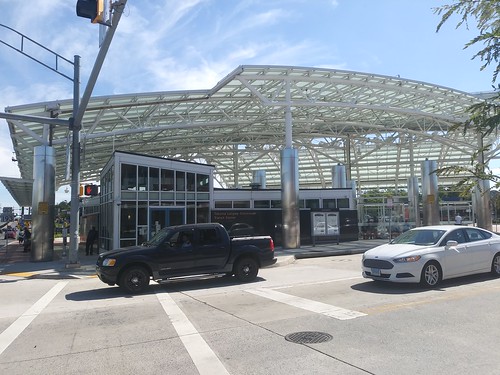
It wouldn't be out of the question to go in and replace the glass, as well as to add a gateway sign (item #10), along the lines of the El Monte Station in Los Angeles County

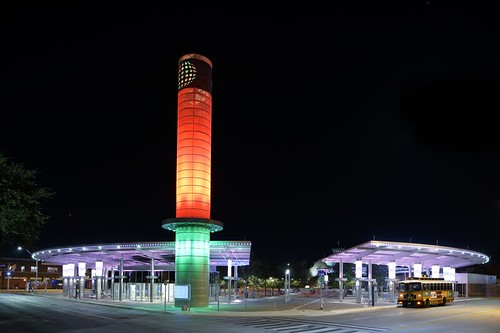
or the Centro Chroma Tower in San Antonio, a public art installation by Bill FitzGibbons.
Bill FitzGibbons, _Centro_Chroma_Tower_image_5mb-960x640

In my reviews of area transit stations, I've made the point that the DC and Baltimore area "metropolitan planning organizations" should produce jointly a guide to transit station design, so that the various misses as illustrated in my analyses of area stations can be reduced, and the station's opportunity to accomplish multiple objectives concerning transit marketing, civic design, and economic development simultaneously can be better achieved.

Labels: , , , , , , ,

Thursday, July 12, 2018

A well designed train station is a well designed train station: it's not about "luxury"

Interior, Grand Central Station.  Alexsandr Stickpin Photography. ("Grand Transit: MTA and Grand Central Terminal," Art History Today).

MobilityLab Express has an article, "Grand Central was designed for luxury travel. That’s why commuters love it," attributing the success of Grand Central Station in New York City to the fact that it was designed for long distance trains during the heyday of railroad passenger travel.

I don't agree.

It is a pretty station.  But virtually all big city railroad stations constructed before 1935 were similarly grand, even if the level of grandeur was scaled to the size of the city.  Grand Central Station was built to be both functional and aesthetically attractive.

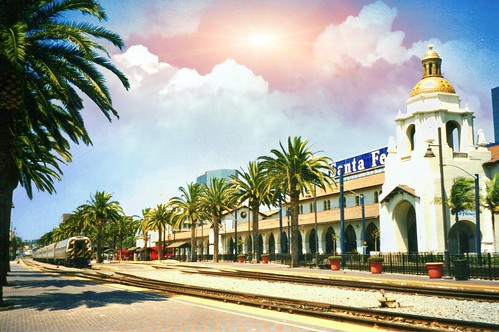
But so was the Santa Fe railroad station in San Diego or Union Station in Denver, etc.  (Or for that matter, the Ferry Terminal Building in San Francisco.)
Union Station ~ San Deigo CA ~ Historic Building

In the postwar period and in the context of an automobile-centric transportation, the importance of design and aesthetics was stripped out of railroad station planning, whereas most train stations in the US are now built to be functional. (Separately, the train station preservation movement, both for use as transportation facilities or as adaptive reuse projects to maintain the building in the face of the loss of its function.)

NJ Transit platform at Penn Station.  Wikipedia photo.

Penn Station, while originally built with a beautiful façade, was built for both local--presumably not "luxury"--and intermediate distance travel primarily between Washington, Philadelphia, New York City and Boston, and according to some architectural historians was poorly designed as it relates to passenger throughput.

And anyone who uses the station knows how cramped the platforms are, which were created as part of the original station and retained after the above-grade building was demolished in the early 1960s.

I think more than "building a station to serve luxury markets," the issue is the design of the station as a way to maximize the quality of the trip and the experience, specifically:

-- quality of accommodations for passenger throughput generally (entry and exit, connections to other transit services)
-- quality of accommodations for passenger throughput specifically to/from and on platforms
-- centrality of its location (for example the recently in the news Michigan Central Station was deliberately constructed in a location outside of the center thinking it could attract patronage regardless)
-- its place as an anchor of the area transit system and the mixed use district in which it is placed
-- amenities, especially retail and food service
-- architectural design and aesthetics.

In my two trips to Europe, I have been in train stations in Hamburg, Essen, and Dortmund in Germany and in the UK, St. Pancras, Kings Cross, Euston, and London Bridge in London; Lime Street, the Liverpool airport station (some distance from the airport), and the Liverpool Central commuter rail station.

Hamburg especially impressed me.  It's one of the busiest stations in Europe with 650,000 people moving through the station, with connecting service from multiple underground lines, the main inter-city bus terminal nearby (with an underground connection across the street); superior placement and separation of tourist bus services from traditional local transit service; and it anchors both the city's pedestrian shopping district and the Spitallerstrasse transit mall.

The way local transportation intertwines but is separated to foster throughput with the Hamburg train station as the anchor to all the services is far superior to any train station I've experienced in the US, especially Union Station in Washington, where taxicabs, tourist buses, ride hailing pick up and drop off, and individual passenger pick up and drop off are all massed together--poorly--in front of the station.

But even smaller stations in Essen and Dortmund were similarly situated--adjacent to the main pedestrian shopping district, with inter-city bus and local transit services, and tourist bus services, all well integrated but separated as needed for optimum service provision.

Similarly, my more recent trip to the UK super impressed me in terms of the way the train stations were so massive, beautiful, full of amenities, and successful (even if there were wayfinding and other issues) and itinerant service problems on the Thameslink/Southern Rail and Northern Rail services.

Euston is an "old station" undergoing renovation so it was cramped--especially in the face of recent massive train service breakdowns. But it still has great underground and bus connections, and compared to just about any train station in the US, bike accommodations.

By contrast, each of the other stations I visited in London, all renovated more "recently," was amazing, and mixed longer distance service with commuter trains.

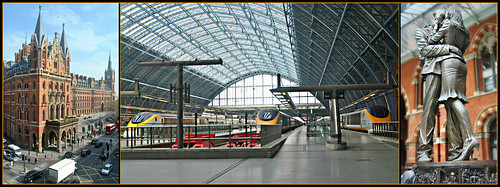
St. Pancras is also home to the Eurostar trains connecting London to the European continent, with decidedly luxury options, but that didn't make the station necessarily more beautiful or successful. (Although yes it is stunning inside and out.)
St Pancras International Station London

Similarly, in Liverpool, Lime Street station has longer distance and commuter trains, a "low level" (local underground) station, is adjacent to the main city local transit station at Queens Square, and anchors the adjacent pedestrian district.

The "airport" station is not at the airport but links to it, and has local and long distance train connections, plus local bus transit, and intercity bus transit.  It also provides for a dose of redundancy in that the station can be used for long distance trains while Lime Street station is closed for renovation, which was the case when I was leaving Liverpool.

Many of the Liverpool area local train stations have combined ticket office-retail stores run by Merseytravel and the "automatic" coffee dispenser at the Airport station ticket office (the coffee shop was closed by the time I got there) made excellent coffee!

(Note that I also visited the Victoria Coach bus station in London and the Liverpool One inter-city bus station in Liverpool.  The Victoria station is beautiful art deco outside and terrible inside.  I learned that the problem inside is multiple landowners and the inability of Transport for London to take control of the design, planning, and operation for the service.  The Liverpool One station is outdoors, but has good information and wayfinding systems, excellent platform shelters, and a ticket and information office run by the local transit authority.)

"Old" books on train stations.  I hate to admit that it wasn't until I saw a book by John Droege, Passenger Terminals and Trains, at an antique mall, that I realized it would be helpful to bone up on the historical literature on railroad station design and architecture.

The Droege book dates to 1916 but has been reprinted.  Carroll Meeks' The Railroad Station: An Architectural History dates to the 1950s.

The past blog entry "Transit, stations, and placemaking: stations as entrypoints into neighborhoods" (2013), discusses how, especially in the urban context, transportation infrastructure's aesthetic elements have often been ignored and this can have deleterious impact on quality of life.

After I wrote that piece, because the Wall Street Journal mentioned a 100 year old article on "railroad beautiful" I tracked down some early planning writings from the early 1900s on the aesthetic qualities and design elements of railroad systems, concerning both station grounds and the right of way and yard facilities.  The Boston and Albany Railroad was a leader in adopting such an approach.

See "A Railroad Beautiful" and "The Treatment of City Squares--III; The Square Before the Railroad Station," House and Garden (2), 1902 and "Railroad Gardening," Standard Cyclopedia of Horticulture. (These resources have been scanned for online access by the Hathi Trust.)

Transit station reviews.  I have written reviews of the Silver Spring Transit Center and the Takoma Langley Crossroads Transit Center, as well as submitted comments on the redesign and expansion of Union Station.

-- "Updating my review of the Silver Spring Transit Center: a few things I missed in 2015," 2018
-- "Takoma Langley Crossroads Transit Center: a critical evaluation," 2016
-- "DC Union Station EIS FRA -- Comments due November 9th," 2016

Clearly station designs today have a lot to learn from the station designers of yesteryear.  As do I.

Note that the Network Rail train station design manual is superior.

-- Guide to Station Planning and Design, Network Rail

But the US Federal Railroad Administration publication is good on the underlying principles, but provides limited direction in terms of specifics, and it doesn't give examples of supra-best practices, which would raise the expectations of planners and riders both.

-- Station Area Planning for High-Speed and Intercity Passenger Rail, Federal Railroad Administration, US DOT

Similarly the SEPTA guide for their light rail/trolley stations is a useful resource, but for a much different scale of transit service

-- Modern Trolley Station Design Guide, SEPTA

Labels: , , , , , , , ,

Friday, May 25, 2018

Updating my review of the Silver Spring Transit Center: a few things I missed in 2015

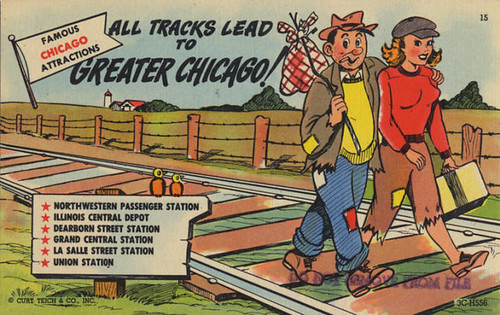
All Tracks Lead to Greater Chicago postcard, Curt Teich Co.
This vintage postcard describes Chicago's train stations as major attractions.

I wrote about the Silver Spring Transit Center in 2015:

-- "Multiple missed opportunities in the creation of the Silver Spring Transit Center"
-- "Brief follow up on the Silver Spring Transit Center"

although my review of the Takoma Langley Crossroads Transit Center in 2016 has a more detailed framework.

(And other guides for railway--Network Rail in the UK, and streetcar--SEPTA in Philadelphia--systems have great frameworks and checklists too.)

The three pieces provide a pretty good framework for thinking about a wide range of access, service, and accommodation issues as it relates to transit stations.

This is also another example of apply "Transformational Projects Action Planning" at multiple scales, in this case at the scale of an individual project.

Silver Spring Transit Center
WRT the SSTC, over time, I've come up with a few things I missed that are a big deal.

1.  The transit information center shouldn't be buried in the back of the bus station on the second floor but placed on the ground floor at the front.  

It should also be open on weekends.

It could function in part as a Silver Spring Visitor Center too, and get some other funds to support 7 day/week operation.

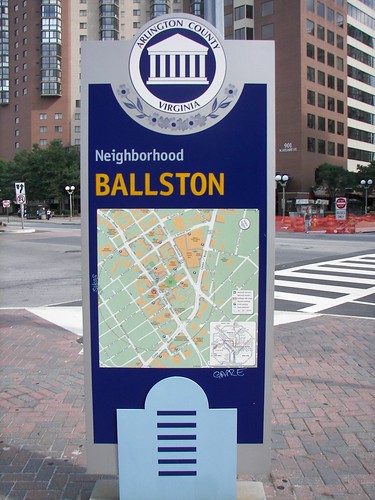
Wayfinding Sign, Ballston, Arlington County, Virginia
Area map sign for a neighborhood in Arlington County.

2.  Two of the three information panels on the SSTC directory repeat.  One of the panels should have a map of Silver Spring, comparable to area maps in other wayfinding systems.

The information panels aren't lighted at night.  That's a big deal.

In the Gallery Place station there are sign panels showing the Metrobus transit network for Greater Washington, which they call the National Capital Region.  This kind of signage needs to be placed at main transit stations such as SSTC.

3.  At the transit information center, on the second floor, they have a real time display of all the bus routes serving the station.  But that's the only place it's available.  This information is not displayed as you approach the bus station on the ground plane, is not in the foyer of the Metrorail station, etc.

4.  There should have been accommodations made for the long distance commuter buses, to provide shelter, on the "ground floor" of the site, not necessarily within the current SSTC footprint.  The inter-city bus line Peter Pan does have a bay in the main SSTC, and you can buy tickets for it from the transit info center.  (But Greyhound still has a separate station about one mile away.)

Commuter buses don't go into the SSTC because it would add time to the trip.  Instead they stop adjacent to the station on Colesville Road, but closer to the intersection at East-West Highway.

 A ground floor "appendage" closer to the street could have been created to provide more direct support for this kind of service.

Which could also be extended to serve other inter-city bus services like Best Bus, which does stop at Silver Spring, but on the street in front of the transit center, not inside.
Inter city bus stopped adjacent to Silver Spring Transit Center
Best Bus -- service to NYC -- stopped adjacent to Silver Spring Transit Center, on Colesville Road.

5.  In fact, a bus station lobby for Colesville Road commuter and inter-city bus service could be integrated with a relocated transit information center facing the street. Plus a visitor center for the district could be included.

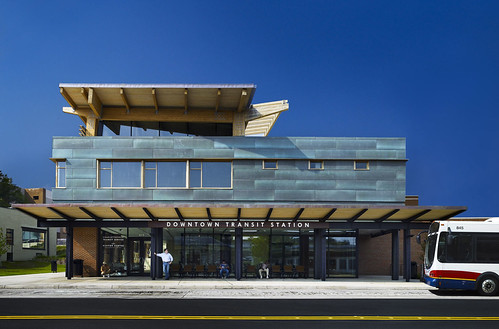
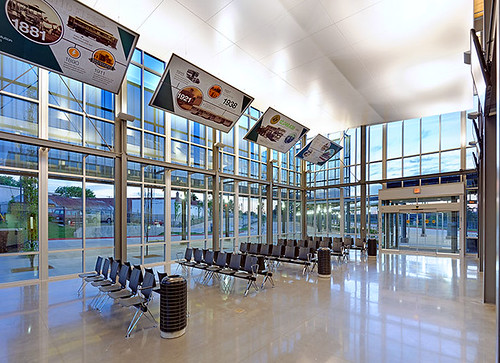
Charlottesville's two-level Downtown Transit Station would be an example (the second floor fronts the pedestrian mall and has the town visitor center, while the ground floor, facing Water Street, has the ticket office, waiting area, and restrooms).
Downtown Transit Station, Charlottesville, Virginia
Bus station side of the Downtown Transit Station, Charlottesville.  (It could use more prominent signage.)

City of Springfield Missouri, Downtown Bus Transit Station | Maintenance Design Group
Springfield Missouri, Downtown Bus Transit Station.

The transit ticket office and waiting area in Lancaster, PA would be another.  But there are others.

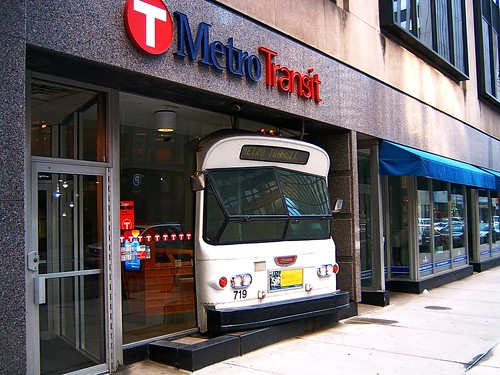
Some transit systems do have customer service centers in street-facing locations.   It could also have a café.

The Metro Transit Service Center on Marquette Avenue in Minneapolis.
Metro Transit Service Center, Minneapolis.

6.  I wrote about high quality exterior signage also as a form of public art being a big miss in TLCTC, using examples from California and San Antonio.  I didn't think about that for the SSTC until recently.

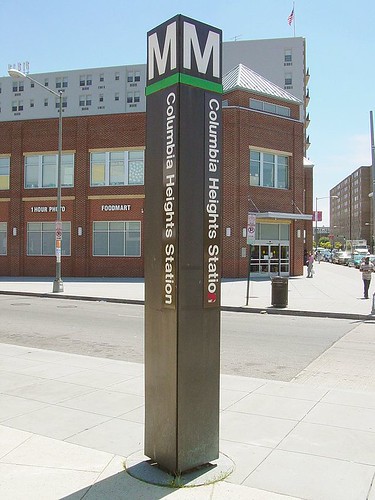
WMATA's signage isn't very interesting, the "obelisk."  It also can't be seen from far away.
Columbia_Heights_station_entrance_pylon
Columbia Heights Metrorail Station pylon sign.

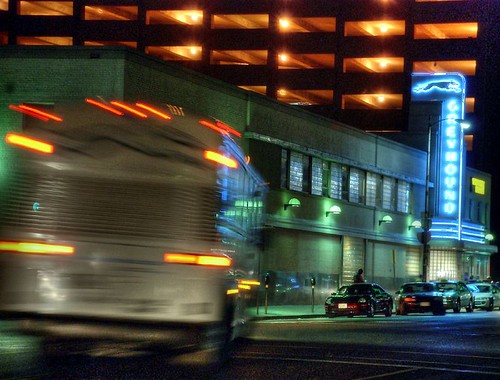
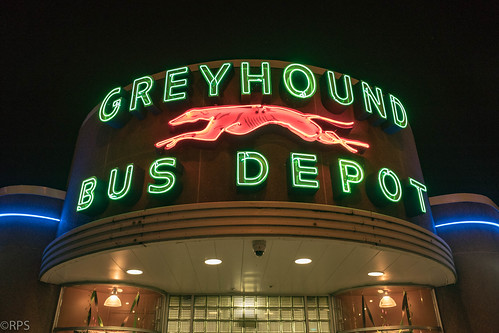
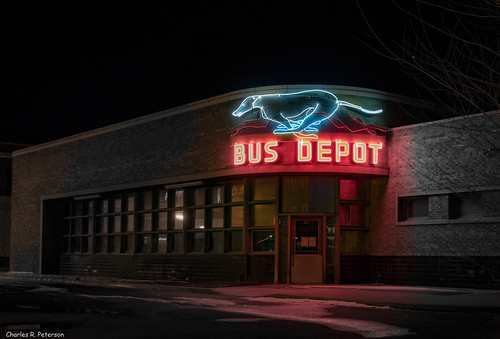
In an e-discussion today, I brought up old Greyhound bus terminal neon signage as an example of practical signage that is also a form of public art.

Greyhound Bus Depot- Pocatello, Idaho

Greyhound Bus Depot- Pocatello, Idaho


Amarillo By Morning

Greyhound Bus Depot- Dallas


Art Deco greyhound station, Huntington, West Virginia
Greyhound Bus Depot- Huntington, West Virginia


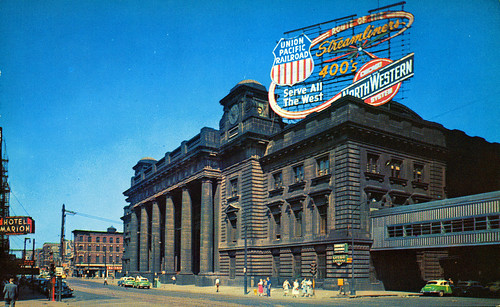
But there are examples of train stations too.  Not just the "Go By Train" signage in Portland, Oregon,  although I should have referenced it.  That model has been used elsewhere in the city to create "Go By Streetcar" and "Go By Tram" signage.

Chicago and Northwestern Station, Chicago, IL
Chicago and Northwestern Station, Chicago.

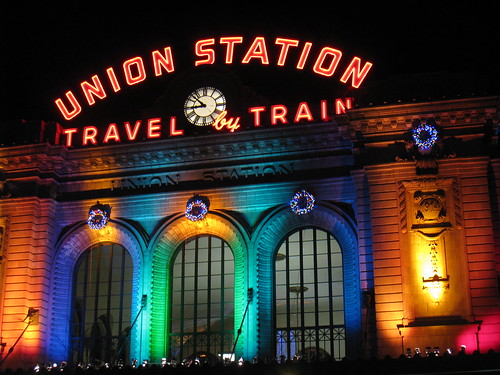
Union Station -Denver

Denver.

The Denver train station also shows the opportunity presented by architectural lighting.

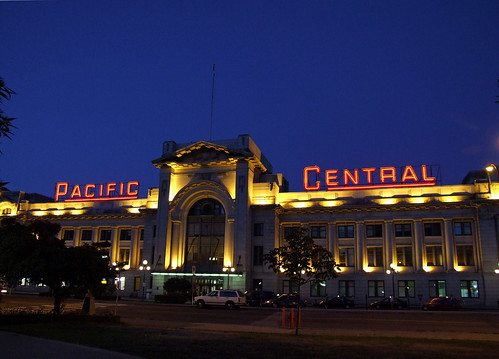
Pacific Central Station, Vancouver
Pacific Central Station, Vancouver.

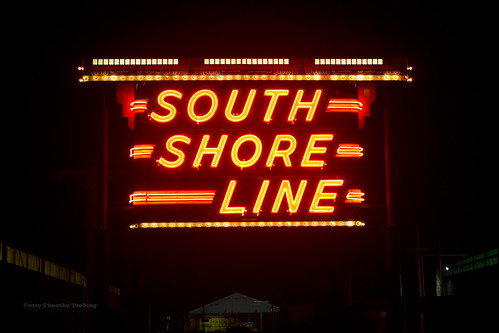
In fact, why don't local transit agencies create great neon signage.  The old North Shore and still extant South Shore Lines in Greater Chicago had such signage.

North Shhore Line Sign

South Shore Line

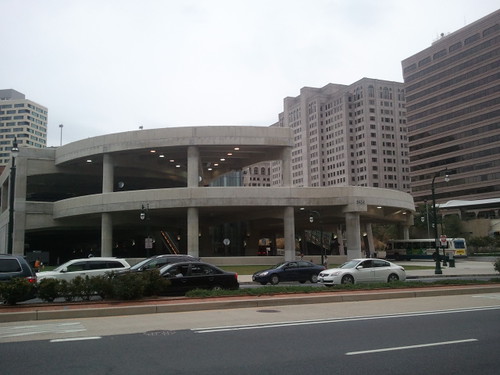
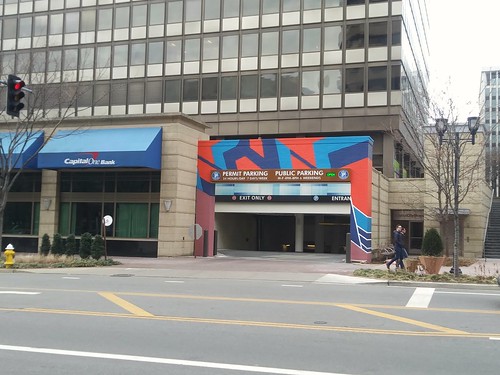
7. Recent initiatives to add bursts of color in the otherwise monochromatic Crystal City business district demonstrate that ugly concrete parking structures don't have to remain dull.

Colorful painting treatment around public parking entrance, Crystal City

Labels: , , , , ,

Thursday, January 26, 2017

Will buses ever be cool? Part Two: Infographic on improving bus service from U California Institute for Transportation Studies


-- Institute of Transportation Studies, University of California
-- Access Magazine, ITS

Labels: , , , , , , , ,

Saturday, January 21, 2017

Will buses ever be cool? Boston versus the Raleigh-Durham's GoTransit Model

"Will buses ever be cool?" is the title of an article in the Boston Globe, which discusses the Better Buses campaign of Boston's Livable Streets Alliance, a sustainable mobility advocacy group.  From the article:
Stacy Thompson wants buses to be cool. It might seem like a long shot, but she’s not alone.

Public transportation advocates have long lobbied the Massachusetts Bay Transportation Authority for better bus service, with varied success. Now, they’re trying another approach: giving the humble bus an image makeover in hopes of boosting its popularity and, perhaps, its perceived status.

“Buses are not the second-class citizens of the transit system,” said Thompson, executive director of Livable Streets Alliance, a local transportation advocacy group. “They can be awesome, and they should be fun.”

The alliance launched a “Better Buses Week” initiative in the fall with a session called “Making Buses Sexy,” and the Barr Foundation in the coming weeks will encourage people to share photographs from buses in a social media campaign called “Beauty and the Bus.”
I have many posts on this topic, dating to 2005, and a too comprehensive post on this topic, "Making bus service sexy and more equitable," dating to 2012.
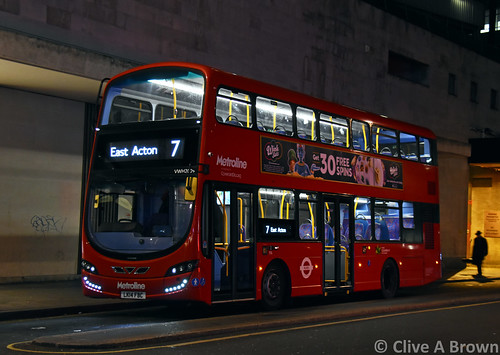
DSC_0996wLondon bus, Flickr photo by Clive Brown.

The basic concept is to disruptively rebrand bus service by using a different kind of bus, complemented by a wide variety of other upgrades to the service and amenities package surrounding bus service.

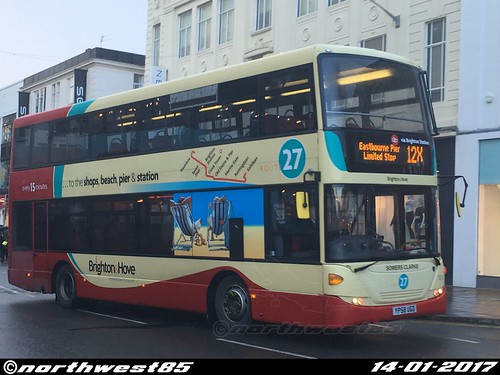
Because of the popularity of the double deck bus in London, and throughout the UK, I figure the best way to do this is to shift to the double deck bus.

(In North America such buses are used by tourist transit services and a few transit agencies.  Ottawa, Ontario has the largest fleet of double deck buses in traditional transit service.)

Later I suggested given anti-transit, I mean anti-streetcar people say we don't need streetcars, just better bus service, that we should truly test a high quality bus service, using double deck buses versus streetcar service, to see if making bus service great, which includes:
  • double deck buses
  • a great design scheme
  • high quality shelters and stations
  • great marketing and wayfinding information
  • reliable and frequent enough service
  • that is efficient in getting people to their destination
would get the same kind of ridership bump that typically is associated with streetcars ("The need for a double decker bus vs. streetcar comparison study").

I like how the buses in the Brighton & Hove system are branded with the route of the bus.
704

In DC, it would be relatively easy to shift to double deck buses, because for the most part, utility wires and traffic signal infrastructure doesn't go across the roads--except on side streets. Although there would be a problem accommodating such vehicles in bus garages.

It would be harder in the suburbs because their utility wire and traffic signal infrastructure is different.

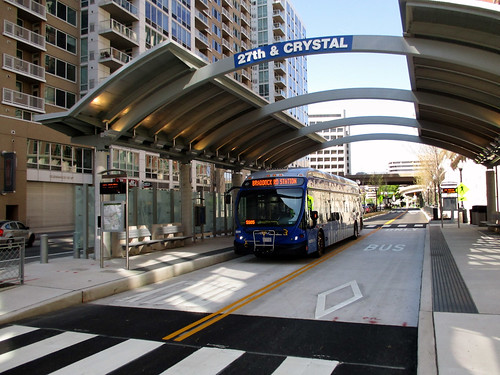
Bus rapid transit positioning as the model.  One of the ways bus rapid transit systems aim to reposition their service vis-a-vis traditional bus service is through design, design forward shelter and station infrastructure, marketing, wayfinding materials, and fast, frequent service.
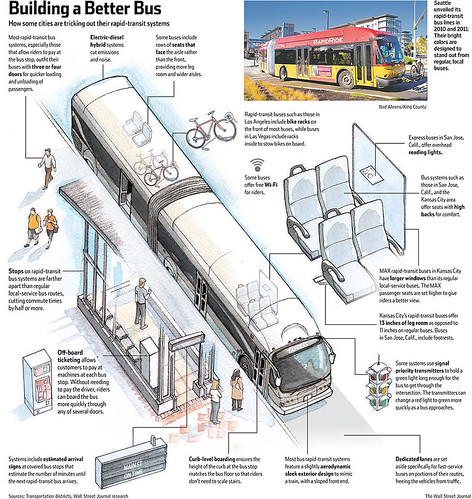
Building a better bus, graphic
Wall Street Journal graphic.

But why should we limit such "amenities" to premium bus service?

In most places, traditional bus service, as a legacy system, is in dire need of a reboot.

Metroway bus stop, Arlington County, Virginia.  Flickr photo by BeyondDC.
27th & Crystal station

Raleigh-Durham and GoTransit.  For years I have argued transit/transportation planning in the DC metropolitan area is sub-optimal, that we don't really plan at that scale, that by default WMATA (Metrorail and Metrobus) is the planner, and for the most part, network breadth and frequency of service is satisficed in favor of year-to-year vagaries of the annual budget.

-- "Metropolitan Mass Transit Planning presentation
-- "Route 7 BRT proposal communicates the reality that the DC area doesn't adequately conduct transportation planning at the metropolitan-scale"

In September, I came across an article about the rebanding of transit in Cary, North Carolina ("Cary's Buses Switching Names, Offering Free Rides," Cary Citizen) which clued me into the fact that this rebranding is part of a larger effort.

Across the Research Triangle region, the transit agencies there--Triangle Transit provides service across jurisdictions, while the major jurisdictions (Raleigh, Cary, Chapel Hill) each have intra-city transit services also--have been developing an integrated form of collaborative service delivery for over a decade.

So I sought out and interviewed David Eatman, the transit administrator for the City of Raleigh, who was kind enough to speak to me at length about the transit program there.

The level of transit service integration includes:

- coordinated schedules
- one single call center 485-RIDE (in DC, each transit agency has its own set up/phone number to provide information), as well as an integrated mobile product that includes information from all the transit agencies
- a common fare media product
- a regional transit pass charging one price for use of all or any of the transit services (the DC area does have a regional bus pass, but it is not well marketed; it's easier for Baltimore to do this because they do not have multiple agencies providing services and information, whereas in the DC area at least nine different agencies provide bus service)
- joint purchasing
- transportation demand management services across jurisdictions (in the DC area, the MPO provides some services across jurisdictions and in Baltimore, and individual agencies, especially Arlington County, deliver additional programs)

And more recently:

- the introduction of a common brand, GoTransit, with a common design scheme, differentiated by assigning different primary colors to each agencies.  Thus far, only the Chapel Hill Transit agency hasn't shifted to the GoTransit brand.  Each agency is sub-branded, such as Go Cary for the Cary system, Go Raleigh, and Go Triangle, for the regional transit agency, Triangle Transit.

This integration process has been going on for a long time and has been a three-stage process.

The area is covered by two different transit planning organizations (metropolitan planning organizations sanctioned by the US DOT) and 12 municipalities.

There had been interest in reducing costs, so integrating the services had been studied beginning in the 1990s.  That was the regional study and consolidation consideration phase.

The  decision was made not to consolidate, but to go forward together, by collaborating and coordinating to an extremely high degree, but on a voluntary basis. This hinged on an unwillingness to give up unique identities, while recognizing the reality of being part of a larger region.

The analogy many people used was of the college sports teams.  The schools have individual identities, but at the same time are part of a strong conference, the Atlantic Coast Conference.  People can be proud of both their school and team as well as the history and prominence of the ACC as a coordinating league.

The third stage is unified branding and further development of the services.  One reason that they moved to a common design and brand is that citizens were sometimes confused about differently branded buses seemingly serving the same areas, and believed, incorrectly, that the services were inefficient and wasting money.  The agencies also were in favor of a stronger visual identity, and a forward and colorful design.

The area is looking to build a light rail line, and in November citizens voted in favor of a regional sales tax for transit.

The "GoTransit" brand has been extended across the services provided by the agencies, although most of the services provided at the metropolitan scale are performed by Triangle Transit.  GoLive is the integrated transit information app which includes transit information for university-bus services as well as the regional transit service from Greensboro.

transit%20ambassador
GoSmart is the brand for transportation demand management.  The GoPass is the discounted/free transit pass offered to students and staff by universities and to employees by participating employers.. GoTogether is the marketing campaign promoting sustainable mobility and transit use, while GoAmbassador is the sub-brand for their transit volunteer program.

In short, transit service coordination and branding in the Raleigh-Durham region is a model example of best practice, demonstrating that multiple agencies can build and deliver better and seamless services to riders by working together.

Systems with multiple modes like in the DC area (train, subway, various forms of bus, streetcar; in Boston, ferry service and light rail too) might argue that it's easier to integrate in Raleigh-Durham because thus far, they only provide bus services.

But judging by how bus service in London is provided by multiple operators under the London Transport "brand," or how transport associations in Germany's metropolitan areas coordinate service delivery across multiple modes and communities, I don't think that operation of multiple modes is a significant barrier to service integration.  Also see "One big idea: Getting MARC and Metrorail to integrate fares, stations, and marketing systems, using London Overground as an example."

Common transit infrastructure design.  I doubt though, that the transit agencies in the Triangle area of North Carolina have settled on a single model for bus shelters and stations.  That is an issue in the DC area too.

I have discussed elements of this in terms of transportation infrastructure as an element of civic architecture, making these points:

1. Transit infrastructure brands transit
2. Transit stops and stations are key marketing touchpoints
3. Transit stops and stations should better integrate within neighborhoods
4. Transit stops and stations should, when practical, interpret and present transportation-transit history
5. Transit vehicles can be an element of city/urban design and branding
6. Transit vehicles can be an element of transit marketing

Because DC is a large city by comparison, there is interest on the part of large advertising companies like Clear Channel (which has the contract), JCDecaux, Cemusa, and others to provide transit shelters in return for being able to place and sell advertising on the structures.

In 2005, DC signed a long term contract with Clear Channel, and the city has upgraded the shelters across the city.  Meanwhile, the other jurisdictions, and WMATA have different standards, shelters, etc.  Some are better than others.

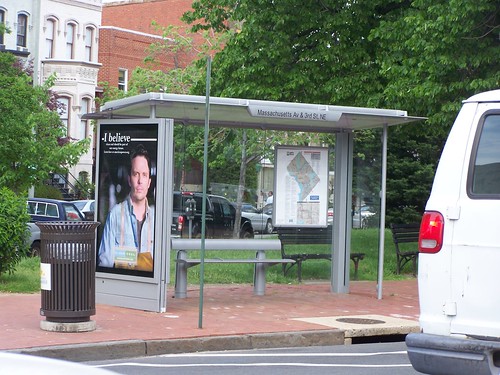
DC's old bus shelters are comparable to the shelters still used today at Metrorail stations
Luxury bus stop

Current DC bus shelter
DC bus shelter

Montgomery County Maryland bus shelter, Wikipedia photo
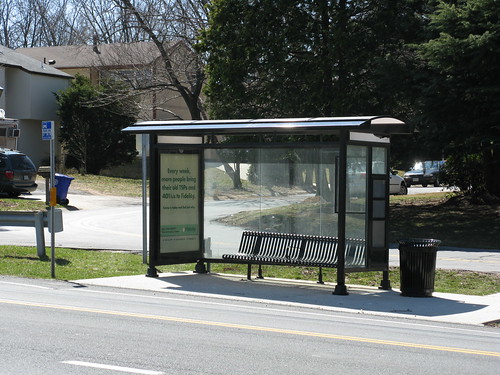
Montgomery County Maryland bus shelter, Laytonia_-2008_03_17_-_EB_Bus_Shelter

It would be optimal to build a common transit shelter system at the metropolitan scale so that "surface transit" would read the same way across the metropolitan area, regardless of what city or county you're in.  Much of the analysis in my recent review of the new Takoma Langley Crossroads Transit Center is relevant to this general point.

This also came up in Arlington, where citizens revolted against what they thought was an overly expensive program for new bus shelters ("Arlington County's bus shelters and a public realm framework of quality").

MBTA Silver Line bus station.  Photo by Steve Pinkus.  One problem I have with these shelters is that they are open to the elements, which is no fun in bad weather.  The stations typically include kiosks with route maps and sometimes interpretation boards on cultural history.
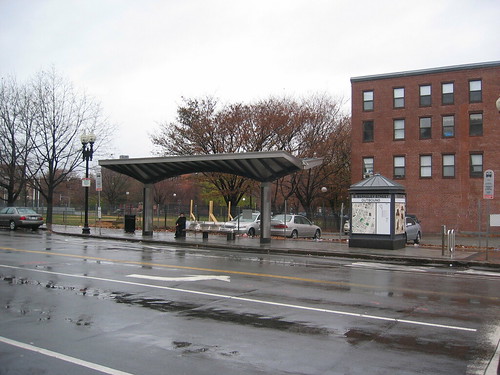
Bus shelter, Silver Line, Boston

Conclusion.  Boston doesn't have the same issue of polyglot and discoordinated branding and services that is the case in DC which has a separate service for most of the separate jurisdictions.
By contrast, like in Baltimore, all of the transit services are provided by one agency, the MBTA.  The problem is that bus service is a legacy service and in desperate need of a reboot--and its branding lags the train and subway services.

MBTA did that kind of reboot with their Silver Line bus rapid transit service ("Silver Line: 10 years of history, changes," Boston Globe, and "The Silver Line Expansion Is a Rare Bright Spot for the MBTA," Boston Magazine; Boston Silver Line Washington Street Bus Rapid Transit (BRT) Demonstration Project Evaluation, FTA), but those ideas haven't migrated to regular bus service.

That's the kind of quantum change that needs to be considered by most transit agencies.

The Raleigh-Durham model of coordination is one that is relevant to transit agencies and metropolitan areas whether or not they have one transit agency or several.

The learning is that riders hanker for a seamless service and that agencies can change and reposition legacy services to do this, if they are willing and committed to doing so.

Recommendations

1.  If there are multiple agencies: coordinate and collaborate.
2.  Develop and implement a common branding system.
3.  Develop and implement a common system of transit infrastructure.
4.  If it is a single (but legacy) system: rethink; reboot; reposition; rebrand

Boston's newer transit stations incorporate some design thinking that is quite forward, but as a whole the system hasn't been rebranded. Image by the SubwayNut. The tagline reads: "America's first subway and the best way to get around Boston."
For other elements of a high quality surface bus network, see "Is making surface transit free the best transit investment DC can make?."
Labels: , , , , , , , ,