Rebuilding Place in the Urban Space

"A community’s physical form, rather than its land uses, is its most intrinsic and enduring characteristic." [Katz, EPA] This blog focuses on place and placemaking and all that makes it work--historic preservation, urban design, transportation, asset-based community development, arts & cultural development, commercial district revitalization, tourism & destination development, and quality of life advocacy--along with doses of civic engagement and good governance watchdogging.

Thursday, February 02, 2012

Journal of Sustainable Real Estate

-- Journal of Sustainable Real Estate

Published annually online, has some interesting articles including:


2011

- Dynamics of Green Rentals over Market Cycles: Evidence from Commercial Office Properties in San Francisco and Washington DC
This study examines the rental rate dynamics of green commercial office properties in the San Francisco and Washington DC metropolitan areas. Similar to previous studies, we find that green office properties enjoy rental rate premiums over comparable non-green buildings. Our models also suggest that green property rents may provide a hedge in down markets.

- Residential Land Values and Walkability
The aim of this paper is to determine to what extent the benefits of walkable neighborhoods are reflected in land values. We find that after controlling for population growth and lot size, land values generally increase with walkability and that this result is stable over time.

- Creative Construction: The Capacity for Environmental Innovation in Real Estate Development Firms
This paper examines three hypotheses: (1) green development adopters and their investors take a longer-term stake in projects; (2) price competition is less important than competition over quality, and (3) the developer takes greater control, especially in the provision of design and construction services.

2010
- Location Efficiency and Mortgage Default
Using a sample of over 40,000 mortgages in Chicago, Jacksonville, and San Francisco, we model the probability of mortgage default based on differences in location efficiency.

Labels: , , ,

Monday, October 03, 2011

Good stuff and fundraisers--Community Forklift (DC area)

Community Forklift is a building materials recovery and resale operation in Edmonston, Maryland, serving the Washington DC metropolitan area. (I am on the board.)

From email:

Please spread the word: we have TRUCKLOADS of landscaping materials & plants arriving this week at our warehouse. Starting Wednesday, we'll be selling them very cheaply, and donating to nonprofits & community gardens. More details below!

Also, if you haven't heard, we have two great events this month. Visit Community Forklift for more info.

• COCKTAILS FOR A CAUSE on Monday, Oct. 10th at The Passenger, near the Convention Center. Their "mixologists" are known for their great cocktails, and 10% of the proceeds will go to Community Forklift (we're hoping to buy a second truck, and to purchase & repair our warehouse).

• Forklift EXTRAVAGANZA, featuring the DC LADY ARM WRESTLERS: On Saturday, Oct. 22nd, have a wild night at our warehouse for only $10 a ticket. Enjoy the Eat Wonky food truck, adult beverages, DJ Booger and DJ One Heart Muzik, and a silent auction with thousands of dollars worth of prizes. It's gonna be hilarious - these ladies all have costumes & entourages, and really know how to entertain (come root for our Reuse Associate Kitty S., who will step into the ring as "Motown Mama!")

Get your tickets now!

Labels: , , ,

Tuesday, September 15, 2009

Community Forklift -- the DC region's building materials recovery and resale center -- is now open Sundays

Community Forklift is located in Edmonston, Maryland, a couple miles outside of DC in Prince George's County, Maryland (where it is easier and somewhat cheaper to lease industrial space compared to DC).

- Website
- Directions and Map to Store
- What We Do

A couple of past articles that mention the organization are:

- Varied Treasures (Washington Post)
- Buying on the cheap: inexpensive tricks can turn boring space into lively place (Washington Times)

The stock of items present is wide, turns over quite a bit, and is constantly improving. (I saw an amazing double sideboard seafoam green kitchen sink which had been already sold, but was in perfect condition and worth as much as $4,000 easy--it sold for a lot less than that!). Great fireplace mantles, decent cabinets, constantly improving sections of lighting and tiles await you

A new "Salvage Arts" department, not unlike the more upscale items present at the Brass Knob store on 18th Street in Adams-Morgan, has recently opened, with a grand opening set for Saturday September 26th.

The new Salvage Arts department at Community Forklift.

(Disclosure: Community Forklift is a division of the nonprofit organization Sustainable Communities Initiative. I am on the Board of Managers of Community Forklift.)

Volunteers are welcome!

Labels: ,

Monday, August 31, 2009

LEED and "greenwashing"

Definition of greenwashing:

From "Some Buildings Not Living Up to Green Label" in the New York Times:

The Federal Building in downtown Youngstown, Ohio, features an extensive use of natural light to illuminate offices and a white roof to reflect heat.

But the building is hardly a model of energy efficiency. According to an environmental assessment last year, it did not score high enough to qualify for the Energy Star label granted by the Environmental Protection Agency, which ranks buildings after looking at a year’s worth of utility bills.

The building’s cooling system, a major gas guzzler, was one culprit. Another was its design: to get its LEED label, it racked up points for things like native landscaping rather than structural energy-saving features, according to a study by the General Services Administration, which owns the building.

Builders covet LEED certification — it stands for Leadership in Energy and Environmental Design — as a way to gain tax credits, attract tenants, charge premium rents and project an image of environmental responsibility. But the gap between design and construction, which LEED certifies, and how some buildings actually perform led the program last week to announce that it would begin collecting information about energy use from all the buildings it certifies.

-----
Native landscaping is important. But a system of evaluation on environment- and energy- sensitive construction should be weighted towards energy consumption, not other glitz. Period. And should take into account the cost of losing embodied energy, i.e., demolition of buildings and replacement.

The best way to build in a manner that promotes energy conservation is compact development that promotes walkability and transit use. It's like health care, I read something last week that says 80% of people's health and wellness can be influenced by diet and exercise and not smoking. With energy saving in the built environment, build for long term use, in an energy efficient way, in a spatial pattern that isn't based on automobility.

As long as you drive to a "LEED certified" building, you aren't doing much for the environment, even if you drive a hybrid, you're still driving. And sure, while I support electric cars and recognize that we will be using coal to make energy (electricity) for a long time, it does have negative impact on the environment. So not driving, electricity or not, is even better...


Labels: , , , , , ,

Saturday, July 18, 2009

The way development works

The Examiner reports, in "Link probed between D.C. councilman's support, developer dollars," that Ward 5 Councilmember Harry Thomas Jr. is being investigated because of his support of a local development project and a subsequent donation to the Ward 5 Business Council by the developer.

Now this is a complicated thing.

First, for the most part Councilmembers ALWAYS support reasonably decent (and plenty of INDECENT) development proposals in their wards. ALWAYS.

There is no way that Councilmember Thomas wouldn't have supported this project, whether or not community benefits monies went to organizations and projects supported by the Councilmember.

And this is a pretty good project, that I would support. It's to put quality rowhouses on a piece of underused land, and it extends the street grid to do so. It's a bit crippled by not extending the street grid to 4th Street NE, but all in all, it's an excellent development. See this DC MUD blog entry from a couple years ago, "Brookland Eyes 10 Acres of Development at St. Paul's," for more detail.

Second, it does shed light on the reality that the community benefits process is under-structured, which is something I have been concerned about for many years. It's a system that is designed to be messy and unstructured and fraught with peril.

See "Community Benefits Agreements," an updated blog entry from last April, for an outline of how to improve the structure and process of negotiating and awarding community benefits in zoning issues.

By setting priorities for neighborhood and area improvements beforehand, and then by directing community benefits monies towards consensus priorities, the kind of seeming graft that is discussed in the Examiner article will be much less of an issue.

Third, I will admit that the Ward 5 Business Council won't accomplish very much. It has a diffuse agenda and the people involved don't know very much, therefore they will yield very little in real accomplishment, regardless of how much and who gives money to the organization.

So the fact that Councilmember Cheh is setting up a Ward 3 Business Council seems troubling.

DISCLOSURE: The Padous filed a complaint against me when I worked for the Brookland CDC, claiming that deliberately falsified reports were filed. I wrote and signed the reports, so the complaint was against me. (Each month, individual DC Main Streets programs have to file a voluminous report with the RestoreDC program in the Dept. of Small and Local Business Development.) So the Inspector General's office investigated. They never really tell you when they close the investigation, but I don't consider this to be hanging over me. But it sure does make me question Abigail Padou's motives.

DISCLOSURE 2: I have been involved in "seeking" community benefits in various matters in the past. My strategy for what became H Street Main Street meant that community benefits related to the first phase of the Dreyfus Station Place project near Union Station got those benefits awarded to facade improvement on H Street, rather than to the H Street Community Development Corporation for non-H Street related programs. This was about $200,000.

And Abdo Development provided $10,000 (I know, not very much) to historic preservation survey activities in the H Street neighborhood, in association with their redevelopment of the Children's Museum into the Landmark Lofts project on H Street. I was involved in securing that donation as well.

DISCLOSURE 3: When I was the program manager for Brookland Main Street, EYA did donate to the Brookland Festival in 2007, and had a booth at the festival. I don't remember the amount, it was maybe $2,500.

Labels: , , , , , , , ,

Saturday, May 30, 2009

Speaking of green collar jobs

Historic preservation trades are green collar jobs, but aren't conceived of such in DC's campaign to focus on workforce development in the green economy. It's not that preservation isn't considered sustainable, but the focus is on new industries. From the webpage:

The District defines Green Collar Jobs as career-track employment opportunities in emerging environmental industries, as well as conventional businesses and trades, created by a shift to more sustainable practices, materials, and performance. It includes both lower and higher skilled employment opportunities that minimize the carbon footprint of all inputs necessary and directly result in: the restoration of the environment, the generation of clean energy and improved energy efficiency, the creation of high performing buildings, and the conservation of natural resources.

- District of Columbia Green Collar Jobs Demand Analysis Final Report

If you own a historic house, or one eligible for designation, think of how hard it can be to find someone qualified and able to do quality work and (2) how much you pay them. It's not cheap even though the results are well worth it.
100_6440.JPG
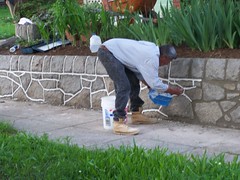
Application of period-appropriate beading while repairing a stone retaining wall on 3rd Street NW, Washington, DC.

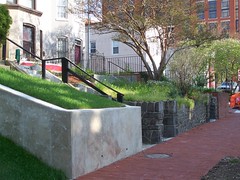
Typical concrete retaining wall constructed by DDOT on the 900 block of 2nd Street NE
Inappropriately replaced "historic" retaining wall on 2nd Street NE.

In typical historic preservation projects, 70% of the cost of the job is labor, and 30% of the cost of the job is materials. Most of the profits on the sale of materials don't stay local, either within the city or the region.
Home Depot
Department signs hang at a Home Depot story in Chicago, Friday, Aug. 8, 2008. The Home Depot Inc., the nation's largest home improvement retailer. (AP Photo/Charles Rex Arbogast)

On new construction jobs, 50% of the cost is labor; 50% materials. So the multiplier effect on the economy of new construction isn't as great when compared to historic preservation-based construction.

One of the things I proposed some years ago was creating a preservation training program in the high school level + community college equivalent, based on the Preservation Arts Department at the High School of the Arts in Brooklyn, and other programs. We proposed that as a possible use in the Crummell School in Ivy City, but the guy we were working with in Ivy City got wacked out, and we ended up scuttling the project. It needs to be taken up again.

You can't get more sustainable than having a house that is a couple hundred years old. (Ours is only 80 years old--this October.)
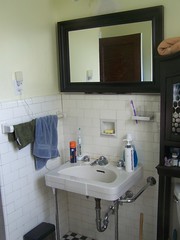
Crane Diana bathroom sink with Crane Drexel handles and mixing faucet, our house
This sink is not original to the house. It's from 1951 and we bought it at Brass Knob warehouse. The first plumber we had was congenitally unable to grasp dealing with a "historic" sink and valves. We had to fire him (after spending way too much money on him, none of which we got back) and found another (through Brass Knob Warehouse) who still likes new equipment but is fully prepared to deal with "old" components and is willing to consult with experts (in the case of old Crane sinks, DEA Bathroom Machineries is the national expert) for insight and guidance on how to make it work. (The subway tiles on the wall are original. There are some tiles we need to replace because of the butchery of the first plumber.)

Labels: , , , ,

Wednesday, April 08, 2009

Community benefits agreements and energy considerations

This memo has gone through a number of iterations over the past few years. This version was written in February 2008 and updated in June 2008. Below is the complete version, updated to last June, with edits and expansions as of today.

One of the reasons I'm reprinting it is to have one master version with the June 2008 revision. But the other is that I just read something, "Building Green," from the April issue of Chain Store Age magazine (a trade magazine for the chain retail industry) that reiterates a point that was made below. "Green building practices" are merely good business, they are profitable for developers and store owners, and therefore when considering proffers or community benefits in the context of zoning decision-making, green building characteristics should not receive any special consideration.

From the article:

The survey, called "Green Building Market Barometer," is from Turner Construction ... Survey respondents said that green buildings enjoy lower costs than non-green buildings in three important areas:

- energy;
- overall operating expenses; and
- total life cyle over a 10-year span.

The executives also reported that green buildings have better financial performance than non-green ones in terms of:

- higher building values;
- higher asking rents; and
- greater return on investment and higher occupancy rates.

Those perceptions are confirmed by other studies...

Although 87% of the surveyed executives believed that green buildings cost more to construct, some 73% said that higher costs would be paid back through lower operating costs, with a median estimated payback period of seven years. The results indicate that many executives still believe that green construction is significantly more expensive than traditional building methods, when in fact, according to Turner, it can often be achieved with little or not premium.

For example, a review by Davis Langdon, of a wide range of studies, found that hte average construction cost premium required to achieve a moderate level of green features (equivalent to LEED SIlver certification) was only 1% to 2%.

-----------------------------

The current community benefits system is ad-hoc and the lack of transparency and structure disproportionately benefits developers at the expense of communities

Through my involvement in community land use matters since 2000, including participation on the ANC6C Planning and Zoning Committee from 2003 to 2005, I have become increasingly concerned about the lack of structure and inadequate levels of citizen participation in the negotiation of community benefits agreements generally, the lack of transparency of agreements negotiated between developers and local nonprofits deemed "community organizations" to determine how monetary benefits are spent, as well as the relatively paltry amount of benefits provided by most projects, and the failure to garner amenities in ways that could significantly contribute to substantive structural improvements in the neighborhood and at the city at large.

Doesn't anybody remember the great reporting in The Common Denominator about the community amenities agreements associated with development at Fort Lincoln, agreements that have never been effectuated, and the fact that the DC Government isn't too worked up about this? (See May 6, 2002 - News - Residents cry foul: Ft. Lincoln developer reneges on city deal that delivered land rights; June 3, 2002 - News - Fort Lincoln residents seek Norton's help; August 12, 2002 - News - Residents sue, charge Ft. Lincoln New Town developer with fraud; and May 6, 2002 - News - LBJ's 'Great Society' spawned Fort Lincoln development plan all from The Common Denominator.)

Furthermore, communities that are better organized and have resources end up getting more (or some) benefits, while under-organized communities get little to nothing in terms of benefits from new development occuring within the neighborhood. (This should be considered a violation of the 14th Amendment to the U.S. Constitution, and the provision of "equal protection under the law." But this line of inquiry has been inadequately tested through the Courts.)

Justification for community benefits/proffers

The economic justification for developer-paid community benefits/proffers is two-fold. First, adding developable square footage to the project through zoning use changes (including planned unit developments), variances, and special exceptions make a property significantly more valuable. It is reasonable to ask that a developer pay back to the community some of this increase in value.

Second, development projects too often have a "trickle down" effect. Developments are frequently touted for their revitalization benefits, but in my experience without specifically linking the project to other improvements simultaneously, it is difficult to achieve the kinds of benefits touted by the project in short to intermediate periods of time.

For example, the "overnight" success of H Street NE actually represents more than 30 years and hundreds of millions of dollars of already expended federal and city development funds. People still complain about the failure of revitalization -- "when is it going to come? -- not realizing that so much time and money has already been invested.

But part of the "failure" is the failure to coordinate investment and improvements, and to ensure that a project fully connects to the neighborhood and/or commercial district beyond the confines of the lot lines of the development.

My joke about the two office buildings on the 600 block of H Street NE is that in 20 years, the only economic development spawned by the project was one hot dog cart Monday through Friday. (They started with two but there was only enough business for one.)

This "failure to thrive" comes from the failure to link big new projects to necessary and complementary neighborhood improvements simultaneously.

At the same time, coordinating private investment with investments in public space and community capacity will make new projects more valuable more quickly, so one could argue that for certain kinds of developments, especially commercial and probably condominium development, that the money comes right back in terms of increased value. E.g., if H Street were currently a thriving commercial district, it is likely that the Akridge "Burnham Place" development would already be underway, and that the Senate Square development would have sold out, despite the housing downturn, etc.

How much are zoning changes worth?

The Zoning Commission and Office of Planning do not provide a metric for calculating how much density bonuses are worth. Some projects receive density bonuses worth tens of millions of dollars, and frequently the community benefits offered are worth significantly less than $200,000.

For the sake of argument, I suggest that the economic value of density bonuses be paid into a proffer fund at the rate of at least 10%. So added density worth $10 million would generate a minimum of $1 million in funds for proffers.

Communities must first set priorities for neighborhood improvements

Having a structured conversation about community benefits is a necessary first step in the consideration of a wider-range of public-private partnerships organized around land use and development that is designed to yield neighborhood and/or city-wide stabilization and improvement benefits.

Without such a conversation, communities give up a lot with little in the way of calculable return, judging by my experiences thus far. Most benefits agreements are paltry, and too often are little more than graft projects designed to fund an ANC Commissioner's pet projects or organizations. In the past, while rare, individual residents have received personal benefits (such as health club access to a hotel) or air conditioners.

In order to craft agreements, first neighborhoods/Wards/ANCs must work together to develop a set of neighborhood priorities, and ensure that proffers are directed only to those items which the community agrees are important.

-------
There was a letter to the editor of the Post on 4/5/2009 about the need for a canopy over the Foggy Bottom Metro Station, "Foggy Bottom Metro Needs a Canopy." It seems painfully obvious that this would be a public space improvement that should logically be funded through proffers related to the various development projects in that community, projects that are still going forward despite the recession.
------

Priority areas for funding include civic institutions (public schools, libraries, parks), transportation-mobility improvements, streetscape improvements, community history and interpretation, public art, and commercial district revitalization programs, and historic preservation-based building rehabilitation.

Contributions must be substantive, yielding long-term benefits and consequences, rather than "flash in the pan" benefits with little in the way of structural impact. For example, a project at Fort Totten in Ward 5 provided funds for improvements to a local school and library, and an offer was made to the National Park Service to fund improvements to an adjacent park.

Probably improvements to public charter schools should not be considered an acceptable proffer, because the buildings and facilities are not owned by the DC Government (and thereby held in trust for the Citizens of the District of Columbia).

Is design improvement a community benefit but not a proffer?

Another consideration is project-specific design and urban design considerations more generally. "Design" is currently considered a community benefit under the Planned Unit Development system, but almost every instance where I have been involved the benefit to the community is nonexistent and changes to the project come only after an inordinate amount of work on the part of particularly engaged residents.

This is especially important with housing developments. In the current system of development, a commercial building may have a useful life as short as 20 years. In any case, it can be "freshened up" with a new facade at some point to extend its useful life. Owner-occupied housing is likely to never change its design. The hip modern designs of today are likely to become quite dated in as soon as 10 years.

We must remember with housing developments that "what you see is what you get," forever. Fostering design improvements to projects should be an important part of the development process, although I believe personally that this type of benefit should be built into the project as a direct cost independent of the proffer system.

Participation of community development corporations in the proffer process

In the past local CDCs have received ownership positions in development projects by private developers as a community benefit. In part this was done to assure that a particular developer would win development rights from the government entity that controlled the property, such as the Redevelopment Land Agency. But the contracts for these benefits are not open to the public (for the most part) and no accountability and oversight mechanism has been built into these agreements to ensure that "community benefits" truly result from the economic interest awarded to seemingly local organizations.

This must change. No development participation should be awarded to community organizations without the provision of transparency, the provision of direct benefits to the community, and a process of oversight and accountability over such agreements.

How should a community structure its thinking about community benefits?

Proffers can be categorized as one of five types:

1. National benefits;
2. City-wide benefits;
3. Neighborhood benefits within a geographically defined area such as an ANC;
4. Building-specific design improvements; and
5. Site/area physical improvements located within a few block radius of the project, the area most impacted by the project during and after construction.

National benefits. This category covers green/environmental/LEED type requirements. Generally, these kinds of investments pay back to the developer, and for the most part are "merely" good business practices that deserve little in the way of special consideration when valuing community benefits agreements.

It is important that these types of project improvements be considered in an absolute rather than a relative manner. E.g., who cares if a gas station has a couple solar panels? And losing the embodied energy of a building through demolition can likely not be recovered through green construction practices on new construction.

However, building materials recycling could be considered a national benefit deserving of special consideration as a proffer, because the cost of deconstruction is higher than standard demolition. Construction materials make up 50% of the waste stream and much could be recovered through building deconstruction. Therefore, it could be categorized as a city-wide benefit as well.

City-wide benefits. This category relates to city-wide policy, and would cover affordable housing, DC-based employment agreements, minority contracting requirements, and transportation infrastructure investments, among others. These are public policies that serve the city more broadly, rather than the specific neighborhood in which a project is located.

Employment and contracting requirements should be considered standard business practices not deserving of special consideration. Affordable housing requirements do cost money and should be awarded consideration.

Transportation demand management practices (spaces for car sharing, secured bicycle facilities, showers [for office developments]) should have been required as part of the recent Comprehensive Plan revision but were not. ANCs could step and demand that TDM planning and facilities be required for new housing and commercial developments.

Certain of these investments could be considered community amenities to the extent that they provide neighborhood benefits beyond benefits strictly for users of the site, such as car sharing spaces where the car can be used by members not living on the property and shared parking facilities.

Funding improvements of important projects with both neighborhood and city-wide benefits could also be included within the proffer system, e.g., the rehabilitation of a cultural resource asset such as a neighborhood movie theater, deaccessioned school building, etc.

Neighborhood benefits. This category would encompass proffers that are directed to facilities, organizations, services, and residents located within the defined geographical area where the project is located. For example, affordable housing, hiring policies, and business source agreements that target neighborhood/Ward residents and businesses specifically would be considered community benefits deserving of special consideration.

So would improvements made to local public schools, parks, and libraries. Or assistance made to important neighborhood projects. (For example, in the H Street neighborhood, proffers could have been used to help fund the cost of rehabilitating the Atlas Theater.)

Other examples of neighborhood benefits would be the provision of shared parking facilities, i.e., a parking garage supporting residents but also providing access to consumers visiting an adjacent commercial district, funding of historic preservation/cultural resource surveys, paying into community development education programs at the neighborhood level, funding of commercial and neighborhood improvement projects such as:

• community heritage/history interpretation and signage programs;
• public art projects;
• business directories/maps for installation in neighborhood-commercial bus shelters;
• bus stop, treebox, street furniture, sidewalk lighting, and other streetscape/infrastructure improvements deemed important by a neighborhood;
• neighborhood marketing programs including the development of brochures, booklets, and banner programs;
• traffic calming projects including bulb outs;
• funds paid into business development programs to support the development and improvement of local retail and home-based businesses; etc.

For example, in Brookland, the east side of the station does not have a canopy over the escalator/stairs. The cost to install a canopy is $900,000, and installation of this desired facility for the east exit at the Brookland station is not currently scheduled. Proffers could fund the installation of a canopy there independent of WMATA funding streams.

Similarly, a development project on the 600 block of H Street NE has agreed to pay for the creation of a mid-block crosswalk and the cost of the installation of a traffic signal. The signal alone costs $150,000.

Building-specific design improvements. A possible improvement would be urban design additions to the project that the developer does not want to make because of value engineering desires. This is a tougher nut to crack, and could be considered a neighborhood improvement as well.

For example, I was not able to convince the developer of the 600 H project to develop the south side of the project, rear buildings which will border houses and a historic alley, to comparable to traditional rowhouses--think crappy south Fairfax new townhouses around Fort Belvoir vs. the 1890s brick rowhouses that typify Greater Capitol Hill.

Partly this was a failure due to their suburban design sensibilities, but part was over cost, as the labor cost for traditional masonry is $15/s.f., much higher than the cost of slapping up a pane of glass for a commercial building or some hideous siding.

Site/area physical improvements. This category covers activities benefiting the area immediately around the specific development activity, the area that is most impacted physically, and on a day-to-day basis, by the project both during construction, and after it is finished. This includes streetscape improvements and other enhancements.

Conclusion

Equity. Somehow, the value of proffers needs to be shared more equally between city-wide, neighborhood, and micro project improvements.

Neighborhoods with many development opportunities will benefit disproportionately from the proffer system that does not "tax" the overall revenue stream generated by proffers. Improvements in other parts of the city can be funded in part by directing a percentage of all proffers to a fund for city-wide funded projects.

Another resource. Community Benefits Agreements: Making Development Projects Accountable,

Monitoring and Enforcement. This article from the New York Times, SQUARE FEET; The Trade-Offs in Zoning Trade-Offs," discusses how important monitoring is to the maintenance of public benefits. From the article:

Since 1961, when the first density bonus was codified into city zoning law, public amenity trade-offs have proliferated. The Hearst Tower, under construction at Eighth Avenue and 57th Street, was granted a density bonus in exchange for making improvements to the Columbus Circle subway station. The Biltmore Theater on 47th Street was fully restored by the developer of a residential tower on that street.

More common, however, are spaces that have been taken over for private purposes. For example, many spaces that were created for the public have been appropriated for cafe seating, a common violation of the density bonus that was publicized by Jerold Kayden, a professor of urban planning and design at the Harvard University Graduate School of Design, in his extensive study of public spaces created in New York City since 1961.

After the study was published, the city started enforcement procedures against a number of building owners, and Professor Kayden established a small nonprofit monitoring group called Advocates for Privately Owned Public Spaces, which is financed by the Municipal Art Society. The group keeps an updated database of more than 500 public spaces, but has neither the staff nor the resources to track public amenities built by private developers that are not regulated by city zoning laws.

It is important that the proffer system be open, transparent, and trackable.

Arlington County has a capital improvements database, which is now publicly accessible. (See the past blog entry "A laudable example of municipal transparency: Arlington opens municipal construction project tracking database to the public.")

A similar kind of database needs to be created in DC that would list all properties owned by the DC Government and its instrumentalities, including publicly chartered Community Development Corporations, and any and all such proffers and community benefits agreements associated with properties/developments.

And a system needs to be set up for monitoring and tracking compliance, with reports provided annually to ANCs for all projects within their borders, as well as a master report including all projects across the city.

Labels: , , , , , , , , ,

Monday, January 05, 2009

News from Oregon

1. "Oregon exceptionally generous with green-energy subsidies" from the Portland Oregonian

2. Oregon's own economic stimulus plan, "To battle recession, Oregon Democrats reach for credit card ," from the Portland Oregonian

3. Bicycling is a $150 million/year industry in Oregon, and bicycle commuting makes the cover of Oregon Business magazine, "Bicycle Industrial Complex."

Labels: , , , , , , ,

Tuesday, December 09, 2008

Another example of LEED certification missing the point...

is that a proposed motorsports (speeding cars driven really really fast and loud besides) park in the Atlanta region will construct its buildings to LEED standards. See "Dawsonville motorsports park a dream for drivers" from the Atlanta Journal-Constitution.

More and more I think about absolute vs. relative standards--a Prius is better than an Escalade or a Hummer, definitely, but isn't the point optimal mobility, not relative improvements? Shouldn't a motorsports park not even be eligible for LEED certification, based on nature of the project?

Labels: ,

Monday, September 22, 2008

My sentiments exactly

In "The Bad News About Green Architecture " Newsweek architecture critic Cathleen McGuigan criticizes green architecture for missing the point. From the article:

Achieving real sustainability is much more complicated than the publicity suggests. ...

When it comes to green, people don't want to hear that size matters. We keep building not just bigger entertainment complexes but bigger houses. "Green McMansion" is one of my favorite oxymorons. Currently the average new house is 2,500 square feet, up 1.5 percent in size from last year—though the shock of this winter's fuel bills may finally slow the trend. Building green houses—or at least advertising them as green—is on the rise, though there are no national standards about what constitutes a green home. People are attracted to sustainable houses partly as a cool novelty, when in fact green dwellings have been around for eons. Think of igloos, tepees or yurts—they took advantage of readily available local materials and were designed to suit their specific environments. Shelters around the world tend to be situated to benefit from the sun in the winter or to shield their inhabitants from chilling winds. But we forgot those basic principles when we plunked down every possible style of house into our sprawling American suburbs.

Labels: ,

Tuesday, June 10, 2008

Community Forklift fundraiser this Saturday

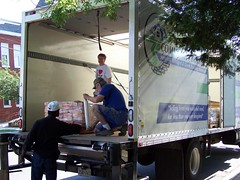
Community Forklift on a donation pickup in Brookland

From Jim Schulman, Director of Community Forklift:

Are you familiar with Community Forklift, the nonprofit thrift store for building materials? You can donate your home improvement leftovers instead of landfilling them, or you can shop at their huge warehouse and save tons of money on repairs and renovations. It’s good for your wallet as well as the environment!

However, it is still a young program, and the staff is working hard to keep growing in this tough economy. To help, the good folks at
ALL2DANCE in Takoma DC are holding a dance and silent auction to benefit Community Forklift on June 14th. It should be a lot of fun, and all sorts of local and green businesses have donated auction prizes (list below). Please consider attending to support this great local resource!

If you are not able to come, you can still help in a huge way. Please tell everyone you know about
Community Forklift - especially contractors, renovators, building supply companies, property managers, real estate agents, and landlords! There is even a blurb down at the bottom of this email that you can forward along.

Community Forklift -- "lifting up communities” with low-cost and green building materials.

---------------------------
You’re invited to a “Tropical Treat”
DANCE & SILENT AUCTION to benefit Community Forklift at
ALL2DANCE!
Sat, June 14, 2008
-Silent Auction 8 to 10 p.m.
-Intro. Group Dance Lesson 8:30 p.m.
-Social Dancing 9 to 11 p.m. (Ballroom, Latin, Swing)
-And a Pro/Am Dance Showcase!


Tickets are $10/person (available at Community Forklift or at the door)

ALL2DANCE is at 6925 Willow Street, NW DC 20012 – 202-422-6250
Two blocks from the Takoma Metro station, same building as the Washington Opera Company.

Auction Prizes include:
· Gift certificates to green businesses
· Guided canoe trip for two, donated by the Potomac Overlook Regional Park in Arlington
· One night stay at a luxury boutique hotel – choose from Hotel George or Hotel Monaco. Perfect for a romantic night in DC! (www.monaco-dc.com and www.hotelgeorge.com)
· Beautiful planters created from copper gutters from
Kraftwerks Sheet Metal & Slate, a local company specializing in historic roofing
· Gift certificate for artwork from
Susan Chapin- "art and objects from surplus and salvaged materials"
· Gift certificate to The Diner in Adams Morgan
· Case of Honest Ade from local drink company
Honest Tea, a socially responsible business that sells healthy alternative beverages with a lot less sugar than most bottled drinks
· Herbal consultation from
Deb Friedman, clinical herbalist in Takoma Park
· Gifts made from reclaimed materials, including cufflinks from old typewriter keys, a bunny made from sweaters, a tote bag made from the canvas of a sail, and a tabletop gecko made from magazines - from
Eco-Artware
· Long-sleeve t-shirt and necklace beading kits from Capitol Hemp in Adams Morgan
· Trash removal from
Junk In the Trunk ($165 value / 3 cubic yard removal). Includes a pink t-shirt and reusable bag with the Junk In The Trunk logo!

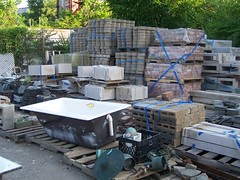
Community Forklift, bricks and stone
Materials inside and outside at Community Forklift
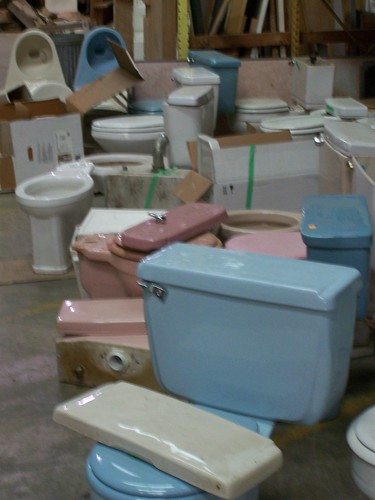
Toilets at Community Forklift

Labels: , ,

Tuesday, March 25, 2008

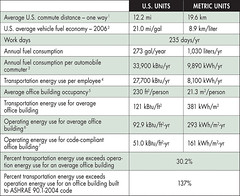
Transportation Energy Intensity as a Building Performance Metric

Is a building green if people drive to get there? See "Driving to Green Buildings: The Transportation Energy Intensity of Buildings" from Environmental Building News.

Comparing Transportation and Operating Energy Use for an Office Building (from Environmental Building News)
Comparing Transportation and Operating Energy Use for an Office Building

Labels: , , ,

Tuesday, March 11, 2008

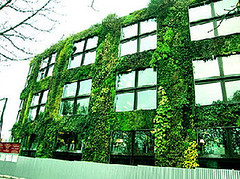
Vertical gardening by Patrick Blanc

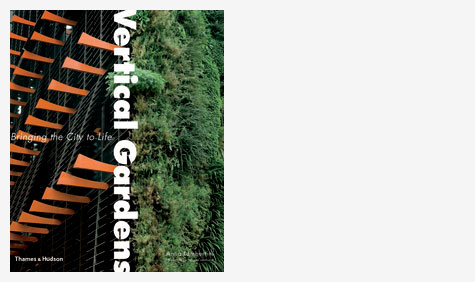
I am not into green building all that much, preferring to focus my energy on green living more generally. I find this article from the Financial Times, about vertical gardening, "Vertical is the way to go," appealing.

It's a book review of a sort on the work of Patrick Blanc. See his website.


Vertical Gardens by Patrick Blanc

Labels: , , ,

Wednesday, February 20, 2008

Absolute vs. relative reporting

A couple weeks ago I complained about a Washington Post story lauding green McMansions, ""Can Big Be Green?."

Somehow I missed a story in the New York Times on the same broad subject, the impact of the suburban "carbon footprint." In "Don't Let the Green Grass Fool You," the Times article is very direct about the "enormous carbon footprint" of suburban living.
Suburban energy consumption
Suburban energy consumption in metro Atlanta. NYT graphic.

I have published this particular graphic many times. (And don't forget the great article, Green Manhattan from the New Yorker.)
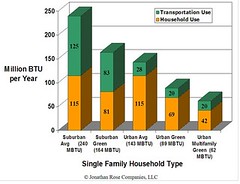
Sprawl vs. Green Urban
Graph by the Jonathan Rose Companies.

Also see the NYT Dot Earth blog entry, "Can we uninvent suburbia?"

One of the things to do regardless of suburbia, is to ensure that infill development in fundamentally urban places is urban, rather than suburban. The new Congress Heights shopping center mentioned in a blog entry yesterday fails on that count.
Brentwood Shopping Center, DC
Rhode Island Place shopping center adjacent (!!!!!!!!!!!!!) to the Rhode Island Metro Station.

Labels: , , , ,

Saturday, December 29, 2007

The hypocrisy of LEED

is about building to the checklist and value engineering, rather than building truly environmentally sound buildings. See "It's Way Too Easy Being Green: The decidedly dupable system for rating a building's greenness," from Slate. From the article:

But closing the loopholes in the checklist will take the USGBC only so far. In Europe, which has had baseline standards for energy efficiency since the mid-1990s, all new buildings are green buildings, at least to some extent. So while American buildings are green by the grace of Goldman Sachs, London offices are green regardless of whether the client cares about the environment, or needs a shot of good PR.

Lately, even the USGBC seems to realize the solution lies not in giving out medals for greenness one building at a time, but in encouraging greener communities. Density is why the average resident of Tokyo uses as much energy in a week as the average resident of Houston uses in a day. The USGBC has launched a pilot program with the Congress for New Urbanism and the Natural Resources Defense Council to grade entire neighborhoods. Rather than looking at green building as a personal (or corporate) virtue, the neighborhood program encourages planners and builders to make more integrated, systematic changes in the way we live.

Labels: , , ,

Tuesday, November 20, 2007

Disruption

Someone I was talking with at the post-lecture reception said that a lot of us were already at the place that Professor Sennett is talking about. I think that's true, but not so many, otherwise you couldn't have Ford Motor Company advertising about the green SUV. (See "SUVs Are Not Cool, Unless They’re “Hybrid Hybrids”," from Streetsblog.

The point isn't driving more green, it's living more sustainably.

For awhile I used the term Sustainable land use and resource planning (SLURP), because I really don't like the term smart growth, although in some sense I suppose the best term is compact development. By definition, compact development has work and residential destinations located within, and mobility is optimally oriented to non-automobile forms.

The reason I get so tired of people talking about green buildings is because the real point is energy use overall, and as long as you drive to and from your green building, does it really matter?

I am thinking that "green" is the new "new urbanism"--meaning terms that have become so overused and mis-calibrated so that they end up not meaning that much.

E.g., as long as new urbanism is mostly about building new subdivisions on previously undeveloped land, it adds to the problem.

As long as green buildings are located in areas where they add to the automobile load, they don't add much benefit to the system.

Just like the Center for Science in the Public Interest, with regard to health behaviors, says "the most important health behavior you can change, after not smoking, is to eat less fat," the most important sustainable living behavior you can adopt is to (for the most part) not drive an automobile.

Next would be to not use materials that consume tremendous amounts of energy in order to be created,

Labels: , , ,

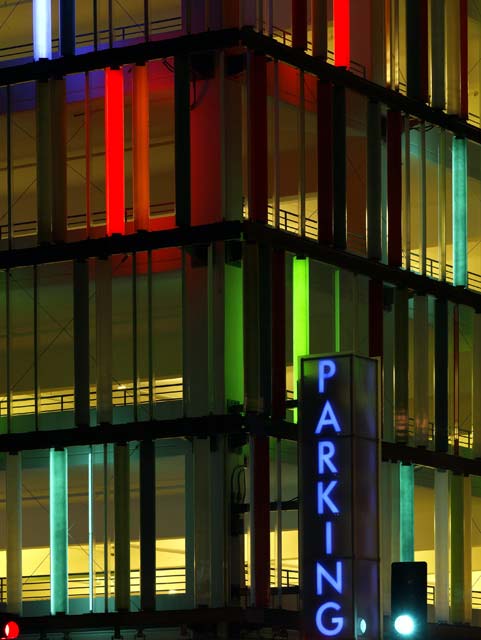
By definition, isn't a "green" parking structure an oxymoron?


Photo: John Edward Linden. Santa Monica Civic Parking Structure: detail of multicolored channel-glass bays at Fourth Street and Civic Center Drive.

See A Civic Gateway: Santa Monica Civic Center Parking Structure: The humble parking garage is humble no more with a bold design that makes it a sparkling destination point in itself - oh, it's LEED green, too," from ArchNewsNow.

The last couple days, I've attended a couple presentations by the famed sociologist Richard Sennett, at the UMD. He is focusing on what he sees as the need for disruptive action to deal with the carbon offsets and global warming, with about a 60 year period to act.

One point he makes is that planning for coherence and order (opposed to the kind of organic complexity discussed by Jane Jacobs) produces what he calls "brittle cities," places unable to change very much or change very well in response to changed conditions.

In part, this is what Drew Ronneberg calls "planning for contraction," or others "Shrinking Cities." (Also see Youngstown 2010.)

The real disruption is that the U.S. population is based upon cheap energy. Cheap energy allows sprawl. It also allows for most of society to buy food that it doesn't produce. Similarly, water availability is key to sprawl and population growth. These resources are dwindling.

How can we possibly support the population we have, sprawling, in conditions of expensive energy, declining energy supplies, abundant energy supplies less conducive to vehicle use and massively carbon producing (coal), and declining water supplies?

That sets up real possibilities for disruption.

Labels: , ,