Rebuilding Place in the Urban Space

"A community’s physical form, rather than its land uses, is its most intrinsic and enduring characteristic." [Katz, EPA] This blog focuses on place and placemaking and all that makes it work--historic preservation, urban design, transportation, asset-based community development, arts & cultural development, commercial district revitalization, tourism & destination development, and quality of life advocacy--along with doses of civic engagement and good governance watchdogging.

Monday, May 18, 2026

Dog poop powered lights at dog parks

I am working on a design brief for a new playground for Sugar House Park, for a grant due next Friday.

So yesterday I went to 11 playgrounds, a separate pocket park, and a dog park.  

Tomorrow I want to double check a couple I went to, including ours at the Park so I can lay out a separate but equal facility program with additional features to differentiate the replacement for our failing playground from the relatively newer and still in great shape playground.  One my camera died.  

Plus, a recheck of another park I saw a couple years ago, and one new to me.

It wasn't until I saw these discarded bags of dog poop at the South Salt Lake City Dog Park that I realized there were no trash cans there.  However, there was a single bicycle rack.

In parks planning, dog poop is a total pain in the ass.  (1) Technically it's hazardous waste.  (2) If uncollected it is a vector in pollution of our local creeks and the river into which they flow, the Jordan River, and ultimately into the Great Salt Lake.  (3) It's better than leaving it but putting it in a can makes it smell, and (4) if put in cans it's not supposed be put in, like a recycling bin, the whole load is discarded because it's contaminated.

If you don't see recycling cans in your park--and the parks in Salt Lake City and the County Parks too, as well as Sugar House Park don't have them--it's because of rampant contamination, eg. trash in recycle bins, recycling in trash bins.  It's no longer worth it.  

Ideally, people would follow the "take it in, take it out" guidelines, but most people think if they throw something in a can, even if it is recyclable or compostable.

The Park Spark project in Pacific Street Park, Cambrige, Massachusetts was created as an art project.  Photo by Matthew Mazzotta.

Possibly the best solution is to create dog poop digester stations in parks, especially dog parks.  It creates methane used to power a street light ("Coming to a park near you: dog poo-powered lamps," The Observers, "Dog poop has bright side: Powering Mass. park lamp," Seattle Times).

The Park Spark project did this in Cambridge, Massachusetts almost 20 years ago, but in terms of scaling it up nothing came of it because the artist who conceived it wanted to prove it was doable, not to try to build a business out of it and scale it up and outward across the country.  It also turns out the process of "turning it on" is complicated ("Artist's Poo-For-Fuel Project Gets Messy," WBUR/NPR).

But it's deserving of a new effort, not so much to power lights, but to divert dog poop at a bigger and better scale from the waste stream, make the environment nicer, to reduce contamination of land and water, and do something useful with it.  Imagine if when leaving a park, people could just put their bag in and the digester would go to work.

After all, now there are services that will pick up the poop in your yard, for people who are too gross to not do it at all--I knew a household like that, or because they don't want to do it.


For parks that don't have a formal dog park, they could still have a digester and use the power somewhere else.  For example a number of parks in the Salt Lake Valley serve as collection points for glass for people who don't want to pay a monthly fee for pick up (that's what we do).


Or we could use a poop digester to help power lights at the basketball courts.  Or along the bicycle path, etc.

A culture of waste versus a culture of waste reduction (zero waste).  Oh the things I saw in DC, like stopping at a sewer grate to throw away fast food containers, cars with Fraternal Order of Police license plates tossing litter--don't they get paid by the city to take good care of it?  A can rolling on the floor of a subway car.  A little kid said something to me, I said we had a responsibility to keep places clean.  His mother then said the opposite, etc.    Salt Lake City still has litter but so little compared to DC, even in comparatively nice areas.

It would be hard to build a culture where people would collect their dog poop and take it on occasion to these digesters, the same way our household saves up glass bottles to put in the dedicated glass recycling stations here (you can also pay to get it picked up).  

It happens that there is an insulation company in the region spinning fiber from discarded glass, so it's economically feasible to recycle glass.  But the company estimates only 10% of glass is recycled.

(Salt Lake City, followed by Salt Lake County, is a leader in putting pro environmental messaging on its trucks.  But Momentum Recycling, which collects the glass [and also does biodigestion] doesn't.  They have beautiful trucks, but they don't have messages to tell people to recycle glass.)
 
Trash trucks should be seen as rolling billboards for environmental messaging.

We haven't built the culture in the US to support an "in your bones" understanding of and responsibility for waste reduction.  

Plenty of people think throwing something away so it's not litter is the extent of their responsibility.  While it isn't litter, maybe it is recyclable or compostable.

When I take "disposable" recyclables or compostable with me, or buy them while I'm out, I bring them home to properly dispose of (but not on vacations, except if possible I will bring recyclables home even still).
 
As a bicyclist often I would pick up bottles and cans and put them in recycle cans.  Virtually every time I would stop for glass, and depending on the circumstances pick up broken glass, because that punctures bicycle tires.

As a pedestrian I pick up litter and separate it out between trash, recyclables and compostables.  As I walk if I spy the right cans and they are close enough to the sidewalk so I don't feel like I'm trespassing, I'll toss them in respectively.  Otherwise I bring it home and separate it. 

As a driver, in parking lots and parking on the street, and sometimes when I see a preponderance of recyclables on and around the street and curb, I will stop and pick it up and take it home.

I wish more people would do the same.

Labels: , , , ,

Sunday, May 03, 2026

What happens on Sunday when the 9th and 9th commercial district in Salt Lake doesn't have trash pick up on the weekends


This is so basic and something I have never understood.  Most people do their shopping from Friday to Sunday.  So you need more weekend service, not none.

Labels: , ,

Wednesday, October 01, 2025

Best practice innovation and government: bottle deposit bills and DC


Everett Rogers' book Diffusion of Innovations came out of his dissertation where he studied the "diffusion of innovation" through different sectors of the economy-society.  

For example, it took 17 years for a good innovation to percolate out through K-12 education, because of how it is organized--thousands of districts across 50 states and territories.

There used to be talk about how states can be "Laboratories of Democracy" in fostering innovation that is later taken up by other states--Mitt Romney's state health insurance program in Massachusetts ("Mitt Romney Finally Takes Credit For Obamacare," NPR) is one example, another is how the Children's Health Insurance Program started out of a community program in Pittsburgh ("CHILDREN IN CRISIS: The Story of CHIP," PBS documentary).

Today I think it is a lot more difficult than we realize between the lobbying of special interests (the conservatives have an especially good one in the American Legislative Exchange Council, which gets conservative legislation passed across the country), state legislatures that pre-empt local action, and just the amount of time required to organize and get something passed.

Another example is the penny.  We know we don't need it.  But copper interests kept their hand in Congress to keep it minted.  Finally, it won't be newly minted, but will still remain in circulation ("No more pennies? Coin collectors say end of penny will have little impact on hobby," St. Cloud Times).

At the local level, an example is bag charges.  DC did it in 2009.  The Wall Street Journal was up in arms ("In Washington, a Lesson in Bureaucracy Comes in Every Bag"), but a year later said it wasn't so bad ("Capital Takes Bag Tax In Stride").  But it's taken more than a decade for neighboring jurisdictions to pass similar laws, in part because of state action.

-- "Recycling, waste streams, plastic bags, and bottle bills," 2013

I bring this up because the DC City Council is considering a bottle deposit law ("Fight gearing up over D.C. bill to recycle bottles and cans for cash," Post).  Environmental groups put this on the DC ballot in 1988!!!!!!!!!!!! and it was defeated by organizing by the beverage industry.

That was around when I first moved to DC, coming off of about 10 years of Michigan already having such a bill, where it worked well at reducing bottle and can litter from beverages ("How Does Recycling Your Bottle and Cans Help Preserve Michigan’s Environment).

A few years ago, I walked from my house in Manor Park to Columbia Heights and back, and picked up almost 500 recyclable bottles and cans (not all subject to traditional deposit laws, some were from food).

I wonder what Everett Rogers would think of a 40+ year diffusion curve for bottle deposit laws?

Labels: , , , , , ,

Wednesday, March 12, 2025

Trash piled up around a trash/waste can/container at London Fields Park, on a nice weather weekend, London


Reddit photo.

Many parks and business improvement districts provide more limited services on weekends, when these districts may have more patronage not less, but it doesn't comport with "business hours."

They need to have more frequent pick up on weekends.  

This has to do with planning for seasonality and 12 month parks.

Note that the park users are to be lauded for putting the trash at the waste can.  There are photos of Dolores Park on a weekend that are super trashy ("Enough litter to fill 460 bags of trash left behind by Dolores Park revelers over weekend," San Francisco Chronicle).


That's the point made in the entry, "Gaps in Parks Master Planning: Part One | Levels of Service" wrt parks that need more service than what is typical.  That goes for parks in temperate areas too.  In winter, parks tend to be used less.  But not in temperate areas.

Labels: , , , , ,

Saturday, April 20, 2024

Earth Day Part 1: DC isn't achieving its sustainability goals wrt waste diversion

According to the Washington Informer article, "DC's new plan to slash its trash," DC is adding ten years, one decade more, to its waste diversion goal, from 2030 to 2040  That's 16 years!!!!!!!!!!

From the article:

The Sustainable DC Plan, which came out in 2013, said the District should begin diverting 80% of its waste away from landfills and incinerators by 2032. Two decades later, the city has made some progress, particularly when it comes to composting and recycling—but it’s not likely to achieve the original goal. 

A long-awaited Zero Waste DC Plan, which the D.C. Department of Public Works (DPW) released earlier this year, pushed the target date back eight years. To reach 80% waste diversion by 2040, the plan lays out 43 actions aimed at seven overarching goals, which include reducing how much waste we generate, increasing how much we reuse and expanding access to recycling and composting services.
Ironically when the plan was introduced in 2013, I wrote that the city wasn't likely to achieve these goals especially wrt "waste," that it wasn't adopting best practice goals and examples from the best performing cities, but was watering the goals down ("Realizing all aspects of Sustainable DC: it all comes down to chickens...").

One problem is responding to "politics and interest" rather than best practice, like diverting food waste from households.  It's important, but hard to do at scale when you only focus on food waste. It's boutique, not substantive.

I've written about DC's waste practices for years ("More on zero waste practice and DC," 2015).  There's a lot more that can be diverted than recycling and yard waste.  But yard waste is a huge component of the waste stream.

The solution, which I wrote in 2013 ("Urban composting redux," "A way for DC to begin adding yard waste collection as a separate element of waste collection and reduction programming") is to divide the city into two: (1) rowhouse neighborhoods and (2) detached housing neighborhoods.

Salt Lake brands their waste program slcgreen,  They assign 3 cans to households: brown for yard waste and food scraps, green for trash, blue for recycling.  

They send waste inspectors through neighborhoods a few times per year to check for contamination and will post information on cans, and/or forbid their pick up, when there is a high rate of contamination.  

Separately Momentum has gray cans for glass and purple for food waste, which people pay for separately.  (Salt Lake also charges for waste pick up separately.)  Momentum also offers glass drop off recycling in various locations around the city, which is what we use.

Why so long, so obtuse, about developing a yard waste diversion program?
  Detached housing neighborhoods tend to generate a lot more yard waste than rowhouse neighborhoods.  But unlike neighboring jurisdictions, DC has never developed a yard waste diversion program for these neighborhoods.  That's the major reason why DC lags so much.

Salt Lake City puts pro-recycling, pro-zero waste messaging on its garbage trucks ("Every year Salt Lake City puts new pro-environmental messages on its sanitation trucks," 2018)

If DC had a regular yard waste diversion program, like Salt Lake, people could put their compostable food in the same can, not wasting money on the very small artisan diversion program at present. 

Start a yard waste diversion program with the Outer City and the detached houses, figure it out, and then introduce a more specialized program to the rowhouse neighborhoods.  

Alternatively, simultaneously with the launch of an Outer City focused diversion program, the city could also do a pilot program in one rowhouse neighborhood, and work from there.  But it's obvious they lack the capacity to do two different programs at once.

(Separately, in Salt Lake, Momentum Recycling, which is contracted to do the glass recycling, has started a boutique composting program too, but it takes everything, meat etc., and then does bio-digestion to produce natural gas. So it expands the range of what's offered towards zero waste, but I don't think the latter program could work at scale.)

Other DC area jurisdictions have done yard waste diversion for decades.  Montgomery County also promotes on-site yard waste composting in many ways.  That's what we did, although it's an issue with tree branches.  Having portable chippers go through neighborhoods every so often would help.  

Maryland even makes compost (Leafgro) and sells it based on getting yard waste from Montgomery and Prince George's Counties.

Um, paying attention to me 11 years ago, probably means that DC would have achieved its waste diversion goals by 2030...

Labels: ,

Sunday, August 21, 2022

Interesting study on litter focuses on the brand of the trash

2004.

When I was involved in the early days of H Street Main Street, a commercial district revitalization initiative for the H Street corridor in Northeast DC, one of the activities my committee did was a monthly litter cleanup.

I didn't want to do it--because the litter just comes back--but it was important to respond to the expressed needs of the volunteer committee members.

It was actually a great thing to do for creating visibility for the organization, for getting a handle on the problem, and for volunteer recruitment.

One of my earliest blog entries was on litter, as a result of those efforts. And I wrote more pieces over the years.

-- "Every litter bit hurts," 2005
-- "Litter revisited," 2006

Photo by Inked78.  700 block of H Street NE.

While we never did formal litter surveys, I was especially impressed by the litter survey methods of Keep Australia Beautiful, which tended to be much more detailed than the survey forms typically used in the US.  (In the US, Keep America Beautiful's biggest funders are industry, and I can't imagine industry wants too much detail on the nature of litter.)

My newsfeed had an article ("We studied 40,000 pieces of litter to find out where it all comes from – here's what we discovered," The Conversation) about a study in the UK, which was twofold: (1) like Keep Australia Beautiful, it was highly detailed about the types of litter; but (2) added a new dimension to the study, recording the brand of the litter.  From the article:

The community interest company Planet Patrol created an app for people to record the litter they find and remove. We used it to map the location, materials, type and, where possible, brands of 43,187 items of litter collected across the UK in 2020. Our research was recently published in the Journal of Hazardous Materials.

Plastic was the most common material recorded, accounting for 63.1% of all items. Metal was second (14.3%), followed by composite materials (pieces of litter made from more than one material, like Tetrapak cartons) at 11.6%. Bottles, lids, straws and other items from the drinks industry made up 33.6% of the total, of which metal cans were the most common.

Our citizen scientists identified brands for 16,751 items (38.8% of the total), with 50% of these belonging to just ten brands. The Coca-Cola Company was the most frequently identified brand (11.9% of branded litter), followed by Anheuser-Busch InBev (7.4%) and PepsiCo (6.9%). The top three brands were all drinks manufacturers.

The article first suggests that based on the survey, some of the EU's emphasis on litter interdiction, focused on impact on rivers and the sea, is misdirected.  It also suggests naming the biggest sources of identifiable litter, as a way to change the actions of the companies and the behavior of users.

Should we name and shame?  Since most litter in the environment cannot be traced back to its origins, naming the people and organisations responsible may seem futile. But litter that can be linked with an industry or a company is some of the easiest to address. This is particularly true for packaging, which made up 59.1% of the items logged in our study.

Given how common this type of waste appears to be, expanding opportunities for people to refill containers with goods (where appropriate), removing or reducing the need for new packaging as zero-waste shops do, is a good idea. This will require collaboration between companies, industries and governments. Small-scale efforts to achieve this are underway, with Wales pledging to become the first refill nation (where people can easily refill water bottles, making bottled water obsolete), some supermarkets introducing or trialling refill aisles and The Coca-Cola Company’s various small-scale efforts to allow consumers to refill bottles with beverages, most notably in Latin America.

It's definitely a transformational approach, one that hadn't occurred to me before.

-- "Planet Patrolling: A citizen science brand audit of anthropogenic litter in the context of national legislation and international policy," Journal of Hazardous Materials (2022)

Labels: , , , ,

Thursday, August 11, 2022

Master planning for solid waste | Creating a VV equivalent for solid waste management and service operating at the metropolitan scale

VVs, or Verkehrsverbund, are German "transport associations" that are organized at the regional scale to plan, coordinate, and deliver transit services in an integrated fashion. 

--"Verkehrsverbund: The evolution and spread of fully integrated regional public transport in Germany, Austria, and Switzerland," Ralph Buehler, John Pucher & Oliver Dümmler, International Journal of Sustainable Transportation (2018)
-- Transport Alliances - – Promoting Cooperation and Integration to offer a more attractive and efficient Public Transport, VDV, the trade association for German transport associations.  


One of my points about master planning is that for functional areas: transportation; parks and recreation; culture; etc., it tends to not be master planning in reality, but planning for what the agency is responsible for.

That means in parks planning, other parks and open spaces within a jurisdiction are not likely to be addressed even though they serve residents, whose interests should be represented. For example, in DC it means that federally controlled parks are rarely covered in "local parks plans" (("Federal shutdown as another example of why local jurisdictions should have more robust contingency and master planning processes," 2013, "DC, parks planning, and golf,"2020)

In recreation planning, it means that for profit entities, like fitness centers, yoga instructors, and other uses like boxing ("Another example of the need to do comprehensive parks, recreation and civic assets planning at multiple scales, including neighborhoods like Columbia Heights," 2019) are not likely to be addressed.

In transportation, it means that private parking resources are usually not addressed in parking planning ("Testimony on parking policy in DC," 2012), private sector operators aren't addressed in planning for various modes.

In solid waste, it means that the agency only plans wrt residential waste pickup for houses of 1-4 units.  Multiunit residential and commercial properties are covered by the private sector, and for the most part, solid waste planning doesn't address those elements of waste generation.

In terms of overall waste reduction planning, it's essential to include all properties in a jurisdiction within planning ("More on zero waste practice (and DC)," 2015).

WRT solid waste and recycling it's pretty much the same.  The city is responsible for certain types of recycling.  And it imposes rules on the other properties, but doesn't do too much enforcement and oversight on recycling from multiunit residential and commercial properties ("Reformulating building regulations to promote sustainability," 2016).  

(This also came up in comments on a recent Post article on composting, "Composting in NYC is hard."  It would be easy for DC to impose composting requirements on apartment buildings and would be a great way to reduce the waste stream.)

Even though there are tremendous opportunities for waste diversion and reduction.

Inquirer photo.

This comes up because a building materials recycling and resale organization in Philadelphia, Philly Reclaim, is shutting down because it was behind in rent, has organizational management issues, and the building is being sold ("Tacony salvage shop needs to move by Monday. It’s giving away sinks, lumber, and more," Philadelphia Inquirer).  It has to be out of the property by Monday, and is giving everything away as a way to try to empty the property.

Most communities have a number of organizations that are involved in recycling items that aren't part of the traditional municipal recycling waste stream of paper, metal, glass, and plastic.  For example, this list of other organizations that deal with "Hard to Recyle" items in Salt Lake County lists more than 40 organizations.

But they aren't organized into an overarching association, in a manner comparable to how Germany organizes regional transport associations to coordinate the planning and delivery of transit services.  

Sometimes a local government may make grants to organizations in this space that are nonprofits, but the groups are generally a mix of for profits and nonprofits.  And it's not particularly systematic.

According to the Inquirer article, a house typically is comprised of 60,000 pounds of materials, so materials that are diverted from the waste stream--and typically building materials make up 33% of the waste stream--reduced the overall stream in significant ways ("Construction and demolition waste," European Commission).

If the waste industry was organized like a German VV, then Philadelphia and area solid waste agencies would have known that Philly Reclaim  was in trouble, and that the overarching planning unit needed to step in and assist Philly Reclaim both in terms of building their organizational capacity, as well as finding a new location, even perhaps providing city facilities for it, given the value the group provides in diverting materials from the waste stream.

From the standpoint of master planning, it would behoove solid waste agencies to initiate a broader master planning and service integration approach.

====

In Greater Salt Lake, governments mostly don't do glass recycling directly.  There is a separate company, Momentum Recycling, that does it.  The area is fortunate that there is an insulation manufacturing plant in the region, so it will take glass and make it into insulation fiber.


 At an event yesterday, I asked and they estimated that probably 10% or less of glass is recycled in the area.  In Salt Lake City you either pay for a separate can and pickup, or you can drop it off at various glass collection stations around the city and county.

 Glass collection container in Sugar House Park, Salt Lake City

I gave them a bunch of ideas.  Putting messages on the area garbage trucks, sponsoring NPR, promoting events, etc.  But they need planners too.

Salt Lake City sanitation/garbage trucks carry "ads" promoting recycling and waste diversion

Labels: , , , ,

Thursday, June 02, 2022

Waste diversion, food waste versus yard waste composting and DC

For almost 10 years I've been writing about how DC could do a better job with waste diversion, especially yard waste--unlike all area jurisdictions, where state requirements force them to do it, DC doesn't do yard waste diversion.  Why I don't know.

According to the EPA, food waste is about 14.6% of the waste stream, and yard waste about 13.5% of the waste stream.


I've suggested that the city needs to have two different programs based on geographic, one for the outer city, where houses tend to have larger yards and generate large amounts of yard waste, and one for the core of the city, in particular the rowhouse neighborhoods, where houses with small yards tend to (but not uniformly) generate less yard waste.

-- "A way for DC to begin adding yard waste collection as a separate element of waste collection and reduction programming," 2013

In fact, as far as the core is concerned, a program could vary by block, depending on micro-local conditions, as there are plenty of blocks in rowhouse neighborhoods, especially in Capitol Hill and Columbia Heights, that generate fair amounts of yard waste. (Note that DC does some diversion of trees and branches, especially in conjunction with post-storm clean up.)

And I suggested the city could develop the program slowly, ward by ward, as it develops the capacity and expertise to do yard waste diversion.

I bring this up because WUSA-TV reports ("Public curbside composting? It could soon be a reality in DC") that the city is close to piloting to 10,000 households a program for picking up "organic" waste.  I am motivated to write this entry because according to the story:

“Making composting accessible to residents across the District is the single most meaningful step the District can take toward meeting its Zero Waste goals,” the committee report reads. “Organic waste, which includes food and yard waste, makes up roughly a third of the District’s waste stream.”

It's true, but judging on the proposed costs of the program, they aren't focusing on yard waste at all, just food waste.  From the report:

  • Opt-in mailers for all DPW-serviced households ($36,750)
  • Compost caddies for 10,000 households ($200,000)
  • Compostable bags (50 per household) ($24,000)
  • Curbside containers (5-gallon buckets) ($360,000)
  • Disposal costs ($93,600)
  • Collection costs ($3,640,000
  • Hauling costs ($37,440)
  • Ongoing education and outreach for opt-in households ($40,000)

First, more impact would be realized by yard waste diversion more generally, and rather than opening it up to the entire city as intimated by the report, pilot the program on a geographic-specific basis.

In my opinion, the most important steps the city could take wrt waste reduction ("More on zero waste practice (and DC)," 2015) would be to:

(1) institute yard waste diversion; 

(2) develop more focused waste diversion programs for other types of waste; 

(3) working with the private sector, develop recycling and waste diversion programs for multiunit housing; 

(4) expand food waste diversion programs from the current drop off program, working with community gardens, multiunit buildings, etc.; and 

(5) incorporate food waste diversion within regular yard waste programs, which is how it's done in Salt Lake City, San Francisco and other places.  But also encourage residents who are able to do on-site composting themselves.  Montgomery County, Maryland is a national leader on this, even though they have a formal yard waste collection program anyway.

This does remind me of the point I made in response to the development of a City Sustainability Plan during the Gray Administration (2011-2014).  I said the city has no chance in becoming the most sustainable city in the US by 2032 if even now, the practices that it adopts are nowhere near the best in class practices already adopted by the nation's most sustainably focused cities.

-- "Realizing all aspects of Sustainable DC," 2013

Conclusion.  In short, it seems like this pilot program won't accomplish all that much, compared to focusing on yard waste reduction first, developing geographically specific foci, targeting the outer wards initially, creating a pilot for rowhouse neighborhoods specific to their needs, and developing the yard waste diversion program in a manner where it can also handle food waste.

While simultaneously developing special waste diversion programs for multiunit housing and the encouragement of on-site composting for those households with the yard space to accommodate it, using Montgomery County's best practice as an example ("Urban/Community composting," 2014).

Labels: , , , ,

Saturday, September 28, 2019

I hope they installed cameras: Illegal dumping cleanup in Oakland, California

According to the San Francisco Chronicle ("Dramatic before and after photos show Oakland street cleanup") a cleanup of a 2.5 mile stretch between Permain Street and Douglas Avenue in Oakland, California, a street that repetitively experiences illegal dumping involved 135 volunteers who removed 24 tons of refuse in a five hour effort.


It was organized by the Alameda County Illegal Dumping Pilot which is:
a six month-long endeavor to end illegal dumping regionally. Through education (teaching school children, landlords, and businesses about the dumping issue), eradication (sending out clean-up crews), and enforcement (cracking down on illegal dumpers), they hope to create a permanent shift in people's behavior.
While I think education and such is important, and it does reduce dumping by the small grouping of people who listen, as well as by making legal dumping easier, the best way to address illegal dumping is cameras, enforcement, big fines, and community service focused on making the people clean up the places they've soiled.

That's what they're doing with great effect in St. Louis ("Foc used ways to deal with illegal dumping: camera-based enforcement," 2018).

Labels: , , , , , ,

Thursday, July 18, 2019

Every year Salt Lake City puts new pro-environmental messages on its sanitation trucks

... for years I've argued more cities and counties should be doing this.  Here are there are some examples.

Some, including DC, have decorated some trucks with murals.

But mostly DC's sanitation trucks, and local government sanitation trucks miss the opportunity to use the potential of their rolling billboards.

Salt Lake City very consciously takes a different path, with messages on each side of the truck, and they change every year ("Truck Wraps Deliver Words of Wisdom, Inspire Recycling).

The for profit firm Waste Management does a good job with messages on their truck. But unlike SLC, the messages are pretty static, mostly about how the trucks run on gas generated from landfills. It is to the credit of SLC that they are willing to invest in the money required to change the messages every year.

And that they do is a good thing, because after awhile, you stop noticing messages when they don't change.

A typical DC trash truck

DC garbage/sanitation truck

Most include a tagline, "DPW: The Preferred Choice" except that virtually everyone getting service from DPW doesn't have a choice.

Not that I am complaining, most of the time they do an excellent job, and I think it's a difficult one, especially given how hot it can be in the summer, and cold in the winter.

Labels: , , , ,

Saturday, November 03, 2018

Garbage trucks as mobile billboards: Gaskells, UK highlights its charity, the Whitehall Centre homeless services organization

Gaskells is a waste management company based in Bootle, outside of Liverpool.  There is an article on the company in the trade magazine UROC, which is for the UK independent waste hauling industry.

As their primary charitable endeavor, they choose to support the Whitehall Centre, an organization dealing with providing services to the homeless, what's called "rough sleeping" in the UK.

They've chosen to support Whitehall Centre because rough sleepers often choose waste bins ("skips") as a place to sleep.

They've put information on at least one of their trucks promoting the Whitehall Centre (press release).

====
While originally I wrote about the use of garbage truck sides as a way to show "public art" in the form of murals, something pioneered in Philadelphia about 10 years ago, now I think garbage trucks should be used to display environmentally-related messages.

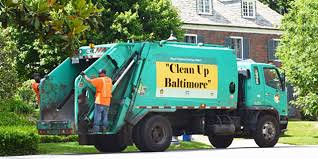
Waste Management does it on their trucks.  Baltimore City has used garbage truck "billboards" in their anti-litter campaign.

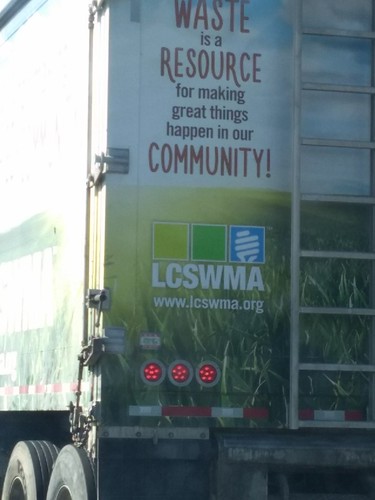
Lancaster County Waste Management Authority waste transfer trucks serve as rolling billboardsGarbage trucks as mobile billboards for urban environmental messaging and marketing is a big lost opportunity for most communities. 

But not for Lancaster County, Pennsylvania or Baltimore City.

Labels: , , , ,

Wednesday, August 22, 2018

Focused ways to deal with illegal dumping: camera-based enforcement

Yesterday's Washington Post has an article, "'Like the Wild West': Prince George's continues to fight abandoned cars, litter," about illegal dumping in Prince George's County and complaints by citizens and business owners that the County has no enforcement program. From the article:
Standing in front of Kearney’s with his rescue dog on a recent morning, Cummins surveyed the state of Marblewood Avenue.

To his right, there was a pile of wood and a tattered maroon sofa that sagged in front of a “Gorgeous Prince George’s — No Dumping” sign. To his left, a black Dodge Charger with no license plates was parked in front of a “No parking any time” sign. It was one of more than a dozen abandoned cars on the street that had been tagged by county officials with green stickers threatening impoundment. But the cars are rarely towed and the stickers easily pulled off, Cummins said.

“It only gets worse in the afternoon,” he said, shaking his head as he walked his dog inside and explaining that more cars and trash are typically dumped later in the day. …

Complaints through the CountyClick311 program and emails to officials — Cummins estimates he has sent 200 in the past four years — have resulted in little improvement, both Santivasci and Cummins said.

The trash problem isn’t limited to Marblewood Avenue. Under Alsobrooks, the state’s attorney’s office has prosecuted 215 illegal-dumping cases since 2014, Erzen said. According to Maryland law, people convicted of illegal dumping could face up to five years in prison and a fine of $30,000. …

This fall, the county plans to create an interagency task force that will focus on enforcement, tracking and prevention, including studying why people litter and how targeted marketing can reduce the behavior. The county will also deploy solar-powered compacting trash cans and recycling bins in litter hot spots.
It happens that on Monday, the St. Louis Post-Dispatch ran an article, "Caught on camera: Look who the city nailed when it went after illegal dumpers," about the city's focused enforcement program, which puts cameras in areas in which illegal dumping frequently occurs.  There they've been fining offenders, there are repeat offenders, and yes, a majority of the offenders are from the suburbs.

Thanh Huynh of Fenton picks up trash in a Gravois Park alley between Nebraska and Oregon avenues on Wednesday, July 25, 2018, after she and her husband were sentenced to 40 hours of community service and fined $500 for illegal dumping while renovating a Dutchtown property. St. Louis Police patrolman Dave Krapf oversees the community service, making sure that offenders have water and plenty of trash bags. Photo by Robert Cohen.

When I first came across the St. Louis story online on Sunday, I was reminded of what it was like to live in DC in the period before 2005, when the city was marked by crime, abandoned properties, litter, graffiti, and illegal dumping--this was in my old H Street NE neighborhood within one mile of both the US Capitol and Downtown.

It's easy to forget those times, as most of those problems--well litter is still rampant and crime can still be a problem--have subsided.

Photos taken of these illegal dumping incidents led to successful charges against each of the perpetrators.  St. Louis City photo.

Illegal dumping.  At the very least, Prince George's County needs to look to St. Louis for guidance on how to better address illegal dumping.  And illegal dumping is a different problem from litter and needs to be addressed differently. According to the SLPD article the city has a special refuse tax designed to fund specific responses:
The cameras are perched on light poles throughout the city, trained on alleys that cut through stretches of town long forgotten and filled with piles of trash.

In the Baden neighborhood, on the city’s northern border, three of the 100 cameras are mounted in a one-block area just off North Broadway, a dumping ground so popular that a few days after city workers pick up truckloads of garbage, tires, drywall, mattresses and tree limbs, the area looks as if the crews were never there.

The eyes in the sky are part of a full-throttle effort by the city to clean up a mess that has been decades in the making. A trash fee increase approved by the Board of Aldermen last year paid for the cameras and also is funding new trash trucks and overtime for police officers to go after the culprits causing the messes. …

The cameras serve as 24-hour watchdogs, locked on problem areas and snapping images with every movement. The photos are downloaded weekly by police.

The cameras have led to 18 guilty pleas this year, including two by Ray Huffman, a contractor from Bonne Terre, Mo., a town about an hour south of St. Louis.

All but three of those who admitted to wrongdoing live outside the city of St. Louis.
Litter.  Litter is a different story from illegal dumping.  For years I've made recommendations.  Just having more trash cans isn't the issue.  Because the issue is people not caring enough to properly dispose of "trash" in general.  Although yes, not having cans in places where they are needed does increase litter compared to places where trash cans are placed.

The Post story also discusses the county's programs for waste diversion and recycling, which are a different issue entirely.

Community engagement.  In "Every Litter Bit Hurts" (2005), "Litter revisited" (2006), and "Community cleanups (and other activities) as community building and civic engagement activities" (2011) I've discussed various ways to begin to engage residents, students, and others in litter reduction programming.

In my personal experience, it's not enough for "one person" on a block to regularly pick up litter.  Sure, my block and the neighboring streets are cleaner than they would be because I pick up litter, especially recyclables.

But it doesn't result in people seeing my example and then being "inspired" to take independent actions of their own to pick up litter themselves. Maybe they do on their own property (not usually).  They definitely don't do it off their property.

Back when I did "broken windows" type experiments in the H Street neighborhood--focused litter reduction on the 600 block of I Street NE and regular cleaning of the bus shelter at 6th and H Streets NE, I found that the litter picking on I Street seemed to result in less trash being thrown, but cleaning the bus shelter made little difference.

Therefore, I think it's more important to do systematic efforts with community associations and schools, and more "adopt a block" and "adopt a bus stop" type programs.

And rather than focus on one "city-wide" cleanup day, I think it's better to have a full year of programming, drilling down to schools and neighborhoods and political subdivisions (wards/council districts, etc.).

WRT schools, I've always been intrigued by how in Japan, schools don't have custodians.  Instead, the students are responsible for cleaning the school.  Yes, it may not be as clean as floors buffed by a custodian running a floor polishing machine, but the kids learn responsibility and that if someone litters someone else has to pick it up.

It's why the "Every Litter Bit Hurts" piece recommends that all schools do community cleanups within a one or two block radius from the school every fall and spring.

Targeted cleanups in persistent problem areas. It happens this came up in my neighborhood recently, and I made a point that certain areas of the Greater Neighborhood/Ward have extranormal problems with litter.  Usually these are major intersections, industrial areas, areas along high use roads and railroad tracks, and besides commercial districts, often the residential blocks abutting these districts, for one half block to a full block beyond the commercial streets.

Those places should be identified, and a program to address the problems should be undertaken.

Metrics. One of the things I recommend is collecting and positing baseline data about litter. My favorite tool for this is the survey by Keep Australia Beautiful, which is more detailed than ones I've come across in the US.

-- Run a Neighborhood Litter Count, webpage, Keep Australia Beautiful
-- Simplified Litter Survey Form, Keep Australia Beautiful
-- Nattional Litter Index report, 2011-2012, KAB (data survey form on pp. 169-171)

Other litter reduction strategies. A few years ago, DC was one of the first jurisdictions to pass a 5 cent bag tax, levied on certain transactions and it has made a big difference in terms of discarded plastic bags as part of the litter stream.  While the Wall Street Journal originally covered the story with "the sky is falling" breathlessness, not quite one year later they followed with an article that concluded the program was working.

But it's just one gesture.  A container deposit law would be the best as research on states with container deposit laws have higher participation in recycling programs and less litter too ("What's the best way to get Americans to actually recycle?," Fast Company; "Do bottle bills boost recycling," Waste360).

Baltimore city garbage sanitation truck with environmental messageTrash trucks as billboards.  One opportunity to message on litter and illegal dumping is on the sides of trash trucks.  Few municipalities seem to do this.  Baltimore is an exception.

Labels: , , , , , ,

Wednesday, July 18, 2018

Towards "less" (zero) waste

Last week the Washington Post had two articles, one in the science section ("Weekly trash can be drastically reduced") and in the food section ("How to break your plastic, foil and paper addiction") about what we might call people adopting extreme zero waste behaviors--only throwing out ounces of waste each week, making their own cosmetics, etc.

Reading it made me feel inadequate and I do a lot, probably a lot more than the average DC resident:

-- recycle hugely and correctly (non-recyclables are disposed of in recycle bins by a significant number of households, which led China to stop buying US waste products, which has roiled the market)
-- separately recycle batteries (AU, My Organic Market, Library of Congress), textiles (thrift stores, those containers here and there), water filters (My Organic Market), plastic (grocery stores), pharmaceuticals (Walgreens), and wine corks (My Organic Market, Whole Foods)
-- take reusable building materials to Community Forklift and donate reusable stuff to the thrift store up the street
-- compost yard waste and kitchen waste (+ hair, nail clippings, napkins, sponges, q tips, etc.)
-- don't collect clippings when mowing the grass (with an electric mower)

to the point where we only "throw out" a few gallons of waste/week on average -- and that's by volume not weight, mostly nonrecyclable wrappers and stuff, or items that are soiled.

Being that I shop mostly by bicycle I am not likely to bring lots of containers to the store although we buy some stuff in bulk (especially spices, but that's more about freshness and cost savings).

While those people featured in the articles kick my butt in terms of hard core practices concerning zero waste, likely they consume way more energy because they drive, and live in suburban settings.

Making better choices is all about constraints.

Be that as it may I think the articles could turn off more people than they attract, because both featured zealots, rather than ordinary people doing a bunch of relatively simple things to reduce their waste production.

The thing about the concept of "zero waste" is that we aren't making it clear that this is a "stretch goal," that we don't necessarily expect people to get to that point, but we can do a lot to reduce the waste stream.

Just a few steps make a huge difference:

(1) recycling and not indiscriminately tossing recyclables into the trash

(2) taking the effort to divert (by donating) reusable stuff

(3) composting yard waste

(4) composting food waste.

That can be up to 90% of a household's typical waste stream.

With things like plastic you need to build into your routine bringing it with you when you go shop, dropping off textiles at a bin or thrift store because you'll be traveling by one, etc.

Shouldn't there be articles about that, rather than the zealots?

Also see "More on zero waste practice (and DC)" and "Reformulating building regulations to promote sustainability."

Separately there are different kinds of opportunities with multiunit housing and people who "dump" at the Fort Totten Transfer Station and certain types of businesses like restaurants.

And while I understand everyone wants curbside pick up of kitchen waste, like how Montgomery County encourages households to compost on-site, DC should be doing that in the outer city along with yard waste diversion ("A way for DC to begin adding yard waste collection as a separate element of waste collection and reduction programming").

====
I've touted Salt Lake City's community days where different neighborhoods put out bulk trash on different days and people can "pick first."  They ended the practice because in many neighborhoods items were tossed on the curb in chaotic ways.

-- press release

Separately, the City of Boston has released recommendations on moving towards "zero waste".


Labels: , , ,

Thursday, June 28, 2018

As a bicyclist, this is why I stop to pick up glass bottle litter in the roadway

As a bicyclist, this is why I stop to pick up glass bottle litter in the roadway
Broken glass bottle on 3rd Street NW on the interim route of the Metropolitan Branch Trail, adjacent to Fort Slocum Park.

There has been a fair amount of press coverage about the "new" phenomenon of "plogging," where runners pick up litter while they run.

-- "Plogging' Swedish fitness craze is coming to the US," Washington Post; "It's like jogging, but better for the environment. 'Plogging' has come to Miami," Miami Herald).

Mayor of DC Muriel Bowser even did a plogging event as part of Earth Day ("DPR Celebrates Earth Day with Citywide Plogging and More," DC DPR press release).

As a former runner, I can't see doing that because the frequent starts and stops would be hard on the body, and hard to recover from in terms of maintaining a decent pace and form while you run.

But I do pick up litter, recyclable bottles and cans mostly, while I bike.  Maybe there is a preponderance of litter and it looks terrible.  Or there are cans or bottles in the gutter while I am stopped at an intersection waiting for the traffic signal to change.

I tend to deposit such in residential waste recycling cans, although here and there in commercial districts there are also separate waste cans for recycling, usually painted blue, although there is a variant type in the NoMA district.

For the most part, given the number of flat tires I have experienced over the 28 years I have bicycled in DC, I almost always stop, "maintaining my pace or not," to pick up glass bottles discarded in the roadway because they will end up broken and that increases the likelihood of a flat tire for a cyclist.

… sadly, I rarely ever see other cyclists pick up litter.

Labels: , , ,

Thursday, June 07, 2018

Using sanitation trucks as rolling billboards

I write about this a lot, how most communities neglect to utilize their vehicles as opportunities for placing advertisements promoting service-related messages.  Sanitation trucks are a perfect example.  Some cities, like Baltimore, do use the sides of the trucks to promote pro-environmental messages.  And the private firms, like Waste Management do.

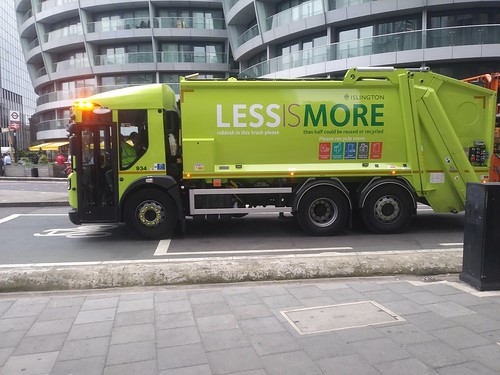
In London, it seems most of the boroughs do understand the value of sanitation trucks as rolling billboards.  I got this photo of a truck in Islington borough.  I noticed another truck, maybe from the City of London, similarly branded, but I wasn't positioned to take a photo.

Promoting recycling on a sanitation/garbage truck, Islington borough, London

==========
This post was sponsored by the donors--anonymous and named, to the GoFundMe account associated with my recent trip to Liverpool and London, which was triggered by my receiving a free registration to the International Place Branding Event one-day conference in Liverpool. Their support is gratefully acknowledged in making this and many other posts possible.

(Donations are still being accepted.  Thank you.)

Labels: , , , ,

Tuesday, April 03, 2018

Creating local markets for recycled waste using the market for road paving

In the spirit of April being Earth Month
============

Been thinking about the problems that are being posed by China's stopping of buying recycled materials from other countries.  This had been the primary market for a goodly part of the recyclable waste stream in many communities, especially on the West Coast.

Also a major manufacturer of bottles using recycled glass is closing a plant in Massachusetts ("Milford glass bottle factory to close in spring," Milford Daily News) because of declining sales to "industrial" brewers of mass market beer, in the face of the rise of the craft beer sector. This is creating problems for the sales of recycled glass in New England.

Glass is used in asphalt paving in Baltimore, or at least it was at one time, based on the pavement of streets near to Penn Station, which glisten and sparkle from the use of glass.  "Glasphalt" enhanced asphalt can use up to 25% glass, depending on its size and whether it is used in the base or top coat ("Glass in asphalt gets another look," AsphaltPro).

Roof shingles too can be used in asphalt production ("Using recycled asphalt shingles in asphalt pavements" Asphalt Magazine). Shingles make up about 8% of construction waste. They would require extra processing to remove nails and other detritus, but that creates jobs.

The asphalt plant in DC is on industrial zoned land along the Metropolitan Branch railroad and subway tracks.

In cities with frequent repaving and with asphalt plants located within the community (e.g., in DC the asphalt plant along the Metropolitan Branch Trail is always busy), why not boost solid waste reduction and markets for recyclables by using glass and/or shingles as part of the feedstock for asphalt paving?

It would also be a way for the local transportation research program between Howard University and the DC Department of Transportation to do a wider range of projects.

For example, I learned about shingles as a potential pavement material from the publications I get from the transportation research center at the University of Minnesota, which also runs the Local Transportation Technical Assistance Program for the state and the various county, city, and town transportation agencies.

-- "Innovative asphalt mixture leads to new patent," Catalyst Newsletter, University of Minnesota CTS

Labels: , ,

Monday, August 07, 2017

Waste diversion is better to start from incrementally

The Washington Post reports, "Composting and curbside pickup in Washington's five-year plan," that DC plans to institute curbside yard waste and composting pick up by 2022.

But DC is way behind.  In "A way for DC to begin adding yard waste collection as a separate element of waste collection and reduction programming" and "More on zero waste practice and DC," I discuss a wide variety of initiatives DC could undertake to divert a significant amount of waste from the waste stream, and few seem to be being pursued.

From "Solid waste management update":
Maryland just released the draft of the state's Zero Waste Plan, with aggressive goals for significant diversion and reduction within the waste stream by 2040.  The plan has 56 action steps.   Steps include banning unrecyclable materials, 90% diversion of food waste, and significant take up of recycling in multiunit buildings.
While a goal for a program to launch in five years seemingly isn't particularly ambitious, it's pretty ambitious compared to where the city is at today with solid waste practice:

- people toss into trash a lot of waste that can be diverted from the waste stream
- especially recyclables (cans, bottles, cardboard, paper)
- but also other reusable items (furniture, construction materials, etc.)
- the city isn't diverting yard waste at present, even though the outer city generates a considerable amount of such waste
- there is no real program to promote on-site composting in the outer city, where many households have lots of a large enough size to do so
- diverting recyclables from trash receptacles in the public space is hit or miss, with a lot of recyclables tossed into the trash
- most multiunit buildings do little in the way of recycling and diversion
- most food service establishments could do a lot better job of recycling and capturing food waste for composting
- the city hasn't created new building regulations that could systematically support diversion ("Reformulating building regulations to systematically support sustainability")
- a lot of the trash dumped by individuals at the Fort Totten Waste Transfer Station is divertible, if they were required to sort what they dump

In short, DC is very much behind better practice, let alone best practice, although from a Gerschenkronian perspective (summary of Economic Backwardness in Historical Perspective) there can be advantages in being so far behind. 

Theoretically, it allows you to jump ahead of being behind, to the best of best practice.  But I don't see that happening.

DC's solid waste planning process is constrained.  One problem is that "DC's" solid waste diversion planning is constrained because DPW is primarily concerned with the trash it picks up, mostly from households, not commercial and multiunit residential buildings.  This shapes how it plans.

And serious "reeducation" is required for current programs, let alone new programs.  From the Post article:
Brenda Platt, co-director of the Institute for Local Self-Reliance — a District-based national nonprofit that has pushed for composting programs — said the success of a wide-scale composting program depends on education. She urged the city to establish more programs in schools to teach children the importance of composting, while ensuring residents understand how it helps the environment and how to get involved.
Yes, education is an issue. But it's an issue now, with solid waste practice more generally, let alone for the adoption of significantly new practice.

Interim measures to adopt now.  Important interim measures can be adopted now to get the city to a better place concerning actual diversion of waste, working towards 2022 as more a midpoint on better practice, rather than the start of it.

1.  Institute yard waste diversion in the outer city "now" (something I suggested maybe 10 years ago, but is standard practice in states such as Maryland). I would start by testing it in one ward, like Ward 4, and then rolling it out to other wards as the program is implemented, tested, and refined.

2.  Promote on-site composting in the outer city "now."

Montgomery County promotes yard waste diversion on site as well as through regular pick up. We developed our personal on site composting program based on materials and website based information provided by Montgomery County. Last time I checked, similar information was not available on the dc.gov website.

While the new drop-off program is a good thing (something that was initiated in Manhattan decades ago by the Lower East Side Ecology Center), plenty of households could do this on-site, reducing the demand for government-provided services.

For example, my household has been doing on-site composting since 2009 and over time as I've become even more hardcore, in a typical week we generate less than 2 gallons of "trash" but a full bin of recycling.

3.  Institute city-wide "education" programs to discourage people from tossing recyclables into the trash stream.

This is a major program, partly because when people are given large trash cans, they are less inclined to sort  ("Why don’t Austinites recycle more? The answer might be simple," Austin American-Statesman)

4.  Institute city-wide "education" programs to discourage people from tossing into recycling stuff that isn't recyclable, from dog feces to light bulbs to all kinds of weird s***. 

I did read the city's Solid Waste Study which was released a few months back with the intent to write about it, but it wasn't particularly scintillating.  We can do a lot better, especially on this dimension.

5.  Then add composting pick up pilots, working to add curbside composting to one "center city" ward "now" -- meaning before 2022, to test the viability in the urban core, as well as curbside composting to one "outer city" ward "now", to test the viability there too, all the while massively promoting on-site composting.

6. Create best practice recycling and diversion programs for multiunit residential properties.

Because DPW doesn't pick up from these properties, and in fact generates revenue from such properties as tipping fees, there isn't much going on in terms of solid waste diversion with apartment, condominium, and cooperative properties, especially older properties controlled by regional rather than national firms.

7.  To accomplish this, DC should start out by identifying one multi-property firm to work worth to develop best practice across various types of properties.  As such a program is created and refined, other properties can be added to the program.


Mayfair on the Green condominiums.

Toronto has some significant best practice examples that DC can learn from ("Toronto Green Multiunit Building Challenge"). Toronto's multiunit buildings recycle and compost 27% of their waste, while single family residents divert 65%.

The example of the Mayfair on the Green complex in Scarborough demonstrates that significant improvement is possible ("Best practice multiunit residential zero waste project in Scarborough").

The complex now diverts 85% of their waste, stream, after instituting changes to collection practices accompanied by a heavy and ongoing education and participation campaign.

8.  Require the sortation of divertible "trash" dropped off by individuals at the trash transfer stations.  Nothing prevents DPW from doing this now, as I have testified/written about for some time.

Instituting new programs in 2022, without improving current practice, and testing in the interim isn't likely to significantly improve outcomes.  Unless somehow the city believes that by adding curbside composting all of a sudden those households that are laggard will start not just composting but modifying their currently less sustainable behaviors as it relates to the waste stream, adding new programs will only have some benefit.

Households committed to sustainable practice are primed to do the right thing. 

But the vast majority of households aren't committed to sustainable behavior and therefore have to be educated, incentivized, and or "punished" in order to adopt new sustainable waste diversion practices.

Set real metrics for measurement of success, improvement, and progress for 2018-2022, including:

1. Increasing recycling
2. Reducing the number of recyclable/divertible items tossed in the regular waste stream
3. Bringing yard waste diversion online in the Outer City
4. Reducing the amount of unrecyclable items tossed into recycling bins
5. Participation in urban composting programs (drop off at farmers markets, on-site, curbside)
6. Development of recycling and diversion best practice for multiunit residential buildings

Labels: , , , , , ,