I didn't get to last night's hearing in Arlington County on streetcars. Too bad. According to the
Washington Post, "
Arlington streetcar forum gets noisy," the meeting was quite raucous.
The funny thing is that in 2009, after a presentation, I commented to Chris Zimmerman, a long-time member of the Arlington County Board and the most knowledgeable elected official in the region when it comes to transit and transportation, that what was interesting to me about Arlington County is that (I thought...) you didn't see the kind of reflexive a-knowledgeable opposition to transit that you get in DC with regard to streetcars or in Montgomery County to the light rail, e.g. as reflected in the 2011 Post article, "
Arlington, Fairfax bringing streetcars back to life."
Little did I know how wrong I was.
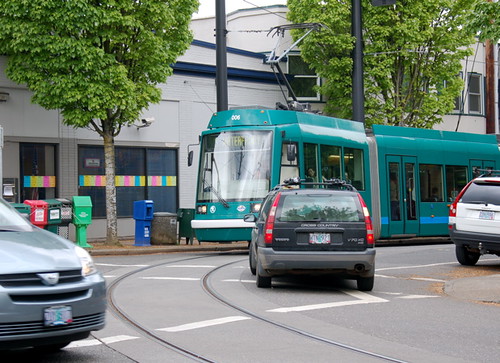
What gets me about the opposition is that I don't understand how anyone who has seen streetcars work in Portland, Oregon (pictured right, photo from the
Portland Oregon Daily Photo blog), or San Francisco, or in cities in Europe would come up with the arguments that they do about why streetcars (or light rail) won't work here, for whatever reason, in a metropolitan area that has--when it isn't down for maintenance--a highly (more or less, with qualifications) successful subway system.
Instead, opponents bring up spurious arguments such as:
-
streetcars are 19th century technology. Note so is the automobile, although granted, like streetcars and light rail, the technology has improved over the intervening decades.
The real argument they are making is that streetcars are mass transit and cars are personal transit. In any case, modern streetcars reflect up-to-date technology and engineering.
-
people won't ride streetcars/transit. This is a pro-automobility argument sure, but in the DC metropolitan area in particular, certain cities and subdistricts within areas such as the Wilson Boulevard corridor in Arlington County and along the red line subway in Montgomery County and of course, DC proper, have some of the highest transit ridership percentages in the U.S. (outside of New York City and San Francisco). I just don't understand how anyone can make that argument with a straight face.
-
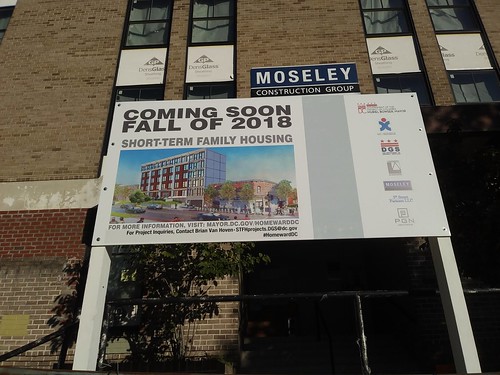
transit investment isn't an investment to improve throughput (and comfort), it's strictly a giveaway to developers--"Development oriented transit" vs. "transit oriented development." This is a variant of the fallacious "argument to the person."
All infrastructure investments in mobility improvement, be they for transit, roads for automobiles, ports for ships, airport expansion, etc., benefit nearby landowners and property developers. That's been the case for hundreds of years. So what.
Also see the study co-published by the American Public Transportation Association and the National Association of Realtors,
The New Real Estate Mantra: Location Near Public Transportation.
-
buses are better than streetcars because they are more flexible in the case of road breakdowns. I will agree that there is a wee bit of truth, but only a little, to this point. However, uptime in modern streetcar and light rail systems is extremely high, making this argument based on pre-1960 systems irrelevant. Plus, a bus ride isn't more comfortable than a streetcar ride, and more people will ride streetcars than buses.
Although I will say that I read a quote recently by new anti-streetcar Arlington Board member Mary Garvey, and she made a good point, that the electric wire infrastructure is subject to storm damage, but the other benefits that come from fixed rail service are worth the occasional inconvenience that arises from storm damage.
Furthermore, it's not like the regular road network isn't subject to catastrophic breakdown on a trip basis, which was the subject of yesterday's Dr. Gridlock column. With dedicated transitways and signal priority, fixed rail transit including streetcars is less subject to such breakdowns.
-
streetcars upgrade transit service at the expense of the poor. I don't understand this argument at all. It's typically made by "progressives," which must mean that I am becoming conservative, even though I consider myself a progressive/leftist.
The root of the argument is that people need more service, and rail transit costs more than bus service, and since transit service budgets are more subject to decrease than increase, service to the poor will be reduced.
On the other hand, rail service is more reliable and more comfortable, which I think are key equity issues as well. And by appealing to more choice riders, there is a larger political base of support for transit service anyway, compared to when transit is considered a social service only for the poor.
Still, we need to ensure that this argument doesn't become truth, so that expansion of fixed rail transit service doesn't come at the expense of cutbacks to bus service in areas not served by fixed rail transit.
-
improving transit service -- streetcars vs. buses -- is more about gentrification and will displace the poor. This is an argument that is being made in the context of transit improvements in Columbia Pike in Arlington and Langley Crossroads in Maryland. It came up in last night's meeting too. It's a legitimate concern that needs to be addressed simultaneously with transit improvement.
Especially because the examples that streetcar proponents like me tout--service in Portland Oregon, which started in large part as a redevelopment initiative for an old railyard, now called the Pearl District, Nob Hill, and Downtown, or in the South Lake Union district in Seattle--is absolutely about what Dan Tangherlini once called "Development Oriented Transit" rather than the more common term, "Transit Oriented Development."
But it isn't the fault of the transit system, but the result of a market economy that values real estate on the basis of its accessibility, which derives from its level of mobility connectivity.
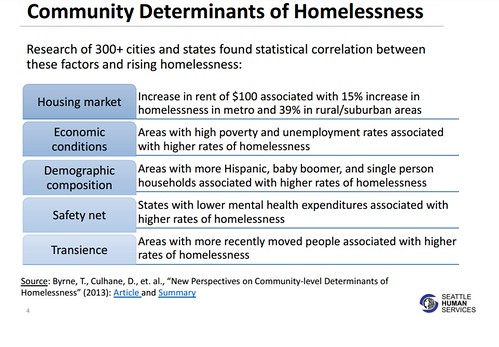
Better transit means that property is worth more and rents rise. People of lesser means can't compete.
That means ensure the provision of affordable housing, through portfolio investment and by building more units of affordable housing in new developments.
But like all of these kinds of arguments, the point isn't to use equity-regressive taxation arguments etc. to stop transit or gas taxes, it's to put in place programs and protections so that some people aren't made worse off by the change.
Arguably, over time too, the impoverished have more economic advantages because of their access to more robust transit infrastructure, access to more jobs in more places, and less need to spend money on an automobile (which costs $7,000 to $9,000 per year), etc.
There has been some interesting work in the Seattle area on transit equity issues. See
Puget Sound Regional Equity Network: Principles of Equitable Development.
And I definitely need to read this report from the Dukakis Institute at Northeastern University,
Maintaining Diversity In America’s Transit-Rich Neighborhoods: Tools for Equitable Neighborhood Change. From the report:
• For 64% of the neighborhoods around the new rail stations in the study (that's 27 of 42 total), population grew more quickly than the rest of the metro area.
• 55% of those neighborhoods showed a "dramatic" increase in housing production.
• 62% of those neighborhoods showed a faster increase in owner-occupied units than the rest of the metro area.
• 50% of those neighborhoods showed an increase in the proportion of non-Hispanic white households relative to the rest of the metro area. (The other half showed no change or a decrease.)
• 62% of those neighborhoods showed an increase in median household income; 60 percent showed a boost in the proportion of households with incomes of more than $100,000.
• 74% of the neighborhoods showed rents that increased faster than the rest of the metro area. A full 88 percent had a relative boost in median housing values, too.
One of the problems with streetcars, as opposed to light rail or subway projects, is that they are being done by local jurisdictions as opposed to regional or state transportation authorities, and therefore have fewer access to funds to develop mitigation programming. However, Arlington has been very much focused on equity issues as it relates to Columbia Pike.
But this issue, in a market economy, isn't fully addressable. Some people, those with the least ability to deal with change, will be worse off.
Does that mean not improve transit?
Labels: equity, public finance and spending, real estate development, social programs, transit, transit accessibility, transit and economic development, transportation planning