Rebuilding Place in the Urban Space

"A community’s physical form, rather than its land uses, is its most intrinsic and enduring characteristic." [Katz, EPA] This blog focuses on place and placemaking and all that makes it work--historic preservation, urban design, transportation, asset-based community development, arts & cultural development, commercial district revitalization, tourism & destination development, and quality of life advocacy--along with doses of civic engagement and good governance watchdogging.

Monday, August 04, 2025

Another view on the sale of federal buildings: need for updated facilities | Impact comparable to the closure of city-based navy shipyards?

I have been quick to criticize the Trump Administration for its agenda on shrinking its real estate portfolio.  While some of it, like abrogating leases, was a part of Trump/Musk DOGE agenda of destruction of the federal government without any connection to need for a functioning government--e.g. leases for Social Security offices and federal land management offices were broken--there is another issue.

The buildings, many built before 1980 are old, often poorly maintained and expensive to renovate.  Then it may make sense to sell and rebuild, or since the government is shrinking, lease smaller buildings.

The JFK Federal Building in Boston. Photo: Paul Marotta/Getty Images

From the Boston Globe article, "The federal government could soon sell these three big downtown Boston buildings The JFK, O’Neill, and McCormack federal buildings span 2.6 million square feet, combined. A federal board is considering putting them up for sale":

... much of the federal government’s 180 million-square-foot property portfolio needs extensive repair, and is riddled with expensive problems such as antiquated air systems, leaking roofs, unusable elevators, and flooding basements, the board said. Buildings managed by the GSA are on average more than 50 years old.

“Congress cannot appropriate its way out of this maintenance backlog,” said Nick Rahall, a former congressman from West Virginia and PBRB board member. “The inventory needs to be shrunk so tax dollars can be invested in properties where employees are actually coming to work.”

Like a broken clock being right twice a day, the Trump Administration has, amongst its chaotic and authoritarian decision making, made a couple of good decisions.  This may be one at least partially,.

-- "Trump Policies Shake the Foundations of the US Office Market," Natixis

-- "Trump May Sell Up to 67% of Government's Office Portfolio," CRE Daily

However, proponents of the sale of federal property argue that there is a lot of profit to be made ("Chance favors the prepared mind: residential conversion of federal buildings in Downtown DC needs "A Vision Plan for Judicious Conversion of Federal Properties in the District of Columbia."" [2025]) and that's a problem.  

The buildings are old, the commercial property market is soft, especially in Boston ("One of Boston’s skyline-defining towers is on the auction block — and expected to sell at a big discount," Boston Globe) and DC (The Increasing Levels of Vacant Office Space: The Achilles’ Heel of DC's Office Market), made only worse by federal government shrinkage and federal real estate being a significant element of the local market ("Trump wants to move 100K federal jobs out of D.C. What could that look like?," Virginia Public Media), and the buildings may not lend themselves to refurbishment, making the property valuable only in that it can be redeveloped after the expense of demolition of current facilities.

And, still, these decisions will be negative for most major downtowns where a sell off will occur ("The 443 federal buildings Trump administration could sell," Boston Globe).

=====

Impact as significant as closure of federal Navy Yards.  In the 1960s and later, the Department of Defense closed naval facility shipyard functions in cities like Brooklyn, DC, Boston, Charleston, South Carolina, and Philadelphia.  

Thousands of workers at the sites lost their jobs ("Military cutback will eliminate 37,000 jobs," AP, about a later round of closures), some functions were dispersed, often to suburbs, and with the multiplier effect even more jobs were lost (about the closure of the Navy Yard in Long Beach, "In Long Beach, an Era Ends in Tears," Los Angeles Times).

Blog commenter Will makes the point that this had significant impact on what was called 1960s "urban decline."  A lot of the jobs were industrial.  The closure shifted cities to a post-industrial economy but with fewer jobs overall, and fewer blue collar jobs especially.  (This is one of the arguments made by William Junious Wilson in When Work Disappears.

For example, at its peak in WW2, the Washington Navy Yard had 20,000 employees working on ships and munitions manufacturing, the Philadelphia Navy Yard, 40,000 employees (that facility didn't close until the 1990s), 42,000 at the Brooklyn Navy Yard.

At the time, too, these facilities were developers of innovative technology, although the concept of spinoff commercial technology transfer wasn't an issue then.

The shrinkage of the federal government under the Trump Administration will likely have similar effects.

Labels: , , , , , ,

Monday, July 21, 2025

Building housing ahead of the market in "transitioning" markets

At a real estate conference I was at many years ago, a developer made the point that building affordable housing was unprofitable in Prince George's County, Maryland (the area's least economically vibrant community but comparatively still quite successful) because it was underpriced by existing Class B, C, and D housing.

I've mentioned the HUD typology of neighborhood type, ranging from distressed to healthy, with various types of emerging and transforming points in between.

Photo: Justin Guido, PPG.

An example in Pittsburgh about new construction in urban neighborhoods with relatively weak microeconomies, illustrates both points.

A developer built some new (ugly to me) rowhouses in Pittsburgh's Hill District, believing that the "neighborhood deserves" new construction housing and greater choice, just like more thriving parts of the city ("Six new townhomes. Zero buyers. And one developer on the brink," Pittsburgh Post-Gazette.

The houses were priced at about double the area's mean housing price of $227,000.  None have sold even after price reductions.  From the article:

The six modern townhomes on a quiet stretch of Rose Street were built by developer Steffan Johnson — who saw them as a personal response to the difficulty he experienced while shopping for urban housing desirable to upwardly mobile Black professionals when he and his family moved here in 2009 from Minneapolis.

“I wanted to show what’s possible for this side of the city by bringing modern architecture and high-end finishes — almost custom homes — to a part of the Hill that is long overdue,” he said. But five months after listing the homes — for $480,000 — Mr. Johnson has yet to find a single buyer.

This is a lesson for revitalizing cities and neighborhoods that you can't be too far ahead of the market.  Especially when it is still emerging.

East of the River neighborhoods in DC have a similar problem with new construction not always being able to appraise at the right price to support a mortgage, because existing housing costs less, and it's hard to find higher price comp(arison)s.

It's interesting to think about this in terms of his target market.  Does it exist in Pittsburgh, or are people content to live in non-Black majority neighborhoods.

Another is the idea of the "one over neighborhood" ("When the one over neighborhood is in the county next door, and housing prices have been in the tank: Mount Rainer, Maryland," blog entry 2016) by Live Baltimore.  The Hill District hasn't developed positive dynamics at the scale of the metropolitan residential housing landscape the same way that South Pittsburgh or Lawrenceville have.

Labels: , , , , ,

Thursday, November 18, 2021

Hunger and Homelessness Awareness Week -- November 13th - 21st

-- Hunger and Homeless Awareness Week

The Orange County Register is running articles throughout the week on the topic as it relates to their county.

Past blog entries:

-- "President Biden's Infrastructure Program: Part 1: Homelessness," 2021
-- Associated Press story on homelessness in Western U.S. cities," 2017
-- "One of the "solutions" to the crisis of homelessness is a lot more SRO housing," 2017
-- "One potential solution to the problem of "finding work" for homeless adults," 2017
-- "Another example of the need for social housing organizations to construct social housing at scale," 2019
-- "Creating 'community safety partnership neighborhood management programs as a management and mitigation strategy for public nuisances: Part 3 (like homeless shelters)," 2020

One of the things that bothers me about people's remonstrations about new residential development is that "it isn't affordable."

By definition new housing delivered today is built at today's costs for land, materials, and labor.  How would it not be the most expensive housing available on the market today?

The US developed a system where the private sector is the primary actor building housing.  

As early as the 1930s, the federal government's policy makers recognized that "the market" couldn't build housing for low income segments of the market without subsidy.  But for the most part, elected and appointed officials weren't interested in supporting alternatives to the private sector in general.  And for the most part, subsidies weren't provided, therefore low income/social/affordable housing wasn't constructed.

Planning hindrances to affordability.  Another reason why social housing isn't produced "all that much" is that our planning systems aren't designed to produce it ("Community planning, capitalism, and housing/real estate development," 2020). 

1.  The biggest restriction is on height of buildings.  This causes great opportunity costs as units not built today cost more to build tomorrow.  A lot of conservatives criticize "government" and zoning regulations for causing the problem.  But really such limits are a response to resident fears about density -- nimbyism.  

2.  Sure, there might be "inclusionary zoning" requirements on new construction, where a small set of units of new developments are set aside for lower income segments of the market.

3. The real need is to produce social housing at scale.  Vienna ("Learning from Vienna and from Vienna's Social Housing Model," 2013), Stockholm ("Why Stockholm's 1930s Housing Projects Are Now in High Demand," Bloomberg), Singapore ("Why Singapore Has One of the Highest Home Ownership Rates," Bloomberg), and the UK, among others did this.  Vienna and Singapore still do.  The others not so much.

4.  One way to do this and to have it mixed in within existing communities would be to allocate some lots for multiunit housing to 100% affordable/social housing developments.  Cities like Helsinki do this.

5.  Another restriction usually is the banning of "single room occupancy" buildings, smaller units, often rented by the week or month, with shared bathrooms and limited kitchen facilities.

Yesterday, I came across this postcard, postmarked 1925, featuring the 1800 unit YMCA Hotel in Chicago "for transient men."  The existence of such housing today would go a long way towards addressing homelessness.

I doubt that DC has as many as 1,800 units of SRO housing, while Chicago had that much in a single building!

6.  A simple way to add housing is to encourage accessory dwelling units -- carriage houses, basement apartments, etc. -- as part of existing houses/lots.  For example, DC has the capacity to add 10,000 to 30,000 housing units from such measures.

But too many communities either prevent such housing altogether or impose artificial limits that severely limit supply.  DC is one of the places with arbitrary limits.

Labels: , , , , , , ,

Wednesday, April 14, 2021

President Biden's Infrastructure Program: Part 1: Homelessness

A few months back, I wrote "What should a domestic Marshall Plan/21st Century New Deal look like?," suggesting a bunch of sectors where focused federal government investment could make a big difference.  

Charlie commented that a key element of the New Deal was moving capital from Wall Street to the nation's interior, which was starved of investment capital in general.  This is a huge point.

So I have started reading some books on the New Deal, right now I'm reading The New Deal: A Modern History by LA Times journalist Michael Hiltzik, and The New Deal and the American West.  

There are plenty of journal and other articles as well, both old and new ("Learning From the New Deal—For the Next Recovery," Atlantic Monthly).

There is a lot of criticism of President Biden's proposed program ("Biden Details $2 Trillion Plan to Rebuild Infrastructure and Reshape the Economy," New York Times, "White House Issues State Infrastructure Grades," US News & World Report), and the planner in me would say that there needs to be more serious planning before moving forward, and innovation.

For example, I wrote a bunch of pieces after Obama was elected, suggesting reorganizing federal agencies to better address urban and rural development issues.

-- "How will Obama relate to the District?"

But reading about the New Deal and taking into account the reality of the Republican response to government generally and Democratic proposals specifically: in effect -- "Can't do.  Won't do.  F*** you" -- it's not possible to do this kind of planning because all it does is provide more time for the opposition to organize.

In such cases, planning makes it easier to stymie.  See various writings on the concept of "vetocracy", e.g., "A few steps to overcome American 'vetocracy"," San Francisco Chronicle.

(Which is tragic because it makes it difficult to develop the necessary support base to help ensure ultimate success for the program.)

And sadly, the way that government works now, it's so hard to create a program to begin with, that there isn't the concept that programs can be improved over time, with experience, because it's almost impossible to get enough votes for a "technical modifications" bill.

The process is very bad.

The Interstate Highway System as a counter example.  By contrast, the process by which the federal government "created" the Interstate Highway system took more than 20 years, and it wasn't because of President Eisenhower's experience as a young military officer.

First, there was the development of technical ideas and a campaign for the idea of highways, in part spurred on by the example of Germany.  For example I have a copy of an issue of Fortune Magazine from 1936, with graphics showing how freeways can be designed.

Second, building on such efforts, and Congressional mandates, in 1939, the Bureau of Public Roads released a plan, Toll Roads and Free Roads, for the Interstate Highway System.

Third, in 1944, Congress authorized but did not appropriate funding for the proposed system subsequently refined (Federal-Aid Highway Act of 1944).

Fourth, in 1956, Congress appropriated money to build the system ("Congress Approves the Federal Highway Act," US Senate), recognizing that in those 12 years between authorization and appropriation of funds there was plenty of organizing and lobbying ("Origins of the Interstate System," FHWA).

And this doesn't even count the 25 or so years it took to build the bulk of that system, and funding its maintenance, which is an issue now, both with the failure to increase gasoline excise taxes very much, the effect of inflation on maintenance, funding new projects, and the transition from fossil fuel powered motor vehicles to electric vehicles that don't pay excise taxes on motor fuels.

Biden doesn't have 20+ years to pass an infrastructure bill.  At most he might only have two years.

=====================

Homelessness and affordable housing as infrastructure.  So, WRT "homelessness," last week a HUD press release stated that "HUD ANNOUNCES $5 BILLION TO INCREASE AFFORDABLE HOUSING TO ADDRESS HOMELESSNESS."

But for me, speaking of planning, it sounds more like "same old, same old."  This is the downside of not being able to plan, and having to develop consensus on what to do, when so many different interests have such vastly different opinions and approaches to dealing with the problem.

One key element that is needed is a massive program to build single room occupancy housing in major metropolitan areas, ideally in places with high quality transportation.  At the very least, most major cities need thousands of units of this type of housing, not a few dozen or even hundreds of units,  but thousands.

-- "One of the "solutions" to the crisis of homelessness is a lot more SRO housing," 2017
-- "Another example of the need for social housing organizations to construct social housing at scale," 2019

Granted, I often criticize people for believing the solution to complicated problems is "this one thing."  

I don't believe that building SRO housing is "the one solution that will end homelessness," but lack of such housing, at scale, is a significant reason we have the problem we have.

For the most part, post-war housing and zoning policies made such housing illegal.  Without the right type of housing for a significant segment of the homeless population, obviously it becomes a serious problem.

It will only get worse, because housing will only get more expensive, making it that much more difficult for people on society's margins to be able to get and pay for housing without extranormal public support.

But note, it's not cheap.  

For example, the 148 unit Mark Twain Hotel in Chicago cost $23 million to buy and $20 million to renovate, and ongoing operating subsidies because most of the tenants are extremely low income ("Iconic Mark Twain Hotel Converting to Affordable Housing in Chicago's Gold Coast Historic District," Multifamilybiz, "After nearly $20 million facelift, Near North Side SRO unveiled as affordable housing ‘done right’" Chicago Sun-Times). 

Labels: , , , , , , , , ,

Thursday, March 28, 2019

Another example of the need for social housing organizations to construct social housing at scale

Yesterday's Washington Post has a disturbing story ("Homeless, living in a tent and employed") about the plight of a homeless couple who are living in a tent on 1st Street NE near Union Station.

They are employed, although in low wage jobs.

When you make little income, you take any housing you can get at a rent you can afford.

They'd been paying rent on an apartment in a substandard building in Prince George's County, but the building was condemned with residents forced to find other housing.

The problem is, a $900 per month apartment is hard to find, especially when 100+ households are thrown back onto the market for housing in a situation like this.

Operating and maintaining low income housing isn't easy. The problem with managing and operating low cost housing is that it isn't cheap either, and after awhile, the properties deteriorate and eventually close after the cost for upgrade or maintenance exceeds the financial capacity of the owner.

I wrote about this a few years ago, suggesting that cities and counties create anticipatory programs to help ward off housing closure:

-- "Tower renewal: The Watergate and Southwest DC, and Toronto," 2011
-- "Deeper thinking/programming on weak residential housing markets is required: DC example, Anacostia," 2012
-- "Receivership is an underutilized tool: Lynhill Condominiums in Prince George's County, Maryland," 2014
-- "The long term potentially negative aspects of condominium buildings as a dominant housing form in cities," 2016

The Toronto Globe and Mail has a related article about how to make "tower communities" more livable, by adding social infrastructure, retail, and other amenities, "Tower Ambitions: how advocates and planners are rethinking high rise tower neighborhoods."

And Vancouver, BC still has a lot of SRO housing, although much of it is substandard and run by property owners who are more interested in milking profits from it ("For low-income residents in Vancouver, a different kind of real estate," Toronto Globe & Mail).

In line with my recommendations for government intervention, the City of Vancouver has produced an SRO Revitalization Action Plan.

Lack of enough housing is a problem. But having enough housing and different types of housing, in particular small apartments, is another issue. The private sector housing production industry is focused on producing the most profitable types of housing. That excludes low income housing, which is why it is subsidized.

But rather than rely on the private sector, it would be better for the social housing sector to be the prime mover in this segment.

And rather than having people live on the street, why not produce more of this type of housing, at scale, in well located places?

At a conference in Portland Oregon in 2005, I was surprised to see existing lower rent SRO housing that was well located, pretty near to Downtown.

I've written a couple pieces about the need for larger scale production of "single room occupancy" apartments, although the Post article demonstrates the need for housing that can accommodate more than one person.

-- "One of the "solutions" to the crisis of homelessness is a lot more SRO housing," 2017

There are related articles from places like Hong Kong ("Hong Kong rents leave some in coffin homes," AP) and London ("London housing crisis: £480 a month for a bed, in a shed" and "The great London property squeeze," Guardian) about lack of housing options leading people to rent spaces in "coffin hotels" etc.

Again, I think this coverage of affordable housing shortages in high cost markets illustrates the need for significantly more and a greater variety of SRO type housing.

Not just microhousing for higher income segments such as WeLiving ("What Life Is Like Inside WeWork's Communal Housing Project," Bloomberg), shared apartments for $2,000+/room ("Inside Common's Newest Co-Living Space In Chinatown, On A Fast Track To Opening," Bisnow), microapartments ("Historic DC mansion gets luxury apartment makeover," WTOP; "Life in a 375-square-foot apartment," Washington Post; "NYC micro-apartments: Success of Kips Bay's tiny studios could to more, developer says," AM New York), etc.

Note that the Kips Bay project referenced in the AM New York article includes affordable units.  From the article:
Billed as an experiment, the city relaxed its rules on minimum apartment-size at Carmel Place to see if micro-apartments could help house the growing singles population and drive down rents. Above nearly 5,000 square feet of donated city land, Monadnock Development constructed 55 micro-units, including eight set aside for homeless veterans and 14 affordable units renting for between $949 and $1,490 a month.
Still expensive for people living on the edge, but it adds more options.  (Although I argue for more SRO housing that is even cheaper to rent, because it's "cheaper" to have people housed than to deal with the social and economic costs of homelessness for the people stuck in that situation and for the cities and counties that have to deal with it.

Why aren't we integrating social housing into new large scale, grayfield developments?  Imagine if the future development over the Union Station railyard included a couple SRO buildings.-

Yes, there are requirements for a percentage of units to be allocated as affordable housing within the new construction of multiunit housing.  This is called "inclusionary zoning."  But usually this produces something like 15% of total units for lower income tranches, when far more than 15% of the population can't afford top priced housing.

But it would have even more effect if entire buildings were planned around a social housing agenda within these kinds of developments, rather than a few units, begrudgingly provided ("'Poor doors' are still creating wealth divide in new housing," Guardian).

Including social housing producers and operators as part of master planning for such large scale redevelopments would be a major change to the paradigm.

Labels: , , , , , , ,

Wednesday, November 15, 2017

Associated Press story on homelessness in Western U.S. cities

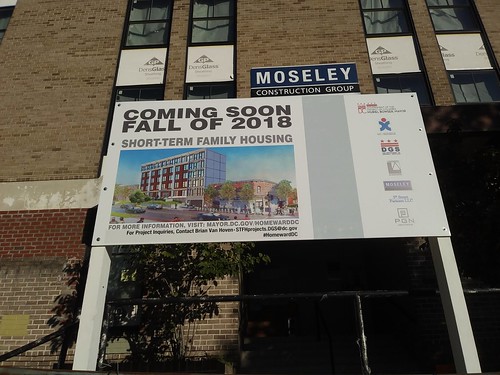
I noticed that DC is rebranding the smaller family homeless shelters it is creating as "short term family housing"I noticed that on the family homeless housing building being constructed in Ward 4 in DC, that the property is being promoted as "short term family housing."  This is part of the program to close the large homeless shelter in the long since closed DC General Hospital building, and shift people to smaller facilities spread out across the city.

Because I scan a lot of newspapers online, I am able to see trends that mostly aren't discernible within "local" newspapers because they are only covering matters within their geography. 

But from newspaper coverage and some observation, it's been clear to me for many years that homelessness in western cities like San Diego, Salt Lake City, Seattle, and San Francisco is much worse that what I seem to see in the east. 

Partly it's an issue of "the weather" allowing for more people to sleep outside for more months of the year.  But it's also because some of those cities are hyperstrong real estate markets, and the inventory of extremely low cost housing has disappeared.

Yes, it's an issue in DC too, but by comparison the problem pales.

I wrote about this a few months ago in response to an article in the Orange County Register, making the point that (1) there needs to be a lot more SRO housing and (2) a way to create social enterprise businesses that can provide "supported settings" for work opportunities.

-- "One of the "solutions" to the crisis of homelessness is a lot more SRO housing"
-- "One potential solution to the problem of "finding work" for homeless adults

This has been an issue in DC because of the program to decentralize family homeless shelter to smaller facilities across the city, as well as to bundle support programs more purposively within the program. See "Decentralizing homeless shelters in DC," 2016.

A worker clears out a homeless encampment near Seattle’s Ravenna Park neighborhood. (AP Photo/Ted S. Warren)


Reading the Associated Press article that was distributed last week, "Amid booming economy, homelessness soars on the US West Coast," I think that those two recommendations are on point.

The article doesn't really address substance abuse (in London, research finds that 44% of "rough sleepers" are alcoholics) or mental health issues among the homeless, instead it mostly focuses on the cost and availability of housing.

In this Sept. 25, 2017 photo, a worker sprays a bleach solution on a sidewalk in downtown San Diego as part of an effort to control a deadly hepatitis A outbreak. The increased number of hepatitis cases in the homeless population, and the geographic spread of the disease led California to declare a state of emergency in October. (AP Photo/Gregory Bull)

It makes sense that as extremely low cost housing options disappear in strongest real estate market cities, people living precarious lives already are pushed over the edge.

Ironically, around the same time this article was published, the Bisnow real estate news information service ran a story about a new "power nap store" called Recharj, where people can pay to sleep for 25 minutes ("Power nap retail concept expanding to second location"). From the article:
The studio offers single 25-minute power naps for $9 and unlimited monthly memberships for $79. Customers nap on a six-foot Yogibo, which it describes as "new age bean bag furniture," in private spaces with sound-absorbing drapes. The napping areas also include a full-body support pillow, a throw pillow, a blanket, an eye mask and ear plugs. For those seeking guided meditation, Recharj offers a series of classes for $18 each. The classes, with names such as "Sound Bath Immersion," "Gong Bath" and "De-stress," are also included in the monthly membership.
And there are related articles from places like Hong Kong ("Hong Kong rents leave some in coffin homes," AP) and London ("London housing crisis: £480 a month for a bed, in a shed" and "The great London property squeeze," Guardian) about lack of housing options leading people to rent spaces in "coffin hotels" etc.

Again, I think this coverage of affordable housing shortages in high cost markets illustrates the need for significantly more SRO type housing.

Not just microhousing for higher income segments such as WeLiving ("What Life Is Like Inside WeWork's Communal Housing Project," Bloomberg), shared apartments for $2,000+/room ("Inside Common's Newest Co-Living Space In Chinatown, On A Fast Track To Opening," Bisnow), microapartments ("Historic DC mansion gets luxury apartment makeover," WTOP; "Life in a 375-square-foot apartment," Washington Post; "NYC micro-apartments: Success of Kips Bay's tiny studios could to more, developer says," AM New York), etc.

Note that the Kips Bay project referenced in the AM New York article includes affordable units. From the article:
Billed as an experiment, the city relaxed its rules on minimum apartment-size at Carmel Place to see if micro-apartments could help house the growing singles population and drive down rents. Above nearly 5,000 square feet of donated city land, Monadnock Development constructed 55 micro-units, including eight set aside for homeless veterans and 14 affordable units renting for between $949 and $1,490 a month.
Still expensive for people living on the edge, but it adds more options. (Although I argue for more SRO housing that is even cheaper to rent, because it's "cheaper" to have people housed than to deal with the social and economic costs of homelessness for the people stuck in that situation and for the cities and counties that have to deal with it.

Labels: , , , , , , ,

Wednesday, August 02, 2017

One of the "solutions" to the crisis of homelessness is a lot more SRO housing

Recently, the Washington Post has run stories on the city's clearing out of homeless encampments and the impact of the closure of a well-located "self-storage" facility on people living marginally, and using the facility to store their belongings and as a sort of place to live.

-- "'It made America possible for me': The final hours in a lost refuge for the homeless," also see this 2015 story identifying the pending closure of this facility, "For D.C.'s desperate, a refuge from homelessness is about to disappear"
-- "Homeless tent city in the heart of gentrifying Washington gets moved out" (note that the Post has run many similar articles since 2015)

These are tough issues. 

Homelessness as a choice?  Partly, people live in tents because they don't want to live in shelters for various reasons, some legitimate, some likely spurious.  For single adults, the cost of housing is an issue, as can be mental and health issues, including substance abuse.

Public space management
.  But the fact of the matter is that people don't have an inalienable right to camp in the public space, and this isn't necessarily an issue of gentrification, but it is an issue of an increasingly desirable housing market shifting towards the provision of housing only to the most expensive segments of the market.

I don't necessarily have a problem providing space for encampments, although given the spatial organization of the city, likely such space would not be as well located as at 2nd and K Streets NE.  But such space needs to be managed.  And such facilities have been semi-disastrous in Seattle ("Shooting At Homeless Camp In Seattle Kills 2, Wounds 3," NPR)  which gives me pause, although DC hasn't had similar problems.

Is homelessness generated in part by the lack of affordable housing for single adults?  I was talking about this with a journalist and I burst out that the problem is that we don't have SRO -- single room occupancy -- housing,.

SRO housing (also a variant, "rooming houses" or "boarding houses") for singles and the working class was a typical feature of communities especially pre-1950s,  SRO buildings were made up of single rooms with limited kitchen facilities in the room (sink, hotplate), and shared bathrooms.  Usually the buildings didn't have much in the way of common facilities or larger, shared kitchen facilities.

By contrast, boarding/rooming houses provided meals for an additional charge.

The decline of SRO housing availability.  In the booming economy of postwar America, this kind of housing was crowded out in favor of apartment buildings, usually in the suburbs, although some remained in the center cities, especially as the real estate markets there declined.  After WWII, some cities, including New York City, made creating new SRO facilities illegal.

-- "The $80-a-Week, 60-Square-Foot Housing Solution That’s Also Totally Illegal: It’s Time to Bring Back the SRO," NextCity
-- "Bring Back Flophouses, Rooming Houses, and Microapartments: Dumb urban policies wiped out the best kinds of housing for the poor, young, and single. But they’re finally making a comeback in smart cities," Slate Magazine

But more recently, as center city real estate markets improved, this kind of housing was crowded out. 

Microapartments as single adult housing for the comparatively well off.  Although interestingly, these days, but as a "product" targeting upscale demographics, the type has been revived, marketed as "microapartments." 

New York City especially has encouraged the creation of upscale microapartments, creating a national design contest ("Efficiencies wanted, emphasis on efficient," New York Times; "Tiny Apartment, Big Winner: The Design That Won NYC's Micro Contest," Wired Magazine) while not paying much attention to the demand for SRO housing on the part of lower income segments.

Today, microapartments are being built in New York City, Seattle, Washington, and other locales.

-- "Manhattan-style micro units have arrived in DC," Post
-- "Life in a 375-square-foot apartment," Post

While microapartments are cheaper than larger units or houses, they are comparatively expensive.  Traditionally, Single Room Occupancy housing was cheap, and paid for by the week. From the second article:
Their $2,250-a-month “junior one-bedroom,” overlooking the bustling bar and restaurant scene along 14th Street NW, is “massive” at 500 square feet, says manager Jason Tremblay, grinning. That’s because the smallest of the Harper’s 144 units are practically shoe boxes at 350 square feet.
DC does have SRO housing, but clearly not enough.  I was prepared to write an article about how DC doesn't have any of this kind of housing, but the reality is that it has some. 

In fact, the organization So Others Might Eat has 500 units of SRO housing, which they call "Single Adult Housing," spread out in buildings across the city, and a few other organizations provide similar housing too, such as a 10-unit building run by the Coalition for the Homeless and the 60-unit Willis P. Greene Manor Supportive Housing Program run by the Marshall Heights Community Development Organization in Ward 7.

I think we probably need a couple thousand more units of this type of housing to satisfy "the market" and simultaneously address homelessness for a significant segment of the market.

Orange County, California: the problem is both supply and cost.  Then I read a great story in the Orange County Register, "Who are the homeless living in the shadow of the Big A? Here are 11 stories," recounting the stories of 11 people living on the banks of the Santa Ana River in the shadow of Anaheim's baseball stadium, so I started looking up SRO housing in Orange County where they have even less than is available in DC, but at much higher prices.

Clearly, not only do they need a lot more SRO housing in Orange County, but it needs to be well located, and cheaper. From the article:
We spent a week talking to people who live along the Santa Ana River trail. Like any neighborhood, the people are diverse, but most share a common goal: They’d rather be paying rent than living in a tent.
Location is an issue because the transit system in Orange County is much less robust than DC (or Los Angeles County) and the cost of a car is a deal breaker for many people living on the economic edge of society.

Failure to plan for a robust housing market for all segments creates big problems.  Likely the lack of affordable single adult housing is is a much bigger issue than we think about, and it's an illustration of my point that without a "market segment analysis" of the etiology of homelessness, it's hard to address the issue properly ("A brief follow up on homelessness policy," 2016).
Homelessness
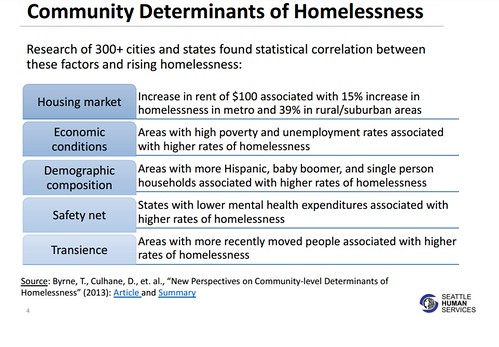
Community Determinants of Homelessness, slide from a Seattle Human Services presentation

Not to mention the need for comprehensive housing policies rather than piecemeal approaches ("Look ma, no comprehensive housing policy: so affordable housing suffers," 2012).

Problems include the cost of serving homeless adults "on the street."  Plus it's very expensive as the cost of "servicing" homeless adults is much greater than if they were housed ("Million Dollar Murray," New Yorker Magazine).

See "Seattle may extend alcohol-sale limits to much larger area" from the Seattle Times, the series "Health Care 911" and "A Costly Cycle of Care" from the San Diego Union Tribune.

These stories discuss what emergency services personnel call "frequent flyers," the people who are the most frequent consumers of emergency medical services. These clients go in and out of the system, and consume a disproportionate share of the resources. In San Diego, 1,136 frequent users, less than 1% of the city's population, generate 17% of the emergency calls, which cost about $20 million annually. According to the 2004 Seattle Times article:
An estimated 2,000 chronic street alcoholics live in King County, nearly all in the three downtown Seattle zip codes. The 20 worst offenders among them cost an estimated $2 million a year for police, medical, ambulance and transportation, according to the King County Department of Community and Human Services.
Housing segregation abets the problem.  The tendency to keep housing types segregated, rather than mixing housing types within neighborhoods, limits the ability to satisfy the needs of various segments, especially low income housing.  This is complicated further by the fact that traditional residents tend to oppose the addition of different housing types to their otherwise type segregated neighborhoods.

E.g., my neighborhood has a handful of apartment buildings, one nearby building might have 50 units, otherwise apartment buildings have 4-6 units and there aren't very many, plus many of the buildings that are particularly well located and nice have been converted to condominiums. 

Otherwise, all of the houses in my neighborhood are single family, a mix of both detached and attached (rowhouses, triplexes, and duplexes), which doesn't leave much room for serving other segments of the housing market, especially lower income segments.

Recommendations concerning Single Room Occupancy Housing for lower income segments of the housing market

-- build more "single adult housing"
-- provide subsidies recognizing that it's cost-effective because it is cheaper to provide services to people who are housed rather than through emergency services provided "on the street"
-- make sure it is well-located, proximate to high quality transit access
-- and includes "supportive programs" as necessary to assist the residents

Labels: , , , , , ,

Thursday, January 29, 2015

Woodridge, a hot neighborhood nationally?

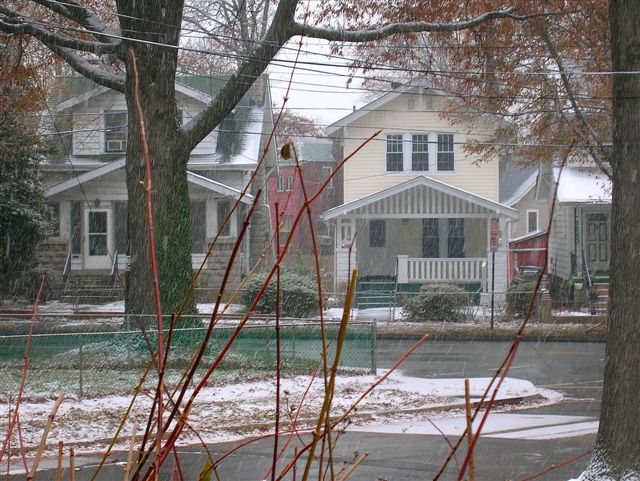
snowy, icy, ickyAccording to the Redfin online and real estate brokerage, the 2015 list of the hottest national neighborhoods includes a surprise, a DC neighborhood, Woodridge (pictured at left, Flickr photo by Jaime Fearer).

Here's the list:

1) El Cerrito, San Diego
2) Dickinson Narrows, Philadelphia
3) East Atlanta, Atlanta
4) Little Neck, Queens, N.Y.
5) Bohemia, Long Island, N.Y.
6) Curtis Park, Sacramento
7) Andersonville, Chicago
8) Woodridge, Seattle
9) Crocker, San Francisco
10) Woodridge, Washington, D.C.

Woodridge Community gateway signIt's hard for me seeing Woodridge as one of the nation's hottest neighborhoods. I do understand the price appeal.   Here's Redfin's criteria according to the Los Angeles Times:
The website says it compiles the list based on the number of page views, favorites and Redfin “Hot Homes” in a neighborhood, after adjusting for size
which seem somewhat spurious.

From the standpoint of price vs. value, you get more house and more yard in Woodridge, and compared to living in Prince George's County, DC houses are more likely to hold their value.

According to the article Redfin claims that people are again seeking farther out locations
“Many homebuyers have recoiled from the dramatic increase in house prices in urban centers posted over the past three years,” Redfin Chief Economist Nela Richardson said in a statement. “They are now searching for more affordable places farther out.”
Woodridge has decent and eclectic housing stock, and it's in DC.

Using the Live Baltimore concept of a "one over neighborhood" and buying close to the neighborhood that you want, but is too expensive, Woodridge is "one over" from Brookland, which is definitely a hot neighborhood with escalating prices.

Most in city neighborhoods are attractive because of walkability and rail transit.  But from the standpoint of the kinds of characteristics that attract people to in-city neighborhoods, walkability, access to a Metrorail station in particular, and having a neighborhood commercial district including restaurants you can walk to.

Woodridge comes up short--it's not a walkable neighborhood, it's a driving neighborhood-- making it less likely to achieve the same level of hotness and long term value as its one over neighbor, Brookland, or closer in neighborhoods that are eminently walkable.

Woodridge is automobile-centric, although a number of bus lines serve the area, the schools are just ok, and it's roughly 1.0 to 2.0 miles to either the Brookland or Rhode Island Metro Stations.

Using Walkscore, 2100 Otis St. NE comes out at a 65, somewhat walkable, with lower scores for transit and bikeability.  By contrast much more of Brookland rates higher, and core neighborhoods have scores in the 90s.

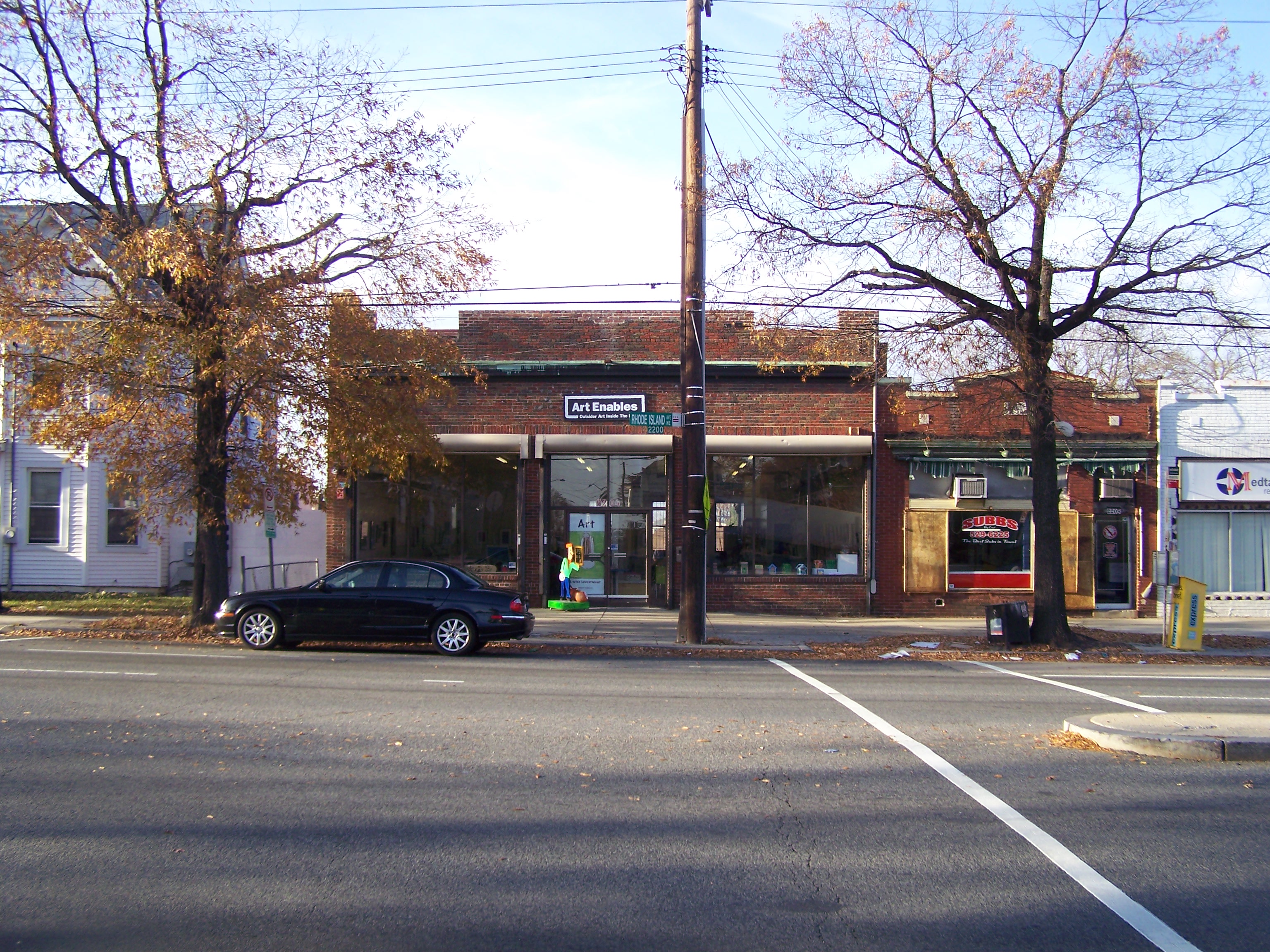
Rhode Island Avenue NE, Washington, DCThere is commercial district of sorts on Rhode Island Avenue NE, with some decent buildings, but it's pretty disjoint, without many particularly noteworthy businesses, other than Rita's ice cream and the Art Enables Gallery.

The north side of the street has particularly wide sidewalks that would serve as great restaurant patios.

Zeke's, a Baltimore coffee outfit, recently opened up a DC shop at 2300 RI Avenue NE.

But there is a Main Street commercial district revitalization initiative for the corridor and maybe that can help turn things around for the commercial district.

Woodridge bannerBesides a coffee shop, a great "community restaurant" is a key necessity to help reposition the commercial district.

But it's tough in DC to maintain the success of a commercial district that relies on the automobile (see "“Dying” Georgia Avenue Block Bodes Ill for the Neighborhood," Washington City Paper) rather than pedestrians.

Labels: , , ,

Monday, January 19, 2015

Tinkering with retail zoning categorization to maintain a slice of neighborhood serving retail

In a thread on a GGW post, a commenter made a point about how as part of a new apartment building project at 2255 Wisconsin Avenue NW, the developer is kicking out the hardware store--the only one in the area--in favor of a Rite Aid pharmacy, even though there is already a CVS pharmacy across the street--albeit not in property owned by this specific developer.
2255 Wisconsin Avenue NW, DC
I don't know what the process was for approving the development, if it was a standard process or a Planned Unit Development process.

PUDs provide a density bonus in return for negotiated "community benefits."  I have written ("Community benefits agreements: revised (again)") that the community benefits negotiation process is very loose, and needs tightening up

Generally, PUDs don't do a very good job providing directed requirements concerning retail, and the GGW comment highlights this problem, which admittedly, I might have missed myself, had I been involved in the process.

This piece about Florida Market (now called once again, Union Market) provides an example of how to go about providing more directed guidance on retail and commercial district amenities as part of a PUD negotiation process, "Retail planning and the Florida Market."

The apartment building at 2255 Wisconsin Avenue NW is being constructed behind the street fronting buildings, rather than being constructed above, taking advantage of the lot size and topography, so it probably didn't involve a PUD process.

The zoning order (if there was one) should have specified that neighborhood serving retail ("convenience retail"), specifically the hardware store, should be maintained as part of the new development, rather than being displaced by new retail that merely repeats what already exists.
Rating stores in terms of product mix, goods, and price points
Rating stores in terms of product mix, goods, and price points.

In any case, the process demonstrates an ongoing defect in the city's commercial zoning categories as they relate to encouraging the provision and maintenance of neighborhood-serving retail.

Restaurant patio, Bethesda Row "alley"
Lots of restaurants, limited retail, in Bethesda Row.

2.  Separately, I was taking some people from Europe on a tour of Union Market, and we were discussing various trends in retail, including lifestyle centers, which are anti-mall, and outdoors-focused, with the development laid out more like traditional commercial districts.

I mentioned how Bethesda Row in Montgomery County is an example of a lifestyle center, and the first thing one of them said was "but they don't have any stores that provide real services, like a dry cleaners."

That's the flip side of the issue identified in the GGW thread about new retail developments in the city.

They are set up to add retail space, but not to provide space for what might be called "convenience services" as opposed to the commonly used term "convenience retail."  Services would include dry cleaners and repair services (shoes and leather goods, appliances, etc.)

In large part this happens because owners of newly constructed space seek out tenants that can pay the highest rent.  That tends to be either big chains or restaurants generally, and definitely not service businesses like dry cleaners that have low profitability.

3.  From time to time, I mention that Laguna Beach, California has a "neighborhood serving" retail zoning category, which I noticed the one time I visited there, based on a notice placed on a particular building, but I never really looked into it.
2013-09-01 23.00.39
Laguna Beach.  Flickr photo by Dean.

It turns out that Laguna Beach has an array of commercial zoning categories, most focused on maintaining locally-serving retail and services in the face of the reality that Laguna Beach, a small community with about 22,000 residents but located on the Pacific Ocean with great beaches, is a major tourist destination, with an average of thee million visitors annually.

Generally, tourist-focused retail is much different from resident-serving retail--art galleries and souvenir shops vs. pharmacies, supermarkets, hardware stores, dry cleaners, etc.  The rents end up being much higher, which normally prices out convenience goods.

The city's Commercial Neighborhood Zone focuses on maintaining retail that serves residents.   According to the city code:
Principal activities are commercial retail functions, service oriented businesses, office/professional uses, and limited residential uses. The commercial-neighborhood zone differs from the local business-professional zone in that it features a stricter orientation to resident-serving businesses and greater limitations on residential uses.
4.  I do think that there is a need to refine DC's commercial zoning categories, which mostly build in a lot of "matter of right" which limits review, to better focus attention on the continued provision of neighborhood serving retail in those commercial districts which are primarily neighborhood serving.

This is especially important in the face of conversion of property ownership from small operators to large firms and the rebuilding of small spaces into larger and new buildings.

The Laguna Beach zoning code provides some good examples of how to go about doing so.

Changes in DC should include the PUD process and better specifying retail mix and the provision of retail space for "community services."  This could involve tax incentives or other considerations such as density bonuses.

Another way might be to add a special exception review process concerning "use" changes for specific spaces, e.g., such as from hardware to restaurant, or when certain categories, like chain pharmacies, are already represented.

Labels: , , ,

Sunday, September 07, 2014

Quote of the day: "New apartments are generally more expensive than older ones"

From "Apartment rent hikes magnify high cost of a UW education: A rush of new apartments is causing an uptick in rents in the University District, and University of Washington students fear they’re getting priced out of the market." in the Seattle Times. From the article:
Even now, about a thousand new apartment units are under construction in the neighborhood, designated an “urban center” by the city and planned for denser growth. New apartments are generally more expensive than older ones. ...

Fiona Stefanik, a fifth-year student, also found better options outside the University District — she’ll be sharing a two-bedroom apartment with two roommates in Lake City this fall.

“Even though they’re building a lot more housing, it’s still just really expensive, because there is such a high demand,” she said.
Nothing particularly scintillating about these quotes.

Just that it reiterates that a lot of the discussion about the higher cost of housing (e.g., "Why it's so hard to find a cheap apartment in Washington, DC," Post) ascribing the problem of rising housing costs in DC being due to historic preservation is a misreading of economics.

The issue is more that comparatively speaking, historically, DC has a lot more single family housing than apartments. And the single family houses are small.

The issue is low inventory.

Higher demand in the face of low inventory leads to higher prices.

It truly is the most basic concept in economics.

Adding to inventory today won't provide lower cost housing, unless it is subsized, because the cost of new construction is priced into rental rates for new housing at today's market pricing (it's an illustration of LIFO vs. FIFO in accounting practices for the pricing of products--which is most often seen in how gasoline re-prices in the face of rising prices).

However, over long periods of time, adding housing today will result in lower prices, comparatively speaking, in the distant future.

Labels: , , , , ,

Sunday, August 24, 2014

Historic preservation is not the bogeyman for finding cheap apartments in DC

Today's Post has an article, "The new housing market: Why it’s so hard to find a cheap apartment in Washington, D.C.," with this line about strategies for producing more and lower cost housing:
In D.C., you could even ditch the large historic districts that make it extremely difficult to build anything substantial in many desirable neighborhoods.
Too bad it's wrong.  (The article doesn't say all that much considering.)

The reason that it's hard to find cheap apartments in DC, is that relative to demand, there is lack of inventory.

But it's not because of historic districcts.

It's because historically, DC had been a small city relatively speaking, and not an industrial city, which would have led to the construction of more and higher capacity apartment buildings and tenements.

Instead, especially in the late 1800s and into the early part of the 1900s, mostly single family housing (rowhouses) was constructed in those inner city neighborhoods that are now considered desirable.
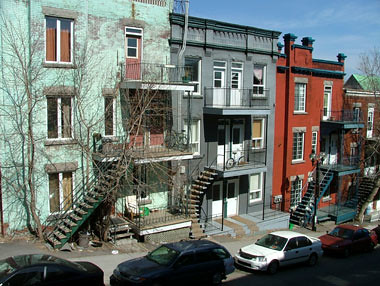
Montreal (tri) plex

Plexes in Montreal.

Compare that to cities like New York (tenements and "walkups"), Cleveland or Boston (three-story buildings with two or more apartments on each floor), and Montreal (plexes--three-story buildings constructed on the equivalent of two rowhouse lots, with 5-6 units total) where the focus was on constructing residential buildings with multiple apartment units.

And even in neighborhoods where there is a mix of apartment buildings and single family housing, like Dupont Circle or parts of Capitol Hill, Columbia Heights, etc., the apartment buildings aren't that big, limiting inventory.

This is the 300 block of East Capitol Street NE.  Bigger buildings tended to be built near the Capitol and Downtown.  When Congress met on a more limited basis, apartment living in the city was more common.

When demand is high and inventory is low, prices are high.

Personally, I think that neighborhoods with a mix of residential building types are more resilient.

... but getting back to the quoted piece, again, removing historic designation wouldn't all of a sudden yield "cheap apartments," because the issue is lack of apartments, not historic designation.

By definition, newly constructed apartments are priced at today's market rates, so prices are "high."
1022 3rd Street NE
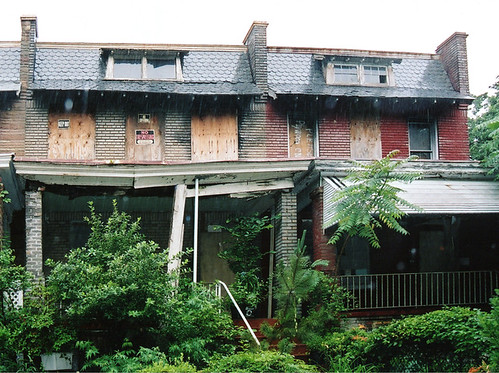
These "Wardman style" rowhouses at 1022 3rd Street NE were torn down in the mid-2000s in favor of a large multiunit apartment building.  (The buildings were left to decay while the developer was assembling the block.)

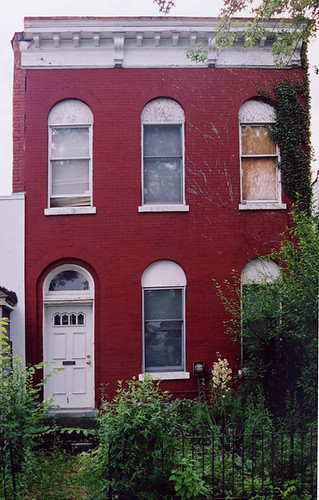
This Queen Anne style rowhouse, dating probably to the 1890s, was at the southwest corner of 3rd and K Streets NE.
1002 3rd Street NE

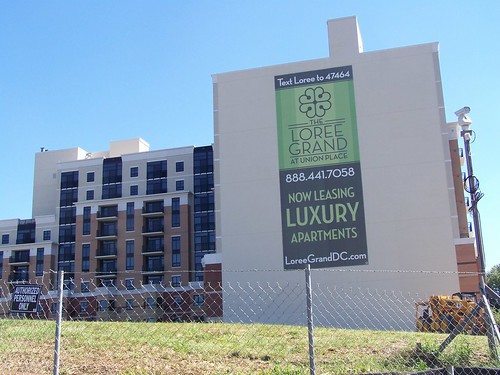
So if you were to tear down a bunch of houses, in this case, rowhouses that would be eligible for designation, but were not in a historic district, such as what was done on the 1000 block of 3rd Street NE, where a block of rowhouses were torn down to build the first phase of the Loree Grand apartment building on the 200 block of K Street NE, what is produced are new apartments constructed at current costs, which are priced at the high end of the market.
Banner on the Loree Grand apartment building, Washington, DC

In 30 years or so, the prices will end up being lower relative to new construction. But that doesn't mean much to people today.

According to the Loree Grand website, rental rates for apartments range from about $1,500 for the smallest studios to not quite $4,414/month for a 1,318 s.f. unit.  Prices are dependent on the size of the unit.

And this would be the case, if you were to tear down historic houses too, although prices would end up being even higher, because of the higher costs involved in assembling land.

Labels: , , , , , ,

Tuesday, October 29, 2013

NCPC study on height limit: hearing, comments due Wednesday October 30th

See the NCPC webpage on the topic.

I will try to whip off some comments.

The recommendations by the NCPC are not to do very much ("Few changes for D.C.'s Height Act, panel recommends" from the Washington Business Journal), allowing residential occupancy of the penthouse floor on commercial buildings, while DC Office of Planning recommends a different course, ("D.C. proposes major changes to the Height Act" from the WBJ).

From the second article:
The existing Height Act is based on a 1-to-1 ratio, generally restricting building height to the width of the street, plus 20 feet along commercial roadways. Few buildings exceed 130 feet.

The District suggests, within the traditional L’Enfant City, shifting the ratio to 1-to-1.25, which would, for example, allow for a 200-foot-tall building along the 160-foot wide Pennsylvania Avenue. Within areas zoned for medium and high density development, the change would allow for roughly 37 million square feet of new space.

Outside the traditional L’Enfant City, where the federal government has less interest (even “non-existent” interest, the report states) D.C. suggests lifting the Height Act entirely, and allowing the city to determine its own appropriate height limits.
I agree with the DCOP recommendations, although I don't think that allowing even taller buildings outside of the core will make much difference, at least not for the next 50 years, because those places, with the possible exception of a couple blocks in Friendship Heights, isn't where demand is most pronounced.

Tradeoff between historic preservation and economic growth

I think, despite the loss of certain viewshed elements, that the value of retaining the primacy of the center city in the context of the metropolitan economic landscape, especially in terms of commercial property, but also residential property, means that the city should be allowed to be taller, especially in the core, where the demand for height is the greatest.

Even London has allowed taller buildings in the face of its great number of historic buildings and viewshed issues.

But we have to accept it will take decades, beyond our lifetime, to see the full economic impact

The theoretical reasons that support my position on the height limit are based on Jane Jacobs' precepts in Death and Life of Great American Cities, that you need density to support a wide variety of uses and a large stock of old buildings to support innovation.

A big reason why DC is less competitive on amenities compared to other larger cities is the loss of density, especially in the face of a "biggening up" of how the retail sector is organized.  You need more people to support retail in terms of how it is offered now.

And the reason that rents are high in the city is because the supply of property is constrained.  This displaces all the uses except for those most motivated to pay the highest rents--law firms, trade associations, and lobby firms and contractors who need convenient access to the Executive and Legislative branches of the federal government.

A height increase helps us deal with both issues.  But because the time frame on which this occurs is so long, it will take many decades to see the full effect, as I argue here, "Reprint: Height Act: It's important to discuss but too late to make any difference on what has already happened" and "DC height limit revisited."

Green Metropolis versus Triumph of the City on density

I read Green Metropolis finally but haven't gotten around to writing about it.  The author contrasts DC and NYC unfavorably.  He makes the argument, rightly, that the low density of the core necessarily drives sprawl, pushing development outward.

Frankly, I think his arguments about the environmental efficiency and sustainability supporting density are more convincing than the urban economics arguments laid out by Edward Glaeser in Triumph of the City

I also don't see things changing much--which is very depressing--because the opposition to densification is so high.  If it weren't so advantageous to the city and to developers now, we wouldn't be seeing this march towards change.

Don't get me wrong.  Residents will benefit greatly, but over time, from the change, albeit at some cost (viewsheds, light downtown, etc.).

Transit expansion in the core won't happen without a height increase

The biggest benefit from a height increase will be that it allows for expansion of the heavy rail transit system because of the property tax revenues generated from greater property values--37 million more square feet, when developed, is worth a minimum of $22 billion.

The benefits to residents (and downtown property owners and users) that will come from an expanded transit network is almost incalculable.

More density will allow more service to more places and more service overall.

But there is no way to economically justify creating another subway line serving the core of the center city without adding land value in the core to pay for it. Otherwise our money is tied up in funding sports stadiums.

I wrote about this more extensively here, "DC Height Study Public Meetings This Week and the long term implications for transit expansion in DC."

I haven't read it yet, but I have picked up a book about the NYC subways where the author makes the argument that without the subways, New York City was not capable of simultaneously growing and improving the quality of the life for residents and workers in terms of their mobility.

With regard to the proposed zoning increase in Midtown Manhattan, I argued that the area is already at maximum capacity in terms of transit ridership and infrastructure, and to allow greater usage density for commercial and residential space is unsupportable transit-wise and should be accompanied by transit expansion to be allowed.  See "The Battle for Building Intensification around Grand Central Station."

The same goes for DC's core.  Without a simultaneous commitment to expand transit, a height increase should not be allowed.  See "More discussion of the height limit #2: Without adding high capacity transit service, there should be no increase in allowable heights."

Because a height increase will add significant value to existing property, new building approvals should be tied to proffers or impact fees

Arlington County is well known for tying building size bonuses to the provision of public benefits.  DC should do the same as it relates to allowing taller buildings in the core.  See "More discussion of the height limit #1: Grant height increases conditionally, in return for significant public benefits, not as matter of right."

But rather than have a willy nilly system, a consensus for what should be funded should be developed and adhered to in negotiations.  Alternatively would be to impose developer impact fees to pay for the improvements to transit, provision of other civic assets, etc.

DC doesn't charge impact fees.  Other jurisdictions, like Montgomery County, do.

See "Times have changed with regard to funding infrastructure improvements that make land more valuable," "Monetizing community benefits for public space conversion and other considerations: Seattle," "DC is turning me into a nimby," and "Maybe DC can learn that it has something that developers want."

That might be better as such a process is less likely to be gamed, unlike the current process that is associated with "community benefits agreements" now (see "Deputy Mayor’s Office (Finally) Makes Public Closing Documents on Hine Development" from the Capitol Hill Corner blog, which discloses that the city will allow the developer to deduct the cost of providing public benefits from ground lease payments).

Labels: , , , ,

Tuesday, February 12, 2013

Historic preservation isn't just a designation, it's also a tool of revitalization

---------
Update: Dan Reed reminds me that I should have mentioned the Flower Theatre Project, which is a community effort focused on revitalization of the theatre in the context of the area's revitalization program.
---------

So the Gazette has a piece, "Long Branch redevelopment plans spur continued feedback," (also see the 2012 entry from GGW, "Silver Spring's Flower Theatre could bloom once again") about revitalization planning in the Long Branch sector of Montgomery County.  This area is considered comparatively impoverished compared to other areas of the county, and has been the subject of a great deal of planning and investment.

The area will also be served by a station on the proposed Purple Line light rail line, so it will be impacted by having better and greater access to high quality transit service, which will in turn affect the neighborhood, leading to a variety of changes, and providing new and different opportunities for development, change, and the repurposing of currently underutilized buildings.

Left: Photo of the Flower Theatre.  Image from an entry by the Silver Spring Singular blog.

David Rotenstein, a historic preservation consultant and someone who I would term a historic preservation purist, is quoted in the piece as saying the building is unremarkable. I think that's a really inconsidered statement. From the article:

Speakers also disagreed on the plan’s recommendation for the historic designation of the Flower Theatre and Shopping Center, which some supported, while others argued it would limit redevelopment efforts.

Leslie Miles, chair of the county Historic Preservation Commission, said the commission recently voted in favor of the theatre and shopping center’s designation, support that was echoed by Mary Reardon, vice president of Montgomery Preservation Inc., and Marcie Stickle, advocacy chair for the Silver Spring Historical Society.

Historian David Rotenstein — who has studied the property in the past — said, however, the shopping center is “a common and unremarkable example of postwar architecture” and does not deserve historic designation.

Others discussed the theater’s potential role.  Amanda Hurley, of Silver Spring, said the Flower Theatre, “a beloved local landmark,” has been the subject of studies and recommendations and could become a “community anchor.”

What is the purpose of historic preservation?

Compared to every other building in the United States or other cinemas or other shopping complexes or other art deco buildings, the Flower Theatre shopping complex may be "unremarkable."  Although I would not agree.

In any case, that is not the scale at which historic preservation designation decisions are made.  What matters in this instance is the significance of the building on at least five dimensions:  (1) architectural and use; (2) neighborhood-cultural-social; (3) countywide; (4) regional and/or state; and (5) nationally. The building can be significant and worthy of designation on one or more of these dimensions and it isn't necessary to meet the criteria of significance for each in order to be designated.

Many people still believe that the point of historic preservation is the preservation of particularly worthy buildings and sites associated with key people, architecture, and events--like Mount Vernon, President George Washington's plantation, or Independence Hall in Philadelphia, where the Continental Congress met and the Declaration of Independence was signed, etc.

That I think is the sentiment expressed by Mr. Rotenstein with regard to his comment about the Flower Avenue Playhouse, that the building isn't particularly memorable, when compared say to the Washington Monument or to the finest examples of art deco architecture still extant nationally.

This is the case even though the architect of the building, John Zink, was a regionally and nationally significant architect because of his work designing many theater buildings that were constructed throughout Maryland, Virginia, and DC, and many of his theater buildings (including the Senator in Baltimore, and the Newton in the Brookland neighborhood of DC) have been individually designated or are designated as part of broader neighborhood historic districts (the Takoma Theatre in the Takoma neighborhood of DC).

... and despite the fact that the Flower Theatre is a relatively rare example of somewhat untouched art deco architecture in Montgomery County.  Silver Spring's downtown was the site of many art deco buildings, but many have been demolished or changed significantly from their original design.

Neighborhood and commercial district historic preservation 

But since the 1920s, with the development of the movement to create a "neighborhood" historic district in Charleston, South Carolina, preservation has also been about preservation of the vernacular and community, not just great buildings.

I call this kind of historic preservation preserving the nexus of architecture (mostly buildings), place (including urban design), and history (people). Another way to think about this is in terms of the concept of the cultural landscape.

This is the type of preservation most often associated with the creation of neighborhood historic districts or the designation of key buildings that are significant within neighborhoods particularly, even if there are other similar types of buildings present elsewhere in the locality.

Two concepts are key: (1) the period of significance--the time period for which the history of the neighborhood, including the predominant architectural styles, is significant in terms of preserving and recognizing the neighborhood; and (2) the context of the built environment.

Thematic historic preservation and the scale at which preservation is practiced

Another element is the preservation of particular types of buildings in the context of a nation, state, region, county, or community.  This is tougher because there are big gaps in how preservation decisions are made, and planning at these various scales is hard to do generally, and really hard to do when you are crossing jurisdictional boundaries.  For example, to have a good representation of theater and cinema buildings in the Washington region, you have to deal with the policies of three different states and many separate jurisdictions.  As a practical matter this never happens.

That being said, the Flower Avenue Playhouse to which the article is referring to is, in the context of the history of movie presentation in the Washington region, quite unique with regard to the ouevre of cinema buildings constructed in Montgomery County.  (See Robert K. Headley. Motion Picture Exhibitions in Washington, DC: An Illustrated History of Parlors, Palaces and Multiplexes in the Metropolitan Area, 1894-1997. H-Net book review)

It's one of the only theater buildings constructed around or before 1950 that was built in an area that wasn't a key town center (like Silver Spring, Bethesda, Rockville, or Gaithersburg) in Montgomery County.  It was one of the last of these types of buildings, as cinemas came to be built in places that were more accessible by the car, on arterials rather than in more traditional commercial districts, and then mostly within shopping centers.

This is another reason why historic designation for the building is reasonable.

(Note that the concept of state and national designated "heritage areas," based on the organizing framework of the cultural landscape, addresses heritage preservation over a large district sharing a common identity, history, and theme.  The Alliance of National Heritage Areas is a support organization for state and nationally-designated heritage areas.)

Purple Line routing and station mapState and federal historic preservation tax credits are often the difference between revitalization and continued disinvestment in weaker real estate markets

Finally, perhaps the most important reason to designate the Flower Theatre is to be able to provide financial assistance to the revitalization effort, through tax credits.  A designated building is eligible for tax credits.  An undesignated building is not.  And as discussed above, on a comparative basis, the Long Branch area (graphic of the Purple Line routing, including a station in Long Branch, above, from the Washington Post) of Montgomery County is less successful, and providing inducements for improvement is something that the County is already doing.

Federal (up to 20% of the cost of the rehabilitation), State of Maryland (20% to 25% of the cost of the rehabilitation); and Local (10% of the cost of rehabilitation) historic preservation tax credits are available to buildings that are historically designated in Montgomery County, Maryland.  That is up to 55% of the cost and that can make a significant difference financially in whether or not to rehabilitate.

I am shocked that Mr. Rotenstein doesn't think that is a significant reason to move forward with designation as well.

Historic preservation as a regulation/rule/law

Another important concept is what does historic mean?  For many people, especially real estate developers, it is a legal definition.

If a building or neighborhood is legally designated historic, then it is historic and is to be protected. If the building or neighborhood is eligible for designation as historic, but isn't designated, is the building or neighborhood worthy of stewardship, or just a bunch of buildings able to be altered beyond recognition?

To most developers, lack of historic designation means that the building has no historic significance, even if it does, but hasn't been designated.

Although there are many developers who seek out historic preservation tax credits when appropriate, or pursue projects that can only be realized through the provision of preservation and other tax credits and other incentive programs.

Conclusion

For many reasons, historic preservation designation is a useful technique as part of the toolbox of  neighborhood and community stabilization and improvement strategies, and should be considered as a desirable strategy with regard to the improvement of the Long Branch neighborhood of Montgomery County Maryland and the revitalization of the Flower Theatre, an art deco cinema building and shopping complex that is a key and distinctive element of the commercial district in that neighborhood.

Labels: , , , , , ,