Rebuilding Place in the Urban Space

"A community’s physical form, rather than its land uses, is its most intrinsic and enduring characteristic." [Katz, EPA] This blog focuses on place and placemaking and all that makes it work--historic preservation, urban design, transportation, asset-based community development, arts & cultural development, commercial district revitalization, tourism & destination development, and quality of life advocacy--along with doses of civic engagement and good governance watchdogging.

Monday, July 06, 2026

Automated speed camera data from Toronto shows the value of this traffic speed enforcement mechanism

Doug Ford, Premier of Ontario, uses provincial powers a lot to preempt local government action, especially in Toronto.  One example is his elimination of the use of automatic speed cameras over "freedom etc." plus other measures can do just as well, such as oversize speed limit signs.

Guess what?  Tickets work.  Since the elimination of cameras, speeding has increased 235% in the Parkdale neighborhood, based on data collection associated with the speed limit counter signs, which collect data, they aren't limited to just saying "slow down" ("We all have one thing to say about Doug Ford’s ban on automated speed cameras: We told you so," Toronto Star).  From the article:

That’s based on data reported from one of the city’s digital “Watch your Speed” signs. You’ve seen them around. They’re typically posted near schools. They flash with your car’s speed as you pass by, hopefully serving as a visual reminder, when necessary, that you should slow the heck down. They also, it turns out, keep a permanent record of speeds.

These signs can be set up to collect data in both directions.  Yellow signs are typically placed near schools.  White signs elsewhere.  Photo: TrafficLogix.

Using the same basic methodology as Safe Parkside, I looked at data from more than 800 sites with these digital signs. In October 2025, the last full month before Ford’s ban on speed cameras took effect, the digital signs collectively recorded 626,137 vehicles exceeding the posted speed limit by at least 20 km/h. In April, with no more fear of speed cameras, the number nearly doubled, to more than one million.

Of 837 sites I looked at with data from both before and after the speed camera ban, the number of drivers doing 20 clicks over the limit increased at 476 of them. (Before the program was put on ice, the city had 150 speed cameras that rotated through locations like these.)

Tickets are "controversial."  They cost money so people don't like them, without acknowledging that if they followed the laws they wouldn't be ticketed.  

In the Douglas Shoup parking universe, parking tickets are a source of revenue for commercial district public space improvements.  But to me there is a fine line between encouraging and discouraging people to visit traditional commercial districts.  You have to balance parking concerns, bad behavior of parking--which is why Shoup encouraged low or no cost parking in garages, and high prices for street parking--and encouraging return passenger.

The recent director of the Philadelphia Parking Authority, Richard Lazar, made the point that rather than focusing on the revenue generating capacity of tickets, he prefers to think of them as "education devices" that people use to change their behavior ("Rich Lazer Would Like You to Love the PPA. No, Seriously.," Philadelphia Magazine).

Lazer recognizes that increased enforcement isn’t viewed positively across much of the city. He doesn’t look at enforcement as a revenue generator — a claim you can hear muttered at expired meters across Philadelphia — but rather as a behavioral change. If you’re blocking a crosswalk or parking on a sidewalk or jamming up a bike lane, yes, you’ll have to pay a fine. And maybe next time, you won’t do it (or at least will think twice about doing it).

“It’s about curb management and enforcing quality-of-life issues so they don’t happen anymore,” Lazer says. “And maybe that’s putting yourself out of business, because you want people to follow the rules. But at the end of the day, we don’t want to be looked at as somebody who just wants to generate revenue, because that’s not the mission. Our operation is not out to just crush people.”

I imagine he believes that parking scofflaws, who don't care about tickets--a problem in DC with out of state license plate users of the streets because it's hard to penalize them, that they should get their cars impounded, as another form of education.

Anyway, the Toronto findings are a sad but good example of real life experimentation to prove or disprove various approaches to public policy, in this case traffic enforcement.

Labels: , , , ,

Friday, June 26, 2026

Big Pickup Trucks and SUVs Kill

 According to the New York Times (""The Deadly Rise of Giant Trucks and S.U.V.s" (NY Times article on taller hoods and larger blind-spots)"), 10% of the increase in pedestrian deaths--which have risen at a rate in the US higher than other countries--is because people's purchases shifted from low profile cars to high profile trucks and SUVs.  And that 10% number only includes deaths on roads, not in parking lots, private roads, or driveways.


Left turns are the biggest source of crashes resulting in death.  The way that the article describes the various blind zones of the Chevy Silverado truck are exactly the circumstances that killed an elementary school child in my neighborhood a few years ago ("Salt Lake City girl struck, killed in crosswalk near elementary school," Salt Lake Tribune).

It was worse than shown in the simulation because the driver was short, making the blind zones even bigger.  From the Times:

To analyze how these blind zones have changed, we used a three-dimensional scanner to compare sightlines in four of the most common pickups today — the Chevrolet Silverado, Ford F-150, GMC Sierra and Toyota Tacoma — with their counterparts from the 1990s or early 2000s.

The Silverado’s blind zones have nearly doubled.

The Sierra’s and the Tacoma’s grew by about 60 percent.

The smallest increase was the F-150’s. Its blind zones grew by about 25 percent.

Money. ‘King of the Road’

Our overall findings match what we found in court records and heard from dozens of experts who reconstruct crashes for police and lawyers. Today’s S.U.V.s and pickups promise more: more seats, more space, more safety, more power, more domination, more prestige.

And, for automakers, more money.

They are the source of virtually all of the U.S. auto industry’s profits, said Mark Wakefield, an industry expert at the consulting firm AlixPartners. For nearly a decade, Ford and G.M. have said in their annual reports that their earnings depend on larger S.U.V.s and pickups. The cost of making bigger vehicles is usually not much higher than it is for cars, because they are often built in automakers’ most efficient factories and the extra raw materials are relatively cheap.

Left: 1998 Chevy Silverado.  Right: 2021.

Yet customers are willing to pay much more for them. The average sticker price for a full-size pickup is $70,000, double that of a sedan, according to Cox Automotive. (Some people pay more to soup up their trucks with “lift kits” that raise their suspensions.)

Labels: , , ,

Thursday, June 04, 2026

Totally unsurprised: The Mazda that drove onto the Seattle Light Rail tracks was from Utah

Utah's predominant license plate features an arch rock formation from the Arches National Park.

On the light rail tracks at Mount Baker Station in Seattle.

I am totally unsurprised that the person involved in the incident in Seattle ("How did an SUV get onto (and off) the Mount Baker light rail platform?," Seattle Times), was from Utah.

 Every person from every other place thinks X drivers are the worst.  But Utah drivers are so timid.  They won't enter an intersection when the light is green, they wait behind the line, so traffic backs up. 

It's interminable sometimes to get through a four way intersection because people hesitate and/or if you're traveling straight in the other direction, you wait for that car to clear in the other lane, rather than moving simultaneously.

Scary.  Terrifying.

So many wrong way drivers on the freeways, often resulting in crashes and deaths ("I-80 closed after fleeing suspect causes wrong-way crash near Salt Lake City," Fox13, "Wrong Way Accidents: What They Are and How They Occur").

And there are multiple accidents every year on the light rail, mostly in Salt Lake but in the suburbs too ("One person injured following collision between TRAX train and vehicle," Fox13).

Outside the Delta Center, where professional basketball and hockey games are played in Downtown Salt Lake City.

There is no question that "design flaws" do contribute to these kinds of accidents.  Car-centric people have a hard time conceptualizing mixing traffic with a train car.

And wrt wrong way crashes, to be fair, when we were growing up, mostly you entered a freeway from the right side of the road.  

I can see an impaired person thinking that's the case, not paying attention to signs, and entering on the right, despite the Wrong Way and Do Not Enter signs ("Driving in the Right Direction: State Efforts to Combat Wrong-Way Driving," National Conference of State Legislatures).

But a lot of it isn't the result of design flaws so much as it is driver error and recklessness.  It's hard to design that out of the system when so many people are imprinted with an automobile-centric and dependent mobility paradigm.

Especially in the Salt Lake Valley.  Utah is touted as being environmentally forward through its Envision Utah program ("Progressive Planning in Conservation Communities") but it's the epitome of sprawl.  

And the Legislature and Executive Branch are pretty much pro-growth anti-environmental, unless they have no other choice, like with the Great Salt Lake (" This article is more than 1 year old Utah’s Great Salt Lake rings climate alarm bells over release of 4.1m tons of carbon dioxide," Guardian).

Labels: , ,

Friday, September 26, 2025

The Trump Administration as transit troll

I have been reading a bunch of books about the genesis of Broken Windows policing theory as implemented in New York City.  Jack Maple (The Crime Fighter: Putting the Bad Guys Out of Business) makes the point that regardless of the success of crime suppression programs, there will always be high profile incidents.

These incidents support the perception of crime ridden streets and the need to be fearful, even when the counter case is so strong.

This comes up because a couple weeks ago, after a killing on the Charlotte, NC light rail system ("Deadly stabbing on Charlotte train highlights America's transit safety challenges," ABC11), the Trump Administration used this event as an excuse to suggest defunding transit ("Trump Admin Issues New Threat After Charlotte Train Killing," Newsweek).

Transportation Secretary Sean Duffy said, “Safety needs to be the top priority of elected officials. Citizens don’t want federal dollars going to public transportation that local leaders refuse to keep safe!”

-- "Trump Admin To Redirect $2.4 Billion From California's High-Speed Rail Project To National Rail Program," Benzinga 
-- "How the Trump administration is targeting green transportation in blue states," Grist
-- "Trump Grant Program Pours Money Into Roads, Mostly Ignores Transit Projects," Streetsblog USA
-- "Trump administration threatens to pull New York transit funds as it questions anti-crime efforts," AP
-- "Everyone to Congress: Stand Up and Fight for the Infrastructure Funding You Allocated (And Your Constituents Need)," Streetsblog USA
-- "Judge temporarily blocks Trump administration’s new transit and homelessness grant conditions," AP

The fact is, transit is safer than driving ("We Need a Reality Check on Crime, Safety and Transit," "New York City’s Subway Is Actually Safer Than Your Car," Bloomberg).  

An article in the Washington Post, "845,000 dead on U.S. highways. Why not address the main cause?," makes the point that almost 40,000 people die each year from motor vehicle accidents, while many more are injured, some severely.  From the article:

Approximately 94 percent of car crashes involve some form of driver behavior like speeding, distraction, failing to yield or DUI identified as a contributing factor, although this doesn’t mean the driver is always solely responsible — bad roads, confusing or obscured signage, wildlife darting into the road, mechanical failures and other factors play their part, too.

Why aren't there calls to stop producing automobiles, close down roads and make everyone walk?  Also see the Detroit News article, "Efforts to lower pedestrian fatalities in Pontiac 'made an impact,' sheriff says":

Sheriff Mike Bouchard on Sept. 5 ordered a patrol increase in "hot spots" for these types of collisions in Pontiac. His order was in response to a string of seven hit-and-run crashes that caused serious injury or death in the city this year.

Over the following two weeks, sheriff's deputies issued 78 warnings to people crossing streets in designated no-crossing zones and issued 116 citations for violations including speeding and texting while driving. The sheriff's office crash reconstruction unit also had no calls in Pontiac in that time, according to a news release.

"Our traffic unit did a great job stepping up enforcement in areas with multiple pedestrian accidents,” Bouchard said. “Their focus on both pedestrian and driver behavior clearly made an impact.”

Similarly, many opponents to bicycle trails say it will increase crime.  It's true, it does at the margins, because increasing access to places leads to some criminal activity.  

But the use of cars in the commission of crimes on a daily basis is more than the use of bikes--although some intrepid criminals realize the value of bike access to committing crime.  From the Post:

In one of the five reported robberies, police said six juveniles on red Capital Bikeshare bicycles carried out a holdup early Sunday in the 1100 block of Third Street SW. One of the youths had a gun, police said.

just as police departments realize bike-based cops can go places cars cannot ("The Rise, Fall, and Rebirth of Bicycle Police"), similarly with bike-based EMS crews for special events ("How to start a bike medic team," EMS1).  

Plus cars problem double as they are often "the victims" of crime (Preventing Car Crimes, Urban Institute).

Labels: , , , , ,

Thursday, August 08, 2024

Revisiting: Need for social marketing initiatives around installation of neighborhood traffic calming initiatives: Salt Lake City

In June I wrote "Need for social marketing initiatives around installation of neighborhood traffic calming initiatives: Salt Lake City," about animus about a traffic safety initiative in my neighborhood.  I made the point that car-centric people don't understand how imprinted they are with automobile dependence, and their unwillingness to consider other modes (walking, biking, transit) and users, in this case all the kids who live in the vicinity of this oversized intersection.

But I also made the point that the City Transportation Department could have handled outreach a lot better--basically they didn't do any.  I sent a pdf of the blog entry to the Department Director, and they responded.

These are photos of a couple of outreach devices they deployed, including a signboard in the roundabout and a flyer dropped off at area houses.


And just this week, the City Transportation Department continued to refine the street markings, in keeping with the idea that the roundabout is a prototype, a test.

Labels: , , , , , , ,

Friday, August 02, 2024

Quote of the day: cars and pedestrians

There's an article, "Push. Pray. Walk: After yet another death, should Toronto replace these dangerous pedestrian crossovers?," in the Toronto Star about pedestrian crossings--not full traffic signals--and how there are plenty of close calls, and deaths from time to time. I like this particular paragraph.

Much of Toronto’s pedestrian infrastructure — and this goes for bike infrastructure too — was seemingly designed with the idea that the city’s drivers would have some baseline level of aptitude and care. Maybe that was always naïve. Maybe driver behaviour has just gotten worse in recent years.

Either way, the aptitude and care aren’t there.

The first paragraph called out to me, but these are good too.

We can debate the nature of the problem — I tend to think one root cause is a driver education system that licenses too many people without adequate training — but regardless, the response from city hall needs to be about emphasizing infrastructure that protects and separates pedestrians and cyclists from cars. That means red lights that enforce a stop instead of crossovers that are treated as optional, and concrete barriers instead of paint.

A lot of drivers aren’t going to like that — they already complain that there are too many traffic lights and lane restrictions as it is — but the reality, I fear, is that road safety measures that rely on driver responsibility are banking on an unrealistic expectation. Toronto’s bad drivers have shattered that basic trust too many times.

Labels: , , , ,

Thursday, June 27, 2024

Need for social marketing initiatives around installation of neighborhood traffic calming initiatives: Salt Lake City

Gosh, years ago I wrote about an approach to planning I called "action planning," focused on implementation, and to be successful included elements of social marketing and branding and identity.

My thinking about planning and how it should be performed has moved from action planning ("Social Marketing the Arlington (and Tower Hamlets and Baltimore) way," 2008, "All the talk of e-government, digital government, and open source government is really about employing the design method," 2012), to best practice revitalization planning ("Why can't the "Bilbao Effect" be reproduced? | Bilbao as an example of Transformational Projects Action Planning," 2017) to transformational projects action planning ("Updating the best practice elements of revitalization to include elements 7 and 8 | Transformational Projects Action Planning at a large scale," 2024, "A wrinkle in thinking about the Transformational Projects Action Planning approach: Great public buildings aren't just about design, but what they do," 2022), with stops for destination marketing, cities as brand management, and risk management as areas that elected officials should be very much concerned.

Traffic calming has been a revolutionary treatment in sustainable mobility focused transportation for the last 20+ years.  Most people probably think of it as speed bumps, but there are many different treatments.

But it's not widely understood, especially in places that are dominated by the car, like Salt Lake City.  Like many cities, Salt Lake is a leader in trying to balance the modes with a renewed focus on sustainable modes--walking, biking, and transit.  It's doing some great bike infrastructure, some of which we will be trying to get for the perimeter of Sugar House Park.

A traffic lane was removed and an in-ROW bicycle lane was installed on 900 East adjacent to Fairmont Park.

The Livable Streets Plan is an implementation focused plan aiming to bring that about ("In Salt Lake City, here’s what kind of ‘traffic-calming’ projects could be coming to your street," Salt Lake Tribune).  The city has been investing in such efforts for awhile, and the CIP process prioritizes monies for this action item.

My one criticism of the approach would be a lot of the residential streets in Salt Lake are "naturally traffic calmed" already based on their design, width, etc., and often people don't understand when treatments are implemented, often with little community involvement.  

(Many DC residential streets are similarly set up.  And I've argued that a bike boulevard program is really a traffic calming program irrespective of the bikes.)

That being said here and there are exceptionally wide neighborhood streets too, and traffic calming is a lot cheaper that reconstruction to make the street narrower.

So far, using the concepts of "Tactical Urbanism," many of the projects are either prototypes or done simply, but IMO there can be seriously negative aesthetic effects.

-- Tactical Urbanism Manual, volume 1
-- Tactical Urbanism Manual, volume 2
-- Tactical Urbanists Guide to Materials and Design

"Temporary" can be a long time.  Years.

(Trent Nelson | The Salt Lake Tribune) Mayor Erin Mendenhall and council member Dan Dugan swap out a 25 mph speed limit sign for a new 20 mph sign in Salt Lake City on Wednesday, July 27, 2022.

In 2022, the city reduced the street mph to 20mph for most neighborhood streets, which in a car oriented city, is at times controversial ("Salt Lake City Council lowers speed limit to 20 mph on 70% of city streets in unanimous vote," "Salt Lake City swaps first 20 mph speed limit sign in initiative for safer streets," Salt Lake Tribune).  (There is a local walking and transit advocacy group called Sweet Streets, that helped promote this change.)

I live on a street that's pretty wide--so cars speed quite a bit, even though it's only one block long, between two households with children, a weird intersection confluence, and about 20 children in close by houses, many of whom come to play next door (the house is more popular with kids than the one with the pool...).

The parents have been hyper about speeding cars, and the neighborhood and our District 6 Councilmember is more concerned about traffic safety these days because a nearby elementary school had a traffic fatality last year ("Yard sign, Person running for District Six Council in Salt Lake using traffic safety as a campaign issue," 2023).  

So about six weeks ago, that helped some of my neighbors get a temporary roundabout placed in the weird intersection.  Anecdotally, I think it's contributed to speed reduction, but I don't think they did of study of prevailing speeds beforehand.

It's not fancy.  It's temporary.

Sometimes kids play in it, but with supervision.  That scandalizes my MIL, but I'm not about to get into a debate with her about how the car companies and their allies changed the definition of street to be car centric instead of people centered.  See Fighting Traffic:The Dawn of the Motor Age in the American City.

Road Witch was a campaign in England 20+ years ago, focusing on rebalancing the use to streets toward residents, not automobiles.

But there has been opposition, both in Nextdoor, the neighborhood e-list, and through flyers distributed to nearby houses (I'm next door to the roundabout, and obviously with my sustainable mobility proclivities am supportive.)

I think that the real problem has been lack of neighborhood communication and education, heightened by the reality of car centricity, which automobile dependent residents aren't inclined to question--they just take it for granted.

The roundabout just popped up with no notice.  It's cheap looking.  There have been no explanatory materials placed in the roundabout or on people's doorknobs--both about why this has been installed and what temporary means in terms of the plastic poles.

At the Long Beach Beach Streets event, they prototyped sustainable road treatments, but with explanation.  A signboard like that needs to be made for SLC traffic calming treatments, including roundabouts.

There should have been a "block party" to introduce it (the same goes for other traffic calming treatments elsewhere in the city).

Community pop up event showing what a greenway could look like in their neighborhood.  Minneapolis Star-Tribune photo.
People hanging out in a parklet.  Parklets convert street parking spaces to alternative uses.
Salt Lake City Transportation Department pop up booth at Poplar Grove Park.  
They have the capacity for community communication.

WRT temporary, I imagine it could become something more like the roundabout at Hollywood Avenue and 1000 East, but again, no two way communication.  This is a photo not of that roundabout.  It's pretty, not cheap.


Ironically, according to the Salt Lake Tribune, community communication is part of the planning process:

Quick-action pilot projects could start as soon as this fall, but an overhaul may not begin until late 2024. “There’ll be outreach and engagement and development of the plan and the design neighborhood by neighborhood, followed by bidding it out and finding contractors that can build it for us — often, that process takes two years,” Jon Larsen, the city’s director of transportation, said . 

Across the board, implementation is dependent on future funding, which Larsen said was requested in this year’s capital improvement budget. Once the program has its team on board, they’ll begin prioritizing roadways to start on with guidance from the city council. “I know that sounds like a really long time to people; we’re hoping to find ways to speed up that process, and especially having more staff, I feel confident we will be able to,” Larsen said.

I think this and other traffic calming projects in the city show that the community communication element is an afterthought.

I do believe the people in my neighborhood would be more supportive if they knew the reasons why it was installed.  It has full walking infrastructure even though most people drive, although there are plenty of dog and child walkers.

And this need for community communication should be lesson for transportation departments more generally.  Explanatory signage is a must.

Labels: , , , , , ,

Friday, May 10, 2024

Vision Zero initiatives on the decline: Cache County Utah shows another way

The Philadelphia Inquirer reports, "Mayor Parker’s budget slashes funding for Vision Zero, a program designed to end traffic deaths," that the mayor has cut funding for Vision Zero programs, which are designed to reduce traffic fatalities.  Other cities have had mixed to negative results from similar initiatives.

Past writings:

-- "Revisiting Vision Zero in DC and NYC," 2021

-- "A more radical approach to Vision Zero," 2019
-- "A reminder about how the entitlement of automobility is embedded into law and democratizes death by accident," 2014
-- "A "Vision Zero" agenda for DC," 2014
-- "DC and Vision Zero Revisited," 2015
-- "Updating Vision Zero approaches," 2016
-- First global benchmark for road safety in cities published by International Transport Forum," 2018
-- "Traffic safety," 2022
-- "It's a mistake to remove "Enforcement" from the "E's framework" of bicycle and pedestrian planning," 2022
-- "D.C. cuts speed limit to 20 mph to curb pedestrian deaths: a step forward but not enough | New thoughts on a comprehensive Vision Zero agenda," 2020
-- "Pedestrian fatalities and street design," 2019

To my way of thinking, it's because a lot of the crashes are due to negligence or deliberate behavior, which isn't addressable by design.

-- "The Road Not Taken | a response to a letter to the editor in the Washington Post about DC, traffic deaths and traffic safety," 2024
-- "Social marketing and aberrant driving," 2020
--  "When the car lobby encourages law breaking," 2012
-- but only recently after some high profile deaths is DC addressing this ("Reckless drivers in spotlight as D.C. hits 16-year high on traffic deaths," Washington Post

And because we don't provide actionable information and the structures to address the problem.  

For example, in a blog entry in 2016, I suggested that such information be provided at the Council District scale and that ward-focused committees address traffic safety and sustainable mobility in concerted ways.

The Cache Valley Daily reports, "Local stakeholders to host transportation safety summit at Logan Library," that the MPO there is holding a traffic safety conference next week, to support its plan to reduce crashes and deaths.  


From the article:

Cache Valley residents are being invited to attend a transportation safety summit at the Logan Library on Thursday, May 16.

That gathering is being called by safety stakeholders, including representatives of the Cache Metropolitan Planning Organization, the Utah Department of Transportation, emergency responders, Crash Data and Safety experts as well as local interest groups.

CMPO’s 2024 Safety Summit will be held from 9 to 11:30 a.m. in the Community Room of the Logan Library on May 16.  

The planning documents, Safe Streets for All Action Plan and Safety Data Analysis in particular, have a lot of great graphics communicating information in various ways about where crashes occur, demographics, etc., exactly the kind of information you need to be able to address in real terms, crash reduction.

Labels: , , , , , ,

Thursday, January 18, 2024

The Road Not Taken | a response to a letter to the editor in the Washington Post about DC, traffic deaths and traffic safety

There's a letter to the editor in yesterday's Washington Post, "D.C. must step up on road deaths."  It's a good letter.

I started writing a response in the comments, but it was too long.  So a blog entry is better.  

Definitely this is another example of DC government's failure to focus and to be innovative.  It's amazing how much I've written about this topic, providing guidance for something that could have been great.

Ward focused traffic safety programming.  Years ago I wrote a piece ("Outline for a proposed Ward-focused (DC) Councilmember campaign platform and agenda," 2015) about what would be an ideal approach to a truly ward-focused Councilmember election and governance platform, including having a dashboard on ward-specific data on traffic safety.  

And that there should be ward-specific subcommittees of the pedestrian and bicycle advisory committees to put greater focus on ward specific improvements (this was something I wrote into the Pedestrian and Bicycle Plan I did for Baltimore County in 2010).

Safe routes to school programs.  Separately, the State of Washington Safe Routes to School program recommends that all cities create traffic safety committees to address such issues as they relate to schools, and SRTS improvements simultaneously benefit neighborhoods.  The state requires that SRTS maps be created for all elementary schools, and some cities go beyond and do it for all schools.  Seattle's Feet First advocacy group is a great resource for such programs.  The City of Tacoma separately has an SRTS plan that is first rate.

-- "Why isn't walking/biking to school programming an option in Suburban Omaha? | Inadequacies in school transportation planning," 2022
-- School Walk and Bike Routes: A Guide for Planning and Improving Walk and Bike to School Options for Students
-- Safe Routes to School program, Washington State
-- City of Tacoma SRTS program, including SRTS Action Plan
-- Starkville in Motion

A failed job interview with DDOT.  I interviewed for a job with DDOT (still don't understand why I didn't get it) to liase with ANCs on these kinds of issues.  I prepared a sample data-focused infographic that could be a kind of dashboard for ward-specific transportation as part of my interview.  

For years I wrote that the DDOT safety dashboard was crap ("DC DDOT transportation access portal doesn't really say anything," 2010).  It has since been significantly improved.

ANCs need transportation/traffic safety committees.  In preparing for that interview, I looked at the websites for all of the city's Advisory Neighborhood Commssions (ANCs are block and neighborhood specific councils that weigh in on matters before DC government) and just a handful had transportation/public space committees.  All should, with support from DDOT, the Office of Planning, and the police department traffic and data analysis units. 

And public health.  In Ontario for example, public health officials have been leaders in analyzing traffic deaths and addressing the issues (Office of the Chief Coroner for Ontario: Pedestrian Death Review), and in Toronto ("Dozens of cycling deaths probed," Toronto Star).

It was a great interview, the lead walked me out and we talked, and then.... nothing.

FWIW, I also didn't get a job at Utah Department of Transportation on Vision Zero related issues, although I was a finalist.  They said I wasn't innovative enough!  Maybe they were right. Maybe I just come across badly. But I don't think so.  However, I did mess up the interview a bit, and I had a mistake in my cover letter...

Then again, traffic safety related deaths in Utah, including bicyclists and pedestrians, are falling but only slightly, and in cities especially pedestrian deaths aren't abating ("Deaths on Utah roads down from 2022 but road rage still a concern," ABC4).

-- "Yard sign, Person running for District Six Council in Salt Lake using traffic safety as a campaign issue," 2023

Transportation management districts.  Since 2005 or 2006 I have been recommending that the city create Traffic Management Districts as a way to coordinate transportation management and improvements at the commercial district scale (e.g. for Downtown, H Street NE, Capitol Hill, etc.).  

The city did create "pilot parking districts" but they weren't super well structured and are limited.  The plans created for them impressed me in terms of how ad hoc and unstructured they were.  And they never functioned the way I suggested (e.g., see the discussion on transportation wrt Eastern Market, "Eastern Market DC's 150th anniversary last weekend | And my never realized master plan for the market," 2023).

Urban design/walkable community plans at the neighborhood scale. Out of the Silver Spring Purple Line writings:

Creating a Silver Spring "Sustainable Mobility District from 2017:
-- "Part 1: Setting the stage
-- "Part 2: Program items 1- 9
-- "Part 3: Program items 10-18

I got interested in the concept of urban design plans for neighborhoods, sparked by Dupont Circle and the opening of the Wharf in SW DC.

-- "Planning urban design improvements at the neighborhood scale: Dupont Circle, DC," 2019
-- "More about making 17th Street between P and R a pedestrian space on weekends," 2019

Later I realized it's not about the mode--creating a pedestrian plan, but creating broader walkable community plans.

-- "Planning for place/urban design/neighborhoods versus planning for transportation modes: new 17th Street NW bike lanes | Walkable community planning versus "pedestrian" planning," 2021

... and freeway/tunnel decking. Like the neighborhood initiative in Bloomingdale ("Bloomingdale Village Square Initiative will be holding its third Community Forum on the proposed North Capitol Deck-over Park," 2020), similar discussions in Dupont Circle, the SE-SW Freeway, etc.  

It's a travesty that the planning units in DC think this should be done by the neighborhoods, not the city.

Pedestrian safety audits.  Similar to Safe Routes to School.  FHWA publishes materials on Pedestrian Road Safety Audits.  There is the PEDSAFE: Pedestrian Safety Guide and Countermeasure Selection System to see if there are urban design improvements that can be made after analyzing a crash (also for biking).  

-- All About Walk Audits, America Walks

WalkDenver has done interesting work in this arena too, such as the Walk Audits on Colfax Avenue, including a report on West Colfax.

Vision Zero.  Focused on DC, I've written tons over the years about Vision Zero initiatives to reduce traffic deaths and traffic safety.  

-- "A more radical approach to Vision Zero," 2019
-- "A reminder about how the entitlement of automobility is embedded into law and democratizes death by accident," 2014
-- "A "Vision Zero" agenda for DC," 2014
-- "DC and Vision Zero Revisited," 2015
-- "Updating Vision Zero approaches," 2016
-- First global benchmark for road safety in cities published by International Transport Forum," 2018
-- "Traffic safety," 2022
-- "It's a mistake to remove "Enforcement" from the "E's framework" of bicycle and pedestrian planning," 2022
-- "D.C. cuts speed limit to 20 mph to curb pedestrian deaths: a step forward but not enough | New thoughts on a comprehensive Vision Zero agenda," 2020

In "Revisiting Vision Zero in DC and NYC" (2021) I made these points:

1.  How to measure and benchmark traffic deaths?
2.  The issues are unchanging.
3.  Government has a bias for inaction.
4.  Planning for mode versus planning for place and livability.
5.  Not treating the road system as a network.
6.  Traffic deaths can be broadly categorized into three segments.
7.  How do you get reckless drivers off the street? 
8.  Traffic enforcement.
9.  Oversight Committees at the City/County and District/Ward scales.
10.  Systematic review of crashes/accidents in a public fashion.
11.  Mapping pedestrian, bicycle, transit and car accidents

Lots of links within each section.

Street design and pavements.  The fact is, except for overly wide avenues, the L'Enfant Plan design for the city and its network of streets and sidewalks prioritizes sustainable modes--walking, biking, and transit.  

But roads and cars are overengineered to allow cars to drive at high speeds regardless of land use context.  

That's why I've argued for years to have differentiated pavements for commercial districts, and areas by parks, libraries, schools, and transit stations, to better match desired operating speeds of vehicles with land use context.

-- "A more radical approach to "Vision Zero" is needed: reconstructing streets out of different materials to reduce speeds," 2019
-- "Pedestrian fatalities and street design," 2019

Note that one element of the L'Enfant Plan, radial avenues, was a big innovation for pedestrians and bicyclists as it makes it faster to get from place to place by moving diagonally, instead of in squares and rectangles.

Reckless driving.  In DC, most traffic related injuries and deaths in DC are related to reckless driving, not street design.  This is something that advocates don't really get, as after each high profile crash and death(s), they say it's because of street design.  Sometimes there are issues, admittedly, but mostly it's recklessness.

I've mentioned this for years ("Social marketing and aberrant driving," 2020, "When the car lobby encourages law breaking," 2012), but only recently after some high profile deaths is the city addressing this ("Reckless drivers in spotlight as D.C. hits 16-year high on traffic deaths," Washington Post).

Labels: , , , , , , ,

Monday, September 04, 2023

Motor vehicle related traffic deaths: Washington State

The Seattle Times has an article, "After reaching sad record last year, WA traffic deaths trend higher," about how traffic related deaths are still rising, while they are plateauing elsewhere.  An interesting point is that there are fewer crashes, but more deaths per crash.  The article discusses what they believe are key factors:

The pandemic-effect narrative has been complicated by the continued rise, despite traffic levels returning to something close to normal. In reality, it’s likely a mix of factors, including more speeding, heavier vehicles, dense development concentrated around multilane roads, and a decrease in traffic enforcement. In Washington, 75% of deadly crashes in 2022 involved one or more of the “fatal four”: impairment, distraction, speeding, and not wearing seat belts.

The reason I bring this up is because many advocates continue to focus on street design--no question that it is important--but the reality is that impairment, distraction, and speeding are frequently more significant factors, especially in cities like Washington, DC.

-- "Revisiting Vision Zero in DC and NYC," 2021

I'd been meaning to write about this, because after some high profile crash deaths in DC, the city has been refocusing on identifying and addressing "bad drivers," since it is bad driving, not street design, that has been a key factor in the majority of the deaths ("D.C. struggles to rein in risky drivers. One car has $186,000 in tickets," "D.C. to begin sending targeted messages to high-risk drivers," "D.C. traffic deaths at 14-year high with low-income areas hardest hit," Washington Post).

Labels: , , , , , ,

Tuesday, July 04, 2023

Tempe Neighborhood Traffic Calming Manual

I can't claim to have a handle on every great program, but for smaller communities, Tempe, Arizona, Long Beach, California, and Arlington County, Virginia, have very well developed local transit systems and complementary in-depth sustainable mobility programs.

Back when I was doing a bike and pedestrian plan for Baltimore County, I visited with the Tempe transportation department when I was vacationing in Arizona.

One of their  best practices is a great manual for traffic calming measures, which was just updated as of May.

-- Tempe Neighborhood Traffic Calming Manual

Unlike many places, they not only have developed a good, robust process for dealing with requests, but they have a comprehensive listing of the approved treatments.

Tempe is also national best practice when it comes to neighborhood transit systems.

2. I've also argued that Safe Routes to Schools programs are traffic calming programs too, supporting students, schools, and neighborhoods.

The State of Washington School Walk and Bike Routes: A Guide for Planning and Improving Walk and Bike to School Options for Students is very good on facilities.

The Michigan SRTS Manual is good on the process of creating a program, building support, and planning, but doesn't list interventions, but the Encouragement section of the National SRTS guide does.

Labels: , , , ,

Wednesday, June 07, 2023

Yard sign, Person running for District Six Council in Salt Lake using traffic safety as a campaign issue

Some months ago, in my greater neighborhood a child walking home from school was killed crossing an intersection ("Salt Lake City girl struck, killed in crosswalk near elementary school," Salt Lake Tribune).  

Like some of the recent traffic deaths in DC ("A tragic crash shows the importance of enforcing the rules of the road," Washington Post), I surmise that this was 100% driver error.  

There were no design or visibility issues at the intersection.  The driver says he didn't see her, but in reality I think "I didn't see her/him" really means "I didn't bother looking."

In any case, the problem is negligent or reckless driving, less about road design.  In response to the death, apparently the city transportation department is going to do enhanced sidewalk crossings along one of the major arterials serving the elementary school.  But the real issue is how to prevent bad drivers from driving.

Anyway, I was surprised to see a challenger to the District 6 incumbent using traffic safety as a campaign issue, on yard signs and his website.  I just wonder how real the concern is.  Not that Taymour Semnani isn't interested, but will his focus be substantive?

Salt Lake City recently installed enhanced crosswalk crossings, using a brick motif, at a side street entrance on Westminster Avenue, serving Dilworth Elementary School.


Of course, to me, one of the biggest issues in Salt Lake is the failure to have a systematic "Safe Routes to School" program to encourage walking and biking to school.  

Salt Lake has open enrollment, so a lot of kids don't live near the schools they attend, and are driven.  On the other hand, a lot of schools, especially on the east side are well embedded in neighborhoods, and experience high rates of walking and cycling to school, even if it isn't formally supported.

So this increases the potential for conflict with motor vehicles, since the vast majority of trips here are completed by car.  The best way to address this is through SRTS programs.

Walk and Bike to School initiatives as a way to do urban design improvements in a neighborhood.  While I argue that transportation agencies should be planning for "walkable communities" not pedestrians ("Planning for place/urban design/neighborhoods versus planning for transportation modes: new 17th Street NW bike lanes | Walkable community planning versus "pedestrian" planning," ), the improvements that come from developing safe routes to schools also serve neighborhoods.

-- "Wednesday is National Walk and Roll to School Day," 2022 
-- "Why isn't walking/biking to school programming an option in Suburban Omaha? | Inadequacies in school transportation planning," 2022

Note that such programs should also address night time activities ("Night-time safety: rethinking lighting in the context of a walking community," 2014).

School Walk and Bike Routes: A Guide for Planning and Improving Walk and Bike to School Options for Students, Washington State Department of Transportation
-- Safe Routes to School program, Washington State Department of Transportation
-- City of Tacoma SRTS program, including SRTS Action Plan.  

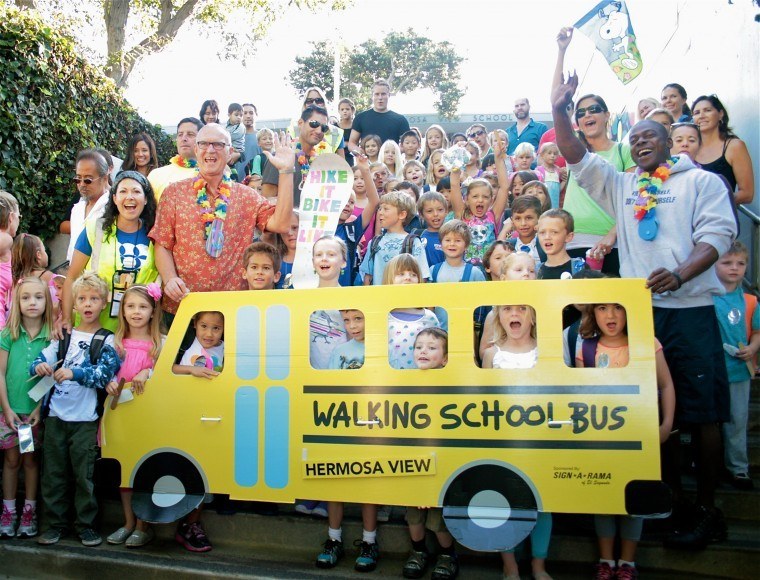
Walk and bike to school activities can also be a way to engage residents who don't have children, in supporting "bike buses" and "walking school buses."

But if kids aren't neighborhood residents, they aren't going to be walking or biking.

Bike bus at Rose Park Elementary.  Note that during Bike Month (last month, I didn't get around to writing about it), a parent on the city's west side organized a "bike bus" for her neighborhood school ("Salt Lake woman organizing ‘bike bus’ method as new transportation for school kids,"  Fox13, "Salt Lake woman organizing ‘bike bus’ method as new transportation for school kids," Utah Public Radio).

Mayor Erin Mendenhall joined them!

Labels: , , , ,

Wednesday, December 28, 2022

Urbanism obituaries, 2022 | Death clusters of people, buildings and organizations as an indicator of institutional failure

Recently, I thought about demolition of historic buildings in cities like Detroit as deaths, and that they were worthy of a listing in my annual article on "Urbanism-related Obituaries (2022)." I have listed failures of retail businesses like Sears or Debenhams, why not buildings?

But then I thought that there was a difference between deaths of individuals and systemic, institutional failure.  And that this type of death should be called out in a different entry.

 Homeless Deaths from Exposure. We can't really blame this on cities.  

Homelessness concentrates in cities because there are more people, housing is more expensive, and people migrate to cities because they are more likely to offer social services.  But multiple reports made me realize that we need to think about this even more ("Hundreds of homeless people died on Orange County’s streets in 2022," Orange County Register; "At least 77 people died homeless in nation’s capital this year," Washington Post; "This year, at least 159 homeless Utahns died. The death toll is likely higher, officials say," Salt Lake Tribune).

Readers have called our attention to the book, Homelessness is a Housing Problem, which I haven't yet tracked down ("Is homelessness a housing problem? Two Seattle experts make their case in new book," Seattle Times).

Traffic-related deaths. There are more traffic deaths outside of cities than within cities, because traffic tends to move more slowly within cities.  

Since covid, traffic related fatalities are on the rise ("With traffic deaths on the rise, psychologists are being called on to make driving safer," APA). They had been on a decline before that.

Then again, it depends on whether or not motor vehicle operators are conscious of pedestrians and bicyclists.  Coming to Utah, it's a poster child for sprawl, and the mobility paradigm is centered on the car.  In fact, two of the top ten car dealership groups are based here, one sold for $3.2 billion (although they have dealerships in states other than Utah).  The state is an oil producer, and has at least five oil refineries, so it is super committed to a gasoline-centric land use and transportation planning paradigm.

Blue ribbons were tied to trees along the walking route to Bonneville Elementary School on 1900 South in Salt Lake City.

Recently a child was killed at an intersection a few blocks away (" School community mourns loss of 11-year-old girl after crosswalk crash," KSL-TV).  

There was no reason for it.  The sight lines are fine, there aren't problems with the pavement quality or intersection, there is a traffic signal.  The driver said "I didn't see her."

I've come to believe that "I didn't see her" really means "I didn't look."

This is a problem in cities that promote more trips by walking, transit, and biking, in that there is little education or emphasis on training motor vehicle operators to be a lot more aware and responsible for their acts.

-- "A more radical approach to "Vision Zero" is needed: reconstructing streets out of different materials to reduce speeds," 2019
-- "Vision Zero mea culpa in DC," 2022

Salt Lake has lots of car-light rail accidents, and the state experiences weird killings of bicyclists by drivers, and many pedestrian deaths 

Drug overdose related deaths. I had no idea, but more people die in most cities from drug overdoses, not murders ("Drug overdoses now kill more Americans than guns," CBS News, "Overdose Deaths Continue Rising, With Fentanyl and Meth Key Culprits," New York Times).  

The cynical part of me thinks that this outcome is cheaper than trying to address the problem.  Although to be fair to public health departments, many do address it.

But it's hard because some of the logical ways of addressing it are politically fraught ("https://chicago.suntimes.com/2022/12/27/23517734/opioid-overdoses-prevention-sites-safe-injection-west-side-tanya-sorrell-lashawn-ford-op-ed," Chicago Sun-Times).

Demolitions of historically significant buildings.  I've written for years that demolition of buildings is seen as a solution, but in weak markets, just creates a different kind of nuisance, that of an empty lot.

One of the buildings demolished in Detroit this year is the headquarters for the American Motors Corporation (AMC).  

(Interestingly, I've been reading a biography of George Romney--The story of George Romney: builder, salesman, crusader--who headed AMC before he went on to become Governor of Michigan and later a candidate for President.  He was Mitt Romney's father and frankly, I think George was a much more principled person.)

Originally it was the HQ for the Kelvinator refrigerator company, with the main manufacturing plant behind.  

When the company merged with Nash Motors and became Nash-Kelvinator it became the headquarters for the combined corporation, and remained so when the company merged with Hudson Motors, and later when it was renamed American Motors.

I can't imagine a new building being constructed in its place will have the kind of architectural stature of this building ("AMC Headquarters redevelopment advances with brownfield plan approval," Detroit News).

Another article discussed the demolition of an apartment building next to a neighborhood park ("Demolition on abandoned Detroit apartment begins Tuesday," Fox2 TV).  It's doubly ironic.  

First, the building was called out as a potential anchor in a neighborhood revitalization plan only four years ago.  

Second, apartment buildings are a great way to leverage the place value of parks in terms of adding residents and increasing property values.  The likelhihood of that vacant lot being filled with a new building in a weak real estate market like Detroit is remote.

In fact, I think about this all the time, wrt Salt Lake City and the park of which I am on the board, and how buildings across the street could be comparable to how apartment buildings line the streets across from parks in New York City.

In short, while it takes a lot of work to restore a vacant historic building, in most instances, the place values (see the book Economics of Uniqueness: Investing in Historic City Cores and Cultural Heritage Assets for Sustainable Development) are so much greater than if they are ever replaced.

Cities need to be more innovative and work harder on this.

Photo: Tom Gralish, Philadelphia Inquirer.

Demise of arts organizations. It turns out that it looks like the Philadelphia Pops Orchestra isn't going to shutter ("Philly Pops musicians and management reach tentative agreement for new contracts," Philadelphia Inquirer).  It was on the verge ("The Philly Pops is shutting down, leaders say:  This season's Christmas concerts will be the Philly Pops' last," PI), and there was a great article about how the shutdown would have significant negative impact on the music element of the performing arts ecosystem in Philadelphia ("Philly Pops fun is going away. What happens next for the arts is serious business," PI).

I've been writing about these kinds of recurring failures for almost 20 years, seeing multiple organizational failures in DC, and recognizing that these weren't one-off problems, but indicators of systemic and structural problems in how communities plan and fund arts and cultural institutions.

-- "Cultural resources planning in DC: In the land of the blind, the one-eyed man is king," 2007
-- "What would be a "Transformational Projects Action Plan" for DC's cultural ecosystem," 2019
-- "A comprehensive list of funding sources for arts and culture," 2019

Most cities fail when it comes to a systemic approach.

To me, a key element is an "early warning" system so that groups can be helped when they fall into trouble to begin with, not when they are about to close, lose their facilities, etc.

Demise of retail businesses, national and local.  I've included listings of retail businesses that fail in the urbanism obituaries for years.  But it deserves mention in this piece.  

Cities need to have early warning systems to deal with this going forward especially now, because post-covid it's that much harder for independent businesses to succeed, yet those are the businesses that enliven central and neighborhood business districts.  

We saw a recent edition of PBS News Hour and they ran a story on small retailers, "Small retailers find ways to adapt amid pandemic and online shopping convenience," featuring a store we used to frequent in Takoma Park Maryland called Table, a housewares store.  They closed their Dupont Circle store in DC, because it was experiencing much less foot traffic, while the neighborhood focused store kept its patronage steady.  

Not that I haven't been writing about those issues for the past 20 years...

-- "From more space to socially distance to a systematic program for pedestrian districts (Park City (Utah) Main Street Car Free on Sundays)," 2020
-- "What is the competitive advantage for the post-covid city? Doubling down on place values," 2022 (this entry has 20+ links to other posts)

Deaths of newspapers. Mention this a lot.  Newspaper readership is associated with participation in local civic affairs.  But printed newspapers have been declining for a long time, first because of the consolidation of local business into large companies that didn't need to advertise, and then the demise of local companies (other than car dealers), and second by the Internet, when people tossed newspaper subscriptions in favor of information from the web and/or stopped reading "quality information" altogether.

This article, "Newspapers are disappearing where democracy needs them most" (Washington Post) mentions the mapping of "newspaper deserts."

-- "Newspapers as public media: WBEZ, radio, an NPR affiliate, to merge with the Chicago Sun-Times," 2022

School closures ("National Community Planning Month: Schools as neighborhood anchors," 2022).  I have a number of entries about how urban planning is upside down in that elementary schools are usually fundamental anchors to healthy neighborhoods, but our planning system does not recognize or prioritize this, and many school planning precepts take actions that actively contravene this.

Recognition of the need for school support, that school support = neighborhood support.  There are stories about school closure planning in Oakland, California ("In Oakland, closing schools opens questions about a city’s soul," Washington Post).  
 

What amazed me about the situation is that Oakland has lots of charter schools ("How Charter Schools Became Such a Big Player in California's Education System," KQED/NPR), and they drew off enrollment from the traditional schools, so those schools started failing, in turn having negative impact on neighborhood based schools.  

This is a problem in DC too.  Student enrollment hasn't grown that much, but the number of schools has skyrocketed, because charter schools can pretty much open regardless of enrollment trends.

One way to think of this is as mitigation.  If new schools are allowed to draw off students, and schools in neighborhoods are key neighborhood assets, then the negative impact on neighborhood schools needs to be mitigated proactively.

Salt Lake is about to go through a series of school closures ("Millions wasted as Salt Lake City school board fails to close elementaries," Salt Lake Tribune).  Reporting has not embraced the concept that I promote, that some schools need to be preserved as neighborhood stabilization measures--recognizing that some schools will close.  Not to mention that organized parent groups vociferously fight closure.

The fact is that household sizes are decreasing and Salt Lake City and County were national outliers in having a high rate of households with children.  That's changing, and there are "too many" schools or schools in the wrong places, as different parts of the County and the school districts go through growth and contraction.  Although it happens that schools in my particular area have burgeoning enrollments.

For example, I went to school in Oakland County, Michigan, one of the nation's richest counties.  When I was in high school, many area school districts had two or three high schools.  Now, many of those cities have closed at least one, and the current enrollment of the one school is significantly less than peak enrollment for one school.  But I looked up the population numbers, and the county actually has 200,000+ more residents than it did when I was in high school.  Demographic trends mean smaller numbers of school aged children.

Library defunding. Not many examples of this.  Libraries at least in the US, open more than they close.  But a rural community in Michigan has defunded its library because it has "gay books" ("Only library in Michigan town to close after voters defund it for refusing to ban LGBTQ books,").  

In the meantime, donations have kept the library open ("LGBTQ-friendly library receives another mind-blowing donation to stay open amid homophobic protest," Queerty).

Libraries are under threat in many communities across the country over similar issues, increasingly with the support of national organizations and initiatives ("Template for attack on LGBTQ books replicated in Central Oregon," Oregon Public Broadcasting).

This is a scary indicator of the power of conservatives to cancel and defund public goods. Who are the real snowflakes?

Labels: , , , , , , ,