Rebuilding Place in the Urban Space

"A community’s physical form, rather than its land uses, is its most intrinsic and enduring characteristic." [Katz, EPA] This blog focuses on place and placemaking and all that makes it work--historic preservation, urban design, transportation, asset-based community development, arts & cultural development, commercial district revitalization, tourism & destination development, and quality of life advocacy--along with doses of civic engagement and good governance watchdogging.

Monday, September 15, 2025

Heritage Open Days in the UK: September 12-21 | California Open Days: September


I've written about the Heritage Open Day program a bunch over the years.  

In England for awhile, the program first began in France in the 1980s ("celebrating open heritage through heritage open days," Town and Country Planning).  

Wales and Scotland have separate programs.

Since then, many cities in North America such as Toronto, New York City, Boston, and Pittsburgh have taken up the idea, usually for a weekend or a week.  Convening groups include preservation, architecture, and/or city tourism offices.

I think most cities should do this as a way to promote the breadth of cultural resources they have, and as a a marketing tool.

====== From a 2019 blog entry:

22.  Create an annual city-wide "Doors Open" event for DC's local cultural institutions.  

"Doors Open" events were pioneered in Europe, and are when a community's culture organizations band together to provide a coordinated schedule of events, usually over a weekend, where people get free access to various cultural sites and events, many of which are not normally open to the public.

In North America, Doors Open Toronto is probably the biggest.  The Toronto Star even publishes an event guide. (2011 Doors Open Toronto Guide)

But Open House New York Weekend  is increasingly a big deal.  Pittsburgh created one, Doors Open Pittsburgh.

In DC the Dupont-Kalorama Museums Consortium has had a district-specific Doors Open event for many years, as do the art galleries on Upper Wisconsin Avenue in Georgetown, but including the participation of AU's Katzen Center for the Arts and the Kreeger Museum.  It's not exactly the same, but Georgetown Glow, an outdoor sculpture walk in December and January is growing into a great event.

Let's do this for the whole city.
=====

This page from the Beverley brochure discusses the use of brick in what are now historic buildings (in the UK they call this heritage preservation or conservation).

This week is Heritage Open Days in the UK.  Events include infrastructure, museums, gardens, estates, and a wide range of other types of buildings including house tours and sites that are not normally open to the public, like the Athenaeum in Liverpool, and arts and crafts studio tours.

I haven't delved into the website that much, but the Beverley Civic Society (a historic preservation group started in 1961) has been a long time participant.

Their 44-page brochure for the events is quite informative.  A model of great information provision.

California.  Held on weekends, California also has a statewide Open Doors event sponsored by the state historic preservation group.  It's not free.  A $20 pass is offered, providing entrance to 75 different sites.

====

They're big on evaluation and continuous improvement.  From "Norwich Heritage Open Days Event Evaluation Report" (Norwich Economic and Regeneration Trust):


Labels: , , ,

Thursday, January 11, 2024

Bad mapping: WMATA Metrorail weekend closures

 Via a Reddit post.


The legend doesn't explain the ongoing closure between Clarendon and Farragut West, or the temporary closure between Forest Glen, Silver Spring, and Takoma and on the Red Line.

It explains it in text on the webpage, but not the map.

Blue, Orange, and Silver Line Construction Friday, Jan. 12 - Monday, Jan. 15 *MDOT MTA Purple Line construction to impact Red Line service Saturday and Sunday only, Jan. 13-14, with no service between Forest Glen and Takoma. Silver Spring Station will be closed with free shuttle buses provided.

This stuff is on my mind because I've been working ongoing in part (not as a designer) on a map signage project for Sugar House Park, and clear, explanatory language and legend on the map (sign) has been a big issue.  

More difficult and a much longer process since we are all volunteers, although we started with a basic sign template based on the Salt Lake City Parks, Open Space, and Trail Signage Guidelines, which are quite good (not perfect, but quite good). 

It also shows the value of digital signage, which can be updated with messages and map changes in real time.  

Like what the NYC Subway is doing. with digital signs both on platforms and outside of the stations.

Labels: , , , , ,

Monday, February 01, 2021

"You are traffic" campaign

I write from time to time about public communications and marketing campaigns about traffic and traffic safety ("Safe driving: April is National Distracted Driving Awareness Month").  Mostly, I find such programs too perfunctory, but there are some outliers, really good approaches and campaigns.


I consider myself fortunate to have lived in a couple places--Ann Arbor and Washington, DC--where it is possible to live in a manner where owning a car isn't required as the dominant land use and transportation planning paradigm in the US is based on automobile-dependence.  (A few other cities--Boston, the core in Chicago and Philadephia, some small cities in New Jersey like Hoboken and Jersey City, etc.--also make it possible to live a sustainable mobility centric lifestyle.)

I only heard about the "You are the traffic" billboards and posters recently (""You’re Not in Traffic, You Are Traffic."," Tree Hugger).

Translink Northern Ireland Railways


Labels: , , , , , ,

Friday, May 15, 2020

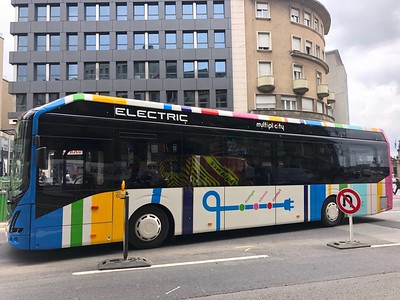
Exemplary bus livery design: Multiplicity, Luxembourg

From time to time, I've written about the graphic design of transit vehicle liveries as a key element of transit branding and marketing.

Luxury bus stopDC later improved its bus shelters, but in the DC area, each jurisdiction is responsible for bus shelters with design chaos being the end result.

I make the point that bus shelters are key touchpoints for marketing and branding transit, and that the quality of this infrastructure communicates whether or not transit is valued by a community.

And also that the system should be legible when you cross jurisdictional lines, but too often it isn't.

-- "Branding's (NOT) all you need for transit," 2018
-- "Transit, stations and placemaking: stations as entrypoints into neighborhoods," 2013
-- "World Usability Day, Thursday November 9th and urban planning," 2017 (section on transit as a design product)
-- "Design as a city branding strategy: transit edition," 2012

I was definitely influenced on this by how Montpellier France commissioned prominent designer Christian LaCroix to create the liveries on its light rail (tram) system.
Montpellier France trams, livery design by Christian Lacroix

I've also written about design and branding as an element of local government more generally.

-- "City branding versus identity | Branding versus Urban Strategy," 2019
-- "Part 7 | Using the Purple Line to rebrand Montgomery and Prince George's Counties as Design Forward," 2017
-- "Great concept, but I don't love the videos: Orlando's "Discover Your Urban" promotion campaign,"

Looking up something else, I came across the liveries for the bus system in Luxembourg, which is called Multiplicity.  According to the Binsfield design agency:
  • The design objective was "To reposition the Luxembourg City bus service and develop a visual identity for mobility and buses in the city."
  • The design approach: "The colored bands in the new design represent some of the city's transport routes, and the lines symbolize the roads and paths used to travel from A to B in the city."
  • The design result: "Buses bearing a colorful new design based on the "multiplicity" visual identity.
Great design!  The different colored stripes represent the color codes of the various bus lines.  Which are also used on the maps for the system ("A graphic designer just got his unauthorised redesign adopted as the official Luxembourg bus map," CityMetric). 

And the design is carried through to the different modes, which use vehicles different from larger buses.

Multiplicity Luxembourg 795, EW1401.

New Routemaster: Multiplicity Luxembourg

luxembourg - multiplicity 34 luxembourg 18-8-14 JL

Volvo 7700 - Multiplicity n°257

Luxembourg Multiplicity bus system, shopping bus

Luxumbourg Multiplicity bus system, Call a Bus transit van

Electric bus, Multiplicity bus system, Luxembourg
Photo from Twitter by Livio Filice.

Labels: , , , , ,

Sunday, February 16, 2020

Rider pushback against transit agencies/marketing campaigns

The lesson is to be very careful about your external communications and outreach.

1.  Boston.  MBTA sends out a social media/twitter message asking for videos about favorite stations as a Valentine's Day promotion, with the winner getting a free trip.  Mostly people posted about problems with the stations, infrastructure and service ("...The T asked people to share some transit love on Valentine's Day. The responses were heartbreaking," Boston Globe).

2.  Toronto Transit Commission has a big marketing campaign with wraps on streetcars and buses and ads in transit stations and bus shelters on fare evasion.

Toronto Star columnist Shawn Micaleff suggests it smacks of an incredible negative attitude about riders, given that fare evasion is about 5% ("Fare evasion may be a problem, but the ‘culture shift’ we need is a respect for transit riders").

The Toronto Sun reports ("Riders make spoof posters shaming TTC fare evasion campaign") on a guerrilla advertising campaign pushing back against the agency concerning service failures.  Although the ads aren't being placed in the public space as posters so far.  Instead they are being posted to thread on Reddit.

One of the spoof ads is pretty biting concerning the cost of fares (although comparatively speaking, TTC fares are cheaper than many other systems).

3.  Not exactly the same, but the transit agency for Ottawa, Ontario has an appointed citizen representative.

This year it's Sarah Wright-Gilbert.  She sees her role--she is a daily transit rider--as calling attention to service issues in a very public way.  According to the Ottawa Citizen ("'My only motivation is to improve public transit': Open, forceful citizen transit commissioner raises stink at city hall") that doesn't sit well with the transit agency management or other board members.

I can see why both groups of stakeholders would be upset with her.  There is a way you have to operate within government and/or the organizational world.  But there is a difference between acquiescing and continuing to outline issues in a forceful way.

It's hard to work within the system when the system is resistant.  OTOH, I can understand why she does it the way she does, given my experience in trying to be "constructive on the inside".

(1) You're ignored a lot of time.

(2) It takes years for your points to be acknowledged and then when they are incorporated into programs, you've long since been forgotten as the originator.  (Or you get screwed in other ways.)

(3) It's frustrating to say the same things over and over and over again, sometimes for a decade or more, and still see little forward motion.

(4) No room for critical analysis whatsoever.  A big part of the reason for this is that there is a fine line between what "powers that be" see as (personal) criticism and what I think is "critical analysis."  I've long since learned to not write critical analysis in personal terms (e.g., "X is stupid for doing Y" rather writing, "Y doesn't make sense for these  15 reasons..."  As it is listing reasons beyond 2 or 3 is too many...)

Any counter point is seen as criticism, and taken personally, not as analysis with the aim of improvement ("Helping Government Learn," 2009 and this 2007 post which references another Harvard Business Review article, "Your Company's Secret Agents," about "positive deviance").

Every so often I am wracked with self-doubt, figuring that I am a terrible, hopeless communicator, since the points I've been making don't seem to resonate.

Or I worry that I am getting stale in my thinking and ideas (even though my stale is usually better than most other people's very good).

=======
Some very early blog entries on the issue of transit marketing and strategic communications include:

-- "Making Transit Sexy," 2005
-- "More on Metro and rethinking transit marketing," 2006 (This piece includes discussion from the book Strategic Marketing for Not For Profit Organizations, a subtly different title from Strategic Marketing for Nonprofit Organizations by Andreasen and Kotler--both are worth reading.)

Some BART strategic communications responses.  A few years ago, BART got props for a twitter response feed that made the point that underfunding transit was the cause of system breakdowns ("BART gets candid in Twitter exchange with angry riders," San Francisco Chronicle).

Also with BART, the new police chief openly worked with the directors of the film "Fruitvale Station," about the killing of Oscar Grant III by a BART transit police officer ("Fruitvale Station' Is Based on the Story of Oscar Grant III," New York Times).

The BART system also has elected representatives, and according to a profile in the Chronicle, Lateefah Simon who represents part of San Francisco, probably has a similar outlook to Sarah Wright-Gilbert ("Lateefah Simon leads BART board on track to social justice").

Posting contact information at transit stations.  A BART director who wasn't re-elected, Zakhary Mallett, tried to get the board to agree to posting photos and contact information of board directors in transit stations.  They said this was suggested as a way to promote re-election, and the proposal did not pass ("Posting information on board members and the Metro," 2017).

I do think it's actually a good idea.  As should be information listing contacts for "Rider Advisory Councils" or similar programs.

When I used to commute to Baltimore, in Penn Station there was a bulletin board with information posted by the local chapter of the Rail Passengers Association.  And sometimes in smaller MARC stations I seem to recall, like in Kensington, Maryland?  But definitely not at DC-area Metrorail stations or Baltimore area MTA stations.

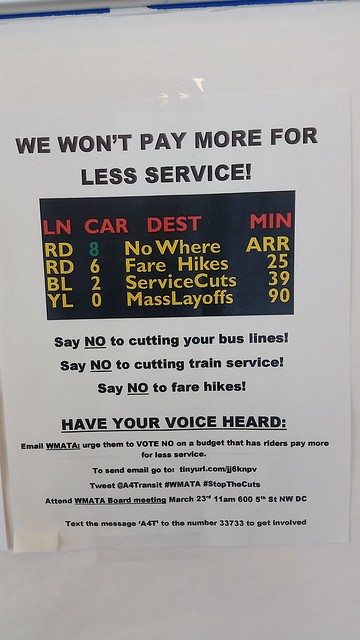
Flyer calling attention to Metrorail fare increases and service cuts posted at the Trips information center at the Silver Spring Transit Center... and shockingly, once I saw something similar at the Silver Spring Transit Center, probably posted by a transit employee?

Labels: , , ,

Wednesday, February 27, 2019

Speaking of Free Circulator promotion

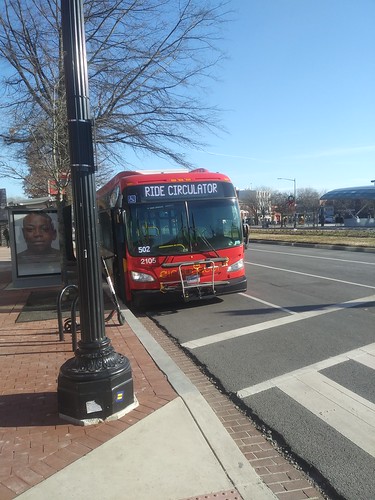
Ride Circulator, D.C. Circulator busI've been meaning to write about this all month, that the DC Circulator, a set of "circulator" bus routes serving Downtown, the National Mall, Georgetown, and other DC neighborhoods, which is provided by DC's Department of Transportation has been promoting bus ridership by making the month of February free.

Yesterday it was announced that this is being extended through March ("D.C. Circulator service will now be free through March," Curbed DC).

I'm just not sure how effective and useful this is (cf. "Is making surface transit free the best transit investment DC can make?," 2016).

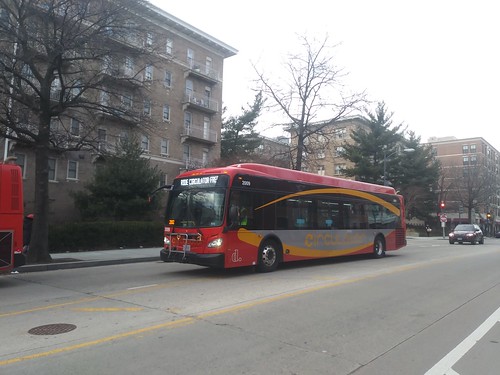
Ride Circulator for Free, DC Circulator bus for the month of FebruaryFrom a marketing standpoint, I am of two minds.  First, it's important to understand why people in cities with a relatively good transit system aren't regular users of transit ("What Makes Transit Successful? Survey Says It’s Frequency, Reliability and Shorter Travel Times," Government technology).

Definitionally, circulator routes--straightforward routes on major streets linking key activity centers and with frequent service so you don't have to worry about a time schedule--are supposed to address the primary concerns of frequency, reliability, and shorter travel times. Unless it's outlandishly high, price is a secondary factor.

I can understand the idea behind making an entire month or two free.

 The concept is that you're getting the person used to taking transit, and it takes more than a day or two of regular ridership to build and regularize "transit taking" as routine.

But likely cost isn't enough of a barrier to changing their routines.

 And after a day or two of free transit, the concept is no longer "new" or particularly exciting.

I'd probably instead make one day each month free or one day each quarter and market the h*** out of it. And I would promote free transit days as part of a year round calendar for transit promotion, which in turn would be a subset of a marketing plan for sustainable mobibility.

... or just make the Circulator free to begin with, as is done in other places, such as Baltimore.

"We get where you're going" marketing campaign for YRT/Viva transit, by Acart.

The biggest thing is to create and execute an annual marketing plan for transit.  I tried to get the original marketing plan (YRT/Viva Marketing and Communication Plan 2006 (December 2005)) for the York Region Transit launch of the Viva BRT system in Greater Toronto about 12 years ago, but they wouldn't cough it up, saying that their current Transportation Master Plan is more relevant.

-- "Viva Case Study, Lee Jacobson Consultants

I don't think that's where DC Circulator is as the Transit Development Plan for the service doesn't address marketing at all.

Labels: , ,

Sunday, February 24, 2019

Tower Hamlets use of garbage trucks as rolling billboards

Twitter photo by @Milo_Edwards.


Criticized for the use of garbage trucks as the medium ("Rubbish spot: London council mocked for placement of Brexit posters," Guardian) for the message of support for EU residents living in the London borough of Tower Hamlets, I still think the use of the garbage truck as "media" is an obvious opportunity that most local governments seem to miss.

I constantly suggest garbage trucks as a great medium for messages on solid waste, litter, and the environment, but there's no reason that the range of messages can't be broader.

Labels: ,

Monday, February 18, 2019

City branding versus identity | Branding versus Urban Strategy

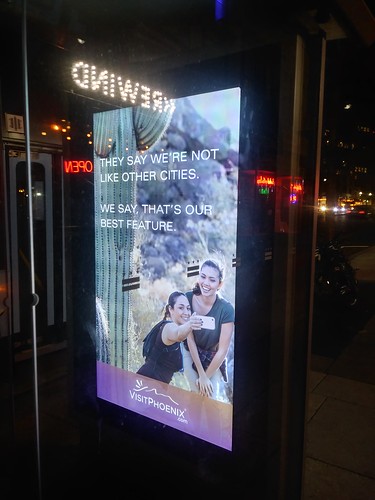
They Say we're not like other cities.  We Say that's our best feature.  Visit Phoenix marketing promotion bus shelter ad, Washington, DCThey Say we're not like other cities.  We Say that's our best feature.  Visit Phoenix marketing promotion bus shelter ad, Washington, DC

Aaron Renn (Urbanophile/Manhattan Institute) has a piece out on CityLab, "Cities: Don’t Fall in the Branding Trap," getting a lot of play with its questioning of homogenized city branding and marketing initiatives.  From the article:
It’s curious that while every company tries its hardest to convince you of how much different and better it is than every other company in its industry, every city tries its hardest to convince you it’s exactly the same as every other city that’s conventionally considered cool.

Look at any piece of city marketing material, from promo videos to airline magazine ad inserts. It’s amazing how so many of them rely on the same basic ingredients: hipster coffee shops, microbreweries, bike lanes, creative-class members, startups, intimations of a fashion scene, farm-to-table restaurants, new downtown streetcars, etc.

Baltimore "Get in on it." brand identity campaignIn 2006, Baltimore's "Get in on it" branding campaign was widely derided.

I have written about this issue for years--one of my earliest substantive posts from March 2005 is on the topic--"Town-City branding or 'We are all destination managers now'"-- and for a long time didn't even like to use the term "branding," because it comes out of the advertising world and seems to be counter to the ground up idea and concept of identity.

The point I made in that piece is that if we make places great "for us," usually they are attractive to others as well.  (This built on a piece from 2002 when I made the point that people visiting the H Street area to go to a theater or the then Children's Museum could, by their spending, support a greater range of retail and restaurants than the neighborhood would otherwise be able to support on its own.)

This book isn't a textbook, more like a motivator to spark ideas about urban positioning and branding.  It was authored by Julian Stubbs, one of the organizers of the city branding conference in Liverpool that I attended last June.

Later I became more comfortable with the term in some recommendations I wrote for plans I did in Brunswick, Georgia and Cambridge, Maryland, making the point that elected officials and key stakeholders within a community need to think of themselves as "brand managers." This is from the Cambridge plan:
Just as the study team believes that “we are all destination managers now,” elected and appointed officials in particular and in association with other community stakeholders serve as a community’s “brand managers”—whether or not they choose to think of their roles in this manner.

That means that decision-making on land use and zoning, business issues, infrastructure development (roads, sewers, water, utilities, transit), technology (broadband Internet, etc.) and quality of place factors (arts, culture, historic preservation and heritage, education, public schools and libraries, etc.) must be consistent and focused on making the right decisions, the decisions that collectively achieve and support the realization of the community’s desired vision and positioning.
Place-lessness in a DC Cool marketing ad.

I agree with Aaron that too many communities aren't focused on the right things.  I think it comes down to communities not being clear about their "competitive advantages."

-- "More (pathetic?) city branding efforts... (Baltimore)," 2006
-- "(DC) Neighborhoods and commercial districts as brands," 2012
-- "The taxi livery debacle as a lead in to a broader discussion of the importance of "design" to DC's "brand promise"," 2012
-- "Design as city branding: transit edition," 2012
-- "City (and university) branding: brand deposits; brand withdrawals; brand destruction," 2012
-- "Georgetown: A subtle but important difference between branding and identity-positioning," 2010
-- "Identity ≠ branding or Authenticity is the basis of identity," 2007
-- "Great concept, but I don't love the videos: Orlando's "Discover Your Urban" promotion campaign," 2017
-- "Some really good marketing videos that are models of city and/or transit promotion," 2018
-- "I don't get DC's visitor marketing ad campaign at all," 2015

It happens this came up in a discussion on a local e-list, HistoricWashington, when someone called attention to a post ("Breaking up DCRA isn’t enough — we need a deputy mayor for urban planning and enforcement") suggesting that DC needs a "Deputy Mayor for Planning," because in the current organizational set up where the city has a Deputy Mayor for Planning and Economic Development, planning gets subsumed to economic development.

I think the issue is a bit more complicated.

Operational responsibilities for economic development outweigh concern for planning.  I don't know if I believe that a Deputy Mayor for Planning is needed. But definitely, hiring a Deputy Mayor who comes from planning is a way to change the way the position is conceptualized.

In an interesting switch, this DC Cool features historic architecture and name checks Georgetown.

But it's more than that. It isn't just that there is a Deputy Mayor position to whom a bunch of agencies report. It's that the DMPED office has a large "economic development" unit also managed by the Deputy Mayor, which is operational, pursuing and managing multiple projects.

From the standpoint of the line from the book In Search of Excellence, "what gets measured gets done," when the bulk of your job and operational responsibilities are economic development related, that's what you focus on.

The ED functions should be calved off and run by a director who isn't the Deputy Mayor. (And in many cities this is done by a third party nonprofit agency. That has issues too.)

Separately, creating a planning commission probably is in order too. There is so much going on planning and development wise in DC that having an extra stage of "independent" evaluation and review is in order and would help both the legislative and executive branches make better decisions.

Rollin Stanley

Planning versus Urban Strategy.  When Canadian Rollin Stanley left as director of planning for Montgomery County, Maryland to a position in Calgary, I thought he took a position as director of planning and permitting, drawn in part by Calgary's hyper growth.

But that wasn't the case. Instead, he was hired by Mayor Naheed Nenshi, considered to be one of the most forward thinking mayors in North America ("Calgary Mayor makes us look like rednecks" and "'Canada's mayor' sees the city positively," Toronto Star), to be "Manager of Urban Strategy" ("Getting to Know Calgary General Manager Rollin Stanley," Skyrise Calgary).

Calgary has created an "Urban Strategy Studio," to be out in front of various real estate development and other initiatives, to:
help focus attention on strategic projects and the infrastructure necessary to make these initiatives happen. The outcomes are focused on making the right investment decisions that result in city building investments that benefit the city and ensure city resources are being located and used to their highest and best uses.
Another example of placelessness in city marketing.

Start by figuring out your city's competitive advantages.  For years and years and years I've written that DC has five competitive advantages:

1. Historic architecture;
2. Place-positive urban design/livability/walkable neighborhoods;
3. History, authenticity, and identity;
4. A rich transit infrastructure that allows for efficient mobility that is not dependent on the automobile;
5. The steady employment engine of the Federal Government.

From the standpoint of what I wrote vis a vis Cambridge and Brunswick, if those are your competitive advantages, then the decisions you make in terms of new development, infrastructure investments, marketing, business recruitment, etc., need to support those advantages by building on and extending them.

I've never really felt that was something embraced or understood by most of the city's elected and top appointed officials.

I wrote about this in 2005, in terms of DC's overly generous offer for a baseball stadium in "Maybe DC can learn that it has something that developers want," and "When you don't believe you're really "world class," you make bad deals," making the point that when you have a lot to offer you don't need to give away the store in negotiating.


This DC Lottery video highlighting city neighborhoods and places is a far better example of promoting the city's best attributes than much of the city's other marketing initiatives, and this ad isn't even focused on external audiences.


Books such as The Living City and Cities: Back from the Edge by Roberta Gratz, and Changing Places by Richard Moe are particularly good resources on the value of place and historic preservation as a sustainable urban revitalization strategy as is Economics of Uniqueness:  Investing in Historic City Cores and Cultural Heritage Assets for Sustainable Development, published by the World Bank and freely downloadable.

Urban Strategy, identity, and competitive advantage versus branding and marketing.  Along the lines of my "transformational projects action planning" concept ("Why can't the "Bilbao Effect" be reproduced? | Bilbao as an example of Transformational Projects Action Planning," "Downtown Edmonton cultural facilities development as an example of 'Transformational Projects Action Planning'"), imagine a city like Washington having a Deputy Mayor of Urban Strategy to whom the planning director reported, and who in turn advocated for decidedly forward thinking urban visions throughout government. (Not that citizens, even though they live in the city, necessarily think in decidedly urban or forward thinking ways.)

A big trend: local governments hiring "innovation officers" ("When Should a City Hire a Chief Innovation Officer?," Government Technology) when I think the problems of lack of innovation are more basic ("All the talk of e-government, digital government, and open source government is really about employing the design method").

LA did hire a design director ("Christopher Hawthorne, LA Times architecture critic to become Chief Design Officer for the City of Los Angeles") which is more along the lines of urban strategy and visioning.

-- "PL #7: Using the Purple Line to rebrand Montgomery and Prince George's Counties as Design Forward," 2017
-- "World Usability Day, Thursday November 9th and urban planning," 2017

Bonus #1: "Fire the planning director" as a perennial request at election time.  Separately, I've often argued with advocates during election season, who hold their support for particular candidates based on whether or not the candidate commits to firing the current planning director.

I'd point out that at the end of the day, directors of agencies do what they are told to do by the Mayor or designees. They aren't operating independently.

You're mad at the planning director, when it's the elected officials who are telling the planning director what to do.  Direct your anger accordingly...

Bonus #2: You gotta sell benefits.  The biggest thing in marketing is benefits.  One of the biggest failures in local government is the failure to "sell" the benefits from change and the value of adding more residents, residents who pay taxes, support a greater range of retail, shop and play locally, etc.

Labels: , , , , ,

Saturday, March 03, 2018

Some really good marketing videos that are models of city and/or transit promotion

1.  The American Institute of Architects online video promoting their upcoming 2018 national conference in New York City June 21-23, is a model for a punchy community tourism promotion video.


2.  Similarly, the DC Lottery video is way better than the videos produced by the city agency tasked with promoting the city.


I've been meaning to mention the DC Lottery "Neighborhoods" scratch off cards.  We can argue about the value of a lottery and how most of the players lose out, but promoting various DC neighborhoods (e.g., Capitol Hill) and landmarks on various series of tickets is a good idea.  Plus, in the "losers" drawing, the winner will get $500,000 towards the purchase of a house, which is a great promotional idea.

The program has been promoted through bus livery ads, in various ways in Union Station, and in other venues.  I don't know if the video ad has run on broadcast or cable television, or just online.

3.  Although to be fair, the DC Cool campaign seems to leave me cold ("Washington, DC Launches Yearlong Marketing Campaign with 'DC Cool'," press release).  This older Destination DC ad is better (but still pales against the DC Lottery ad).


4.  Transit agencies generally aren't at the forefront of marketing excellence, in print or broadcast formats.  Frankly, there aren't even a lot of examples of television ads for transit agencies, because commercial media time is so expensive.

But last night I saw an ad (probably via FIOS, and it was on a cable channel, not an over the air broadcast station) for WMATA's new promise that if your train is delayed 15 minutes or more you get a free ride automatically credited to your SmarTrip card, and I thought it was excellent.

-- WMATA Rush Hour Promise webpage

The only thing is, I thought I remembered a man's voice in the ad, and this one features a woman's voice.  I think there are different ads.


Labels: , , , , ,

Monday, May 08, 2017

Some DC tourism issues (National Tourism Week: May 7th - May 13th)

One of my earliest blog posts is from February 2005, when I wrote that people in commercial district revitalization should think of themselves as "destination managers," and if we make places that are great "for us," fortunately they are also interesting and attractive to visitors.

-- "Town-City branding or 'We are all destination managers now'"

Bike share.  An example is how the city's bike share system is subsidized by visitors who rack up lots of extra fees for using the bikes.  This pays a significant proportion of the system's operating costs.

Destination DC is DC's destination marketing organization.  Destination DC is the city's "destination marketing organization" (formerly referred to as "convention and visitors bureaus) and it is complemented by EventsDC, which owns and manages sports facilities.

Earlier in the week Destination DC announced that DC had record tourism numbers for last year ("DC draws 20 million domestic tourists in year for 1st time," Associated Press), chalked up in large part to the opening of the new Smithsonian National Museum of African-American History and Culture.  From the article:
According to Destination DC, the 20 million visitors was an increase of 700,000 over the previous record for domestic visitation, which was set in 2015. International visitor totals will be released in August.

The Smithsonian's National Museum of African American History and Culture, in the shadow of the Washington Monument, opened in September and has already drawn more than 1 million people. Admission is free, but unlike other Smithsonian institutions, the museum is using timed entry passes to manage the crowds.

Visitors also were drawn to Washington by new and refurbished hotels and, for the first time, Michelin-starred restaurants, Destination DC president Elliott Ferguson said in a statement. By far the highest-profile hotel to open last year was Trump International Hotel on Pennsylvania Avenue, five blocks from the White House, which quickly became a gathering spot for supporters of President Donald Trump.

Michelin released its first travel guide for Washington in October and 11 restaurants in the city earned stars, along with the Inn at Little Washington in the rural town of Washington, Virginia.
DC definitely has opportunities for improving how it deals with and profits from tourism.  This might give us the idea that my criticisms of how DC organizes and delivers its tourism offer are unfounded.  They're not.

I have some basic criticisms:

-- unlike other major US cities, DC doesn't have a real visitor center (it does have an information desk in the Convention Center, but the Convention Center doesn't offer parking, which is a problem for people arriving to the city by car and seeking information)
-- the federal institutions with visitor centers (National Park Service, Smithsonian, Capitol Visitor Center) do not distribute any information not produced by the federal government, so these centers do not provide printed information or guidance on any other city attractions
-- the tourism tax revenue stream needs to be used more systematically to support tourism assets other than the Convention Center
-- the city's "destination marketing organization" needs to support systematically sub-city tourism, especially for Capitol Hill, Dupont Circle, and Georgetown (many other jurisdictions have secondary visitor centers in major destinations within the city)
-- the city ought to have an annual tourism conference -- most states have them (e.g., both the Maryland Tourism and Travel Summit and the VA-1 Tourism Summit are in November) -- to help build the tourism sector beyond the federal institutions
-- Destination DC isn't very good about providing tourism information to visitor centers outside of DC, even though most of those centers report that the primary interest of visitors
-- the federal government should consider the creation of a master visitor center (such activities would be covered by the Visitor Element of the Federal Elements of the DC Comprehensive Land Use Plan)
-- the region should consider developing a set of systematic visitor centers at the region's three airports (two in Virginia and one in Maryland)
-- the transit system could do a better job offering special pricing for tourists -- granted providing such pricing is seen as unfair to residents, who fund the system, on the other hand it should be seen as a transportation demand management initiative

Yes, I understand DestinationDC focuses on filling the Convention Center with events since they have to pay off the bonds that financed its construction.  From "Massive anime convention Otakon comes to DC this summer," (WTOP):
The District will host nearly two dozen citywide conventions this year — those that take up multiple hotels and venues — including the city’s first time ever hosting a massive anime convention called Otakon.
But other DMOs have similar situations and still manage to have a much broader purview.

DC needs a tourism plan.  The best way to deal with this would be to create a Tourism Development and Management Plan as part of the DC Comprehensive Plan, something I suggested c. 2004, based on the experience of Charleston, SC.

It would cover marketing too.  I am not a fan of the current program ("I don't get DC's visitor marketing ad campaign at all,") but it is claimed that it is successful.

-- DC Cool in Washington, Washington.org

Sharing options for lodging.  Personally, I don't think airbnb and similar sharing programs are a big issue in the city. 

Mostly, the hotels and hotel workers unions are fighting this battle, because they believe it's an either-or choice, and they don't want to lose any business. 

As I argued in the other piece, that's too simplistic a perspective, and the hotel industry isn't the only player that needs to be satisfied. People want access to a variety of lodging types and experiences when they travel, and this is an option that satisfies a certain segment of the market, and likely many of these people wouldn't visit the city otherwise, had this option not been available.

I do think that it's reasonable to put restrictions on how many properties can be listed, they should be licensed and stays taxed, so that these visitors still contribute to the tourism tax revenue stream, and of course, properties that shouldn't be made available through such programs shouldn't ("DC attorney general sues Ginosi for allegedly treating rent-control apartments like ‘hotel rooms’," Washington Post).

City Tourism

The United Nations World Tourism Organization also sponsors a Global Summit on Cities Tourism.  The sixth conference will be held in December in Kuala Lumpur, Malaysia.

The first conference resulted in the production of the Global Report on City Tourism.  The UNWTO is especially focused on the economic development potential that tourism presents.  From the report:
Cities appeal to a broader market, they are easy to reach and they have a lot to offer, this also brings a new spending pattern that can go from those staying in budget hotels to the five star hotel customer, but all have one thing in mind: they want to discover and visit other cities. Cities need to assess their products and understand which of their products offerings appeal to the market.
What does tourism mean for cities?The report on City Tourism is part of a series of UNWTO reports, ranging from UNWTO AM Report Vol. 4 'Global Report on Food Tourism and AM Reports Volume 3 'Global Report on LGBT Tourism to AM Report No.5 Global Report on Aviation.

Urban Cultural Tourism

A big thrust in urban tourism for the last 20+ years has been "cultural tourism," which addresses historic architecture and local history.  It's touted for many reasons, especially because improving local cultural assets also serves residents.

From "Cultural Visitor Profile" from the National Assembly of State Arts Agencies:

In a nutshell, cultural tourists compared to the average U.S. traveler:
  • Spend more: $623 vs. $457
  • Are older: 49 vs. 47
  • Are more likely to be retired -- 20 percent vs. 16 percent
  • Are more likely to have a graduate degree: 21 percent vs. 19 percent
  • Use a hotel, motel or B&B -- 62 percent vs. 55 percent
  • Are more likely to spend $1,000+/-: 19 percent vs. 12 percent
  • Travel longer: 5.2 nights vs. 3.4 nights
  • Travel by air: 19 percent vs. 16 percent.
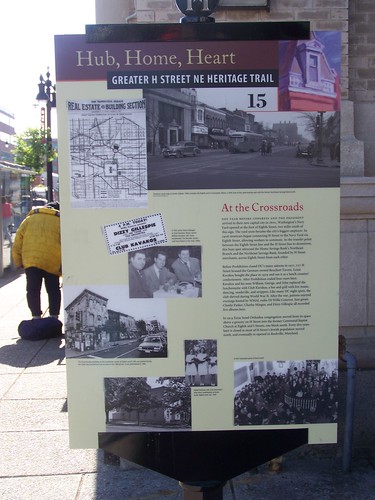
H Street Heritage Trail sign, northeast corner of 8th and H Streets NELeft: CulturalTourismDC trail sign on H Street NE in Washington, DC.

Because cultural tourists spend more time and money compared to other segments of the tourism market, this is seen as a particularly desirable segment of the market.

DC and tourism planning.  DestinationDC is the city's tourism bureau, called a "convention and visitors bureau" in the trade.  It mostly focuses on landing big events to be held at the Convention Center.

It doesn't provide systematic support for sub-city tourism initiatives and services, unlike say, Miami ("Why Miami-Dade has more visitor centers than any city in the U.S.," Miami Herald).

While regional tourist centers experience a high demand of information on DC, because DC is the primary visitor destination, for the most part DestinationDC doesn't provide information to those centers (guidebooks and maps) unless they pay for them.
    Urban Cultural Tourism and DC (and Salt Lake City)

    In DC, CulturalTourismDC is the leading organization focused on strengthening local history interpretation.  They used to sponsor walking tours across the city in the spring and fall.  Now they only do this in the fall.

    CTDC's funding has dropped considerably over the years and I argue that the local tourism destination marketing organization, Destination DC, ought to do more focused funding of development activities for cultural destinations. 
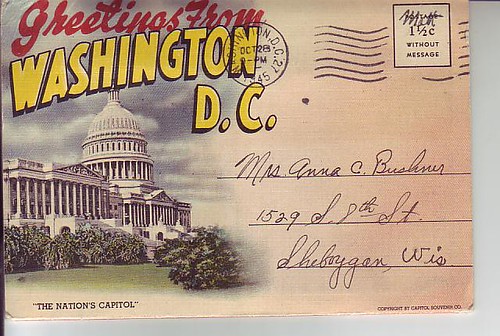
    Greetings from Washington, DC 1945 Postcard Folder Linen Vintage (item 230017469602While I hesitate to use the word "unique" in comparing jurisdictions, DC (and Salt Lake City, which is defined in terms of its place as the headquarters of the Mormon Church, or Vatican City and its place as the Holy See) has a unique tourism marketing problem in that it is defined globally as the Federal City, the US National Capital, and this shapes very specifically what visitors want to consume when they come here:

    - US Capitol
    - White House
    - Museums on the National Mall, especially the Air and Space Museum, but also the Museums of National History and American History
    - the Monuments on the National Mall
    - Mount Vernon, George Washington's plantation
    - Alexandria and Georgetown as old port towns but mostly as commercial districts with historical references
    - maybe the Kennedy Center
    (and for certain audiences, the Franciscan Monastery and the Shrine of the Basilica of the Immaculate Conception, both in Brookland).

    National "cultural tourism" versus "neighborhood cultural tourism."  That doesn't leave much time, space, and interest for visiting "local DC."  Note how the souvenir postcard folder pictured above doesn't feature "local" historic landmarks, but landmarks related to the federal city.

    One of the problems of neighborhood-based tourism in the city is that while you can walk around attractive neighborhoods and appreciate the architecture, or follow a heritage trail, there are few attractions to visit and the retail and restaurant options are limited.

    Fortunately, as the city's population increases, it supports more interesting local businesses and a restaurant scene is developing ("In DC, a Street's Grit Gives Way to Glamour" and "A Trendy Turn in Obama's Town" from the New York Times and "DC's Diverse Cuisine," from the Cooking Channel show "Chuck's Eat the Street").

    Eastern Market is one of the few neighborhood attractions of major scale outside of a shopping district, but is more likely visited in association with the out-of-town visitor market associated with people who live here.  The National Zoo has a mix of local and out-of-town visitors.

    Union Station is called the city's #1 visited place, with more than 20 million visits each year, but the majority of these visits are associated with local transportation (subway and commuter related railroads) and aren't really tourist visits.

    Salt Lake City has a similar marketing positioning problem in terms of how it is perceived as the home and headquarters of the Mormon Church and therefore "everything there to see must be related to the Church."  That is decidedly not true--and Utah more generally has been very successful at marketing its outdoor activities as part of its tourism offer.

    With the failure of the City Museum here in 2004, and my realization that we don't have a "local" art museum devoted to local and regionally relevant art, I have come to realize how problematic it is that we don't have a wide ranging cultural plan and our funding scheme for local attractions is disjoint--we spend a lot of money, but we don't spend it very well. 

    I can't even count the number of entries I've written on the topic, but here are some:

    -- "Town-City branding or 'We are all destination managers now'"
    -- "Tourism Marketing and DC"
    -- "You (Don't) really like me--DC and its suburbs"
    -- "Who DC? -- More about DC tourism"
    -- "Civic Tourism"
    -- "Central Library Planning efforts and the City Museum, how about some learning from Augusta, Maine, and Baltimore"
    -- "Cultural resources planning in DC: In the land of the blind, the one-eyed man is king"

    I have argued that the city should manage itself in terms of heritage and tourism as a cultural landscape, comparable to a "heritage area," whether or not the city aimed to create a formal heritage area or seek federal designation as a national heritage area.

    Visitability

    The New York Times reported about how the local Convention and Visitors Bureau, NYC & Company, has put a visitor center in Macy's, because the store gets a huge number of tourist visits, more than six million annually.  See "Tourist-Hungry New York to Put Visitor Center in Macy's."

    I came across some interesting work from Australia (via the Australian National Tourism and Events Excellence Conference website), including how Destination Melbourne is refocusing their work on the elements which make cities great places to visit, which they call "visitability."  The concept is based on a presentation to the organization by Rick Antonson, CEO of Tourism Vancouver, and focuses on five elements equally important to residents and visitors:
    • Safety
    • Access and transport
    • A sense of community – no matter where you are from
    • Confidence
    • Good infrastructure that serves the people
    These elements comprise the offer by the "place" and end up being "packaged" and consumed through experiences at particular places and destinations.  Personal, unique, and memorable experiences allow people to make deeper relationships with the place.

    Bad experiences are memorable too... 

    Destination Melbourne is creating a "visitability framework" to focus their efforts in making Melbourne a "compelling destination" and driving continuous "improvement in services and experiences" offered to residents and visitors.
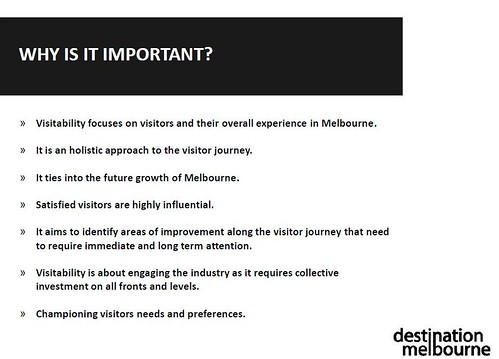
    Visitability, from a Destination Melbourne presentation
    Slide from a presentation by Destination Melbourne at the TEE Conference.

    NOTE that in the urban planning world, especially relating to transportation and the built environment--although because of a strong bike helmet requirement, bike sharing has basically failed there, and livability, Melbourne is highly touted and has been picked by The Economist Magazine as the world's most livable city for three years in a row.  See "Melbourne ranked world's most liveable city - again" from the Melbourne Age.

    So they must be doing something right.  Even so, clearly they aren't satisfied with resting on their laurels, and partly this is because when the compare their city to others, "they have no great icons - no Rock, Reef, Opera House, SeaWorld, Disneyland or Giant Pineapple."  This motivates them to work harder.

    But the visitability concept is applicable to tourism entry points at all levels: sub-local; local; regional; state; and national/international. 

    Visitor Center policies and case studies
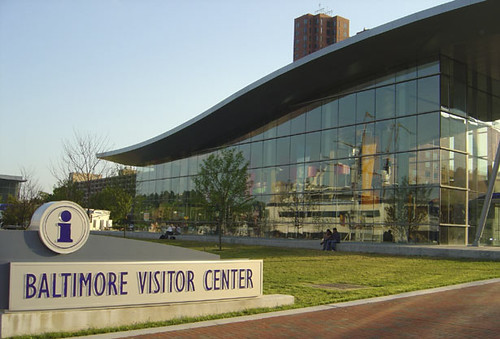
    Baltimore_VisitorCtrLeft:  The Inner Harbor is Baltimore's #1 visitor attraction and the Visitor Center is located in a building on the waterfront.  

    Most states have a network of visitors centers, which are typically run by the state tourism agency (which is usually part of the Dept. of Economic Development) in conjunction with local destination marketing organizations.

    Cities may have more than one visitors center, a main location definitely, and sometimes subsidiary centers.  New York City has main tourist centers and certain business improvement districts, like Chinatown and the Fashion District, run local visitor centers.  Pittsburgh has a main center in the Golden Triangle and secondary centers at highly visited attractions such as the Pittsburgh History Center (a great local history museum).  Petersburg Virginia has a main visitors center in the city, but they also run a "state" visitors center on I-95, and include some artifacts displays there as well.
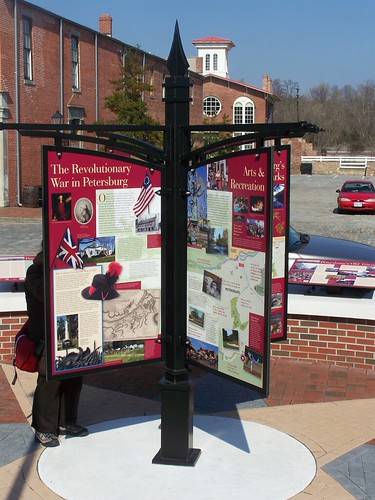
    Kiosk, historic/history interpretation, Petersburg, VARight:  Petersburg has a great set of cultural-historic interpretation signage in the plaza across from their visitor center (which is located in an old railroad station).

    For the most part, DC proper doesn't really have a visitor center, while most other big cities do.

    At the state level the hierarchy is bigger centers at main entry points and in big cities, and smaller centers at the city/county level.  A third level is information racks that are placed at hotels and other places, and to be included organizations pay for their information to be distributed. 

    Most US states and the largest cities have excellent tourism development programs, as do many foreign nations, such as the Provinces of Canada.  Their reports and guides make useful resources.

    While DC doesn't have a main visitor center comparable to other large cities, there are a number of "main" visitors centers run by federal agencies.  The Smithsonian has one.  Congress has one (the Capitol Visitors Center).  The National Park Service runs the visitors center associated with the White House.  There is a visitors information desk in the Convention Center.  In the past, the DC Chamber of Commerce ran a visitors center buried in the Ronald Reagan Building.

    Federal visitor centers do not distribute any information produced by local organizations, including DestinationDC.  An interesting wrinkle is that compared to traditional visitors centers which are "codification points" for a wide variety of information about nonprofit and for profit visitor experiences, ranging from museums and parks to antique stores, restaurants, and hotels, federal laws preclude at least the CVC and the White House center from providing any other "local" information.

    This makes them singularly un-useful from the standpoint of promoting "local DC" to people visiting the city, other than their visits to federal facilities.

    In my opinion, DC should have a main visitors center at Union Station and should provide support to permanent secondary centers in certain key commercial districts like Georgetown and Capitol Hill, with the ability to have more temporary set ups (Arlington County has a mobile vehicle, Downtown Bethesda has a rolling kiosk, Montreal supports both permanent secondary centers such as at the Mont Royal Metro Station and temporary movable kiosks such as in the summer months in "The Village").  The federal visitor centers should be integrated into this system, and an attempt should be made to get these facilities to carry all types of information relevant to visitors.

    I have written about this more extensively: "A National Mall-focused heritage (replica) streetcar service."

    Left: the Silver Sightseer streetcar in front of the US Capitol, sometime before October, 1962.

    Besides marketing their state and providing information to potential and actual visitors, Tourism Queensland offers a wide variety of resources to the industry, including an active support and research program for "Visitor Information Centers."

    -- Visitor Information Center Policy Resource Kit, Tourism Queensland
    -- Visitor Information Center case studies, Tourism Queensland

    DC does get from 13 million to 17 million visitors annually, and while that is only about 1/3 of the number visiting NYC, it's still a lot.  It would be good to benchmark the area's visitor centers, and DC's offer against what it argues are peer cities.

    Consideration of the findings by Tourism Queensland can inform improvement efforts here.

    Airports, visitability and international visitors: 
    Bureaucracy dooms the brand promise of Brand America

    Another "problem" is that three of the main entry points into "Washington" aren't in DC proper-- National Airport and Dulles Airport in Virginia and Marshall-BWI Airport in Maryland.  Each has a visitor information desk, but none of the services are comparable to the airports with the best visitor information set ups.

    Plus, at Dulles Airport especially, the experience for visitors leaves a lot to be desired, which is something that Tyler Brule of Monocle Magazine mentions from time to time, especially in his weekly column in the Financial Times, where he has been very negative about Dulles Airport, because of big problems with the customs entry process.  From "Let’s play ‘Guess where I am?’":
    I’ve just come off an airliner and it’s absolute pandemonium. There are gate agents screaming for transfer passengers, there are sniffer dogs, there are loads of immigration officers and there’s a general sense of disorganization. My fellow passengers look bewildered and flustered after their eight-hour, 45-minute flight from Frankfurt, and there’s a lot of huffing and puffing as we’re divided up into groups of arriving passengers and “connectors”. ...

    description of 1,000 people waiting to go through ICE at shift change, when many people leave their posts, with the result that even fewer agents are there to work with the passengers.

    As I approach the desk, I feel like giving the young gentleman a lecture about how bad this whole performance is for Brand USA – particularly on top of a whole week of television reports about the new fee that visitors will have to pay to get a visa and how these funds will be used to create a campaign to encourage more tourism to the US. I want to ask him if he (and his bosses not far away in the District of Columbia) think a 90-minute wait in a dumpy airport is any way to welcome the world and if his department is really that interested in having people visit the US.

    Of course, this is even worse now given the "America First" and anti-global rhetoric and actions of the Federal Government as discussed in the previous entry, "National Tourism Week (May 7th - 13th), Public Diplomacy, National Heritage Areas, etc."

    Combine this experience, plus the then less than sterling experience of getting to the city from the airport--this will change in a few years when there is subway service there, but the location of the subway station will be less than ideal--and then think about what this says not only for BrandAmerica ("Brand USA, a campaign to lure back foreign tourists — and their money" Washington Post and "Re-branding America" from the Sunday Boston Globe) but BrandDC (see the blog entry "Creating Brand Washington"), and is it any reason that the number of international visitors to the US is falling?

    Note that while the FT piece is from 2011, the problem at Dulles continues.  See "Editor's note: BWI is the big winner in the battle for passengers" from the Washington Post.  And the MWAA has responded with a advertising campaign.  But I would aver the problem is more structural and fundamental--something that marketing can fix, but advertising can't.

    An evaluation of area airports in terms of the "visitability" approach is long overdue.  Also see the past blog entry, "More on transportation to the DC area airports." which discusses airports planning at the regional scale.

    Local airports and the provision of visitor information

    That the area's major airports are in Maryland and Virginia and not DC complicates the realization of my recommendation that there should be a coordinated set of visitor centers at the region's airports, as part of the DC city network of visitor centers.  There are information desks at each of the airports with some visitor information.  But there should be a much better offering than there is currently.

    But I don't claim it would be easy to get the airports and Destination DC to come together and do this.  Also, Maryland has visitors centers north and south of Baltimore on I-95 and they might think that this suffices, although such facilities only target automobiles, and miss out on reaching people on mass transit of various sorts.
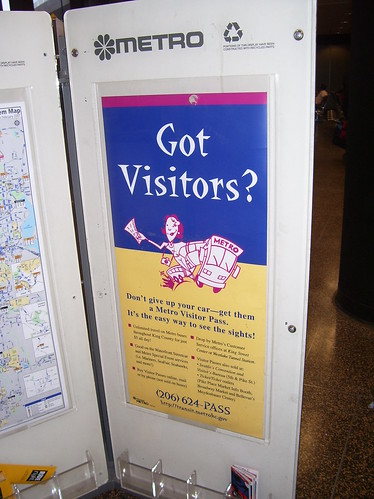
    King County Metro Bus promotional poster at an information rack at the Seattle-Tacoma Airport
    Right:  King County, Washington Metro used to have a kiosk in the airport terminal promoting bus transit use.  Now that they have a light rail station at the airport, they seem to have removed marketing materials from within the airport terminal.

    Airports and transit

    Transit wayfinding needs to be improved at all the airports, especially to be able to reach people who are less accustomed to riding transit, and therefore need more information in order to be comfortable in choosing it.

    That's discussed here, "More on airport-related transit/transit for visitors."

    Comprehensive airports planning at the regional scale would address public transit issues as well.  It's really a surprise (not) that this isn't done.  

    A key element of appealing to international visitors is a reasonably efficient transit system for getting to the major lodging centers in the metropolitan area.  This will improve for Dulles Airport with the extension of Silver Line service there sometime within the next 5-6 years.

    Transit service to BWI Airport is pretty good, considering the distance from DC and has improved as BWI improved its surface transportation programming, integrated bus service to and from the train station into its ground transportation system, and MARC added weekend train service on the Penn Line.  Light rail service to the airport is available from Baltimore, and WMATA runs a bus from the end of the Green Line Metro at Greenbelt--although this ride is now so expensive it's cheaper to take a MARC train.
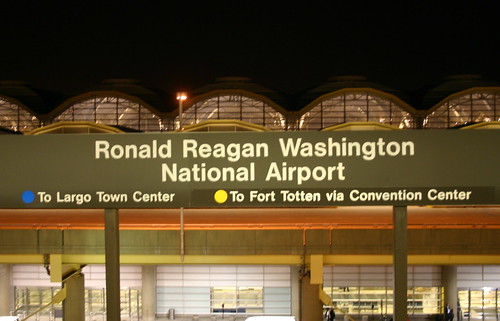
    07.WMATA.RRWNA.VA.08mar07Left:  Flickr photo by Elvert Barnes.

    National Airport has great transit service when the Metrorail is running--the subway station is conveniently located for reaching both terminals--and paltry service when the subway isn't running and airplanes are still landing and taking off.

    Conclusion


    DC needs to truly up its game as far as visitability, cultural tourism, and visitors centers are concerned. 

    National Tourism Week, World Tourism Day and other tourism promotion activities are a way to call attention to the need for better tourism planning, development, and management activities in DC.

    Labels: , ,